
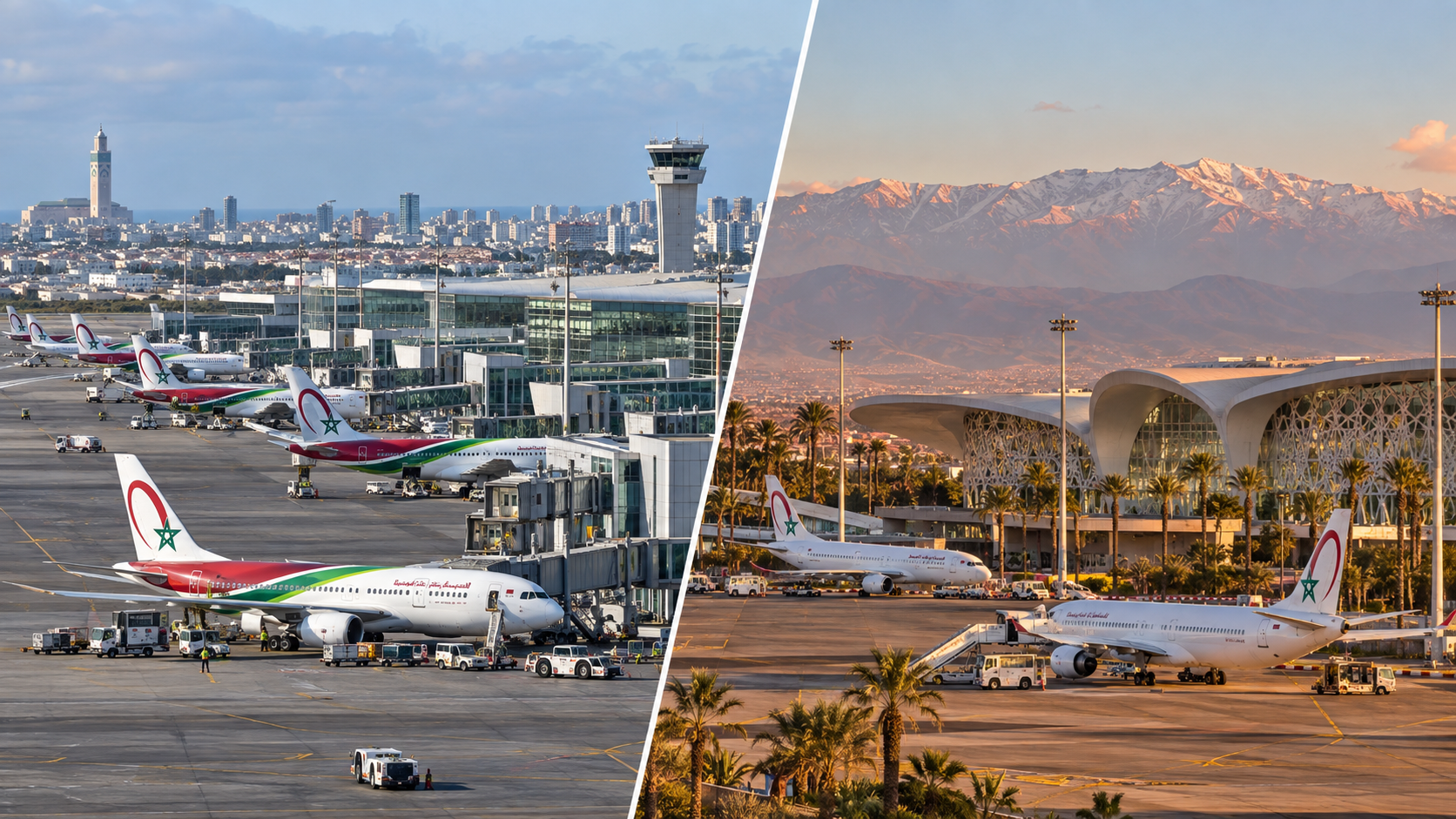
Casablanca ranked fourth and Marrakech tenth in Africa for scheduled airline seats in August 2026. The result shows how Morocco is building two complementary aviation gateways: one connecting continents, the other delivering visitors directly into the tourism economy.
Morocco now has two airports among Africa’s ten largest by scheduled seat capacity.
Casablanca Mohammed V International Airport placed fourth in the continental ranking for August 2026, with 803,579 available seats, according to the latest performance update from the African Airlines Association, or AFRAA.
Marrakech Menara Airport ranked tenth, with 480,112 seats.
That gives Morocco something few aviation markets on the continent can claim: two major gateways operating at different ends of the travel business.
Casablanca connects Morocco, Africa and the wider world. Marrakech brings international visitors directly into one of the Kingdom’s most important tourism economies.
AFRAA’s ranking was led by Cairo International Airport, followed by Addis Ababa Bole International Airport and Johannesburg’s O. R. Tambo International Airport. Casablanca came next, ahead of Algiers, Nairobi, Cape Town, Tunis and Lagos. Marrakech completed the top ten.
What “seat capacity” really means
The figures cover August 2026 only. They do not represent annual passenger totals.
Seat capacity measures the number of seats airlines scheduled on flights serving an airport during a particular period. Put simply, a 180-seat aircraft contributes 180 seats to the total whether every place is occupied or some fly empty.
That distinction matters.
The AFRAA list is not a ranking of Africa’s busiest airports by passengers handled. It is also not a judgement on airport quality, punctuality, profitability or customer service.
AFRAA describes the table as a ranking by seat capacity. Its published airport chart does not provide a separate breakdown between domestic and international seats.
What the numbers do reveal is the scale of airline supply. Carriers commit aircraft, crews and valuable schedule space when they believe a market can support the service.
Across Africa, total seat capacity rose by 8.8 per cent compared with August 2025. Capacity on routes within the continent increased by 10.5 per cent, driven, according to AFRAA, by new routes, wider networks and the use of larger aircraft.
Casablanca connects; Marrakech welcomes
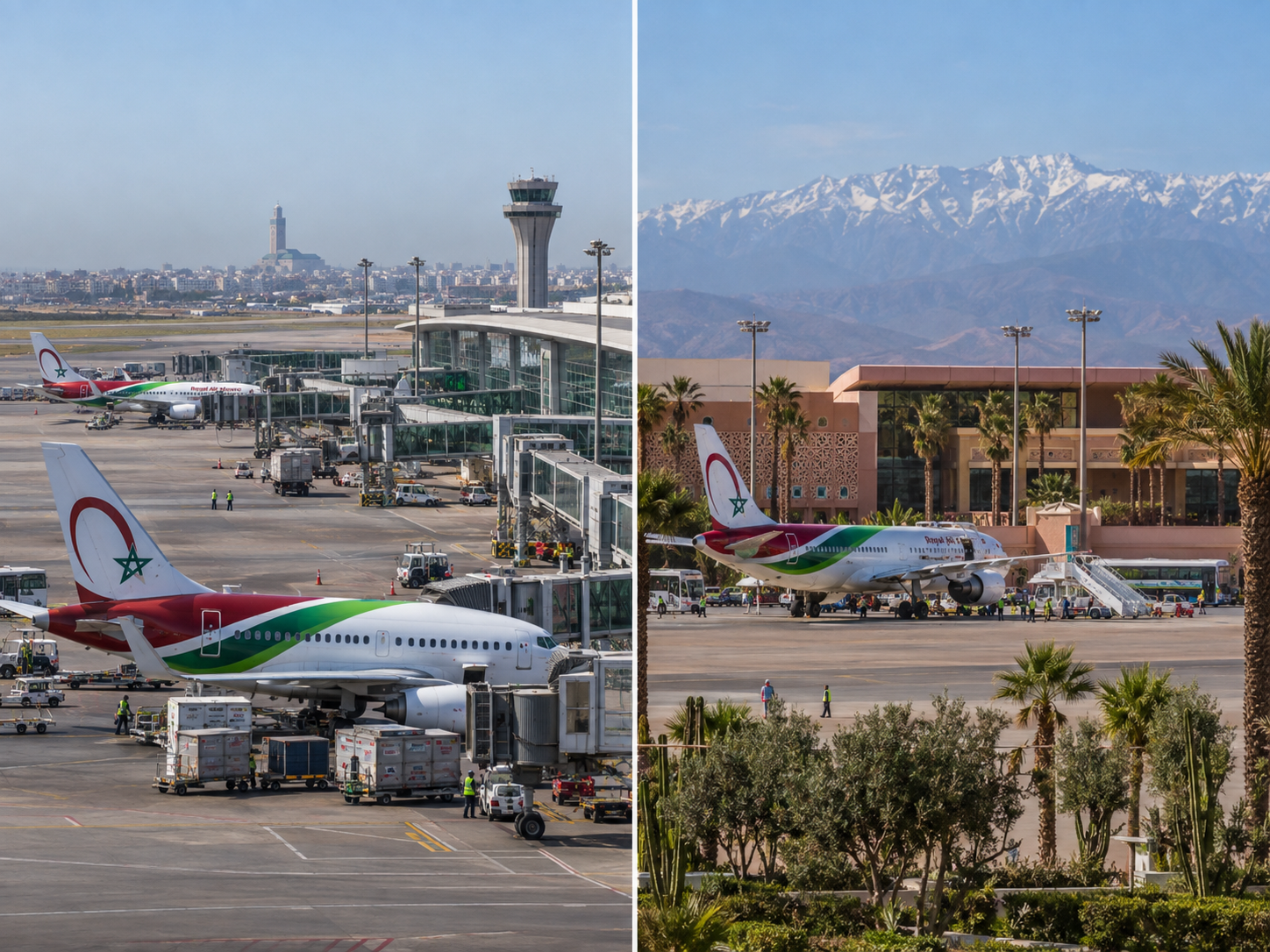
The two Moroccan airports have reached the top ten through different business models.
Casablanca airport is the country’s principal aviation hub and the centre of the Royal Air Maroc network.
Many travellers using Mohammed V International Airport are not simply flying to or from Casablanca. They are connecting between Moroccan cities, African capitals, Europe, the Middle East and the Americas.
That hub structure allows one route to support several flows of traffic. A Royal Air Maroc flight arriving from Europe, for example, can carry passengers continuing to destinations across Morocco and Africa alongside those ending their journey in Casablanca.
International airlines add further capacity, while Office National des Aéroports, or ONDA, is responsible for operating the airport infrastructure that supports this expanding network.
Marrakech airport plays a different role.
Its traffic is more heavily driven by passengers who want to visit Marrakech and the surrounding region. International network carriers, low-cost airlines and leisure operators connect the city directly with major overseas markets.
That point-to-point model takes travellers closer to where they intend to stay and spend.
For a visitor booking a weekend break, wedding, conference or longer holiday, a direct flight to Marrakech removes the need to change aircraft or continue overland from another Moroccan city.
Casablanca acts as Morocco’s connecting engine. Marrakech operates as a powerful front door to the visitor economy.
Why more seats matter beyond the airport
For travellers, greater flight capacity can bring more routes, better departure choices and increased competition between airlines.
It can also make family visits easier for Moroccans living abroad and place more international destinations within one connection of cities across the Kingdom.
More seats do not automatically mean cheaper tickets. Airfares still depend on season, demand, competition, operating costs and how quickly flights fill. But additional capacity gives passengers more options — especially when it brings a new direct route or extra weekly frequency.
The wider impact begins after landing.
Every additional visitor can generate demand for hotel rooms, riads, restaurants, taxis, car hire, guides, shops, attractions and entertainment. Conference venues and tour operators also become easier to sell internationally when clients can reach the destination on convenient schedules.
This is why flight capacity matters to Morocco tourism. Airlines are not only transporting passengers; they are supplying the access on which large parts of the visitor economy depend.
The benefits can also spread beyond Marrakech itself. Travellers landing at Menara may continue to the Atlas Mountains, Essaouira or other destinations, extending spending across a wider area.
Casablanca’s economic effect is broader still. Its network serves business travel, family connections, tourism and transit passengers while reinforcing Morocco’s position between Europe, Africa and the Americas.
More capacity raises the standard
Placing two Morocco airports in Africa’s capacity top ten is a strong sign of connectivity and demand. It is not, however, the finish line.
Passengers experience an airport through punctuality, passport control, baggage delivery, signage, staff assistance and the journey between the terminal and their final destination.
As airlines add flights, ONDA and its partners must ensure that terminals, border-processing capacity, baggage systems and ground transport keep pace. Growth should make travel easier, not simply make airports busier.
That is the real opportunity behind the AFRAA ranking.
Casablanca’s 803,579 scheduled seats reflect Morocco’s expanding role as an international and African connecting hub. Marrakech’s 480,112 seats show the strength of direct demand for the country’s tourism offer.
One airport connects travellers through Morocco. The other delivers them straight into its visitor economy.
Together, they show that Morocco’s aviation growth now has more than one engine.