
The Moroccan delivery app shows how home-grown technology can connect consumers, restaurants, couriers and investors within one expanding digital ecosystem.
Made in Morocco is no longer limited to products leaving a factory.
It now includes the applications people open, the payments they make and the digital services they use every day.
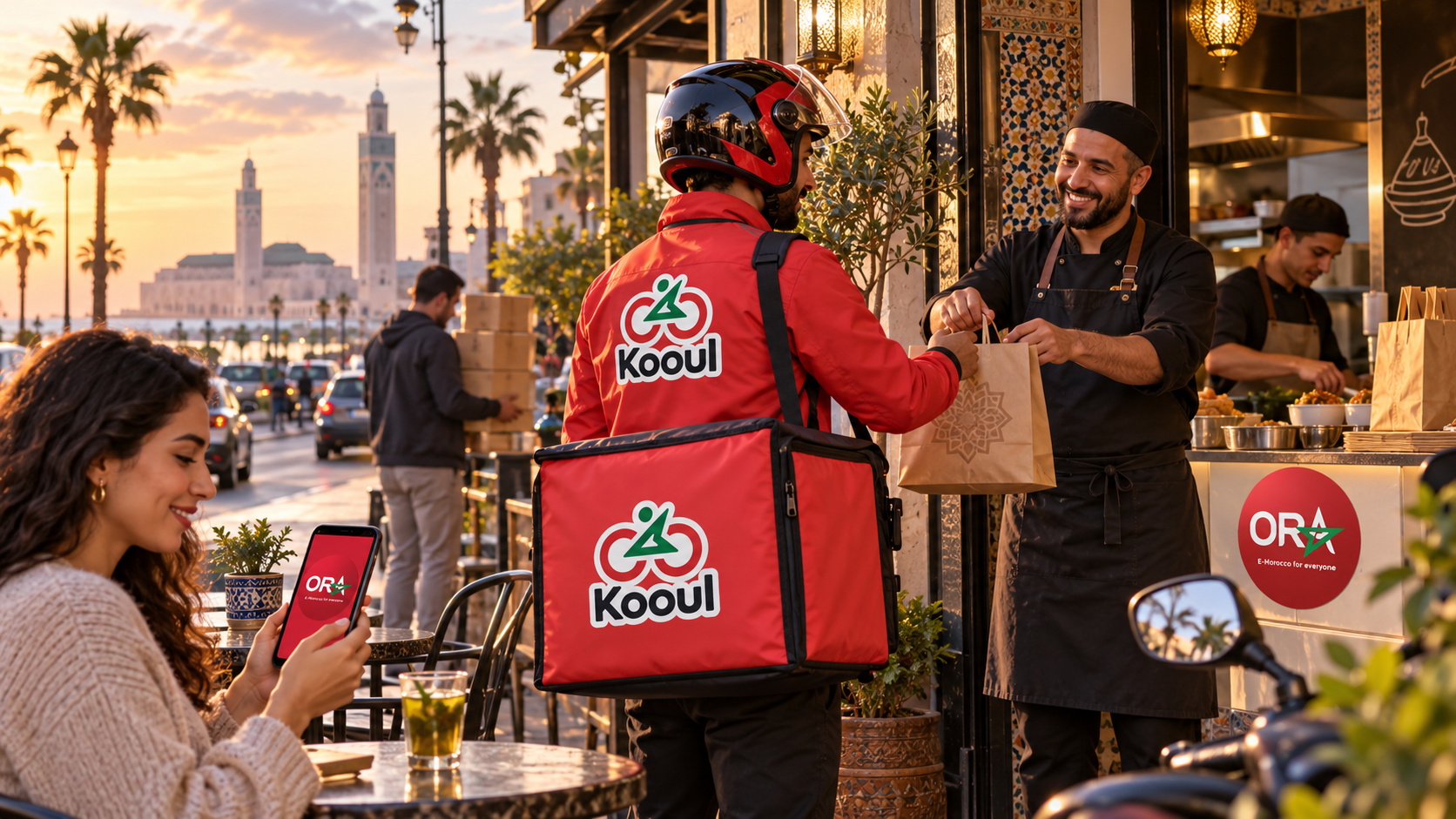
Kooul, the Moroccan delivery platform developed by ORA Technologies, is part of that transition. Built in Casablanca for the domestic market, it connects consumers with restaurants, grocery stores and other local businesses through an experience designed around Moroccan needs.
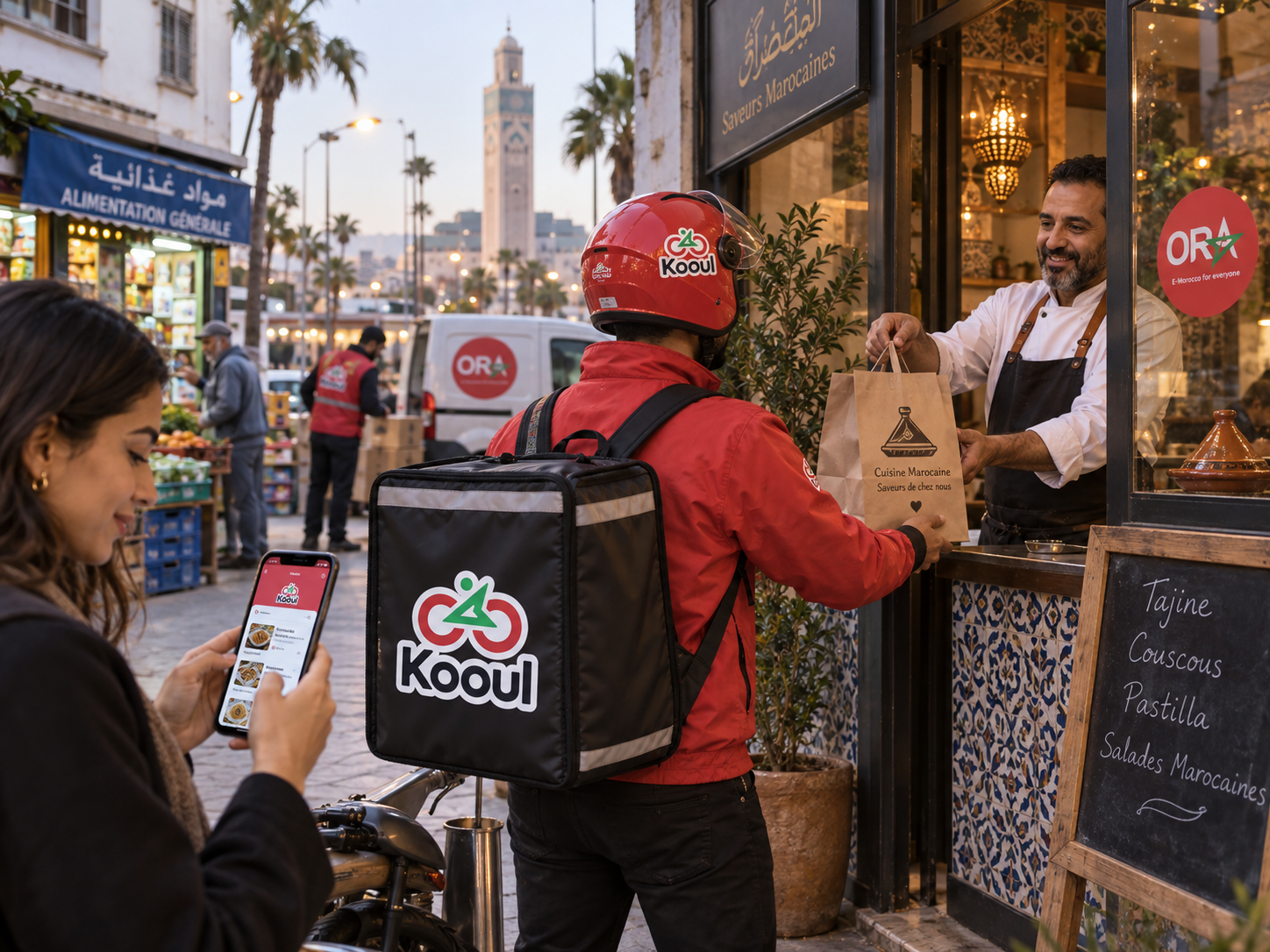
Open the app, choose a restaurant, place an order and follow its journey to your door. The process may appear simple. Behind it sits a larger ecosystem of software developers, merchants, couriers, customer-service teams, payment systems and logistics operations.
That is why Kooul represents more than another delivery option. It shows how locally developed technology can keep more expertise, investment and economic activity within the Kingdom.
A Moroccan platform for everyday life
ORA Technologies was founded in 2023 by Moroccan entrepreneur Omar Alami with the ambition of developing digital services for everyday life.
Kooul is its food-delivery and local-commerce platform. According to its app listings, it works with more than 800 restaurants and stores across Morocco.
Its stated coverage includes Casablanca, Rabat, Marrakech, Tangier, Agadir, Dakhla, Skhirat and M’diq.
The platform brings together international chains, Moroccan brands and smaller independent establishments. This gives local restaurants another digital route to customers beyond their immediate neighbourhoods.
It also makes Kooul part of a much broader shift. Moroccan businesses are increasingly using home-grown technology to manage orders, reach consumers and participate in the digital economy.
What choosing local can support
Made in Morocco is commonly associated with food, fashion, cosmetics, furniture or industrial products. Digital platforms deserve a place in that conversation.
A locally developed application creates demand for engineers, designers, logistics specialists, sales teams, customer-service professionals and data experts.
Restaurants and shops gain an additional channel through which they can promote their products and receive orders. Couriers gain access to another delivery network. Consumers benefit from greater choice between platforms competing on price, coverage, speed and service.
Supporting a Moroccan platform should never mean accepting less.
A local application must still be reliable, affordable and easy to use. It must earn customer loyalty with performance rather than depend on patriotic sentiment alone.
But when a Moroccan service competes effectively, choosing it can have an impact beyond a single order. It supports the people and businesses building the country’s own digital infrastructure.
Moroccan capital backing Moroccan technology
Kooul’s development also tells an important story about startup financing in Morocco.
In 2025, ORA Technologies raised $7.5 million in a Series A round led by Azur Innovation Fund alongside strategic Moroccan investors. The company said the financing would support Kooul’s delivery operations and the development of ORA Cash, its digital-payment solution.
ORA later announced an additional $2 million investment from Moroccan private investors in 2026, bringing its Series A funding to $10 million.
The significance extends beyond the amount raised.
Moroccan investors are financing a Moroccan technology company that serves domestic consumers and works with local businesses. Capital, technology, logistics and commerce are being connected inside the same national ecosystem.
That is an important step for a startup market seeking to help more companies move from promising ideas to scalable operations.
ORA Technologies also won the Moroccan edition of the Startup World Cup in 2026. The victory earned it the opportunity to represent the Kingdom at the global final in San Francisco in November.
The international platform gives ORA greater visibility while highlighting the wider progress of Moroccan entrepreneurship.
Technology designed around Morocco
International platforms bring investment, operational knowledge and proven systems. Their presence has helped accelerate the adoption of digital commerce.
Moroccan platforms contribute something equally valuable: proximity to the market.
A local technology company can build around Morocco’s languages, payment preferences, neighbourhoods, restaurant economics and consumer habits. It can learn directly from customers, businesses and couriers operating in the same environment.
Kooul’s expansion beyond restaurant meals into groceries and local services reflects that local understanding.
Its place within the broader ORA ecosystem — which also includes digital payments and last-mile commerce — points towards a more connected Moroccan consumer platform rather than an isolated delivery application.
The next chapter of Made in Morocco
Morocco has demonstrated its ability to manufacture vehicles, aerospace components, textiles, food products and consumer brands.
Its next generation of national champions may also be built through software, digital payments, logistics networks and mobile applications.
Kooul is a visible example of that evolution. Moroccan entrepreneurs created it, local teams are developing it, Moroccan investors have financed its growth and businesses across the Kingdom are joining its network.
Supporting Made in Morocco does not require rejecting international companies. It means ensuring that competitive Moroccan alternatives receive a fair opportunity to grow, improve and earn consumer trust.
Every order remains a personal choice. But when the service is strong, choosing local can help build something larger.
Made in Morocco can now reach consumers not only in a box, a bottle or a vehicle — but through an application on their phone.