
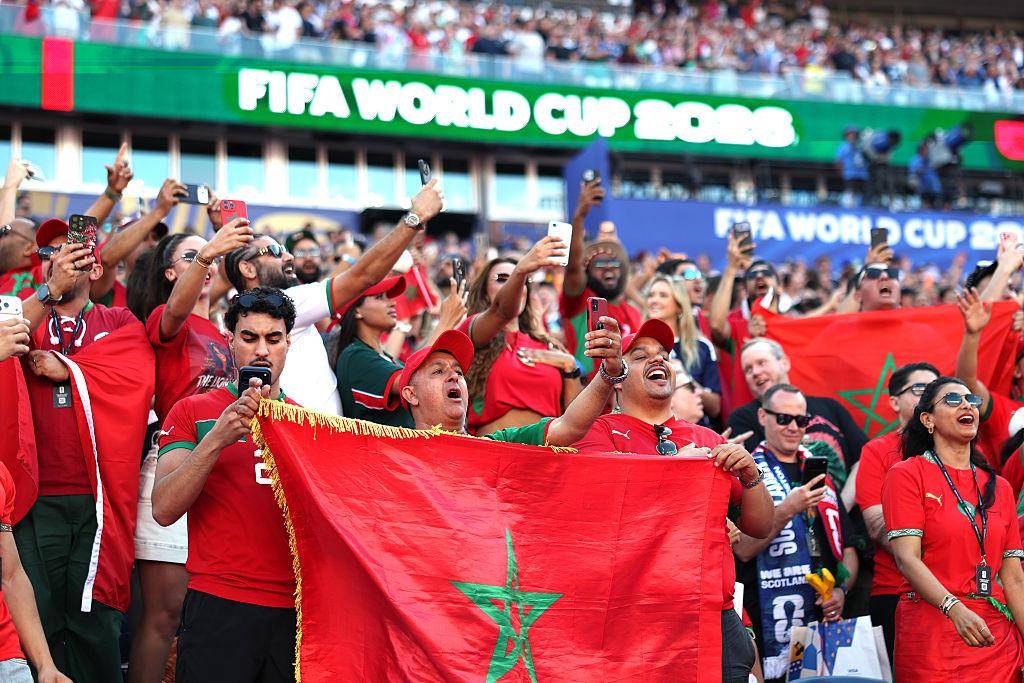
Morocco left the World Cup with a defeat, but not with a damaged image. The 2-0 quarter-final loss to France in Foxborough ended the Atlas Lions’ 2026 campaign, yet it also confirmed something more durable than a result: Morocco has become one of football’s most recognisable resilience brands.
That phrase can sound polished, but the meaning is practical. In modern sport, national image is no longer built only through trophies. It is built through repeated visibility, emotional consistency, digital reach, diaspora mobilisation and the ability to make neutral audiences care. Morocco now has all of those elements.
Defeat Did Not Break The Narrative
The danger after a knockout exit is that the story collapses into the score. That did not happen here. France were better, and Morocco’s coach Mohamed Ouahbi said so clearly. The French had more technical control, more late-game acceleration and more attacking certainty when the match reached its decisive phase. That honesty matters because it prevents the defeat from becoming a victim story.
But the broader Moroccan narrative did not depend on pretending the team was unlucky. It depends on the fact that Morocco has now produced two consecutive World Cup campaigns with real global weight. The 2022 semi-final run introduced the story. The 2026 quarter-final run confirmed that the story was not a temporary emotional spike.
Resilience Has Become A National Code
Morocco’s football identity is now easy for global audiences to understand. Compact. Hard to intimidate. Emotionally charged. Tactically serious. Backed by a visible diaspora. Able to turn pressure into collective energy.
That clarity is valuable. Many national teams win occasional matches without creating a recognisable image. Morocco has done something different. It has built a repeatable emotional code that broadcasters, brands and fans can identify quickly. In lifestyle terms, this is where sport becomes image. The Atlas Lions are no longer only a team. They are a visual and emotional shorthand for a country that wants to be seen as ambitious, disciplined and globally present.
The Diaspora Is More Than A Fan Base
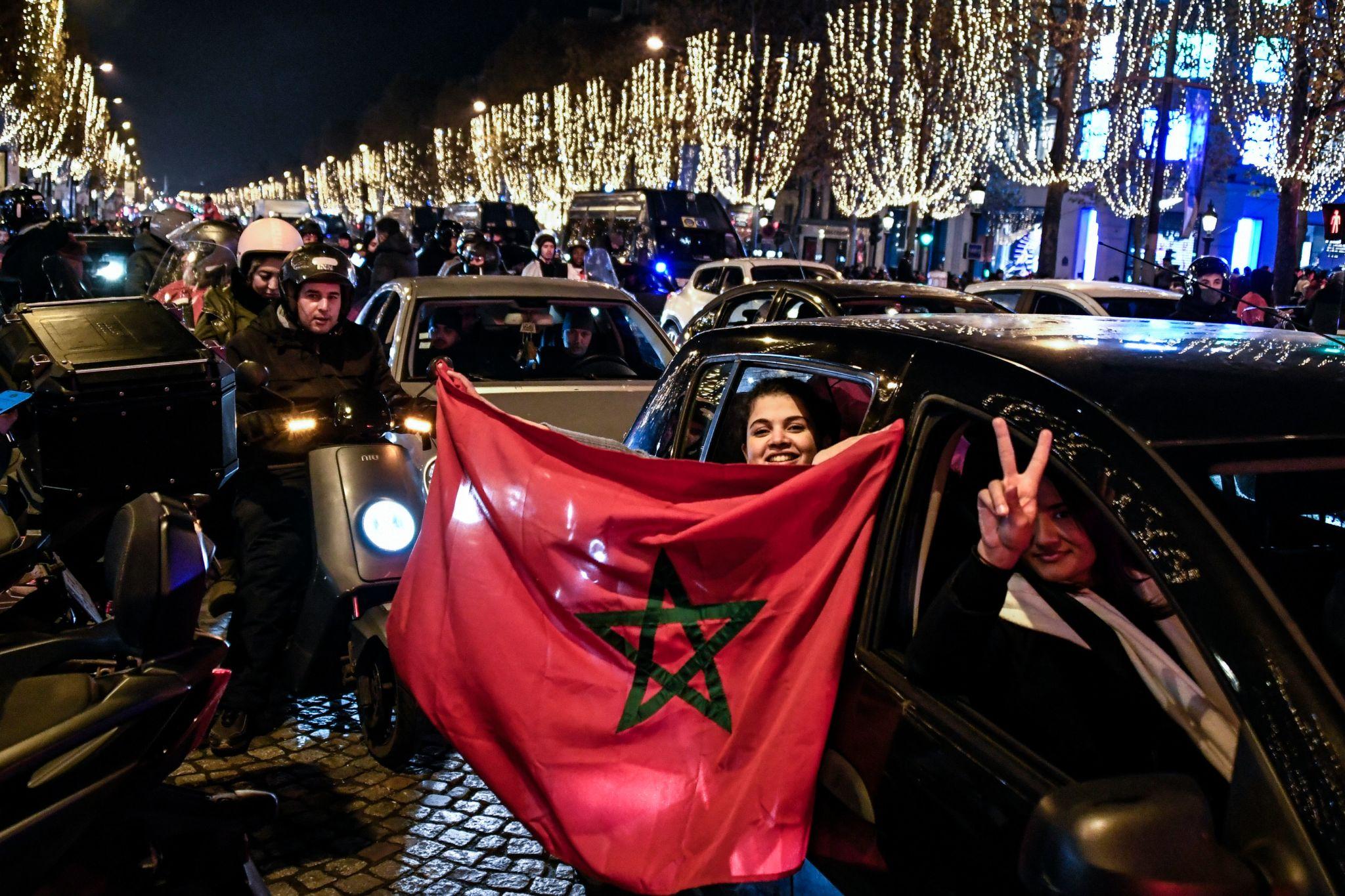
The Moroccan diaspora should not be reduced to crowd shots and flags. It is a distribution network. Across France, Belgium, the Netherlands, Spain, Canada and the United States, Moroccan supporters turn matches into social media events, cafe economies, family debates and local viewing markets. They amplify the national story in languages and cities far beyond Morocco’s borders.
That matters commercially. A national team with a powerful diaspora does not only generate stadium atmosphere. It creates attention across multiple advertising markets, media ecosystems and consumer communities. It makes the Moroccan brand travel even when the match is played thousands of kilometres away. This is one reason Morocco’s football image has become so valuable before 2030. Its audience is not contained inside its borders.
The France Match Was An Identity Mirror
France-Morocco is never just a fixture. It is a match loaded with history, migration, family identity, admiration and rivalry. Le Monde’s reporting before the quarter-final captured the emotional split inside parts of Paris’s Moroccan community, where support for Morocco and connection to France could exist at the same time.
That duality gives the fixture cultural depth. For Morocco, the point is not only that millions watched. It is that the match forced people to discuss identity, belonging and representation through football. That is the type of attention that makes a sporting event larger than its technical content. A normal defeat disappears quickly. A culturally loaded defeat remains part of the conversation.
Football Is Now A Soft-Power Channel
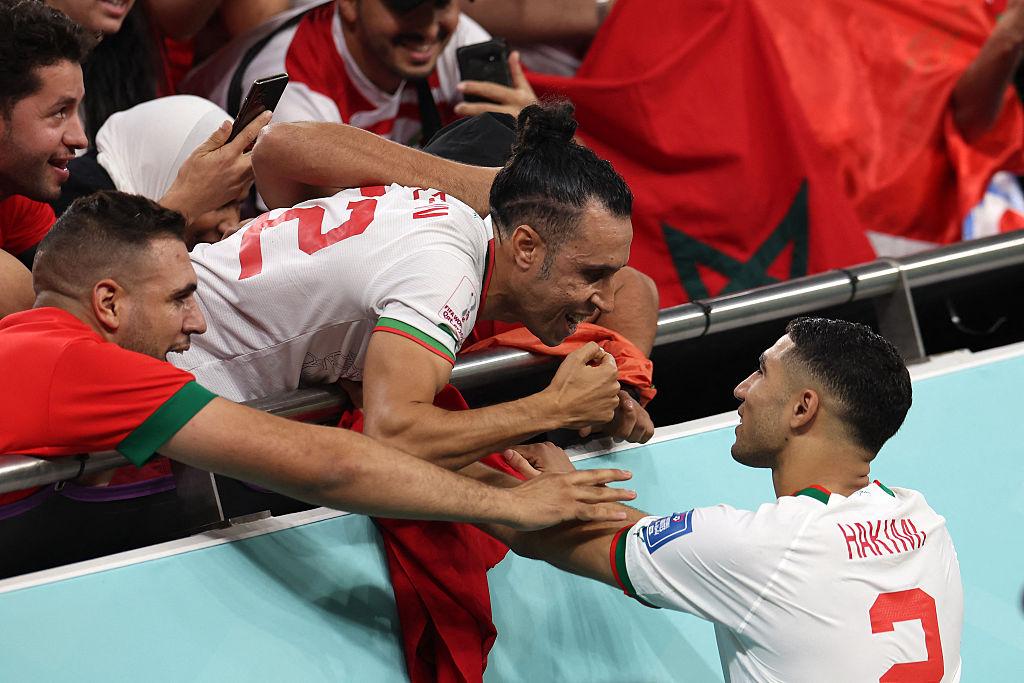
Morocco has several global image assets: tourism, craft, food, diplomacy, infrastructure, renewable energy and its 2030 World Cup role. Football now sits beside them. The national team has given Morocco something that state branding campaigns often struggle to create: emotional legitimacy in real time. A tourism slogan can tell people a country is vibrant. A World Cup run shows them the crowds, the tension, the discipline and the pride without needing to explain it.
That is why football is becoming a soft-power channel for Morocco. It creates visibility that feels organic rather than advertised. The challenge is turning that attention into longer-term value.
The 2030 Link Is Now Stronger
Morocco will co-host the 2030 World Cup with Spain and Portugal, and the national team’s recent performances change the meaning of that tournament. Without competitive credibility, a host country can feel like a venue. With competitive credibility, it becomes part of the sporting drama.
Morocco now enters the 2030 cycle with proof that its football story can carry international attention. Reuters has reported that the country is targeting 26 million visitors by 2030, and the football platform can help convert global recognition into tourism demand if the infrastructure and service experience are strong enough. The brand value is clear. The execution challenge is just as clear.
The New Lifestyle Image Is Not Only Exotic
Morocco has long been sold internationally through beauty: riads, deserts, medinas, colours, food and coastline. Football adds another layer. It presents Morocco as competitive, modern, organised and emotionally powerful. That matters because countries are not only judged by how attractive they look, but by how capable they appear.
The Atlas Lions help shift the image from postcard to performance. That does not replace tourism aesthetics. It strengthens them. A country that is already visually attractive becomes more compelling when it also looks ambitious and strategically prepared. This is where lifestyle branding becomes national positioning.
The Risk Is Turning Pride Into Comfort
There is one danger in the post-match mood. Pride can become too comfortable. If Morocco only celebrates resilience, it may avoid the harder lessons from the France defeat: the squad still needs deeper bench quality, more late-game physical impact and more attacking alternatives when an important player is missing.
A premium national brand cannot be built on emotion alone. It needs performance improvement behind it. The best use of pride is not self-congratulation. It is investment discipline. Morocco should take the global image gain, but also treat the defeat as a reminder that admiration is not the same as silverware.
The Media Value Is Becoming Measurable
Major tournaments are now digital economies. Matches create clips, memes, reaction videos, live commentary, creator content, fan pages and algorithmic visibility. Academic research on the 2022 World Cup has shown how journalists, media and influencers compete for visibility during high-intensity sporting events, making football a hybrid digital public sphere rather than a traditional broadcast product.
Morocco has benefited from that shift. Its matches do not only live inside 90 minutes. They live through reaction videos, diaspora posts, tactical threads, fan edits, street celebrations and international media framing. That gives the Moroccan story a longer shelf life than the match itself. For a country preparing to host in 2030, that digital endurance is an asset.
The Bottom Line
Morocco’s defeat to France ended the 2026 World Cup campaign, but it did not weaken the country’s global football image. The Atlas Lions leave with a stronger resilience brand, a wider diaspora-driven media footprint and a clearer place in the international conversation before 2030.
The lesson is not that Morocco should be satisfied with admiration. It should not. The lesson is that the country now owns something valuable: a football identity the world recognises, shares and remembers. The next step is to make that identity deeper, more competitive and more durable when the World Cup comes home.