
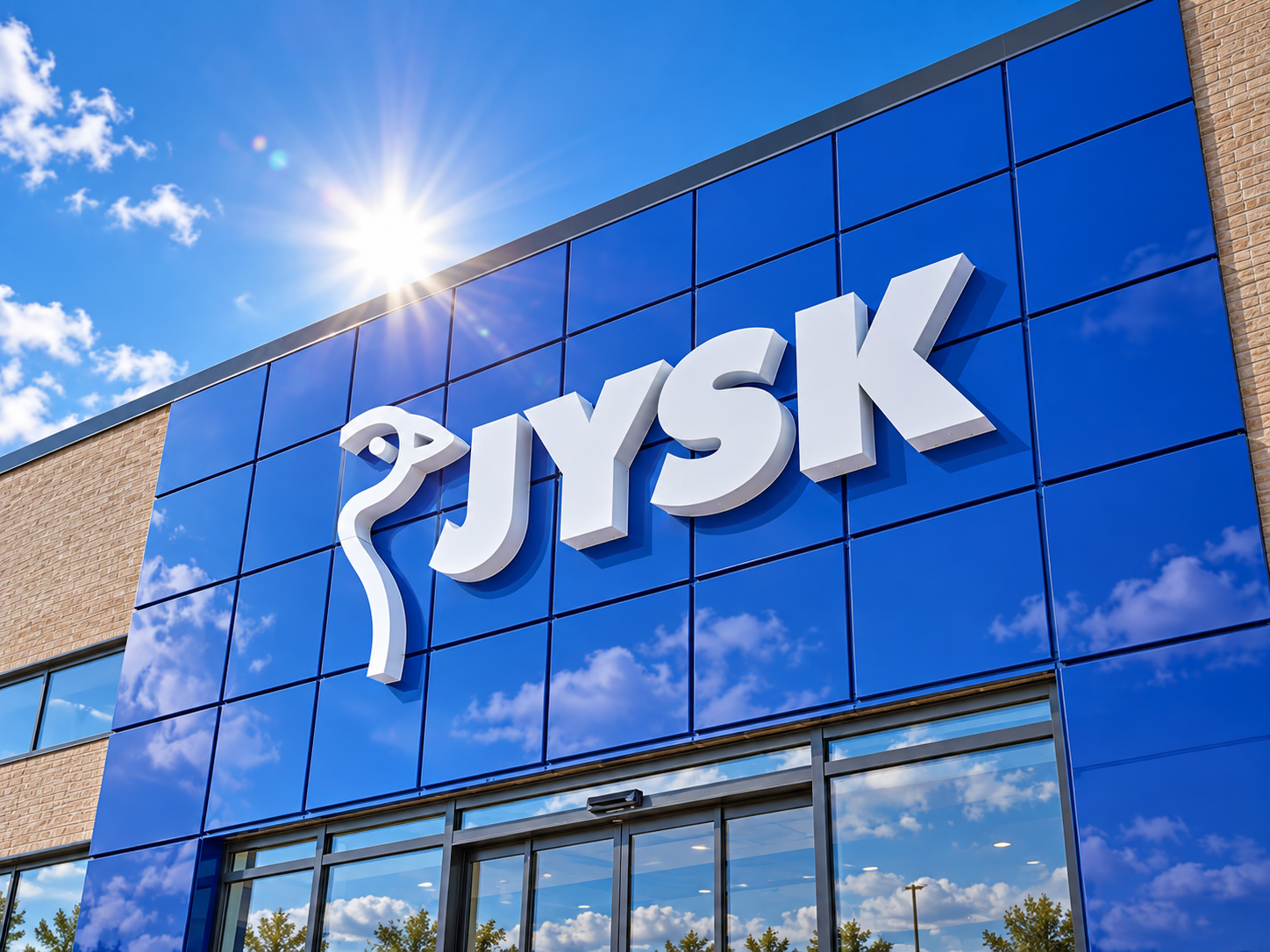
The Danish home furnishings retailer had opened five stores across three Moroccan cities by July 2026, combining physical retail, e-commerce and local logistics under Country Director Igor Raić.
CASABLANCA — Danish home furnishings retailer JYSK is developing its first directly operated retail network in Africa, building on more than MAD 50 million in investment reported by its Moroccan management at the beginning of 2026.
The company had opened five stores across Casablanca, Tangier and Rabat by July, following its entry into Morocco in April 2025.
Led locally by Igor Raić, JYSK is combining physical stores with online sales and dedicated logistics infrastructure as it assesses opportunities for further expansion.
In an interview with Médias24 published on 1 January 2026, Raić said e-commerce represented an estimated 15% to 20% of the company's Moroccan revenue.
The figure provides an indication of the role of digital commerce in JYSK's early development, although it is a management estimate rather than an independently audited financial ratio.
From Casablanca to a Wider Moroccan Network
JYSK entered Morocco on 10 April 2025, opening two stores in Casablanca before adding a third location in December.
The retailer subsequently expanded to Tangier in June 2026 and Rabat in July, bringing its documented network to five stores across three cities.
Its offering includes mattresses, furniture, household textiles, storage products and home accessories, marketed through a standardised format associated with Scandinavian design.
The expansion represents a move beyond the company's initial Casablanca market as it seeks to establish a broader retail presence.
In April 2026, JYSK announced that it saw potential for a total network of up to 70 stores in Morocco over five years.
The assessment reflects the company's view of the market's long-term capacity rather than a commitment to open a fixed number of locations.
Management also outlined plans to identify eight to ten additional sites over the following 12 months, with cities including Fès, Kénitra, El Jadida and Marrakech under consideration.
Those locations represent development opportunities, not confirmed store openings.
Igor Raić and the Investment Strategy
Raić has overseen JYSK's Moroccan market development, including the launch of stores and the establishment of supporting commercial infrastructure.
In January 2026, he reported cumulative investment exceeding MAD 50 million.
According to his statements, the expenditure included store fit-outs, equipment, operational launch costs and initial merchandise inventory.
The figure refers to investments declared at that date and should not be interpreted as the total amount invested by October 2026.
Alongside its physical stores, JYSK has developed a Moroccan e-commerce operation supported by a dedicated fulfilment facility in Casablanca.
The infrastructure allows the retailer to serve online customers while gradually expanding its physical presence.
For a home furnishings business, this combination provides different ways for consumers to explore and purchase products.
Stores allow customers to examine furniture, mattresses and household items, while online distribution offers access to products beyond the immediate reach of individual locations.
Raić has described the initial Moroccan launch as exceeding the company's expectations and ranking favourably among its international market entries.
JYSK has not published detailed standalone revenue or profitability figures for Morocco that would allow an independent assessment of those comparisons.
The Commercial Test Behind Further Expansion
JYSK's Moroccan strategy combines standardised retail stores, digital commerce and fulfilment infrastructure.
The company has also emphasised the importance of recruiting and developing local employees.
Its April 2026 anniversary announcement reported approximately 60 employees, before the Tangier and Rabat openings.
Subsequent reports indicated that the workforce had grown to around 90 in June and nearly 100 by July. These figures describe different reporting dates, not a verified October headcount.
JYSK also reported that Moroccan employees awarded the company an average score of 80 out of 100 for job satisfaction and motivation in an internal survey conducted in January 2026.
According to the company, Morocco ranked among its five highest-scoring markets on those measures.
As the network grows, JYSK will need to maintain product availability, service standards and efficient distribution across additional cities.
The long-term opportunity is to develop a retail business in which stores and online sales complement one another, supported by reliable logistics and a consistent customer experience.
The potential scale identified by management is substantial, but future openings and financial performance will depend on market demand and operational execution.
For JYSK, the next challenge is turning its early Moroccan expansion into a commercially sustainable network, supported by physical stores, e-commerce and efficient distribution.