
Morocco’s tourism success is creating a new kind of pressure.
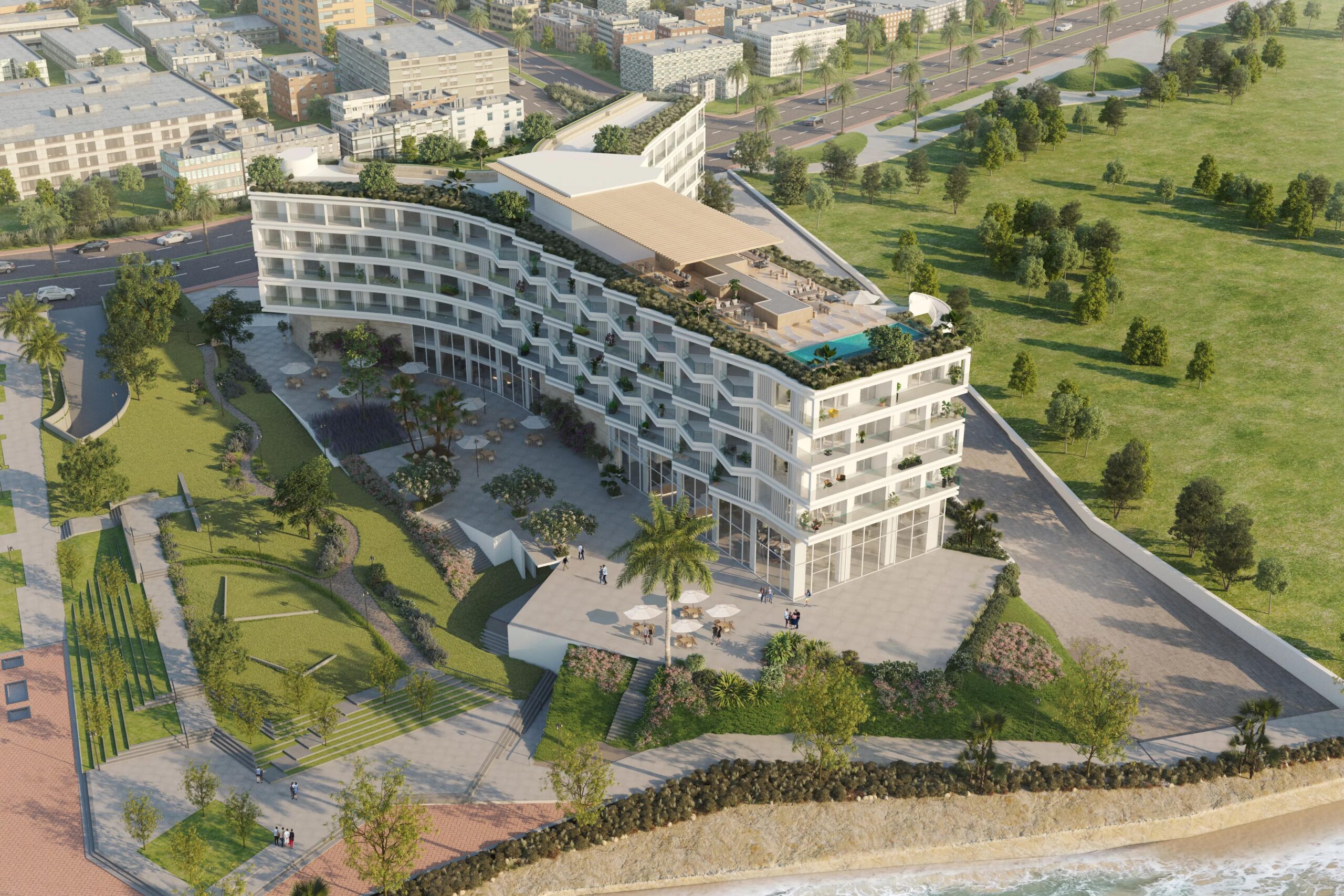
After welcoming nearly 20 million visitors in 2025, the country is now preparing to add 60,000 hotel beds before the 2030 FIFA World Cup, increasing its accommodation capacity by approximately 20%.
The target reflects confidence in Morocco’s tourism trajectory. It also reveals the scale of the operational challenge ahead.
More flights, stronger international visibility and major sporting events can bring millions of additional visitors. But tourism growth cannot be sustained by promotion alone.
Visitors need rooms, transport, trained staff, reliable services and destinations capable of absorbing demand without damaging the experience that attracted them in the first place.
The next phase of Morocco’s tourism expansion will therefore be measured not only by arrivals, but by how effectively the country converts visitor growth into profitable, high-quality and geographically balanced capacity.
A National Capacity Expansion
Morocco currently has slightly more than 300,000 hotel beds after adding approximately 45,000 over the past four years.
The planned addition of another 60,000 beds would represent one of the country’s largest hospitality expansions and is intended to support a national target of 26 million tourists by 2030.
The scale of the ambition is understandable.
Morocco will co-host the 2030 World Cup with Spain and Portugal. The tournament will generate concentrated demand across several cities, but the government’s objective extends beyond the competition itself.
The larger strategy is to use global visibility, airport expansion, new transport infrastructure and stronger air connectivity to create lasting tourism growth.
That distinction matters.
Building hotel rooms for a temporary event carries significant financial risk. Building them for a tourism market that continues growing after 2030 creates a much stronger investment case.
The central question is therefore whether the new capacity will be supported by stable demand throughout the year, rather than by a few weeks of exceptional occupancy.
Hotels Cannot Be Built Everywhere
National visitor numbers can disguise major differences between destinations.
Marrakech, Agadir, Casablanca, Tangier and increasingly Rabat already attract substantial tourism or business-travel demand. Other cities may have cultural potential but weaker air links, limited international recognition or insufficient year-round activity.
The 60,000-bed programme will therefore require careful geographic allocation.
Too much capacity in already crowded destinations could place further pressure on roads, water, housing and public services.
Too much capacity in less-developed destinations could produce hotels that struggle to maintain occupancy outside major events or holiday periods.
The strongest projects will be those built around identifiable demand.
That may include leisure tourism, conferences, coastal travel, sports events, cultural tourism, medical travel or business activity.
A hotel should not be justified merely because a city is expected to receive more attention before 2030. It must have a credible market after the stadium lights are switched off.
The Investment Opportunity
The expansion creates a clear opportunity for hotel groups, developers, institutional investors and local entrepreneurs.
International brands can bring distribution networks, operational systems and global customer recognition. Moroccan investors can provide local knowledge, land access and an understanding of domestic demand.
But the investment requirement extends far beyond luxury resorts.
A country targeting 26 million visitors will need accommodation across several segments, including business hotels, mid-market properties, serviced apartments, family resorts and professionally managed guesthouses.
The largest volume of future travellers may not be searching for the most expensive room.
They may be searching for a clean, reliable and well-located property with strong digital booking, predictable service and accessible pricing.
This makes the mid-market segment especially important.
Luxury properties can strengthen destination branding, but affordable quality creates scale.
Morocco’s hospitality expansion will be more resilient if it develops a broad accommodation base rather than concentrating too heavily on premium projects designed for a limited customer group.
Rooms Are Easier Than Service
Physical capacity is only part of the challenge.
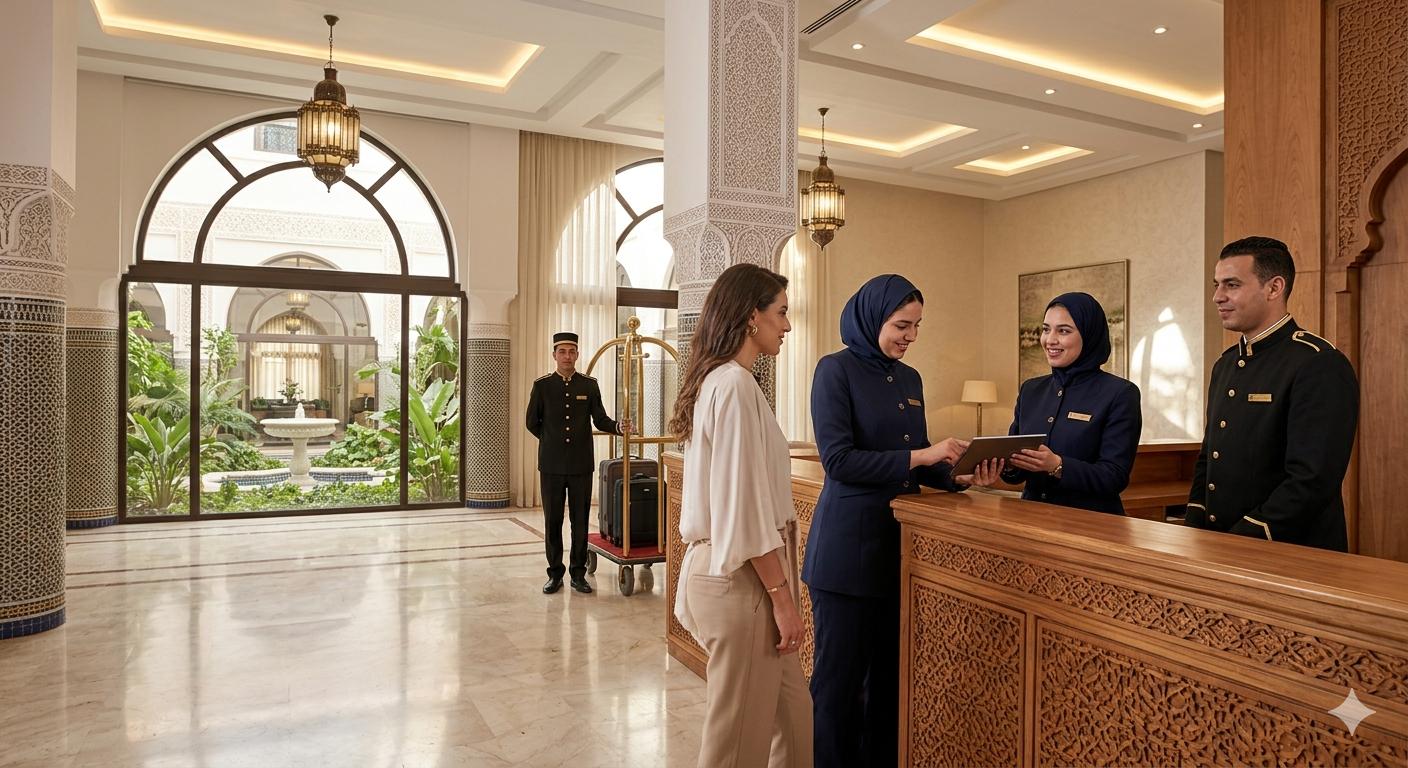
A hotel can be financed, designed and constructed within a defined schedule. Developing experienced managers, chefs, reception teams, technicians and service staff takes longer.
The planned expansion could create significant employment, but it could also intensify competition for qualified hospitality workers.
Hotels that open without sufficient training risk producing inconsistent service at precisely the moment Morocco is receiving greater international scrutiny.
That would weaken the country’s tourism proposition.
A visitor may admire the architecture, landscape and cultural offer, but the final impression is often shaped by daily interactions: check-in efficiency, cleanliness, language ability, food quality, maintenance and problem resolution.
Hospitality is ultimately a human-capital industry.
The 60,000-bed target must therefore be accompanied by accelerated training, better career pathways and stronger cooperation between hotel groups, tourism schools and vocational institutions.
The sector must also offer working conditions capable of retaining talent.
Creating thousands of positions will mean little if experienced employees continue leaving the industry because wages, progression and stability remain insufficient.
Infrastructure Must Grow With Occupancy
Morocco is investing more than 190 billion dirhams in railways, roads, airports, stadiums and urban infrastructure ahead of 2030.
Those investments are essential because hotel capacity cannot operate in isolation.
A visitor must be able to reach the destination, move through the city and access services without excessive friction.
Airport capacity, rail connections, taxis, public transport, sanitation, water management and digital infrastructure all influence the tourism experience.
The pressure will be particularly visible during major events, when accommodation may be available but surrounding systems become congested.
The strongest tourism economies do not simply provide rooms.
They create an integrated visitor journey from arrival to departure.
Morocco’s infrastructure programme provides the foundation for that integration. The implementation test will be whether projects are completed on time and whether cities are able to operate them efficiently after construction.
The Risk Of Building Too Fast
Rapid hospitality expansion can create oversupply if projections prove too optimistic.
Tourism demand is sensitive to economic downturns, airline capacity, geopolitical events, climate conditions and changes in travel behaviour.
Hotels also carry high fixed costs.
Even when rooms are empty, owners must continue paying staff, maintenance, financing and utilities.
Projects built with unrealistic occupancy assumptions may therefore become financially vulnerable after the initial excitement surrounding 2030 fades.
This is why financing discipline matters.
Investors need realistic revenue projections, strong operators and sufficient capital to survive periods of weaker demand.
Banks and development institutions must assess whether individual projects respond to real market needs rather than simply benefiting from a national growth narrative.
The objective should not be to reach 60,000 beds at any cost.
It should be to create 60,000 beds that remain commercially viable.
Beyond Marrakech And The World Cup
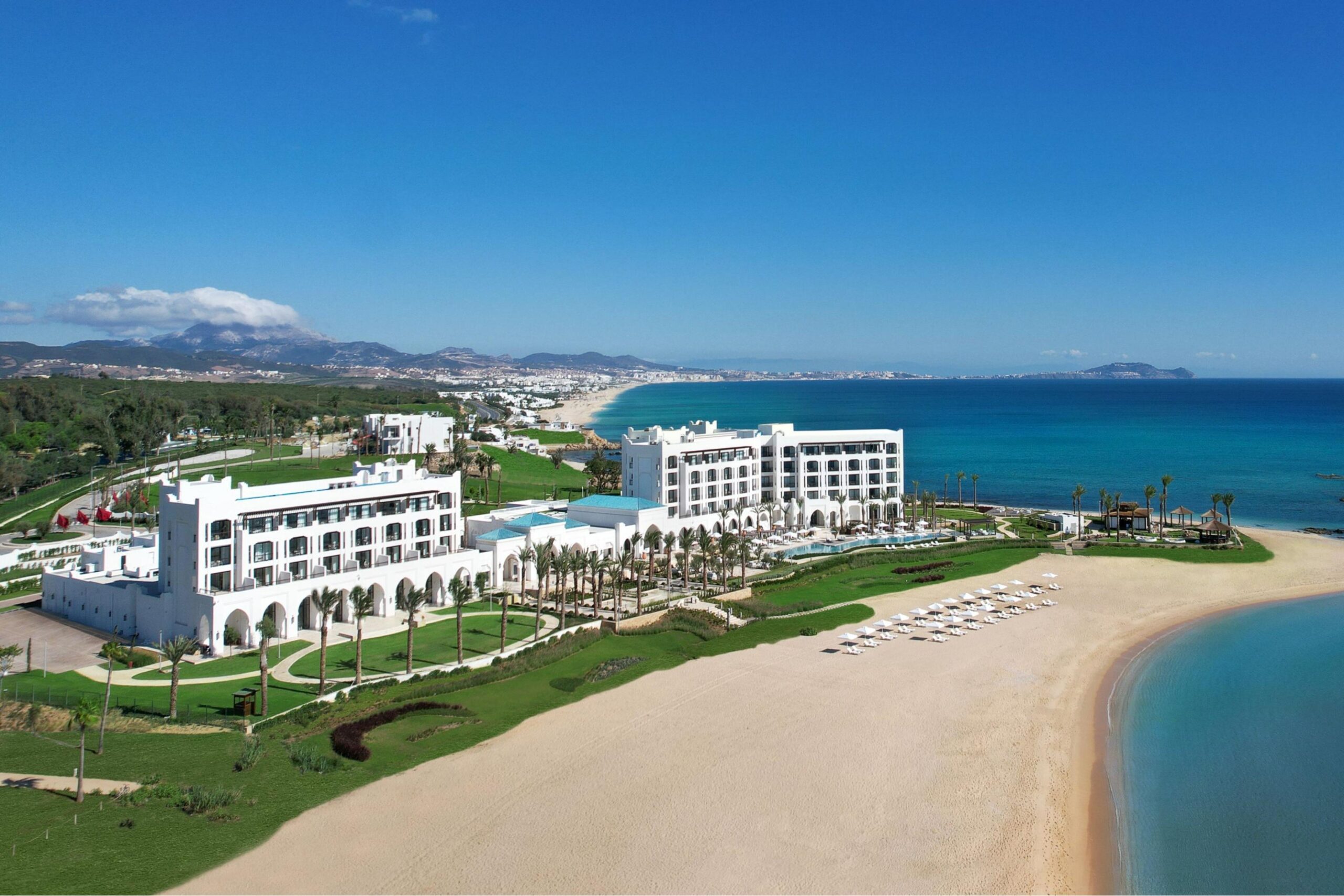
The expansion also offers an opportunity to diversify Morocco’s tourism geography.
Marrakech remains one of the country’s strongest global destinations, but excessive dependence on a small number of cities limits the national economic impact.
Rabat can grow as a destination for culture, diplomacy, sport and business. Tangier can build on its location, port economy and Mediterranean identity. Fez, Meknes and smaller destinations can attract visitors through heritage, cuisine and regional travel.
Tourism diversification would spread investment, employment and visitor spending more widely.
But new destinations need more than hotels.
They require experiences, transport, professional promotion and reasons for visitors to stay overnight rather than pass through for a few hours.
The development of accommodation must therefore be coordinated with destination development.
Otherwise, new rooms may exist without a sufficiently strong tourism product to fill them.
The Real 2030 Test
Morocco’s plan to add 60,000 hotel beds is a sign of confidence.
Nearly 20 million visitors in 2025, a target of 26 million by 2030 and expanding international connectivity all support the case for additional capacity.
But the headline number will not determine success.
Success will depend on where the rooms are built, who operates them, how they are financed and whether the surrounding cities can support the increase in visitors.
The World Cup may accelerate investment, but it cannot become the only commercial justification.
The strongest outcome would be a hospitality sector that is larger, more professional and more geographically diverse long after 2030.
Morocco has already proven that it can attract global attention.
The next challenge is to build enough capacity without sacrificing service, profitability or the quality of the destination itself.