
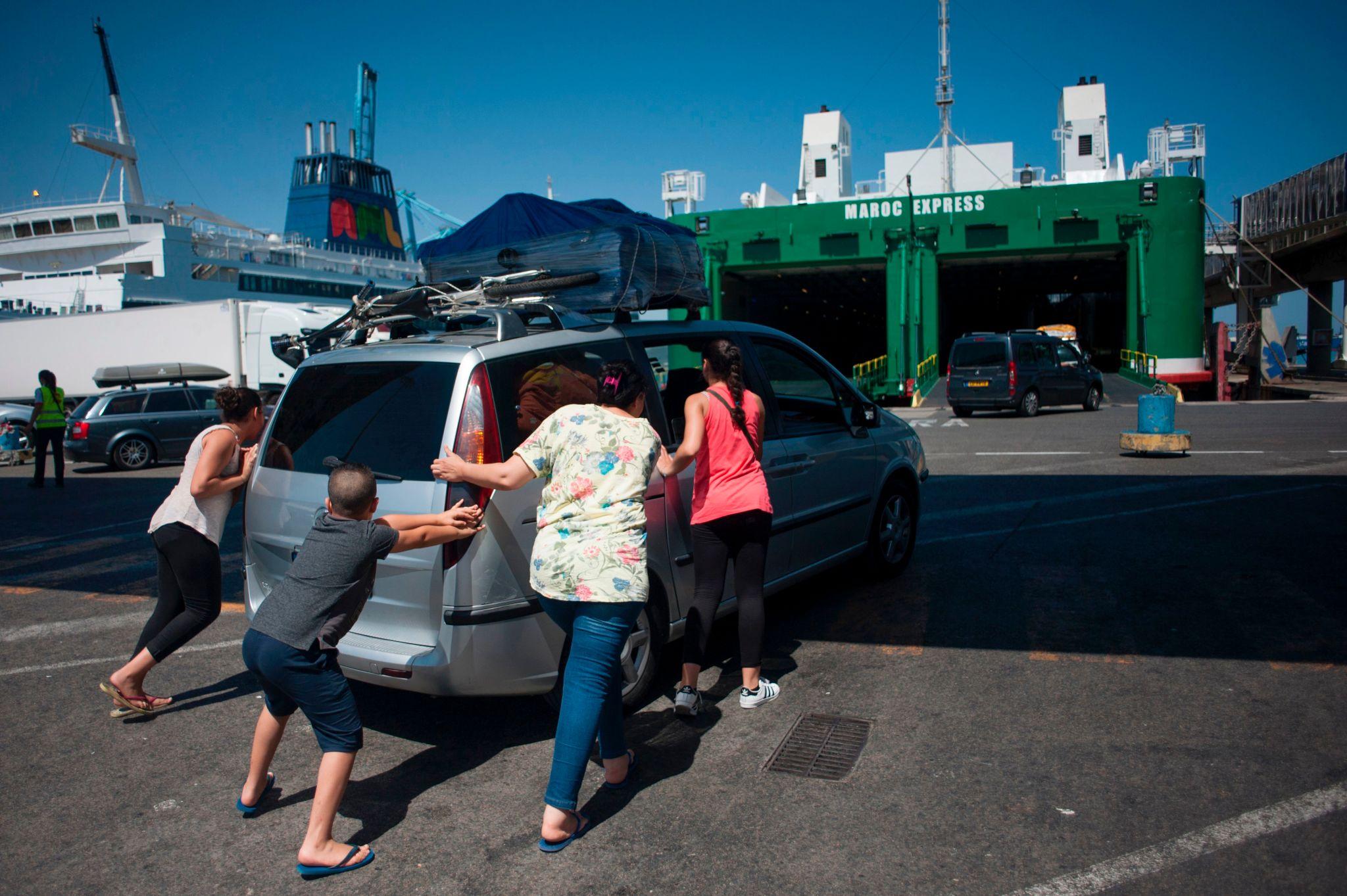
For Morocco’s diaspora, the summer journey home does not always begin at the airport.
It begins in a car.
On a highway in France.
At a service station in Spain.
In a queue near Algeciras.
With children asleep in the back seat, luggage packed too tightly, food prepared for the road and a family waiting on the other side of the Strait.
This is the other Moroccan travel story.
Not premium airport lounges.
Not tourism campaigns.
Not business-class routes.
The ferry.
Every summer, Morocco’s diaspora turns ports into emotional infrastructure. The crossing is not just transport. It is reunion, identity, family logistics and national attachment moving through terminals, customs lines, parking zones and ferry schedules.
That is why the Ferry Summer Test matters.
Ferry Summer Test Defines The Diaspora Journey
The Ferry Summer Test matters because ports remain one of the most important gateways between Morocco and its people abroad.
For many Moroccan families in France, Spain, Belgium, the Netherlands, Germany and Italy, travelling by car is still the most practical way to return home. It allows them to carry more luggage, visit several cities, bring gifts, move with children and keep flexibility once they arrive in Morocco.
This makes the ferry route different from air travel.
A flight is a ticket.
A ferry trip is a family operation.
The road, the port, the ship, the police checks, the customs process, the heat, the waiting time and the final drive into Morocco all become part of the same experience.
If the system works, the journey feels emotional.
If it fails, the holiday begins with exhaustion.
Operation Marhaba Is More Than Logistics
Operation Marhaba exists because this movement is too large to be treated as normal seasonal travel.
It is a national operation.
SNRT News reports that the 2026 edition includes a consolidated network of 26 reception spaces across Morocco, Spain, France and Italy, with social assistance and medical support available to help Moroccan residents abroad during the crossing season.
That structure matters because the flow is human, not only statistical.
Travellers include elderly people, pregnant women, children, first-generation migrants, second-generation families, young diaspora visitors and people who may be driving thousands of kilometres before even reaching the ferry.
A modern port system must therefore manage more than boarding.
It must manage fatigue, information, health, crowd flow, paperwork and emotional pressure.
The Numbers Show The Scale
The scale is already large.
Hespress reports that more than 1.86 million Moroccans living abroad have already returned to Morocco during Marhaba 2026.
Yabiladi, citing Spanish port data, reports that around 759,000 passengers and 188,000 vehicles have passed through Spanish ports toward Morocco, with Algeciras carrying the largest share of traffic.
That is why ports become strategic in summer.
A problem at one crossing can quickly affect thousands of families.
A delay in Spain can become a late-night arrival in Tangier.
A queue at customs can become a missed family event.
A poorly managed traffic peak can turn one of Morocco’s most emotional annual movements into frustration.
The ferry is a small crossing on the map.
But it carries a huge national feeling.
Algeciras Remains The Pressure Valve
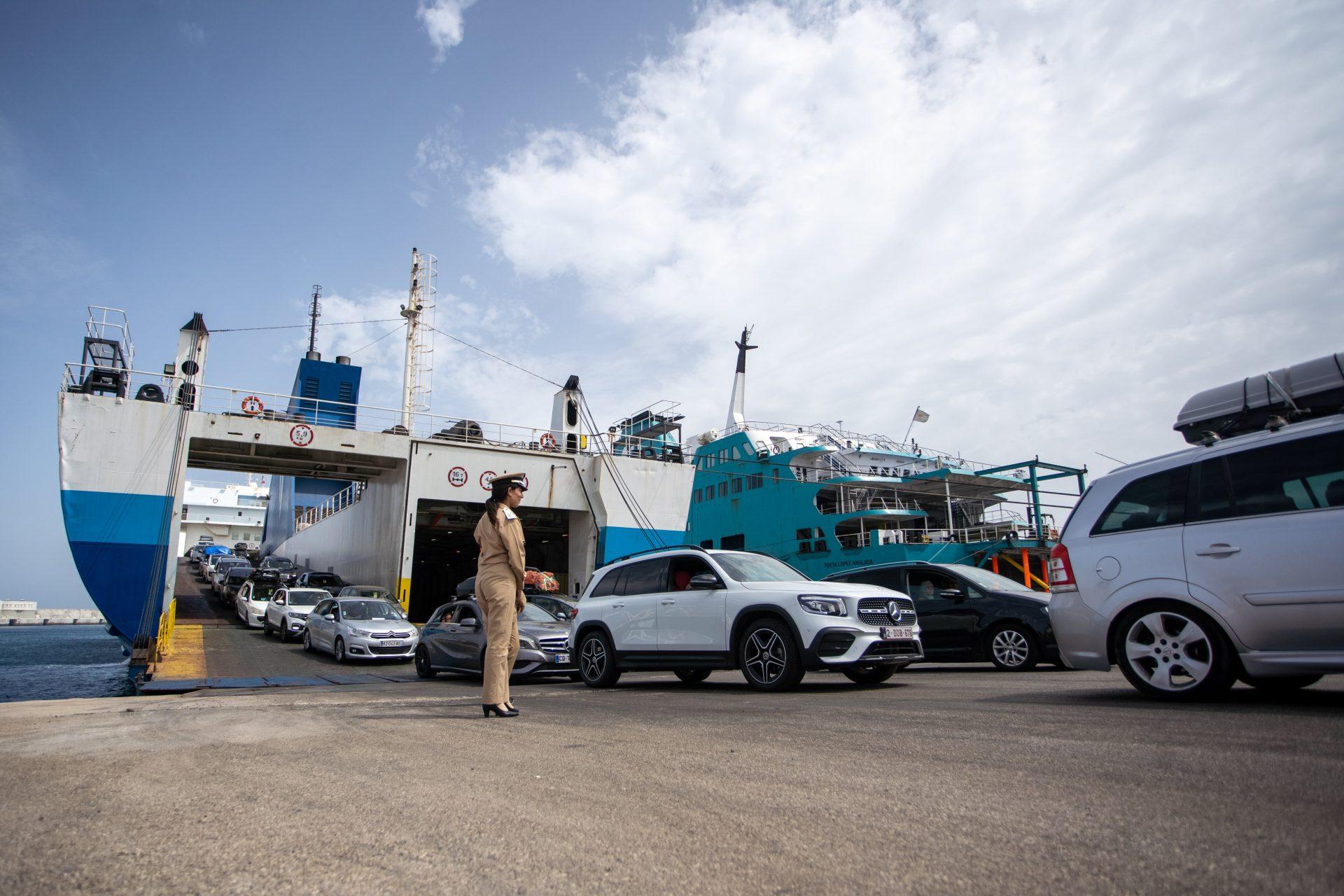
Algeciras remains one of the most important pressure points in the Morocco-Europe summer route.
It is familiar, busy and deeply tied to the diaspora experience. Families know the road to Algeciras. They know the waiting areas. They know the tension of arriving close to departure time. They know the relief when the car finally enters the ferry.
But familiarity does not remove pressure.
When flows rise, the system is tested quickly.
Ports must coordinate with ferry companies, police, customs, traffic authorities, reception teams and emergency services. One weak link can slow the entire chain.
For Morocco, the performance of foreign ports also matters because the Moroccan travel experience begins before travellers reach Moroccan territory.
If the wait is painful in Spain, the emotional cost is still Moroccan.
Tanger Med Carries National Expectations
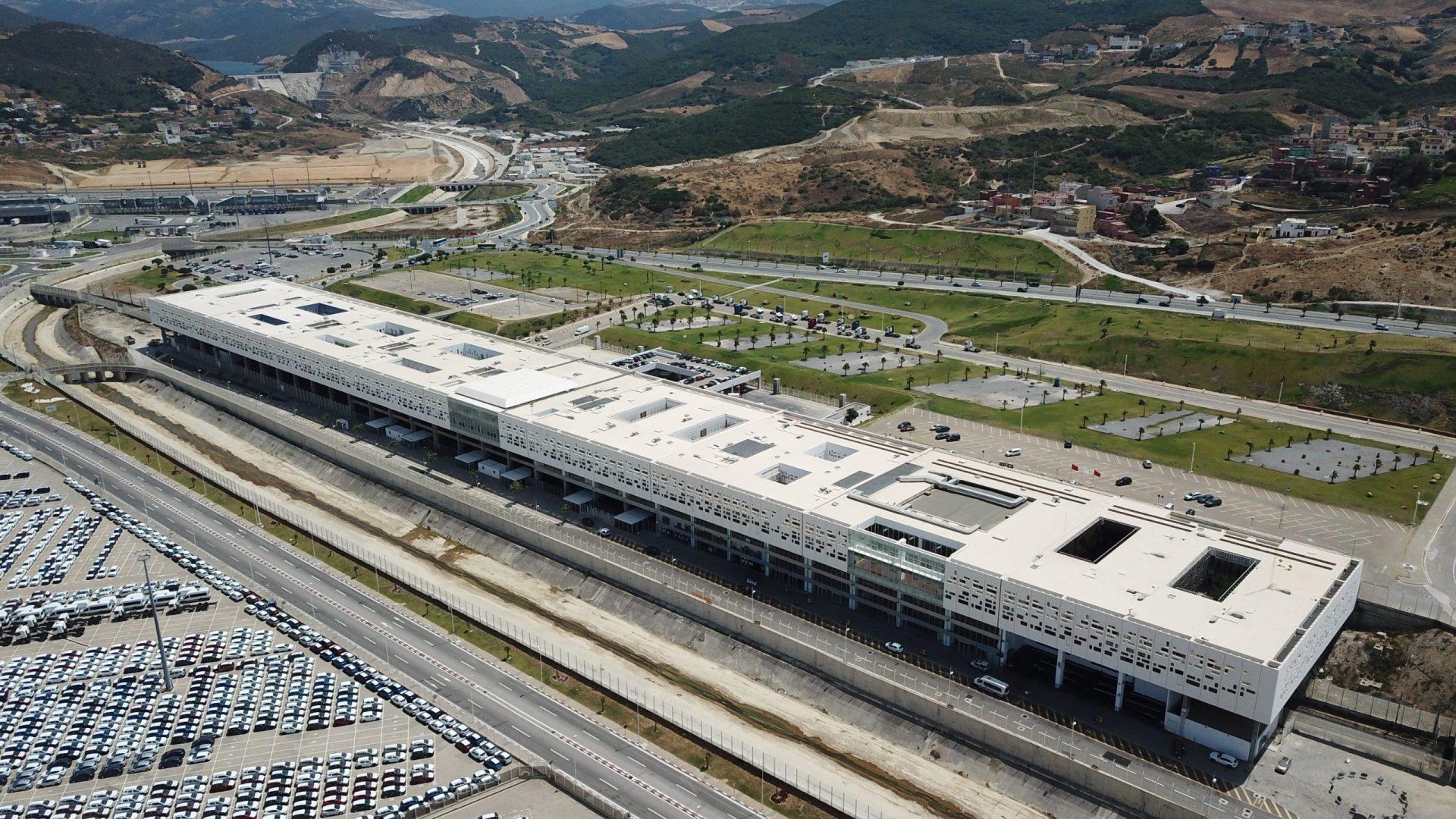
On the Moroccan side, Tanger Med is more than a port.
It is one of the country’s most visible infrastructure symbols.
It represents modern Morocco, logistics power, industrial ambition and international connectivity. But during Marhaba, it also becomes something more personal: the first Moroccan contact point for thousands of families coming home.
That gives Tanger Med a special responsibility.
The port must not only handle containers, trucks and commercial flows. It must also handle families carrying identity, expectation and fatigue.
A smooth arrival tells the diaspora that Morocco is ready.
A chaotic arrival tells a different story.
This is why port performance is not a technical issue alone.
It is a national image issue.
The Car Changes Everything
Airports process passengers.
Ferry ports process households.
That difference matters.
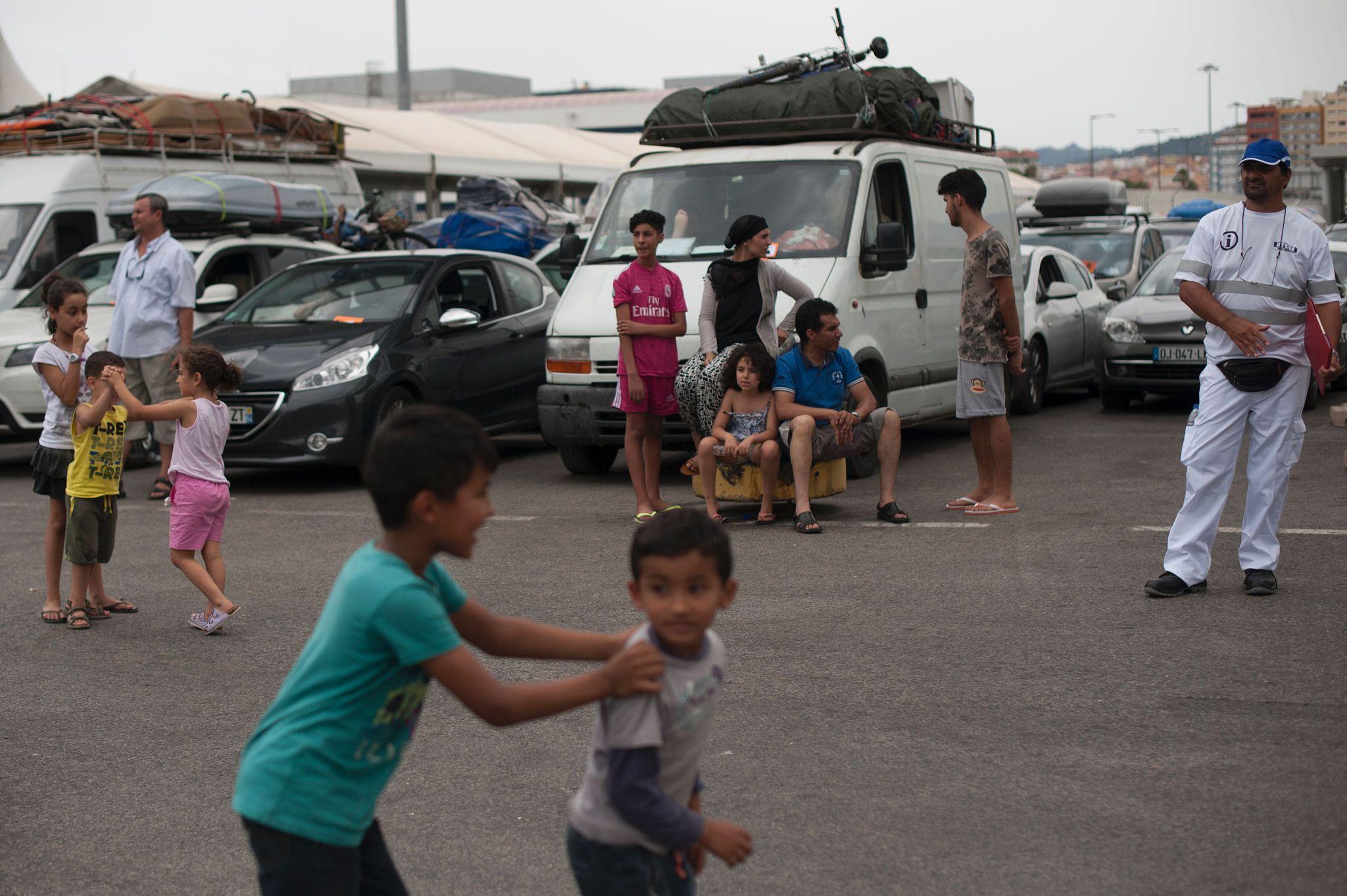
A family arriving by car may carry roof boxes, suitcases, gifts, strollers, medicine, food, electronics, paperwork, pets and sometimes elderly relatives who need more time and assistance.
The vehicle creates flexibility, but it also creates complexity.
Every car must be processed.
Every lane matters.
Every customs interaction matters.
Every inspection delay multiplies across the queue.
Every heatwave makes waiting harder.
This is why ferry travel cannot be judged only by passenger numbers.
Vehicle numbers are the real pressure signal.
A port with too many cars becomes a city of waiting families.
Heat Turns Waiting Into A Safety Issue
Summer port pressure is not only about time.
It is about heat.
Families waiting in vehicles under high temperatures face real discomfort, especially with children, elderly travellers or people with health problems. A two-hour delay in mild weather is frustrating. A two-hour delay in extreme heat can become dangerous.
That is why shaded areas, water access, medical teams, toilets, clear information and traffic flow are essential.
A port is not just a crossing point.
During Marhaba, it is a temporary public space for thousands of people who may be tired, hot and emotionally stretched.
Good logistics protect dignity.
Bad logistics create anger.
The Diaspora Is More Demanding Now
Morocco’s diaspora has changed.
The first generation accepted more difficulty because returning home was the priority. Long waits, weak communication and administrative inconvenience were often seen as part of the journey.
The newer generation is different.
They compare Morocco with European systems. They expect digital information. They want clear signage, predictable timings, respectful treatment and efficient service. They are emotionally Moroccan, but operationally demanding.
That is healthy.
It pushes the system to improve.
If Morocco wants to keep the third generation connected, the journey home must feel easier, not harder.
Nostalgia can bring people once.
Good experience brings them back.
Ports Are Part Of Soft Power
Soft power is often discussed through football, tourism, cuisine, music or cinema.
But for the diaspora, soft power can be a port experience.
A clean arrival.
A respectful officer.
A clear sign.
A medical team ready to help.
A fast lane working properly.
A family assistance desk that solves a problem.
These details shape how people feel about the country.
A Moroccan living in Europe may read speeches about diaspora importance, but the real test comes when he or she arrives at the border with tired children and a car full of luggage.
The state becomes real at the checkpoint.
That is where trust is built or weakened.
Ferry Companies Must Share Responsibility
The experience does not depend only on public authorities.
Ferry companies are part of the system.
Ticketing, boarding accuracy, delays, customer communication, cabin availability, vehicle loading, safety instructions, cleanliness and onboard service all affect the journey.
If ferry operators oversell, communicate poorly or fail to manage peak flows, public authorities absorb part of the anger even when the company caused the frustration.
That is why coordination is essential.
Marhaba requires public-private discipline.
Ports, police, customs, shipping companies and assistance teams must act as one chain.
The traveller does not care which institution failed.
The traveller experiences one journey.
Digital Tools Can Reduce Stress
One of the biggest opportunities is better digital information.
Travellers need real-time updates on port congestion, ferry delays, expected waiting times, required documents, weather conditions, alternative routes and emergency contacts.
A well-designed digital system could reduce uncertainty before families reach the port.
If Algeciras is overloaded, travellers can adjust timing.
If a ferry is delayed, families can avoid unnecessary waiting.
If documents are incomplete, travellers can fix the issue earlier.
If heat alerts are active, families can prepare better.
The future of Marhaba should not depend only on more lanes and more staff.
It should depend on better information.
The Ferry Journey Is An Economic Event
Diaspora ferry travel also has economic weight.
Families spend money on fuel, tolls, ferry tickets, food, hotels, vehicle checks, insurance, port services and purchases before reaching Morocco. Once inside Morocco, they spend on family support, restaurants, housing, weddings, domestic travel, repairs, gifts and local businesses.
The ferry is therefore not only a transport link.
It is the opening gate of a major seasonal economic cycle.
If the journey is smooth, spending begins with confidence.
If it is stressful, frustration can affect the mood of the entire visit.
Ports are not just moving cars.
They are welcoming purchasing power.
The Return Journey Matters Too
Morocco often focuses emotionally on arrivals.
But the return journey matters just as much.
A diaspora family that leaves Morocco through long queues, poor communication or stressful port conditions carries that final memory back to Europe. The last impression can shape the entire perception of the summer.
A beautiful holiday can be damaged by a bad exit.
That is why Marhaba must be measured in both directions.
Arrival dignity.
Departure dignity.
Both matter.
The diaspora relationship is not only about saying welcome.
It is about saying goodbye properly too.
Ports Compete With Airports
Air travel has become easier for many diaspora families because of direct flights, low-cost carriers and shorter journey times.
But ferry travel still has advantages, especially for families who need cars in Morocco or want to carry more belongings.
That creates competition between modes.
If ferry ports become too stressful, some families may switch to air travel and rent cars locally. If flight prices are too high, families may return to ferries. If both become expensive and stressful, some may shorten trips or come less often.
This is why travel infrastructure matters for national attachment.
The easier it is to come home, the more likely people are to keep coming.
Morocco Must Think About The Third Generation
The first generation came back because Morocco was birthplace.
The second generation came back because family ties were strong.
The third generation may need a different reason.
For them, Morocco must feel accessible, modern and welcoming. The ferry journey is part of that perception. If young Moroccan-Europeans associate summer Morocco with endless queues, heat, confusion and family stress, the emotional bond weakens.
If they associate it with arrival, excitement, efficiency and pride, the bond strengthens.
This is why Marhaba is not only an annual operation.
It is intergenerational policy.
The future diaspora relationship passes through today’s travel experience.
The Port Is A Mirror Of Governance
A port during peak season reveals how a country manages pressure.
Can institutions coordinate?
Can information flow?
Can staff stay respectful under stress?
Can technology help?
Can vulnerable travellers receive support?
Can traffic move?
Can complaints be handled?
Can emergencies be managed?
These are governance questions.
The diaspora sees them directly.
A strong Marhaba operation tells Moroccans abroad that the state understands them. A weak one tells them they are important in speeches but inconvenient in practice.
That difference matters.
The Bottom Line
The Ferry Summer Test shows that Morocco’s diaspora story is still deeply tied to ports.
Operation Marhaba 2026 has mobilised 26 reception spaces across Morocco, Spain, France and Italy. More than 1.86 million Moroccans living abroad have already returned to the Kingdom this season, while Spanish ports have recorded around 759,000 passengers and 188,000 vehicles heading toward Morocco.
That is not just transport.
It is identity in motion.
For Morocco, the challenge is clear.
Make the ferry journey smoother, safer, more digital and more respectful.
Because for millions of Moroccans abroad, the road home does not end at the port.
It begins there.