
The summer trip home is supposed to feel emotional.
For Morocco’s diaspora, it often means family, weddings, beaches, grandparents, cousins, long dinners, Tangier traffic, Casablanca arrivals, ferry crossings, airport reunions and the feeling of returning to a country that still feels like home even after years abroad.
But this summer, another question is entering the travel conversation.
Which route is safe?
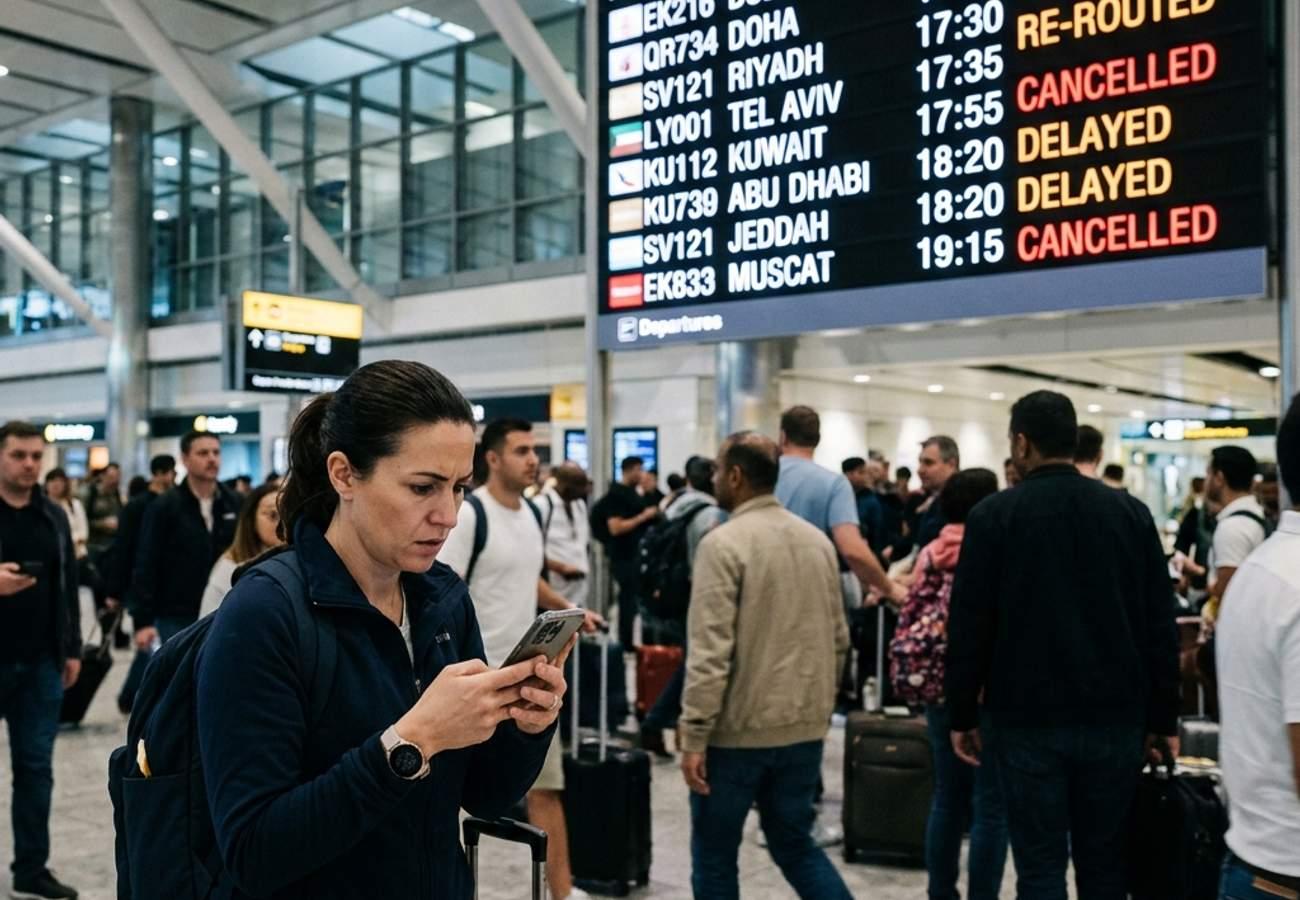
As tensions in the Gulf disrupt parts of the aviation map, travellers across Europe, the Middle East and North Africa are watching flight paths more closely. For Moroccan families travelling from the Gulf, Asia, Europe or through connecting hubs, airspace anxiety has become part of the journey.
This is not panic.
It is the new travel calculation.
Gulf Route Anxiety Enters The Moroccan Summer
Gulf Route Anxiety matters because Morocco’s travel season is deeply connected to its diaspora.
Millions of Moroccans abroad plan summer trips around school holidays, family events, Eid periods, weddings, business visits and long-awaited returns. Many fly direct from Europe. Others connect through Gulf hubs, Turkish routes, European capitals or regional networks.
When Middle Eastern airspace becomes unstable, the effect does not stop in Dubai, Doha, Riyadh or Abu Dhabi.
It reaches travellers trying to move between continents.
Reuters reported that Middle Eastern aviation executives at Farnborough sought to reassure the market despite conflict, while Emirates President Tim Clark said the airline was operating at 90% capacity and premium cabins remained full.
That reassurance matters.
But so does the anxiety behind it.
If aviation leaders need to project stability, passengers understand that stability is being tested.
Morocco Is Not Isolated From Airspace Risk
Morocco is geographically outside the Gulf conflict zone.
But travel networks do not work only by geography.
They work through connections.
A Moroccan student flying from Asia to Casablanca may transit through the Gulf. A Moroccan worker based in the UAE may return to Rabat or Marrakech. A family in Saudi Arabia may travel to Tangier. A business traveller may connect through Doha, Istanbul, Paris or Dubai depending on price and availability.
If Gulf airspace becomes riskier, routes can shift, flight times can change, and passengers can face delays, cancellations or higher prices.
This is why Morocco cannot view the issue as distant.
Aviation disruption travels along the same networks as passengers.
EASA’s Warning Changes The Mood
The European aviation warning is important because it gives the anxiety an official frame.
Reuters reported that the European Union Aviation Safety Agency reinstated and toughened its Middle East flights warning, advising airlines to avoid airspace over Bahrain, Kuwait, Qatar, the United Arab Emirates and the Gulf of Oman as U.S.-Iran tensions flared again. The advisory is valid until July 29.
That is not a small message for travellers.
Most passengers do not study conflict-zone bulletins. But they do react when regulators warn airlines to avoid airspace. It tells them that the issue is not only political news. It has operational consequences.
For families booking flights, that changes the feeling of the ticket.
A route is no longer just cheaper or faster.
It may feel more exposed.
Airlines Sell Confidence, Not Only Seats
Airlines are not only transporting passengers.
They are selling confidence.
When passengers buy a ticket, they trust that the carrier is monitoring risks, coordinating with regulators, adjusting flight paths and making safety decisions before customers even understand the danger.
That trust becomes more important during conflict.
Emirates, Qatar Airways, Etihad, Royal Air Maroc, Turkish Airlines, Air France-KLM and other carriers all operate inside a world where airspace can change quickly. A safe route today may need adjustment tomorrow. A planned connection may be disrupted by a regulator’s advisory, a missile risk, a drone alert or a sudden closure.
Passengers cannot manage that complexity alone.
They need airlines to do it for them.
The Diaspora Watches Price And Safety Together
Moroccan diaspora travel is often price-sensitive.
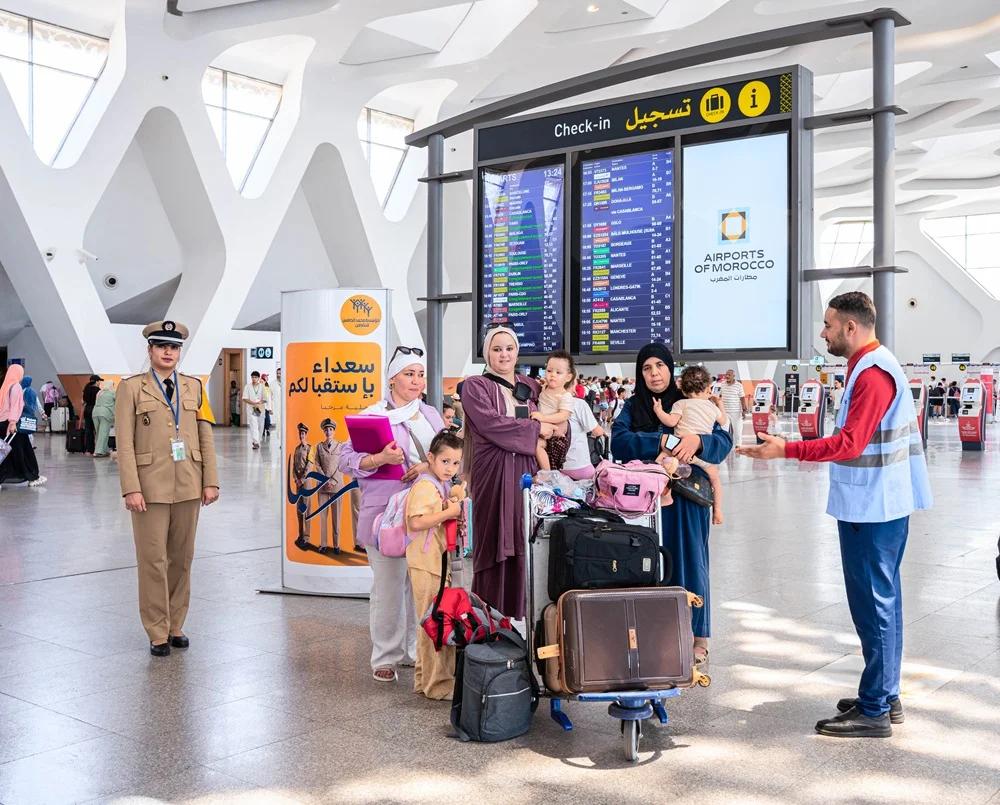
Families compare fares across months. They choose between direct and connecting flights. They calculate luggage, children’s tickets, airport transfers and school-holiday premiums. A cheaper route through a major hub can be attractive.
But when airspace tension rises, the calculation changes.
A low fare may no longer be enough if the route feels uncertain. A family may prefer a direct flight to Morocco even if it costs more. A traveller may choose a European connection over a Gulf one. Another may delay booking until the situation becomes clearer.
This is where geopolitics enters household budgeting.
The flight search page becomes a risk map.
Dubai And Doha Are More Than Hubs
For many travellers, Gulf hubs are not abstract points on a map.
They are familiar transit machines.
Dubai, Doha and Abu Dhabi connect Europe, Asia, Africa and Oceania through highly efficient airports and strong airline networks. Moroccan travellers use these hubs for work, family visits, tourism and long-haul connections.
That is why disruption in the Gulf can have an outsized psychological effect.
If one of the world’s most trusted connection systems looks exposed, passengers begin to ask whether any route is guaranteed.
Reuters noted that Air France-KLM suspended flights to and from Riyadh and Dubai until July 27, while European safety regulators extended regional airspace warnings.
That does not mean Gulf hubs are unusable.
It means the route decision feels more complicated.
Royal Air Maroc Must Read The Moment
For Morocco’s national carrier, this kind of uncertainty can create both challenge and opportunity.
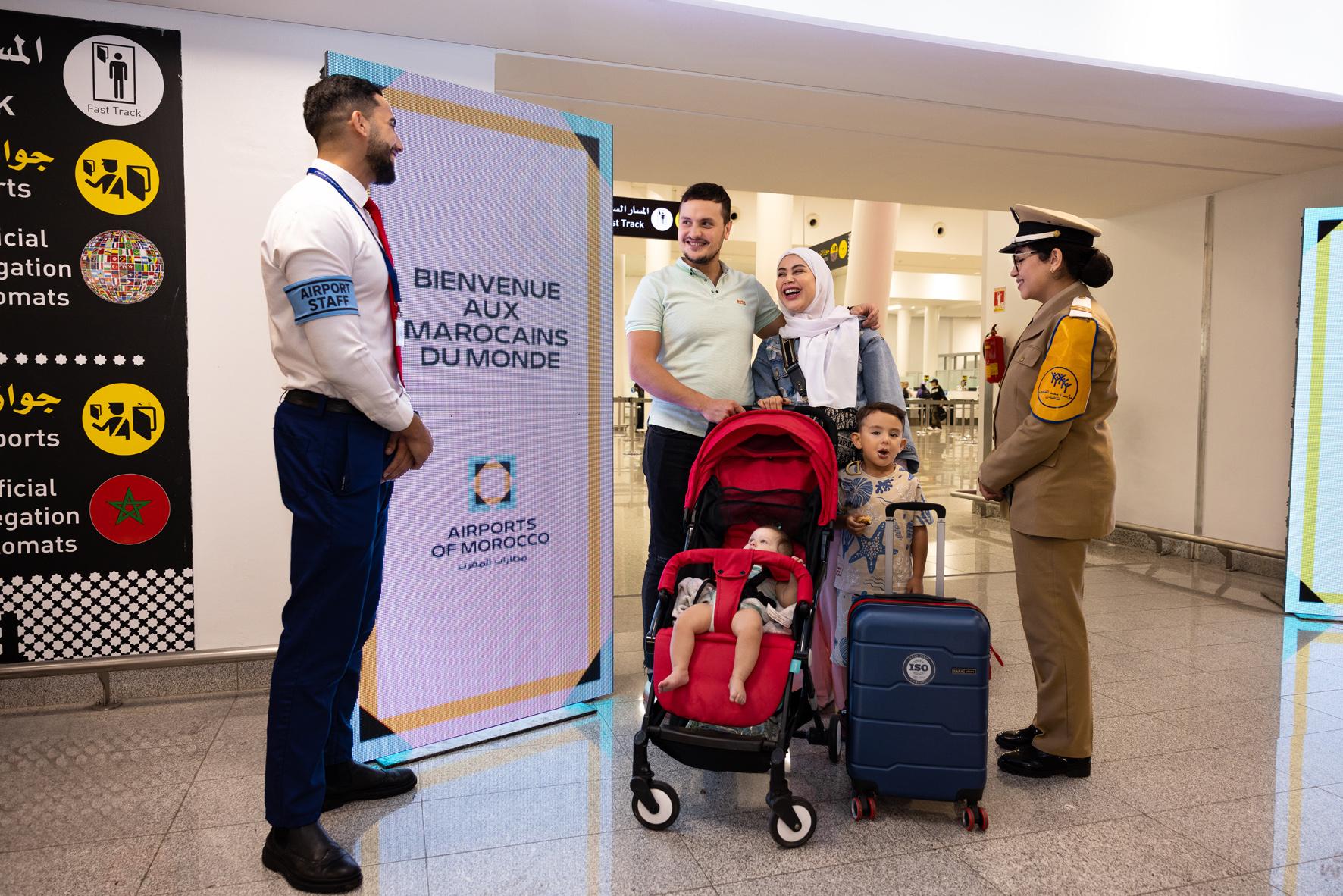
If travellers prefer direct routes into Morocco, Royal Air Maroc can benefit from stronger demand, especially during peak summer. Direct flights reduce connection risk and simplify the journey for families travelling with children, elderly relatives or large baggage.
But stronger demand also creates pressure.
Passengers will expect clear communication, reliable schedules, fair pricing and flexibility if regional disruptions affect broader networks. A national carrier is judged differently during summer return season. It is not only an airline. It becomes part of the emotional infrastructure connecting Morocco with its diaspora.
When uncertainty rises, RAM’s role becomes more important.
Europe-Morocco Routes Gain Strategic Value
Most Moroccan diaspora travel flows through Europe.
France, Spain, Belgium, the Netherlands, Germany and Italy remain central to summer movement into Morocco. When Gulf routes become uncertain, European-Moroccan routes gain even more strategic importance.
Direct flights from European cities to Casablanca, Rabat, Tangier, Marrakech, Fez, Agadir and Nador become not only convenient.
They become safer-feeling alternatives.
This matters for low-cost airlines too. Ryanair, easyJet, Transavia, Vueling and other European carriers help absorb summer demand. If regional tension pushes more passengers toward Europe-Morocco direct routes, capacity and pricing become even more important.
The Morocco summer route map is no longer only a tourism question.
It is a resilience question.
Families Need Clearer Information
During travel disruption, families do not need vague statements.
They need practical information.
Is the flight operating?
Has the route changed?
Will the connection still work?
Is the layover long enough?
Can the airline rebook if airspace closes?
What happens to baggage?
Does travel insurance cover conflict-related disruption?
Should passengers arrive earlier?
What if children or elderly relatives are travelling?
These questions are ordinary, but they become urgent when news headlines mention missiles, drones and airspace advisories.
Airlines that communicate clearly reduce anxiety.
Airlines that communicate late create anger.
Insurance Becomes Part Of The Trip
Many travellers ignore insurance until something goes wrong.
This summer, that may be risky.
Conflict-related disruption can be complicated. Some policies may exclude war-related events or impose strict conditions. A flight may be technically operating, but a passenger may feel unsafe. A route may change without triggering full compensation. A connection may fail because of airspace delays.
Travellers need to check policy language carefully.
This is not fearmongering.
It is practical.
When geopolitical risk affects aviation, insurance becomes part of the travel decision, especially for families spending thousands of euros or dirhams on peak-season tickets.
Safety Does Not Mean Zero Disruption
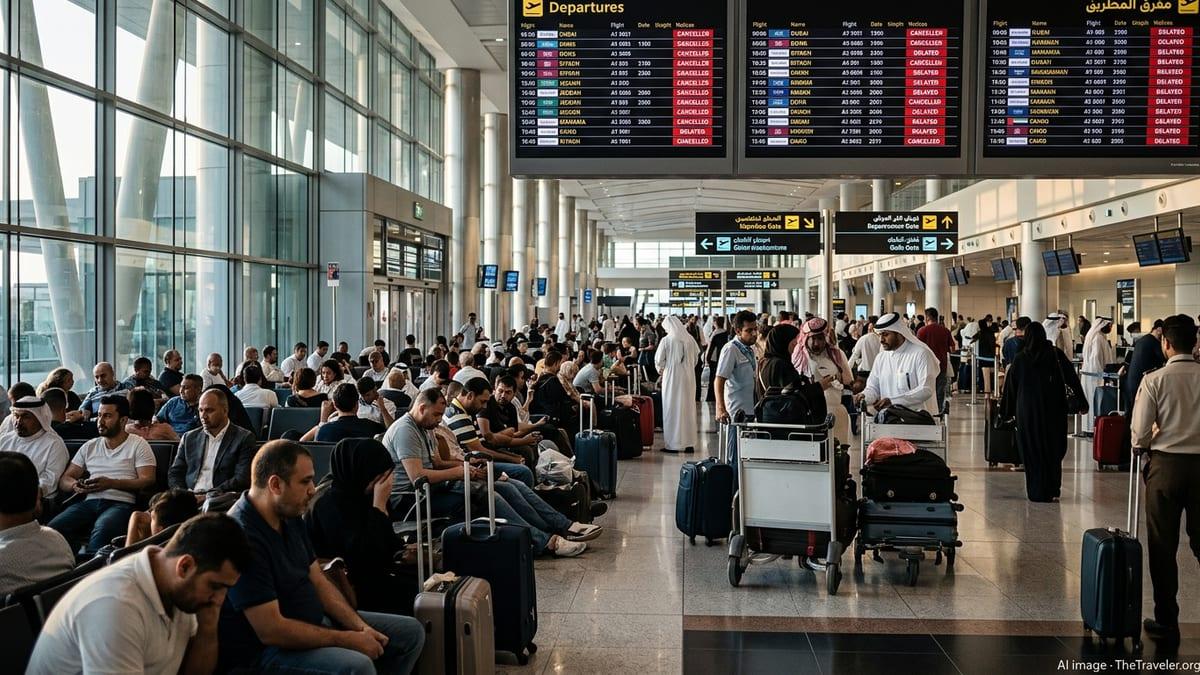
One important distinction must be clear.
If an airline operates a flight, that generally means it has judged the route acceptable under its safety protocols and regulatory framework. Airlines do not casually fly through active danger.
But safety does not mean zero disruption.
A flight can be safe and still be delayed.
A route can be safe and still be longer.
A connection can be safe and still be missed.
A hub can be open and still be crowded because other flights were cancelled or rerouted.
That is the reality passengers must understand.
The issue is not only whether planes can fly.
It is whether the travel experience remains predictable.
The Gulf Crisis Changes Summer Psychology
For Morocco’s diaspora, summer travel is already emotionally loaded.
Many people save money all year for the trip. Families coordinate holidays. Children expect to see grandparents. Weddings depend on arrivals. Businesses depend on returning clients. Coastal cities depend on visitors.
When airspace anxiety enters that system, stress rises quickly.
A traveller in Dubai may worry about getting home.
A Moroccan family in Europe may worry about relatives connecting from the Gulf.
A tourist may compare Morocco with other destinations based on flight stability.
A diaspora entrepreneur may delay a business visit if routes look uncertain.
Geopolitics becomes personal when it threatens the family calendar.
Morocco’s Airports Must Be Ready For Route Shifts
If direct Morocco routes become more attractive, airports must handle the seasonal pressure.
Casablanca remains the national hub, but Tangier, Marrakech, Rabat, Agadir, Fez and Nador all play important roles in diaspora travel. Peak arrivals can already strain baggage halls, passport control, parking, taxis and domestic connections.
If travellers shift away from some connecting hubs and toward direct arrivals, pressure can concentrate differently.
This is why airport resilience matters.
Not in the abstract tourism sense.
In the everyday experience of a family landing at midnight with children, suitcases and a long drive ahead.
Travel Agencies Regain Value
In a normal market, many passengers book directly through apps.
In a disruption market, travel agents can become valuable again.
A good agent can compare routes, explain risks, check airline policies, suggest longer connection buffers, identify direct alternatives and help rebook when disruptions occur. For older travellers or families less comfortable with digital tools, this matters.
The more complex travel becomes, the more people want human guidance.
This could benefit Moroccan travel agencies serving diaspora communities in Europe and the Gulf.
The algorithm gives a fare.
A good agent gives a plan.
The Emotional Cost Is Real
Travel disruption is often discussed through delays and money.
But the emotional cost matters too.
A missed wedding.
A cancelled family reunion.
A grandmother waiting at the airport.
A child crying during a long layover.
A worker losing holiday days.
A family paying extra for a reroute.
These are not market statistics.
They are the human side of airspace instability.
For Morocco’s diaspora, travel is not only movement.
It is identity, family and belonging.
That is why route anxiety feels heavier than a normal delay.
Morocco’s Global Position Makes The Story Bigger
Morocco’s international identity is changing.
It is connected to Africa, Europe, the Arab world, the Atlantic and the Mediterranean. Its diaspora is spread widely. Its airports link workers, investors, tourists, students and families. Its foreign policy touches the Middle East, Europe and Africa.
That means global disruptions increasingly matter to Moroccan audiences.
MTD’s role is to read those disruptions through a Moroccan lens.
Not because every crisis is about Morocco.
But because Moroccan lives are connected to global systems.
Airspace tension in the Gulf can affect a family in Casablanca.
Shipping tension in the Red Sea can affect prices.
Energy tension can affect inflation.
This is the world Morocco now lives in.
What Travellers Should Watch
The key signals are practical.
Whether EASA extends or lifts advisories after July 29.
Whether major European airlines resume or delay Gulf services.
Whether Gulf carriers maintain capacity.
Whether flight times increase because of rerouting.
Whether fares rise on direct Morocco routes.
Whether insurance companies change guidance.
Whether airport delays increase during peak travel weeks.
Travellers do not need to follow every military headline.
They need to follow the travel consequences.
The Bottom Line
Gulf Route Anxiety shows how geopolitical risk reaches Moroccan households through the flight map.
European regulators have advised airlines to avoid several Gulf airspaces until July 29, citing risks linked to missiles, drones and civil-aircraft misidentification. Reuters also reports that Air France-KLM suspended flights to Riyadh and Dubai until July 27, while Emirates says it is still operating at 90% capacity.
For Morocco’s diaspora, that creates a new summer travel calculation.
Direct flights may feel more valuable.
Connection buffers may matter more.
Insurance may need closer reading.
Airline communication becomes essential.
The trip home is still possible.
But in 2026, even a family journey to Morocco can begin with a question once reserved for crisis managers.
What does the airspace look like today?