
Morocco’s automotive industry has attracted another American technology supplier.
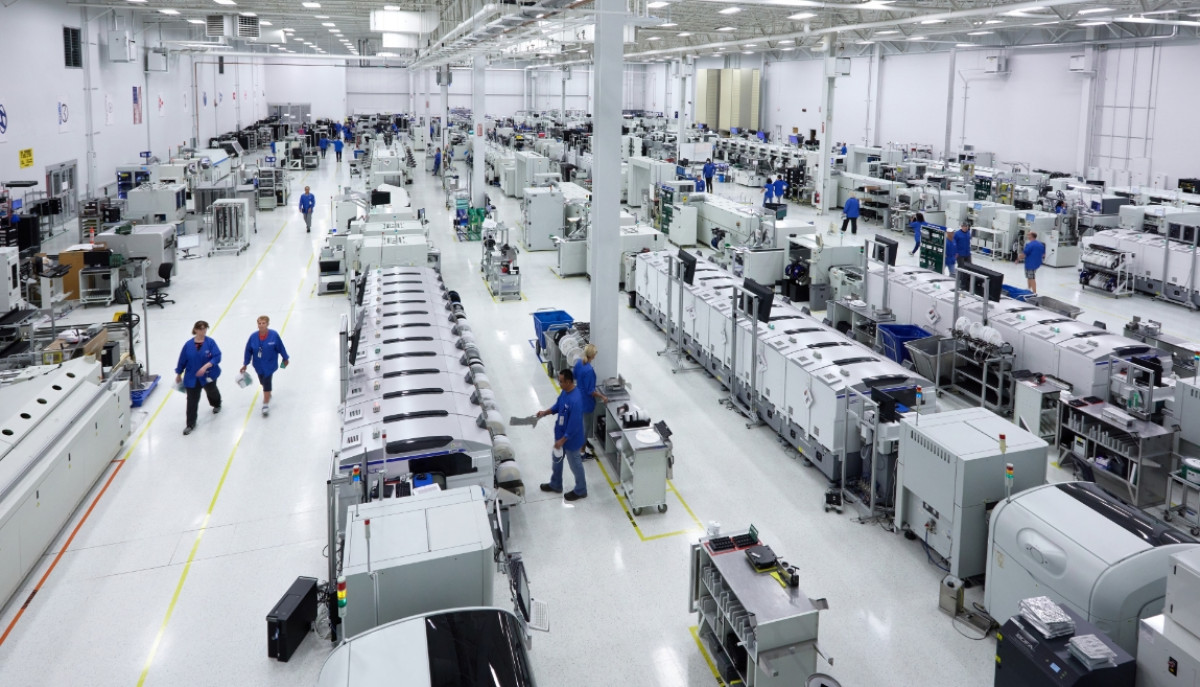
Gentex, the Michigan-based automotive technology company best known for electrochromic mirrors, digital vision systems and advanced electronic modules, is preparing to establish a manufacturing plant in Morocco to supply its European customers.
The company has already signed a letter of intent, selected the location and received Moroccan government support for establishing the local entity.
Production is targeted to begin in 2028. Initial customer requests include basic electrochromic mirrors and more advanced electronic modules.
The announcement is important for a reason that goes beyond another factory.
Gentex says European customers increasingly want manufacturing located closer to the vehicles they produce and sell in the region.
Morocco is being selected as part of that localisation strategy.
That means the Kingdom is increasingly competing not simply as a lower-cost manufacturing destination.
It is becoming part of Europe’s industrial risk-management system.
Customers Are Pulling Gentex Toward Morocco
Gentex’s motivation is unusually clear.
During its second-quarter 2026 discussion, the company explained that international customers are increasingly trying to de-risk their supply chains through greater regional production.
Several European customers specifically want Gentex manufacturing capacity located closer to vehicles built and sold in Europe.
That changes the meaning of the Moroccan investment.
Gentex is not simply searching globally for inexpensive factory space.
Its customers are pushing the supplier toward regionalisation.
Morocco is satisfying that requirement while remaining connected to European automotive production.
This is exactly the position Morocco has spent years trying to build.
Close enough to Europe.
Industrial enough to manufacture at scale.
Competitive enough to justify investment.
Connected enough to deliver reliably.
Supply-Chain Risk Has Become A Location Factor
For decades, manufacturers often optimised supply chains primarily around cost.
Produce where manufacturing is cheapest.
Ship components globally.
Keep inventories lean.
That model became more difficult after repeated disruptions in global logistics, semiconductor supply, geopolitics and transportation.
Automotive companies now care much more about resilience.
Where is the component made?
How far is it from the assembly plant?
How exposed is the route?
Can production continue if another region experiences disruption?
Gentex’s Morocco decision fits directly into this new industrial environment.
Nearshoring is therefore not simply a temporary business trend.
It is changing industrial geography.
Morocco benefits because geography that once appeared peripheral to Europe can now become strategically valuable.
Electronics Changes The Automotive Story
Morocco’s automotive sector initially built much of its reputation around assembly and traditional components.
Wiring systems.
Seats.
Metal parts.
Plastic components.
Vehicle manufacturing.
Those remain important.
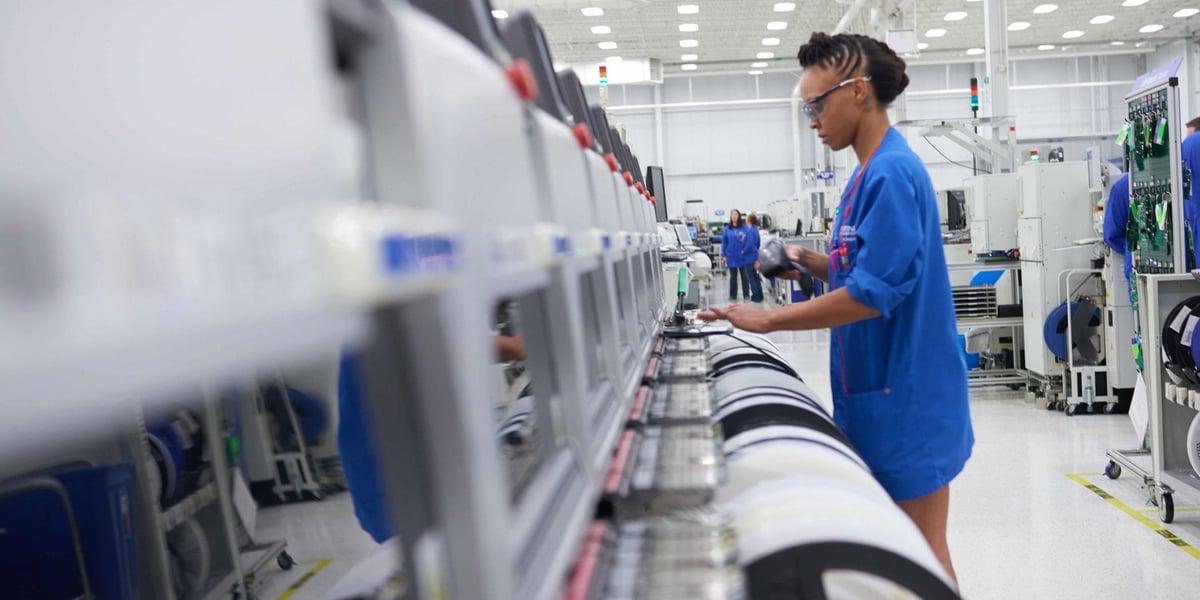
But modern vehicles contain increasingly sophisticated electronics.
Cameras.
Sensors.
Digital displays.
Driver-monitoring systems.
Connected-car technology.
Electronic control modules.
Gentex operates directly inside this transition.
The company’s broader automotive technology portfolio includes digital vision, connected-car technologies, dimmable devices and driver-monitoring capabilities.
That makes the Moroccan plant strategically more interesting than a simple component-assembly project.
It creates another entry point into automotive electronics.
Morocco Needs More Value Per Vehicle
A country can manufacture one million vehicles and still capture very different levels of economic value depending on what happens locally.
If most complex components are imported, local value remains lower.
If the country manufactures electronics, batteries, software-linked systems and advanced components, value increases.
The next Moroccan automotive target should therefore not be measured only in vehicles produced.
It should also measure:
How much Moroccan industrial value exists inside each vehicle?
Gentex can contribute to that progression.
Electrochromic mirrors may appear relatively simple to the consumer.
They combine specialised materials, electronics and manufacturing processes.
Advanced electronic modules move further into technology-intensive production.
Each additional capability deepens Morocco’s automotive ecosystem.
Final Assembly Is Only The Beginning
Reporting around the project indicates that the first Moroccan phase is expected to include final assembly of some products currently completed in the United States, while core technology production would initially remain within Gentex’s existing industrial system.
That distinction matters.
Morocco should not expect every new investor to relocate its highest-value technology immediately.
Industrial upgrading usually happens gradually.
First comes assembly.
Then localisation.
Then suppliers.
Then engineering.
Then more complex production.
Eventually, some research and development may follow.
The important question is whether the Moroccan operation gains capability over time.
A factory that performs the same limited operation for twenty years creates one kind of value.
A factory that continuously absorbs more sophisticated processes creates something much larger.
Supplier Development Must Follow
Gentex will require inputs.
Packaging.
Industrial equipment.
Logistics.
Maintenance.
Electronic components.
Plastic parts.
Metal components.
Quality-control services.
Technical labour.
Some inputs may initially come from Gentex’s established global supply network.
Morocco’s opportunity is to localise more of them progressively.
This is how one foreign investment multiplies.
The first company arrives.
Local suppliers qualify.
Those suppliers invest.
They hire people.
They gain certifications.
They later serve another international customer.
An automotive cluster becomes valuable when the network is difficult to reproduce elsewhere.
Morocco has already achieved considerable scale.
Advanced electronics can deepen that network further.
Certification Becomes A Barrier To Entry
Automotive suppliers operate under demanding standards.
Defects can create recalls.
Production interruptions can shut assembly lines.
Traceability is essential.
Processes must be documented.
Quality must remain consistent across millions of components.
When Moroccan suppliers learn to operate at these standards, they gain something more valuable than one contract.
They gain credibility.
A company qualified to supply Gentex or another international automotive player can potentially approach additional customers.
The certification process effectively becomes an industrial passport.
Morocco should therefore measure supplier-development programmes not only by how many SMEs participate.
The stronger metric is how many become internationally qualified suppliers.
Engineers Become More Important Than Labour Cost
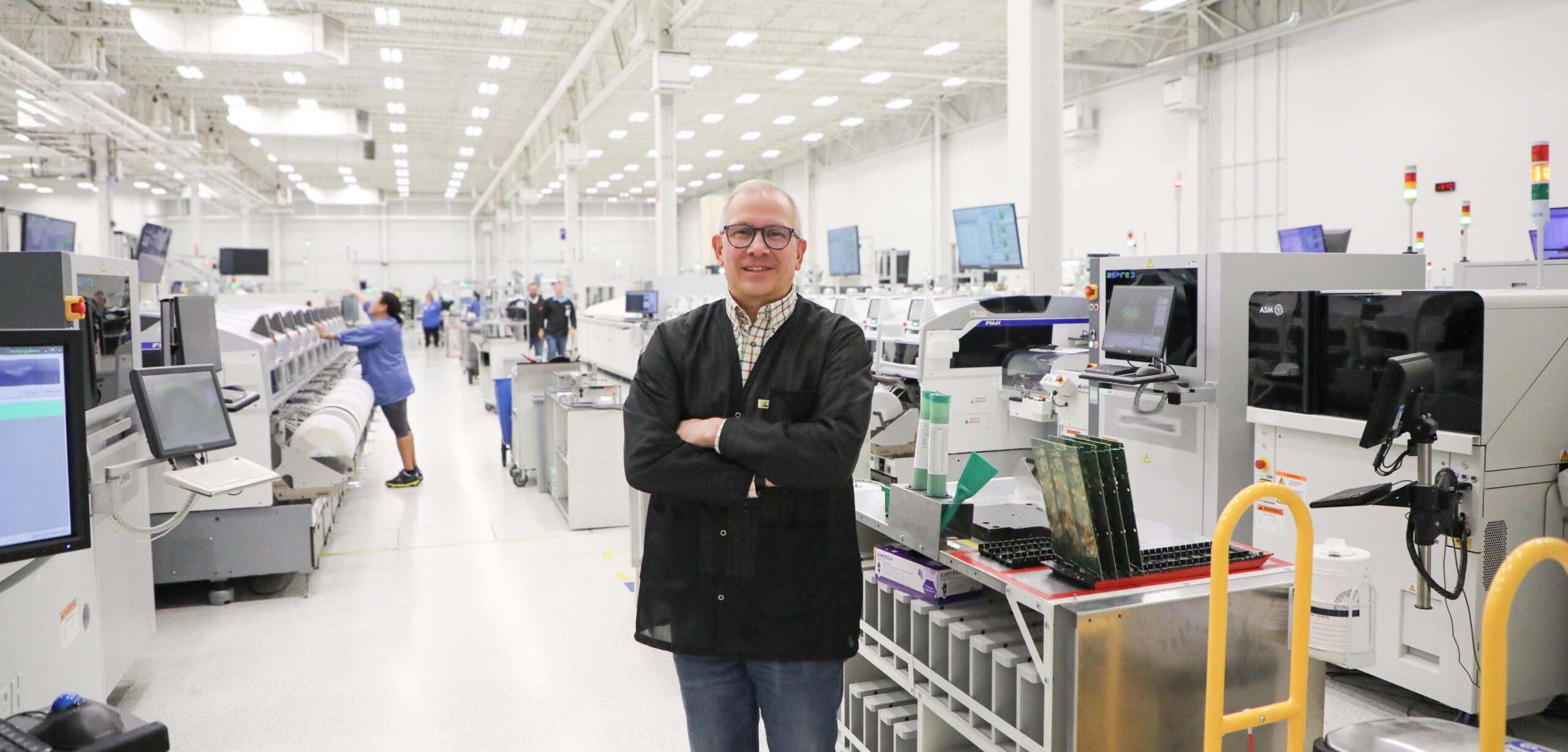
Advanced automotive manufacturing changes workforce requirements.
The sector still needs operators.
But it increasingly needs:
Electronics technicians.
Automation specialists.
Industrial engineers.
Quality engineers.
Software-linked technicians.
Maintenance specialists.
Data specialists.
Production managers.
Gentex’s planned advanced electronic-module production reinforces this shift.
Morocco’s competitiveness cannot therefore depend indefinitely on labour cost.
Engineers and technicians need to become part of the investment proposition.
The strongest industrial location is not simply where workers cost less.
It is where companies can recruit the skills required to launch and improve production quickly.
Universities Need To Follow Industrial Demand
Automotive technology changes faster than traditional educational programmes.
The skills needed in 2030 will not necessarily match those needed when Morocco’s automotive strategy began.
Electronics.
Embedded systems.
Computer vision.
Artificial intelligence.
Industrial cybersecurity.
Automation.
Sensors.
Battery technology.
Training institutions need to remain connected with companies entering the market.
Gentex should not need to import every specialist required for new production lines.
Universities and technical institutes can work directly with industry to understand future hiring needs before the factory opens.
With production targeted for 2028, there is time.
Training should begin before recruitment becomes urgent.
Morocco Is Becoming A European Production Extension
Gentex’s description of the project reveals another strategic transformation.
Morocco is increasingly functioning as an extension of Europe’s manufacturing footprint without being located inside the European Union.
The country combines geographic proximity with different production economics.
That matters when European manufacturers want regional supply without concentrating all production inside the same countries.
Automotive companies can assemble vehicles in Spain, France or elsewhere in Europe while sourcing components from Morocco across short maritime routes.
Moroccan factories can therefore become part of regional rather than purely global supply chains.
This is precisely the kind of integration that makes manufacturing investment more durable.
A factory embedded in customer production networks is harder to relocate casually.
Tanger Med Is Part Of The Competitive Advantage
Morocco’s automotive proposition depends heavily on logistics.
A component manufactured competitively becomes useless when it reaches the customer late.
Tanger Med has helped Morocco solve part of that problem by connecting industrial production with European markets through frequent maritime services.
The strategic value is time.
A Moroccan supplier can operate geographically outside Europe while remaining operationally close to European factories.
That distinction is increasingly important.
Customers demanding regionalised production are not necessarily demanding that every supplier locate inside the EU.
They need reliable proximity.
Morocco can offer it.
Gentex’s choice suggests international manufacturers increasingly recognise this.
Cost Still Matters
Resilience does not eliminate economics.
Manufacturers still need competitive production costs.
Gentex has indicated that it does not expect the Moroccan manufacturing transition to produce a significant increase in operating expenses.
That is a significant detail.
Regionalisation can become expensive when companies move production into higher-cost locations.
Morocco offers the possibility of reducing supply-chain distance without destroying manufacturing economics.
This combination is powerful.
Near Europe.
Competitive costs.
Established automotive infrastructure.
Trade connectivity.
Industrial workforce.
A successful localisation model needs several advantages simultaneously.
Geography alone is insufficient.
Eastern Europe Is No Longer The Automatic Choice
Morocco increasingly competes with Eastern European manufacturing locations for investment serving EU customers.
For years, Central and Eastern Europe benefited from proximity to major German, French and other European automotive groups.
Those advantages remain substantial.
But Morocco now enters more of the same location discussions.
Labour cost.
Trade arrangements.
Logistics.
Political and supply-chain risk.
Availability of industrial sites.
Existing supplier ecosystem.
One report on the Gentex project said Morocco was chosen after comparison with several Eastern European options.
Even when individual location decisions differ, Morocco’s presence in that competitive group is strategically significant.
The benchmark has changed.
Morocco is not competing only with other North African economies.
Advanced Components Can Attract More Advanced Components
Industrial clusters tend to compound.
Automotive assembly attracts basic suppliers.
Basic suppliers attract logistics.
Growing production attracts tooling companies.
Electronics suppliers then have more customers nearby.
Battery producers create another layer.
Software and engineering firms become more viable.
Gentex arrives in a Moroccan automotive ecosystem that is already much more developed than it was fifteen years ago.
Its presence can make the ecosystem marginally more attractive to the next electronics supplier.
That next company makes Morocco more attractive to another.
Industrial ecosystems strengthen through accumulation.
This is why individual investment announcements matter beyond their direct employment numbers.
Gotion Shows Another Side Of The Transition
Morocco’s automotive technology upgrade is also visible in batteries.
Gotion’s major battery project in Kenitra has been moving toward production during 2026, creating another industrial link between Morocco and Europe’s future electric-mobility supply chain.
Gentex and Gotion operate in very different parts of the vehicle.
But strategically, they point in the same direction.
Morocco wants to capture more of what goes inside increasingly technological vehicles.
Batteries.
Electronics.
Sensors.
Advanced modules.
Traditional automotive manufacturing is evolving into a combination of industrial engineering and technology.
Morocco’s supplier base must evolve with it.
Research And Development Is The Longer-Term Prize
Manufacturing is the first stage.
Engineering is more valuable.
Research and development can be more valuable again.
Gentex has made clear that core technologies will initially continue to come from existing facilities.
Morocco should view that not as a weakness but as the next target.
Once production operates successfully, Moroccan engineers can gradually take responsibility for:
Process optimisation.
Product adaptation.
Testing.
Validation.
Industrialisation.
Customer-specific engineering.
Eventually, some development work.
Industrial policy works best when the country creates reasons for investors to expand functions organically.
Companies move engineering closer to factories when local capabilities become strong enough.
Intellectual Capital Stays Longer Than Equipment
Machines can be moved.
Experienced engineers are harder to replicate.
A worker who has spent ten years improving sophisticated automotive electronics carries industrial knowledge that becomes embedded locally.
That is why training and career development matter.
Morocco should want Gentex employees to build long careers inside the sector.
Some may eventually join suppliers.
Others may create companies.
Others may teach.
Industrial knowledge spreads through people.
The economic legacy of a foreign factory can therefore become much larger than the original investment.
But only when local employees move progressively into more technical and managerial responsibilities.
2028 Gives Morocco Time To Prepare
Production is targeted for 2028.
That creates a useful preparation window.
Supplier mapping can begin now.
Training can begin now.
Industrial infrastructure can be completed now.
Technical institutes can identify required skills.
Local companies can pursue automotive certifications.
Potential suppliers can invest before production reaches full scale.
Waiting until the factory opens wastes part of the opportunity.
The strongest investment ecosystems prepare around announced projects before the first component leaves the production line.
The factory may belong to Gentex.
The surrounding opportunity belongs to many Moroccan companies.
Automotive 2.0 Is About Technology Density
Morocco’s original automotive breakthrough was proving that vehicles could be manufactured competitively at scale.
That achievement changed the country’s industrial economy.
The next phase is more demanding.
It is about the technology density inside the ecosystem.
How many advanced components are manufactured locally?
How much engineering occurs locally?
How many Moroccan suppliers reach Tier-1 and Tier-2 standards?
How much intellectual capital remains inside the country?
How many products are exported because of capability rather than simply cost?
Gentex fits directly into this next chapter.
Morocco Is Being Chosen For A Different Reason
Gentex’s planned Moroccan factory is not the largest industrial project announced in the Kingdom.
The company has not yet publicly disclosed the investment amount, employment figure or exact site.
Yet strategically, the project sends a powerful signal.
European customers want more regional manufacturing.
Gentex needs to respond.
Morocco has been selected.
Production is targeted for 2028.
Electrochromic mirrors and advanced electronic modules are expected among the first products.
That means Morocco is increasingly being chosen because global companies need a European-facing industrial platform.
The first automotive era was about proving Morocco could assemble competitively.
The next one will be about proving Morocco can manufacture more of the technology that makes modern vehicles intelligent, connected and increasingly electronic.
Gentex’s decision suggests that transition has already begun.