
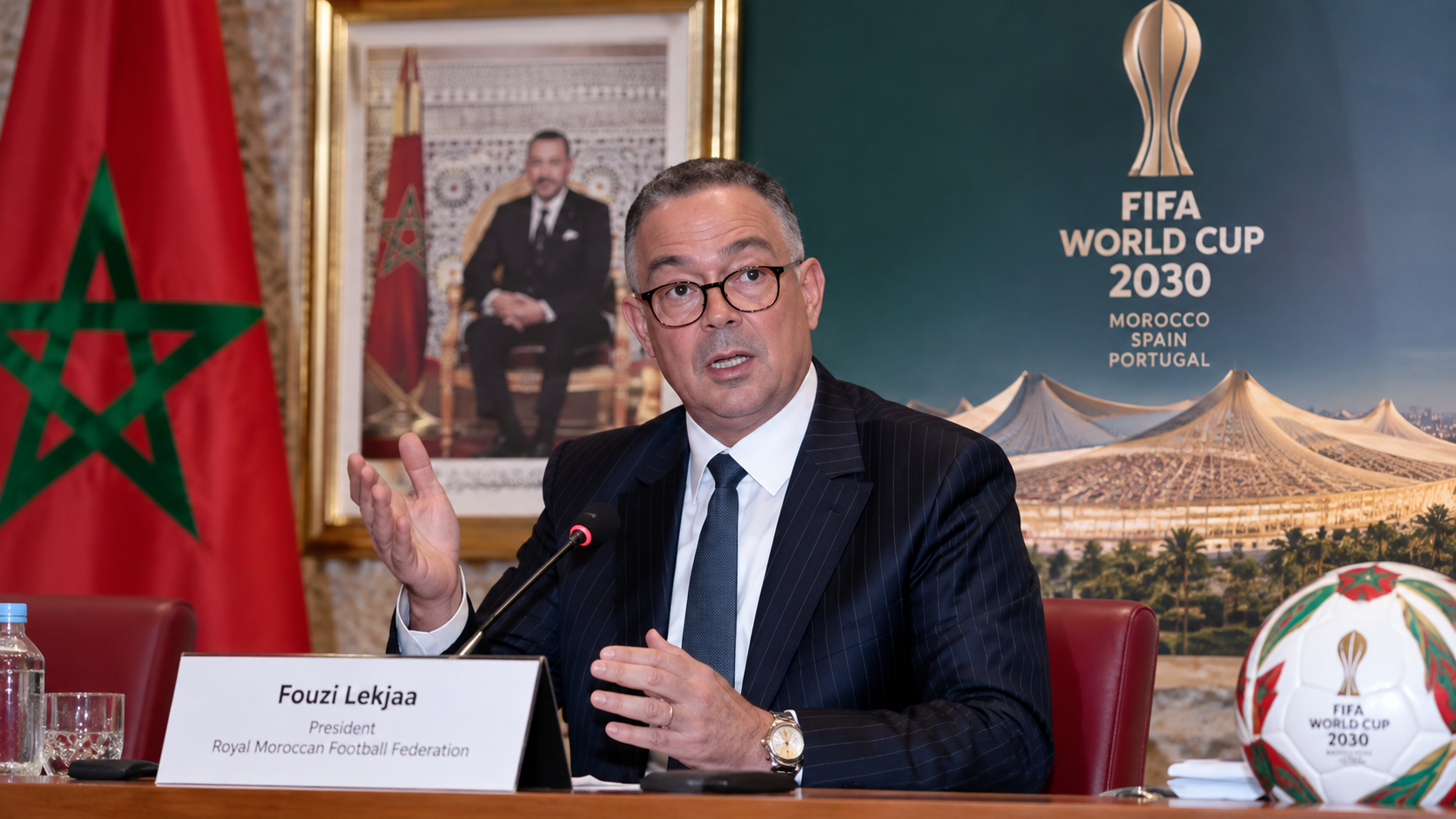
The Moroccan football federation chief has named the future Hassan II Stadium in Benslimane, while FIFA says the final venue has not yet been officially decided.
Morocco has made its clearest declaration yet in the race to host the 2030 World Cup final.
Fouzi Lekjaa, president of the Royal Moroccan Football Federation, says football’s biggest match will be played at the future Hassan II Stadium in Benslimane, near Casablanca.
Lekjaa made the statement during an event in Bouznika, according to Spanish news agency EFE and Reuters.
The declaration reflects Morocco’s confidence in a stadium designed to become the largest football-specific venue in the world.
FIFA, however, has not officially awarded the final. A spokesperson for football’s world governing body said the decision would be made in due course.
Morocco has stated its ambition. FIFA still has the final word.
WHAT FOUZI LEKJAA SAID
Lekjaa said Benslimane province would have the honour of hosting the 2030 World Cup final.
It is the strongest public statement so far from Morocco’s football leadership about the destination of the showpiece match.
His words place the future Hassan II Stadium at the centre of Morocco’s World Cup plans.
The venue is being built in Benslimane province, approximately 60 kilometres from Casablanca. It is designed to accommodate 115,000 spectators.
If delivered according to its planned capacity, it would become the largest stadium in the world built specifically for football.
Hosting the final would make Morocco only the second African nation, after South Africa in 2010, and the first North African country to stage football’s biggest match.
FIFA HAS NOT YET ANNOUNCED THE FINAL VENUE
Morocco, Spain and Portugal have been confirmed as the principal hosts of the 2030 World Cup.
Argentina, Paraguay and Uruguay will each stage one centenary celebration match, recognising the tournament’s South American origins.
The location of the final remains officially undecided.
Spain also wants to host the match. Royal Spanish Football Federation president Rafael Louzán said earlier in September that the final should be played in Spain.
FIFA must evaluate the proposed venues and coordinate the final match allocation with the three principal host countries.
In August, FIFA rejected separate media reports claiming that its president, Gianni Infantino, had already promised the final to Morocco. It described those reports as false and misleading.
That denial did not reject Morocco’s candidacy. It established that no official decision had been announced at that time.
THE HASSAN II STADIUM IS MOROCCO’S CENTREPIECE
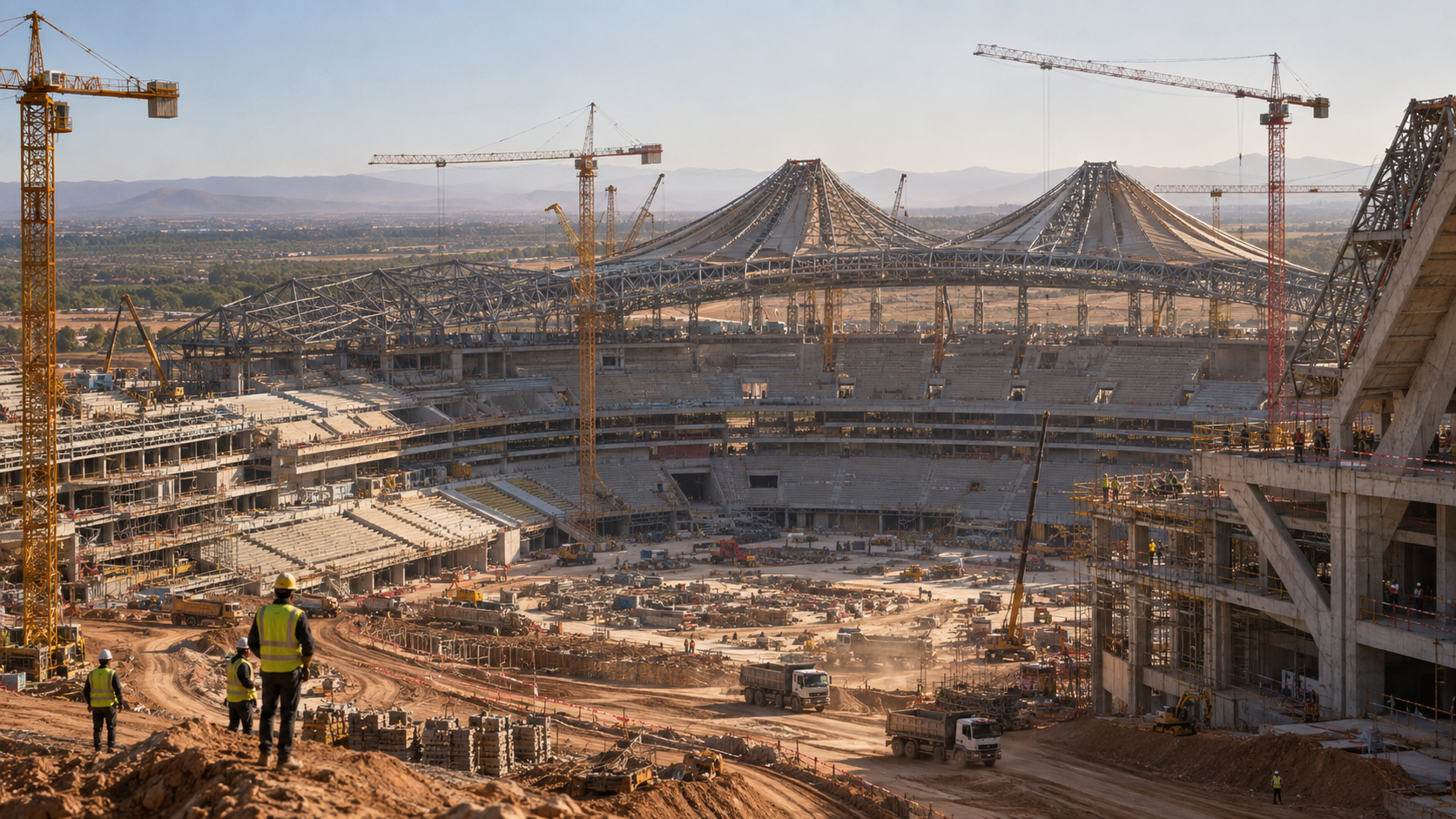
Morocco’s confidence is built around a venue created for the scale and visibility of a World Cup final.
The Hassan II Stadium is rising on a 150-hectare site surrounded by farmland and forest in Benslimane province.
The stadium and its associated facilities are expected to cost approximately $1 billion.
Its vast roof takes inspiration from the traditional Moroccan moussem tent. The design is intended to allow natural light into the structure, while planned botanical gardens will reflect the diversity of Morocco’s landscapes.
Moroccan listed construction companies TGCC and SGTM are building the complex.
During a Reuters site visit in May 2026, an official overseeing the project said construction was approximately 30% complete and around 40% of the stands had been built.
Teams were working across three shifts, with completion targeted for the end of 2027.
Those figures describe progress recorded in May. A newer official update would be required before presenting them as the current construction level.
THE FINAL REQUIRES MORE THAN A RECORD-BREAKING STADIUM
Capacity and architecture will form only part of FIFA’s assessment.
A World Cup final requires a complete operational system capable of serving teams, officials, broadcasters, supporters and security services.
Transport connections, accommodation, training facilities, crowd management and emergency planning will all matter.
Moroccan authorities plan to connect the Hassan II Stadium with Casablanca and Rabat through new highway infrastructure and a railway station.
Its location between two major cities could become an important advantage.
Casablanca provides Morocco’s largest international airport, an extensive accommodation market and substantial commercial infrastructure.
Rabat adds further transport capacity, hotels and institutional experience.
The strength of Morocco’s candidacy will depend on how successfully these different elements are completed, connected and tested before the tournament.
MOROCCO AND SPAIN BOTH WANT FOOTBALL’S BIGGEST MATCH
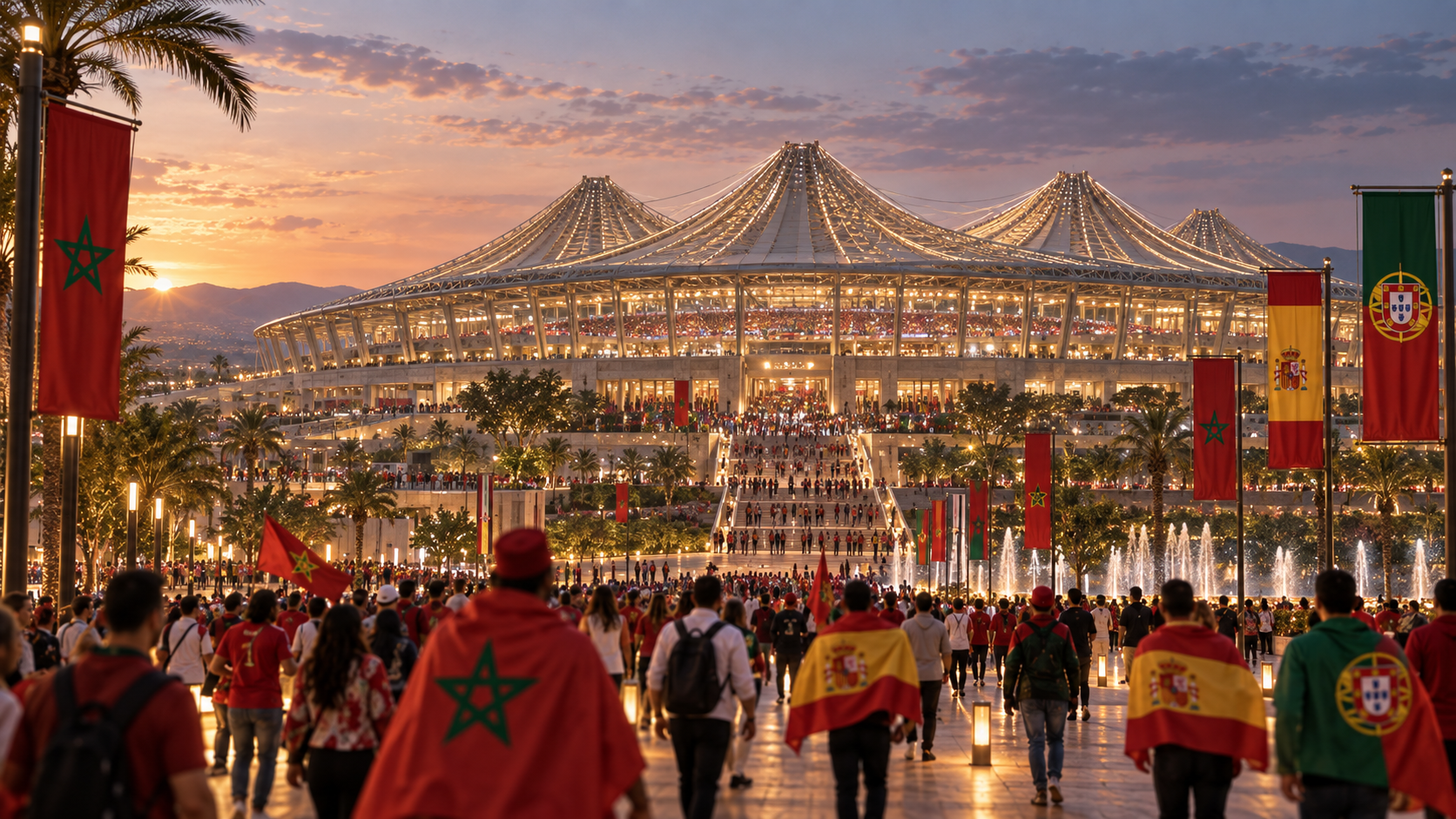
Spain remains a serious candidate for the final, supported by its football history, established infrastructure and internationally recognised stadiums.
Morocco’s bid offers something different.
The Hassan II Stadium is being constructed specifically with the scale of the 2030 tournament in mind. Its projected capacity, Moroccan-inspired architecture and position within a rapidly expanding transport network make it a distinctive proposal.
Lekjaa’s statement shows that Morocco does not view itself simply as one of three countries sharing matches.
It is openly pursuing the tournament’s most prestigious fixture.
The competition should not overshadow the cooperation required between Morocco, Spain and Portugal. The three countries must jointly deliver a complex tournament stretching across different cities and transport systems.
Their shared success will depend on coordination, regardless of which stadium ultimately receives the final.
WHAT MOROCCO HAS ALREADY SECURED
Whatever FIFA decides about the final, Morocco has already achieved a historic milestone.
The country will co-host the men’s World Cup for the first time and become only the second African nation to stage matches in the competition.
The tournament is accelerating investment in stadiums, airports, roads, railways, hotels and urban transport.
These projects are intended to support millions of residents and visitors before, during and after 2030.
The lasting value of the tournament will depend on delivering infrastructure that continues to serve Moroccan cities after the final whistle.
Hosting the final would add a historic moment to that wider transformation, but Morocco’s role in the tournament is already assured.
WHAT HAPPENS NEXT?
FIFA must still confirm the complete host-city list, distribute the matches and announce the final venue.
The Hassan II Stadium must also be completed, equipped and tested for major international events.
The next developments to watch are:
FIFA’s official final-venue announcement
Updated construction progress from Benslimane
Completion of planned road and railway connections
Operational and security testing
The final distribution of matches between Morocco, Spain and Portugal
Until FIFA announces its decision, Lekjaa’s statement should be reported as a declaration of confidence rather than a completed award.
MOROCCO HAS MADE ITS AMBITION IMPOSSIBLE TO MISS
Hosting a World Cup final would represent a defining moment for Moroccan and African football.
Morocco is building a stadium capable of presenting a powerful case. It is expanding the infrastructure around the venue and preparing to welcome the world in 2030.
Lekjaa’s declaration does not complete FIFA’s selection process.
It does ensure that Morocco’s objective is now unmistakable.
FIFA still has the final decision. Morocco has made clear where it believes the final belongs.