
Morocco spent years trying to attract more industrial investment.
Now its success is creating a more complicated question.
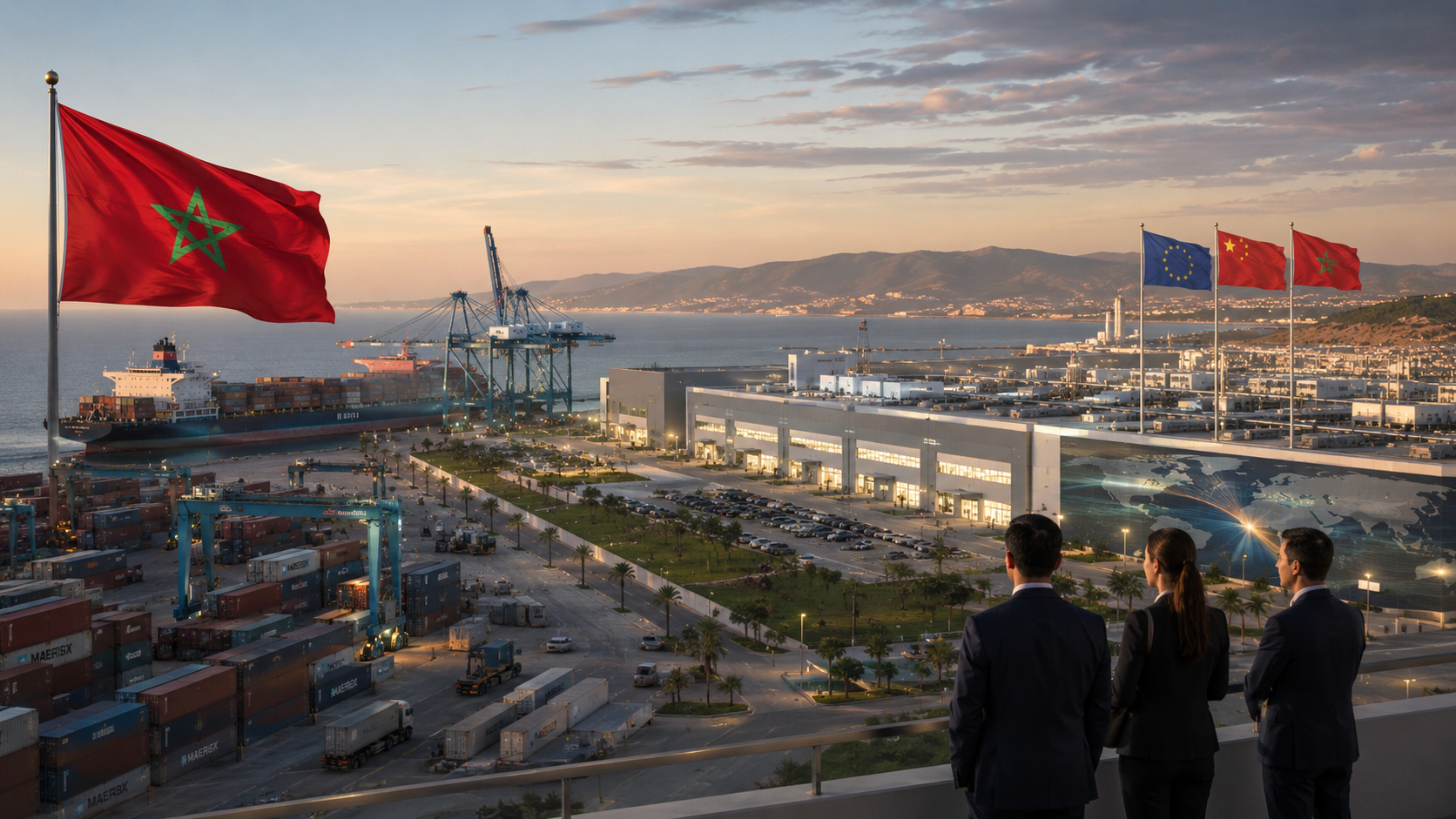
Chinese manufacturers are increasingly choosing Morocco as a production base for batteries, automotive components and other industrial products aimed partly at European markets.
That makes Morocco attractive for obvious reasons.
Proximity to Europe.
Established automotive manufacturing.
Tanger Med.
Industrial zones.
Competitive production costs.
Trade relationships with major markets.
A growing supplier ecosystem.
But as Chinese industrial investment in Morocco accelerates, European policymakers are paying closer attention to what exactly qualifies as Moroccan production, what benefits from preferential access, and how much Chinese state support may sit behind some investments.
This is not simply a Morocco-China story anymore.
It is becoming part of Europe’s much larger debate about industrial sovereignty.
And Morocco is increasingly standing in the middle of it.
Morocco Has Become An Industrial Bridge
Morocco’s economic geography has become one of its strongest assets.
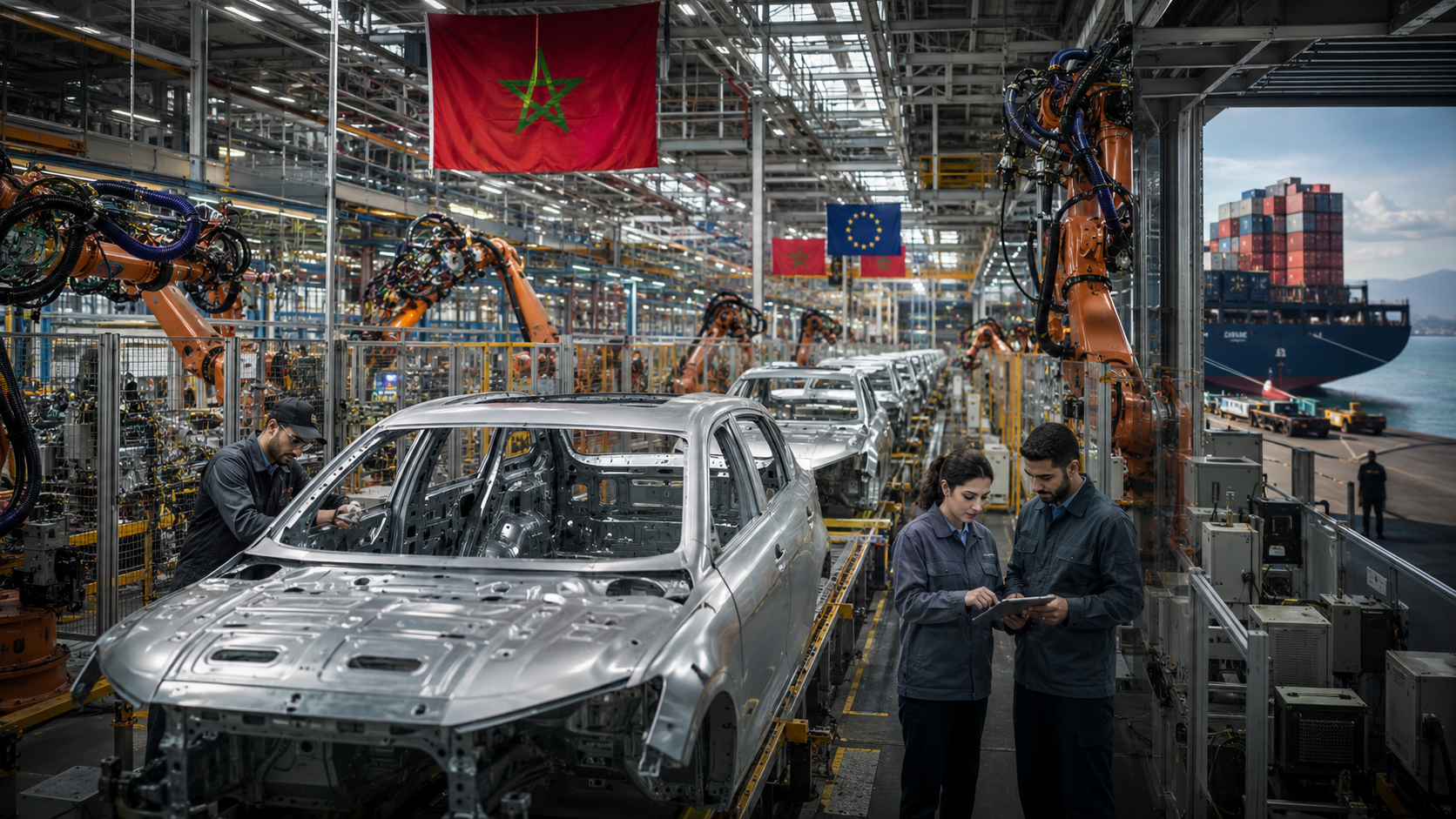
A manufacturer can establish production in the Kingdom and remain physically close to European customers while benefiting from a different cost structure and an established industrial base.
That model has already worked in automotive manufacturing.
Renault.
Stellantis.
Dozens of international suppliers.
Wiring systems.
Seats.
Metal parts.
Electronics.
Now electric mobility is creating another layer.
Chinese companies that dominate important parts of the global EV and battery supply chain increasingly need manufacturing locations closer to European consumers.
Morocco fits that requirement unusually well.
It allows companies to move production closer to Europe without necessarily building everything inside the European Union.
That position is commercially powerful.
It is also precisely what is beginning to attract scrutiny.
Gotion Shows The Scale Of What Is Coming
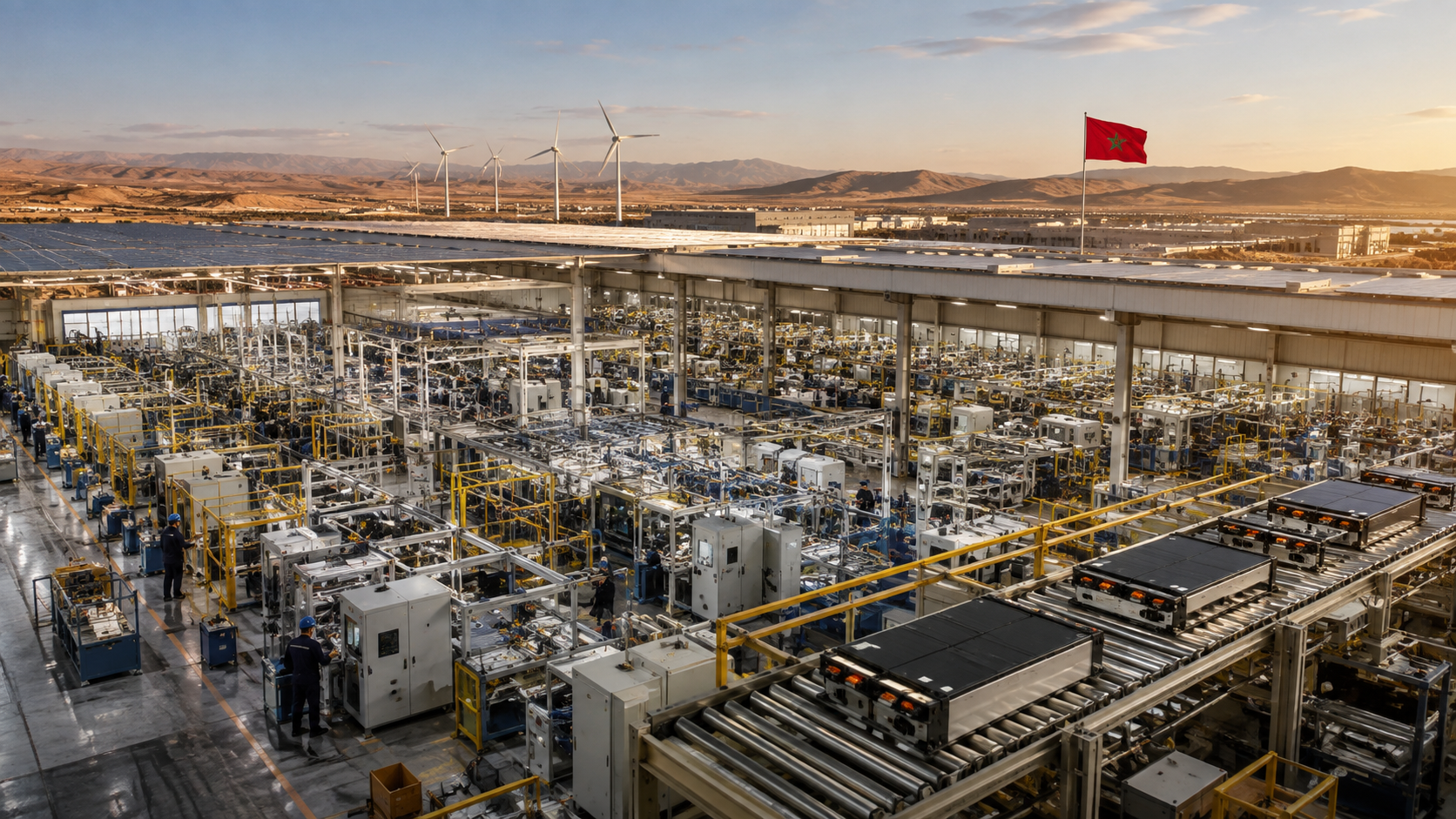
One of the most significant examples is the battery gigafactory being developed in Morocco by China’s Gotion High-Tech.
The African Development Bank approved a €100 million loan in July 2026, equivalent to around $114 million, while planning to mobilise up to another €141 million from financing partners.
The project’s initial investment is estimated at approximately $1.3 billion.
Its first phase is intended to manufacture lithium-iron-phosphate battery products and related components, with Europe expected to be one of the principal export destinations.
This is no longer small-scale supplier localisation.
Morocco is entering one of the most strategic industrial value chains in the global economy.
Battery cells.
Cathodes.
Anodes.
Battery materials.
Energy storage.
Electric vehicles.
The question for Morocco is no longer whether it can attract Chinese capital.
It clearly can.
The question is how to turn that capital into a deeper Moroccan industrial ecosystem.
Europe Is Changing The Rules Around Industrial Value
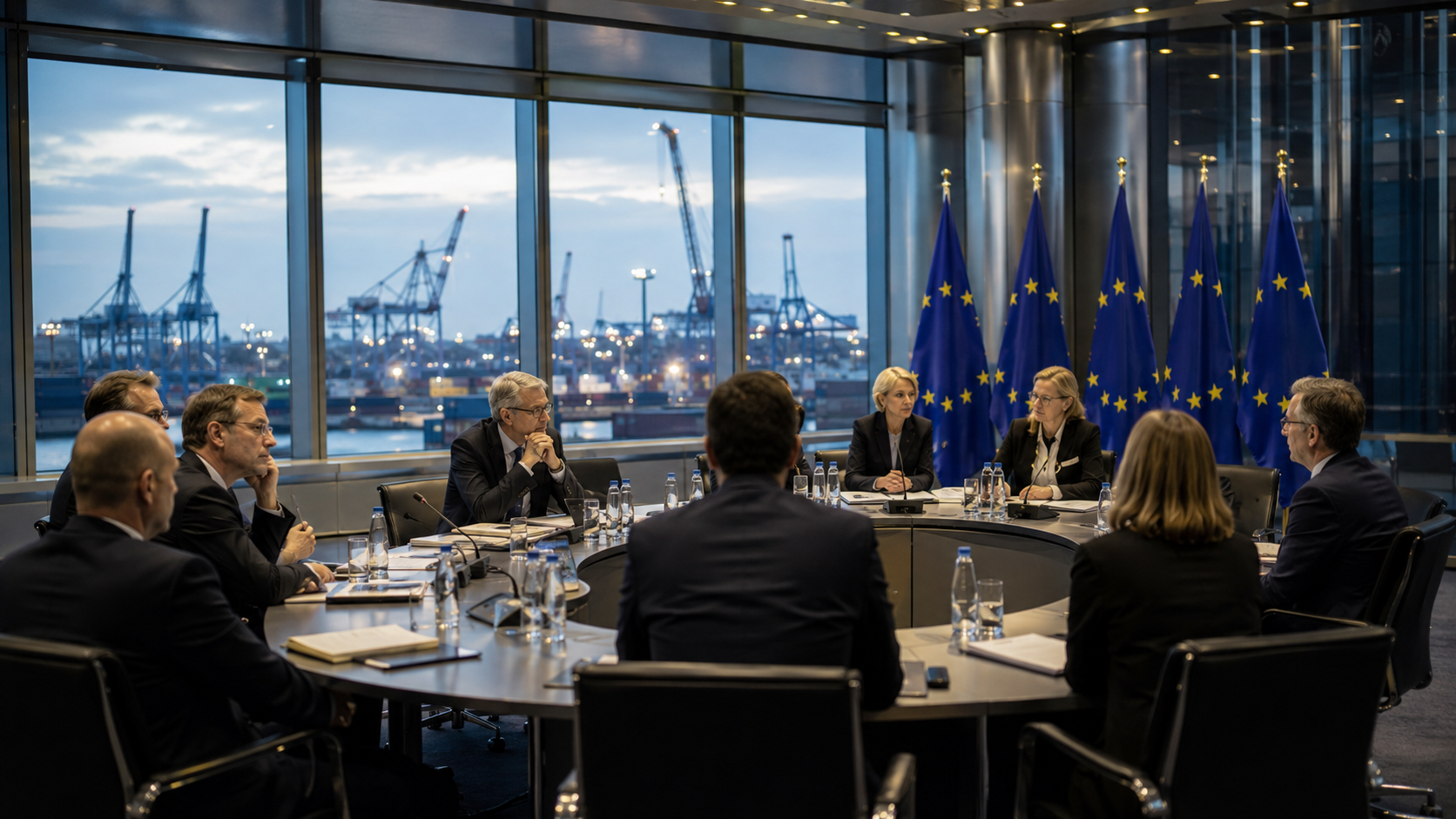
Europe is simultaneously moving toward stricter concepts of local industrial content.
The proposed Industrial Accelerator Act would introduce local-content requirements for some publicly supported industrial products, including electric vehicles and batteries.
The exact treatment of production from countries with EU free-trade agreements remains an important unresolved issue.
Morocco could potentially benefit from its deep economic integration with Europe.
But that treatment is not automatic under the emerging rules.
This distinction could become extremely important.
If Moroccan-made components are treated favourably inside future European industrial rules, Morocco’s attractiveness increases substantially.
If qualification becomes more restrictive, some investment models could need to change.
That is why origin is becoming as important as location.
A factory standing in Morocco does not automatically make every component Moroccan for trade-policy purposes.
The value created locally matters.
Rules Of Origin Could Become Morocco’s Biggest Industrial Asset

Rules of origin sound technical.
They can determine billions of dirhams of investment.
The principle is simple.
A product must contain enough qualifying local or regional value to receive preferential trade treatment.
The more manufacturing, transformation and sourcing happens inside Morocco or within recognised partner supply chains, the stronger the case for Moroccan origin.
This creates a strategic incentive for Morocco.
Do not simply attract final assembly.
Attract the suppliers behind it.
Battery materials.
Electronic systems.
Packaging.
Engineering.
Testing.
Industrial services.
Logistics.
The deeper the local value chain becomes, the harder it is to describe Moroccan production as simply Chinese goods moving through another country.
Industrial depth becomes trade protection.
Brussels Has Already Examined A Moroccan-Chinese Case
European concern is not purely theoretical.
The European Commission previously investigated imports of aluminium road wheels from Morocco connected with Chinese producer CITIC Dicastal.
In a 2025 implementing regulation, the Commission examined financing arrangements, Moroccan industrial incentives and the relationship between Moroccan and Chinese support surrounding the investment.
The Commission concluded that preferential Chinese financing linked to the Moroccan operation could be attributed in the context of the subsidy investigation.
That case matters because it created a precedent.
European authorities demonstrated that they are willing to look beyond the location printed on a product.
They may examine how a project was financed.
Where support originated.
What value was actually created locally.
How bilateral industrial cooperation operates.
For future Moroccan-Chinese projects, that means compliance needs to be built into the investment model from the beginning.
Morocco Should Not Choose Between China And Europe
The easiest interpretation would be that Morocco eventually has to choose a side.
That would be strategically unnecessary.
Europe is Morocco’s largest industrial and commercial partner.
China is one of the world’s most important sources of manufacturing capital, technology and industrial scale.
Morocco benefits from relationships with both.
The stronger strategy is becoming the place where investment from multiple regions can operate under clear Moroccan rules.
European companies.
Chinese companies.
American companies.
Japanese companies.
Korean companies.
Gulf investors.
What matters is whether the investment creates genuine local economic value.
Factories.
Employment.
Suppliers.
Skills.
Exports.
Taxable activity.
Engineering.
Technology transfer.
Morocco’s objective should not be to become anybody’s industrial satellite.
It should become an industrial platform that multiple partners need.
Chinese Investment Can Accelerate Morocco’s Industrial Upgrade
Chinese companies bring something difficult to reproduce quickly.
Industrial scale.
Especially in sectors such as batteries, solar equipment and electric mobility.
China spent years building enormous domestic supply chains.
Those companies now possess manufacturing experience that newer industrial markets may need decades to develop organically.
Morocco can compress part of that learning curve by attracting them.
Local engineers can learn production systems.
Suppliers can acquire new standards.
Industrial zones gain specialist infrastructure.
Universities can adapt programmes.
Employees move between companies.
The benefit of foreign investment therefore goes beyond the initial factory.
Industrial knowledge can spread into the wider economy.
But this happens only when local integration is deliberate.
Local Content Must Become The Central Metric
Job announcements attract headlines.
Investment amounts attract headlines.
The more strategic number may eventually be local content.
What percentage of the product’s value is created in Morocco?
How much equipment is sourced locally?
How many Moroccan suppliers participate?
How much engineering is performed domestically?
How many senior technical positions are local?
How much research is conducted inside the country?
These measurements determine whether an investment becomes embedded.
A factory importing nearly every component, assembling them and exporting the finished product creates one level of value.
A factory supported by dozens of Moroccan suppliers creates much more.
The second model is also more defensible when international trade rules become tougher.
Technology Transfer Should Be Commercial, Not Symbolic
Governments frequently talk about technology transfer.
The phrase can become vague.
The practical version is simpler.
Can Moroccan engineers operate the production system independently?
Can local suppliers meet specifications?
Can Moroccan teams modify processes?
Can they design tooling?
Can they perform testing?
Can they improve efficiency?
Can they eventually develop products?
That is real technology transfer.
It happens through work.
Not ceremonies.
Morocco should therefore encourage investors to create engineering and technical-development functions alongside manufacturing.
The country already proved it can build vehicles.
The battery and electronics era should help prove it can progressively design more of what goes inside them.
Europe Has Its Own Chinese Investment Debate
Morocco is not unique in attracting Chinese manufacturing.
Spain is actively courting Chinese automotive and battery investors while simultaneously asking Brussels for clearer EU-wide rules around foreign industrial investment.
Chinese groups including Geely, SAIC, Chery and CATL have been developing or examining European production strategies as companies respond to trade barriers and supply-chain pressure.
This is important for Morocco.
Europe itself wants Chinese investment when it creates factories and employment.
The dispute is therefore not simply “Chinese investment is undesirable.”
The debate is about conditions.
Local production.
Technology.
Ownership.
Subsidies.
Employment.
Supply-chain dependence.
Morocco faces many of the same questions.
In that sense, Morocco is not outside the European industrial debate.
It is becoming part of it.
Chinese EV Tariffs Changed The Economics
The European Commission introduced definitive countervailing duties on battery-electric vehicles imported from China after its anti-subsidy investigation.
Depending on the manufacturer, the additional duties ranged from 7.8% to 35.3%.
In January 2026, Brussels issued guidance allowing Chinese manufacturers to propose alternative undertakings involving factors such as minimum import prices and future investment commitments.
Trade barriers naturally change corporate behaviour.
If exporting directly from China becomes more expensive, companies search for other structures.
Build inside Europe.
Form European joint ventures.
Regionalise production.
Invest closer to the target market.
Morocco therefore becomes more attractive at exactly the moment Chinese manufacturers are reconsidering global production footprints.
That opportunity is significant.
But it also explains European scrutiny.
Morocco Cannot Become A Simple Tariff Workaround
This may be the most important strategic risk.
If Moroccan production is perceived merely as a mechanism allowing Chinese products to avoid European trade measures, Brussels will eventually respond.
Morocco should therefore have the same interest as Europe in preventing that perception.
The strongest defence is genuine industrialisation.
Real factories.
Real transformation.
Real Moroccan employees.
Real suppliers.
Real investment.
Real local value.
A company should choose Morocco because Morocco is a competitive manufacturing location.
Not because a Moroccan address merely changes the customs treatment of a Chinese product.
The difference may determine the durability of entire investment projects.
Europe Also Needs Morocco
The relationship is not one-sided.
European automotive manufacturing increasingly depends on supply chains extending beyond EU borders.
Industry groups have already argued that future European local-content rules should recognise closely integrated partners such as Morocco, the United Kingdom and Turkey because their automotive industries are deeply connected with EU production.
That gives Morocco leverage.
European manufacturers cannot simply redesign decades of supply-chain integration overnight.
Moroccan plants already produce components used in European vehicles.
European manufacturers have invested directly in Morocco.
Ports and logistics networks connect the two systems daily.
This means Brussels must balance two goals.
Protect European industrial capability.
Avoid damaging supply chains that European companies themselves depend on.
Morocco sits directly inside that balance.
Tanger Could Become One Of The Most Important Nodes
Tangier and the wider northern industrial corridor are especially important.
Tanger Med already provides exceptional logistics connectivity.
Automotive manufacturers and suppliers operate around the region.
Chinese companies are increasingly establishing industrial activities there aimed partly at European markets.
The strategic opportunity is clustering.
Battery suppliers.
Automotive electronics.
Metal components.
Logistics providers.
Engineering companies.
Renewable-energy suppliers.
When enough specialised businesses operate in the same region, investment becomes self-reinforcing.
A new investor comes because suppliers already exist.
The supplier comes because customers already exist.
Talent comes because jobs already exist.
Universities train students because industry demands them.
That is how an industrial zone becomes an industrial ecosystem.
Nador West Med Could Add A Second Industrial Gateway
Morocco’s broader industrial geography is also expanding.
Nador West Med creates the possibility of another large-scale industrial and logistics platform on the Mediterranean.
If Tangier becomes increasingly congested or specialised, investors will look for alternatives.
A second major northern industrial gateway could allow Morocco to distribute future manufacturing growth more widely.
This matters for Chinese investment too.
Battery materials, green-industry projects and export-oriented manufacturing require large industrial sites, energy and port access.
Morocco’s opportunity is not limited to attracting companies already searching for Tanger.
It can build several internationally competitive industrial corridors.
That makes the country harder to bypass.
Energy Will Decide How Much Investment Morocco Can Accept
Advanced manufacturing requires enormous energy capacity.
Battery plants.
Chemical processing.
Automotive factories.
Data centres.
Metallurgy.
Morocco’s recently approved ONEE investment programme exceeding 248 billion dirhams between 2026 and 2030 therefore connects directly with this industrial story.
New factories can be announced faster than power infrastructure can be built.
Morocco needs generation.
Transmission.
Storage.
Water.
Desalination.
Industrial growth will eventually encounter physical limits if utilities do not expand quickly enough.
Chinese manufacturers considering Morocco will examine those fundamentals carefully.
Tax incentives help a factory enter.
Reliable electricity helps it remain.
Green Power Could Strengthen Morocco’s European Position
Renewable electricity can also become strategically valuable in trade.
Europe is increasingly focused on the carbon intensity of industrial production.
Morocco’s solar and wind resources give the country an opportunity to manufacture increasingly low-carbon products for European markets.
That can strengthen the argument that Moroccan industrialisation complements European decarbonisation rather than undermining it.
A battery manufactured in Morocco using increasingly renewable electricity creates a different commercial proposition from one produced in a coal-intensive system and shipped thousands of kilometres.
Morocco should make that advantage measurable.
Investors and regulators increasingly want data.
Carbon intensity may eventually matter almost as much as labour cost.
Morocco Needs Moroccan Champions Inside The Supply Chain
Foreign direct investment is powerful.
It should eventually produce more Moroccan-owned industrial companies.
A Chinese battery producer may create demand for dozens of suppliers.
Some of those suppliers should be Moroccan.
A European automaker may require engineering services.
Moroccan companies should provide them.
A new industrial park may need automation.
Local technology firms should participate.
The goal is not simply hosting multinational corporations.
It is using multinational demand to grow domestic companies around them.
That is how foreign investment creates lasting economic sovereignty.
The strongest proof of Morocco’s automotive success will eventually be Moroccan industrial suppliers capable of expanding abroad themselves.
Chinese Capital Could Also Target The Moroccan Market
Europe is central to the current story.
But Morocco itself is becoming more commercially attractive.
Its population is growing.
Infrastructure is improving.
Automotive ownership can rise.
Renewable energy is expanding.
Industrial activity is increasing.
Chinese companies may therefore increasingly view Morocco not simply as an export base but as a domestic and African market.
This distinction matters.
A factory with several potential markets becomes more resilient.
Europe.
Morocco.
West Africa.
Other African markets.
The broader the customer base, the less dependent the investment becomes on one trade regime.
That is strategically useful for both Morocco and the investor.
Africa Makes Morocco More Valuable To China
Chinese companies have long operated across Africa.
Morocco offers a different model.
It combines African market positioning with European proximity and sophisticated industrial infrastructure.
That can make the Kingdom an attractive regional headquarters or manufacturing base.
Chinese companies can produce in Morocco and potentially serve Europe, North Africa and parts of Sub-Saharan Africa.
Moroccan banks, logistics companies and commercial networks already operate in several African markets.
Those networks can eventually help industrial companies expand.
Morocco therefore sells investors more than one market.
It sells geographic optionality.
Few manufacturing locations offer the same combination.
Brussels’ Concern Is Also A Compliment
European scrutiny should not automatically be interpreted negatively.
In one sense, it is evidence that Morocco’s industrial strategy has become economically significant.
Regulators do not spend much time worrying about manufacturing locations that do not matter.
Morocco is attracting attention precisely because global companies increasingly consider it relevant to European supply chains.
That represents progress.
But success creates responsibilities.
Trade compliance.
Transparency.
Rules of origin.
Local value creation.
Subsidy discipline.
Industrial data.
The more important Morocco becomes, the more carefully its exports will be examined.
That is a normal consequence of moving up the economic hierarchy.
Morocco’s Best Response Is More Industrial Depth
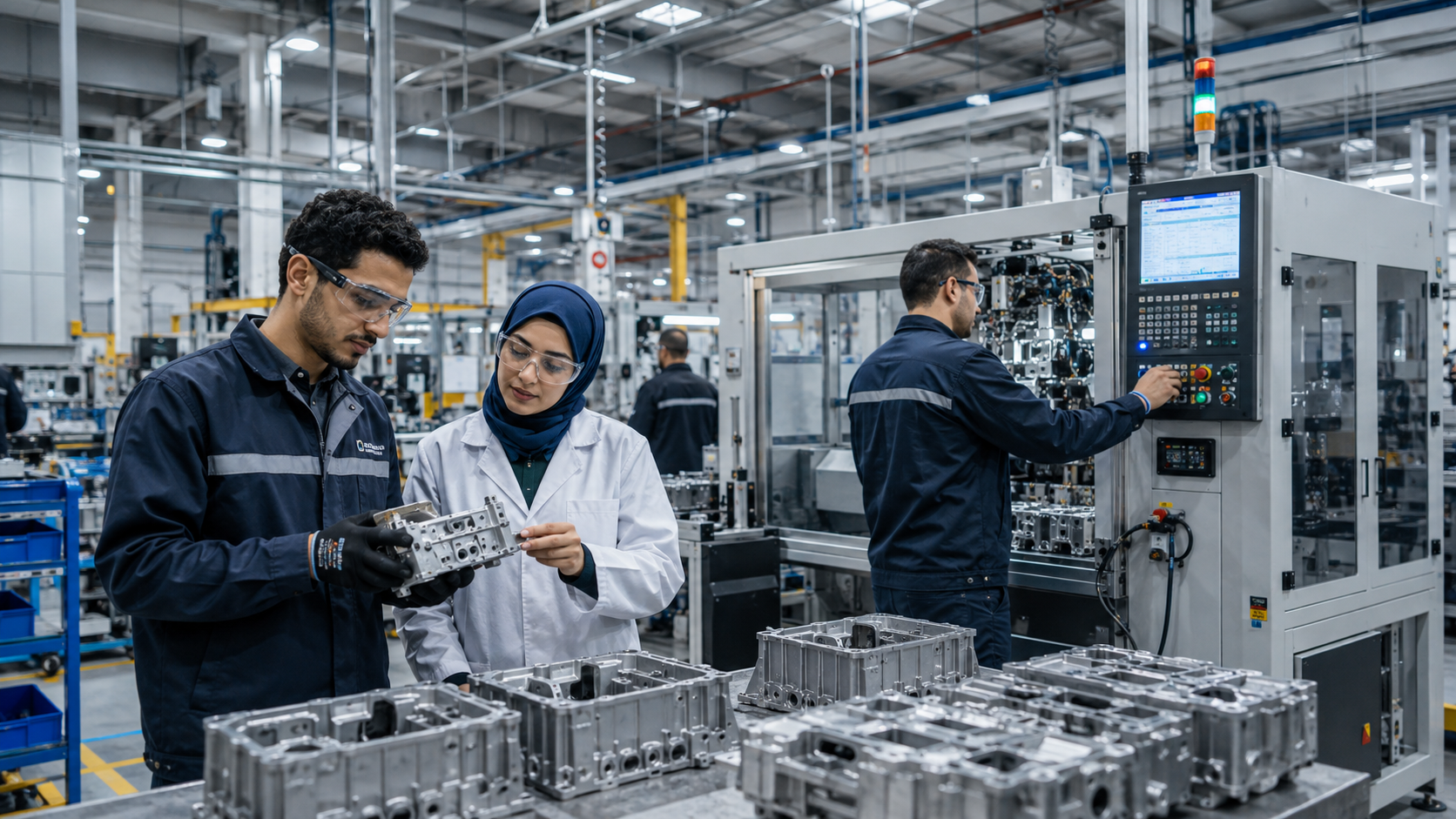
Morocco does not need to slow Chinese investment because Europe is concerned.
It needs to make the investment more Moroccan.
More local suppliers.
More Moroccan engineers.
More local sourcing.
More research.
More technology transfer.
More renewable power.
More processing.
More genuine transformation before export.
That strategy serves everyone.
Chinese companies receive a stronger manufacturing base.
Morocco captures more economic value.
European customers receive reliable regional supply.
Rules-of-origin compliance becomes easier to demonstrate.
Industrial relationships become harder to challenge politically.
The solution to trade scrutiny is not less industry.
It is deeper industry.
Morocco Is Becoming Too Important To Ignore
For years, Morocco’s industrial question was straightforward:
How can the country attract more factories?
That question has changed.
Chinese manufacturers are investing.
European companies are expanding.
American suppliers are arriving.
Battery production is growing.
Automotive technology is deepening.
Europe is simultaneously redesigning the rules governing strategic industrial production and examining how Chinese capital interacts with neighbouring manufacturing platforms.
Morocco has therefore entered a much more sophisticated stage of development.
It is no longer standing outside the world’s industrial competition asking for investment.
It is becoming one of the places where that competition is happening.
That creates risk.
It also creates enormous leverage.
The winning strategy is not choosing Europe over China or China over Europe.
It is making Morocco valuable enough that both need the Moroccan industrial platform.
If the Kingdom can combine Chinese capital, European market access, Moroccan skills, local suppliers and increasingly low-carbon energy, the current scrutiny may ultimately become evidence of something much bigger:
Morocco’s industrial strategy has become important enough to influence the economic calculations of both Brussels and Beijing.