
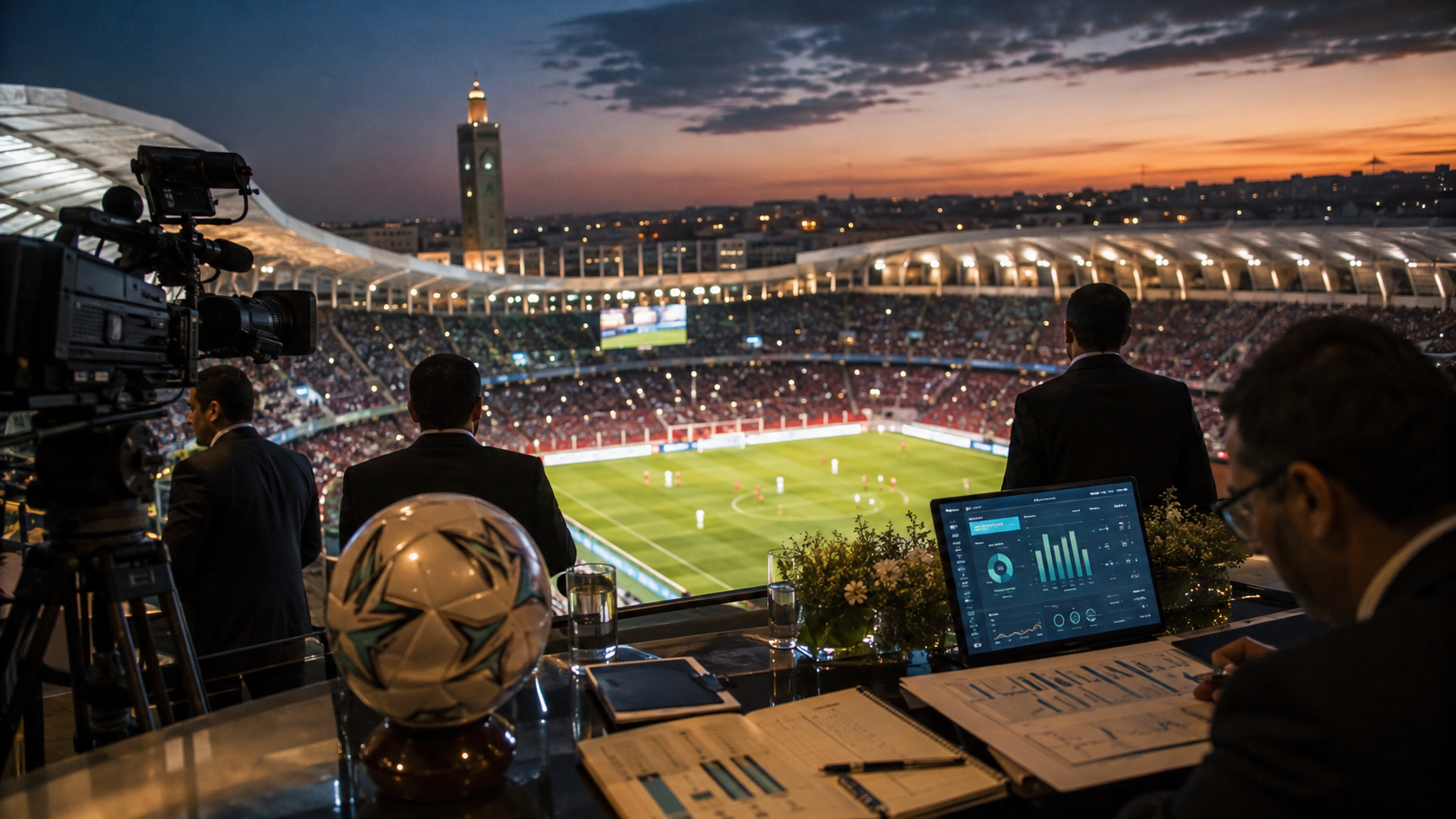
Football’s next commercial battle is no longer only about television rights.
It is about who should own part of the business behind the game.
FIFA recently explored a plan to create FIFA Forward Enterprise, a commercial subsidiary combining broadcast, sponsorship, licensing, ticketing, hospitality and event operations.
The proposed structure carried an implied equity valuation of $20 billion and contemplated raising up to $4.2 billion from minority investors. FIFA would have remained the controlling shareholder.
The proposal has since become highly controversial.
UEFA, the AFC and CONCACAF opposed the process strongly, while several Arab federations — including Morocco — publicly reaffirmed their support for FIFA President Gianni Infantino on 13 August.
For Morocco, the most interesting part is not the politics surrounding Infantino.
It is the number.
$4.2 billion.
That figure reveals how far football’s commercial economy has moved beyond stadium tickets and shirt sponsorships.
And with Morocco preparing to co-host the 2030 World Cup, that shift matters enormously.
Football Rights Are Becoming Financial Assets

Broadcast rights have always been valuable.
What FIFA’s proposal demonstrated is that investors now see football rights as something closer to long-term infrastructure.
A commercial platform can combine several revenue streams.
Media.
Sponsorship.
Hospitality.
Licensing.
Ticketing.
Future digital products.
If those revenues are predictable enough, investors can place a valuation on the entire commercial system.
That is how FIFA arrived at an implied valuation of approximately $20 billion for the proposed enterprise.
This changes how countries should think about major football tournaments.
The World Cup is not simply a sporting event generating a few weeks of tourism.
It is a global commercial ecosystem.
Morocco will sit inside that ecosystem in 2030.
The question is how much of it the Moroccan economy can capture.
2030 Will Generate More Than Matchday Spending
The most visible 2030 revenues will be obvious.
Hotels.
Restaurants.
Transport.
Tickets.
Retail.
But the less visible commercial activity could be equally important.
Production.
Broadcast services.
Digital content.
Data.
Hospitality agencies.
Event technology.
Advertising.
Fan engagement.
Licensing.
Merchandising.
Multilingual media.
Morocco should therefore prepare for 2030 as both a hosting project and a commercial-industry project.
The stadium is only one piece of the football economy.
The companies operating around the stadium may continue generating revenue long after the tournament ends.
FIFA’s $20 Billion Valuation Changes The Scale
FIFA said J.P. Morgan valued the proposed commercial entity at approximately $20 billion, with minority investors potentially contributing up to $4.2 billion.
That number is striking.
A football commercial platform can therefore be valued like a major global corporation.
This reflects one underlying fact.
Football attention is scarce.
Billions of people may care about the same tournament simultaneously.
Advertisers cannot easily reproduce that audience elsewhere.
Streaming platforms cannot manufacture the emotional value of a World Cup overnight.
Sponsors therefore pay for access.
Broadcasters pay for exclusivity.
Hospitality customers pay for scarcity.
Fans pay for identity.
Football transforms attention into financial value.
Morocco Needs Its Own Sports-Commercial Expertise
Hosting the World Cup does not automatically create commercial expertise.
Morocco needs people and companies capable of understanding how rights are packaged.
How sponsorship is priced.
How hospitality is sold.
How digital audiences are measured.
How licensing works.
How fan databases are monetised responsibly.
How international campaigns are distributed.
These skills are increasingly specialised.
By 2030, Morocco should have more sports-business professionals capable of competing internationally.
Otherwise, the largest commercial mandates will naturally go to foreign agencies with decades of experience.
International expertise will remain necessary.
But Moroccan firms should participate inside those contracts rather than simply watching them arrive.
Broadcast Production Can Become An Export Industry
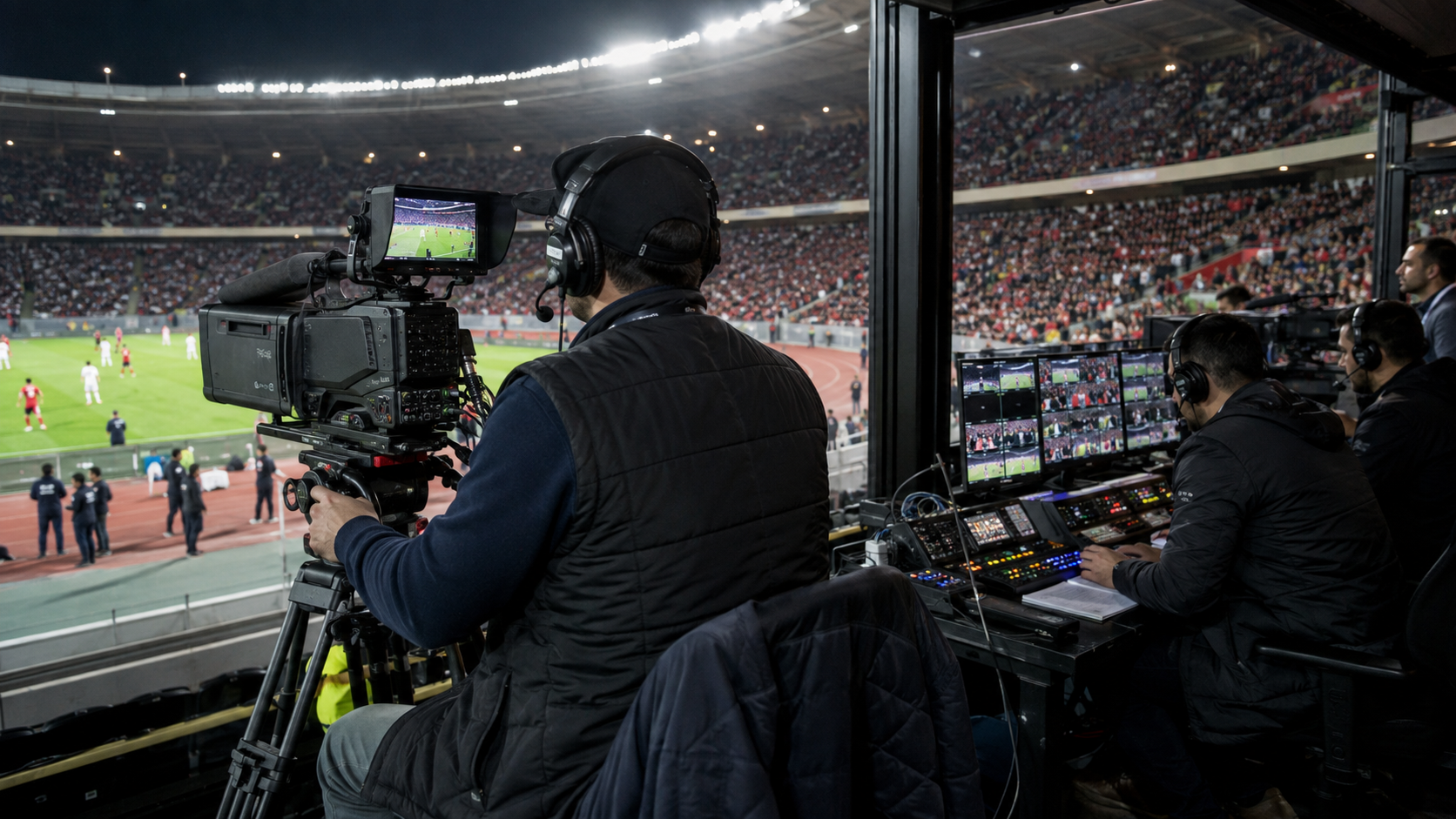
A World Cup requires extraordinary production capacity.
Cameras.
Graphics.
Replays.
Studios.
Commentary.
Sound.
Satellite systems.
Digital distribution.
Highlights.
Data visualisation.
Multilingual feeds.
Thousands of professionals work behind what viewers see on television.
Morocco can use 2030 to accelerate its own broadcast-production industry.
That capability has value after the tournament.
CAF competitions.
Botola.
International football.
Athletics.
Concerts.
Esports.
Corporate events.
A production company trained under World Cup standards can later sell those capabilities across Africa.
That is a much stronger legacy than temporary event employment.
Hospitality Is A High-Margin Opportunity
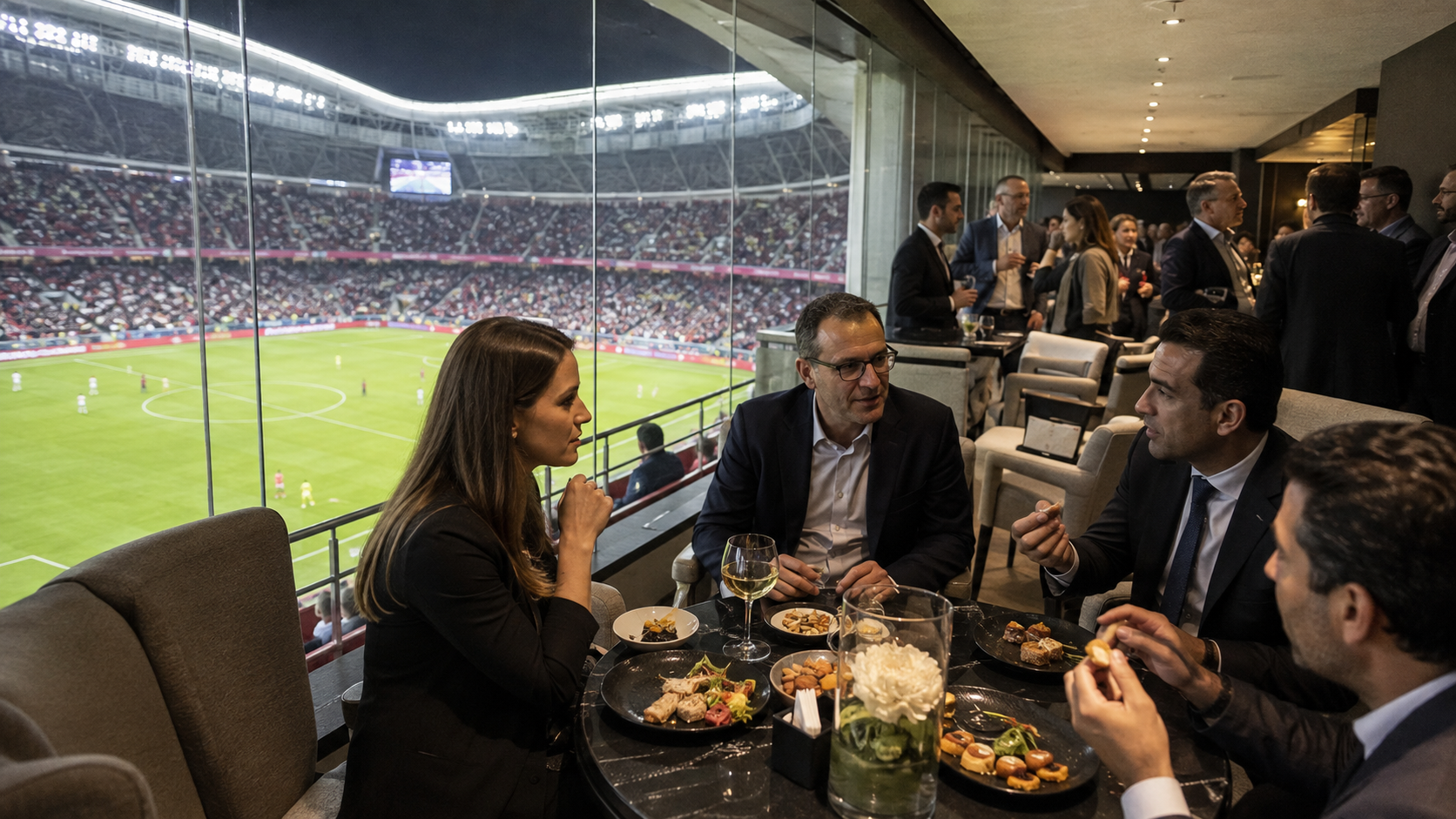
Premium football hospitality can generate extraordinary spending per visitor.
Corporate lounges.
Private boxes.
Premium dining.
Transportation.
Accommodation.
Sponsor events.
Business networking.
VIP tourism.
These customers spend differently from ordinary spectators.
Morocco’s tourism industry should therefore prepare dedicated 2030 products.
Luxury hotels already understand this market.
But event agencies, restaurants, transport companies and regional tourism operators can participate too.
A corporate guest attending one match may also stay several nights, organise meetings and travel elsewhere in Morocco.
Football becomes the anchor for a broader business trip.
That makes hospitality an economic multiplier.
Ticketing Data Has Commercial Value
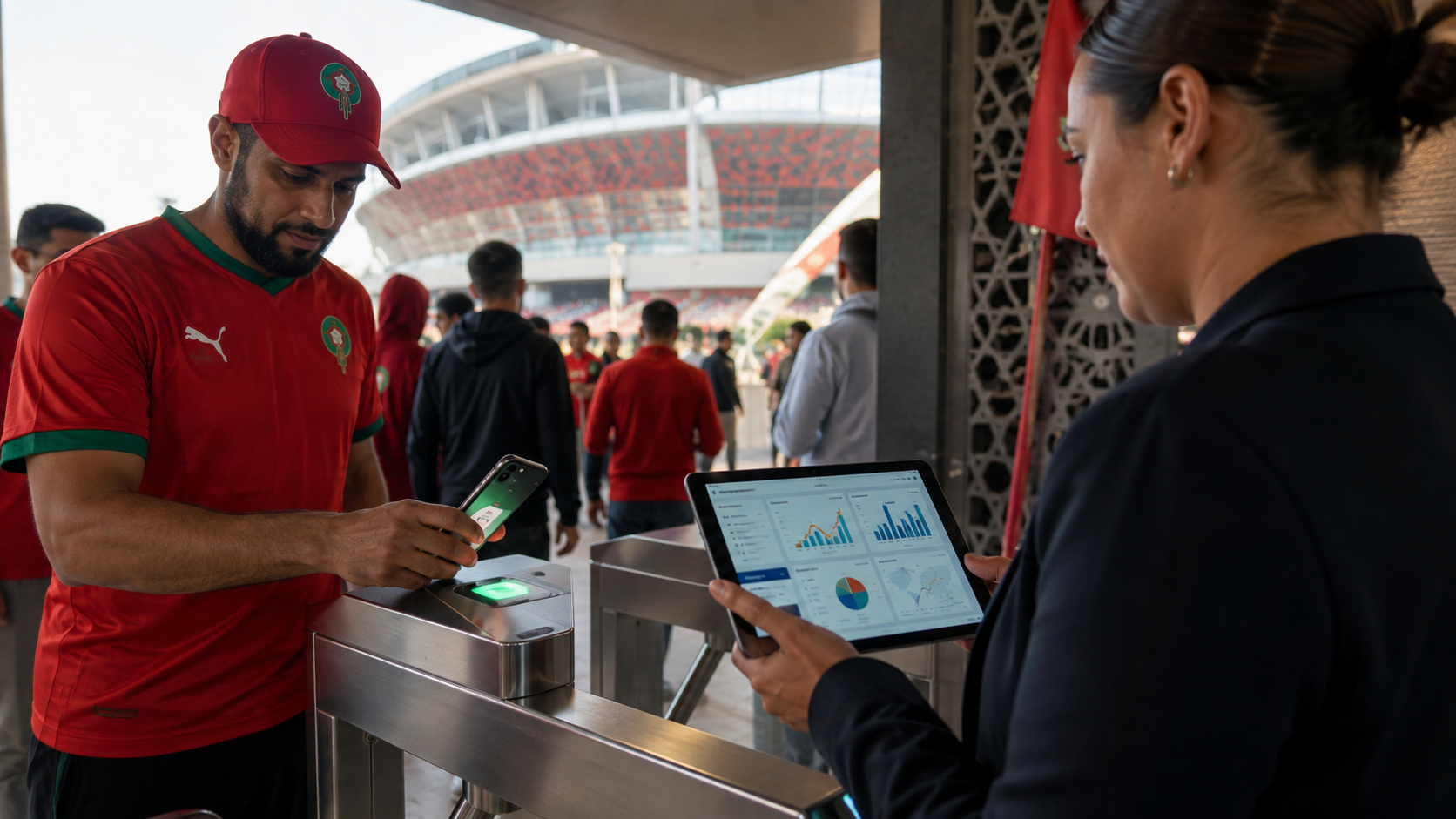
Modern ticketing is no longer simply about admission.
Each transaction creates information.
Who bought?
Where do they live?
Which matches interest them?
How early do they purchase?
Which seats do they prefer?
Do they also buy merchandise?
Data allows organisers to understand audiences much more deeply.
Moroccan football clubs can benefit from the same logic before 2030.
Digital supporter accounts can connect ticketing with memberships and official retail.
The club begins to understand its customers directly rather than only counting people entering the stadium.
That creates more predictable revenue.
It also makes sponsorship packages more measurable.
Merchandise Is Intellectual Property
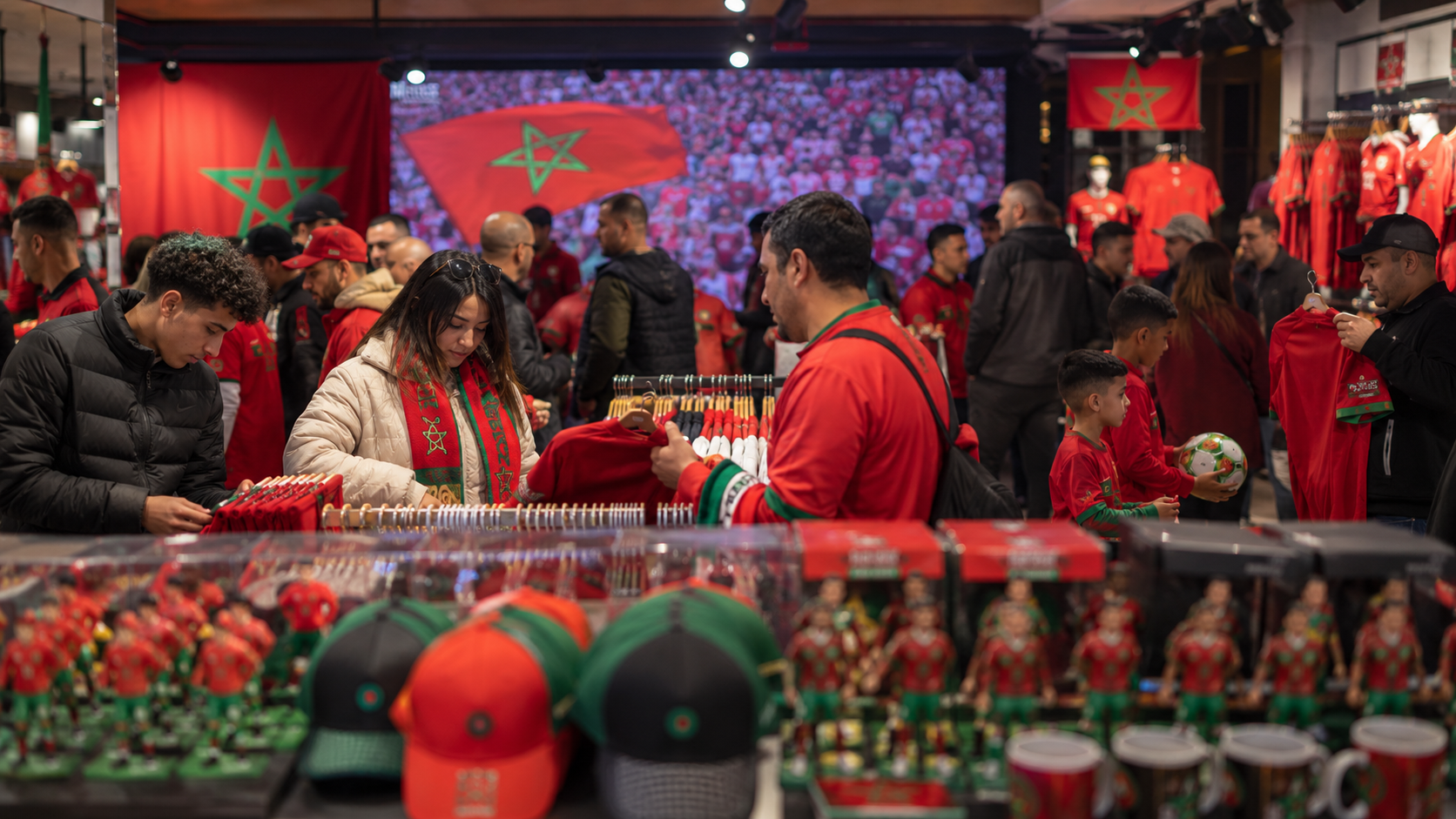
A football shirt is fabric.
A Morocco national-team shirt is intellectual property.
The price difference comes from identity.
This is one of the most powerful aspects of sports economics.
Consumers pay more because the product represents belonging.
2030 will create enormous demand for official merchandise.
Shirts.
Scarves.
Caps.
Collectibles.
Children’s products.
Limited editions.
Collaborations.
Moroccan companies should participate in the design, production and distribution value chain wherever licensing rules allow.
The opportunity extends beyond the tournament itself.
A well-developed national sports-merchandising industry can continue serving clubs and federations afterwards.
Piracy Reduces The Value Of Rights
Commercial rights become valuable only when they can be protected.
Illegal streaming reduces exclusivity.
Counterfeit merchandise reduces licensing revenue.
Unlicensed hospitality damages official packages.
This creates a commercial-policy challenge.
Protection matters.
But enforcement alone is rarely enough.
Legal products must also be easy to access.
Affordable streaming.
Reliable platforms.
Official online retail.
Fast delivery.
Transparent ticketing.
Consumers are more willing to use legitimate channels when those channels work well.
Rights protection and customer convenience therefore need to develop together.
FIFA Wanted Private Capital For Development
FIFA’s proposal was not presented simply as a way to enrich the commercial operation.
The organisation said the new structure could support more than $10 billion in football-development funding over future cycles.
Each of FIFA’s 211 member associations could potentially have received an optional $20 million in immediate project funding, alongside larger future Forward distributions.
This is what makes the economics particularly interesting.
Commercial rights could be converted into upfront investment.
That capital could then finance stadiums, training centres and development programmes.
In financial terms, FIFA was effectively exploring whether future commercial growth could help fund infrastructure today.
That is a much more sophisticated model than relying only on annual operating cash flow.
The Controversy Shows Governance Matters
The proposal also demonstrated the limits of pure commercial logic.
A transaction can look financially attractive and still face institutional resistance.
UEFA, AFC and CONCACAF criticised the process, while the wider dispute has turned into a major governance debate inside global football.
This matters for Morocco too.
Sports organisations are not ordinary corporations.
They represent federations, clubs, supporters and national interests.
Commercial decisions therefore need legitimacy as well as financial logic.
Who owns the rights?
Who benefits?
Who controls the company?
How transparent is the valuation?
How are revenues distributed?
These questions become more important as football grows richer.
A $20 billion valuation naturally attracts more scrutiny than a small administrative federation.
Morocco’s Support Places It Inside The Debate
On 13 August, the federations of Morocco, Qatar, Egypt, Lebanon, Mauritania and Sudan issued a joint statement supporting Infantino’s leadership amid the controversy.
Morocco therefore finds itself directly inside one of football’s largest current governance and commercial discussions.
That should be handled carefully.
The Moroccan opportunity is not to become associated with one personality.
It is to understand the structural issue underneath the dispute.
Football commercial rights are becoming enormously valuable.
Development funding is becoming linked with commercial innovation.
Private capital is increasingly interested in sport.
And member federations want greater influence over how those assets are managed.
All four trends will remain relevant long after the current controversy ends.
CAF Has A Similar Commercial Challenge
African football possesses enormous audiences.
But commercial monetisation still trails the strongest global sports markets.
Broadcast rights.
Sponsorship.
Digital subscriptions.
Merchandise.
Club revenues.
Hospitality.
African football has significant room to grow across all of them.
Morocco can play a role in that development.
Its infrastructure is improving rapidly.
Its clubs have continental visibility.
Its national team has global recognition.
Its media and corporate sectors are comparatively developed.
By 2030, Morocco could become one of Africa’s strongest centres for sports-business expertise.
That would create a legacy extending beyond hosting matches.
Clubs Need Stronger Commercial Departments
The lesson from FIFA’s $4.2 billion proposal also reaches Moroccan clubs.
Football brands can possess tremendous value.
But that value needs professional management.
Sponsorship sales.
Merchandising.
Content.
Hospitality.
Ticketing.
Data.
Academies.
Player trading.
International partnerships.
These functions require dedicated commercial teams.
A club cannot depend entirely on presidents and sporting results.
Revenue needs systems.
The strongest European clubs built professional commercial operations because sporting performance alone is volatile.
Moroccan clubs moving toward more professional structures should follow the same logic.
Media Rights Could Transform The Botola
Domestic broadcasting remains one of the clearest long-term opportunities.
A stronger Botola media product could generate additional value for every club.
Better production.
Consistent scheduling.
Digital highlights.
International distribution.
Diaspora access.
Multilingual commentary.
Behind-the-scenes content.
The league should eventually be sold not only as live matches but as a complete media package.
Millions of Moroccans living abroad represent an obvious audience.
Africa represents another.
A stronger domestic rights market would make clubs less dependent on owners, subsidies or exceptional sporting bonuses.
Recurring media revenue changes football economics.
Morocco’s Diaspora Makes The Audience Global
Moroccan football has a commercial advantage that domestic population statistics do not fully capture.
The audience is international.
France.
Belgium.
The Netherlands.
Spain.
Germany.
Canada.
The Gulf.
Diaspora supporters follow the national team and leading clubs intensely.
That creates demand for official merchandise, digital content and live football.
A Moroccan sports-media company should therefore think globally from its first day.
French.
Arabic.
English.
Potentially Spanish and Dutch targeted campaigns.
The World Cup will temporarily increase international attention.
The diaspora can make part of that audience permanent.
2030 Should Create Companies, Not Only Jobs
Major events often produce employment.
Construction jobs.
Security.
Hospitality.
Transport.
Temporary event staff.
Those are valuable.
But the stronger economic legacy is company creation.
A Moroccan sports-production company that wins international contracts after 2030.
A ticketing technology business serving African stadiums.
A hospitality agency expanding regionally.
A sports-data startup.
A merchandising company.
A content studio.
A digital fan-engagement platform.
These companies create recurring employment and intellectual property.
The World Cup should therefore be used as a customer for an emerging sports-business ecosystem.
Private Capital Will Return To Football
Even if the current FIFA proposal does not survive in its original form, the financial idea behind it will not disappear.
Private equity already invests in leagues.
Clubs.
Media-rights businesses.
Sports technology.
Data companies.
Hospitality platforms.
Football attracts capital because global audiences remain extremely valuable.
FIFA’s proposed $20 billion enterprise simply brought that trend to the centre of world football.
Future structures may look different.
The central question will remain:
How much is football’s future commercial revenue worth today?
That question will shape major sports transactions for years.
Morocco Should Study The $4.2 Billion Lesson
Morocco’s role as a 2030 host makes this debate unusually relevant.
The country is spending heavily on stadiums, rail, airports and urban infrastructure.
Those investments are necessary.
But the commercial economy surrounding the tournament deserves equal strategic attention.
Rights.
Production.
Media.
Data.
Hospitality.
Merchandising.
Technology.
Sponsorship.
These are the businesses through which football converts global attention into durable revenue.
FIFA’s proposed commercial enterprise was valued at $20 billion and sought up to $4.2 billion from minority investors.
Whether that specific structure ultimately survives matters less to Morocco than the economic message behind it.
Football is no longer only a sport financed by commercial partners.
At the highest level, football itself has become an investable commercial asset.
Morocco will help host the world’s most valuable football event in 2030.
Its bigger opportunity is ensuring that by then, Moroccan companies are capable of participating in the billions generated around the game — not simply providing the stadium in which it is played.