
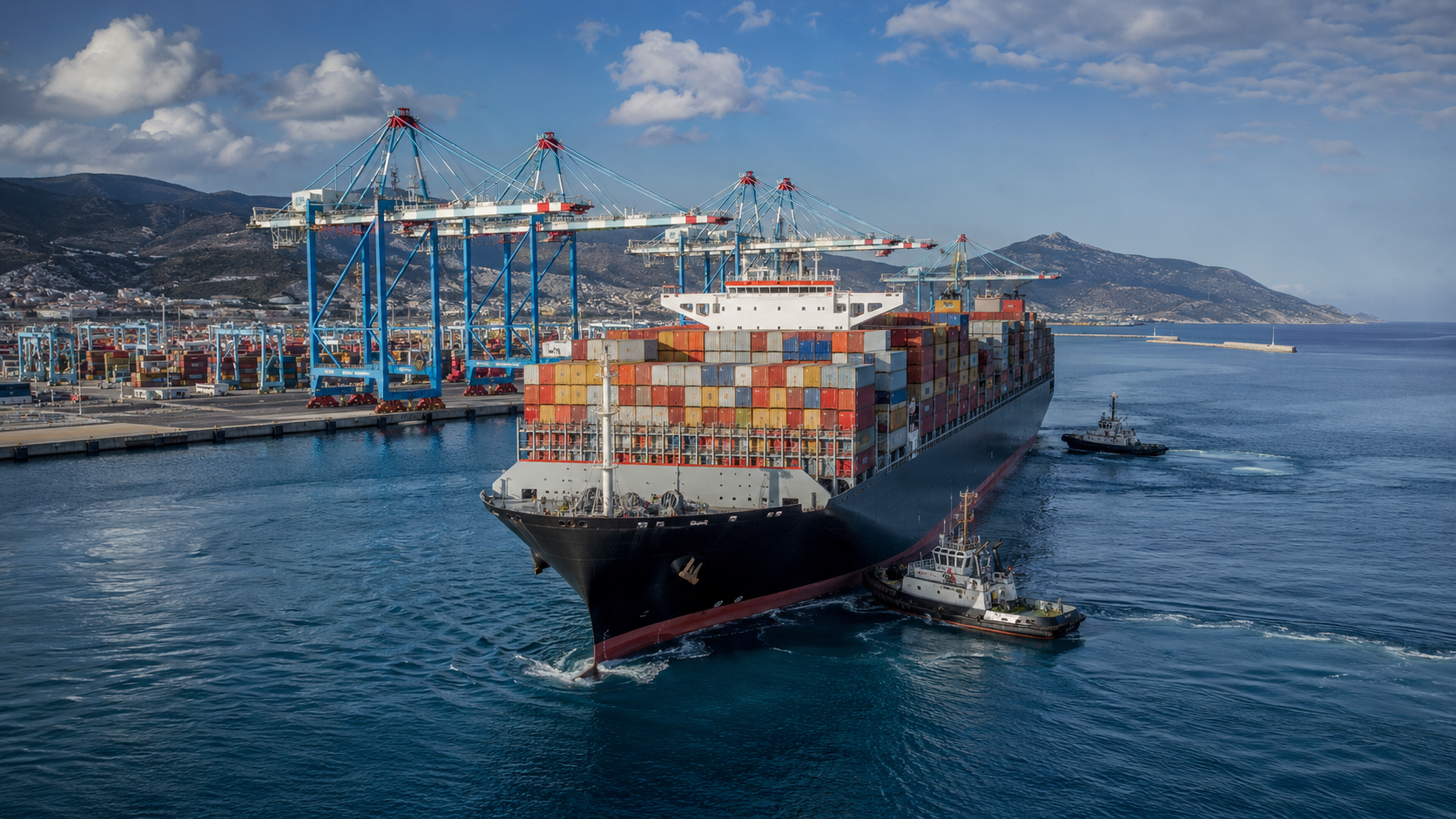
Tanger Med has gained another connection that strengthens something more important than port traffic.
Network power.
Ocean Network Express has launched its new Mediterranean Africa Express — MAX — service, creating a weekly rotation linking:
Algeciras – Tangier – Dakar – Tema – Lekki – Abidjan – Algeciras.
The service began in July 2026 and is designed to connect West Africa with ONE’s wider network toward Northern Europe, Asia, the Indian Subcontinent, North America and Latin America through the Mediterranean hubs of Tangier and Algeciras.
At first glance, this looks like another shipping schedule.
Strategically, it is much bigger.
Every additional weekly service makes Tanger Med more useful to exporters.
More useful to importers.
More attractive to industrial investors.
And increasingly difficult for global supply chains to bypass.
Ports Become Powerful Through Connections
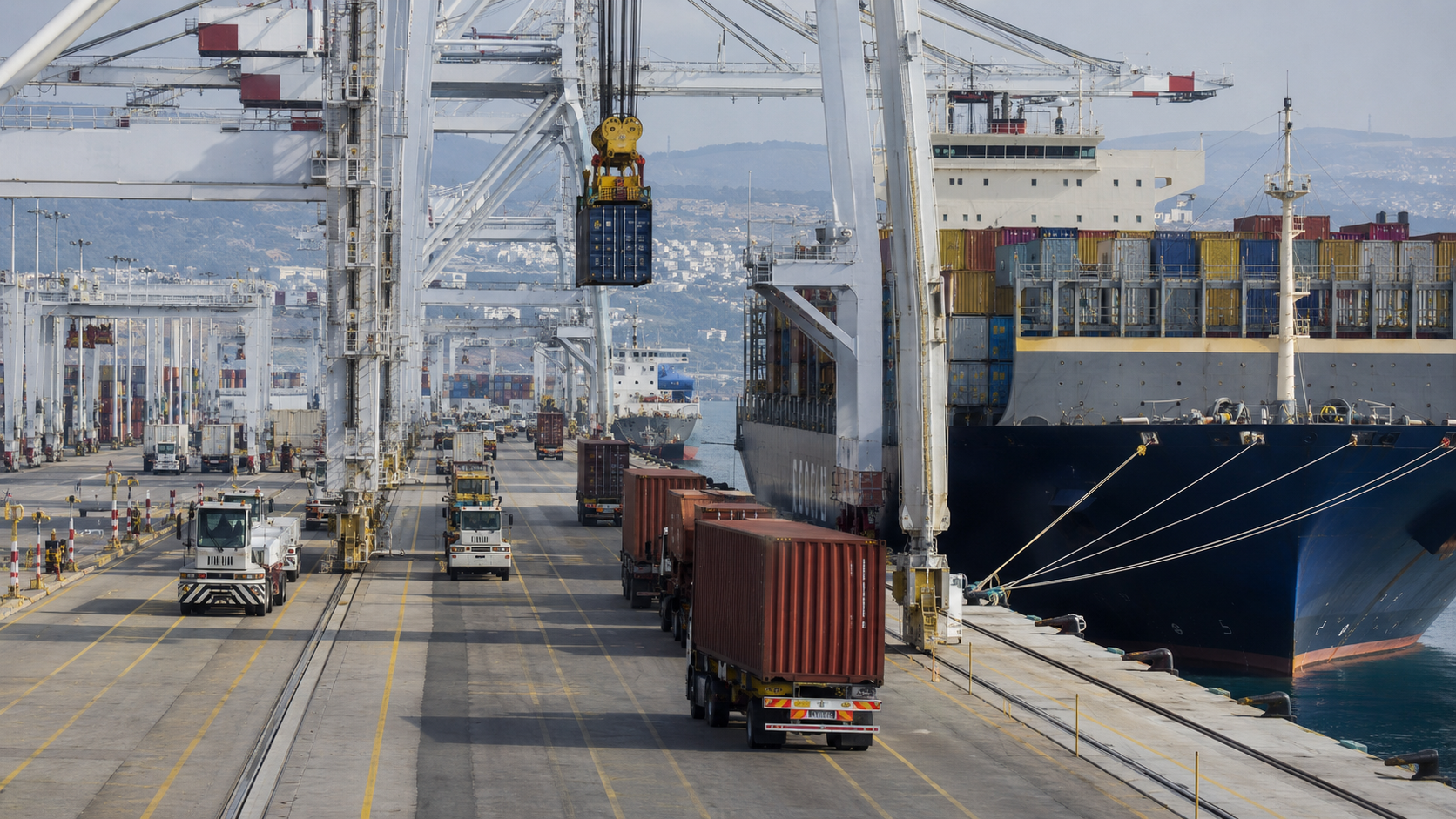
A port is not valuable simply because it has large cranes or deep water.
It becomes valuable when shipping companies repeatedly connect it with important markets.
One route leads to another.
Cargo arriving from Asia can transfer toward Africa.
African exports can connect with Europe.
Moroccan industrial products can reach several markets through the same hub.
This creates network effects.
The more services a port attracts, the more useful it becomes.
The more useful it becomes, the more cargo it attracts.
More cargo then encourages shipping companies to add additional services.
That cycle is one of the reasons leading global ports become increasingly difficult for competitors to challenge.
Tanger Med is already inside that cycle.
The MAX service strengthens it further.
West Africa Is Becoming More Important To Morocco
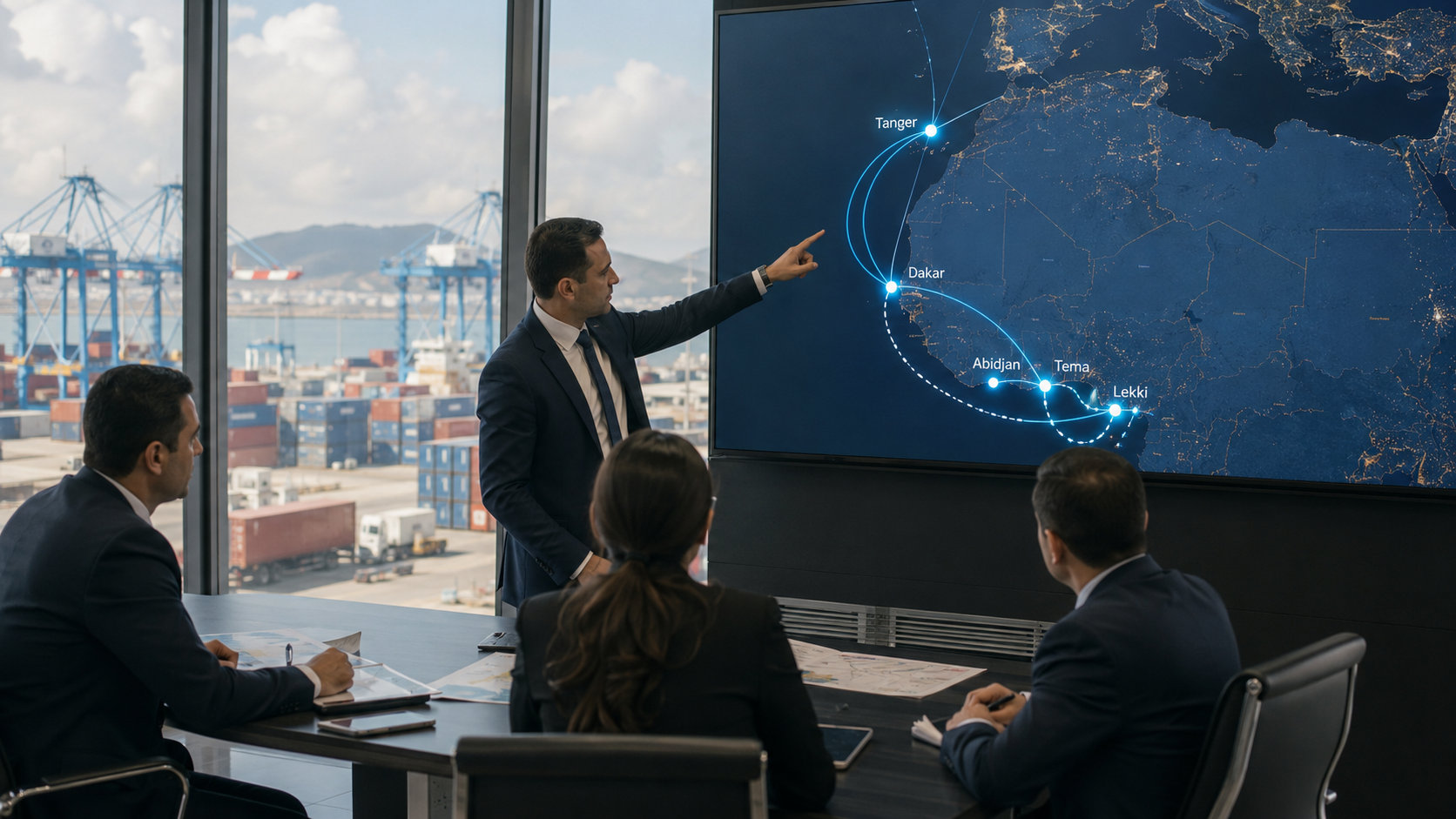
Dakar.
Tema.
Lekki.
Abidjan.
These are not random stops.
They connect Tanger Med directly with some of West Africa’s most important commercial gateways.
Senegal.
Ghana.
Nigeria.
Côte d’Ivoire.
Together, these markets represent hundreds of millions of consumers and some of Africa’s most important economies.
Morocco has spent years expanding commercial relationships across the continent.
Banks.
Insurance companies.
Telecommunications.
Construction.
Real estate.
Fertilisers.
Consumer products.
Logistics increasingly needs to follow those investments.
A company cannot build an African strategy while depending on unreliable routes to move goods.
Maritime connectivity makes commercial ambition physically possible.
Nigeria Changes The Scale
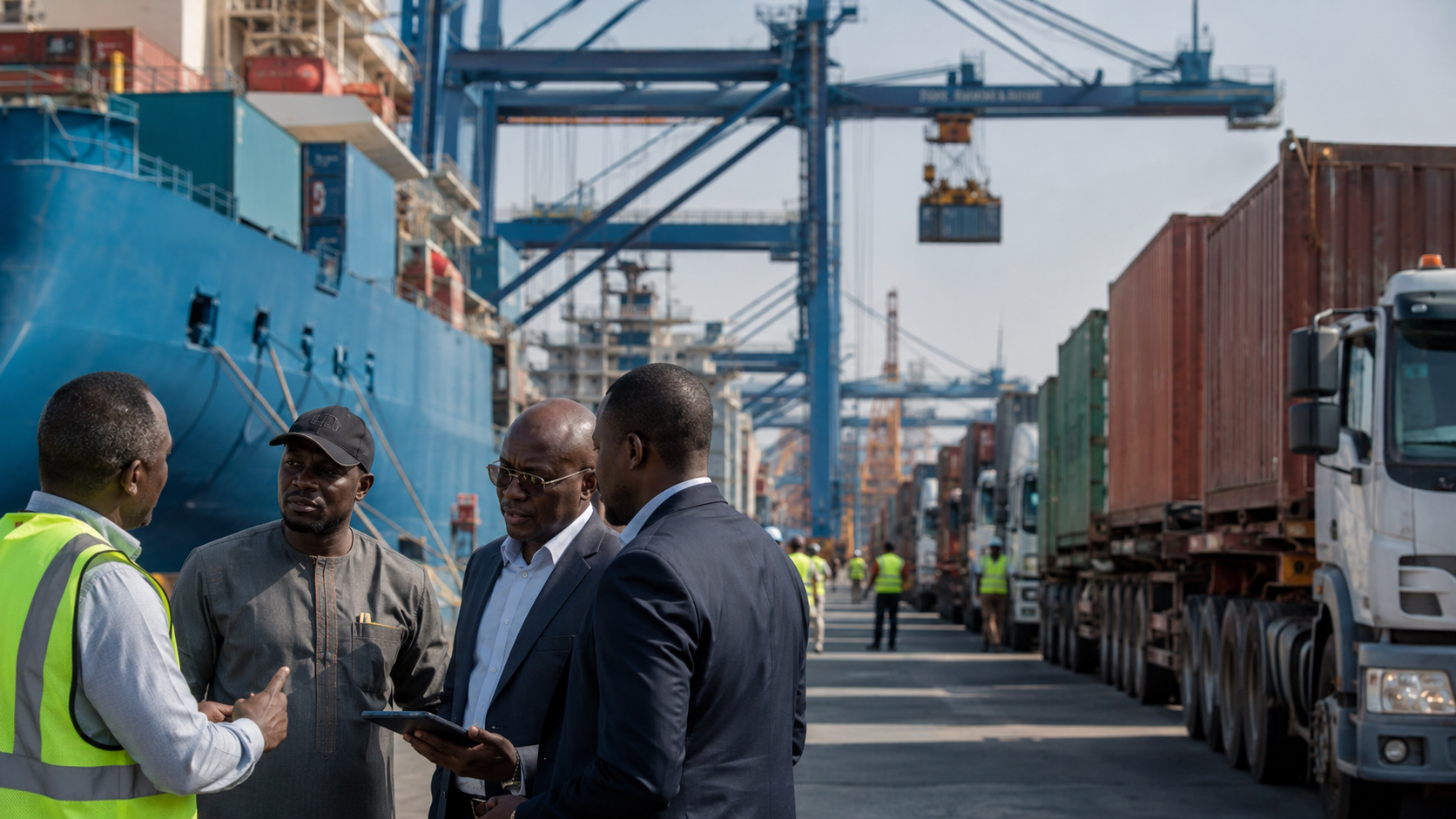
Lekki is particularly important.
Nigeria is Africa’s most populous country and one of its largest consumer markets.
Its economic scale means even a relatively small increase in Moroccan commercial penetration can create meaningful opportunity.
Food products.
Construction materials.
Consumer goods.
Industrial equipment.
Pharmaceuticals.
Automotive-related products.
Moroccan exporters increasingly need reliable routes into West African markets of this size.
A weekly service does not guarantee exports.
But it removes one part of the friction.
Shipping becomes more predictable.
Companies can plan inventory more effectively.
Distributors can schedule deliveries.
The route becomes part of the commercial infrastructure connecting Morocco with Africa.
Tanger Med Is Becoming A Triangular Hub
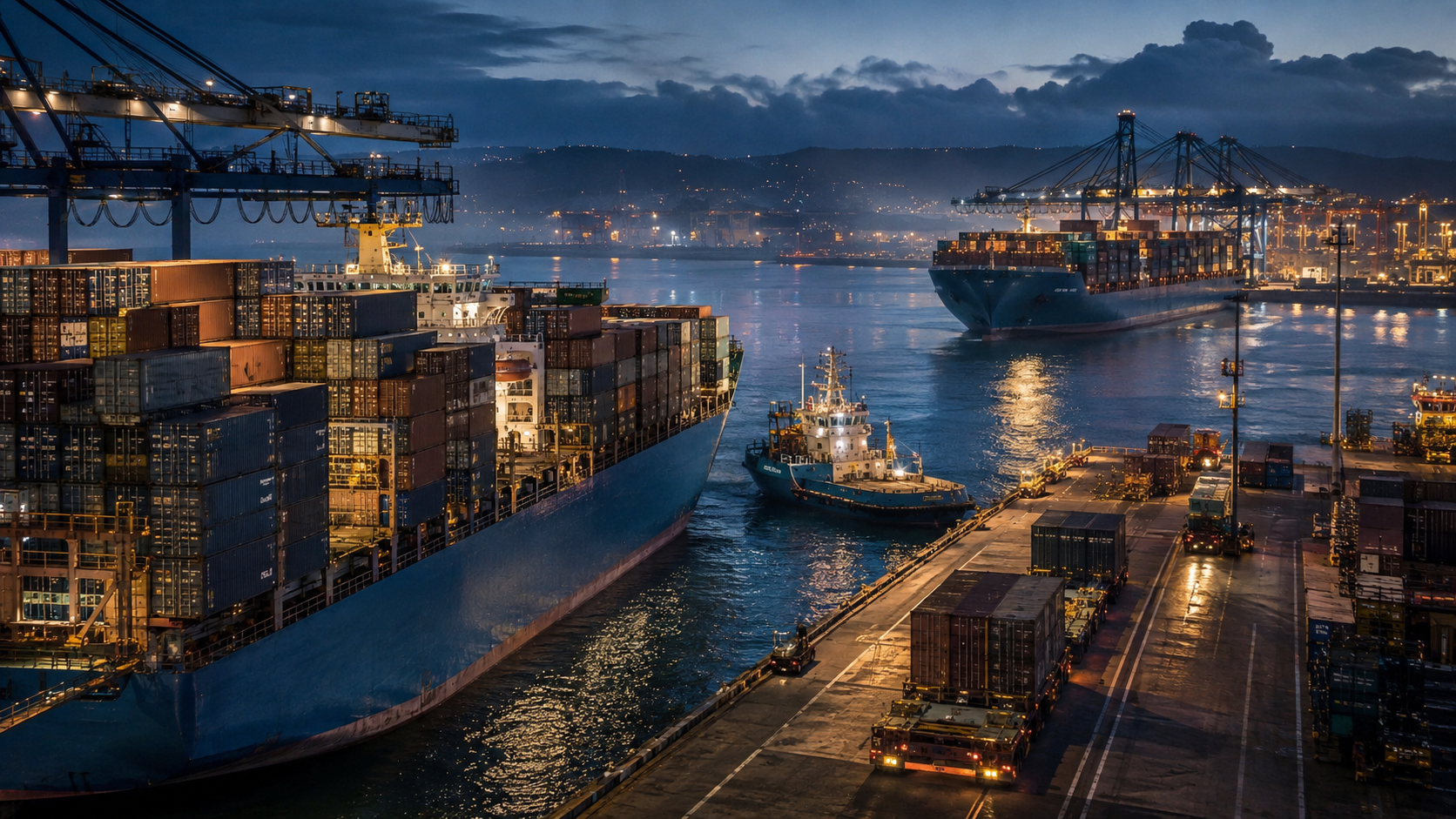
The most interesting element is not simply Morocco-to-Africa trade.
It is the triangle.
Europe.
Morocco.
West Africa.
ONE specifically designed MAX to connect West African cargo with its broader global services through the Mediterranean hub system.
This means Tangier can function as more than an origin or destination.
Cargo can transfer there.
A container arriving from Asia may continue toward Dakar.
A shipment from Abidjan may connect toward Europe.
Moroccan exports can join the same network.
That distinction matters.
Origin-and-destination traffic depends heavily on the Moroccan economy.
Transshipment allows Tanger Med to benefit from trade occurring between other countries too.
The port earns strategic importance from geography.
Algeciras And Tangier Can Grow Together
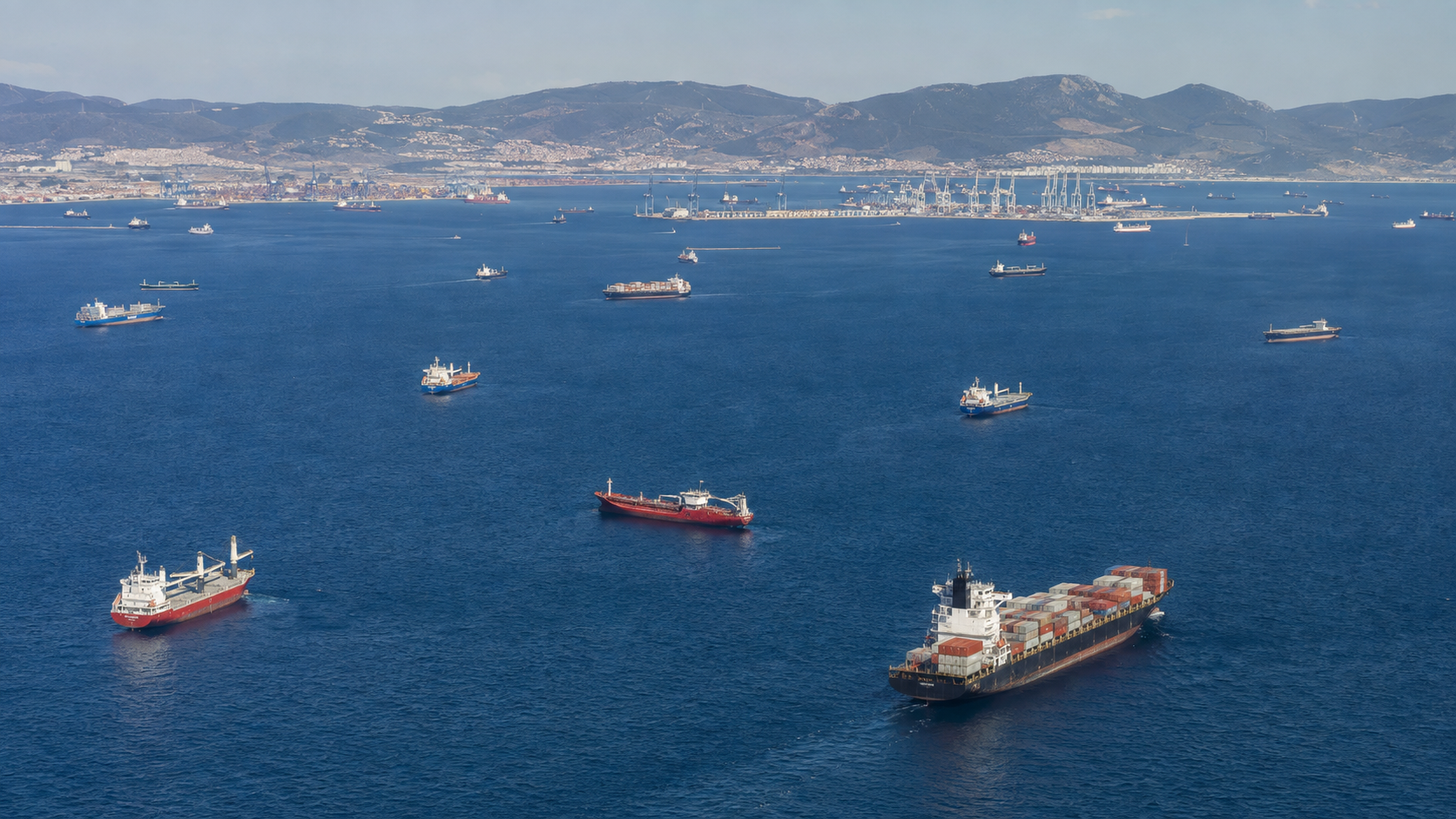
The MAX rotation includes both Algeciras and Tangier.
That is a useful reminder that port competition does not always mean one side must lose.
The Strait of Gibraltar has become one of the world’s most important maritime zones.
Two major hubs sit only a short distance apart.
Shipping lines can use both as complementary transfer points.
Algeciras provides direct integration with European infrastructure.
Tanger Med provides access to Morocco’s industrial base and broader trade positioning.
Together, they create enormous route flexibility.
The strategic question for Morocco is therefore not whether Tanger Med can eliminate Algeciras.
It does not need to.
Tanger Med only needs to capture an increasing share of the value created by flows passing through the Strait.
Frequency Matters More Than Headlines
MAX operates weekly.
That detail is commercially important.
Exporters value frequency.
A monthly service may technically connect two ports.
It does not provide the same flexibility.
If a factory misses a weekly vessel, the delay may be manageable.
Missing a monthly sailing can create serious inventory problems.
High-frequency connectivity reduces the cost of uncertainty.
It allows manufacturers to operate with smaller safety stocks.
That improves working capital.
Logistics therefore influences financial performance.
The shipping schedule eventually appears inside the economics of a factory.
Morocco’s Exporters Can Use The Route
Moroccan companies increasingly need African distribution channels.
Agri-food is an obvious example.
Packaged foods.
Juices.
Sauces.
Dairy-related products.
Consumer staples.
Construction materials provide another.
Cement-related products.
Ceramics.
Electrical equipment.
Building materials.
Pharmaceuticals and healthcare products are another potential category.
The stronger Tanger Med’s West African connections become, the easier it becomes for Moroccan companies to build regional distribution networks from home.
Instead of establishing separate logistics systems for each African market, they can increasingly use one Moroccan export platform.
That creates scale.
African Importers Benefit Too
The route should not be viewed only through Moroccan exports.
African companies can use Tanger Med as a gateway toward Europe and other global markets.
Cocoa-related products.
Agricultural commodities.
Manufactured goods.
Textiles.
Food.
Raw materials.
West African exporters need efficient international connections too.
If Tanger Med can help them reach European, Asian or American customers, Morocco becomes useful even when Moroccan companies are not directly involved in the cargo.
This is an important form of economic influence.
Countries gain leverage when other countries benefit from using their infrastructure.
ONE’s Global Network Makes The Route More Valuable
Ocean Network Express operates a fleet of more than 280 vessels with capacity exceeding 2.2 million TEUs, serving more than 120 countries.
That matters because the value of MAX is not limited to the six ports listed in its rotation.
The service connects into a much larger network.
One container reaching Tangier can potentially continue toward many destinations.
A local shipping connection becomes a global connection through transshipment.
This is where major hubs separate themselves from ordinary ports.
The customer is not purchasing a route.
They are purchasing access to a network.
Nearshoring Becomes Stronger With African Access
Morocco’s nearshoring proposition is usually discussed in relation to Europe.
A factory locates in Morocco because it can reach European customers quickly.
That remains powerful.
But a factory located near Tanger Med increasingly has another advantage.
It can also reach Africa.
This changes the investment case.
Imagine an international consumer-goods company choosing between several manufacturing locations.
A Moroccan factory can potentially serve:
Morocco.
Southern Europe.
West Africa.
Parts of the Mediterranean.
Potentially wider global markets through transshipment.
The factory therefore does not depend on one market.
That geographic optionality is valuable.
It reduces commercial risk.
Tanger Med Industrial Platform Benefits Directly
The port’s industrial ecosystem becomes more attractive when shipping connectivity improves.
Automotive manufacturers.
Aerospace suppliers.
Textile companies.
Food producers.
Logistics groups.
Electronics companies.
An investor choosing an industrial site cares about land and labour.
But logistics can become decisive.
How many shipping services exist?
How frequently?
Which markets can be reached?
What are transit times?
How reliable are transfers?
A location offering dozens of international options gives manufacturers flexibility that an isolated industrial zone cannot.
Connectivity effectively becomes part of the industrial subsidy without government paying for it directly.
Logistics Can Attract Regional Headquarters
Physical trade can also attract management functions.
A company distributing across West Africa from Morocco may eventually place regional teams here.
Sales.
Procurement.
Finance.
Supply-chain management.
Marketing.
Legal.
Customer service.
That creates higher-value employment beyond warehouses and ports.
Morocco has already developed this model in banking and other sectors.
Stronger maritime connectivity can encourage the same in consumer goods and industrial businesses.
The port becomes an argument for locating corporate decision-making in Morocco.
Tanger Med Is Not Only A Port Business
This is where the economic impact widens.
A container arriving at Tanger Med creates activity around:
Trucking.
Warehousing.
Customs.
Freight forwarding.
Insurance.
Banking.
Maintenance.
Technology.
Fuel.
Professional services.
The more traffic flows through the network, the more viable specialised service companies become.
A freight forwarder can grow.
A warehouse can expand.
A customs technology company can develop.
A logistics data business can emerge.
Port growth creates an ecosystem of invisible companies around physical trade.
Digital Logistics Will Matter More
Global customers increasingly expect visibility.
Where is the container?
When will it arrive?
Has customs cleared it?
Will the connection be missed?
Supply chains are becoming digital information systems surrounding physical cargo.
Tanger Med therefore needs to compete through software as well as infrastructure.
Port-community systems.
Real-time cargo visibility.
Automated customs processes.
Digital documentation.
Artificial-intelligence forecasting.
The strongest ports make complicated global logistics feel simple to the customer.
Physical capacity without digital efficiency eventually creates congestion.
Reliability Is More Valuable Than Maximum Speed
Exporters naturally want fast transit.
But predictable transit can be even more valuable.
A shipment promised in nine days that consistently arrives in nine days is easier to plan around than one advertised at seven days but sometimes arriving after twelve.
ONE says MAX is designed around reliable transit times and additional routing flexibility.
This should become one of Tanger Med’s strongest selling points.
Shipping customers build production schedules around promises.
Reliability allows factories to reduce inventory.
That saves cash.
A reliable port therefore creates value far beyond shipping fees.
New Routes Can Help Moroccan SMEs
Large companies already have logistics departments.
Smaller exporters face greater barriers.
They may not fill entire containers.
They may not understand every African customs system.
They may struggle to find distributors.
Stronger shipping frequency can make consolidated cargo more practical.
Freight forwarders can combine smaller shipments.
That can lower the barrier for Moroccan SMEs wanting to test African markets.
A food producer does not need to build a Nigerian subsidiary immediately.
It can begin with smaller shipments through a local distributor.
Logistics can therefore help turn export ambition into experimentation.
Trade Finance Should Follow The Route
Shipping goods creates financial needs.
Exporter credit.
Letters of credit.
Foreign exchange.
Insurance.
Working capital.
Guarantees.
Moroccan banks already possess strong operations across several African markets.
That creates an opportunity to connect logistics and finance.
A Moroccan company selling into Côte d’Ivoire may use a bank with operations on both sides.
The shipment moves through Tanger Med.
The payment moves through the banking network.
This combination gives Morocco a particularly strong position.
Physical infrastructure and financial infrastructure can reinforce one another.
More Routes Increase Tanger Med’s Pricing Power
A port with only a few services depends heavily on individual shipping companies.
A highly connected hub has greater resilience.
One carrier changes a route.
Others remain.
One market slows.
Other markets compensate.
Network diversity reduces dependency.
This can also improve the port’s commercial position when negotiating with shipping lines.
Carriers need hubs capable of feeding many services.
The relationship becomes increasingly mutual.
Tanger Med needs shipping lines.
Shipping lines increasingly need Tanger Med.
That is the point at which infrastructure becomes strategic.
Nador West Med Will Create A Second Question
Morocco is preparing to open Nador West Med in the second half of 2026, with an initial 800 hectares of industrial land and plans to expand toward 5,000 hectares.
That introduces another layer.
Morocco will increasingly have to decide how its major ports complement one another.
Tanger Med is already a mature global hub.
Nador West Med can develop different industrial and energy specialisations.
If coordinated intelligently, Morocco does not need two ports competing for identical activity.
It can create a broader Mediterranean logistics system.
That would give global investors several Moroccan entry points instead of only one.
Africa Is The Long-Term Growth Opportunity
European trade will remain fundamental to Tanger Med.
But Africa changes the long-term ceiling.
Population growth.
Urbanisation.
Infrastructure investment.
Consumer markets.
Industrialisation.
All will increase maritime trade demand over time.
West African ports are expanding rapidly because they anticipate those trends.
Lekki itself represents Nigeria’s attempt to build much larger modern port capacity.
Morocco’s opportunity is positioning Tanger Med upstream of that growth.
The more African cargo connects through Tangier, the more Morocco benefits from continental expansion even when the final products are not Moroccan.
Morocco’s Africa Strategy Needs Containers
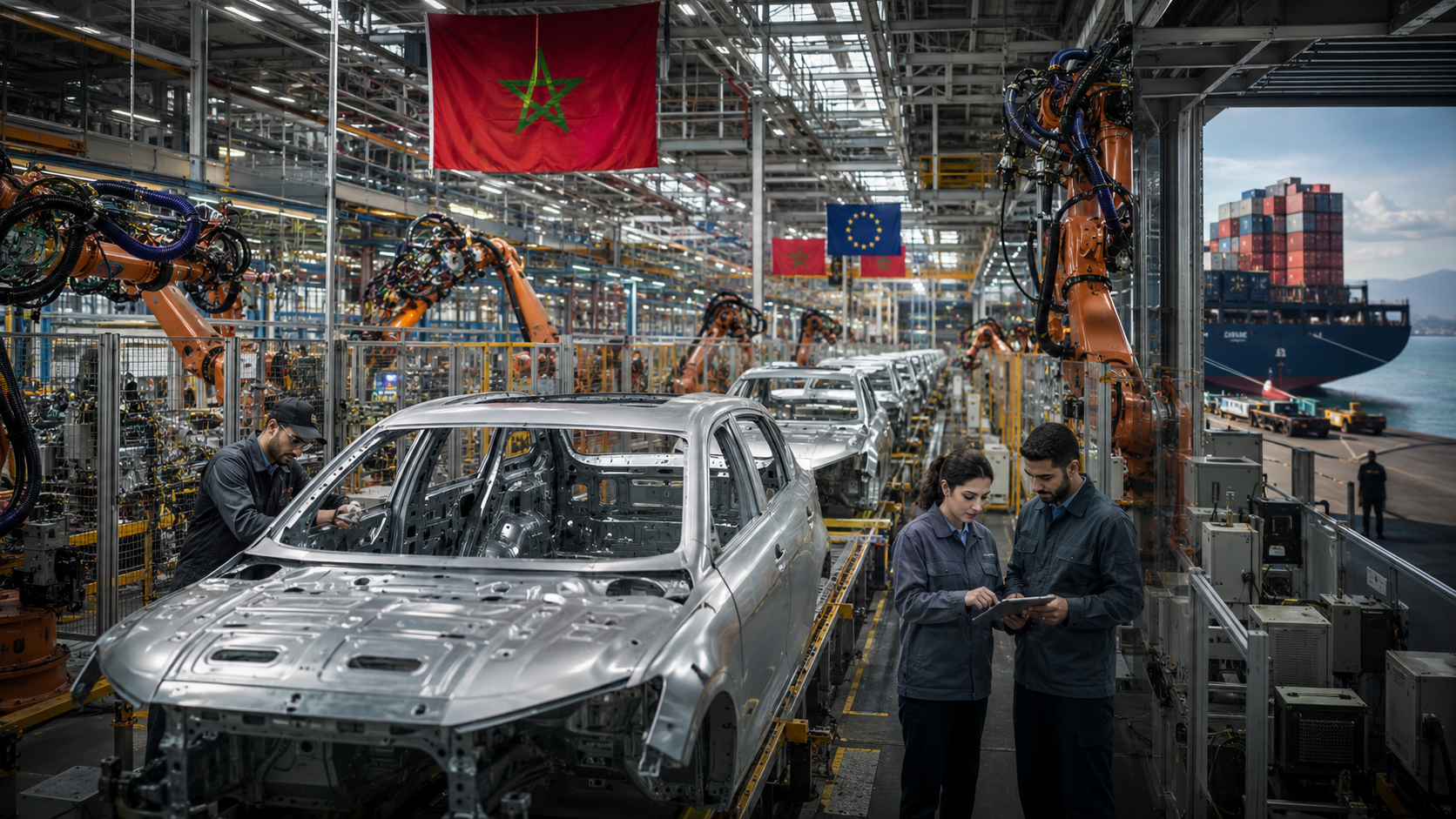
Diplomatic relationships matter.
Banking expansion matters.
Corporate investment matters.
But economic integration eventually needs goods to move.
Containers are the physical expression of trade.
That makes services such as MAX strategically significant.
Morocco has long presented itself as a bridge between Europe and Africa.
A bridge becomes economically real when ships use it every week.
Algeciras.
Tangier.
Dakar.
Tema.
Lekki.
Abidjan.
Then back into the global network.
That is the bridge functioning in practice.
One New Service Is Small — The Network Effect Is Not
MAX alone will not transform Tanger Med.
The port is already far larger than one weekly rotation.
But that misses the point.
Global hubs are built incrementally.
One service.
Then another.
Another destination.
Another transshipment connection.
Another industrial customer.
Another warehouse.
Another supplier.
Each addition makes the complete platform more valuable.
The economic significance therefore comes from accumulation.
A port does not suddenly become indispensable.
It becomes increasingly inconvenient to avoid.
Tanger Med Is Becoming Harder To Bypass
Ocean Network Express launched MAX to connect West Africa directly with the Mediterranean hubs of Tangier and Algeciras, with weekly calls at Dakar, Tema, Lekki and Abidjan and onward access to ONE’s global network.
For ONE, it is a shipping service.
For Morocco, it reinforces a much larger economic position.
Tanger Med can connect Europe with Africa.
Asia with Africa.
Morocco with African consumers.
African exporters with global markets.
Factories with customers.
Banks with trade.
Warehouses with shipping lines.
Every additional route adds another reason for companies to locate economic activity close to the port.
That is how infrastructure becomes an ecosystem.
Morocco does not need every container passing through Tanger Med to contain Moroccan goods.
It needs global companies to keep deciding that the easiest route between important markets increasingly passes through Morocco.
MAX is one more weekly reason for them to do exactly that.