
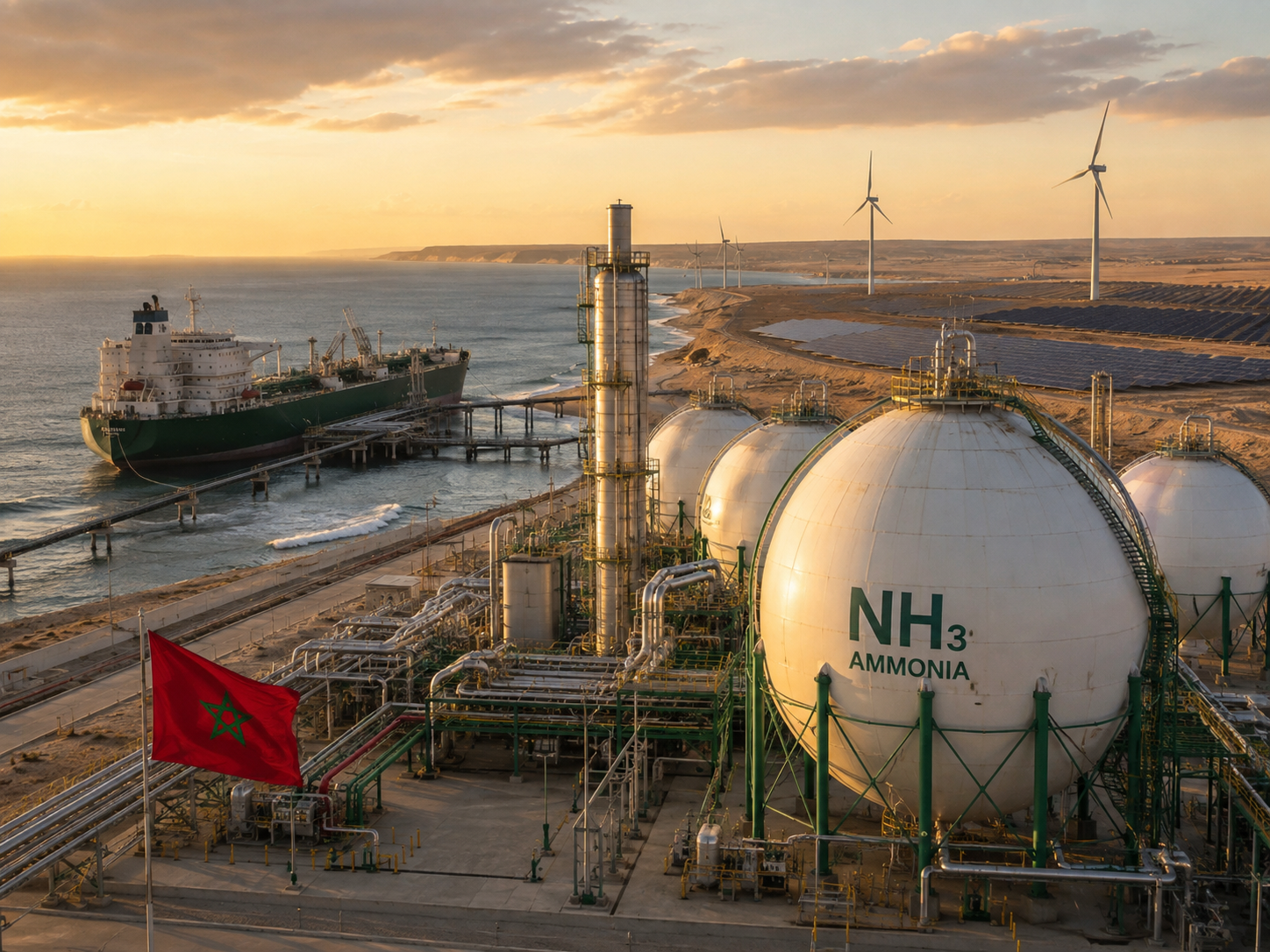
Morocco’s green-energy strategy is beginning to move from electricity into molecules.
On 28 July 2026, the U.S. Trade and Development Agency signed an agreement with ORNX Laayoune 1 SASU to finance a pre-FEED study for a large-scale ammonia production project in Laayoune.
The proposed facility is expected to produce up to 560,000 tonnes of ammonia per year if it reaches construction and full operation.
A consortium of American technology companies led by KBR, together with GE Vernova, Electric Hydrogen and Terabase, has been selected to carry out the technical work. The study will assess electrolyser technology, power-supply options, plant configuration, financial projections and the project’s commercial model.
That distinction is important.
This is still a development-stage project.
The plant has not yet been built.
A final investment decision has not yet been announced.
But the size of the proposed production capacity makes the project economically significant even at this stage.
Because 560,000 tonnes of ammonia represents much more than another renewable-energy announcement.
It represents the possibility of turning Morocco’s renewable resources into an industrial product that can be stored, transported and sold internationally.
Electricity Is Only The First Step
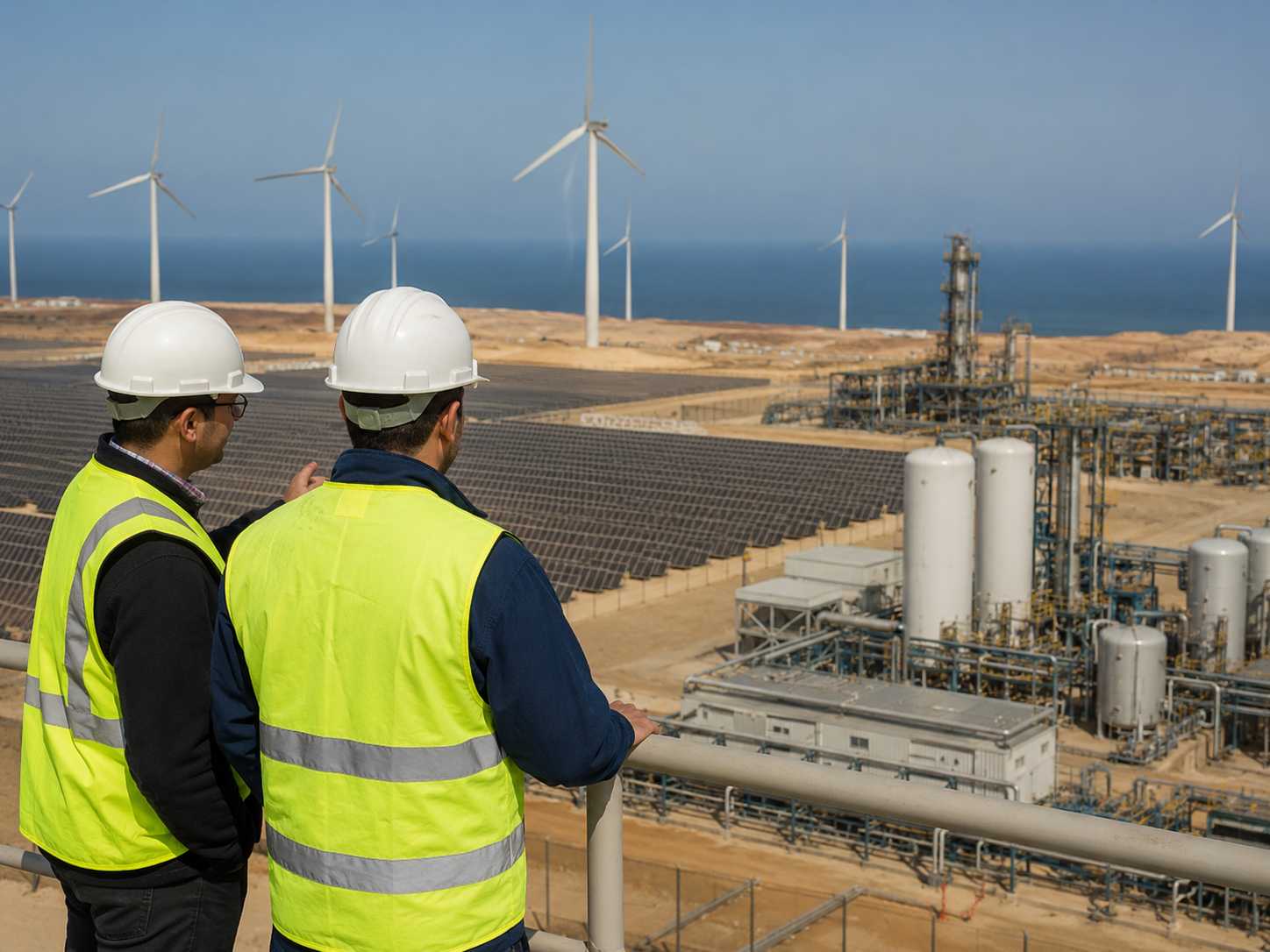
Morocco has already built a strong reputation around renewable electricity.
Solar.
Wind.
Grid expansion.
Storage.
The next challenge is converting that electricity into products the rest of the world can buy.
Green hydrogen is one route.
Ammonia is another.
Hydrogen itself is difficult to move economically over long distances.
It has very low volumetric energy density and requires demanding storage conditions.
Ammonia provides another option.
Hydrogen can be converted into ammonia by combining it with nitrogen.
The resulting molecule is already produced, transported and traded globally.
That gives Morocco a potential route from renewable electricity into international industrial markets.
560,000 Tonnes Is Industrial Scale
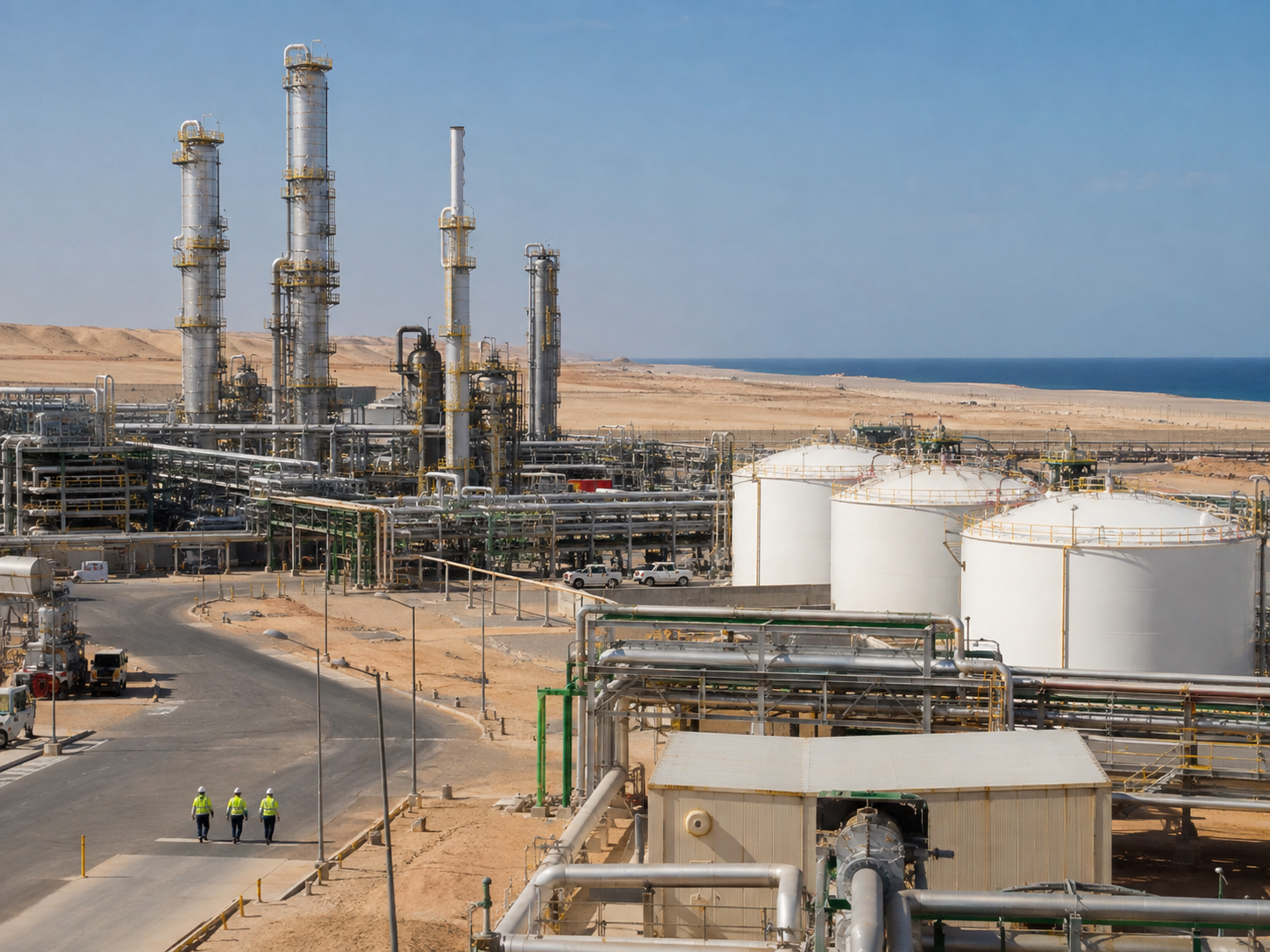
The proposed annual capacity matters.
A small demonstration facility proves technology.
A plant capable of producing up to 560,000 tonnes annually starts to look like industrial infrastructure.
That means large quantities of renewable electricity would need to be available reliably.
Electrolysers would need to produce hydrogen.
Nitrogen would need to be separated from air.
Hydrogen and nitrogen would then be combined into ammonia.
Storage infrastructure would be required.
Port logistics would be required.
Water treatment would matter.
Maintenance would matter.
Export contracts would matter.
A project of this scale therefore creates an industrial ecosystem rather than a single production line.
Ammonia Already Has Customers
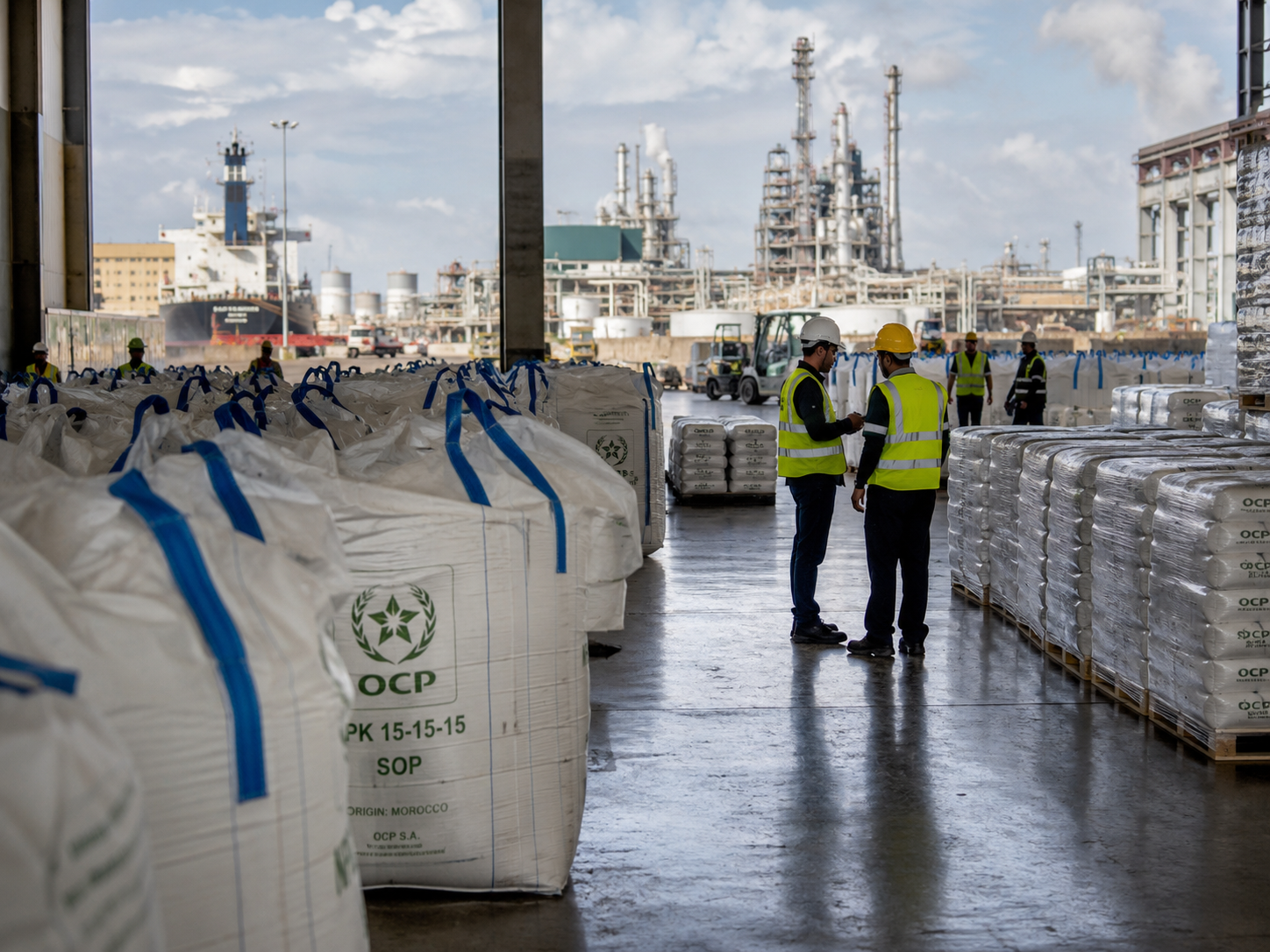
This is one reason ammonia is strategically interesting.
The project does not need to invent a completely new market.
Ammonia is already one of the world’s most important industrial chemicals.
Its largest use is fertiliser production.
It is also used in refrigeration, manufacturing and water treatment.
Future demand could become larger if low-carbon ammonia develops as a fuel or energy carrier.
Shipping companies are examining ammonia as one potential route toward lower-carbon maritime transport.
Power producers are also studying various applications.
Not every projected use will necessarily become commercially dominant.
But fertiliser demand already exists today.
That gives ammonia a much clearer industrial base than many speculative green-energy products.
Morocco Understands Fertiliser Better Than Most Countries
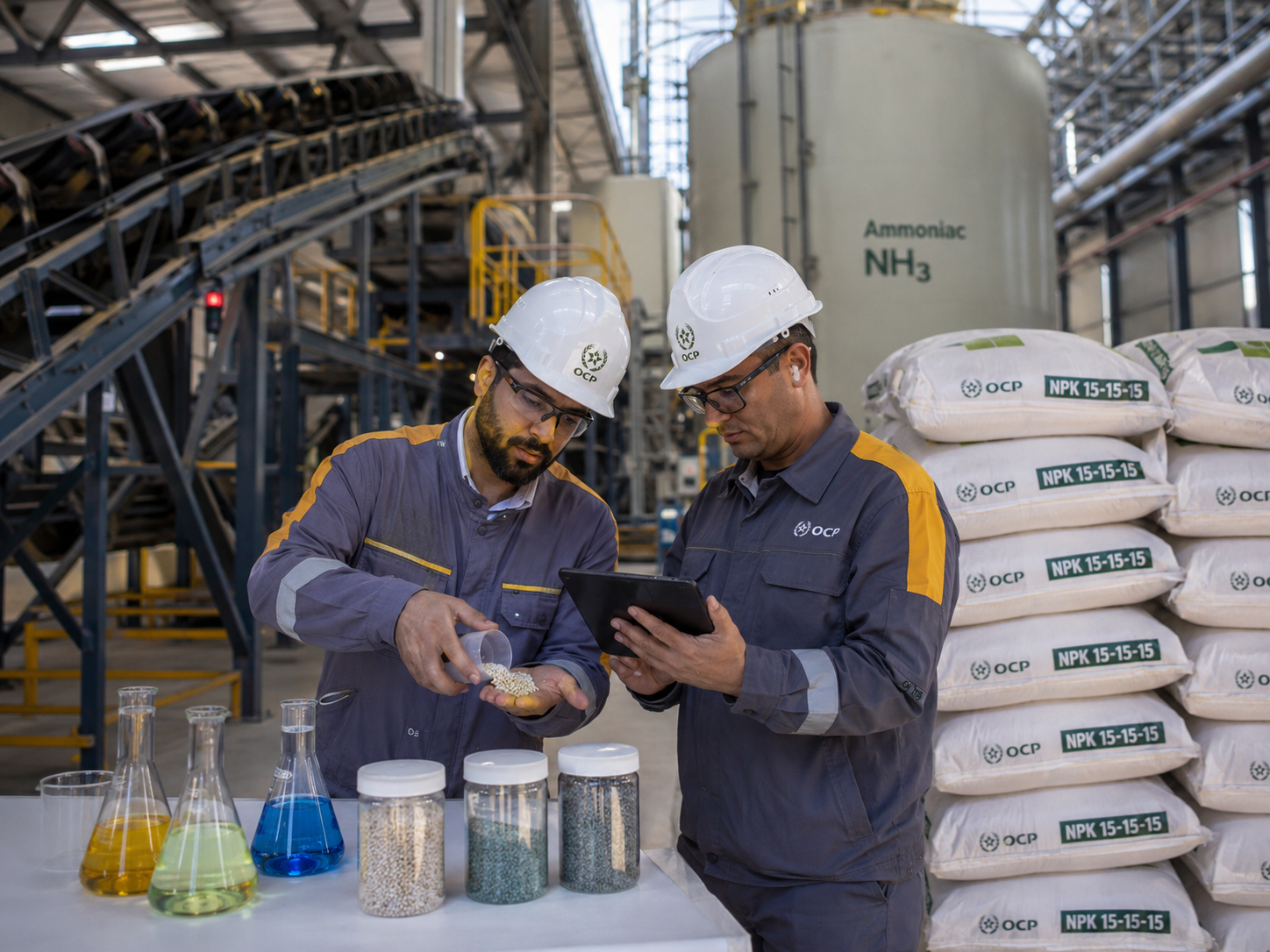
This is where Morocco’s existing industrial economy becomes particularly relevant.
The Kingdom is already a major global player in fertilisers through OCP.
Phosphate rock alone is not enough to manufacture many fertiliser products.
Nitrogen inputs matter too.
Ammonia therefore sits beside an industry Morocco already understands at enormous scale.
That creates a strategic question.
Could locally produced low-carbon ammonia eventually reduce dependence on imported nitrogen inputs while also creating a separate export business?
The proposed ORNX project is not an OCP project, and its eventual customer structure remains to be established.
But nationally, the industrial logic is obvious.
Morocco already has downstream fertiliser demand.
Domestic ammonia production could connect renewable energy with an existing chemical industry.
Import Substitution Could Be As Important As Export
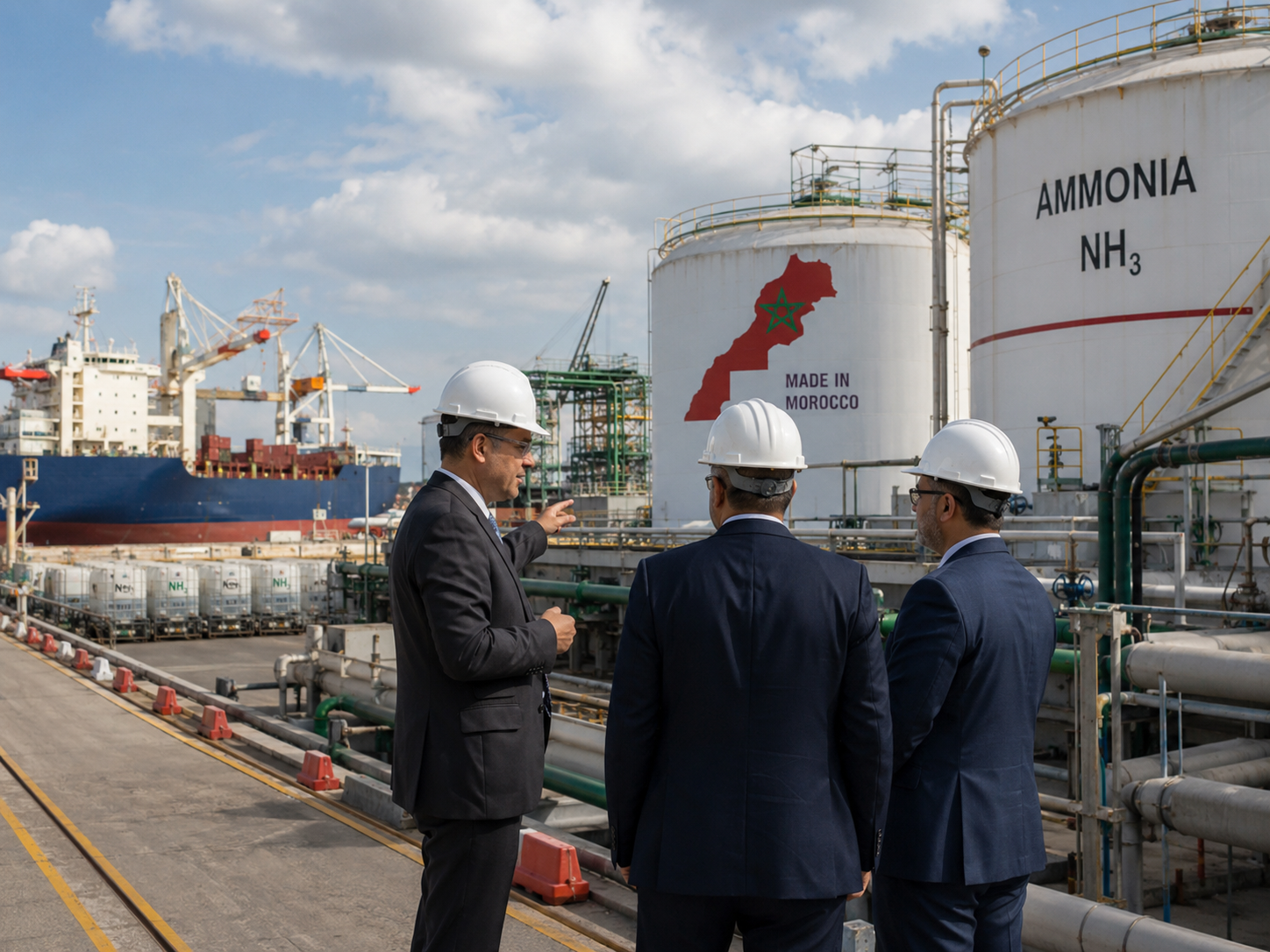
Energy projects are often discussed almost entirely through exports.
That can miss part of the value.
If Morocco imports industrial inputs that could eventually be produced competitively at home, domestic production improves the trade balance in another way.
Instead of generating foreign currency only by exporting a new product, Morocco can also reduce foreign currency spent on imports.
The economics would depend on production cost.
Green ammonia must ultimately compete with conventional ammonia and alternative suppliers.
But if Morocco can reach competitive costs using high-quality solar and wind resources, local industrial demand could provide an important base market.
Export growth could then sit on top of domestic demand rather than replace it.
Cheap Renewable Power Will Decide Everything
Green ammonia sounds attractive.
Its economics are unforgiving.
Electricity represents a major component of the cost of producing renewable hydrogen.
That means the project ultimately depends on extremely competitive power.
Solar and wind resources matter.
Capacity factors matter.
Grid connection matters.
Storage matters.
Electrolyser utilisation matters.
Financing cost matters.
A country can have excellent sunlight and still produce expensive hydrogen if the complete system is poorly designed.
That is why the USTDA-funded study is evaluating power-supply options and the optimal configuration of the project’s industrial components.
Engineering will determine whether the headline ambition becomes commercially bankable.
The Electrolyser Is The Heart Of The Project
Electrolysers use electricity to split water into hydrogen and oxygen.
For large-scale renewable ammonia, they are one of the most important technical and economic components.
The ORNX study will include an assessment of technology from U.S.-based Electric Hydrogen.
This matters because electrolyser performance influences several variables.
Efficiency.
Capital cost.
Maintenance.
Operating flexibility.
Lifetime.
Ability to respond to variable renewable generation.
A project combining solar and wind does not necessarily supply perfectly constant electricity.
Electrolysers increasingly need to work intelligently around those fluctuations.
The technology decision therefore affects both production cost and plant design.
Water Cannot Be Ignored
Hydrogen requires water.
That immediately raises an important Moroccan issue.
The country is managing structural water stress.
Large industrial hydrogen projects therefore cannot depend casually on scarce freshwater resources.
Desalination is likely to play an important role across Morocco’s wider hydrogen strategy.
Morocco’s national green-hydrogen programme has already linked planned projects in southern regions with renewable-powered desalination infrastructure. The government has said the selected projects collectively involve around 20 GW of renewable capacity, including 10 GW of electrolysis, with approximately 8 million tonnes of hydrogen derivatives envisaged across the broader programme.
The industrial objective needs to be clear:
Produce a new export without creating a new water problem.
Desalination Could Become Part Of The Industrial Platform
If renewable hydrogen projects finance large desalination systems, those assets can potentially create wider economic benefits.
Industrial water.
Urban supply.
Infrastructure.
Potential agricultural applications where appropriate.
The economics require careful design because industrial users and public systems have different needs.
But co-development can reduce the cost of water infrastructure at scale.
Morocco has already recognised this logic in its broader green-hydrogen strategy, linking new renewable projects with desalination and infrastructure development in the southern regions.
Hydrogen therefore becomes more than an energy project.
It can help finance utilities.
Laayoune Has A Geographic Advantage
Large green-ammonia projects need space.
Renewable resources.
Industrial land.
Access to water.
Transport infrastructure.
Export routes.
Laayoune offers several of those characteristics.
The wider southern Atlantic corridor also provides access to strong solar and wind resources.
That makes the region attractive for projects where renewable electricity may ultimately represent the largest operating input.
Industrial geography works differently here from traditional manufacturing.
A consumer-goods factory wants to sit close to customers.
A green-ammonia facility wants to sit close to cheap renewable energy, water and export infrastructure.
The customer can be thousands of kilometres away because the product can travel.
Shipping Could Become A Future Customer
Ammonia is increasingly being examined as one possible marine fuel for lower-carbon shipping.
The technology still faces major challenges.
Safety.
Engine design.
Fuel availability.
Infrastructure.
Emissions management.
Cost.
But if shipping adopts ammonia at scale, demand could become enormous.
Morocco would then possess an unusual advantage.
It sits beside one of the world’s busiest maritime corridors.
The Strait of Gibraltar.
Tanger Med.
Atlantic shipping routes.
Mediterranean access.
A domestic green-ammonia industry could eventually serve both export markets and maritime bunkering.
That opportunity is longer term.
The infrastructure decisions being made today could determine whether Morocco is positioned for it.
Ports Become Energy Infrastructure
An ammonia export project cannot stop at the factory gate.
The product needs storage.
Loading infrastructure.
Safety systems.
Maritime transport.
This turns ports into part of the energy value chain.
Morocco’s port strategy therefore becomes relevant to hydrogen strategy.
Tanger Med.
Jorf Lasfar.
Nador West Med.
Southern Atlantic infrastructure.
Different ports may develop different energy specialisations.
A future ammonia economy could require dedicated terminals rather than simply using conventional cargo facilities.
That means energy planners and port planners need to work together years before large export volumes arrive.
U.S. Technology Makes This More Than A Moroccan Project
The American composition of the study consortium is notable.
KBR.
GE Vernova.
Electric Hydrogen.
Terabase.
USTDA explicitly describes the project as an opportunity to place U.S. technology and expertise inside a major Moroccan industrial development.
That creates a two-sided commercial relationship.
Morocco gains access to technology, engineering and potential financing relationships.
American companies gain access to a large emerging industrial market.
This is how major infrastructure relationships often develop.
One feasibility study can lead to equipment orders.
Engineering contracts.
Long-term maintenance.
Financing.
Future projects.
Morocco benefits most when those relationships also produce local capability.
Technology Transfer Needs To Reach Moroccan Engineers
Imported technology can build a plant.
Local expertise builds an industry.
Morocco therefore needs its engineers involved throughout development.
Design.
Construction.
Commissioning.
Operations.
Maintenance.
Process optimisation.
Safety.
Future expansion.
The first large project in an emerging sector naturally depends heavily on international specialists.
The fifth project should depend less.
That is the real measure of technology transfer.
A successful ammonia industry should eventually create Moroccan companies capable of delivering specialised services themselves.
Engineering.
Industrial maintenance.
Water treatment.
Renewable integration.
Storage.
Port systems.
Those companies can later export expertise across Africa.
Financing Will Be One Of The Hardest Tests
A 560,000-tonne project would require substantial capital.
The USTDA grant finances a pre-FEED study, not the plant itself. ORNX says the study is intended to advance the project toward FEED and eventual final investment decisions.
That distinction is fundamental.
Green-hydrogen projects around the world have produced many announcements.
Far fewer have reached final investment decision.
The challenge is bankability.
Who buys the ammonia?
At what price?
For how many years?
How much does the plant cost?
What electricity price can be secured?
Who takes construction risk?
What return do investors require?
These questions determine whether ambition becomes infrastructure.
Offtake Contracts Can Unlock The Project
Large industrial projects often become financeable only after customers commit.
A long-term buyer provides revenue visibility.
That makes lenders more comfortable.
Investors can model cash flow.
Equipment can be financed.
The project moves closer to construction.
For ORNX, securing credible ammonia buyers could eventually become as important as proving the technology works.
Potential customers could include fertiliser producers, industrial users or future energy markets.
The stronger the credit quality of the buyer, the easier project financing becomes.
In infrastructure finance, the contract can sometimes be as valuable as the factory.
Green Premiums Cannot Be Assumed Forever
Low-carbon ammonia may initially cost more than conventional ammonia.
Some customers may pay a premium because of decarbonisation targets.
Government incentives can also support early markets.
But Moroccan producers should not build an industry around the assumption that customers will always happily pay much more for “green.”
Cost competitiveness must improve.
Cheaper renewable power.
Better electrolysers.
Larger plants.
Lower financing cost.
Operational learning.
The long-term winner will be the country capable of producing low-carbon ammonia close enough to conventional cost that environmental value becomes an additional advantage rather than the only reason to buy.
Morocco has a plausible path toward that position.
Carbon Accounting Will Become Commercial Infrastructure
If ammonia is marketed as low-carbon or renewable, buyers will want proof.
Where did the electricity come from?
What was the emissions intensity?
How was hydrogen produced?
Was desalination powered renewably?
What happened during periods without wind or sunlight?
These questions require certification.
Measurement.
Auditing.
Digital traceability.
Carbon accounting becomes part of the product.
A tonne of ammonia may be chemically identical to another tonne.
Its verified production footprint can create a completely different commercial value.
Morocco should therefore build certification capability alongside production.
European Demand Could Be Important
Europe is pursuing industrial decarbonisation and seeking more diversified energy and chemical supply chains.
Morocco’s proximity provides an obvious advantage.
Shipping ammonia from Morocco to European ports requires considerably less distance than transporting it from many competing production regions.
That can reduce logistics costs.
It can also make commercial coordination easier.
Morocco already has deep industrial relationships with Europe.
Automotive.
Textiles.
Food.
Aerospace.
Energy and chemicals could become another layer.
But European customers will demand strict technical and sustainability standards.
Morocco needs to design for those requirements from the beginning.
Fertiliser Could Provide The Strongest Natural Synergy
The strongest Moroccan logic may still be fertiliser.
OCP has already transformed Morocco into one of the most important global players in phosphate-based plant nutrition.
Ammonia provides nitrogen.
Combining domestic phosphate resources with domestically produced low-carbon ammonia could create an unusually integrated fertiliser value chain.
Again, the ORNX project is commercially separate and no specific supply relationship should be assumed.
But from an industrial-policy perspective, the complementarity is powerful.
Morocco owns one major feedstock.
It has the renewable resources to potentially produce another.
Connecting both could strengthen national value creation.
Green Steel Creates Another Potential Market
Hydrogen derivatives can also support future steel decarbonisation.
Morocco’s broader green-hydrogen programme includes green steel among the targeted derivative industries.
That shows the country is not thinking only about exporting hydrogen.
It wants downstream industrial activity.
This is the correct direction.
Exporting electricity-equivalent molecules creates value.
Using those molecules to manufacture higher-value industrial products can create more.
Fertiliser.
Steel.
Synthetic fuels.
Chemicals.
The economic objective should be moving as far downstream as competitive economics allow.
Morocco Should Avoid Becoming Only An Energy Supplier
There is a risk in every major natural-resource opportunity.
Export the resource.
Import the finished product.
Morocco has spent years trying to escape that model.
Automotive demonstrated the alternative.
Build the ecosystem domestically.
Hydrogen should follow the same philosophy.
If Morocco produces ammonia, it should also ask:
What industries can use it locally?
What chemicals can be produced?
What fertilisers?
What fuels?
What technology companies can emerge?
How much engineering can stay?
Exporting ammonia can be valuable.
Building industrial value around ammonia can be more valuable.
Jobs Will Be More Technical Than Massive
Large renewable-energy projects do not always create enormous permanent workforces relative to their investment size.
Automation is high.
That means employment quality matters.
Engineers.
Chemical operators.
Electricians.
Renewable-energy technicians.
Maintenance specialists.
Safety professionals.
Water-treatment experts.
Logistics specialists.
These can be high-value industrial jobs.
Training needs to begin before projects reach construction.
A country does not create a green-hydrogen workforce after the plant opens.
It creates one while projects are still being designed.
Universities Need To Follow The Molecule Economy
Morocco’s engineering schools and universities have adapted over time to automotive, aerospace and renewable energy.
Hydrogen creates another curriculum need.
Electrochemistry.
Process engineering.
Chemical engineering.
Industrial safety.
Power electronics.
Desalination.
Storage.
Materials.
Project finance.
The industry will require people who understand how these systems interact.
Creating specialised programmes now reduces reliance on imported expertise later.
Education becomes part of industrial infrastructure.
Safety Will Be Non-Negotiable
Ammonia is commercially useful.
It is also hazardous.
Toxicity.
Storage.
Handling.
Transport.
Industrial accidents can have serious consequences.
Any large Moroccan ammonia industry therefore needs extremely strong safety culture.
Plant design.
Detection systems.
Emergency response.
Worker training.
Port handling.
Community planning.
Regulation.
The sector should not treat safety as an administrative requirement.
One major accident could damage public confidence in an entire emerging industry.
World-class engineering requires world-class safety.
560,000 Tonnes Could Create A Supplier Ecosystem
Large projects generate demand beyond the main technology providers.
Pipes.
Valves.
Electrical systems.
Civil works.
Control systems.
Storage tanks.
Instrumentation.
Industrial gases.
Maintenance.
Water equipment.
Construction.
Security.
Logistics.
Moroccan suppliers should map these opportunities early.
If every specialised input is imported, the project’s local economic multiplier remains limited.
The goal should be progressive localisation without compromising quality.
The first project creates the standards.
Local companies qualify.
Later projects become more Moroccan.
That is how clusters develop.
Morocco’s Wider Hydrogen Pipeline Is Already Large
The ORNX project sits inside a much larger national ambition.
Morocco has selected six national and international consortiums to develop seven green-hydrogen projects across Guelmim-Oued Noun, Laayoune-Sakia El Hamra and Dakhla-Oued Eddahab.
According to government figures, the projects collectively envisage around 20 GW of renewable power, 10 GW of electrolysis and approximately 8 million tonnes of green-hydrogen derivatives.
Those numbers are enormous.
They also underline the execution challenge.
Morocco does not need seven impressive announcements.
It needs projects reaching financing, construction and production.
The ORNX study is therefore interesting precisely because it represents one of the detailed technical steps required before a final investment decision.
Pre-FEED Is Where Ambition Meets Engineering
Energy announcements often jump directly from concept to future production.
Industrial projects do not work like that.
Pre-feasibility.
Pre-FEED.
FEED.
Permitting.
Commercial agreements.
Financing.
Final investment decision.
Procurement.
Construction.
Commissioning.
Each stage can change the project.
Capacity may change.
Technology may change.
Cost may change.
Some projects never proceed.
That is why USTDA’s July agreement matters.
The proposed 560,000-tonne plant is moving into a stage where engineering and financial assumptions are tested in much greater detail.
That is progress.
It is not yet construction.
560,000 Tonnes Is A Test Of Morocco’s Industrial Future
If ORNX reaches production, Morocco could add a substantial new industrial output to its economy.
Up to 560,000 tonnes of ammonia every year.
Produced through a system integrating renewable energy, electrolysis, industrial chemistry, water infrastructure and export logistics.
The real value would extend far beyond the tonnes themselves.
Reduced import dependence where local demand exists.
Potential exports.
Engineering capability.
Industrial jobs.
Technology partnerships.
Port activity.
Supplier development.
A foundation for downstream chemicals and fuels.
Morocco has already proved it can turn geography into automotive manufacturing.
It has proved it can turn phosphate resources into a global fertiliser industry.
Green ammonia presents a different test.
Can the country turn sunlight, wind, water and industrial engineering into another globally competitive export platform?
The project in Laayoune is still early.
But 560,000 tonnes a year is large enough to show what success could eventually look like.