
Morocco’s football boom is usually discussed through teams.
The national team.
Wydad.
Raja.
AS FAR.
Renaissance Berkane.
MAS Fès.
But some of the biggest economic opportunities created by Moroccan football over the next four years may not belong to clubs at all.
They may belong to companies that do not yet exist.
Sports-tech platforms.
Ticketing businesses.
Stadium hospitality operators.
Data companies.
Merchandising specialists.
Broadcast-production firms.
Fan-engagement platforms.
Sports analytics.
Event-management companies.
Digital-payment providers.
Football tourism businesses.
Morocco has already invested heavily in the physical side of football.
The next opportunity is building the business ecosystem around the game.
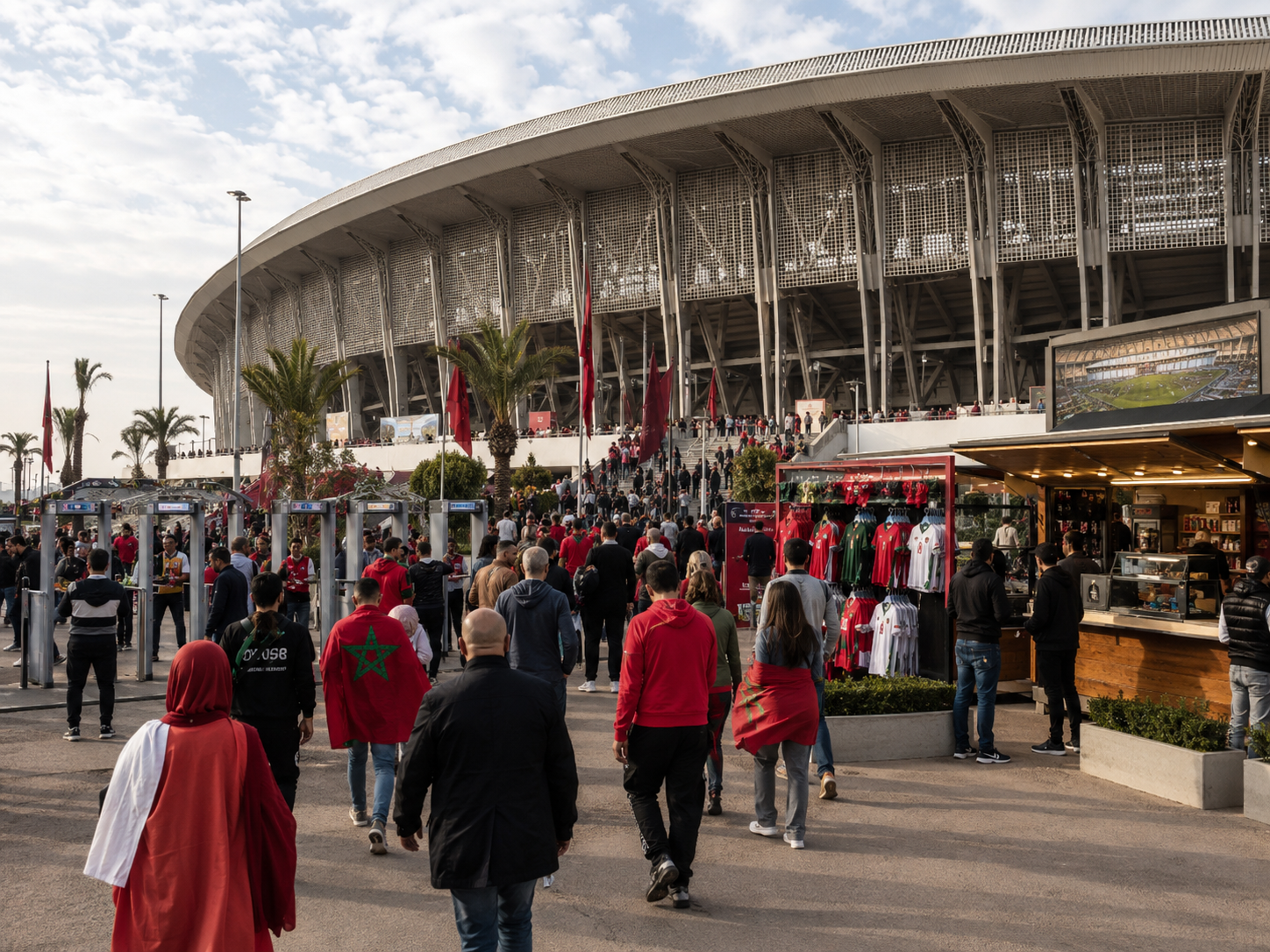
Stadiums Create Markets Around Them
A stadium is an asset.
But the economic activity surrounding it can be much larger than the building itself.
Tickets need to be sold.
Supporters need transport.
Food needs to be served.
Hospitality areas need operators.
Merchandise needs distribution.
Security needs technology.
Screens need content.
Sponsors need activation.
Data needs to be analysed.
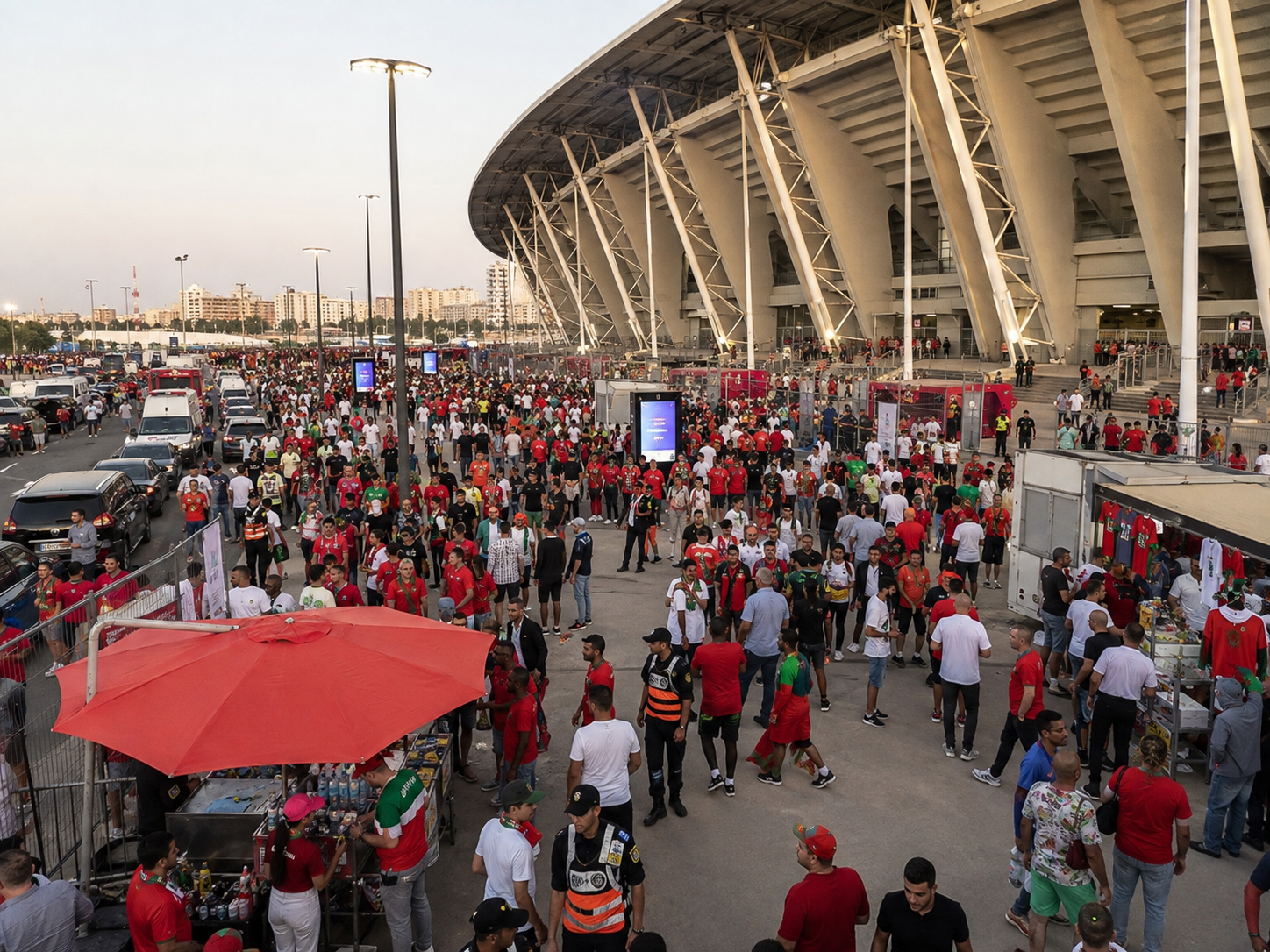
Thousands of people entering one venue at the same time create a temporary economy.
Morocco’s new generation of stadiums therefore should not be viewed only as sports infrastructure.
They can become platforms for private businesses.
Ticketing Could Become A Moroccan Tech Industry
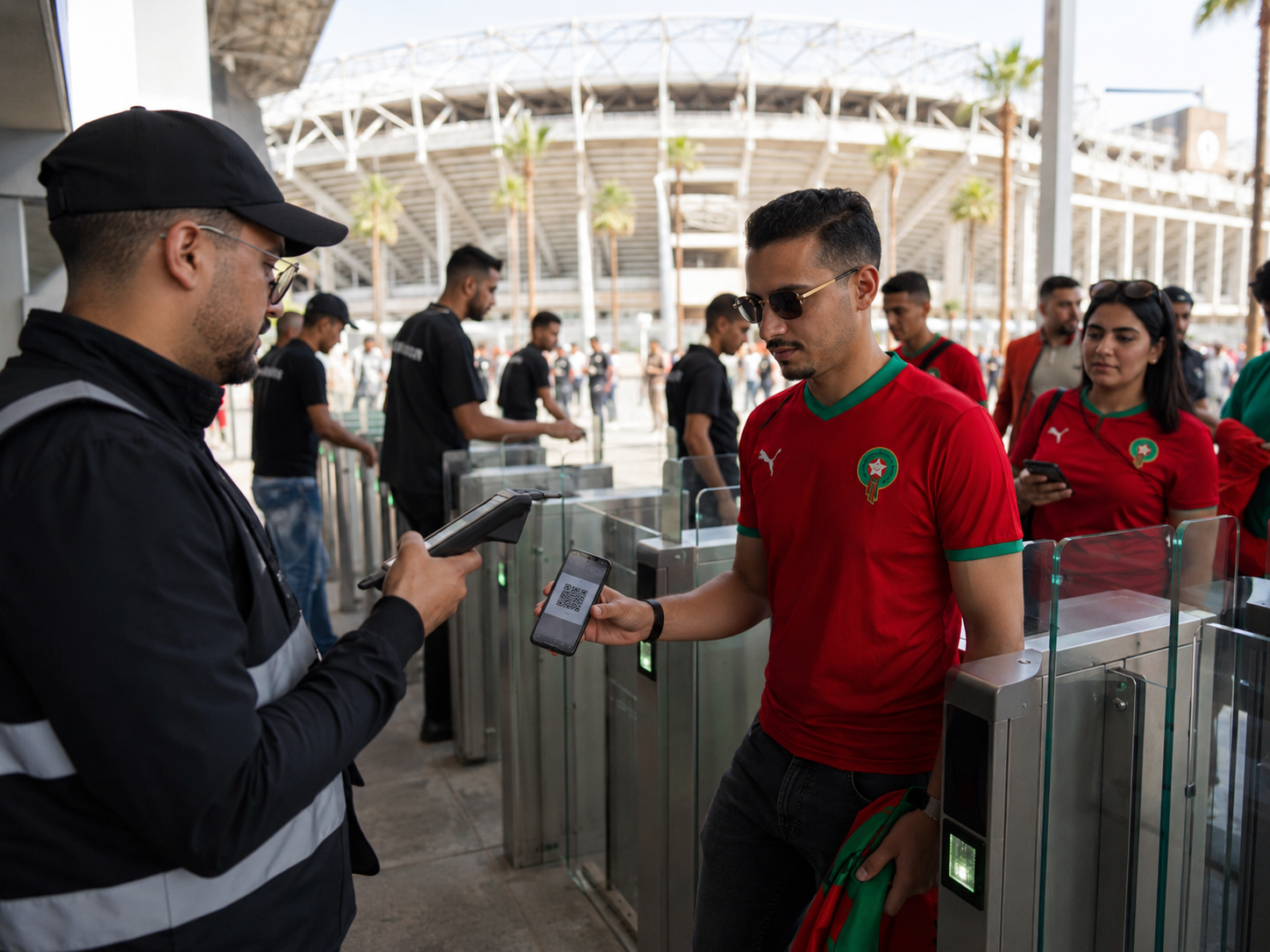
Ticketing sounds simple until tens of thousands of people attempt to purchase simultaneously.
Then it becomes technology.
Payment processing.
Identity.
Fraud detection.
Seat allocation.
Refunds.
Access control.
Customer service.
Mobile applications.
Real-time capacity management.
Moroccan football increasingly needs systems capable of handling major matches reliably.
That creates an opportunity for domestic technology companies.
A Moroccan ticketing company that proves itself across large stadiums could eventually sell the same technology to concerts, festivals and sports events elsewhere in Africa.
One domestic problem can become an export product.
Fan ID Could Create An Entire Digital Layer
Moroccan professional football has already been moving toward greater digitalisation, including discussion around more structured supporter identification.
The commercial potential is significant.
A supporter account could eventually connect several activities.
Tickets.
Season membership.
Official merchandise.
Stadium entry.
Loyalty.
Transport.
Food purchases.
Club content.
The supporter stops being anonymous.
The club understands the relationship over time.
This needs strong privacy protections.
But commercially, it changes football.
A club that knows its supporters can build better products around them.
Companies providing the technology behind those relationships could become valuable businesses themselves.
Payments Are Part Of Matchday Infrastructure
Imagine 60,000 supporters entering a stadium.
Thousands want drinks.
Food.
Merchandise.
Parking.
Transactions need to happen quickly.
Cash creates friction.
Queues become longer.
Reconciliation becomes harder.
Digital payments can increase speed and provide better information about what supporters actually purchase.
This creates an opportunity for Moroccan banks, fintech companies and payment providers.
Football can become a testing ground for high-volume payment infrastructure.
The technology developed there can later serve festivals, transport networks and entertainment venues.
Matchday becomes fintech infrastructure.
Hospitality Could Become One Of The Highest-Margin Businesses
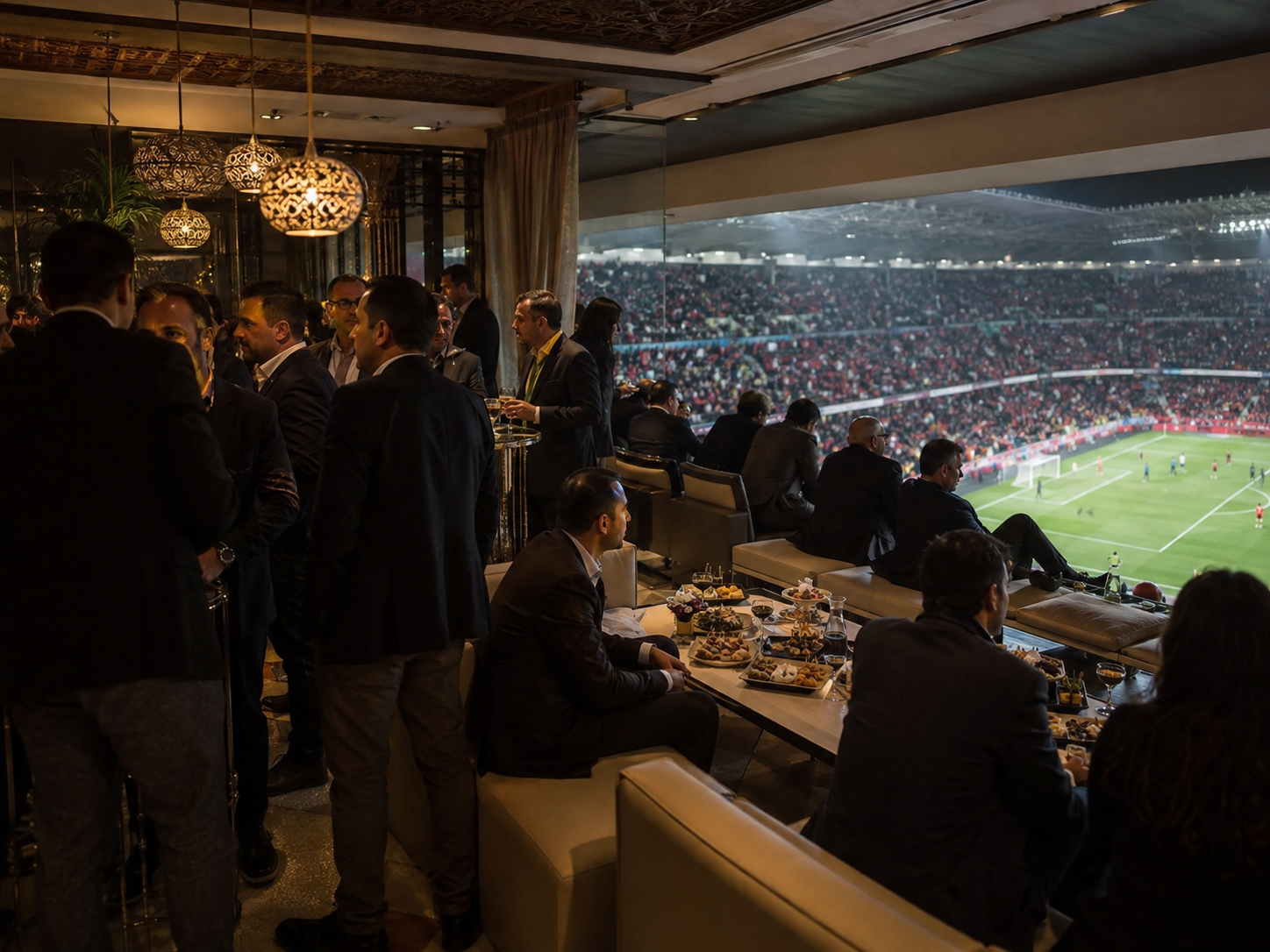
Not every stadium seat has the same economic value.
Some supporters want affordable general admission.
Corporate customers may pay much more for:
Premium seating.
Private lounges.
Food.
Parking.
Business networking.
Dedicated entrances.
Sponsor events.
Hospitality allows stadiums and clubs to increase revenue without making ordinary attendance unaffordable.
This creates room for specialised Moroccan operators.
Catering companies.
Event agencies.
Concierge services.
Premium transport.
Corporate-sales teams.
The hospitality business surrounding football could become much larger as Morocco approaches 2030.
Merchandising Needs Professional Distribution
Football identity creates demand.
Shirts.
Scarves.
Caps.
Retro collections.
Children’s products.
Lifestyle clothing.
Collectibles.
Moroccan clubs already possess powerful brands.
But strong brands do not automatically create strong retail businesses.
Products need design.
Manufacturing.
Inventory.
Stores.
E-commerce.
International delivery.
Counterfeit protection.
Customer service.
That requires professional infrastructure.
A specialist company capable of managing merchandise for several clubs could potentially achieve scale faster than every club building a complete retail operation independently.
Football creates the demand.
A business still needs to capture it.
The Diaspora Makes E-Commerce Much Bigger
Moroccan football supporters are spread far beyond Morocco.
France.
Belgium.
The Netherlands.
Spain.
Germany.
Canada.
The Gulf.
That changes the merchandising opportunity.
A supporter in Rotterdam should not need to wait until visiting Morocco to purchase an official shirt.
A fan in Brussels should be able to order directly.
Diaspora demand turns domestic football brands into international e-commerce opportunities.
The companies solving logistics, payments and fulfilment around that demand may benefit as much as the clubs themselves.
Football exports emotion.
E-commerce can turn that emotion into revenue.
Sports Analytics Could Become A Real Technology Sector

Football decisions increasingly depend on data.
Player recruitment.
Fitness.
Injury prevention.
Opponent analysis.
Passing networks.
Running intensity.
Shot quality.
Academy development.
Moroccan clubs traditionally depended heavily on scouting knowledge and coaching judgement.
Those remain essential.
Data can complement them.
This creates an opening for Moroccan analytics companies.
Software.
Video analysis.
AI-supported scouting.
Performance dashboards.
Academy monitoring.
A company does not need to produce world-famous footballers itself.
It can provide the technology helping clubs find and develop them.
That business can scale internationally.
African Football Is A Much Larger Market
The opportunity should not stop at the Botola.
Africa contains hundreds of professional clubs and federations needing better technology.
Ticketing.
Payments.
Scouting.
Broadcasting.
Fan engagement.
Competition management.
Data.
Moroccan companies can use domestic football as a reference market and then expand.
This is how sports infrastructure becomes an export sector.
A company solves a problem in Casablanca.
Then Rabat.
Then Fez.
Then Dakar.
Abidjan.
Accra.
Other African markets.
2030 can help Moroccan sports companies build credibility far beyond Morocco.
Broadcast Production Could Become An Export Business
Modern football broadcasting requires much more than cameras.
Graphics.
Replays.
Data.
Sound.
Commentary.
Remote production.
Streaming.
Highlights.
Social-media clips.
Multilingual feeds.
Morocco will need substantial production capacity before and during 2030.
The important question is what happens afterwards.
A Moroccan broadcast company trained to international football standards can serve:
CAF competitions.
African leagues.
Other sporting events.
Concerts.
Esports.
Corporate events.
The World Cup can therefore function as a training platform for a permanent media industry.
Content Companies Do Not Need Match Rights To Make Money
Owning live broadcasting rights is expensive.
Sports-content businesses can still operate around football without them.
Interviews.
Documentaries.
Podcasts.
Behind-the-scenes content.
Academy stories.
Historical archives.
Player profiles.
Supporter culture.
Football tourism.
Clubs create stories every day.
A professional production company can turn those stories into sponsorship and advertising inventory.
The sports-media economy becomes much wider than live television.
This is particularly attractive for smaller Moroccan companies because the barrier to entry is lower.
Sponsorship Agencies Could Become More Sophisticated
Brands increasingly want more than logos.
They want measurable engagement.
How many supporters interacted?
How many registered?
How many products were sampled?
How much content was watched?
How many customers converted?
This creates demand for specialist sports-marketing agencies.
Agencies that understand football audiences.
Digital activation.
Stadium events.
Creators.
Sponsor measurement.
Data.
Morocco’s expanding football economy needs companies capable of connecting brands with supporters professionally.
The stronger those agencies become, the higher sponsorship values can become.
Creators Are Becoming Part Of Football Distribution
A young supporter may consume more football through TikTok or YouTube than through traditional television outside match time.
Creators therefore influence attention.
Training reactions.
Tactical analysis.
Transfer discussion.
Interviews.
Supporter culture.
Humour.
A professional creator ecosystem can increase the visibility of Moroccan football dramatically.
The next stage is commercialisation.
Creator-management companies.
Production studios.
Brand partnerships.
Rights-aware content.
Events.
Football creators can evolve from individual personalities into genuine media businesses.
Football Tourism Could Become A New Product
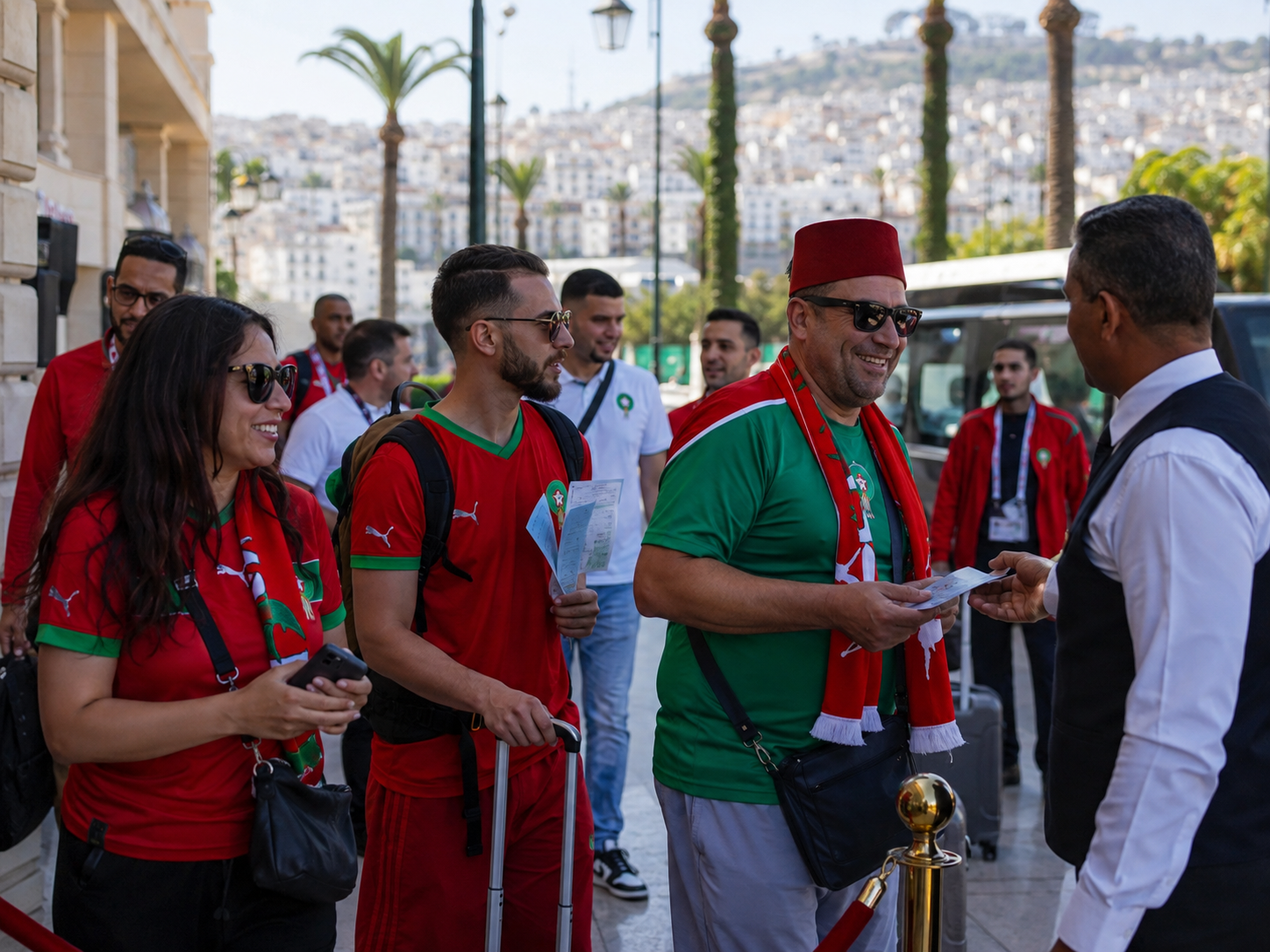
Morocco already attracts millions of tourists.
Football can provide another reason to travel.
A supporter could book:
Hotel.
Match ticket.
Stadium transport.
City tour.
Official merchandise.
Restaurant package.
One transaction.
Major domestic derbies and continental matches already generate movement between cities.
2030 will increase global interest enormously.
Tourism operators can begin developing sports packages before then.
The opportunity is not limited to World Cup visitors.
Football tourism can continue every season afterwards.
Casablanca Could Become A Sports-Business Hub
Casablanca has several ingredients.
Large clubs.
Corporate headquarters.
Sponsors.
Advertising agencies.
Technology companies.
Media.
Major infrastructure.
A large consumer market.
That makes it a natural centre for sports-business companies.
Ticketing startups.
Marketing agencies.
Sports-data businesses.
Merchandising operators.
Content studios.
The more these companies cluster, the more expertise develops.
A sports-business ecosystem does not require every company to operate inside a stadium.
Many of the highest-value jobs may be in offices kilometres away.
Rabat Has A Different Advantage
Rabat combines institutions, national sports bodies, technology talent and major sporting infrastructure.
It could develop a different part of the ecosystem.
Federation technology.
Sports administration.
Training.
Performance science.
National-team services.
Media.
Events.
Morocco does not need one city to own everything.
Different urban centres can specialise.
That creates a broader national sports economy.
Tangier Can Connect Football With Tourism
Tangier offers another model.
Tourism.
International access.
Ferry connections.
European proximity.
Hospitality.
Football.
A major match in Tangier can attract visitors from southern Spain or Moroccan diaspora communities arriving through Europe.
That makes the city particularly suitable for sports-tourism products.
Hotels, restaurants and event operators can capture spending that does not appear directly in club revenues.
Football becomes a city-economy product.
Training Companies Could Become Important
Professional sports require specialised people.
Stadium operators.
Security teams.
Hospitality staff.
Event managers.
Sports marketers.
Analysts.
Broadcast technicians.
Ticketing specialists.
Commercial managers.
Morocco will need more of them.
That creates opportunities for training companies and institutions.
Short professional programmes.
Certifications.
Event-management courses.
Sports analytics.
Stadium operations.
Hospitality.
The workforce supporting football can become an industry in its own right.
Security Technology Is Another Market
Large football events require sophisticated security.
Access control.
Crowd flow.
Camera systems.
Command centres.
Identity verification.
Emergency communication.
Cybersecurity.
The objective is not simply deploying more personnel.
Technology can help operators understand what is happening across large venues in real time.
Moroccan security-tech companies that develop expertise around stadiums may eventually sell the same systems to airports, malls and major events.
Sports infrastructure can create technology with applications far beyond sport.
Stadium Food Is An Underdeveloped Business
Thousands of supporters spend hours inside venues.
Food and beverage should therefore represent meaningful revenue.
But stadium catering is difficult.
Large demand arrives almost simultaneously.
Queues become expensive.
Stock forecasting matters.
Food safety matters.
Payment speed matters.
Menus need to be simple enough for volume.
This creates opportunities for specialised operators.
A company mastering stadium food can later serve festivals, concerts and fan zones.
Again, football becomes a training ground for another business category.
Parking And Transport Need Better Integration
The matchday experience starts before the supporter reaches the gate.
Traffic.
Parking.
Shuttle buses.
Trains.
Taxis.
Walking routes.
A beautiful stadium can still produce a poor experience when arrival and departure become chaotic.
Transport technology can help.
Pre-booked parking.
Digital shuttle tickets.
Route guidance.
Live congestion information.
Integrated match tickets.
Cities and private operators can build services around this problem.
Football attendance becomes easier.
That supports repeat demand.
Clubs Cannot Build Everything Themselves
This is the fundamental business opportunity.
A football club should focus on football and the commercial assets surrounding its brand.
It does not necessarily need to own every supporting capability.
Ticketing can be outsourced.
Payments can be provided by fintech companies.
Merchandise can be managed by specialists.
Hospitality can be operated professionally.
Data can come from technology firms.
Production can come from studios.
This creates an ecosystem of B2B sports companies around clubs.
The clubs become customers.
That is where a new Moroccan industry can emerge.
2030 Gives Startups A Deadline
The World Cup provides something entrepreneurs often need.
A deadline.
There are roughly four years to build capabilities before global football attention peaks in Morocco.
A startup beginning now can develop.
Test domestically.
Win club contracts.
Improve the product.
Build references.
Raise capital.
Expand regionally.
Then approach 2030 as an established supplier rather than a company created at the last minute.
That difference is enormous.
The strongest 2030 companies may be those founded before the rush.
Investors Should Look Beyond Clubs
Private capital interested in football often focuses on club ownership.
There are other opportunities.
Software.
Media.
Hospitality.
Merchandise.
Data.
Events.
Fan engagement.
These businesses can sometimes produce more predictable economics than owning a football club.
A technology company sells services whether one club wins or loses.
A hospitality provider can serve several events.
A merchandising platform can support several teams.
The investor receives exposure to football growth without depending entirely on sporting results.
That could become attractive to Moroccan venture and private-equity investors.
Recurring Revenue Is The Key
The strongest sports businesses will not depend only on one tournament.
They need recurring customers.
Annual software subscriptions.
Long-term club contracts.
Seasonal merchandise.
Regular hospitality events.
Broadcast services.
Data subscriptions.
The World Cup should accelerate growth.
It should not be the only revenue source.
A company whose entire business disappears after 2030 has captured an event.
A company still growing in 2035 has captured an industry.
Morocco Should Measure Business Legacy
2030 success will naturally be measured through stadiums, transport and tournament delivery.
Another metric should be added.
How many Moroccan sports companies exist afterwards?
How many export?
How many serve African leagues?
How many employ engineers?
How much sports technology is created locally?
How much merchandise is formally sold?
How many media companies built international capabilities?
Those figures would reveal whether football investment created a broader economy.
Infrastructure is one legacy.
Companies are another.
Morocco Already Has The Hardest Ingredient
Football businesses need customers who care.
Morocco already has them.
Millions of supporters.
Historic clubs.
A globally recognised national team.
Continental competition.
Modernising stadiums.
A World Cup ahead.
Emotion cannot be manufactured easily.
Morocco already possesses it.
Now the commercial infrastructure needs to catch up.
Morocco’s Next Football Champion Could Be A Company
The next major Moroccan football success may not wear a shirt.
It may be a technology company processing millions of tickets.
A data platform used by African clubs.
A merchandising business shipping worldwide.
A production company broadcasting continental competitions.
A hospitality group operating major stadiums.
A startup managing digital supporter identities.
A sports-tourism company selling Morocco to football fans.
Those businesses would represent a different type of football victory.
One measured not in goals, but in revenue, exports and jobs.
Morocco has invested heavily in making sure the matches can be played.
The next economic opportunity is building everything that makes those matches commercially valuable.
By 2030, Morocco should not only have world-class stadiums and successful teams.
It should have a generation of Moroccan sports companies capable of selling their expertise long after the final whistle.