
Africa’s tourism economy is moving beyond the traditional package of flights, hotels and sightseeing.
The next layer is experience.
Mastercard has expanded Priceless.com into nine African markets, including Morocco, giving cardholders access to a curated portfolio of premium travel experiences across South Africa, Kenya, Morocco, Mauritius, Ghana, Tanzania, Uganda, Rwanda and Zimbabwe.
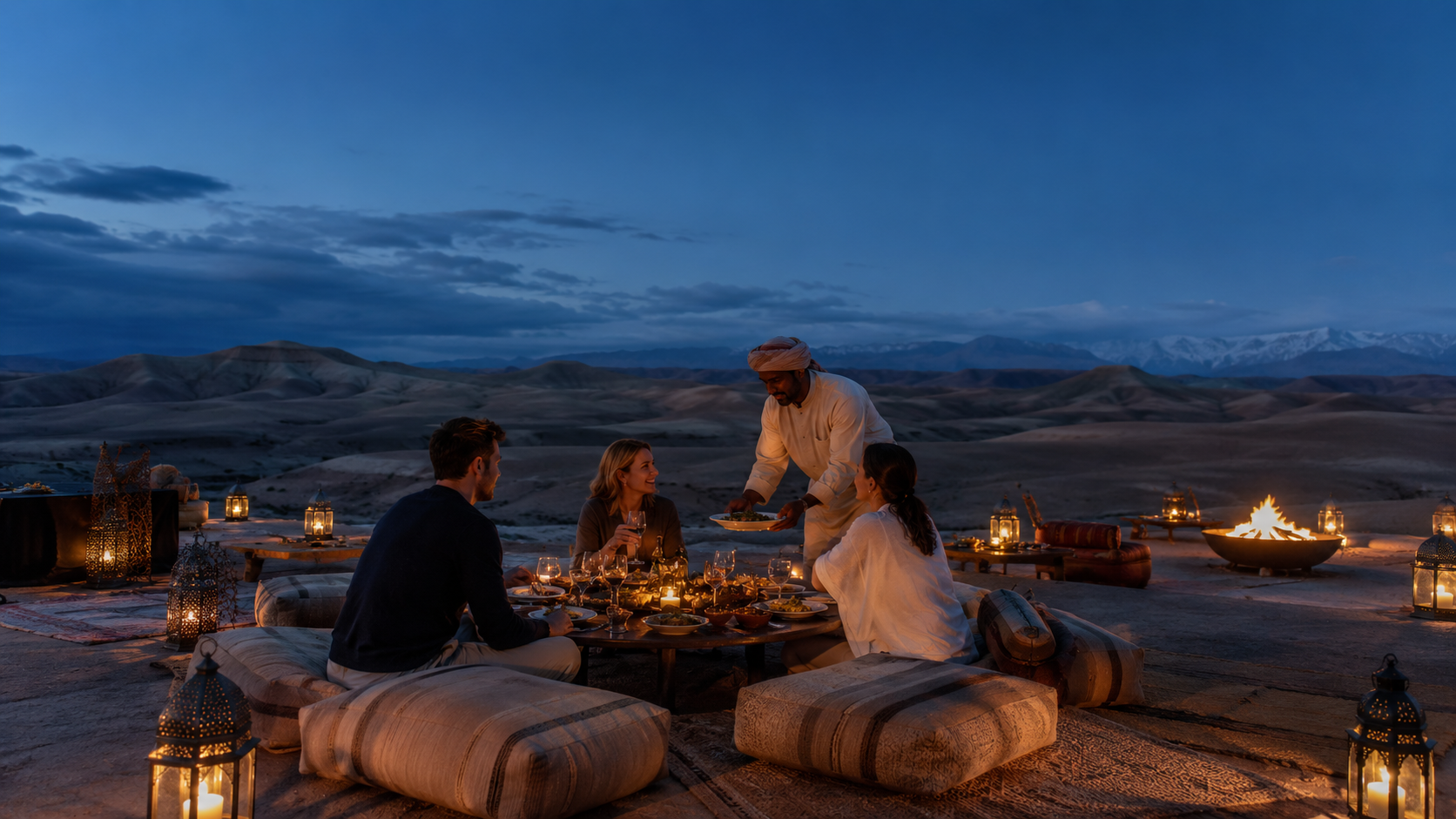
For Morocco, the experience highlighted at launch is a Bedouin dinner in the Agafay Desert.
That may sound like a lifestyle detail.
Economically, it represents something much larger.
The premium travel market is increasingly being built around experiences that can be discovered, booked and paid for before the traveller even reaches the destination.
Morocco already knows how to attract visitors.
The next opportunity is to capture more value from each one.
TOURISM IS MOVING FROM DESTINATION TO EXPERIENCE
Traditional travel marketing sells places.
Marrakech.
Tangier.
The Atlas.
The Sahara.
The coast.
Curated travel sells something more specific.
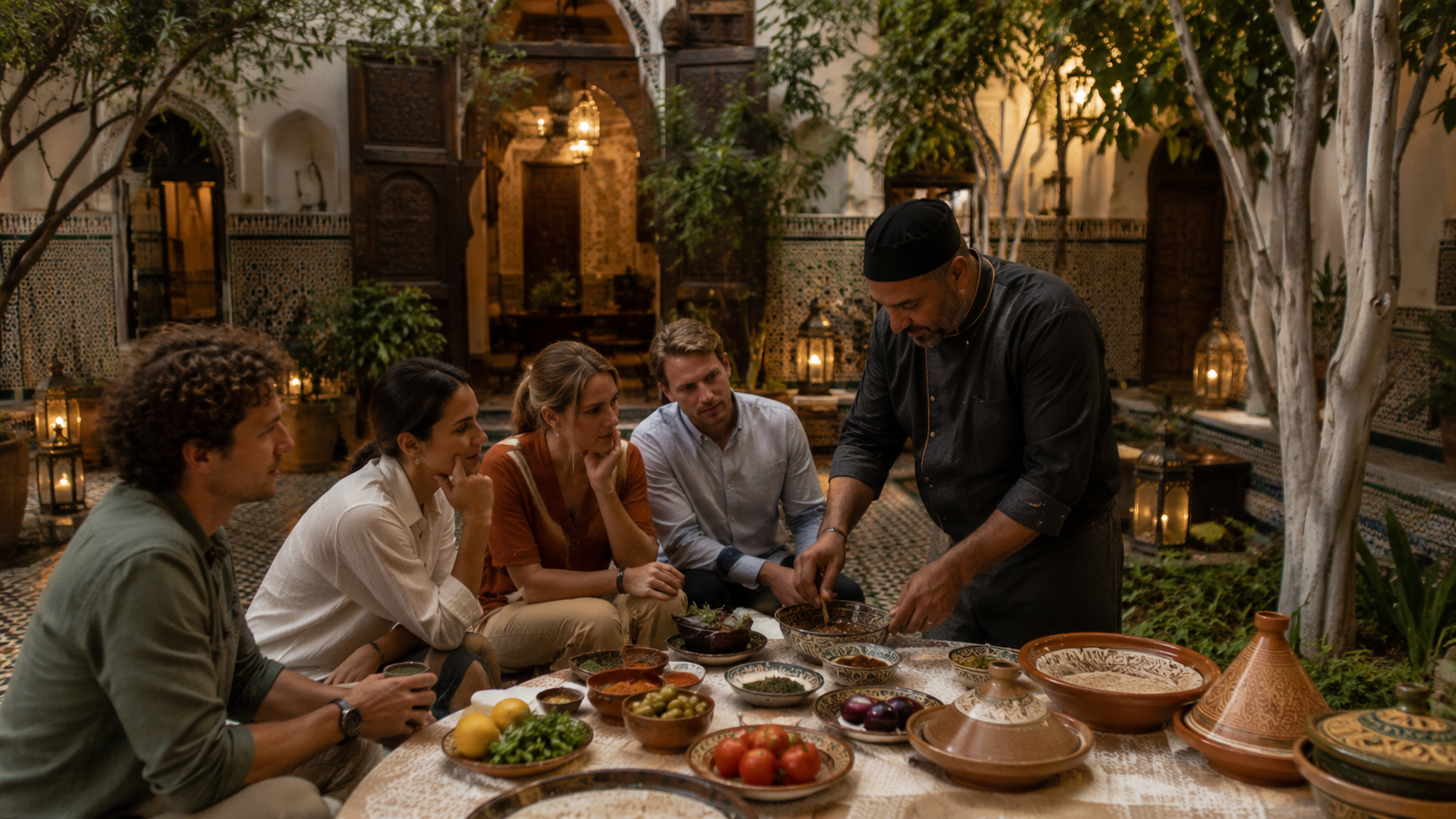
A dinner under the stars.
A private cultural encounter.
A guided culinary experience.
An adventure that feels difficult to reproduce independently.
Mastercard’s Priceless Africa platform is built around four categories, culture and creativity, culinary experiences, nature and wildlife, and adventure. The wider African portfolio includes activities ranging from a sunrise balloon flight over Amboseli to gorilla trekking in Rwanda and Uganda, a candlelit visit to Cape Coast Castle and a traditional dhow experience in Tanzania.
Morocco’s Agafay experience therefore enters a global digital shelf alongside some of Africa’s most recognisable travel products.
That matters for positioning.
The competition is no longer simply between Marrakech and another city.
It is between individual experiences competing for a traveller’s attention before the trip begins.
AGAFAY SHOWS HOW A LANDSCAPE BECOMES A PRODUCT
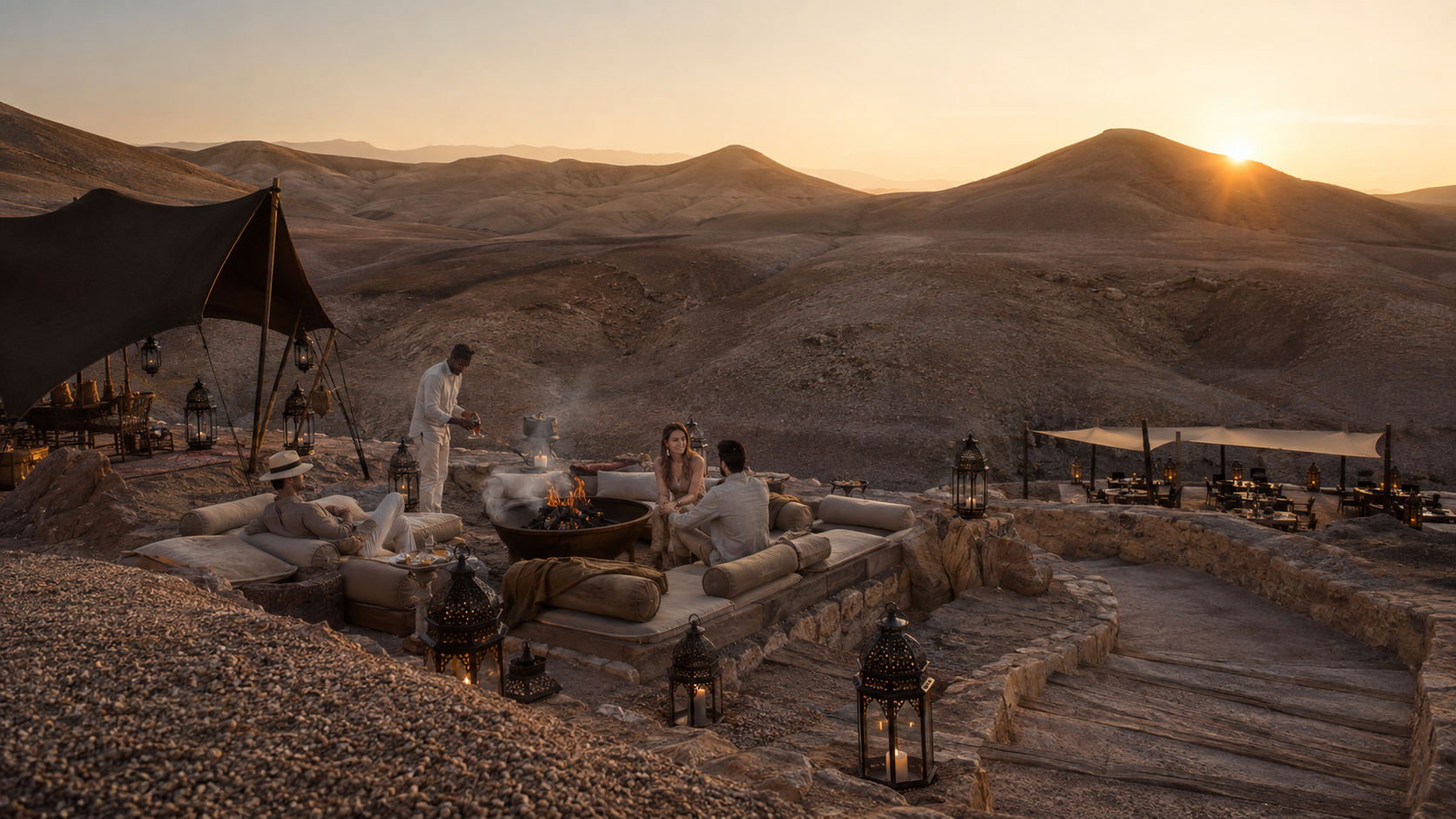
Agafay is particularly interesting because its economic value has been built without the scale of infrastructure associated with Morocco’s largest tourism centres.
The attraction is largely experiential.
Landscape.
Silence.
Food.
Design.
Hospitality.
Proximity to Marrakech.
Those ingredients can be combined into a product with a much higher perceived value than the physical components alone.
That is one of the central lessons of premium tourism.
The traveller does not only pay for dinner.
They pay for access, setting, storytelling, convenience and memory.
This changes the economics of tourism.
A destination does not always need more hotel rooms to generate more revenue.
It can increase the value of what visitors do between check-in and departure.
MOROCCO NEEDS TO MEASURE SPENDING, NOT ONLY ARRIVALS
Tourism success is often discussed through visitor numbers.
That remains important.
But the stronger long-term metric is value per visitor.
Africa welcomed around 81 million international tourists in 2025, up 8% year on year, according to UN Tourism figures cited by Mastercard.
The next question is how much those visitors spend locally.
A traveller who books a premium dinner, guide, transport, wellness session, cultural activity and regional excursion creates a very different economic impact from someone whose spending is concentrated almost entirely in accommodation.
This is where curated platforms can matter.
They can expose travellers to products they may never discover independently.
But Morocco only captures the full benefit if the providers behind those experiences are economically connected to the local ecosystem.
Local operators.
Chefs.
Guides.
Drivers.
Artisans.
Photographers.
Musicians.
Hospitality teams.
Curated tourism becomes economically powerful when international distribution creates domestic income.
THE PLATFORM IS ALSO A PAYMENTS STORY
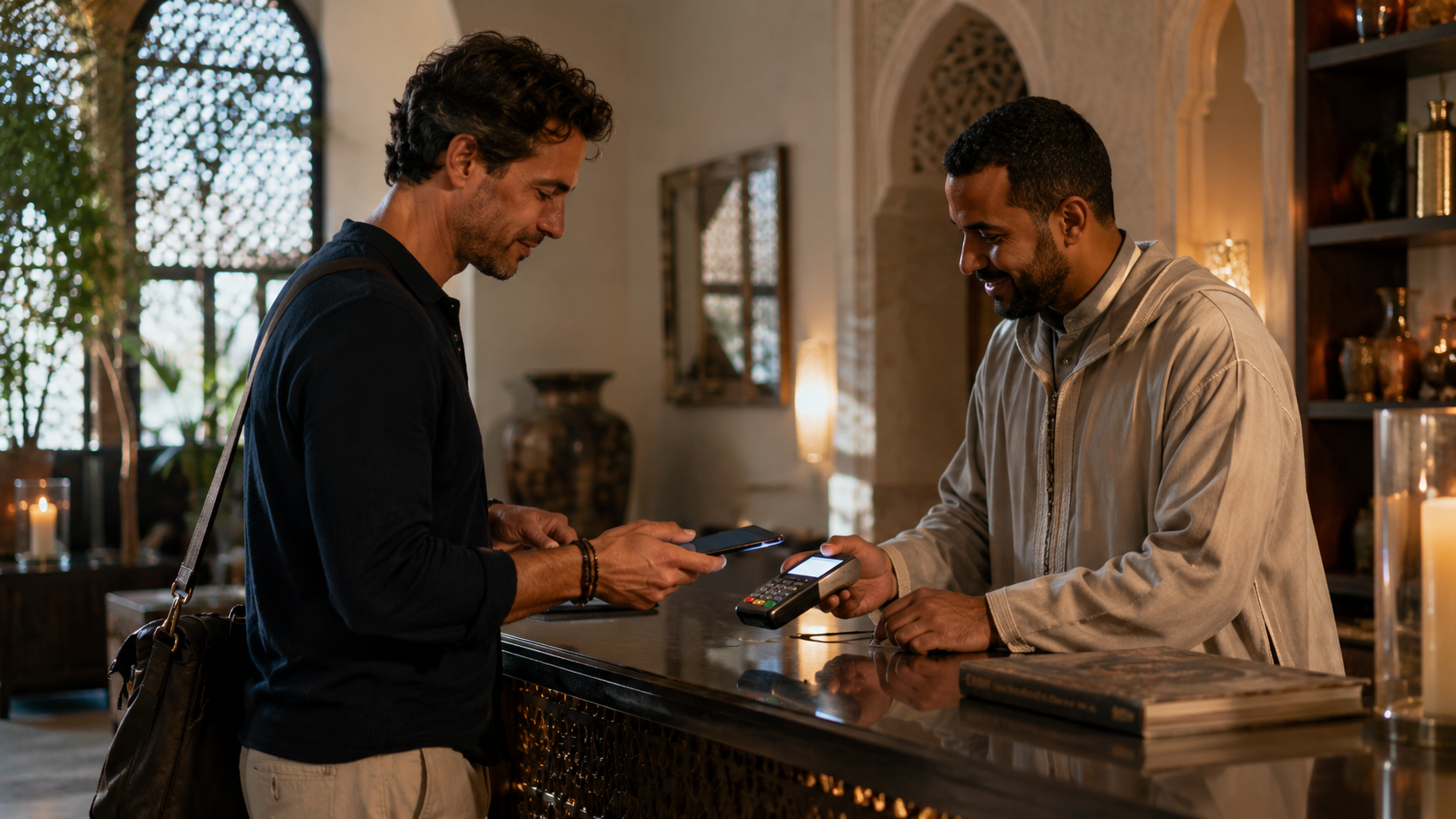
Mastercard’s involvement makes this more than a tourism-content platform.
Priceless Africa sits inside a wider travel ecosystem that includes hotel and flight savings, airport lounge access, booking platforms, car rentals and e-hailing, supported by Mastercard’s payments infrastructure.
This matters because premium travel increasingly depends on reducing friction.
Discover the experience.
Reserve it.
Pay securely.
Receive confirmation.
Arrive.
The traveller does not want to negotiate every step independently.
That creates a new competitive variable for Moroccan tourism operators.
Digital bookability.
A remarkable experience that cannot be easily reserved online may lose to a less distinctive one that can.
For smaller operators, this creates both opportunity and pressure.
International platforms can provide distribution.
But providers need professional inventory, clear pricing, reliable availability and consistent service.
The digital layer becomes part of the tourism product.
CURATION CAN CREATE A QUALITY PREMIUM
The word "curated" is important.
Travel platforms already offer enormous choice.
Choice itself is no longer scarce.
Trust is.
A traveller looking at hundreds of restaurants, excursions and guides may not know which one deserves the booking.
A curated platform reduces that uncertainty.
For Morocco, this creates an opportunity to compete on quality rather than only price.
A premium experience can justify a stronger margin if the customer believes it has been selected, structured and delivered to a high standard.
But curation also creates expectations.
The experience must work.
Transport must arrive.
Food must meet the promise.
Service must be consistent.
Safety must be managed.
The story sold online has to match the experience delivered on the ground.
Premium positioning magnifies both success and failure.
MARRAKECH SHOULD NOT CAPTURE THE WHOLE OPPORTUNITY
Agafay is an obvious launch point because Marrakech already attracts international demand.
The larger opportunity is regional.
Morocco has many destinations capable of becoming curated products.
A private culinary experience in Fez.
Astronomy in the desert.
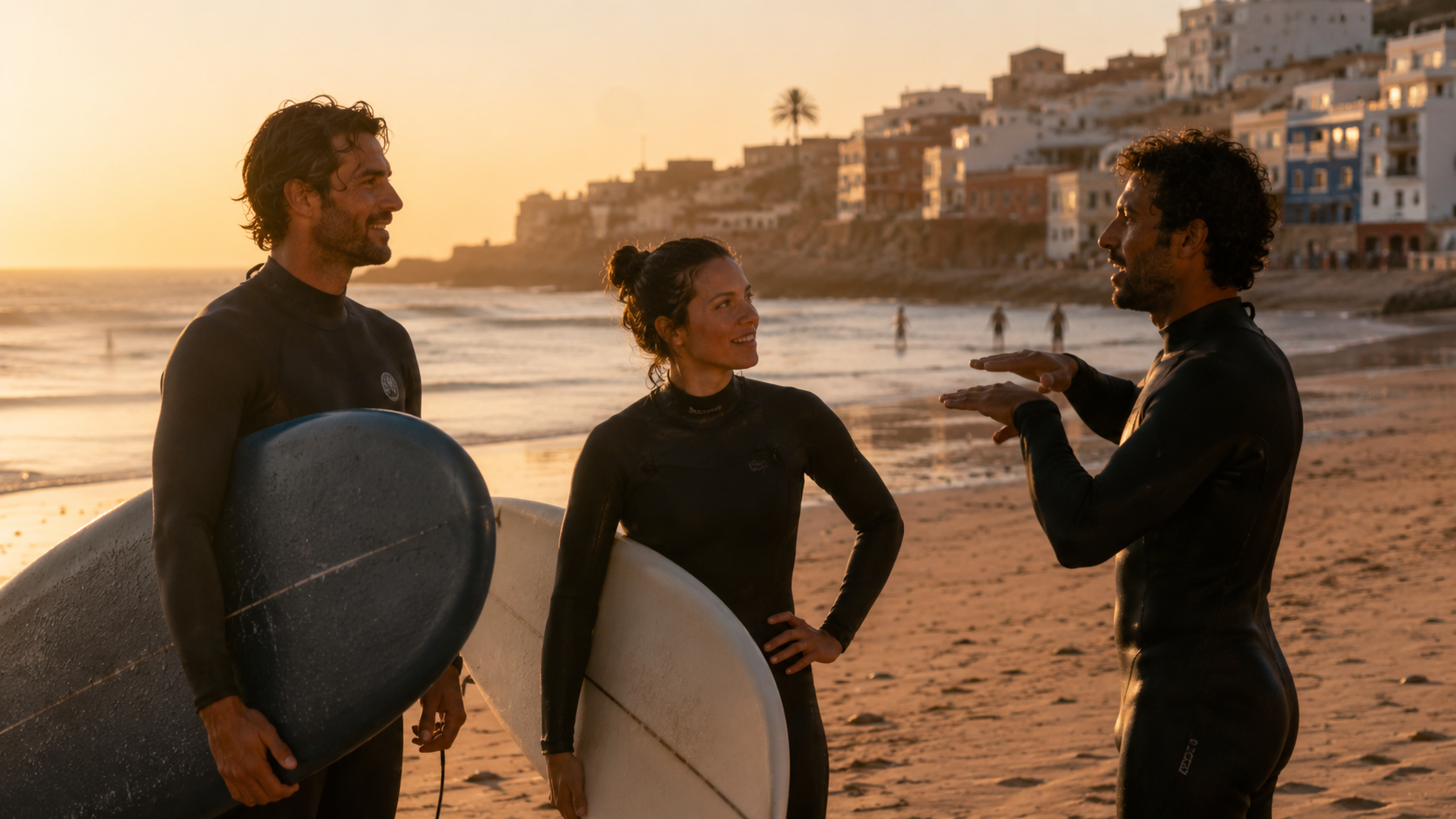
Surf culture around Taghazout.
Craft workshops in traditional production centres.
Mountain experiences in the Atlas.
Wine, gastronomy and agriculture around emerging rural destinations.
Architecture and design in Tangier.
Nature and wellness in less crowded regions.
The objective should not be to package every local tradition for tourists.
It should be to identify experiences capable of supporting professional, respectful and commercially viable tourism.
If curated travel remains concentrated around Marrakech, Morocco gains another premium Marrakech product.
If the model spreads, it can become a regional-development tool.
PREMIUM TOURISM NEEDS LOCAL OWNERSHIP
There is also a distribution question.
Who owns the customer relationship?
Global platforms can bring demand.
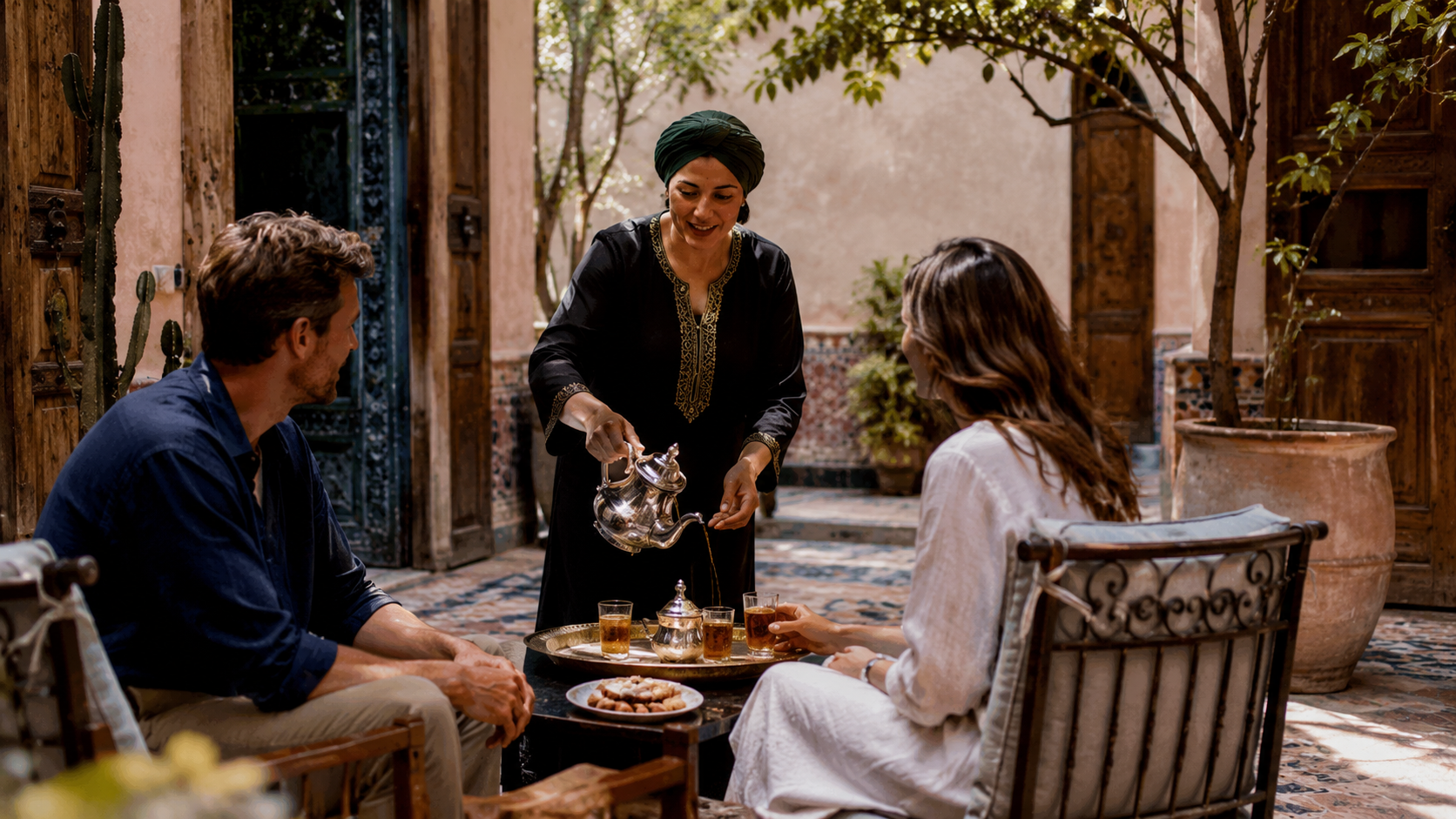
Hotels can package the experience.
Payment networks can facilitate transactions.
But local businesses need to retain enough margin and data to build durable companies themselves.
A tourism operator dependent entirely on one international platform remains vulnerable.
Commission changes.
Ranking changes.
Platform policy changes.
Demand can disappear quickly.
The stronger model combines global distribution with local brand ownership.
The traveller may discover an experience through Mastercard.
They should still remember the Moroccan operator that delivered it.
That is how a local tourism business becomes an asset rather than simply a supplier.
DATA COULD BECOME THE NEXT ADVANTAGE
Curated travel also produces information.
What experiences convert?
Which nationalities book them?
How far in advance?
At what price?
What combination of activities increases total spend?
Which travellers return?
That information can improve destination strategy.
Mastercard is already using its broader travel ecosystem in other markets to combine curated experiences with data-driven tourism analysis. Its August 2026 collaboration with the Saudi Tourism Authority, for example, includes spend analysis, travel-flow insights, segmentation and predictive analytics alongside Priceless experiences.
Morocco should eventually think in the same direction.
The most valuable tourism data are not only arrival numbers.
They reveal behaviour.
And behaviour allows better product design.
AFRICA’S TOURISM COMPETITION IS BECOMING MORE SOPHISTICATED
Priceless Africa launches simultaneously across nine markets.
That sends another useful signal.
Morocco is not competing only with European or Middle Eastern destinations.
African destinations are increasingly competing with one another for premium international travellers.
Kenya.
Mauritius.
Rwanda.
South Africa.
Tanzania.
Ghana.
Uganda.
Zimbabwe.
Each brings a different experience proposition.
Morocco’s advantage is diversity.
Urban culture.
Desert.
Atlantic coast.
Mediterranean coast.
Mountains.
Cuisine.
Craft.
Wellness.
Adventure.
The challenge is turning that diversity into products that can be sold at international standards without making them feel standardised.
That balance matters.
Curated should not mean generic.
THE REAL KPI IS VALUE PER EXPERIENCE
The strongest measure of Priceless Africa’s Moroccan impact will not be how many times Agafay appears in international marketing.
It will be what happens economically afterwards.
How many travellers book?
How much do they spend?
How much revenue stays with Moroccan operators?
How many local businesses gain access to global distribution?
How many visitors add another night because of the experience?
How many destinations outside Marrakech eventually enter curated platforms?
How many Moroccan operators build brands strong enough to attract repeat customers directly?
Those are the numbers that turn lifestyle positioning into economic value.
Mastercard’s expansion into Africa is not simply putting Morocco on another travel website.
It reflects a broader shift in what premium tourism is becoming.
Less about moving people from airport to hotel.
More about controlling the quality, convenience and meaning of everything in between.
Morocco already has the destinations.
It already has the culture.
It already has the stories.
The next opportunity is packaging them professionally enough that travellers are willing to pay more for access, while ensuring more of that value remains with the people and businesses that make the experience possible.
The future of premium Moroccan tourism may not be another hotel room. It may be the experience that convinces the guest to stay one more night.
 Jamal Mahdad, Founder & Editor-in-Chief