

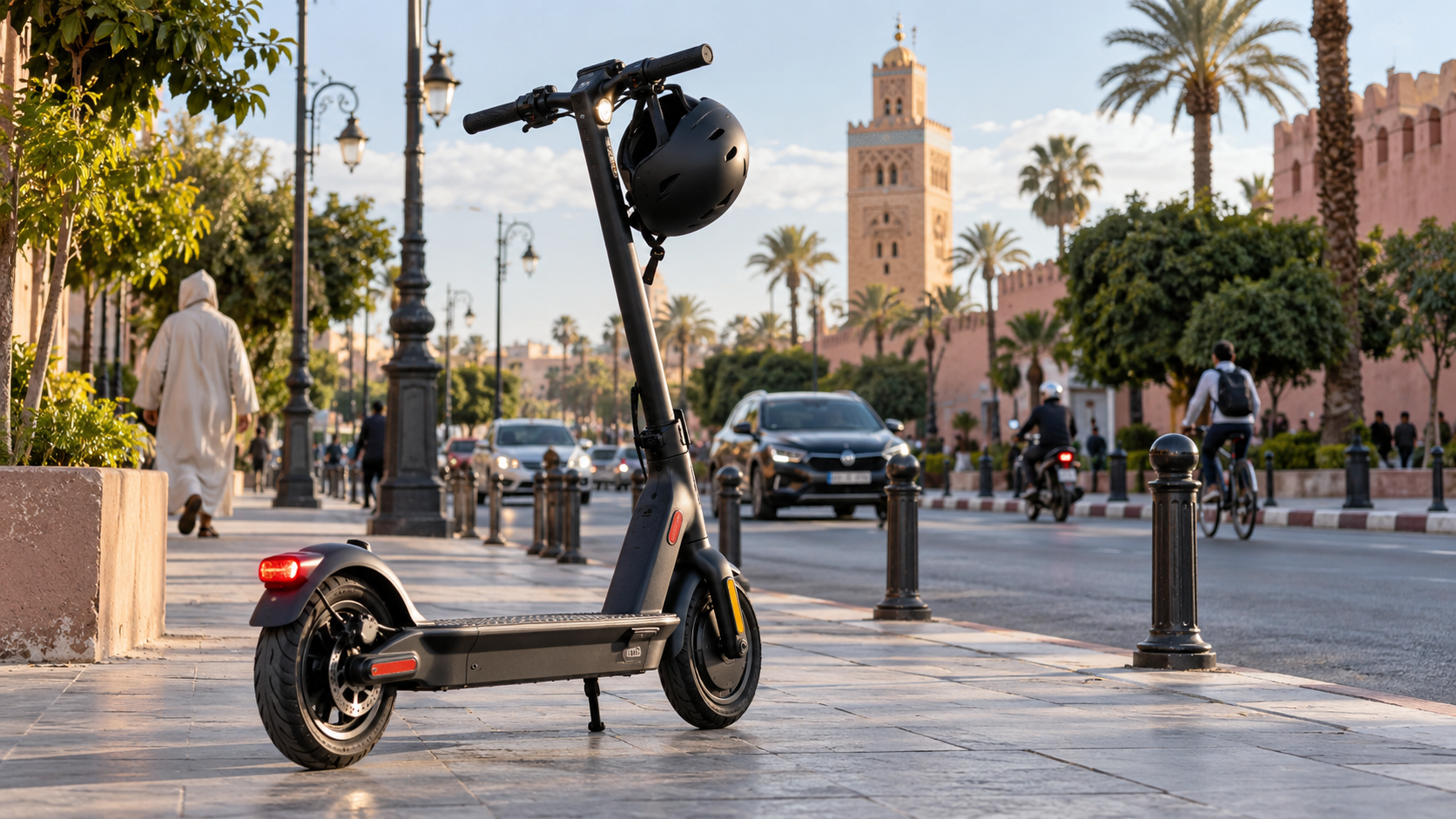
The new framework introduces compulsory helmets, a 25 km/h limit and equipment requirements, but riders have six months to prepare before the relevant provisions apply.
Morocco electric scooter rules have now been formally published, giving riders, parents and retailers a clearer picture of what will be required on the road.
The changes include an approved and securely fastened helmet, a maximum speed of 25 km/h, restrictions on headphone use and mandatory visibility equipment.
But the new obligations do not all apply immediately.
Decree No. 2.25.145 was published in Morocco’s Official Bulletin on August 24, 2026. The provisions covering motorised personal mobility vehicles and electrically assisted bicycles take effect after a six-month transition period.
That gives users time to inspect their scooters, buy appropriate safety equipment and understand where they will be permitted to ride.
MOROCCO ELECTRIC SCOOTER RULES AT A GLANCE
| What changes? | What riders need to know |
|---|---|
| Official text | Decree No. 2.25.145 |
| Publication date | August 24, 2026 |
| Transition period | Six months from publication |
| Maximum speed | 25 km/h |
| Helmet | Approved and securely fastened |
| Headphones | Prohibited while riding |
| Passengers | The vehicle category is designed for one person |
| Visibility equipment | Front and rear lights plus required reflectors |
| Warning equipment | An audible warning device |
| Outside urban areas | Riding is restricted to routes specifically arranged for bicycle users |
| Minimum age | The under-eight restriction discussed earlier does not appear in the final published decree |
The six-month timetable points towards implementation in late February 2027. Riders should check the official Moroccan government publications and guidance from the National Road Safety Agency, NARSA for any further clarification before the transition ends.
THE HELMET WILL BECOME COMPULSORY
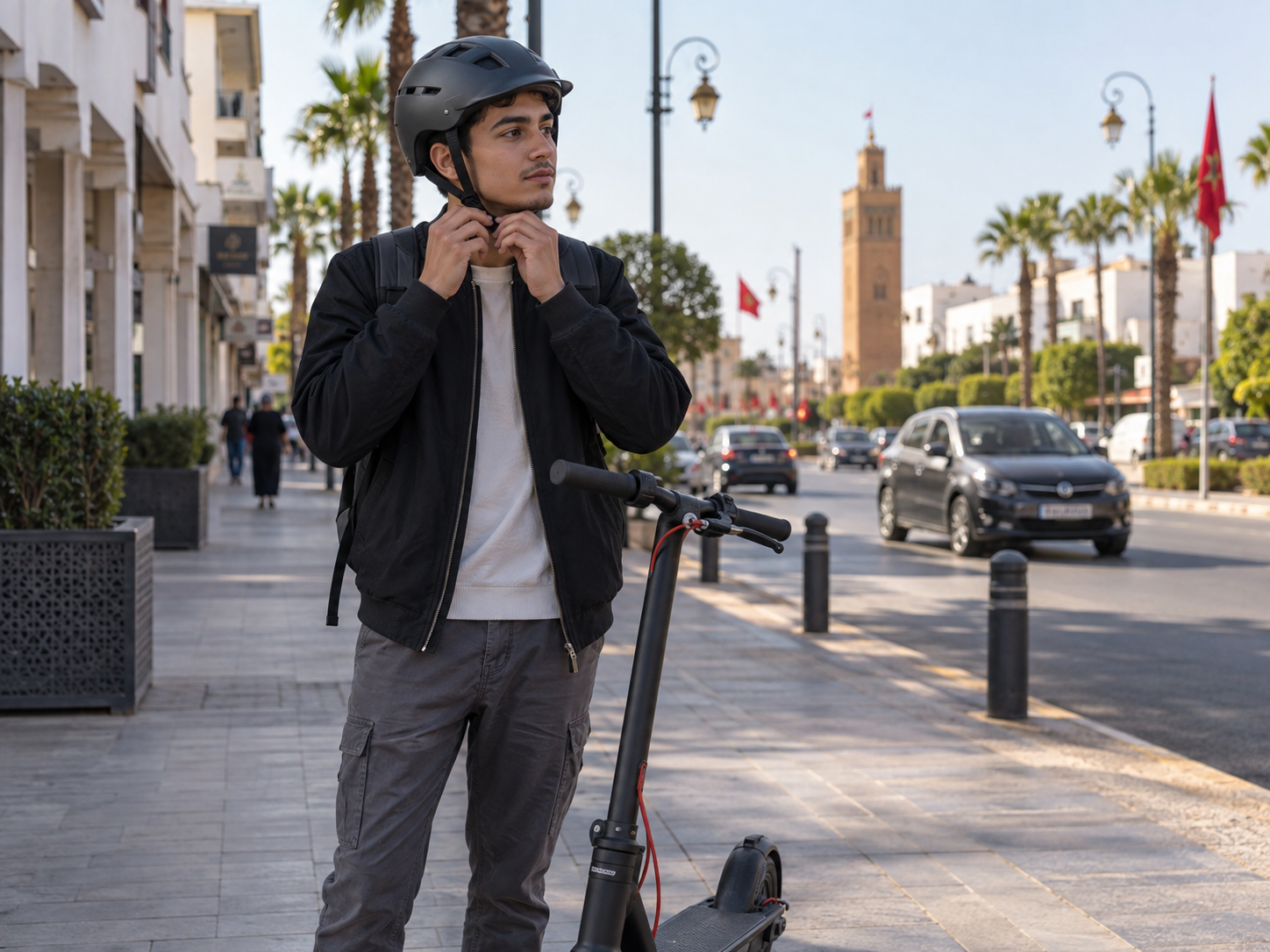
The most visible change is the helmet requirement.
Electric scooter riders will have to wear an approved protective helmet that is properly fastened.
Carrying a helmet on the handlebar or wearing it without securing the strap defeats both the purpose and the practical requirement of the rule.
The Morocco electric scooter rules reflect a simple reality: these vehicles are no longer being treated merely as toys.
Electric scooters now share crowded urban spaces with cars, motorcycles, buses, cyclists and pedestrians. Their small wheels can also react sharply to potholes, kerbs, sand, water and damaged road surfaces.
Riders do not need to wait until the transition period ends to improve their protection.
When choosing a helmet, make sure it fits firmly, can be securely fastened and carries a recognised safety approval. A loose or unsuitable helmet may offer significantly less protection during a collision or fall.
25 KM/H IS THE CEILING
The regulations place electric scooters within the category of motorised personal mobility vehicles.
The category covers a vehicle without a seat, designed for one person, fitted with a steering device and powered by a non-combustion motor.
Its maximum design speed must be greater than 6 km/h but cannot exceed 25 km/h.
The decree also sets 25 km/h as the maximum speed for this category on the road.
The distinction matters.
A maximum design speed describes what the vehicle was manufactured to achieve. The circulation limit concerns how fast it may be ridden. A scooter modified or unlocked to travel beyond 25 km/h may no longer correspond to the technical category defined by the regulations.
Owners should therefore avoid assuming that reducing their speed during a police check automatically makes a modified high-speed scooter compliant.
Anyone buying a scooter should request written technical specifications and verify the maximum design speed before paying.
A salesperson’s verbal assurance is not a substitute for the manufacturer’s documentation.
HEADPHONES MUST COME OFF
The new circulation framework also prohibits headphones while riding.
Headphones can reduce a rider’s ability to hear approaching traffic, horns, emergency vehicles and warnings from pedestrians or other road users.
Even noise-cancelling models used in only one ear can affect awareness and concentration.
The safest approach is straightforward: keep both ears free and remain alert to everything happening nearby.
Riders should also avoid looking at or operating a mobile phone while moving. A few seconds of distraction can be enough to miss a pedestrian, pothole, changing traffic signal or car door opening ahead.
Music and messages can wait until the scooter has stopped safely.
YOUR SCOOTER NEEDS MORE THAN A CHARGED BATTERY
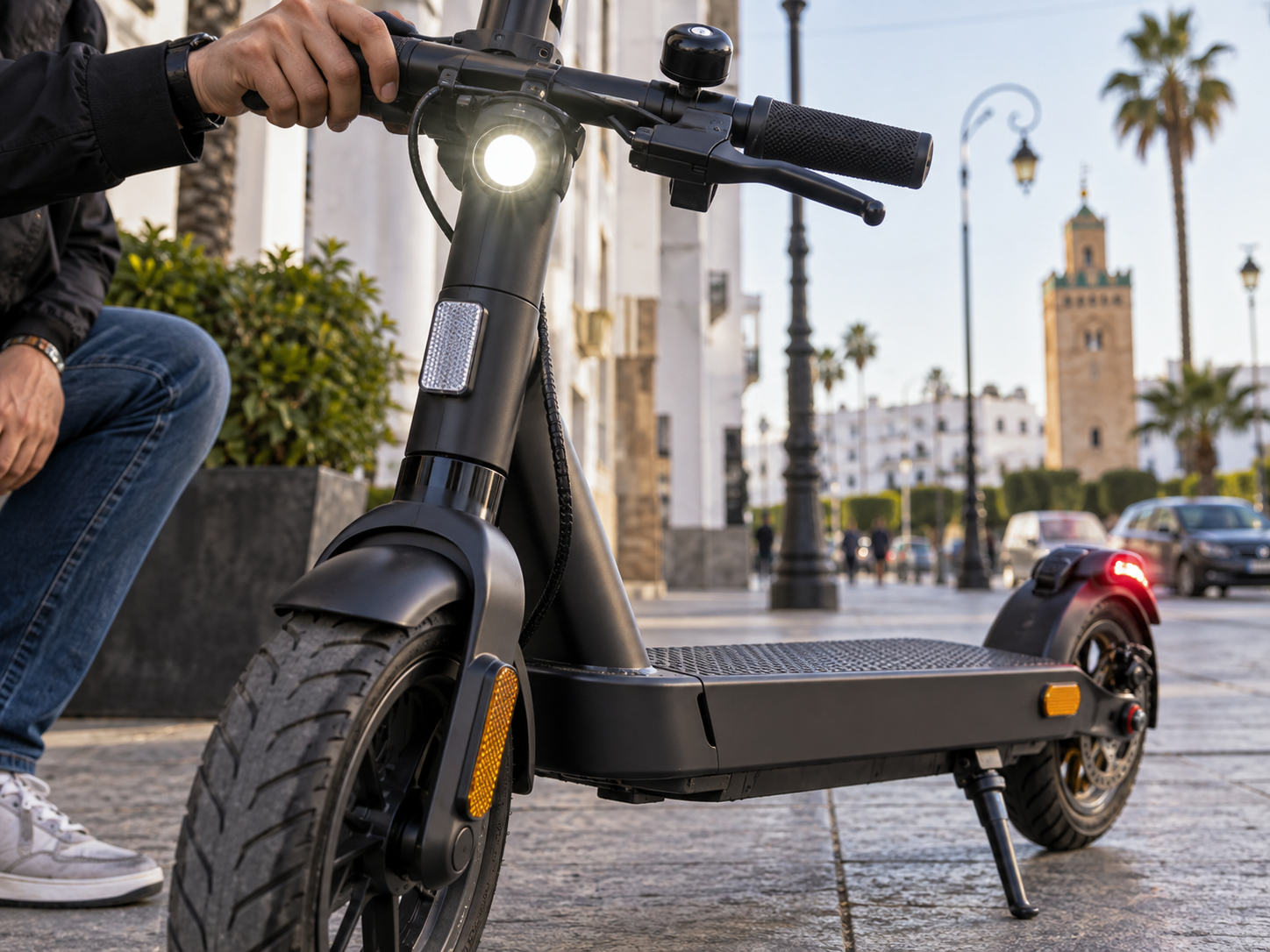
The Morocco electric scooter rules regulate the vehicle as well as the person riding it.
A scooter must have a white front light for use at night or when daytime visibility is poor. It must also carry a rear light that can be clearly seen from behind.
Reflective devices are required to help make the vehicle visible from different directions.
An audible warning device must allow the rider to alert another road user when necessary.
Before the transition ends, owners should check:
the maximum design speed;
the white front light;
the rear position light;
the required front, rear and side reflectors;
the audible warning device;
the steering and operating controls;
the condition of the tyres.
The rules also prevent a motorised personal mobility vehicle from towing another vehicle or load. It cannot be used to push or pull a person, object or vehicle.
The legal category is designed for one rider. Carrying a passenger changes the scooter’s balance, increases its stopping distance and can make steering more difficult.
WHERE CAN YOU RIDE?
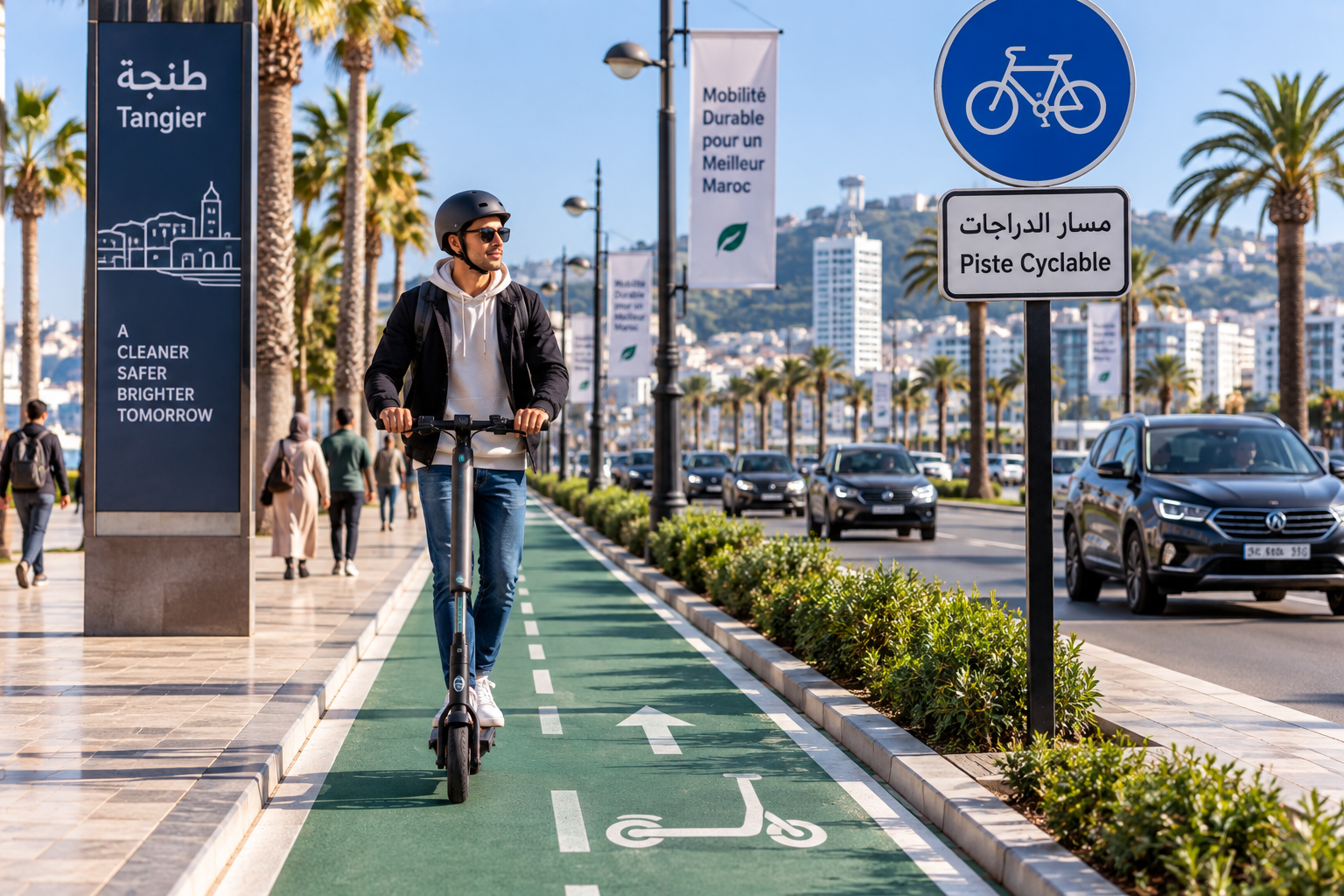
The rules place clear restrictions on using electric scooters outside built-up areas.
Motorised personal mobility vehicles may travel outside urban areas only where routes have been specifically developed for bicycle users.
Riders should not assume that every road connecting two neighbourhoods, villages or towns is suitable or permitted.
Inside cities, scooter users must continue to respect traffic signs, road markings and instructions from the authorities.
National legislation does not make every pavement, road or public space an automatic scooter route. Local traffic arrangements and designated infrastructure still matter.
Conditions also vary sharply between cities.
A protected cycle lane is very different from a crowded commercial street, a steep road, an unlit neighbourhood or a fast route on the edge of a city.
Following the law is the minimum. Riders must still adjust their speed to pedestrians, traffic, visibility and the condition of the road.
WHAT HAPPENED TO THE MINIMUM AGE?
When the draft measures were discussed in July, reports said children under eight would be prohibited from using bicycles or electric scooters on public roads.
That proposed restriction does not appear in Decree No. 2.25.145 as finally published.
MTD is therefore not presenting eight as a confirmed minimum age under this specific decree.
That does not mean every young child can safely or legally use every electric scooter in every public location.
Other provisions, local rules and general road-safety responsibilities may still be relevant. Further official clarification could also be issued before the transition period ends.
Parents should consider the child’s physical ability, judgment, experience, the scooter’s power and the surrounding traffic.
Balancing on a scooter in a quiet private area is not the same as recognising hazards on a busy public road.
WHAT HAPPENS IF YOU BREAK THE RULES?
The decree does not create one identical fine for every possible electric scooter violation.
The consequences can depend on the specific breach and the relevant provisions of Morocco’s Road Traffic Code.
Riders should therefore be cautious about social media posts claiming that one fixed fine automatically applies to every helmet, speed, lighting or headphone offence.
The absence of a simple universal penalty does not mean the rules can be ignored.
Before enforcement begins, NARSA or other competent authorities may publish additional guidance explaining controls, offences and applicable penalties.
MTD will update readers when further official details become available.
Morocco has recently introduced several road-related changes with different deadlines and conditions. Vehicle owners can also read MTD’s explanation of who actually faces Morocco’s December 31 number plate deadline.
FIVE CHECKS BEFORE RIDING
Check the maximum speed
Confirm that the manufacturer’s stated design speed does not exceed 25 km/h.
Choose an approved helmet
Make sure it fits properly and can be securely fastened.
Inspect the visibility equipment
Test the front light, rear light and reflectors before riding.
Remove the headphones
Keep both ears free and remain aware of surrounding traffic.
Check the route
Do not assume that an electric scooter is permitted on every road or public space.
BUYING A SCOOTER? CHECK BEFORE YOU PAY
The transition period is especially important for anyone planning to buy an electric scooter.
A discounted model may look attractive, but the real question is whether it will comply with the Morocco electric scooter rules when the transition ends.
Ask the seller to confirm in writing:
the maximum design speed;
whether the scooter is designed for one person;
which lights and reflectors are included;
whether it has an audible warning device;
what warranty applies;
whether replacement parts are available.
Keep the invoice, warranty, product description and technical specifications.
Consumers should be particularly cautious about models advertised as “unlocked” or capable of travelling significantly faster than 25 km/h.
Greater speed does not automatically mean greater quality. The brakes, tyres, frame and battery must all be suitable for the vehicle’s intended use.
A modified scooter may also fall outside the legal category on which a buyer was relying.
SIX MONTHS TO PREPARE
Electric scooters can provide an affordable, convenient and low-emission option for short journeys.
They can also create serious risks when ridden too quickly, used without proper equipment or treated like toys in busy traffic.
Morocco’s new framework gives riders and businesses six months to prepare. That time should be used to check vehicles, improve equipment and understand the routes on which scooters can be used.
Wear a properly fastened helmet. Respect the 25 km/h limit. Keep both ears free and make sure other road users can see and hear you.
The scooter may be small. The responsibility is not.
 Martino Oosterveer, Contributing Editor