
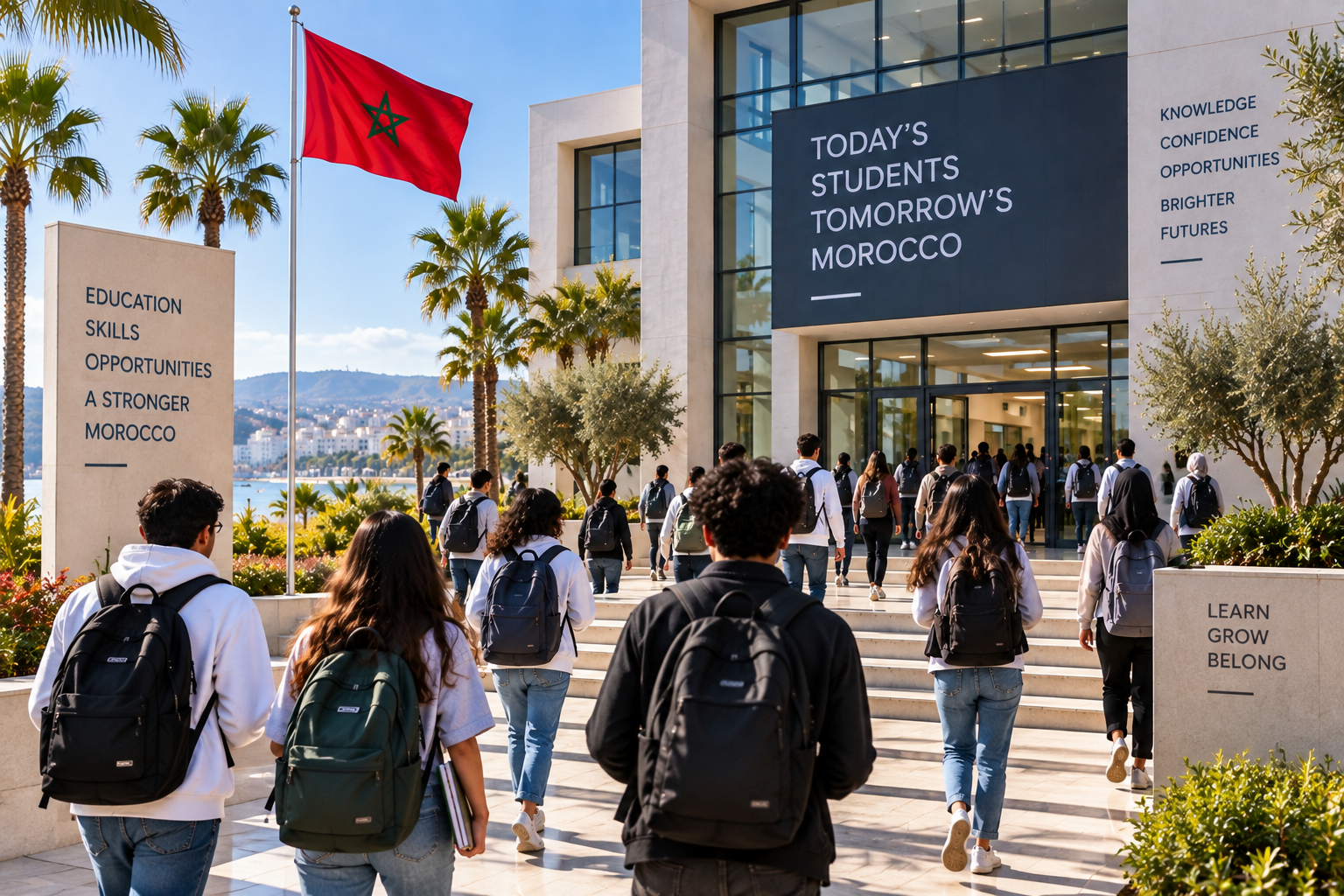
PISA 2025 shows that access to secondary education expanded significantly, while Morocco’s next challenge is turning wider participation into stronger learning outcomes.
Morocco has brought significantly more 15-year-olds into secondary education.
That is one of the most important findings hidden inside the country’s difficult PISA 2025 results.
The number of Moroccan teenagers eligible to participate in the international assessment increased by more than 30% between 2018 and 2025, even though the country’s total population of 15-year-olds remained relatively stable.
According to the OECD, this suggests a substantial expansion in secondary-school enrolment, including among young people from previously marginalised communities.
The achievement deserves recognition. More children remaining within the education system means more opportunities for learning, qualifications and future employment.
But access is only the first test.
The results released by the OECD on September 8 show that Morocco must now ensure that a rapidly expanding education system delivers stronger reading, mathematics and science skills to every student.
MOROCCO’S PISA 2025 RESULTS AT A GLANCE
A total of 6,978 students from 179 Moroccan schools completed the PISA 2025 assessment.
They represented approximately 535,800 students, or an estimated 87% of Morocco’s total population of 15-year-olds.
Moroccan students recorded average scores of:
358 points in science
355 points in mathematics
321 points in reading
374 points in computational problem-solving
The scores remained below the averages recorded across OECD countries.
Compared with PISA 2022, Morocco’s average results were lower in mathematics and reading, while performance in science remained approximately stable.
Compared with 2018, average scores were lower in all three core subjects.
These findings cannot be dismissed. They show that too many Moroccan students are progressing through school without acquiring the foundational skills they will need in higher education, vocational training and the labour market.
However, they must also be interpreted alongside the major increase in the number of teenagers covered by the assessment.
THE NUMBER THAT CHANGES HOW THE RESULTS SHOULD BE READ
PISA does not test every 15-year-old. It assesses eligible students who are enrolled in school and have completed at least six years of formal education.
When more young people remain in secondary education, including students who might previously have left the system, the population taking the assessment becomes broader and more representative.
That is what happened in Morocco.
Between 2018 and 2025, the number of 15-year-olds eligible for PISA increased by more than 30%.
The OECD says this expansion can explain the apparent decline in Morocco’s reading and science performance over that period. Its analysis indicates that performance among the more advantaged students whose educational participation was unaffected by the expansion remained stable in science and mathematics, although it declined in reading.
This does not mean the weaker national scores should be ignored.
It means two developments occurred at the same time.
Morocco succeeded in keeping many more teenagers within the education system. At the same time, the system did not yet provide enough of them with the minimum skills measured by PISA.
The next phase of progress must therefore combine inclusion with learning quality.
THE FOUNDATIONAL SKILLS GAP REMAINS SERIOUS
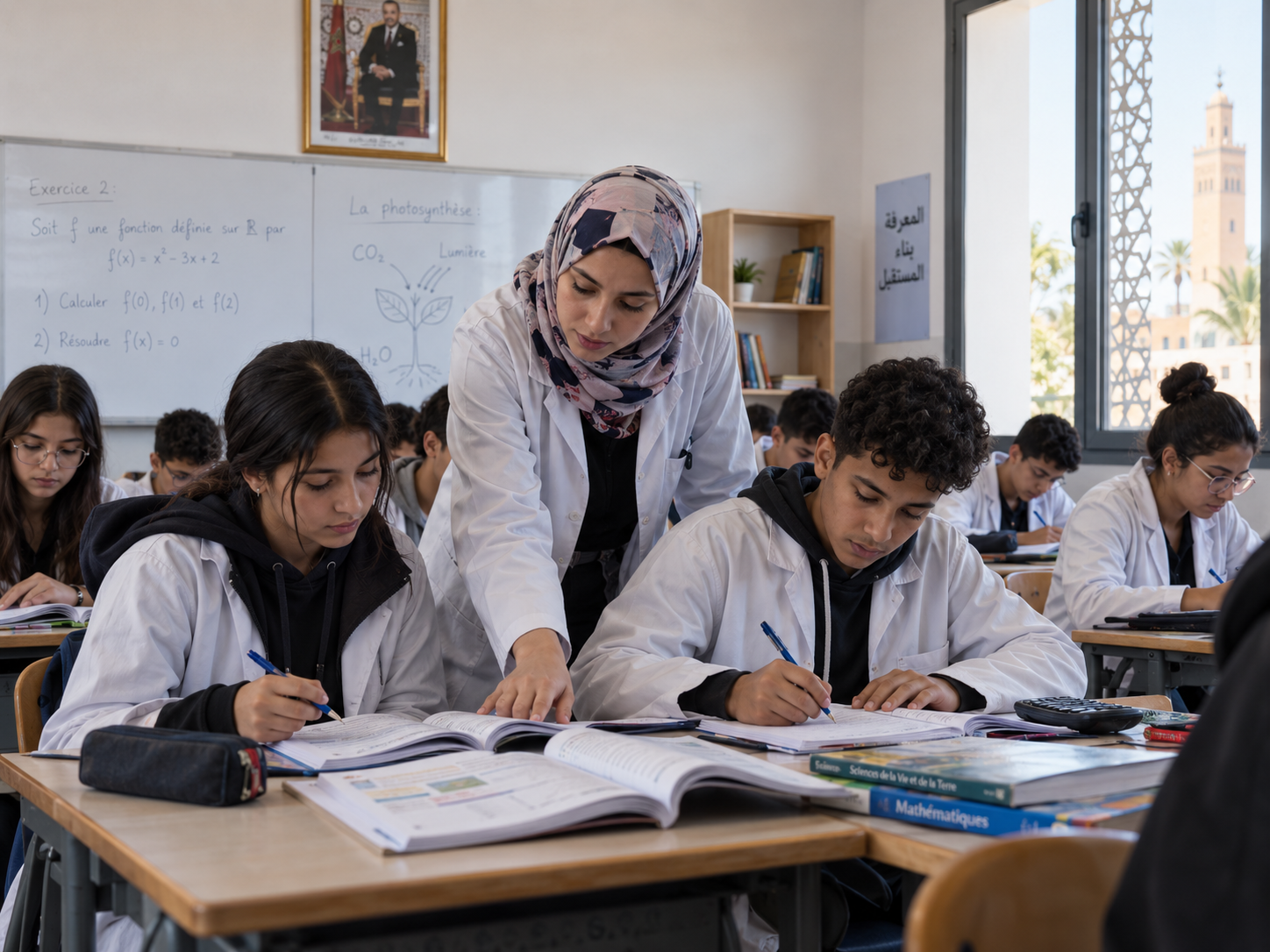
PISA classifies Level 2 as the baseline at which students begin demonstrating the knowledge and skills needed to participate effectively in modern society.
In Morocco, 23% of participating students attained Level 2 or higher in science. The OECD average was 74%.
In mathematics, 16% reached the baseline, compared with an OECD average of 65%.
Reading produced the most difficult result. Only 13% of Moroccan students attained Level 2 or higher, compared with 69% across OECD countries.
These percentages show where attention is most urgently required.
Reading is not only another school subject. It supports a student’s ability to understand a science question, interpret a mathematical problem, evaluate online information and follow written instructions.
Strengthening literacy can therefore support progress throughout the curriculum.
Mathematics also matters far beyond the classroom. PISA’s baseline tasks include practical abilities such as comparing alternative routes and converting prices between currencies.
Improving these skills would help students not only during examinations, but also in vocational training, university and everyday decision-making.
MORE STUDENTS INSIDE SCHOOL CREATES A NEW OPPORTUNITY
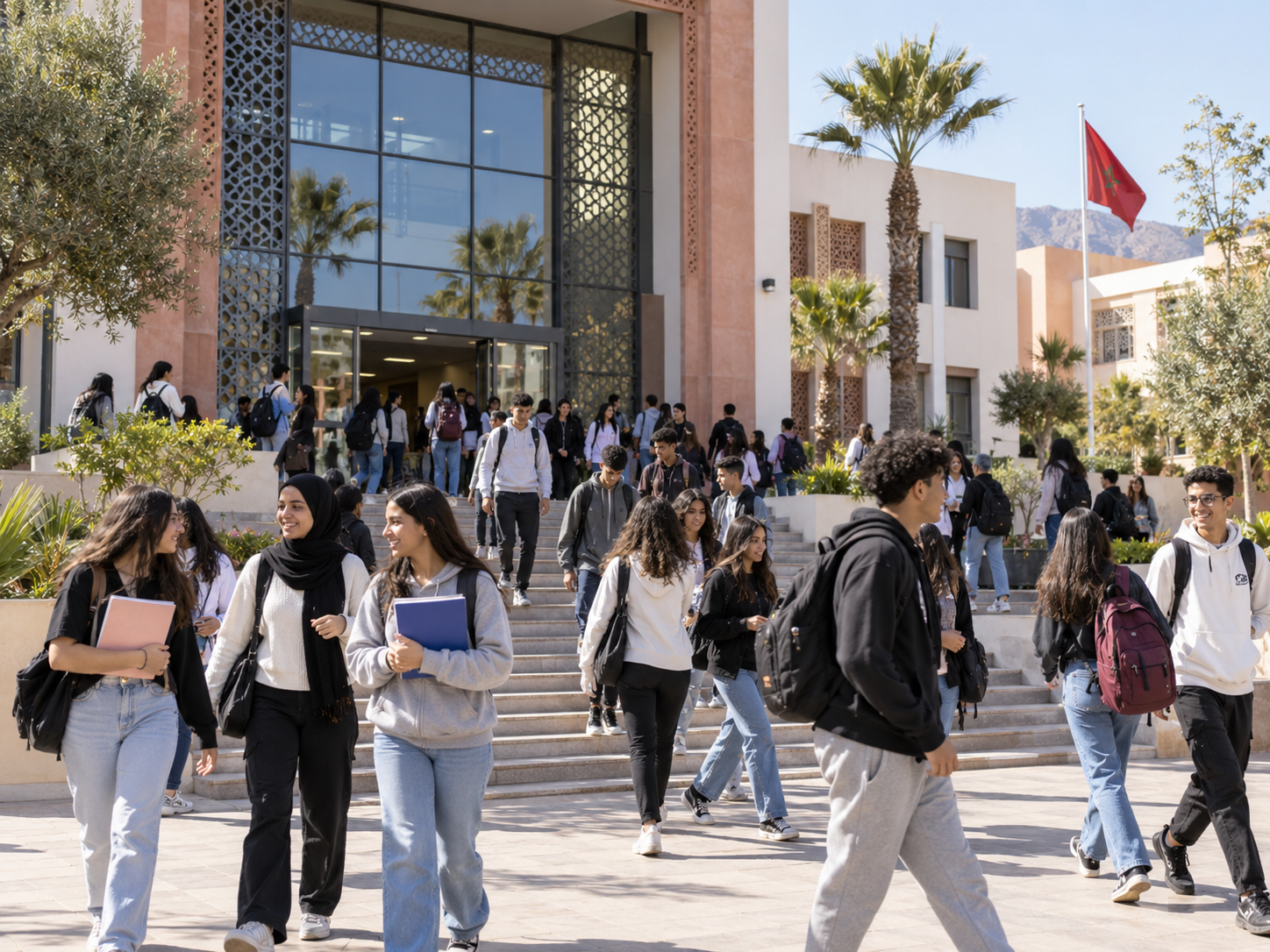
Expanding secondary-school participation changes the scale of Morocco’s education challenge, but it also creates an important national opportunity.
Every additional student who remains in education can potentially gain skills, qualifications and greater access to employment.
The priority is to ensure that enrolment translates into meaningful learning.
That requires early identification of students who are falling behind, focused support in reading and mathematics and clear measurement of progress at classroom level.
Schools also need teaching materials, suitable facilities and sufficient educational staff.
In PISA 2025, 36% of Moroccan students attended schools whose principals reported that teacher shortages hindered instruction to some extent.
The reported shortages were greater for supporting staff, educational materials and physical infrastructure.
These findings help identify practical priorities. They should be used as a diagnostic tool, not as a reason to diminish the work of students or teachers.
MOROCCAN STUDENTS STILL SEE VALUE IN EDUCATION
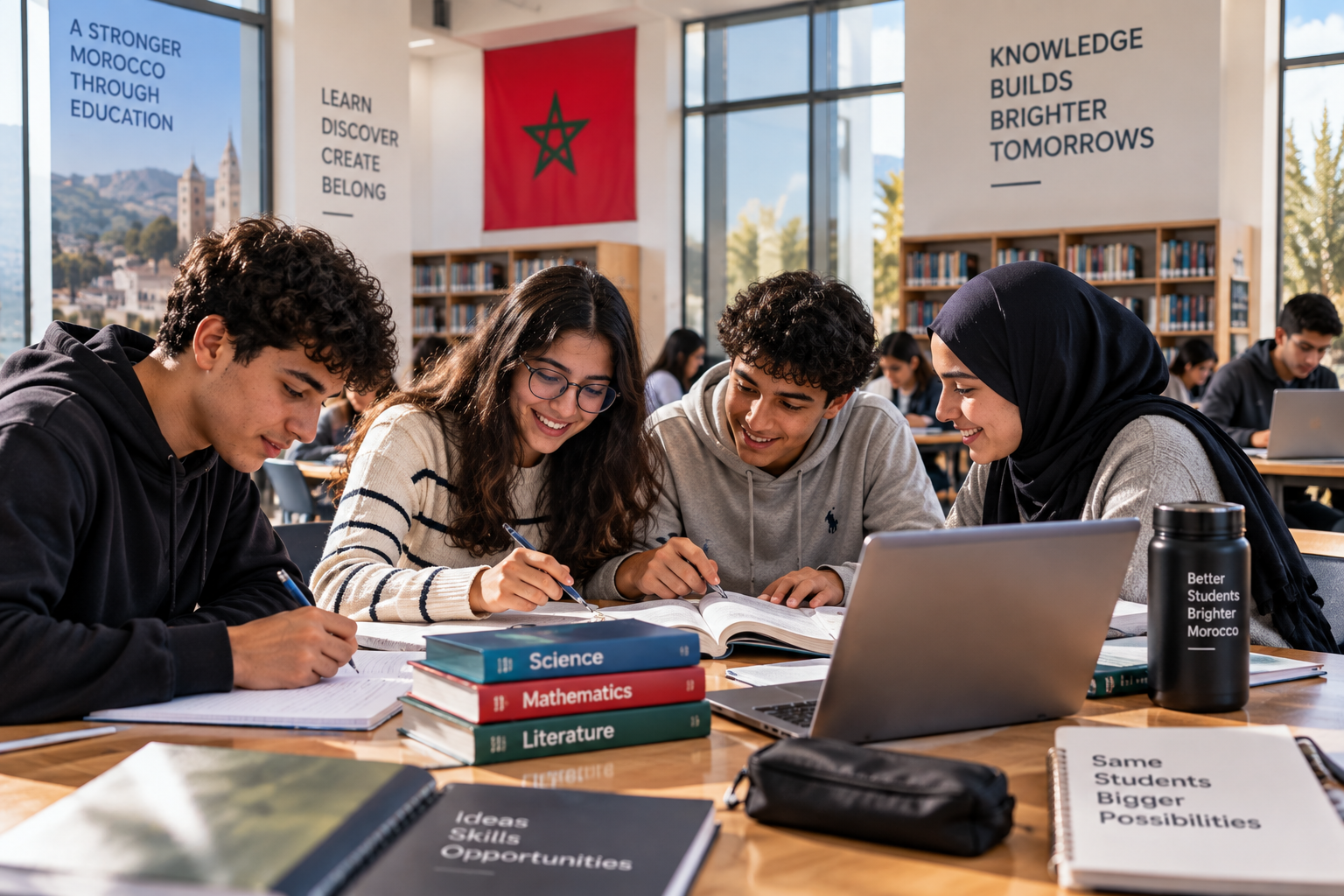
The PISA results also contain encouraging indicators about the attitudes of Moroccan teenagers.
Sixty-seven per cent reported applying additional effort when schoolwork becomes challenging. That was higher than the OECD average of 60%.
Only 17% agreed that school had been a waste of time, compared with 24% across OECD countries.
Between 2022 and 2025, the proportion of Moroccan students who considered school a waste of time fell by 12.8 percentage points.
The share describing themselves as curious about many different things also increased by 8.8 percentage points.
These findings matter because educational improvement depends not only on curricula and buildings, but also on whether students believe that learning is worth their effort.
Morocco is not starting with a generation that has rejected education. Many students remain willing to work, curious about the world and convinced that school has value.
The responsibility of the system is to turn that willingness into measurable progress.
DISADVANTAGED STUDENTS ARE SHOWING RESILIENCE
Socio-economic conditions continue to affect educational performance.
More than half of the Moroccan students assessed were situated within the lowest international quarter of the PISA economic, social and cultural index.
Within Morocco, students from the most advantaged quarter outperformed those from the least advantaged quarter by 55 points in science.
Yet the report also identifies an encouraging sign.
Sixteen per cent of Morocco’s disadvantaged students performed within the country’s highest quarter in science. The comparable OECD average was 12%.
PISA describes these students as academically resilient because they achieved strong results despite their socio-economic circumstances.
Their success shows that background influences outcomes but does not determine them completely.
Understanding what helped these students succeed could provide valuable lessons for schools serving communities with fewer resources.
DIGITAL TOOLS MUST SUPPORT LEARNING
Moroccan students are already using artificial intelligence as part of their education.
Forty-five per cent reported using AI chatbots to support learning at least once a week. Students used them for initial research, summarising texts and preparing written assignments.
This creates opportunity, but also responsibility.
Students need to understand how to verify information, recognise unreliable answers and use AI as a learning aid rather than a substitute for thinking.
Digital distraction is another challenge.
Around 35% said classmates were distracted by digital devices during most or all science lessons. At the same time, 82% attended schools where mobile phones were prohibited.
Rules are part of the response, but digital education is equally important. Young people need the skills to control technology rather than allowing technology to control their attention.
PISA SHOULD GUIDE IMPROVEMENT, NOT BECOME A POLITICAL SCOREBOARD
PISA provides an international comparison, but it is not a complete verdict on Morocco’s schools, teachers or students.
It measures selected competencies among 15-year-olds at a particular point in time. It does not capture every subject, every talent or every improvement taking place within the education system.
It should also not be reduced to a league-table position.
The most valuable questions are practical.
Are students reading with understanding? Can they apply mathematics to everyday problems? Can they evaluate evidence in science? Are schools identifying learning gaps early enough? Do teachers have the support and resources required to address them?
Those questions can turn international data into national progress.
The 2025 assessment reflects learning accumulated over many years. Any current reform should therefore be evaluated through its own transparent results over time, rather than being declared successful or unsuccessful on the basis of one PISA cycle.
ACCESS WAS THE FIRST VICTORY, LEARNING MUST BE THE NEXT
Morocco’s PISA results contain a clear warning, but they also reveal a foundation on which progress can be built.
More teenagers are remaining within secondary education. Many still believe in the value of school. Disadvantaged students are demonstrating resilience, while curiosity has increased.
The challenge is to convert those strengths into stronger foundational skills.
Morocco has already expanded the door to education for a much larger share of its young people.
The next measure of success will be what happens after they enter: whether every student, regardless of background, leaves school able to read confidently, use mathematics practically, understand science and build a future from what they have learned.
 Jamal Mahdad, Founder & Editor-in-Chief