

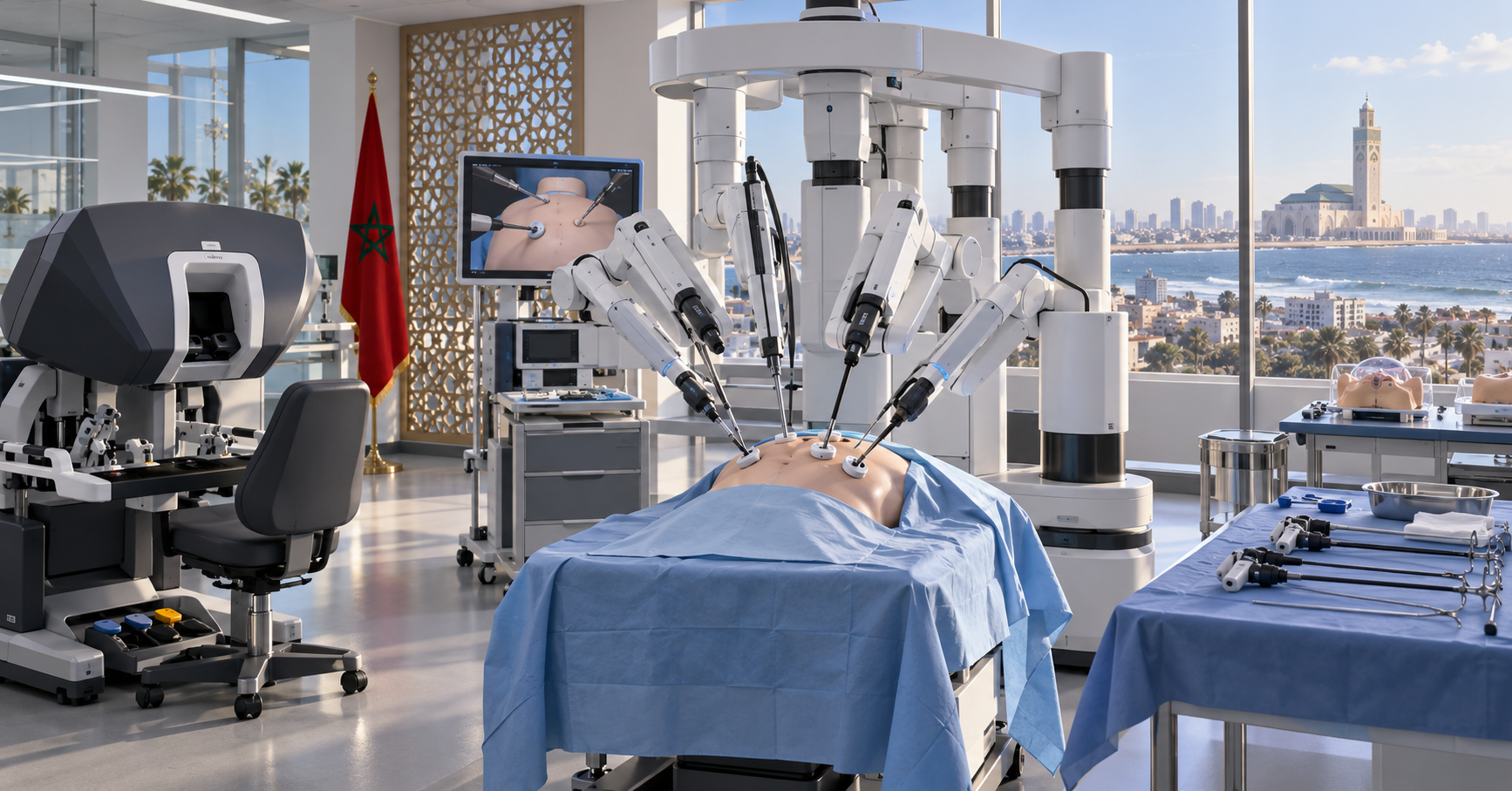
Seventy-six surgeons and operating-room nurses from seven cohorts have completed specialised training at Casablanca’s new robotic surgery school.
Seventy-six surgeons and operating-room nurses have completed specialised robot-assisted surgery training in Casablanca, marking a new stage in Morocco’s adoption of advanced medical technology.
But they are not learning to hand operations over to machines. They are learning how medical teams can control complex surgical systems with precision, communicate around the equipment and rehearse procedures before treating patients.
The graduation ceremony took place on Saturday, September 12, at the Université Mohammed VI des Sciences et de la Santé, UM6SS, in Casablanca.
This was more than a diploma ceremony. Morocco is not simply introducing sophisticated medical equipment. It is beginning to build the specialised teams needed to use that technology responsibly.
MOROCCO’S FIRST CLASS STEPS FORWARD
The 76 participants completed a university programme at the Mohammed VI Interventional Simulation and Robotic Surgery School, M6-ISRSS.
They came from seven training cohorts and included surgeons and operating-room nurses from Morocco, Tunisia and Cameroon, according to information presented at the ceremony.
The university diploma was launched on January 26, 2026. The wider school was officially inaugurated on January 30, which explains why published accounts contain two closely related dates.
One graduate described his training as an intensive six-day course combining theory, practical exercises and simulation. Publicly available information does not establish that every cohort followed exactly the same timetable.
The programme brought together professionals from several areas of surgery. Graduation coverage identified visceral surgery, gynaecology, ear, nose and throat surgery and neurological fields. Launch material also highlighted demand in general, urological and thoracic surgery.
That range matters because robot-assisted surgery is not one standard technique applied identically to every patient. The equipment, positioning, clinical objectives and necessary expertise can differ between specialties and procedures.
The inclusion of operating-room nurses is equally important. A robotic operation depends on a coordinated team, not only the person controlling the surgical instruments.
THE ROBOT DOES NOT REPLACE THE SURGEON
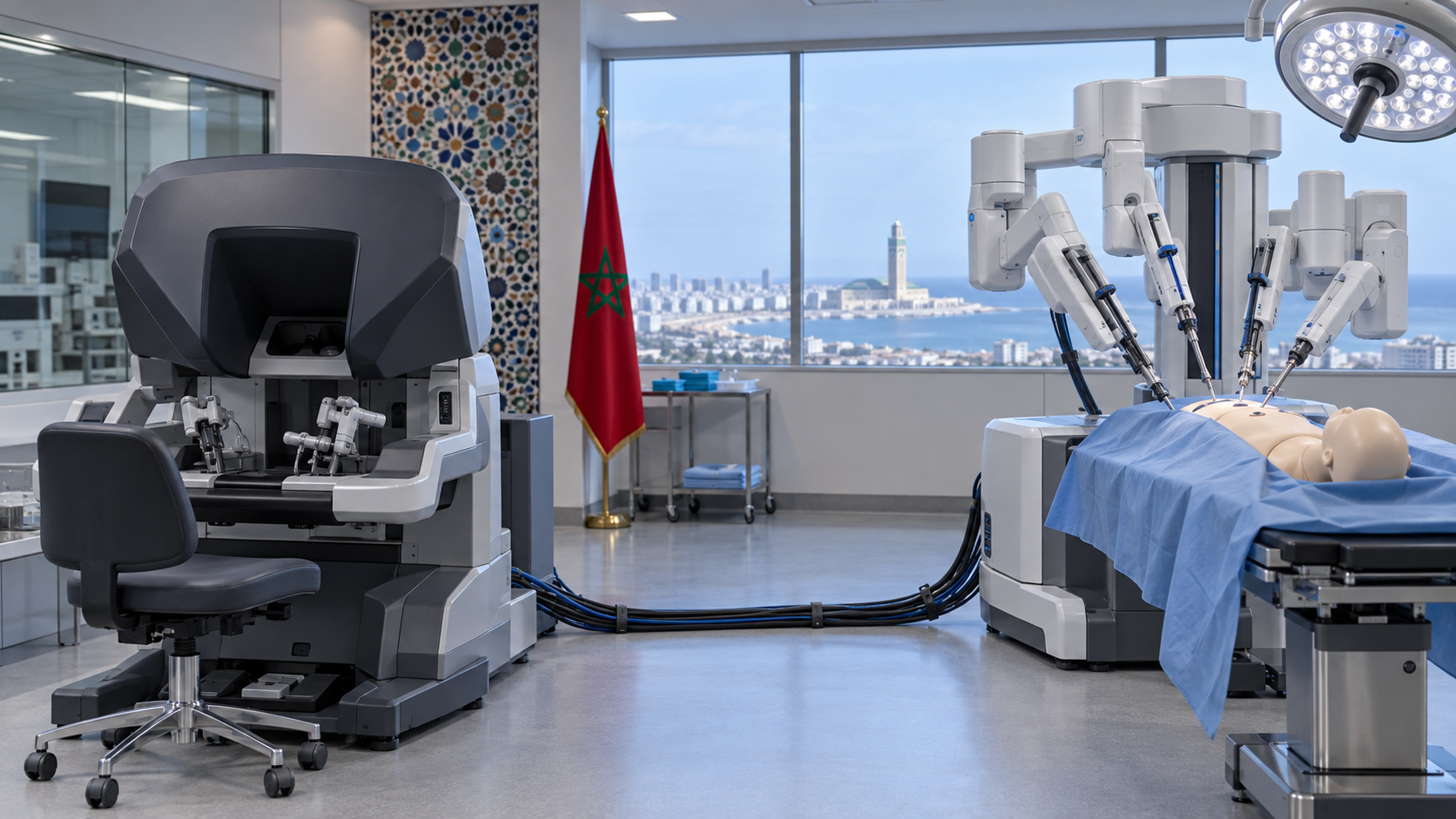
The expression “robotic surgery” can create a misleading picture. In the systems commonly used today, the robot does not independently diagnose a condition, select an operation or perform the procedure by itself.
A human surgeon remains in control.
The surgeon typically operates from a console, viewing a magnified image of the surgical area and controlling instruments connected to robotic arms. The system translates the surgeon’s hand movements into smaller, highly controlled movements inside the patient’s body.
This can provide greater dexterity and precision in suitable procedures, particularly when surgeons must work within confined or difficult anatomical areas.
But the system has no independent clinical judgement. It cannot replace a surgeon’s medical knowledge, understanding of anatomy or ability to respond when an operation develops differently from expected.
Robot-assisted surgery is therefore not the same as fully autonomous surgery. The technology assists the medical team. It does not remove that team from the procedure.
Safety continues to depend on the patient, the procedure, the professionals, the equipment and the hospital systems supporting them.
WHY THE WHOLE OPERATING TEAM MUST TRAIN
A robotic operating room changes how people work together.
The surgeon may be positioned at a console rather than standing directly beside the patient. Other professionals remain at the operating table, prepare and exchange instruments, help position the equipment, monitor the patient and maintain communication throughout the operation.
Every role must be clearly understood.
Operating-room nurses need to know how the equipment is prepared, how the procedure is expected to progress and which instruments may be required. They must also be able to recognise when something is not working as expected and follow the team’s established response protocols.
Checks before an operation are essential. So are communication, preparation and an agreed division of responsibilities.
Technology can malfunction. Instruments may need to be replaced. A surgical team may decide that continuing with another operating method is safer. The ability to respond calmly and collectively must be prepared in advance.
That is why training only the surgeon would leave a serious gap. A robotic system may be operated from one console, but safe surgery remains a team effort.
INSIDE CASABLANCA’S ROBOTIC SURGERY SCHOOL
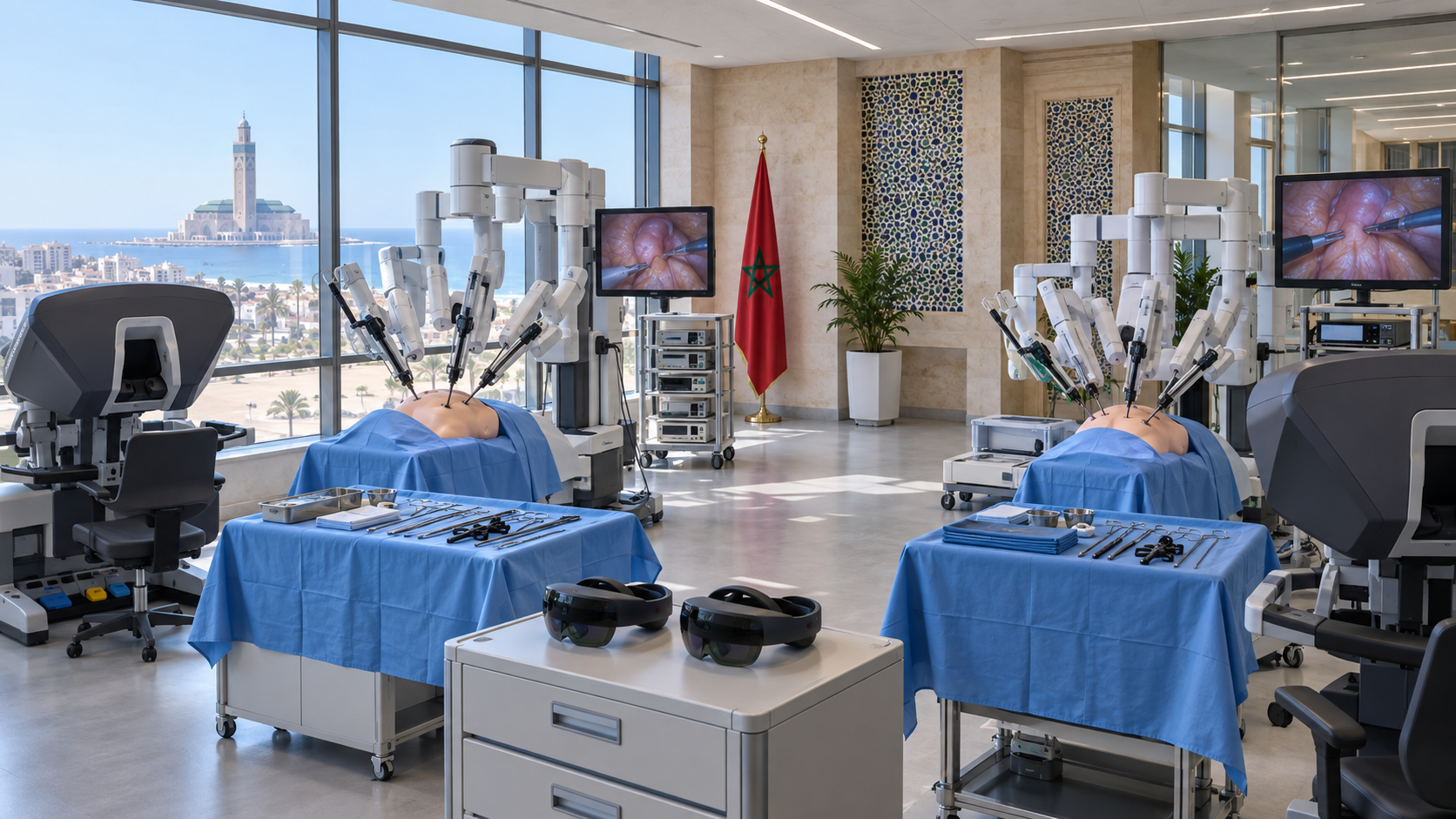
M6-ISRSS is attached to the Centre International Mohammed VI de Simulation en Sciences et Santé, known as CIM6SS.
The centre operates within the Fondation Mohammed VI des Sciences et de la Santé, FM6SS. The school, located at the UM6SS Anfa City campus, forms part of the foundation’s wider hospital and university ecosystem.
Its teaching infrastructure includes simulation equipment, two robots dedicated to training, augmented-reality platforms and units serving different interventional disciplines.
The words “dedicated to training” are important. Training robots allow professionals to acquire and practise technical skills. Their presence does not mean that those machines are being used to operate on patients.
Simulation allows participants to repeat movements, understand workflows and develop team communication without exposing a real patient to the earliest stages of the learning process.
Mistakes can be examined. Difficult tasks can be repeated. Teams can rehearse what to do when equipment does not respond as expected.
For advanced medicine, that controlled practice is not an optional extra. It is part of building competence before technical knowledge is transferred to a clinical environment.
WHAT THIS COULD MEAN FOR PATIENTS
Robot-assisted surgery can offer advantages in carefully selected procedures.
It may help surgeons make precise movements, work within difficult anatomical areas and perform some operations through smaller incisions. For appropriately selected patients, minimally invasive procedures may sometimes be associated with less postoperative discomfort, shorter hospital stays or faster recovery.
None of those outcomes is guaranteed.
Not every operation is suitable for a robotic approach. Robot-assisted surgery is not automatically better than open surgery or conventional laparoscopy.
The appropriate method depends on the patient’s condition, the type of procedure, the available medical evidence and the experience of the team.
Hospitals also need more than trained surgeons. They require skilled operating-room staff, suitable facilities, reliable supplies, equipment maintenance and clear procedures for responding to technical problems or clinical complications.
For patients, the decisive question is not simply whether a robot is available. It is whether the proposed procedure is appropriate and whether the full medical team has the expertise and institutional support to perform it safely.
This article provides general information and does not replace individual medical advice.
TRAINING IS THE BEGINNING, NOT THE FINISH LINE
Completing a university programme is an important foundation. It does not automatically authorise every graduate to perform every type of robot-assisted operation independently.
Further technical preparation, supervised clinical experience and hospital credentialing may be required. Professionals must continue to demonstrate competence, while hospitals need appropriate protocols, maintenance arrangements and ongoing evaluation of results.
Skills must also be sustained. An intensive training course cannot replace continued practice, assessment and experience with specific procedures.
The graduation of 76 professionals does not prove that robot-assisted surgery is already widely available across Morocco’s hospitals. Public information also does not show how many graduates will move immediately into active clinical programmes.
What the ceremony does demonstrate is that Morocco is beginning to create a structured training pipeline around advanced surgical technology, with surgeons and operating-room nurses learning as members of the same team.
That is the real achievement of Casablanca’s first graduating class. The story is not that machines are taking the place of doctors. It is that Morocco is investing in the skilled professionals, disciplined teamwork and careful preparation needed to make advanced medicine work responsibly for patients.