
Sunergia’s new national barometer reveals changing habits in communication, entertainment, shopping and trust across Morocco’s fast-evolving social-media landscape.
Morocco’s digital day is divided between messages, videos, news and recommendations.
WhatsApp keeps families and colleagues connected. TikTok, YouTube and Instagram compete for attention. Products are discovered through posts and creators. But frequent use does not automatically produce trust.
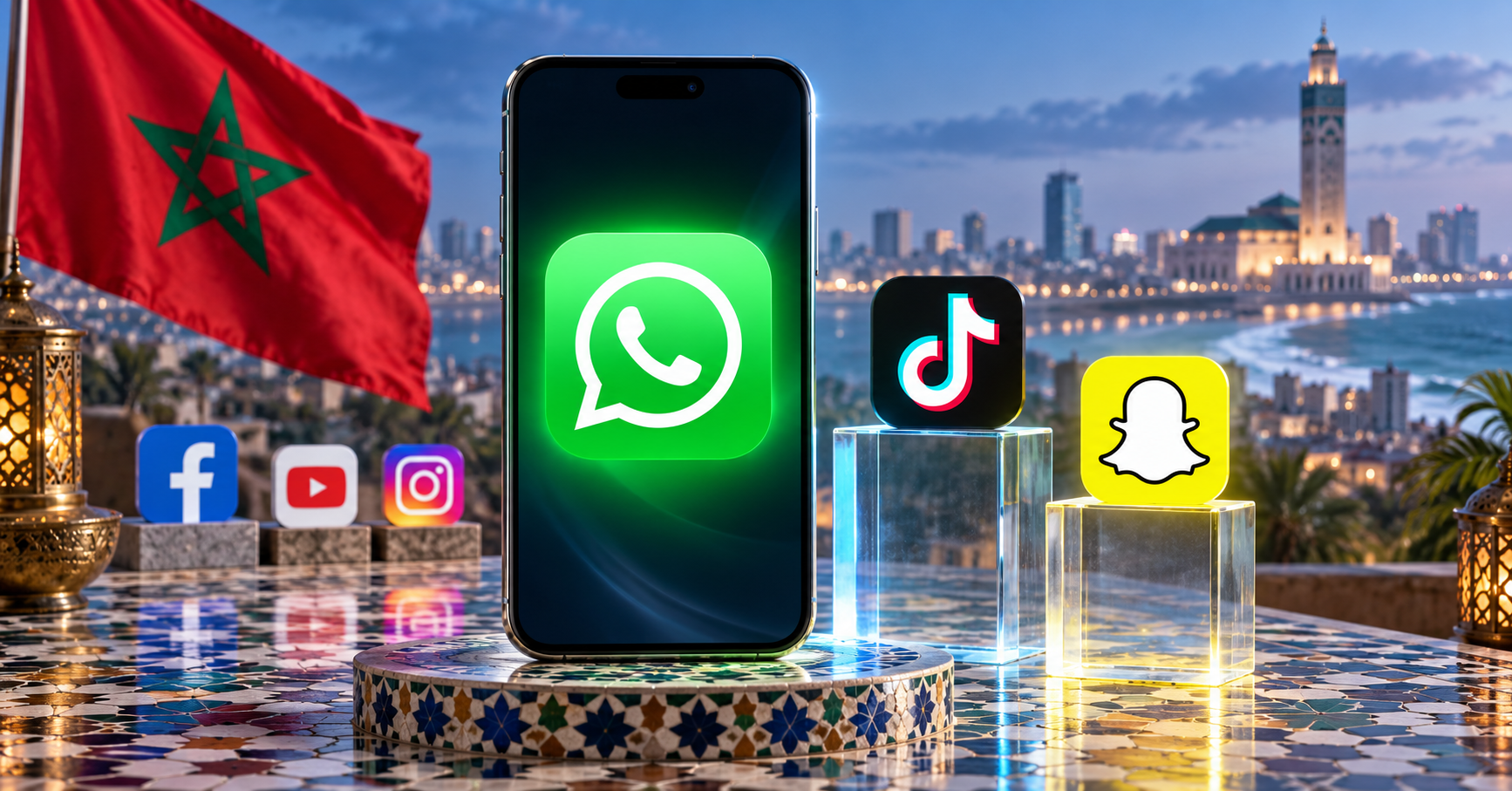
The seventh edition of Sunergia’s Baromètre des Réseaux Sociaux au Maroc, published on September 10, reports that 86% of respondents use at least one social platform. That is five percentage points higher than the 81% recorded in 2025.
WhatsApp remains the clear leader at 83%. TikTok and Snapchat, however, delivered the most striking annual growth.
The survey figures should be read as estimates, not exact user totals. The 2026 material publicly accessible without registration, together with the press coverage reviewed by MTD, does not specify the fieldwork dates, sample size, collection method, weighting procedure or margin of error. It presents age breakdowns beginning with respondents aged 18 to 24, but does not provide enough public methodological detail to apply the findings to every resident of Morocco.
WHATSAPP HAS BECOME PART OF DAILY LIFE
WhatsApp gained eight percentage points from 2025 to reach 83% in the new barometer.
Its dominance reflects a role that extends beyond conventional social networking. The application carries family conversations, voice messages, community updates and work-related exchanges. It is also used to share news, appointments, school information and other practical details.
For families separated by borders, WhatsApp can provide an immediate connection between Morocco and its diaspora.
The barometer reports that 88% of WhatsApp users access the platform at least once a day. That is not the same as saying 88% of all respondents use it daily. The daily figure applies only to people who already use WhatsApp.
Communication with relatives was the most frequently cited reason for using social media, mentioned by 67% of respondents. Following news came next at 47%, while 20% cited entertainment.
FACEBOOK REMAINS STRONG, BUT VIDEO IS CHANGING THE RANKING
Facebook remains in second place at 64%, with 75% of its users reportedly accessing it daily.
Immediately below it, video-led platforms are competing closely. YouTube reached 48%, placing it just above Instagram at 47%.
That one-percentage-point difference should not be treated as proof of a major shift. The 2026 margin of error was not available in the material reviewed by MTD, and rounding alone can affect a gap of this size. The safer conclusion is that the two platforms recorded broadly similar levels of use.
Their audiences behave differently. YouTube combines long videos, tutorials, music, news and short-form content. Instagram brings together messaging, personal updates, creators, brands and video discovery.
Sunergia reports that 61% of YouTube users visit it at least daily, compared with 82% of Instagram users. These are frequency rates among each platform’s users, not percentages of the full survey sample.
TIKTOK AND SNAPCHAT ARE WINNING YOUNGER ATTENTION
TikTok reached 32%, gaining eight percentage points in one year. Snapchat climbed ten percentage points to 18%, the largest annual increase reported among the major platforms.
Neither is close to overtaking WhatsApp nationally. Their importance lies in their rapid growth and much stronger appeal among younger respondents.
Among 18 to 24-year-olds, reported usage reached 88% for Instagram, 79% for YouTube, 58% for TikTok and 49% for Snapchat.
The figures show that younger users are not necessarily choosing one winner. Each platform serves a different purpose.
WhatsApp centres on direct communication. TikTok and YouTube are powerful engines for video and discovery. Instagram combines identity, entertainment, messaging and commerce, while Snapchat emphasises visual and private exchanges.
Morocco’s younger digital audience is building a portfolio of platforms around different moments of the day.
SOCIAL MEDIA IS INFLUENCING WHAT MOROCCANS BUY
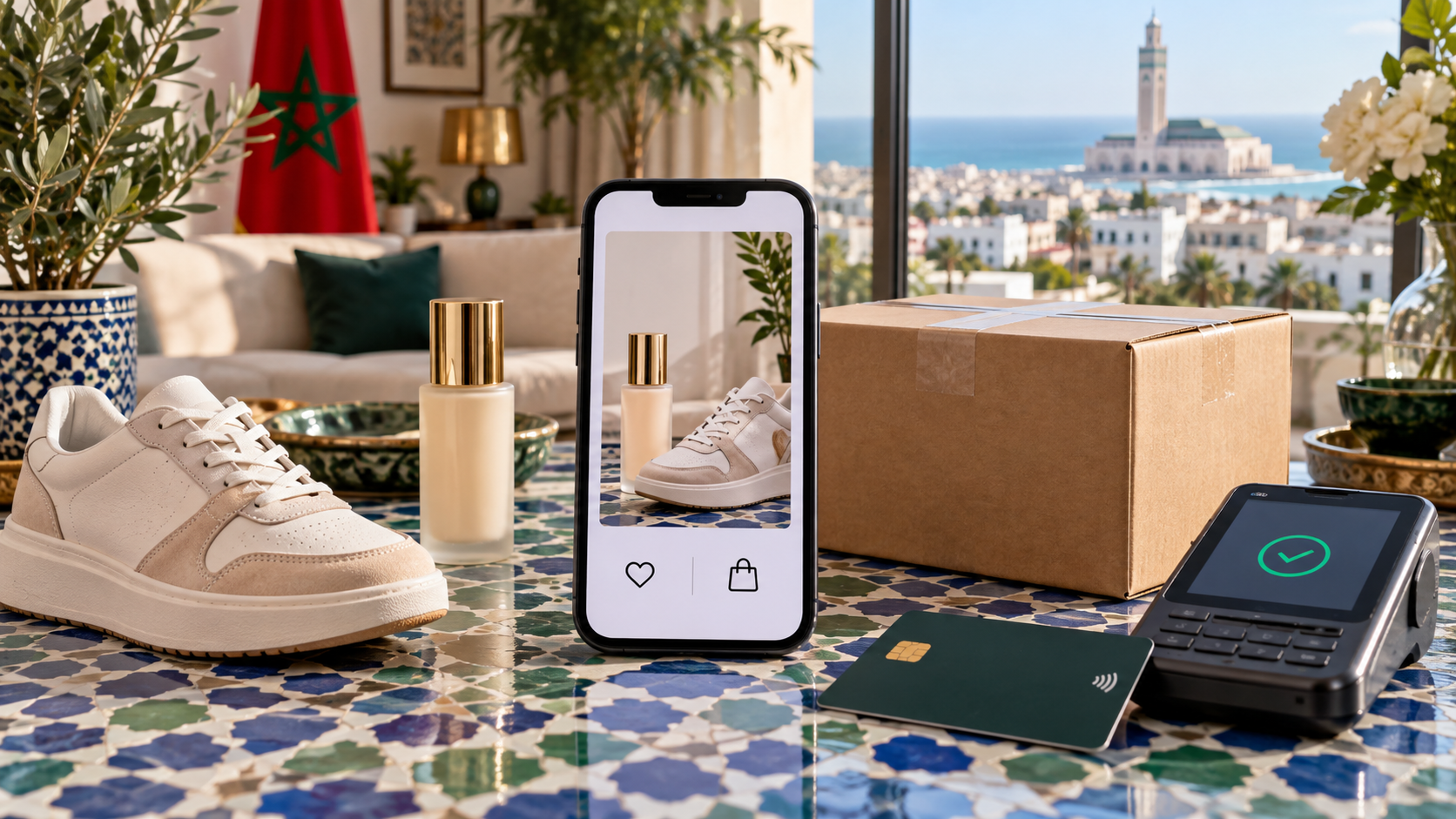
Almost one in two respondents reportedly said they had previously bought a product after seeing it recommended on social media.
That does not mean social media controls half of all purchases. Nor does it prove that a platform, advertisement or influencer caused every decision. Price, availability, recommendations from friends and prior interest may all contribute.
The reported differences are still important. The figure reaches 65% among respondents in socioeconomic categories A and B, compared with 33% among categories D and E.
Location matters too. In urban areas, 53% reported having made such a purchase, against 40% in rural areas.
For Moroccan creators and businesses, this demonstrates the commercial potential of digital discovery. For consumers, it is a reminder that visibility is not evidence of quality and popularity does not guarantee value.
MOROCCANS USE SOCIAL MEDIA MORE THAN THEY TRUST IT

The sharpest contrast in the barometer is between presence and confidence.
Although 86% reported using at least one platform, only 39% said they placed at least some trust in information circulating on social media outside official media channels. The remaining 61% expressed some degree of distrust in response to that specific question.
This does not mean 61% reject everything they encounter online. The finding concerns confidence in a defined category of information, not every family message, entertainment video or business page.
People can use a platform every day without believing every claim it carries. They may trust a relative’s message, enjoy a creator’s video and still question an unsupported news report.
Heavy use creates reach, not credibility. A claim does not become verified because it has been shared repeatedly, attracted thousands of likes or appeared in a polished video.
That distinction creates an opportunity for trusted media, transparent businesses and public-information campaigns to reach people on the platforms they already use.
MOROCCO’S DIGITAL DIVIDE HAS NOT DISAPPEARED
The proportion of respondents using no social platform fell from 19% in 2025 to 14% in 2026.
However, the overall figure conceals substantial differences. The reported non-user rate is 22% in rural areas, compared with 9% in cities. Among socioeconomic categories D and E, it reaches 32%.
Age produces another divide. The barometer reports that 55% of respondents aged 65 and over use no social platform, while younger groups record far higher participation.
Morocco is strongly connected, but access remains uneven. Affordability, devices, network availability, digital skills and confidence can all influence participation.
Closing the divide therefore means more than helping people open an account. It also requires the knowledge to identify reliable information, protect personal data and use digital services safely.
FIVE CHECKS BEFORE BUYING FROM A SOCIAL MEDIA RECOMMENDATION
- Check who is selling
Verify the business name, contact details and physical or registered presence where possible. Be cautious when a seller operates only through private messages.
- Compare the price elsewhere
A social-media discount is not automatically the lowest price. Compare the same product, condition and delivery cost with other sellers.
- Look beyond comments
Comments, likes and follower numbers can be manipulated or selectively displayed. Search for independent experiences and examine how complaints are handled.
- Confirm payment and return conditions
Check delivery charges, payment methods, return rules and warranty conditions before paying. Consult the relevant Moroccan authorities for formal guidance on consumer rights.
- Protect personal information
Do not send unnecessary identity documents, banking details, passwords or verification codes through informal messages.
MOROCCO’S ONLINE LIFE IS BECOMING MORE COMPLEX
Morocco is not simply becoming more connected. Its digital habits are becoming more specialised.
One platform keeps families together. Others entertain, influence discovery or connect businesses with customers. None earns automatic trust simply because millions of people use it.
That creates opportunities for Moroccan creators, small businesses, established brands, media organisations, public services and communication with the diaspora.
It also brings greater responsibility for transparency, verification, privacy and digital education.
Moroccans are giving social platforms more of their time. The new barometer suggests they are becoming far more selective about which platforms receive their trust.