
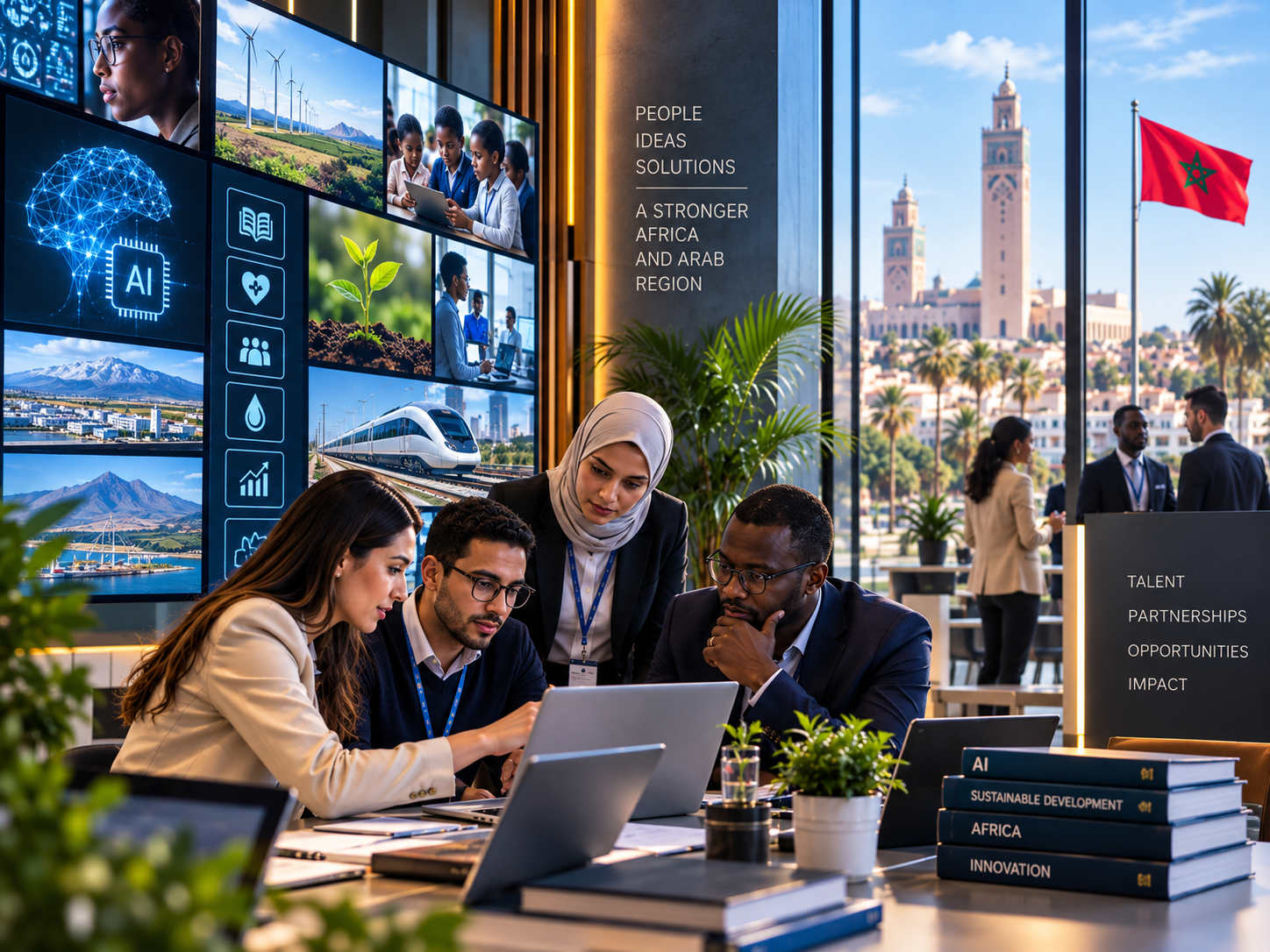
Created with the United Nations Development Programme, the D4SD Hub is bringing governments, universities and technology partners together around practical uses of artificial intelligence.
One year ago, Morocco took an ambitious digital project to the international stage in New York.
Launched during United Nations General Assembly week in September 2025, the Morocco Digital for Sustainable Development Hub — known as D4SD — was created with the United Nations Development Programme to support digital transformation across Africa and the Arab region.
The initiative gives Morocco a central role in a larger regional ambition: enabling countries to develop and adapt artificial intelligence and digital tools around their own public needs, languages and economic priorities.
What the D4SD Hub is designed to do
The D4SD Hub is an Arab-African centre focused on artificial intelligence, data science and digital transformation for sustainable development.
It connects governments, universities, technology companies, innovators and international development partners. The aim is to help them jointly design, test and expand digital solutions that can be adapted across different countries.
Its priority fields include healthcare, education, agriculture, climate resilience, public services, digital identity, linguistic technologies and youth employment.
That gives the initiative a practical purpose. Artificial intelligence is not presented as a goal in itself, but as a tool that can improve services, strengthen institutions and create economic opportunities.
A digital platform developed for one government, for example, could be adapted for another. Agricultural technology designed for water-stressed regions could serve several countries. Language models trained for Arabic and African languages could reach communities that remain poorly represented by many global AI systems.
Moving from launch to cooperation
International visibility gave the hub a strong opening. Its longer-term value will depend on the partnerships and practical solutions built through it.
An important step came during UN Open Source Week in New York in June 2026. Morocco’s Ministry of Digital Transition and Administration Reform organised a strategic roundtable through the D4SD Hub on open-source artificial-intelligence models.
The discussion brought together governments, universities, innovators, development organisations and private-sector representatives.
It also placed Morocco inside an increasingly important global debate: how can countries benefit from advanced AI without depending entirely on closed systems developed for other markets?
Open-source models can be studied, modified and adapted to national requirements. For governments and researchers, that creates opportunities to build tools that better reflect local languages, institutions and development priorities.
The D4SD Hub is intended to support this cooperation by facilitating the exchange of AI models, datasets, digital solutions and technical expertise.
Why Morocco is well placed to lead
Morocco’s role as host reflects its position between Africa, the Arab world and Europe.
The Kingdom has expanding digital infrastructure, a growing technology and outsourcing industry, and universities developing stronger capabilities in artificial intelligence and data science.
It is also investing in data centres, cloud services, broadband connectivity, cybersecurity and the digitalisation of public administration.
In January 2026, the government set out an ambition for artificial intelligence to contribute MAD100 billion to Morocco’s economy by 2030. The plan also targets the training of 200,000 graduates in AI-related skills and the creation of 50,000 jobs.
These are national objectives. The D4SD Hub adds a regional dimension by creating a platform through which expertise and technology can circulate between countries.
Morocco is therefore seeking to play two connected roles: building its own digital capabilities while helping create a wider Arab-African ecosystem.
Technology shaped around regional needs
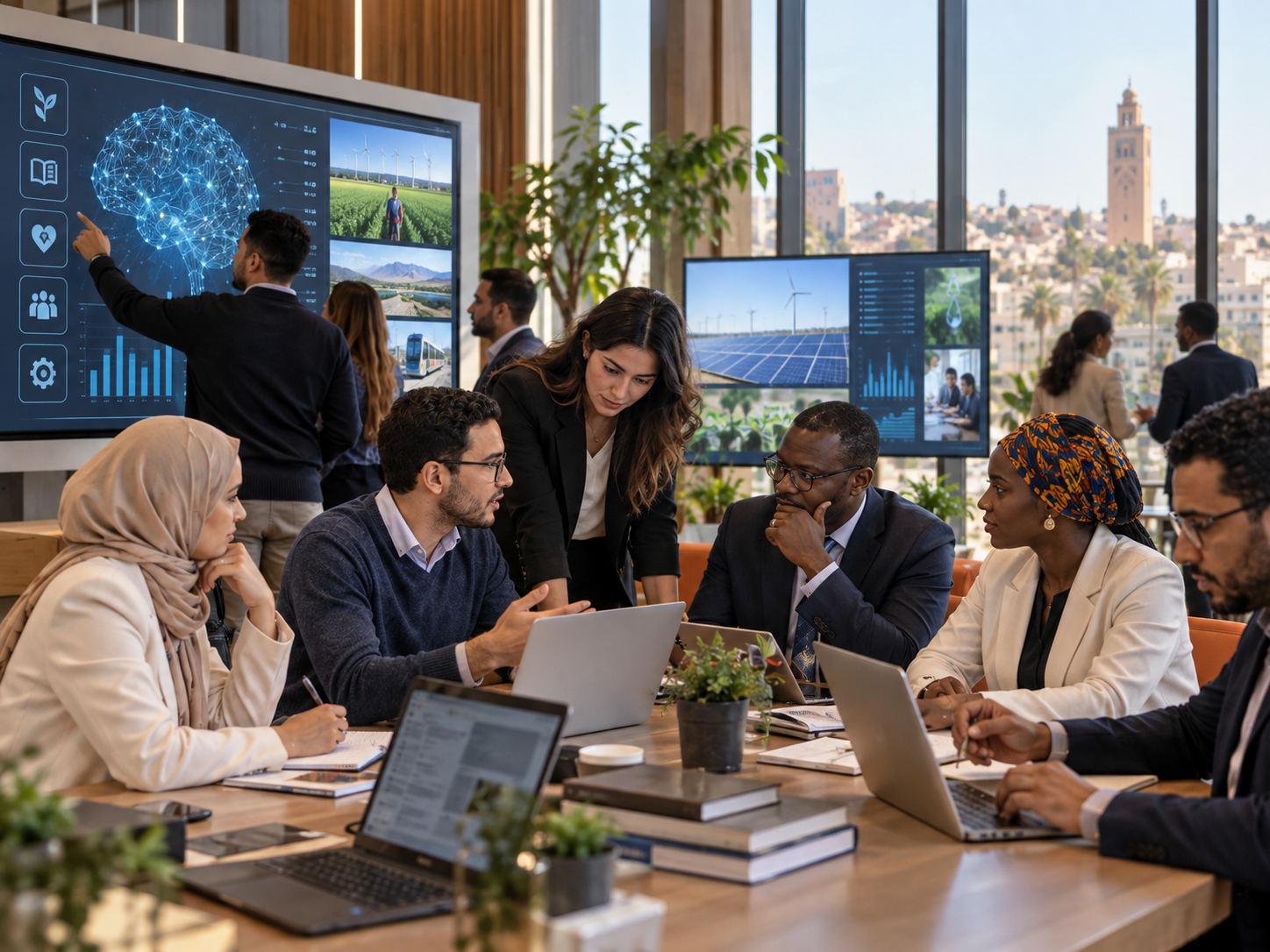
Africa and the Arab region have young populations, expanding digital markets and growing demand for online public services.
They also share challenges, including gaps in infrastructure, shortages of specialised skills, limited local datasets and reliance on imported technologies.
Closer cooperation can help countries address those issues more efficiently. Instead of developing every system in isolation, institutions can exchange knowledge, adapt successful tools and pool technical expertise.
This is where the D4SD Hub can make its strongest contribution.
Its value will be measured through the solutions developed, specialists trained and partnerships turned into working programmes. The activity at UN Open Source Week showed that the initiative is moving beyond its launch and into substantive international discussions.
One year after its presentation in New York, the hub gives Morocco a platform to connect national digital ambition with regional cooperation.
Its central message is clear: Africa and the Arab world should not only adopt the next generation of digital technology. They should help design it, govern it and shape it around the needs of their own societies.