
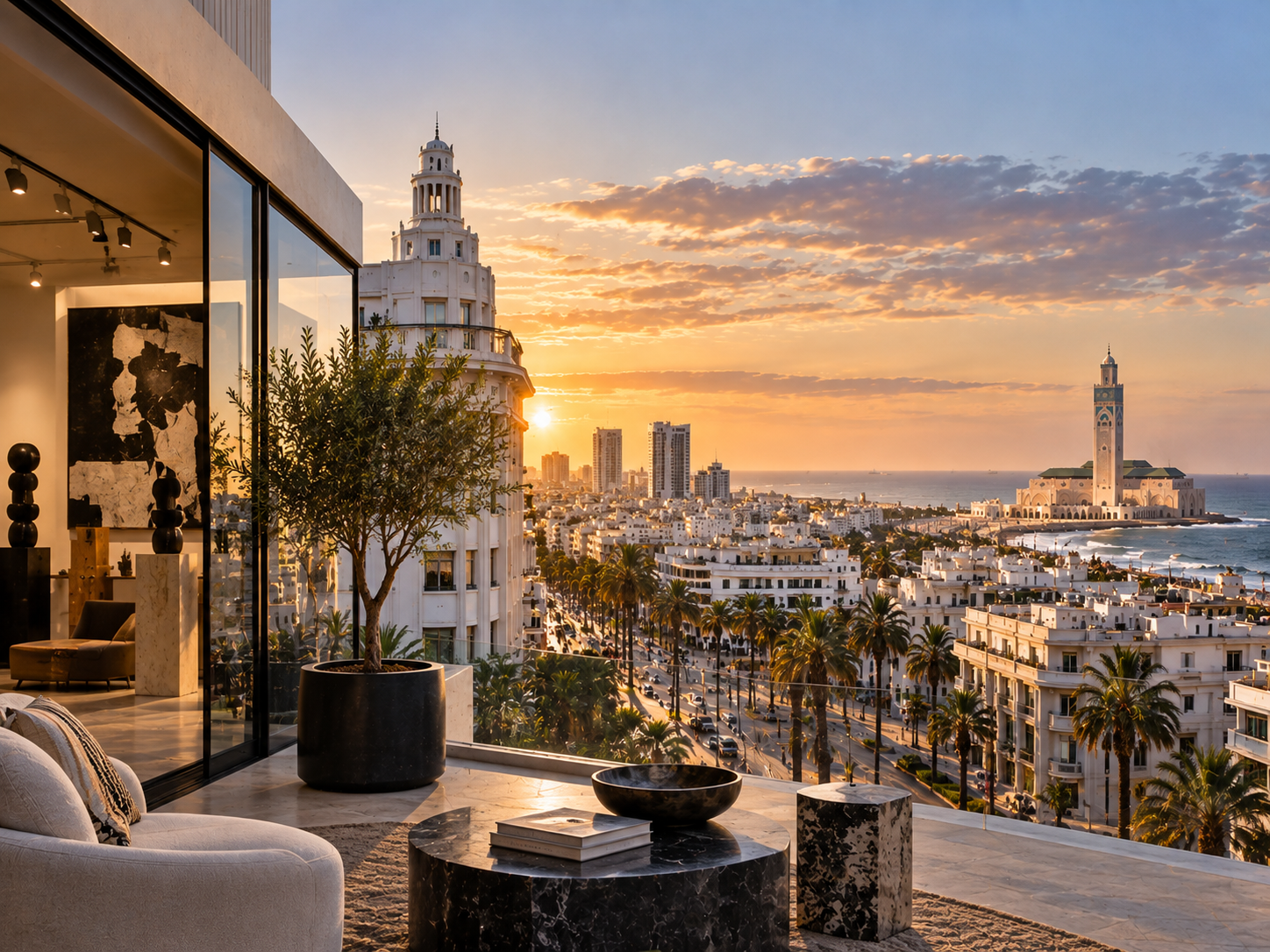
Casablanca is about to turn itself into one giant design show.
From October 5 to 7, the first edition of Morocco Design will spread across galleries, ateliers, hotels, restaurants and architectural spaces throughout the city.
There will be no single exhibition hall.
Instead, visitors will move through Casablanca itself.
Moroccan designers will show work alongside major international brands, studios will open their doors, restaurants will create special experiences and the city’s architecture will become part of the programme.
The ambition is bigger than a three-day event.
It is about convincing people that Casablanca should be seen not only as Morocco’s business capital — but as one of its most interesting design cities.
The City Is the Showroom
That is what makes Morocco Design different.
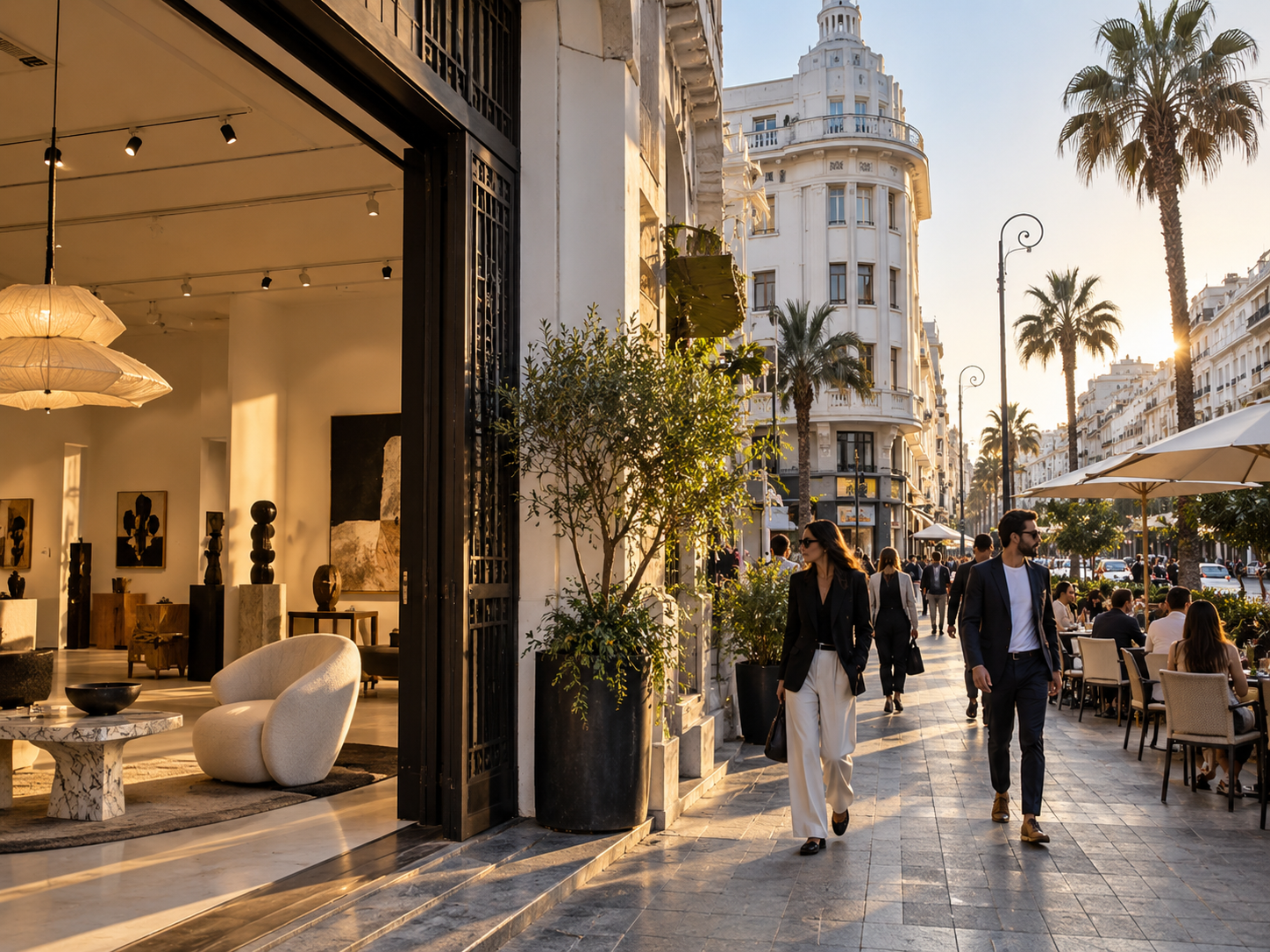
Rather than placing everything under one roof, the event has been conceived as a route through Casablanca.
Showrooms, galleries, ateliers and hospitality spaces will host installations, presentations, exhibitions and private events.
That means the setting matters almost as much as the objects.
Founder Hanane El Moutii has described the goal as creating an experience that feels inseparable from Casablanca itself — something visitors could not simply recreate in Paris, Milan, London or New York.
For a city already filled with Art Deco façades, modernist buildings, old villas, workshops and contemporary interiors, the format makes sense.
Casablanca becomes part of the design.
Moroccan Talent Meets Global Brands
The first edition brings together a wide group of Moroccan creatives and international names.
Moroccan participants include Hamza Kadiri, Hicham Lahlou, Samir Mazer, Salima Filali, Zineb Tazi and Othmane Bengebara.
International brands participating in the programme include Flexform, Roche Bobois, Moroso, Kettal and Molteni&C.
That mix is central to the event’s identity.
The objective is not to present Moroccan design in isolation.
It is to place it in the same conversation as established international houses.
That gives emerging and established Moroccan designers a chance to be seen by collectors, manufacturers, institutions and visitors from outside the country.
Open Ateliers, Hotels and Restaurants
The event will also move beyond conventional furniture and product exhibitions.
Some designers will open their own ateliers to visitors.
Hospitality spaces will host installations.
Restaurants will become part of the programme.
Chef Faycal Bettioui is preparing a dedicated Morocco Design menu at Table 3 and Ora, while other venues across the city will host exhibitions and collaborations.
That creates a more complete lifestyle experience.
You might see a piece of furniture in a gallery, visit the studio where another object was created, eat a menu developed for the event and then walk past the architecture that helped shape Casablanca’s own visual identity.
Design becomes something to move through rather than simply look at.
Casablanca Already Has the Architecture
The timing is interesting because Casablanca has been receiving renewed international attention for its architecture and creative scene.
Architectural Digest recently described the city as an overlooked destination for design lovers, pointing to its mix of Art Deco, modernist architecture, markets, art and music.
That reputation has always existed locally.
Casablanca’s centre is filled with buildings from the early and mid-20th century, including distinctive combinations of European Art Deco geometry and Moroccan decorative details.
Yet the city has often been treated by international travellers as somewhere to pass through on the way to Marrakech, Fes or the coast.
Morocco Design is trying to change that perception.
Not Just Marrakech
Morocco’s international design image has long been closely associated with Marrakech.
That makes sense.
The city has riads, gardens, crafts, galleries, hotels and one of the country’s strongest luxury-tourism identities.
Casablanca offers something different.
It is faster.
More urban.
More commercial.
More modern.
Its design culture comes from offices, apartments, restaurants, studios, old villas and the architecture of a working metropolis.
That difference could become its advantage.
Casablanca does not need to imitate Marrakech.
It needs to show why its own creative identity matters.
A Platform for the Next Generation
Morocco Design is also putting younger creatives into the programme.
One session at Roche Bobois will focus on helping design students understand how to position, present and communicate their work internationally.
That may be one of the most important parts of the event.
Morocco already produces designers, architects and craftspeople with strong ideas.
The harder challenge is often visibility.
How do they reach collectors?
How do they work with manufacturers?
How do they build brands?
How do they enter international markets?
A serious design platform can help answer some of those questions.
Can Casablanca Become a Design Destination?
Three days will not transform a city overnight.
But Morocco Design is making an interesting bet.
Instead of building a temporary design fair and asking people to come inside, it is using Casablanca as the exhibition.
Its studios.
Its hotels.
Its restaurants.
Its architecture.
Its designers.
That approach feels particularly suited to a city whose creative identity has often been hiding in plain sight.
From October 5, visitors will get three days to see another Casablanca.
Not just Morocco’s economic engine.
Not just an airport stop.
But a city that wants to be experienced through design.