

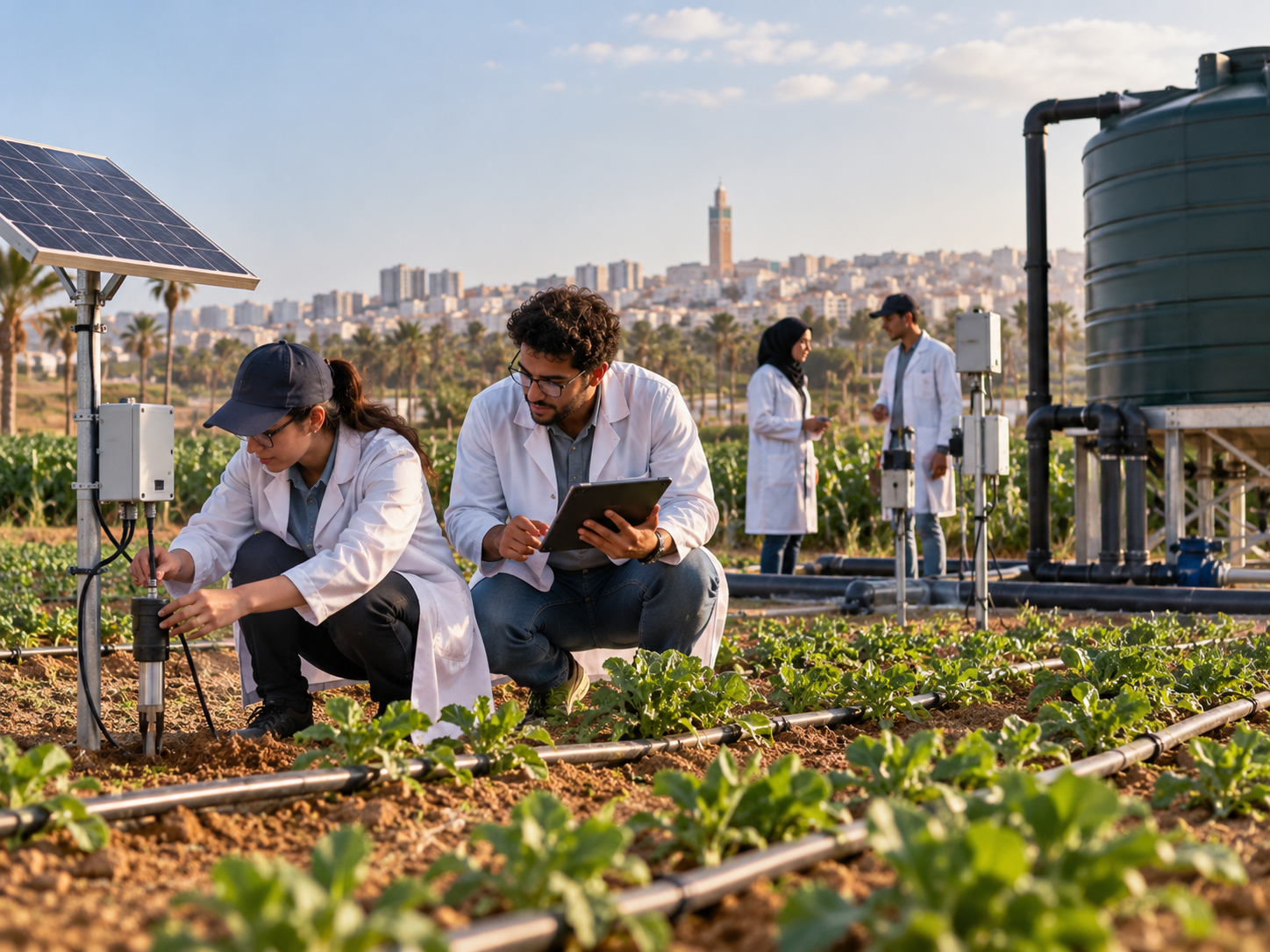
Twenty-two students have developed HERO around a practical idea: recover excess agricultural water and save it for irrigation. An environmental award has recognised their work, while its usefulness on farms remains to be demonstrated.
Water can be scarce when crops need it and excessive when the ground is already saturated.
For a group of students in Casablanca, that mismatch became the starting point for HERO: a system designed to collect surplus water, store it and use it when irrigation is needed.
The team brings together 22 students from the master’s programme in Biotechnologie et Démarche Qualité at Faculté des Sciences Ben M’Sik. Their project’s name stands for Hydro Environmental Resilience Optimisation.
Vivo Energy Maroc highlighted the initiative in an announcement on 5 October, confirming that it had received the company’s Prix de l’écocitoyenneté through INJAZ Al-Maghrib’s 2026 Company Program. The team’s public account places the award at the national final on 30 September.
Turning an Idea Into a Shared Project
For team member Imane Moutaouil, the motivation was the possibility of recovering excess water when it occurs and putting it to use later.
In a public account of the project, she described colleagues sharing responsibilities across technical development, production, finance, marketing and human resources. Building HERO involved organising a student enterprise alongside developing its equipment.
The students also received mentoring that encouraged them to examine the choices behind their proposal.
“Our mentors encouraged us to question our choices and defend them better,” Moutaouil said in remarks published by Vivo Energy.
Team members describe a working prototype in their public posts, combining automated irrigation, drainage, water storage and digital monitoring. Those accounts describe progress beyond an initial concept, although they do not establish how the equipment performs on a working farm.
Responding to What the Soil Needs
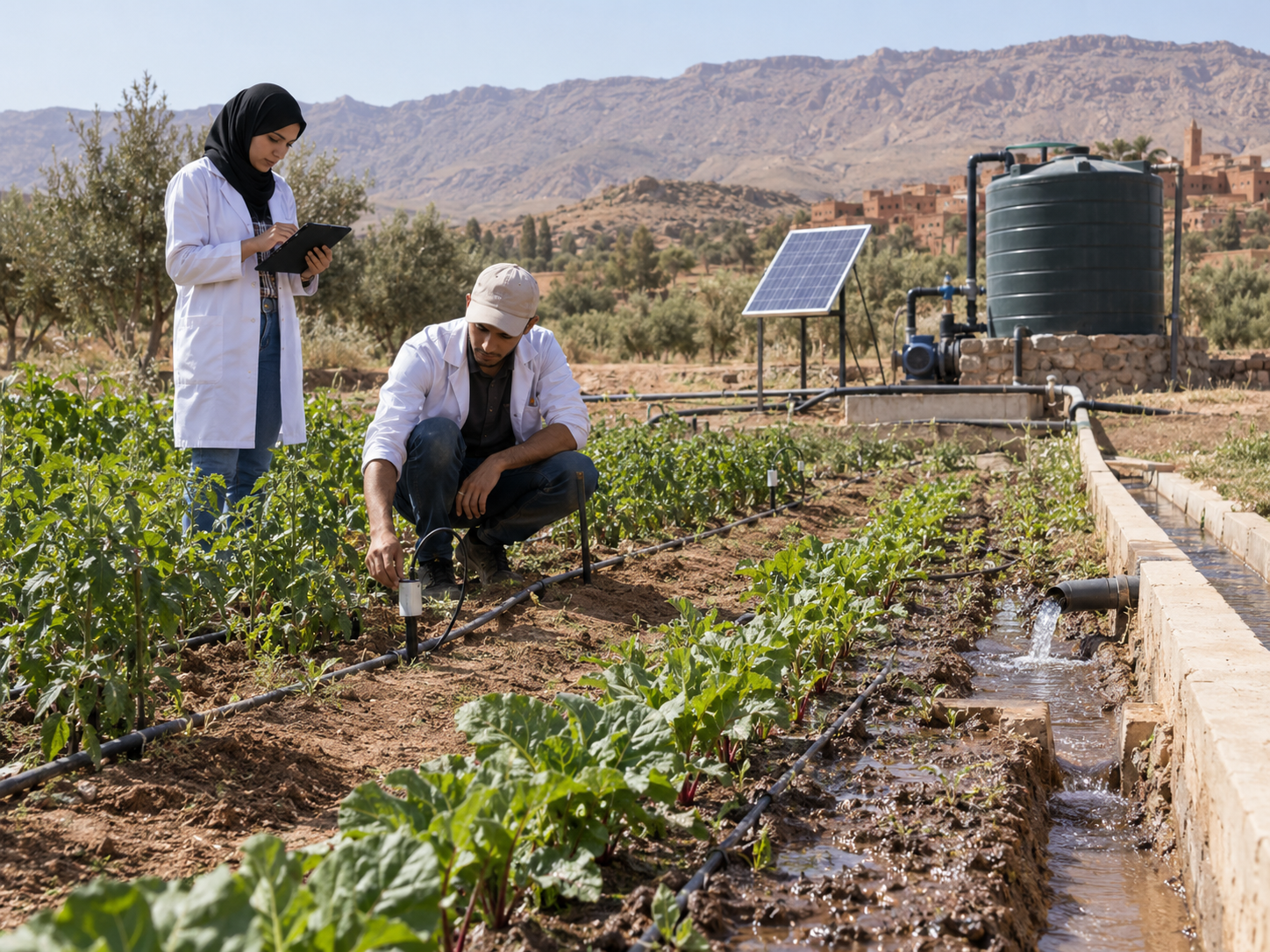
HERO’s intended operating cycle begins with information from the soil.
According to the sponsor’s technical description, sensors monitor its condition. When the soil becomes too dry, the system is designed to activate irrigation. When it becomes saturated, drainage and storage are triggered so surplus water can be retained for reuse.
The installation combines a pipe network, a reservoir and a pump. Solar power is specifically identified as supplying the sensors; the announcement does not specify the pump’s energy source.
Combining irrigation and drainage serves an agricultural purpose. Plants need moisture, but their roots also need oxygen. Guidance from the UN Food and Agriculture Organization explains that prolonged saturation fills the spaces in soil with water, restricting the air available to roots.
Responding to both conditions could help balance the supply of moisture with the removal of excess water. Doing that effectively requires equipment suited to the particular crop and field.
Water generally moves more readily through sandy ground than through clay-rich soil. The position of drainage pipes, the route into storage and the reservoir’s capacity would therefore be practical design considerations.
For a farmer, detecting wet soil is only the beginning. The equipment must collect water effectively, retain it until it is needed and deliver it back to the crop reliably.
From Prototype to Practical Use
Water quality is part of that task. FAO guidance explains that agricultural drainage water can carry dissolved salts and nutrients. Whether it is suitable for reuse depends on its composition, the soil and the crop being irrigated.
These are general considerations for agricultural water recovery. The available HERO descriptions do not explain how water quality would be assessed or whether filtration or treatment is included.
The public material reviewed for this article provides no documented farm-trial results or verified measurements of water savings, energy use or operating costs. Target crops and soils, collection layouts, pricing and availability also remain unspecified. These gaps limit assessment of readiness for farm use; they do not establish that no testing has taken place.
Recovering water cannot create a new supply. It depends on a surplus that can be collected and reused, alongside careful irrigation scheduling and other measures to manage demand.
For the students’ idea to earn a place on a farm, the clearest evidence would come from a growing season: whether recovered water reduces the need for additional irrigation while supporting healthy crops, at an installation and running cost the farmer can justify.