
What if the skin of a fish, normally discarded after processing, could become a material for luxury handbags, shoes and fashion accessories?
Moroccan entrepreneur Aya Laraki built her business around that possibility.
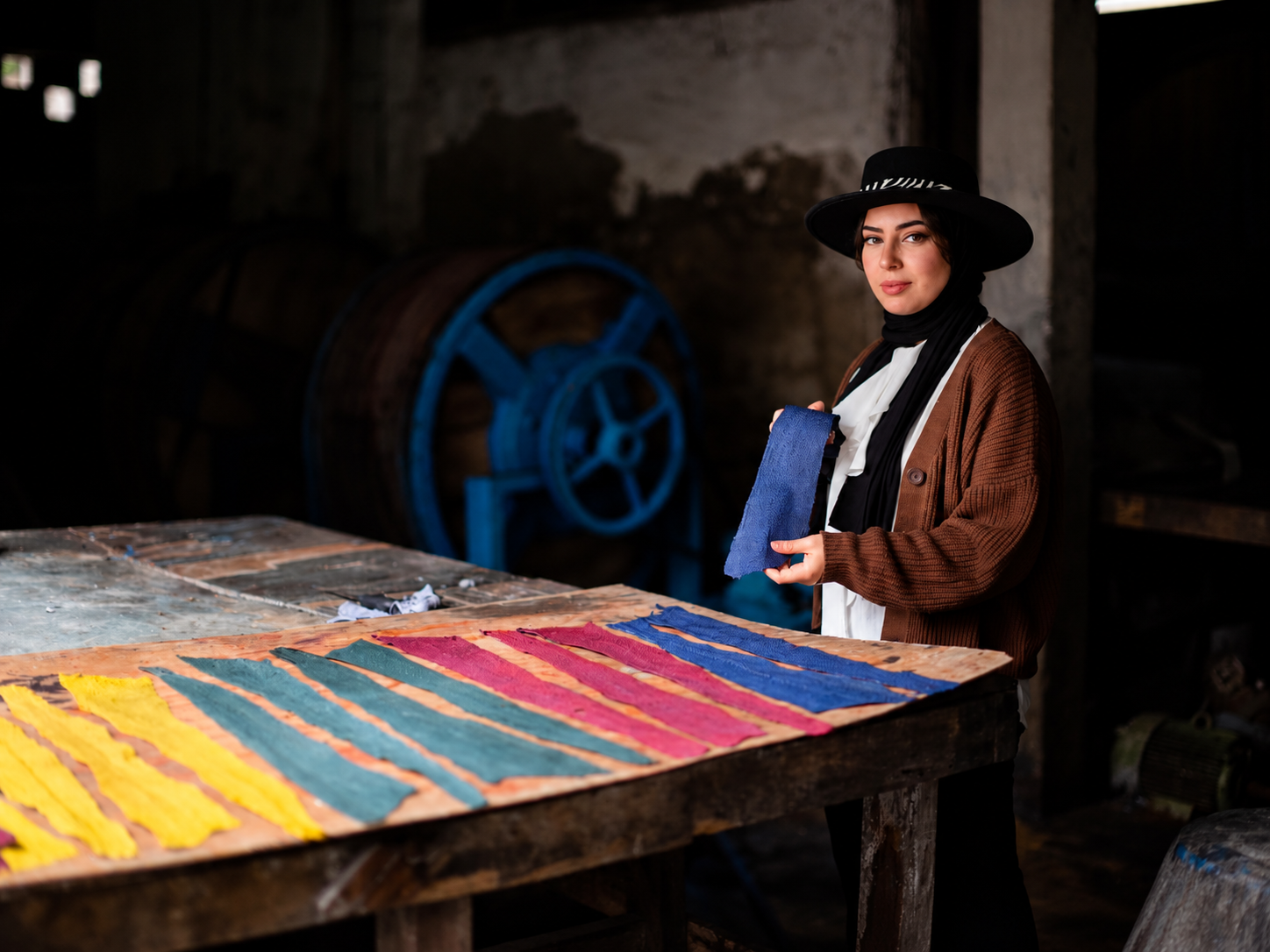
Her Casablanca-based company, CUIMAR, began by transforming discarded fish skins into leather, combining material innovation with Morocco's established leatherworking expertise.
Founded in 2019 under the name Cuimer, the business has since developed beyond its original concept.
Today, CUIMAR offers fish, cow, goat and lamb leathers to designers, fashion brands and accessories manufacturers.
The transformation reflects a broader ambition: moving from an unusual recycled material to a Moroccan leather business capable of serving premium international markets.
From Fish Waste to Fashion Material
CUIMAR's original idea began with a by-product of the fishing industry.
Fish skins that might otherwise be discarded can be treated through tanning and finishing processes to create leather suitable for fashion accessories.
The finished material retains a distinctive natural texture, making it different from conventional cowhide or goatskin.
CUIMAR says its fish leather is made from by-products of seafood processing rather than animals raised specifically for leather production.
The company also states that its fish leather is fully traceable, from collection to tanning.
That approach creates an opportunity to recover value from existing resources.
However, turning waste into a useful product does not automatically establish that its environmental impact is lower than that of other materials.
Water consumption, chemical treatment and energy use remain important factors in leather production.
For CUIMAR, demonstrating the environmental performance of its processes will be increasingly relevant as it approaches international buyers.
A Television Pitch That Attracted Investment
Laraki's idea reached a wider Moroccan audience in 2021.
She appeared on the 2M entrepreneurship programme Qui va investir dans mon projet ? Spécial Startups, presenting Cuimer's concept to a panel of investors.
Following the programme, Cuimer secured MAD 1.3 million in announced financial support, involving investors and Tamwilkom's Innov Invest mechanism.
The amount was reported by SNRT News, citing a joint announcement from 2M and inwi.
The available announcement did not provide a complete breakdown between equity investment and other forms of support.
The television appearance gave the project national visibility, but developing a commercial leather business required more than attracting attention.
Consistent material quality, reliable production and relationships with professional buyers would become central to its development.
From Cuimer to CUIMAR
The company's evolution is reflected in its new identity.
Originally associated with fish leather, CUIMAR now positions itself as a broader Moroccan leather supplier.
Its current product range includes bovine, goat and lamb leather alongside its original fish-based material.
This represents an important change in its business model.
Rather than focusing exclusively on an alternative material for finished accessories, CUIMAR is developing and supplying leather for fashion, footwear, handbags and interior design.
Its website allows prospective customers to explore different materials, request samples and discuss customised colours and finishes.
The company also offers small-order options intended to serve emerging designers as well as established brands.
For Laraki, the opportunity is to connect Morocco's leatherworking heritage with the technical and commercial requirements of contemporary fashion businesses.
Taking Moroccan Leather to International Markets
CUIMAR is also seeking opportunities beyond Morocco.
Its commercial website offers international sample requests and describes shipping arrangements for North American customers.
The company has additionally promoted its participation in international leather and fashion industry events.
Those activities indicate efforts to develop relationships with overseas buyers.
However, they should not be confused with confirmed large-scale export contracts.
CUIMAR's current revenue, production volumes and international sales have not been independently established.
The next challenge is therefore commercial execution.
Supplying premium materials requires consistent finishing, quality control, traceability and reliable delivery.
International customers also expect products to meet technical specifications and sourcing requirements.
For a Moroccan supplier, satisfying those standards is essential to developing long-term commercial relationships.
The Opportunity for Made-in-Morocco Materials
Morocco has a longstanding leatherworking tradition, from historic tanneries to the production of footwear, handbags and other goods.
But producing leather and building an internationally recognised materials business are different undertakings.
The latter requires investment in product development, quality standards, distribution and brand recognition.
CUIMAR is attempting to bring those elements together.
Its fish leather remains an example of material innovation, while its expanded catalogue reflects a wider commercial strategy.
The company also says it is working on cleaner tanning methods, improved traceability and more environmentally responsible production.
These efforts remain under development, and their results have not been independently assessed by Morocco Times Daily.
For Laraki, the objective is to build a business recognised not only for an unusual material, but also for the quality and versatility of Moroccan leather.
From One Idea to a Broader Ambition
Aya Laraki started with a question about discarded fish skins.
That idea became a business, attracted financial support and developed into a broader leather-supply operation.
Today, CUIMAR is positioning itself to work with designers and brands seeking premium materials produced in Morocco.
Its long-term success will depend on product consistency, international demand and sustainable commercial growth.
But its development already illustrates an interesting path for Moroccan entrepreneurship: using material innovation as a starting point for a more ambitious industrial business.
Aya Laraki started by finding value in discarded fish skins. Now she wants CUIMAR to show the world what Moroccan leather can become.