
With more than €60 million invested over a decade, over 1,000 employees in Morocco and new digital manufacturing technology in Tangier, Bel is building on an established industrial business serving domestic and international markets.
CASABLANCA — Behind La Vache qui rit and Kiri, two cheese brands familiar to generations of Moroccan consumers, stands a Tangier manufacturing operation producing approximately three billion portions annually, according to French food group Bel.
The company has invested more than €60 million in the facility over the past decade, strengthening production capabilities, product innovation and industrial technology.
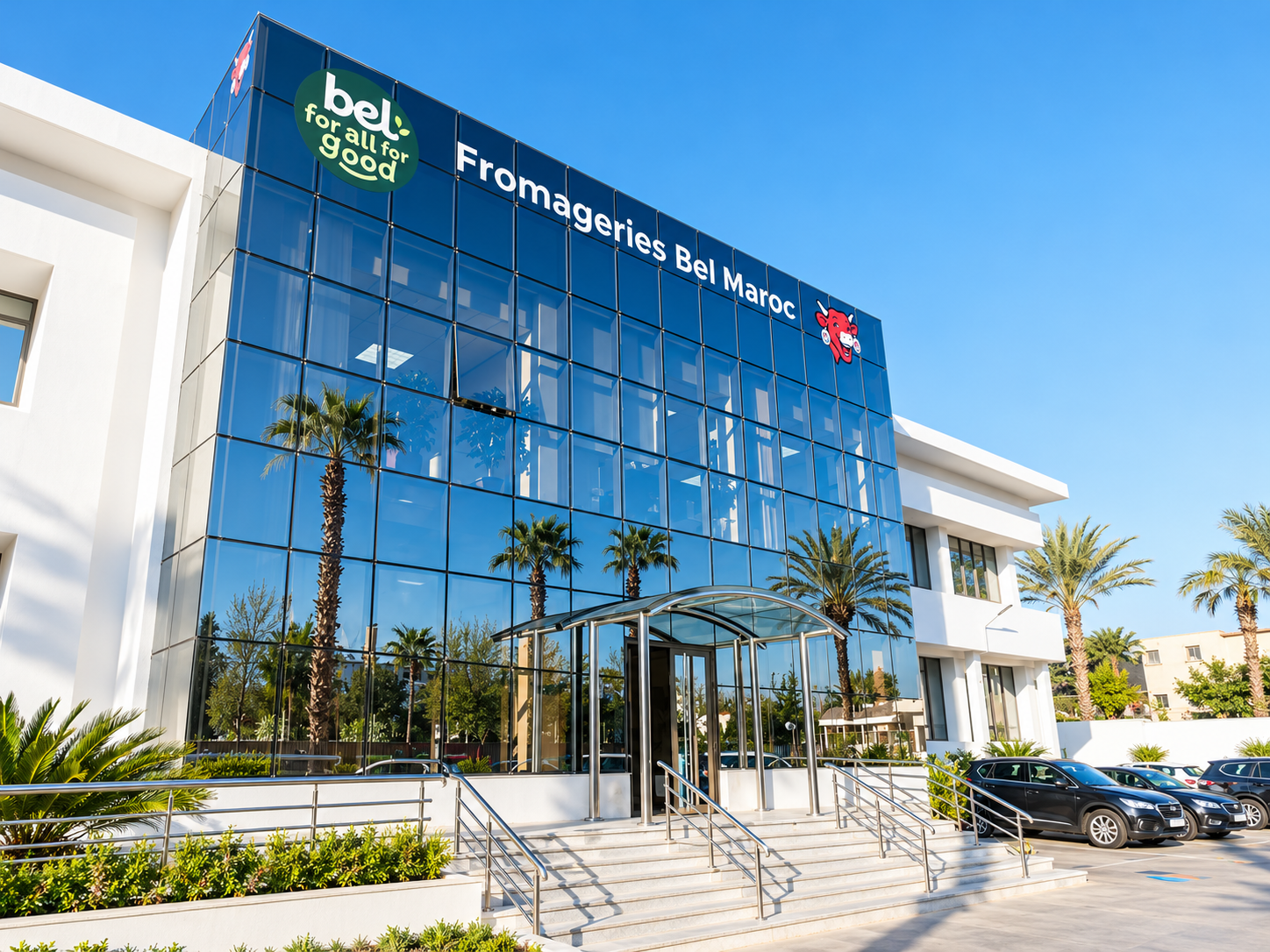
Bel employs more than 1,000 people in Morocco, supported by a manufacturing base in Tangier and a logistics platform in Mohammedia.
The business is led by Ludovic Flateau, General Manager of Bel Morocco and its North Africa cluster, who has overseen its operations since 2022.
Its latest development involves digital manufacturing systems designed to improve production monitoring, information reliability and traceability.
For Bel, Tangier represents an important industrial operation connecting familiar consumer brands with international manufacturing expertise and regional markets.
Three Billion Portions From Tangier
Bel’s Moroccan industrial history dates to 1977, when the group inaugurated its Tangier factory.
The facility developed into an established production base for La Vache qui rit and Kiri, serving Moroccan consumers and customers beyond the country.
In an October 2025 interview with the French Foreign Trade Advisers’ Morocco committee, Flateau described Tangier as an African manufacturing hub producing approximately three billion cheese portions annually.
The figure reflects the company’s reported production scale and should not be interpreted as an independently audited output figure for 2026.
Bel’s investment programme has supported production capacity, workplace improvements and the development of industrial processes.
The factory is complemented by a national distribution network serving different retail channels, including traditional neighbourhood shops and modern supermarkets.
Its operations also extend to export markets.
In February 2024, approximately 20% of production was reported to be exported to around 20 countries, including destinations in sub-Saharan Africa and the Middle East.
These figures provide historical context for the factory’s international role rather than a confirmed measure of current export performance.
For a manufacturer serving both domestic and overseas markets, consistent product quality, efficient logistics and reliable supply remain central to commercial competitiveness.
Ludovic Flateau and the Digital Factory
Flateau has held senior management positions across Bel’s international operations, including assignments in Europe, Türkiye and Egypt, before taking responsibility for Morocco and North Africa.
His leadership coincides with a new phase of industrial digitalisation at the Tangier facility.
In October 2026, Bel highlighted the deployment of its Apriso Manufacturing Execution System, a digital platform designed to give factory teams real-time access to production information.
The system is intended to improve operational visibility, data reliability and traceability while reducing manual information entry.
Bel presented the initiative during a Dassault Systèmes industry event in Casablanca, where Flateau discussed the role of digital technologies in modern manufacturing.
The Tangier deployment forms part of a wider programme across the group’s international industrial network.
For employees, access to more consistent production data can support better coordination and more informed operational decisions.
The company has not disclosed specific productivity improvements or financial savings attributable to the new system at Tangier.
Its implementation nevertheless represents a documented step towards more connected manufacturing in Morocco’s food industry.
Industrial Investment and Long-Term Development
Bel’s investment in Morocco also extends to energy management and environmental initiatives.
In February 2024, the group inaugurated a biomass boiler at its Tangier factory, representing an investment of approximately MAD 30 million.
Designed to use olive-processing residues as fuel, the installation was expected to reduce annual carbon dioxide emissions by around 3,200 tonnes.
That figure represents the reduction projected when the project was announced, not independently verified savings subsequently achieved.
In 2025, Bel Maroc received the corporate social responsibility label awarded by Morocco’s General Confederation of Enterprises, CGEM.
The recognition forms part of the company’s wider work on environmental management, employee development and corporate responsibility.
Alongside these initiatives, Bel continues to invest in the expertise of its Moroccan workforce and the efficiency of its industrial operations.
The group does not publish detailed standalone revenue and profitability figures for its Moroccan subsidiary, limiting independent assessment of its local financial performance.
Its reported investments, production scale and employment nevertheless demonstrate the significance of its manufacturing presence.
For a business built around products consumed regularly by Moroccan households, maintaining industrial reliability while adapting to new technologies will remain an important priority.
For Bel, Tangier is more than the factory behind two familiar cheese brands. It is a manufacturing operation where decades of industrial experience, Moroccan expertise and digital technology are contributing to the next stage of the group’s regional development.