
Jaouda leads Morocco’s local FMCG ranking, while new consumer data shows local and regional brands accounting for 80% of the country’s Top 250.
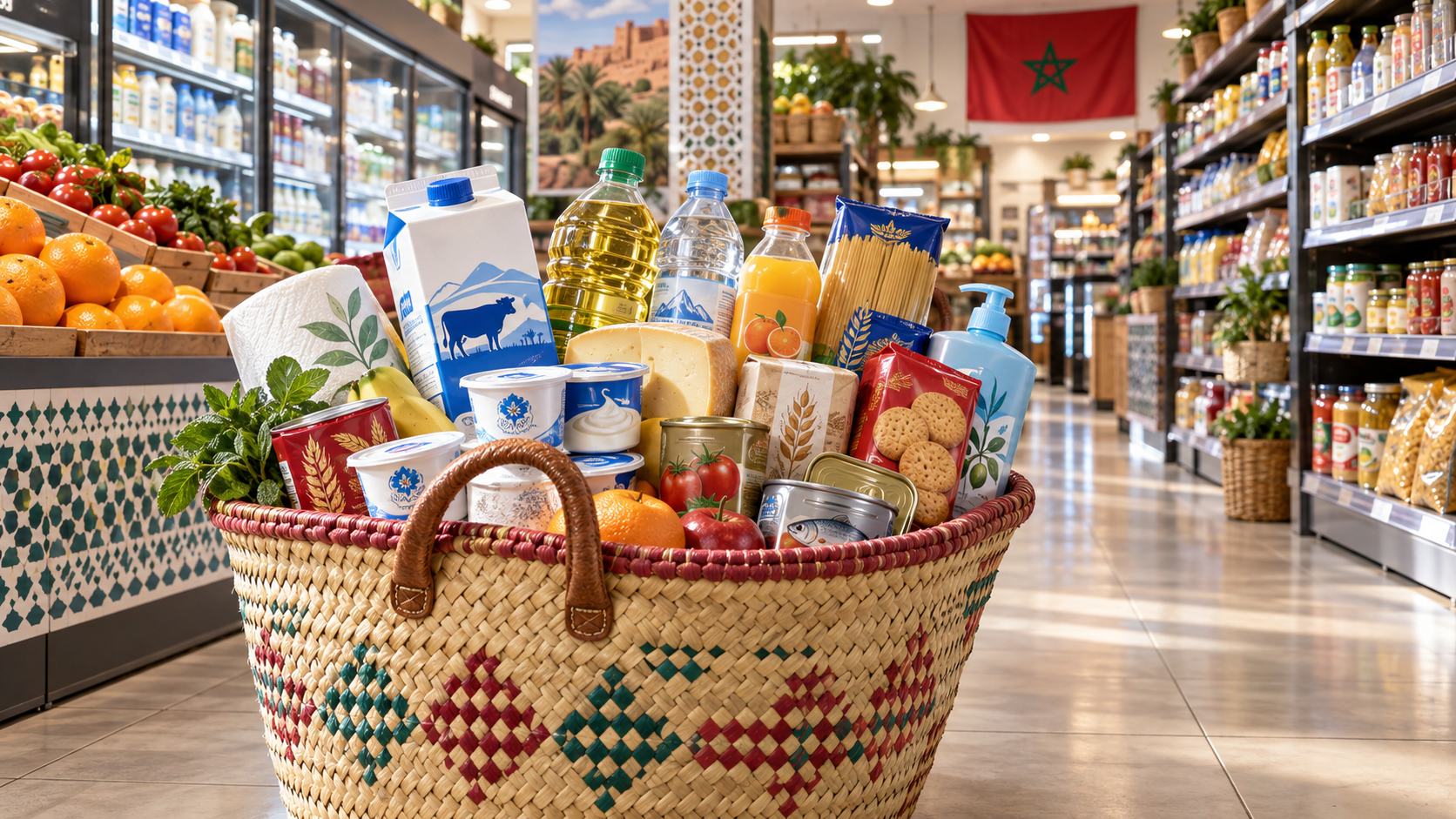
A Moroccan family does not need to walk into a shop intending to support a local business. The choice may happen almost without thought, when the same milk, yoghurt, cheese, juice or other familiar product goes back into the basket.
Those everyday decisions have given local and regional brands a powerful position. They represent 80% of Morocco’s Top 250 fast-moving consumer goods brands by Consumer Reach Points, according to Brand Footprint 2026, published by Worldpanel by Numerator on September 9.
Jaouda leads the local ranking for a second consecutive year, followed by Salim, Colaimo, Albane and Jibal. In Worldpanel’s separate ranking of international brands, Danone takes first place, ahead of Coca-Cola, Indomie, Danette and Knorr.
But “most chosen” has a precise meaning. It measures how widely and how frequently a brand is purchased. It is not a prize for quality, a calculation of revenue or a declaration that one product is best.
MOROCCO’S MOST-CHOSEN FMCG BRANDS
Local ranking
Jaouda
Salim
Colaimo
Albane
Jibal
Global ranking
Danone
Coca-Cola
Indomie
Danette
Knorr
“Most chosen” is measured through Consumer Reach Points, combining household penetration and purchase frequency. It is not a ranking of quality, revenue or brand value.
LOCAL BRANDS DOMINATE MOROCCO’S SHOPPING BASKET
The 80% figure is remarkable in a market where international food and household names compete for shelf space, attention and family budgets.
It must also be read correctly. It does not mean local brands receive 80% of all FMCG spending or account for 80% of every product purchased in Morocco. It means local and regional names occupy 80% of the positions in the country’s Top 250 brands when ranked by Consumer Reach Points.
Nor does it mean that every Moroccan brand is chosen more often than every international competitor. The two published rankings are separate.
What the result does reveal is the depth of local brands across Morocco’s FMCG market. Many have secured the combination that matters for repeat business: widespread availability and a regular place in household routines.
JAOUDA LEADS THE LOCAL RANKING
Jaouda retains first place among local brands. Salim ranks second, followed by Colaimo, Albane and Jibal.
Jaouda is part of COPAG, the Moroccan agricultural cooperative group created in 1987. The brand operates in dairy, a category closely connected to recurring purchases and everyday occasions such as breakfast, school snacks and family meals.
That context may help its reach, but the ranking is not a company endorsement. Worldpanel is measuring recorded purchasing behaviour, not judging whether Jaouda offers superior quality or value.
Its position tells us that the brand combines broad household penetration with frequent purchasing strongly enough to lead the local table. It does not establish Jaouda as Morocco’s number one brand across a combined ranking of local and international names.
GLOBAL GIANTS STILL MATTER
Danone leads the international ranking, with Coca-Cola second, Indomie third, Danette fourth and Knorr fifth.
These global brands bring powerful recognition and extensive distribution to Morocco. Their positions show that international companies remain deeply embedded in household purchasing.
Danone and Danette appear separately in Worldpanel’s table and must therefore be treated as separately ranked brands, despite their connection to the same wider corporate group.
This is not a contest between Moroccan and foreign businesses. The more revealing story is that local brands remain exceptionally prominent while competing alongside some of the world’s best-known consumer names.
WHAT “MOST CHOSEN” REALLY MEANS
Consumer Reach Points, commonly known as CRPs, combine three elements: how many households buy a brand, how often they buy it and the size of the consumer population being measured.
Household penetration shows how many homes purchased the brand at least once during the period. Purchase frequency measures how often those buyers returned to it.
Consider two products on a supermarket shelf. One enters a huge number of homes but is bought only occasionally. Another reaches fewer households, yet its customers buy it every week. Their strength comes from different places, and CRPs bring both forms of purchasing power into the calculation.
This is why a “most chosen” ranking is not the same as a table of revenue, profit, market share or brand value. It does not measure ingredients, taste, product quality, customer satisfaction or public opinion. It is not a survey asking shoppers to name their favourite brand.
It measures choices that households actually make.
WHY LOCAL BRANDS REMAIN SO STRONG
The ranking identifies purchasing patterns, but it does not prove one universal explanation for the performance of every brand.
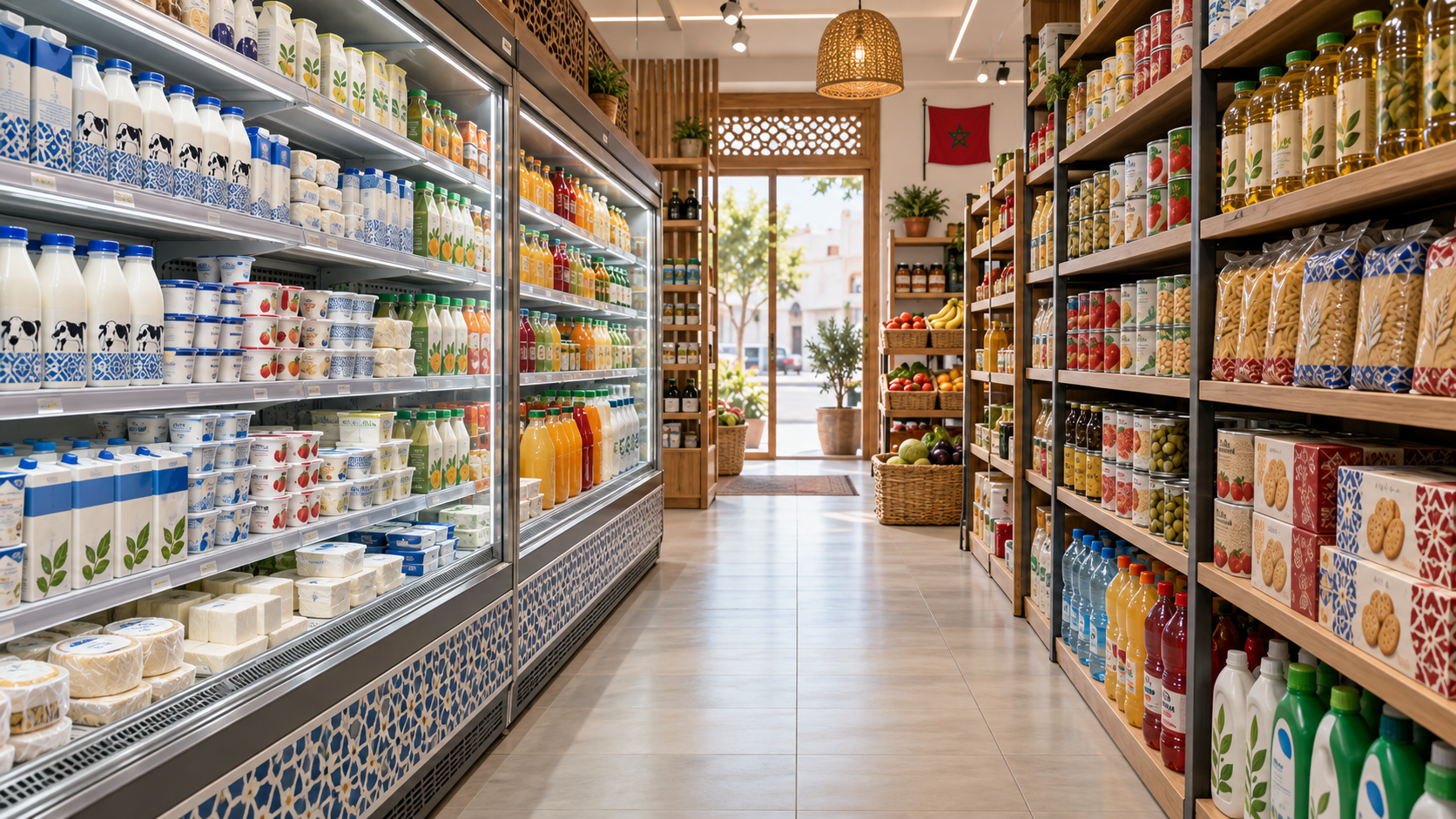
Several factors are likely to contribute. Distribution is crucial. A product cannot become a household habit if consumers struggle to find it in supermarkets, neighbourhood shops or other retail channels.
Familiarity and trust may also influence repeat purchases. Brands with a long presence in Morocco can become associated with breakfast tables, children’s snacks and family recipes. Products designed around local tastes, familiar formats and household budgets may gain an additional advantage.
Price positioning can matter, but the results do not demonstrate that local brands are always cheaper, better or healthier. Convenience, recognition and consistent availability can be just as influential when shoppers make quick, routine decisions.
The growth figures support the importance of winning both new and repeat customers. Among the fastest-growing brands, 83% increased household penetration, while 87% also raised purchase frequency.
Being tried is valuable. Being bought again is what turns a product into a habit.
MOROCCANS ARE SPENDING MORE ON DAILY GOODS
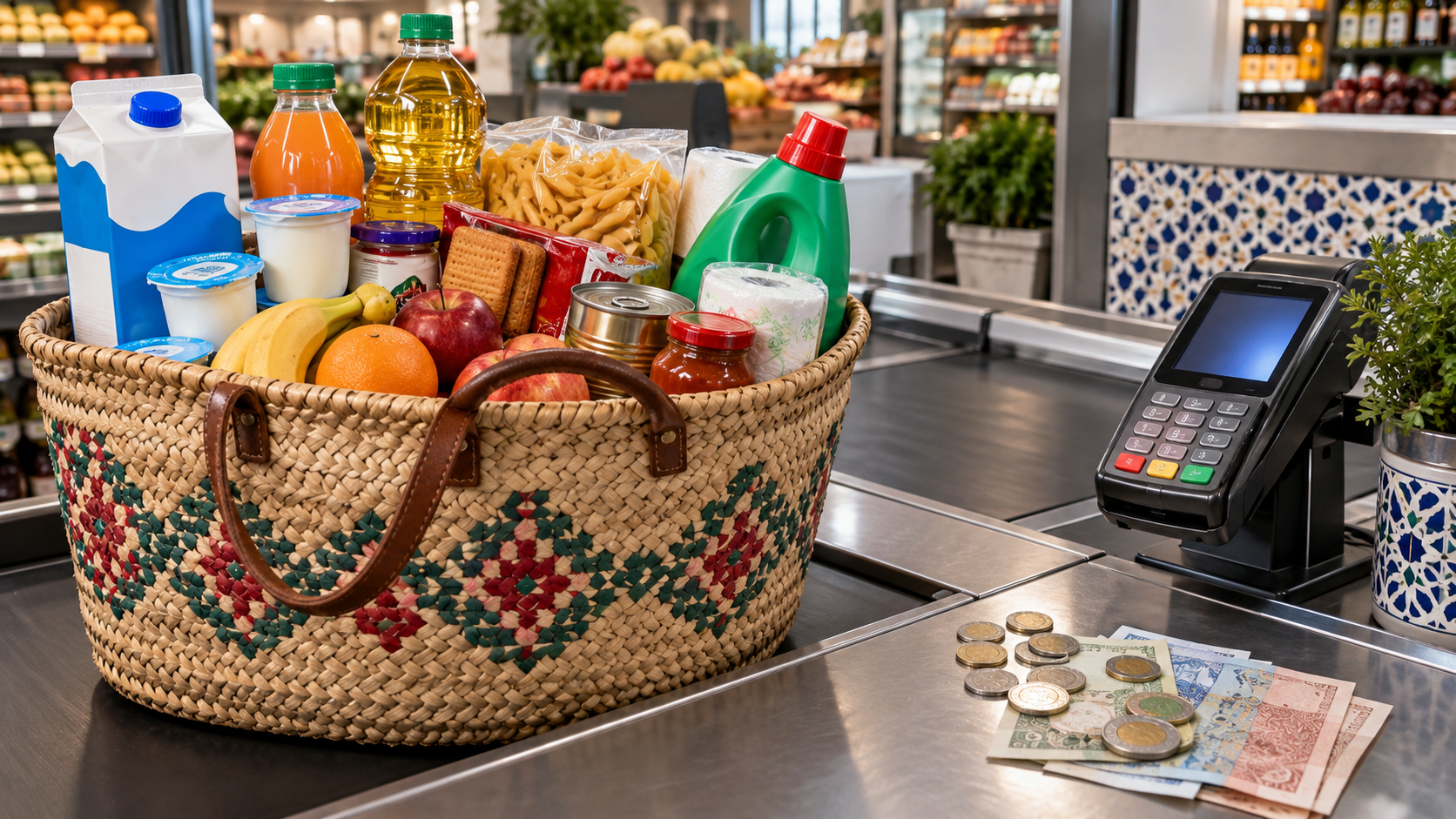
FMCG spending in Morocco increased by 5.3% in 2025, more than double the 2.4% growth recorded a year earlier. Although the report is called Brand Footprint 2026, these spending figures relate to 2025.
More spending does not automatically mean households bought 5.3% more products. Prices, pack sizes, product choices and shopping frequency can all change the final bill. Worldpanel’s published findings do not assign every dirham of the increase to a single cause.
Growth was also spread beyond the leaders. Fifty-six percent of Morocco’s Top 250 brands increased their Consumer Reach Points during the measured period.
The average Top 50 FMCG brand reaches approximately 4.78 million Moroccan households and achieves average household penetration of 76.7%. Yet the Top 50 account for only slightly more than half of total FMCG spending, leaving meaningful space for smaller and emerging brands.
WHAT THE RANKING CANNOT DECIDE FOR YOU
A national ranking cannot tell an individual family which product belongs in its basket.
It does not identify the best quality, lowest price or healthiest option. It cannot show which brand leads in every city or region, which retailer offers the cheapest deal or what one particular household prefers.
Shoppers still need to compare prices, ingredients, nutritional information, pack sizes and their own requirements.
That does not make the ranking less useful. It simply tells consumers what it measures, and what it does not.
Moroccan households are not following a league table when they reach for a familiar carton, bottle or packet. The league table follows them, recording millions of small decisions made in supermarkets and neighbourhood stores.
Global brands may arrive with worldwide recognition. Local brands often arrive with something equally powerful: a familiar place at the Moroccan table, earned one repeat purchase at a time.