

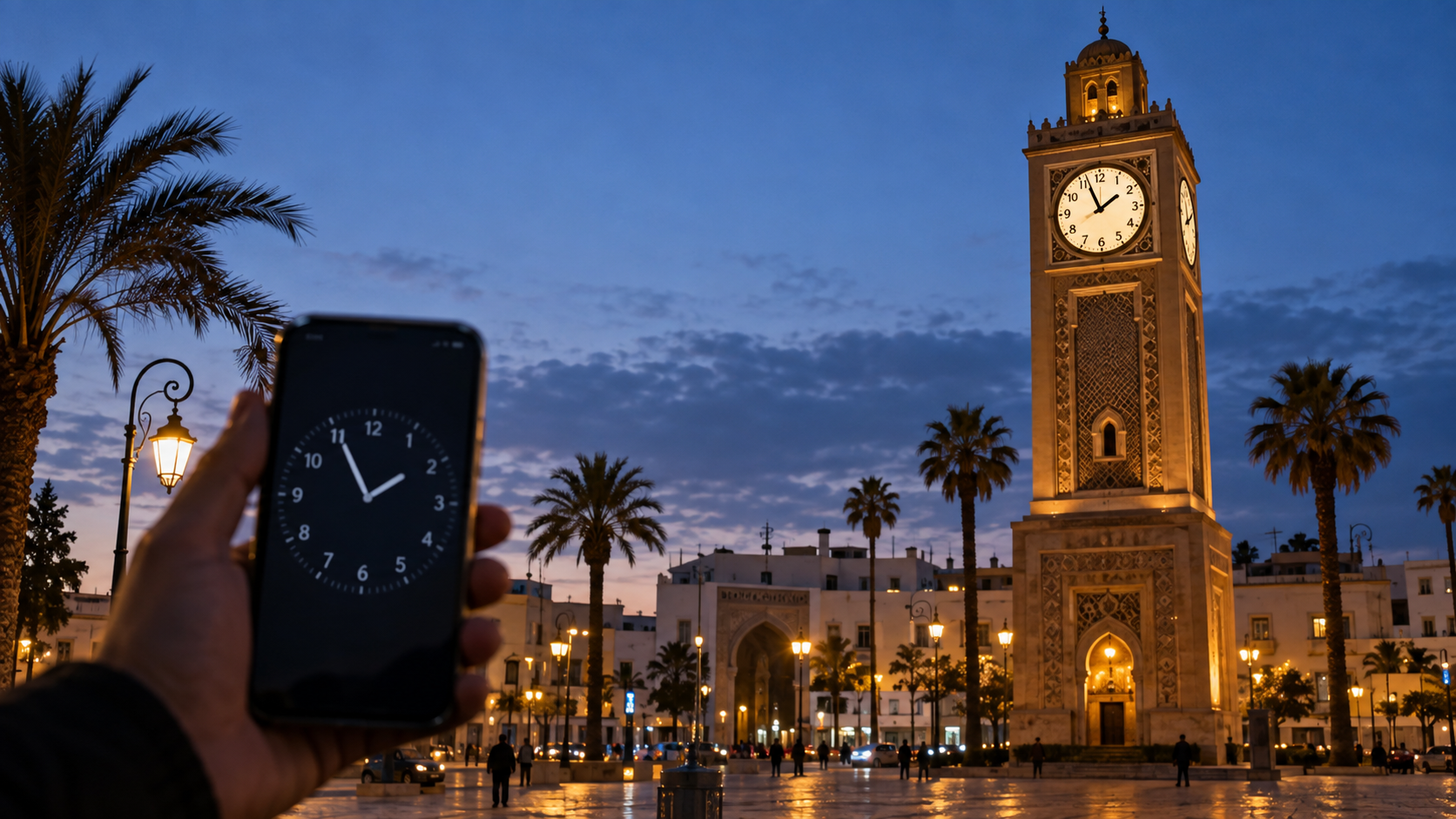
The country returns permanently to GMT early on Sunday. Phones should update automatically, but alarms, appointments and international travel still need checking.
Morocco turns back the clock tonight, giving people an additional hour before Sunday morning begins.
At 02:00 on Sunday, 20 September 2026, the official time will move back by 60 minutes. When the clock reaches 02:00, it will become 01:00 again.
The change takes Morocco from GMT+1 to Greenwich Mean Time, GMT.
This is not the familiar temporary adjustment associated with Ramadan. Morocco is returning permanently to GMT under Decree No. 2.26.530, which also ends the permanent GMT+1 system introduced in 2018.
Most smartphones should make the change automatically. But alarms, cars, household appliances, travel bookings and calls with people abroad deserve one quick check.
WHAT HAPPENS AT 02:00?
The change is simple:
At 02:00 on Sunday, the clock returns to 01:00.
The hour between 01:00 and 02:00 therefore occurs twice.
Someone going to bed at midnight and waking eight hours later will see an earlier time on the clock than they would have under GMT+1.
People do not need to stay awake to change their phones. Devices connected to a mobile network or the internet will normally update automatically when automatic date and time settings are enabled.
Traditional watches, wall clocks and many household appliances will not.
WILL YOUR PHONE CHANGE AUTOMATICALLY?
Most modern iPhones and Android devices should move back one hour without any action from the user.
For that to happen, the phone should be connected to a network and configured to select its time and time zone automatically.
On an iPhone
Open:
Settings > General > Date & Time
Check that Set Automatically is enabled.
On Android
The wording may differ between manufacturers, but the setting is normally found under:
Settings > System > Date & Time
Check that automatic date and time and automatic time-zone selection are enabled.
Some phones may not update immediately because of outdated software, weak connectivity or incorrect regional settings.
After waking on Sunday, compare the displayed time with another reliable source before leaving for an appointment.
Do not manually change a phone that has already updated itself. Doing so could move it back by a second hour.
THESE DEVICES MAY NEED MANUAL ATTENTION
Not everything is connected to a network.
Check:
analogue and digital watches;
wall clocks;
bedside alarm clocks;
clocks inside cars;
ovens and microwaves;
heating or cooling timers;
security systems;
cameras;
older computers and tablets;
medical or household devices using programmed times.
A wrong microwave clock is inconvenient. A wrong alarm, medication reminder or security timer can cause a more serious problem.
CHECK SUNDAY ALARMS BEFORE GOING TO SLEEP
An alarm saved on a smartphone should normally activate at the correct local time after the device updates.
But tonight is not the moment to rely on assumptions.
Confirm that:
automatic time adjustment is enabled;
the alarm still displays the intended hour;
the phone has enough battery;
the correct day is selected;
a second alarm or another device is available if the appointment is important.
Anyone working an overnight shift should pay particular attention because the hour between 01:00 and 02:00 will occur twice.
Employers and employees should confirm how that repeated hour is recorded rather than making individual assumptions.
FLIGHTS AND TRAINS STILL USE LOCAL DEPARTURE TIMES
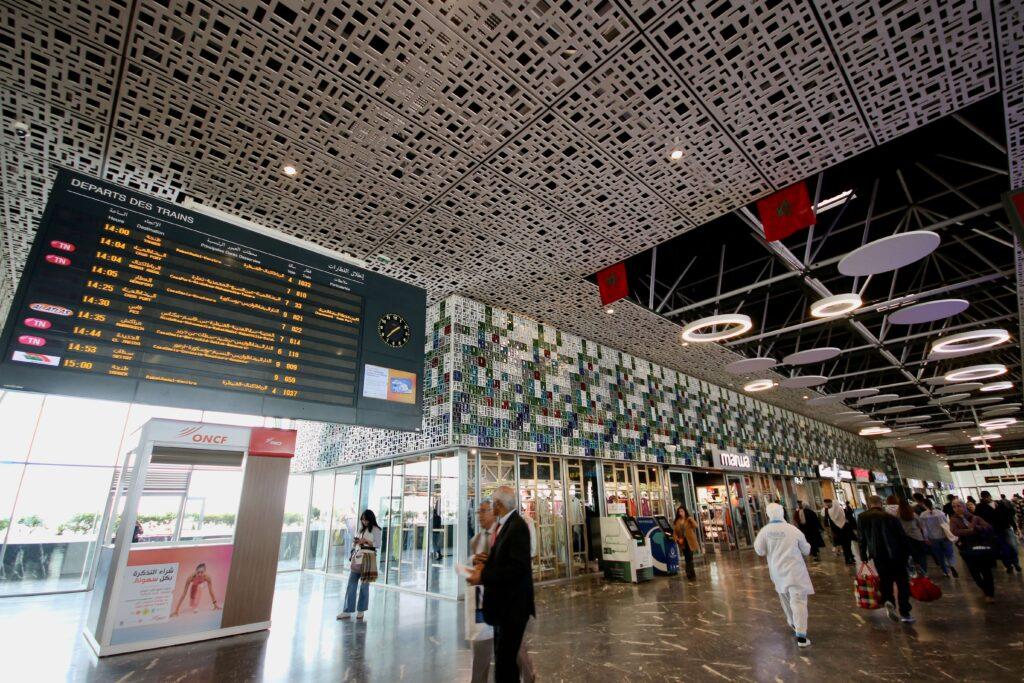
Airline and railway timetables are generally published using the local time applicable on the date of travel.
A flight shown as departing Casablanca at 08:00 on Sunday should therefore be understood as 08:00 under Morocco’s new GMT setting.
The same principle normally applies to train and coach schedules.
Passengers should still check their reservation directly with the operator, particularly when travelling during the first hours after the transition.
Look at:
the latest airline or operator notification;
the departure date and local time;
check-in and boarding deadlines;
airport or station information;
connecting flights in another time zone.
Do not calculate a new departure time independently and assume the ticket is wrong. Confirm any apparent discrepancy with the transport company.
Digital boarding passes and calendar entries should also be reopened after the phone has updated.
CALENDAR APPOINTMENTS COULD CAUSE CONFUSION
Online calendars normally store meetings using time-zone information and adjust them automatically.
Problems can arise when an appointment was saved without a time zone, entered manually or copied into a message as plain text.
A meeting described only as “Monday at 10” may mean different things to participants in Morocco and Europe.
For important appointments, include both the city and time zone:
10:00 in Casablanca, GMT
Video calls, interviews, medical consultations and international business meetings should be reconfirmed, particularly during the first weeks after the change.
CALLING EUROPE WILL REQUIRE EXTRA ATTENTION
From Sunday, Morocco’s time difference with several European countries changes.
France, Spain and the Netherlands remain on Central European Summer Time until their seasonal clock change on 25 October 2026.
Between 20 September and 25 October:
France will be two hours ahead of Morocco;
mainland Spain will be two hours ahead;
the Netherlands will be two hours ahead;
the United Kingdom will be one hour ahead.
When European clocks move back on 25 October, the differences change again.
After that transition:
France, mainland Spain and the Netherlands will be one hour ahead of Morocco;
the United Kingdom and Morocco will share GMT.
These differences may change again when European summer time returns. It is safer to check the current time in each city than to memorise one permanent difference.
WHAT ABOUT FAMILY IN OTHER COUNTRIES?
The United Arab Emirates will be four hours ahead of Morocco after the return to GMT.
Time differences with the United States and Canada vary by city and can change when North American daylight-saving arrangements end.
For the period immediately following Morocco’s change, New York will generally be four hours behind Morocco, Chicago five hours behind and Los Angeles seven hours behind. Those differences will change again when US clocks move back.
Families should check the city, not simply the country, before calling.
WhatsApp may deliver the message instantly. It cannot prevent a telephone from ringing at an inconvenient hour.
SCHOOLS AND OFFICES USE THE NEW TIME FROM MONDAY
From Sunday onward, appointments and published opening hours in Morocco should be understood according to GMT.
A school beginning at 08:00 on Monday will still begin when the local clock shows 08:00. The same applies to offices, banks, shops and public services unless the organisation announces a separate timetable.
The clock changes, but the stated local opening hour normally remains the same.
Parents should check messages from their children’s schools, particularly if transport providers or private institutions issue additional instructions.
Employees with colleagues abroad should review recurring meetings because the automatic conversion may alter what overseas participants see.
FIVE THINGS TO CHECK BEFORE YOU SLEEP
Enable automatic time and time-zone settings.
Check your Sunday alarms.
Confirm flights, trains and coach departures.
Review international calendar appointments.
Adjust watches, cars and household clocks manually.
ONE EXTRA HOUR, ONE IMPORTANT CHECK
Morocco’s return to GMT marks the end of the permanent additional hour introduced in 2018.
For most people, the transition should happen quietly while they sleep.
Their phones will update, their Sunday will begin and daily life will continue under the new official time.
The avoidable problems will come from the clocks and appointments that do not update themselves.
Before going to bed tonight, check the alarm, look at tomorrow’s plans and remember the only calculation that matters:
At 02:00, Morocco turns the clock back to 01:00.
 Martino Oosterveer, Contributing Editor