
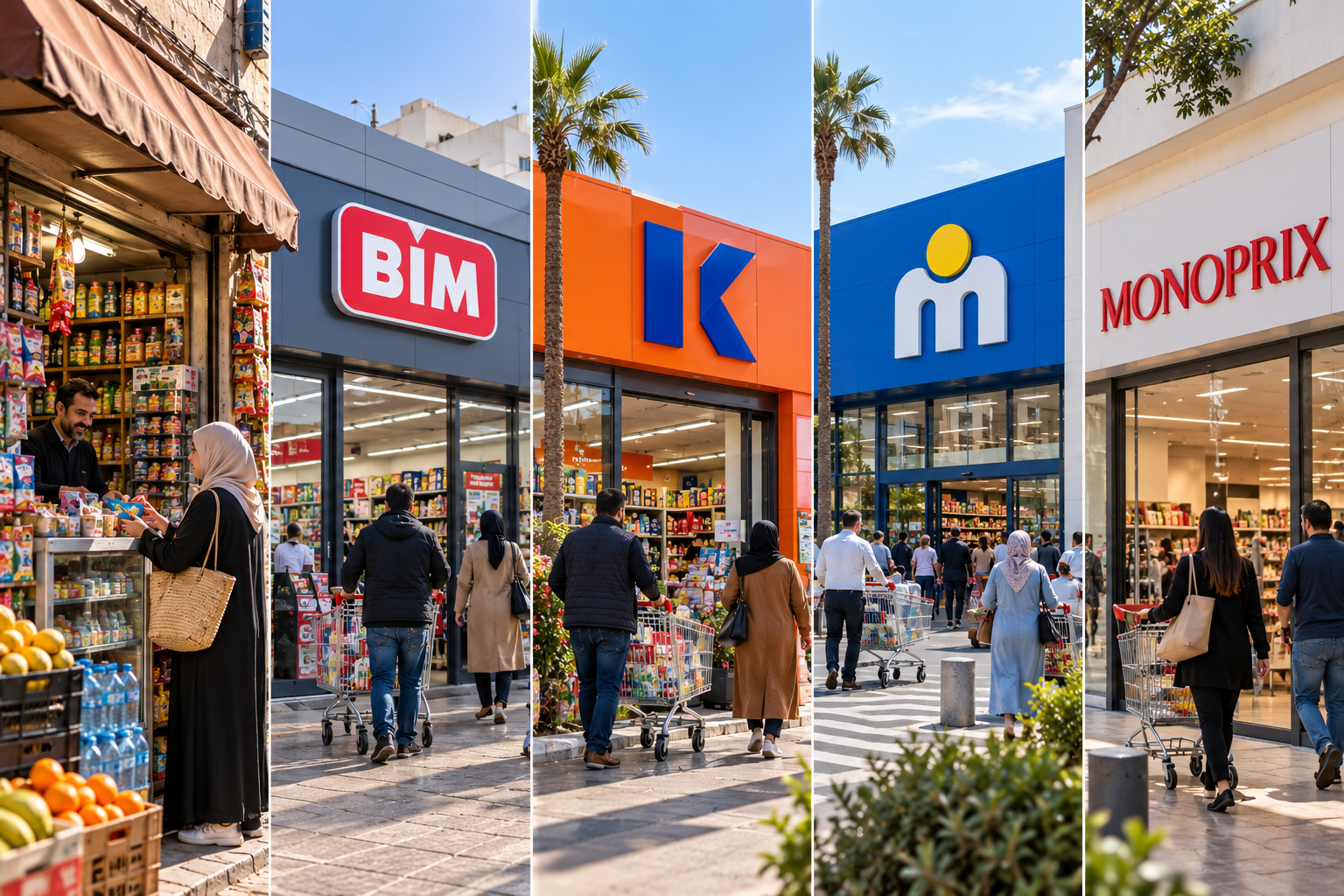
From the neighbourhood hanout to Marjane, Carrefour, BIM, Kazyon, Supeco, Franprix and Monoprix, Moroccan consumers have more ways to shop than ever. The result is not the replacement of traditional commerce, but the emergence of a more diverse and increasingly sophisticated retail market.
Morocco’s retail market is evolving alongside the changing habits of its consumers.
A household may still buy bread and milk from the neighbourhood grocer, fresh produce from a traditional market, packaged goods from BIM, Kazyon or Supeco, and make a larger weekly purchase at Marjane or Carrefour.
What is changing is the range of choices available.
Price, promotions, proximity, product selection, store presentation, payment options and convenience are increasingly influencing where consumers choose to spend.
The result is a more diverse retail environment in which traditional commerce and organised retail continue to develop alongside each other.
THE MOROCCAN SHOPPER IS BECOMING MULTI-FORMAT
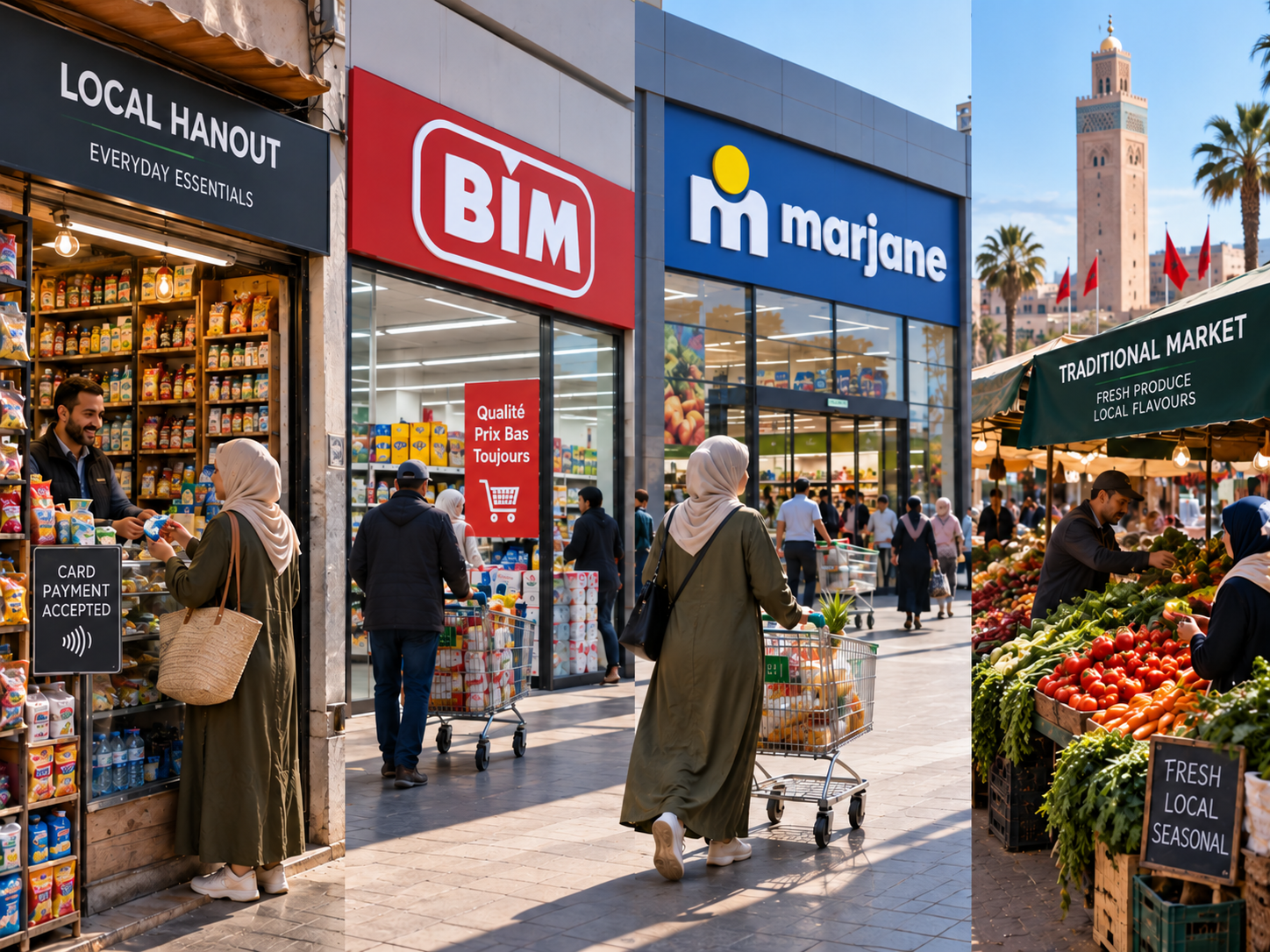
Traditional commerce remains deeply embedded in Moroccan daily life.
The neighbourhood hanout continues to offer immediate proximity, flexibility and familiarity — advantages that remain highly valued by many consumers.
At the same time, organised retail is expanding through several formats.
Marjane, Carrefour, BIM, Kazyon, Supeco and other operators are developing networks that respond to different purchasing occasions, from large planned shopping trips to smaller neighbourhood purchases.
This means Moroccan households increasingly use several channels during the same week.
The key question is therefore no longer simply where consumers shop, but how different formats complement one another within the household basket.
VALUE IS BECOMING MORE IMPORTANT
Price remains an important consideration for Moroccan households, but value increasingly includes more than the final price.
Consumers can compare brands, package sizes and promotions more easily.
Private-label products offer additional choice.
Larger stores can provide broader assortments, while smaller formats can respond to immediate daily needs.
This has created favourable conditions for discount retail.
BIM has developed a dense Moroccan network around compact stores and frequently purchased products.
Kazyon has added another discount proposition.
LabelVie has accelerated the expansion of Supeco, reinforcing the role of value-oriented retail within the Moroccan market.
These developments reflect a broader trend: organised retail is becoming more accessible to consumers across a wider range of neighbourhoods.
RETAIL IS MOVING CLOSER TO THE CONSUMER
Modern retail expansion in Morocco is no longer based only on large hypermarkets.
Marjane operates its major stores alongside Marjane Market and smaller Marjane City formats.
LabelVie has built a portfolio spanning Carrefour hypermarkets, Carrefour Market, Carrefour Express, Atacadão and Supeco.
One Retail, the retail arm of H&S Group, adds another dimension through the development of Franprix and Monoprix in Morocco.
Franprix is positioned around neighbourhood convenience and everyday purchases, while Monoprix addresses a broader urban consumer proposition.
The common direction is clear.
Retail groups are increasingly seeking to combine scale with proximity.
This brings organised retail closer to where consumers live, while broadening the range of formats available in Moroccan cities.
CONVENIENCE IS BECOMING PART OF VALUE
Consumers increasingly consider more than price alone.
Proximity matters.
Product availability matters.
Store organisation matters.
Visible pricing matters.
Opening hours matter.
Payment flexibility matters.
For some purchases, the traditional hanout remains the most practical option.
For others, a supermarket, discount store or convenience format may be preferable.
This diversity gives consumers greater flexibility and encourages retailers to continuously improve the shopping experience.
THE HANOUT HAS AN IMPORTANT ROLE TO PLAY
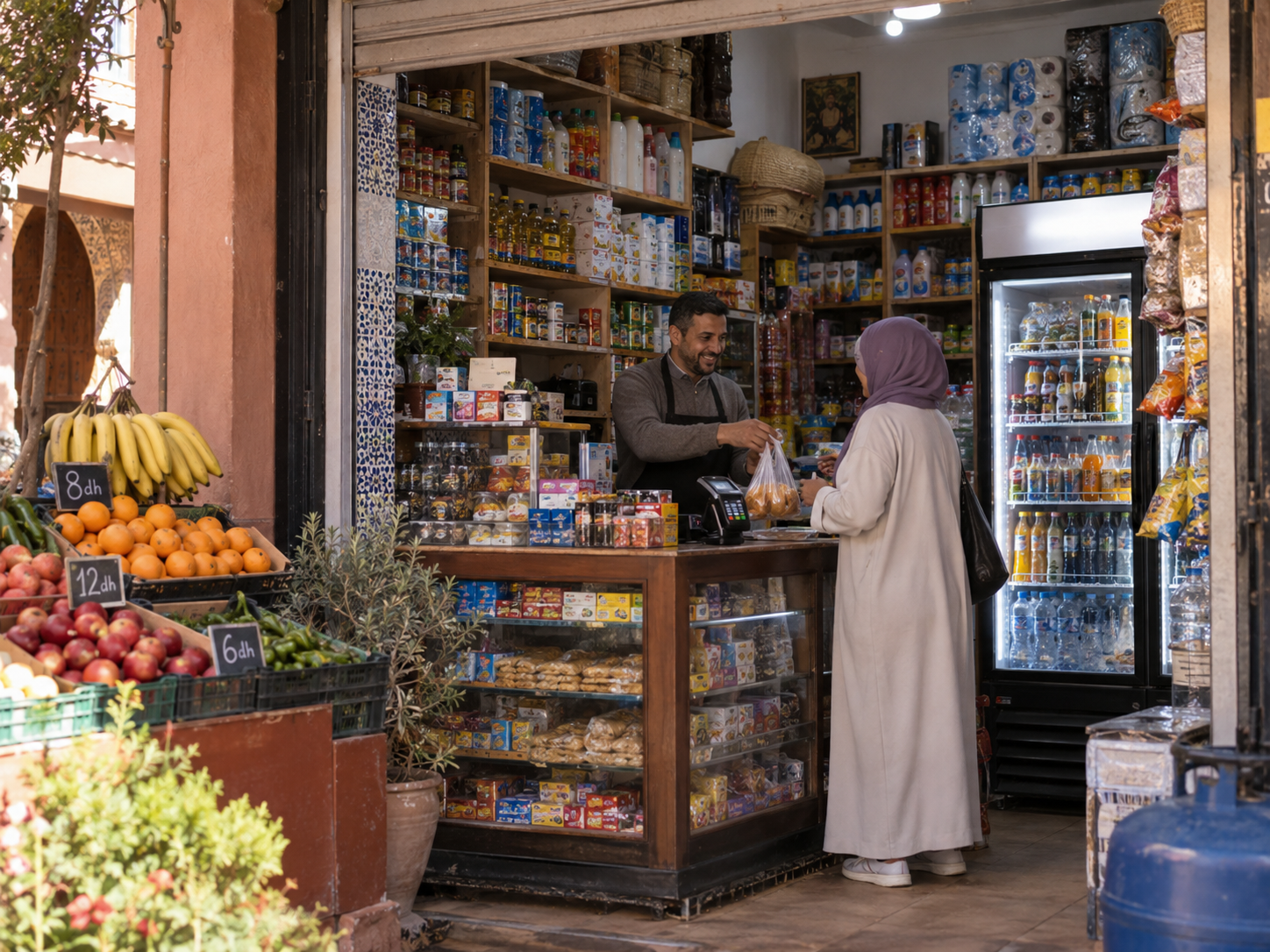
The expansion of organised retail does not remove the importance of Morocco’s neighbourhood grocers.
On the contrary, the hanout remains one of the most distinctive strengths of the country’s retail landscape.
Its advantages are well established: proximity, personal relationships, knowledge of local demand and the ability to serve small and frequent purchases.
The opportunity for traditional retailers is to build on those strengths.
Modernisation does not require abandoning the traditional model.
It can mean relatively simple improvements such as better lighting, clearer product presentation, organised shelves, visible prices, improved refrigeration and more professional signage.
Card and mobile payments can add further convenience.
Digital tools can also support the traditional model.
A neighbourhood grocer can use messaging applications to receive local orders, inform customers about product availability or arrange nearby delivery.
The objective is not to transform the hanout into a supermarket.
It is to combine traditional proximity with modern service standards.
DIGITAL PAYMENTS ARE EXPANDING
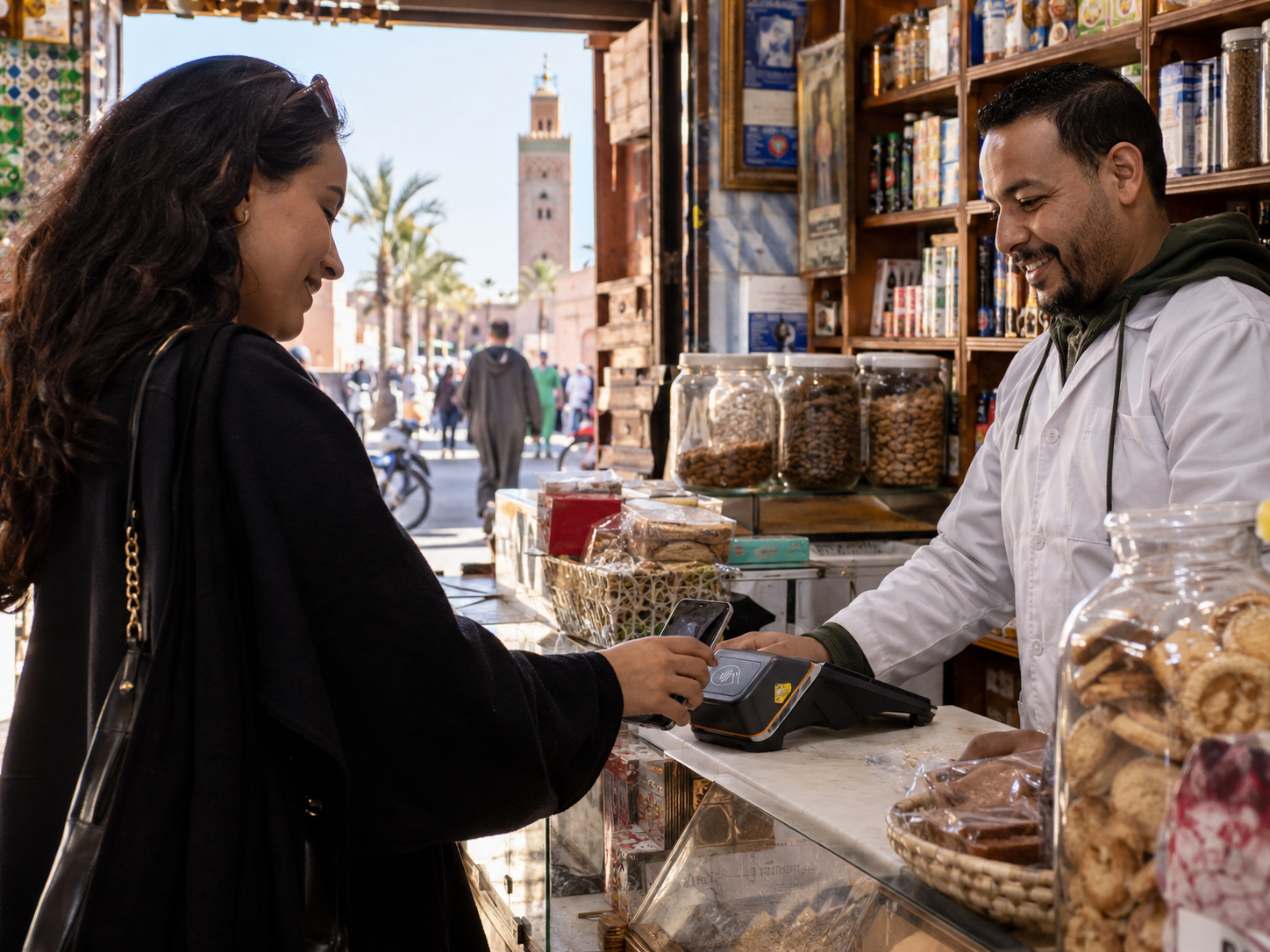
Electronic payments are becoming a more visible part of Morocco’s consumer economy.
Large retailers already provide card payments as standard, while the wider payments ecosystem continues to expand.
For smaller merchants, this creates additional possibilities.
Offering electronic payment can improve customer convenience while helping traditional retailers respond to changing consumer habits.
As payment infrastructure becomes more accessible, the distinction between modern and traditional retail may increasingly depend less on technology itself and more on how effectively each retailer uses it.
THE SMARTPHONE IS BECOMING PART OF THE SHOPPING JOURNEY
The retail experience is also becoming more digital.
Consumers increasingly encounter promotions, catalogues, loyalty programmes and delivery options through smartphones.
This does not reduce the importance of physical stores.
Instead, it adds another channel through which retailers can communicate with customers.
Large groups can use sophisticated digital platforms and loyalty systems.
Smaller merchants can participate through simpler tools such as messaging applications and local delivery.
This creates opportunities for both organised and traditional commerce to strengthen customer relationships.
MORE CHOICE IS RAISING STANDARDS
The development of different retail formats gives Moroccan consumers more choice.
Traditional markets remain important for fresh products.
The hanout remains strong in immediacy and familiarity.
Discount operators compete on value.
Supermarkets and hypermarkets provide scale and assortment.
Smaller urban formats compete on convenience.
Digital channels add flexibility.
These formats do not necessarily need to replace one another.
They can coexist, serving different needs and different moments in the same household’s shopping routine.
Greater competition can also encourage better service, stronger product availability, improved presentation and more convenient payment options across the market.
A MORE DIVERSE MOROCCAN RETAIL ECONOMY
Morocco is therefore developing a more diverse consumer market rather than moving from one retail model to another.
Traditional commerce remains an important part of daily life.
Organised retail continues to expand.
Digital tools are becoming more widely used.
Consumers have more choices.
And retailers of every size have new opportunities to adapt.
The most successful models may be those that combine the strengths of Morocco’s traditional retail culture with the efficiency, convenience and service standards of modern distribution.
That is the deeper change taking place in the market.
Moroccans are not simply gaining more places to shop.
They are benefiting from a retail sector that is becoming more diverse, more competitive and more responsive to their needs.