
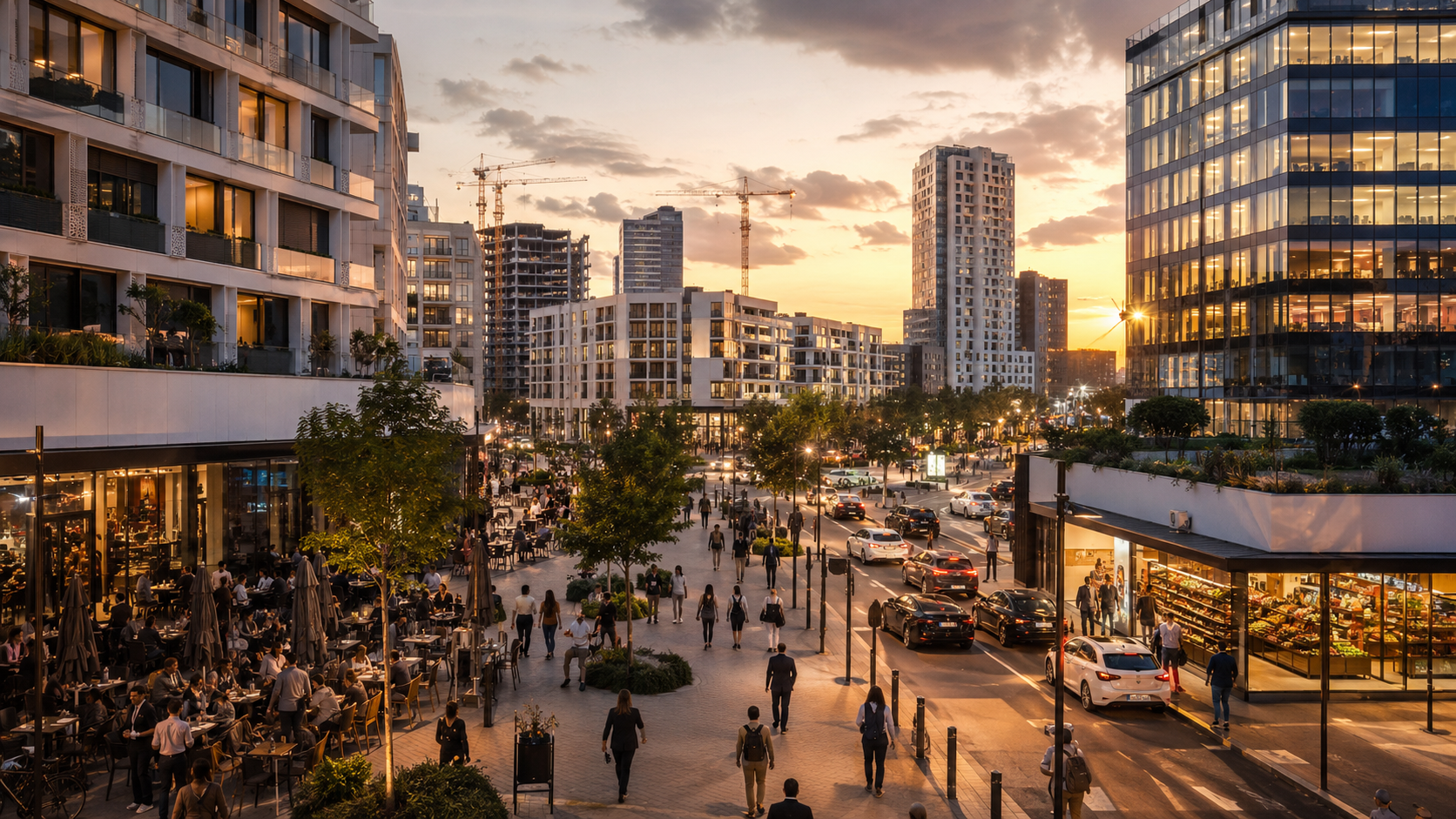
Morocco created 42,905 new businesses during the first five months of 2026.
That number is usually discussed as an entrepreneurship statistic.
It deserves to be read differently.
New companies create employees.
Employees create commuting patterns.
Offices create lunchtime demand.
Construction creates new neighbourhoods.
New neighbourhoods create supermarkets, cafés, pharmacies, gyms, childcare, transport and services.
In other words, business formation does not only tell Morocco where companies are being created.
It helps reveal where the next consumer markets are forming.
The geography is striking.
Casablanca-Settat accounted for 39.3% of all new businesses, followed by Rabat-Salé-Kenitra at 14.3%, Marrakech-Safi at 12.8% and Tangier-Tetouan-Al Hoceima at 10.4%.
Together, just four regions represented 76.8% of all company creation between January and May.
That concentration should matter to every retailer, restaurant operator, property developer and consumer brand in Morocco.
Because tomorrow’s consumption is often visible in today’s company registrations.
Casablanca Is Still Creating Gravity
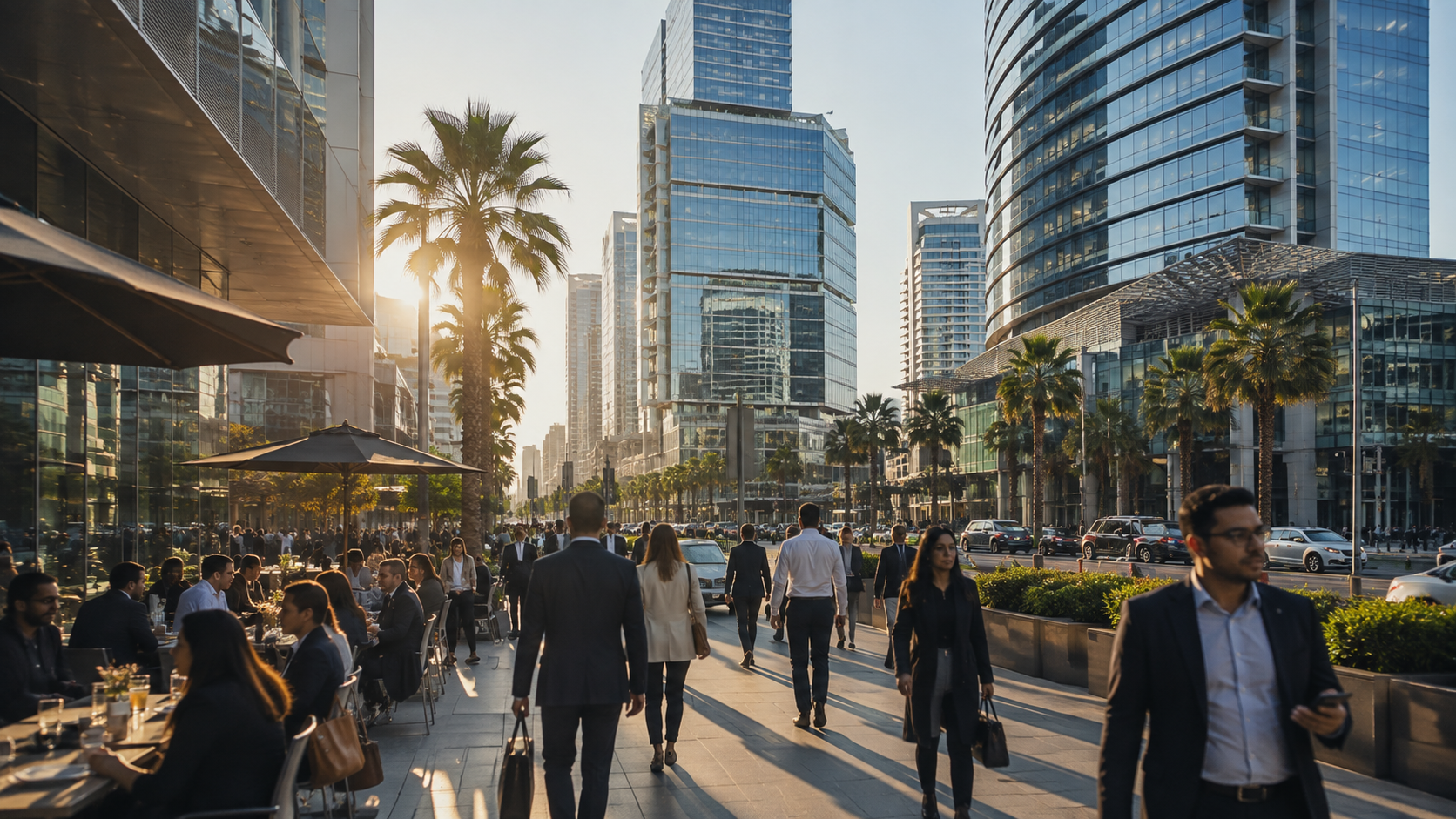
Almost four out of every ten newly registered Moroccan businesses were created in Casablanca-Settat.
That confirms the region’s overwhelming economic weight.
But for consumer companies, the important question is not simply how many businesses exist.
It is what those businesses generate around them.
More employment.
More commuting.
More disposable income.
More business travel.
More demand for food delivery.
More coffee meetings.
More convenience retail.
More housing pressure.
The office economy and the consumer economy reinforce each other.
A neighbourhood that gains several hundred new workers can suddenly support businesses that would previously have struggled.
Restaurants.
Dry cleaners.
Fitness studios.
Mini-markets.
Beauty services.
Coworking.
Childcare.
Retailers therefore need to understand employment geography as closely as residential geography.
Rabat Is Building A Different Consumer Market
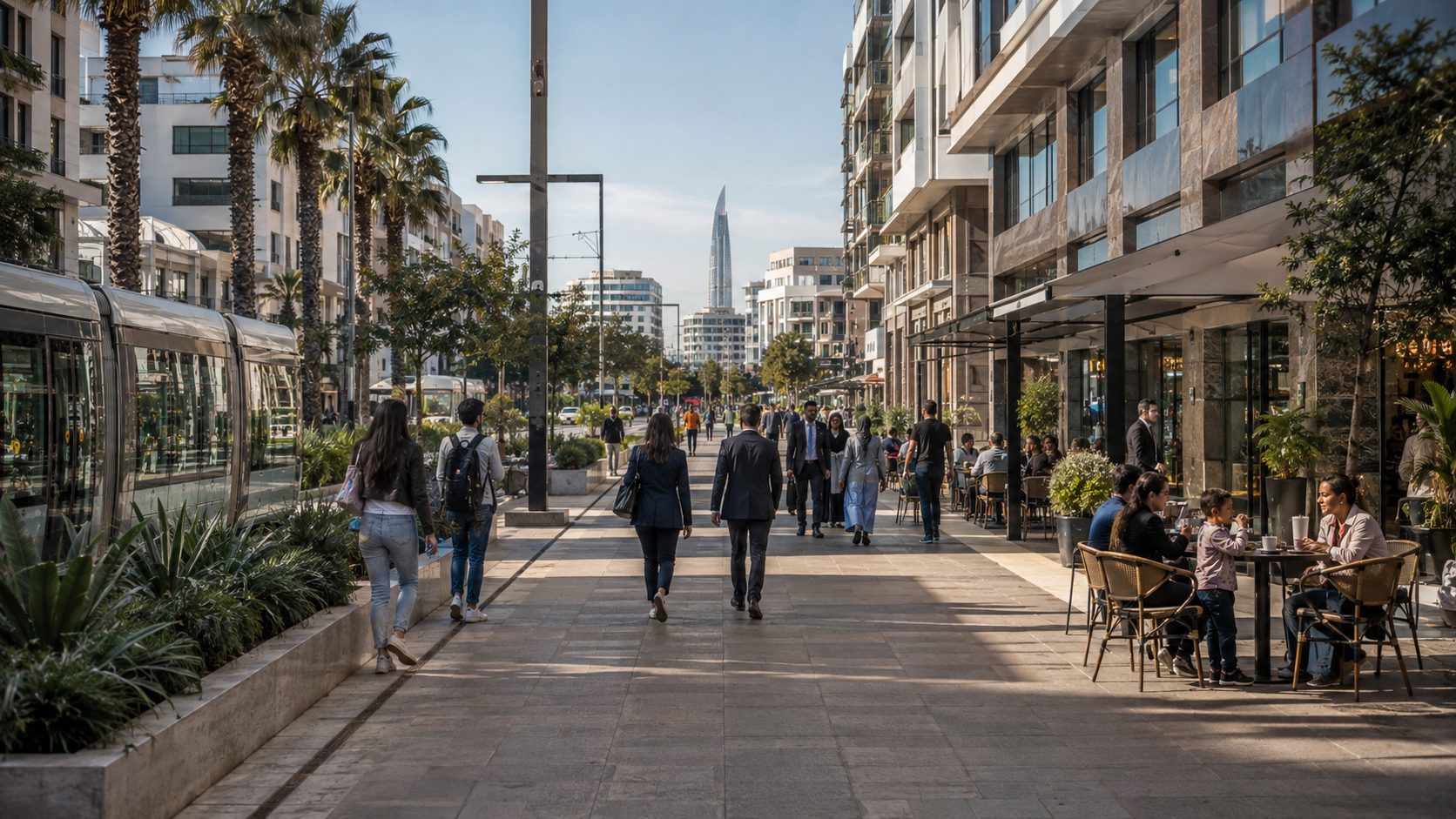
Rabat-Salé-Kenitra captured 14.3% of new business registrations, making it Morocco’s second-largest regional centre for new company creation during the period.
Its consumption profile is different from Casablanca.
Rabat combines government, professional services, education, technology, corporate offices and growing residential development.
Kenitra adds a strong industrial dimension.
This creates several overlapping customer groups.
Public-sector professionals.
Private-sector managers.
Industrial employees.
Students.
Families.
International professionals.
The retail opportunity is therefore not simply opening more stores.
It is adapting formats.
A premium lifestyle concept may work in one district.
A value-led supermarket may work better in another.
Convenience near office clusters has different economics from convenience in residential suburbs.
The national brand remains the same.
The customer mission changes neighbourhood by neighbourhood.
Marrakech Is Becoming More Than Tourism
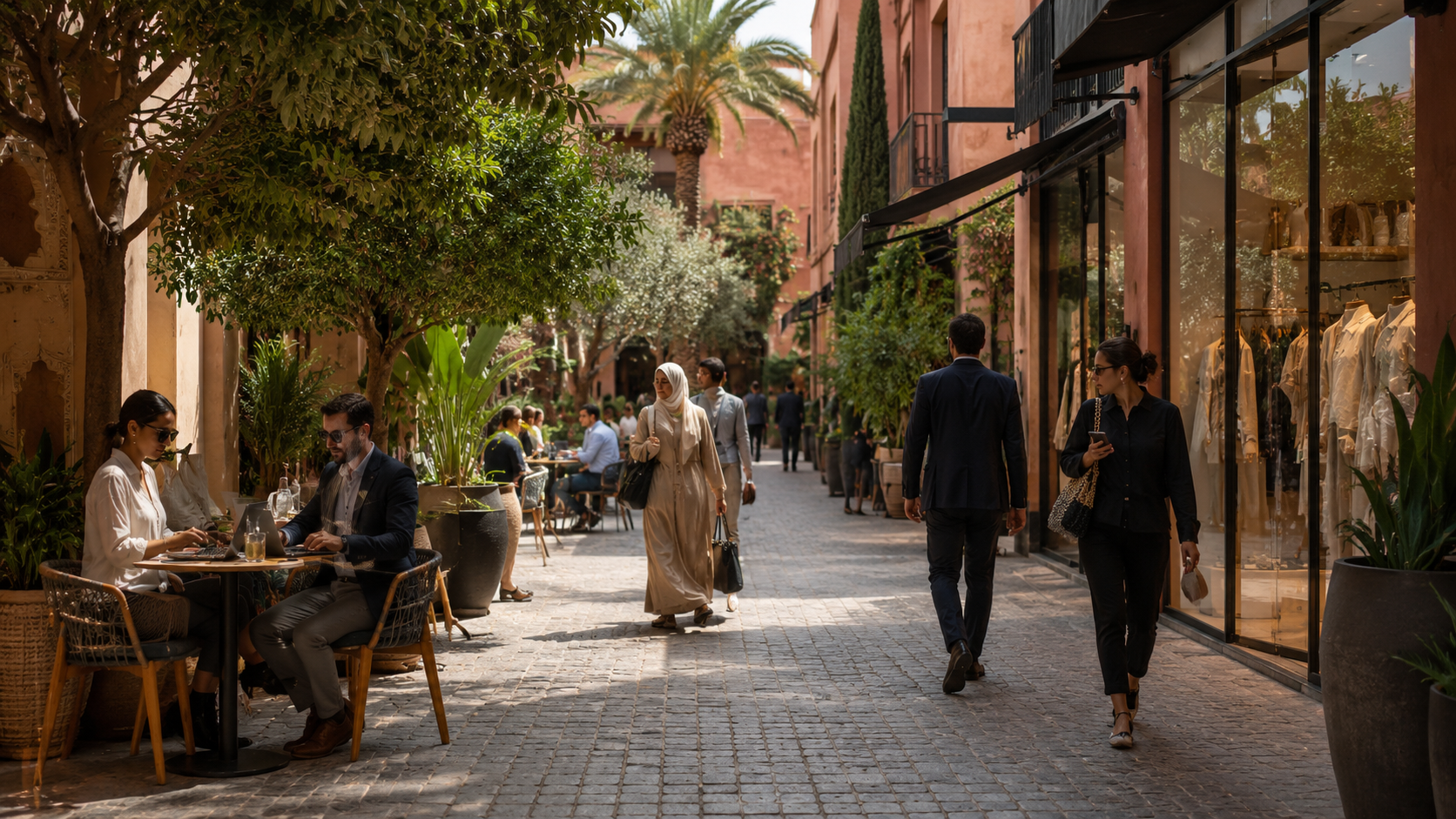
Marrakech-Safi accounted for 12.8% of new businesses.
Marrakech is often viewed primarily through tourism.
That is increasingly incomplete.
A tourism economy this large creates a substantial supporting business ecosystem.
Hospitality suppliers.
Transport.
Construction.
Property services.
Food distribution.
Marketing.
Maintenance.
Wellness.
Retail.
Professional services.
Digital businesses.
The city also attracts residents, entrepreneurs and investors independently of tourism.
That means Marrakech’s consumer economy increasingly has two layers.
Visitors.
Permanent residents.
Retailers able to serve both can create stronger year-round economics.
A business depending entirely on tourists remains exposed to seasonality.
A business serving local residents, professionals and visitors becomes more resilient.
Tangier’s Business Growth Reinforces Its Consumer Story
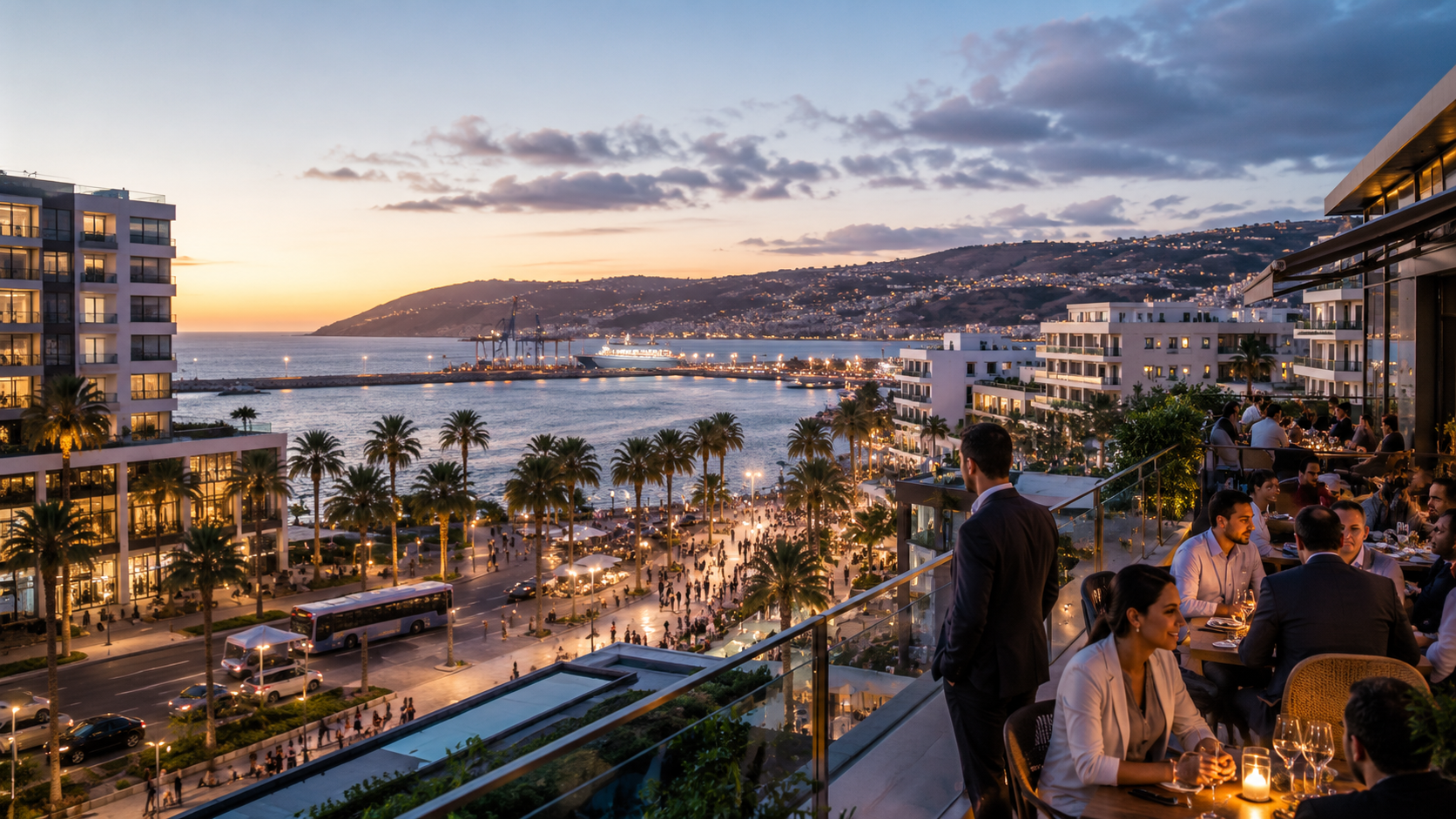
Tangier-Tetouan-Al Hoceima generated 10.4% of newly registered companies, completing the four regions responsible for more than three-quarters of Moroccan business creation.
Tangier is particularly interesting because several economic forces are operating simultaneously.
Industry.
Logistics.
Tourism.
Real estate.
Port activity.
International trade.
Diaspora spending.
The resulting consumer market is very different from a city dependent on one sector.
Industrial employees create daily demand.
Executives create premium demand.
Tourists create seasonal demand.
MRE families create another summer consumption cycle.
Foreign professionals support international formats.
That diversity can make Tangier increasingly attractive to consumer brands that once viewed Casablanca as the only obvious entry point.
Commerce Still Creates The Most Companies
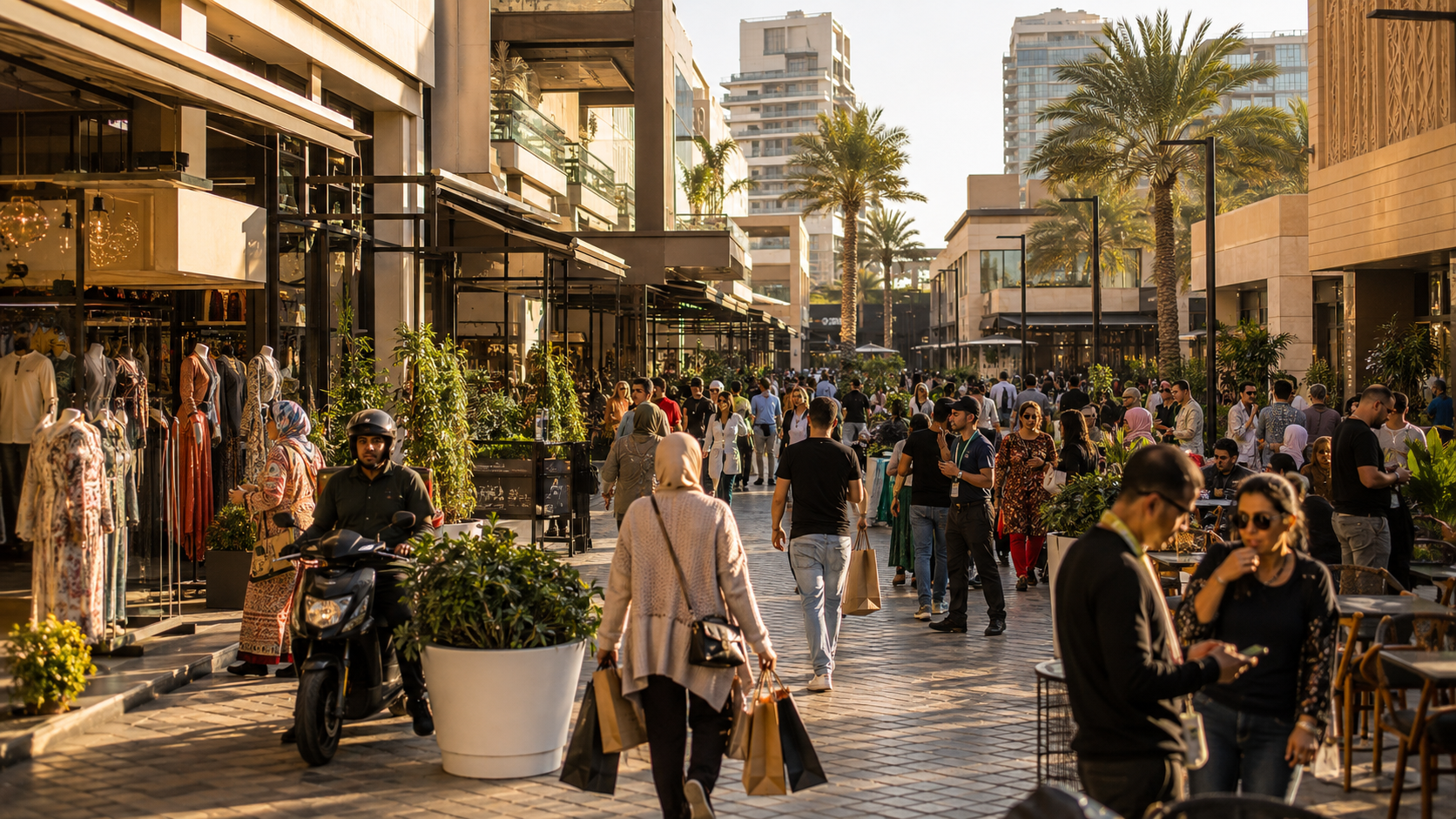
The sector breakdown provides another clue.
Commerce represented 27.6% of new company registrations, the largest share of any sector.
Construction and real estate followed at 25.2%, while services represented 19.6%. Transport accounted for 7.7% and industry for 6.3%.
Commerce leading the ranking is significant.
Moroccans are not only creating factories or technology companies.
They continue creating businesses designed to sell products and services directly into the economy.
That means competition for the Moroccan consumer is increasing.
More sellers.
More formats.
More neighbourhood concepts.
More specialised businesses.
The consumer gains choice.
Companies face greater pressure to differentiate.
Construction Creates Future Retail Demand
The fact that construction and real estate account for more than one-quarter of new businesses should attract particular attention from retailers.
Property development creates retail geography.
A housing project today becomes a consumer district tomorrow.
Thousands of apartments eventually require:
Grocery.
Restaurants.
Pharmacies.
Schools.
Coffee shops.
Fitness.
Furniture.
Home improvement.
Beauty.
Financial services.
Developers and retailers therefore operate on different stages of the same timeline.
The developer sees future residents before the retailer does.
A sophisticated retailer should track construction permits, new residential developments and infrastructure alongside existing footfall.
The best store locations are often identified before the neighbourhood is mature.
Morocco’s Retail Groups Already Understand The Territory Race
The transformation is already visible among Morocco’s largest retail operators.
Retail Holding is preparing a much larger integrated group around the LabelVie businesses, with ambitions reaching 47 billion dirhams in revenue by 2030.
One Retail is pursuing another strategy, combining food retail, beauty, home improvement, cafés and other lifestyle activities.
Its longer-term objectives include 1,000 stores across 65 cities, supported by shared purchasing, logistics and marketing infrastructure.
These groups are not expanding randomly.
They are fighting for geography.
Which neighbourhoods will grow?
Which medium-sized cities are underserved?
Where will income rise?
Where will modern retail habits develop?
Business-creation data can become another input into those decisions.
Small Cities Could Become The Next Surprise
The strongest concentration remains in the major regions.
But consumer companies should avoid assuming Morocco’s future belongs only to Casablanca, Rabat, Marrakech and Tangier.
Modern retail increasingly reaches smaller cities.
As national logistics improve, the economics of serving secondary markets improve too.
A brand no longer needs a full regional distribution system for every city.
Centralised warehouses can serve larger networks.
Digital marketing can create demand nationally.
Standardised store formats reduce opening costs.
That means population centres once considered too small can eventually support modern convenience, beauty, restaurant and lifestyle concepts.
The major regions may generate the largest absolute growth.
Secondary cities may deliver some of the fastest percentage growth.
65 Cities Is A Significant Signal
One Retail’s plan to reach 65 Moroccan cities illustrates how far this logic is moving.
Retail expansion used to concentrate heavily in Morocco’s largest metropolitan areas.
A 65-city strategy assumes something different.
Consumer demand is broad enough geographically to support organised retail far beyond the traditional core.
That has implications for commercial property.
Logistics.
Employment.
Advertising.
Supplier networks.
Local entrepreneurs.
As national chains enter smaller markets, they create more formal competition for traditional independent retailers.
That does not necessarily eliminate the hanout.
It changes its role.
The Hanout Will Remain Important
Traditional commerce still represents roughly 80% of Morocco’s retail market, according to industry estimates cited in analysis of the sector’s current restructuring.
That means modern retail expansion is occurring inside a market where neighbourhood shops remain dominant.
The future is unlikely to be a simple winner-takes-all battle.
Consumers already use several formats.
Hypermarket for larger purchases.
Neighbourhood supermarket for convenience.
Hanout for immediate needs.
Delivery applications for speed.
Specialist stores for particular categories.
Retail competition therefore increasingly concerns share of wallet, not complete ownership of the customer.
The same household can use five different retail channels during one week.
Convenience Is Becoming More Valuable
The more congested cities become, the more valuable proximity becomes.
Consumers do not always want the largest store.
They want the easiest one.
This explains the strategic interest in formats such as Franprix and Monoprix.
H&S Invest’s agreement with Casino provides for 210 stores over ten years, with the first Franprix test location in Casablanca having opened in July 2026.
Convenience retail monetises time.
A customer may willingly pay slightly more for a product when the store saves twenty minutes of travel.
That becomes particularly important in dense business districts and rapidly growing residential neighbourhoods.
The 42,905 new companies help create precisely those zones.
New Businesses Also Create B2B Consumption
Not all consumption is household consumption.
Every new company becomes a customer itself.
Office furniture.
Telecoms.
Banking.
Insurance.
Cleaning.
Catering.
Software.
Delivery.
Printing.
Security.
Professional services.
Vehicles.
Coffee.
Technology.
The creation of 42,905 businesses therefore creates a parallel B2B market.
This is especially interesting for consumer-facing groups with distribution capability.
A retailer may serve households through stores and businesses through wholesale channels.
A restaurant group may provide catering.
A technology company can sell both consumer and SME services.
The line between B2C and B2B becomes increasingly valuable to cross.
Formalisation Creates More Measurable Customers
Another important figure is that 75% of new registrations were legal entities, up from 71% during the equivalent period a year earlier.
The single-shareholder SARL accounted for 65.5% of newly created companies, while standard SARLs represented another 33.6%.
This indicates greater use of formal corporate structures.
Formal companies leave more economic data.
Bank accounts.
Payroll.
Invoices.
Commercial leases.
Credit history.
That makes them easier for financial institutions and service companies to serve.
Formalisation can therefore create a second-order economic effect.
A business becomes visible to the financial system.
The financial system can offer credit.
Credit can finance expansion.
Expansion creates additional consumption and employment.
Business registration becomes the first step in a much larger commercial relationship.
Banks Should Map Business Formation
Banks are obvious beneficiaries.
A newly created company needs an account.
It may later need working-capital financing.
Card terminals.
Payroll services.
Foreign-exchange services.
Trade finance.
Vehicle finance.
Insurance.
Digital payments.
The earlier a bank establishes the relationship, the more services it can potentially provide as the company grows.
Business-formation data therefore has customer-acquisition value.
The same applies to telecom companies.
Every new company requires connectivity.
Mobile lines.
Internet.
Cloud services.
Cybersecurity.
New-business formation is effectively a recurring pipeline of commercial customers.
Restaurants Should Follow Office Density
Food businesses can use similar thinking.
Office districts create predictable lunch demand.
Industrial zones create worker demand.
New residential districts create evening and weekend demand.
Tourist districts create another pattern entirely.
A restaurant concept that works beautifully in central Marrakech may perform poorly beside a Kenitra industrial zone.
The menu may need to change.
Pricing.
Service speed.
Opening hours.
Delivery.
The company-creation map helps reveal where different consumption patterns are emerging.
Location strategy should therefore combine demographic data with business activity.
Population tells you who lives somewhere.
Companies help tell you who spends the day there.
Retailers Need Data Before Concrete
Morocco’s largest retail race is increasingly a race to identify tomorrow’s commercial areas before competitors.
This creates a data advantage.
Business registrations.
Construction.
Residential permits.
Road projects.
Schools.
Industrial parks.
Office developments.
Transport hubs.
A retailer combining these signals can forecast where demand is likely to rise before conventional footfall data confirms it.
Once footfall becomes obvious, property prices usually rise and competitors have already noticed.
The economic value lies in seeing the neighbourhood early.
Data therefore becomes part of location strategy.
New Companies Can Change Property Values
Commercial property follows economic activity.
A neighbourhood attracting offices creates demand for retail units.
Restaurants compete for ground-floor space.
Banks open branches.
Service businesses enter.
Rents rise.
Residential property can also become more attractive when employment grows nearby.
This is why business creation matters to property investors.
The value of a building is influenced partly by what happens around it.
A district with growing business density can produce stronger rental demand than one with identical buildings but little economic activity.
The consumer city and the property city are the same system viewed from different sides.
Casablanca Will Not Lose Leadership Soon
The data still shows an enormous gap.
At 39.3% of new company creation, Casablanca-Settat remains far ahead of every other region.
That matters to brands entering Morocco.
Casablanca will remain the most logical test market for many concepts.
Largest business concentration.
Large population.
High purchasing power.
Corporate headquarters.
Commercial property.
International connectivity.
But national growth no longer means simply opening twenty Casablanca locations.
The real expansion opportunity comes after product-market fit is established.
Can the concept work in Rabat?
Tangier?
Marrakech?
Kenitra?
Agadir?
Fez?
Smaller regional cities?
That is where networks become national businesses.
Morocco Is Building Consumer Platforms, Not Just Stores
The biggest retail groups increasingly understand this.
Retail Holding is integrating food retail, property, international franchises and additional activities into a larger listed structure.
One Retail is combining brands across groceries, beauty, home improvement, cafés and lifestyle while sharing logistics and corporate infrastructure.
This is the platform model.
One customer can interact with the same corporate ecosystem several times during a week without necessarily realising it.
Coffee.
Beauty.
Groceries.
Home improvement.
Restaurant.
Each interaction produces revenue.
Potential loyalty and data integration can deepen the relationship further.
Morocco’s consumer economy is therefore becoming more organised at precisely the same time that new businesses and new urban districts are expanding demand.
42,905 Businesses Tell A Bigger Story
Morocco’s 42,905 new businesses in five months are important because entrepreneurship matters.
But the number also functions as an economic map.
Casablanca-Settat: 39.3%.
Rabat-Salé-Kenitra: 14.3%.
Marrakech-Safi: 12.8%.
Tangier-Tetouan-Al Hoceima: 10.4%.
Together: 76.8%.
Those regions are not merely creating companies.
They are accumulating workers, offices, construction, purchasing power and commercial activity.
That means tomorrow’s Moroccan consumer market is being built alongside tomorrow’s corporate market.
Retail groups should watch it.
Property developers should watch it.
Restaurants should watch it.
Banks should watch it.
Consumer brands should watch it.
Because in the next phase of Moroccan growth, one of the most valuable questions will not simply be:
Where are the consumers today?
It will be:
Where is enough economic activity forming today to create the consumers of tomorrow?
The 42,905 businesses registered in early 2026 are already giving part of the answer.
 Jamal Mahdad, Founder & Editor-in-Chief