

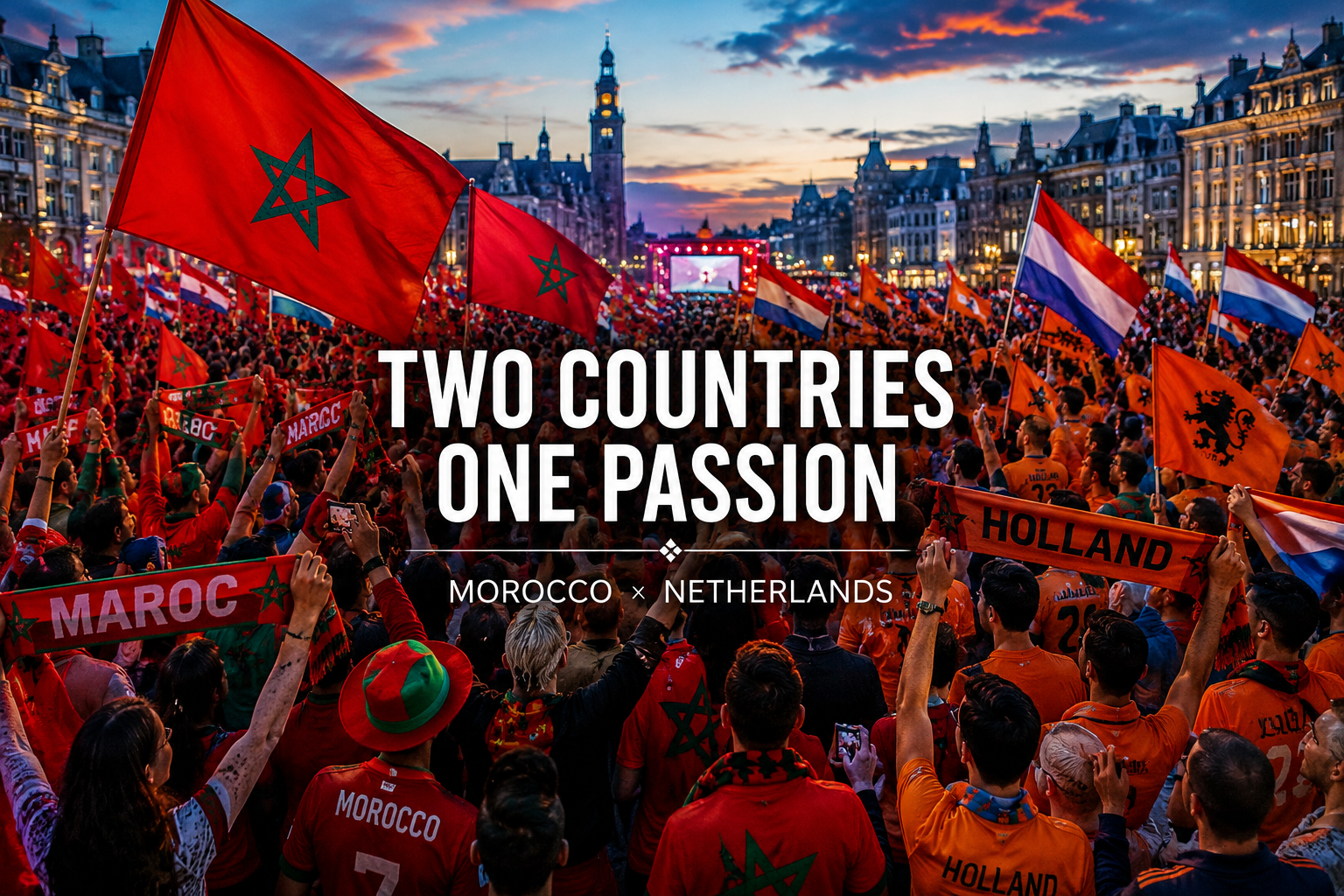
Dutch-Moroccans are at the centre of one of the World Cup’s most emotional knockout stories. Morocco against the Netherlands is officially a Round of 32 match in Monterrey. But for hundreds of thousands of people with Moroccan roots in the Netherlands, it is much more than a football fixture — it is family history, migration memory and identity on a scoreboard.
Europe’s Moroccan Community: The 430,000 Story
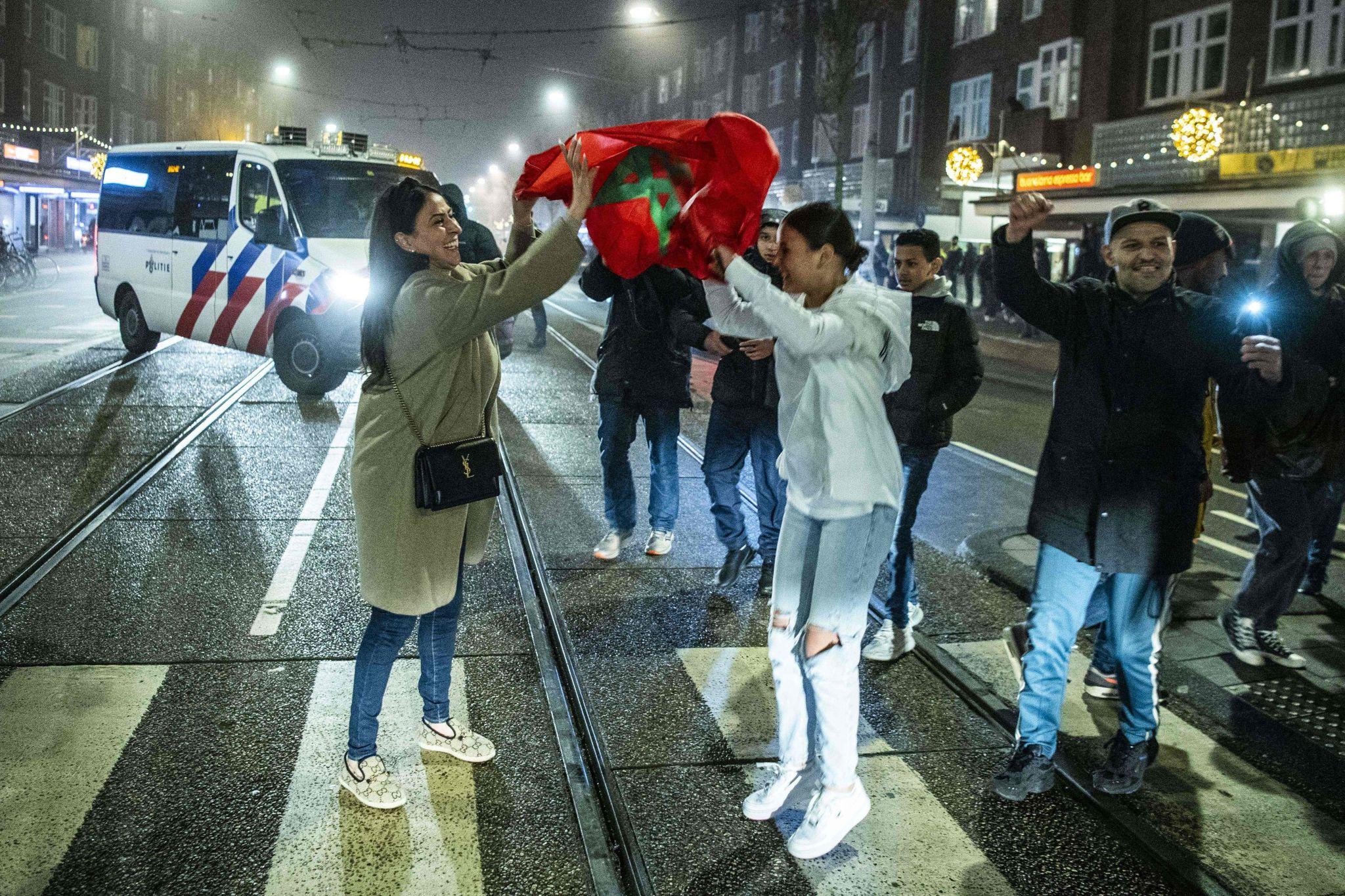
Reuters reported that the Moroccan community in the Netherlands was estimated at about 430,000 people. That number gives the story real weight. This is not a small niche of fans watching a distant match — it is one of Europe’s most visible diaspora communities facing a football moment that reaches directly into family life: Amsterdam, Rotterdam, Utrecht, The Hague, Eindhoven, Tilburg. The Guardian highlighted that Moroccan migration to the Netherlands began from the 1960s, when families moved for work, stability and opportunity. Over generations, they built homes, businesses, families and communities in Dutch society while keeping cultural ties to Morocco. The result is a generation that may feel Dutch in daily life and Moroccan in memory, family and emotion. The match makes that identity visible to the world.
From Dutch Streets To Atlas Lions
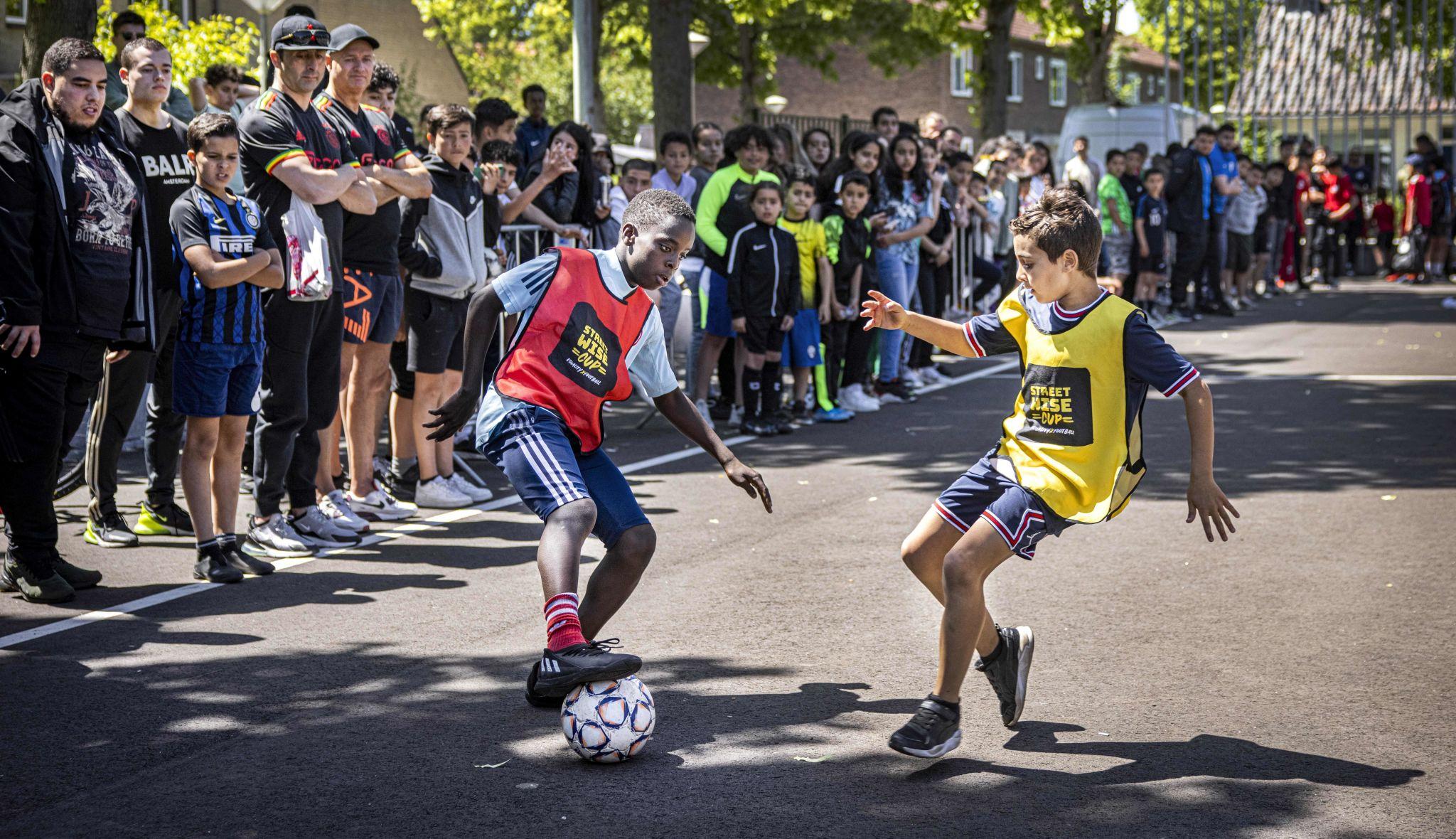
The player connections make the match even stronger. Reuters reported that Morocco have Dutch-born players in their squad and that Ismael Saibari, Morocco’s top scorer at the tournament, plays for PSV Eindhoven. The Guardian pointed to Moroccan players such as Noussair Mazraoui, Sofyan Amrabat and Anass Salah-Eddine, who were born and raised in the Netherlands. These are not distant football systems — they are connected through academies, neighbourhood pitches, club pathways and family decisions. A player can grow in Dutch football and still choose Morocco. Morocco’s 2022 semi-final run changed how young dual-national players view that choice: representing Morocco is now both a cultural decision and a competitive one. The Atlas Lions are not asking for sympathy. They are challenging a European giant.
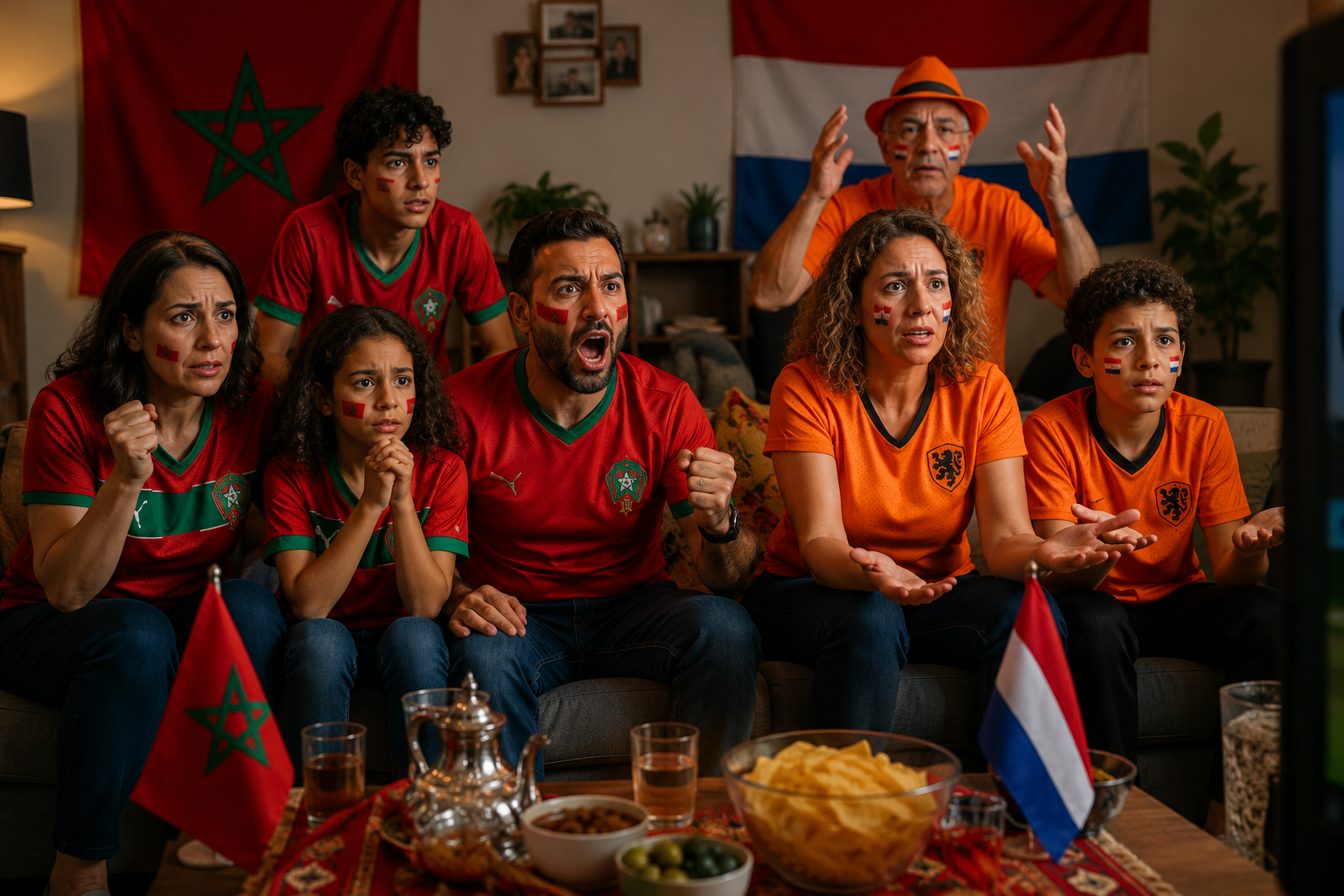
Dutch-Moroccan Family Split: The Emotional Layer
The Guardian described the match through the idea of street football on the world stage — many Dutch-Moroccan players grew up playing in Dutch neighbourhoods, street cages, local clubs and youth academies before reaching elite football. Their style and identity are shaped by more than one environment: the street, the academy, the family, the national team, the diaspora. The match becomes a mirror of modern European football. When Morocco face the Netherlands, those layers appear together. The Guardian also reported that concerns existed around political tension and inflammatory rhetoric from far-right groups in the Netherlands before the game. That context should not dominate the story, but it cannot be ignored. Football identity can be beautiful when it brings people together and dangerous when used to divide. The strongest version of this match is one where Dutch-Moroccans can celebrate pride without being treated as a problem.
One Match Across Continents: The Global Meaning
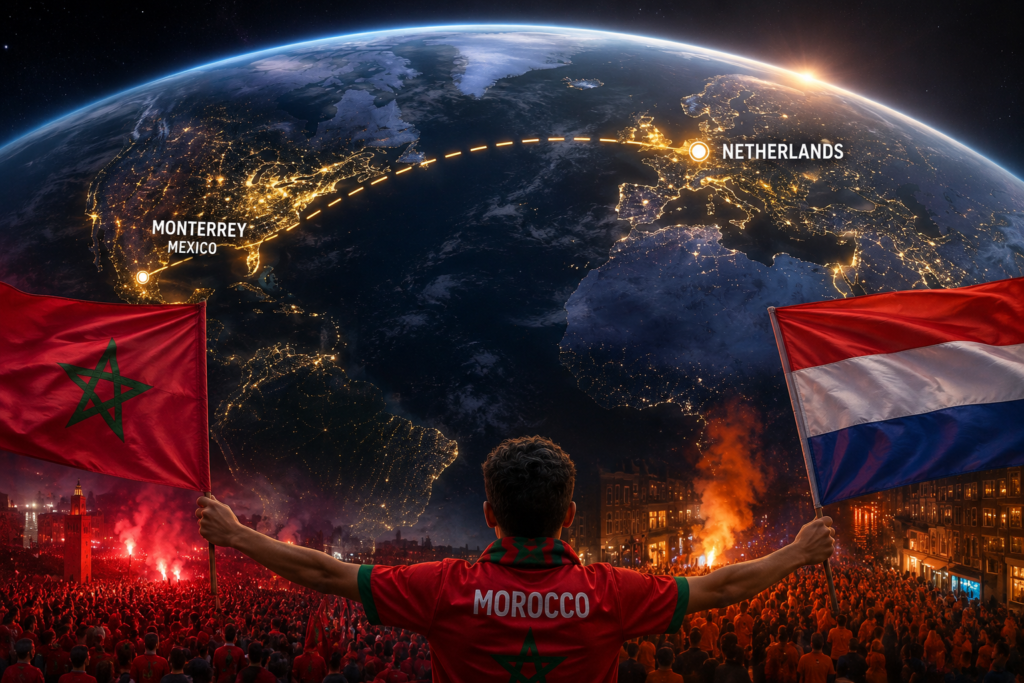
This match can attract global attention because it speaks to many communities beyond Morocco and the Netherlands. Turkish-Germans understand it. Algerians in France understand it. South Asians in England understand it. Mexicans in the United States understand it. Diaspora communities around the world understand what it means to watch two parts of your life meet on a football pitch. That is why this story travels — it is local and universal at the same time. For Morocco, the match is also a soft power moment: the Atlas Lions show a Morocco that is competitive, emotional, multicultural, ambitious and connected to its diaspora. The bracket gives the story a sporting destination — Canada await the winner in the last 16 — meaning a Morocco win would extend the dream and create another massive wave of diaspora celebration. The ball is the trigger. The story is global.