
Forget the old idea that Morocco sits quietly between Europe and Africa.
Right now, the country is moving into a much bigger global spotlight.
With the 2030 FIFA World Cup, record 19.8 million tourist arrivals, airport capacity plans reaching 80 million passengers, and cities like Casablanca, Marrakech, Tangier and Rabat getting more international attention, Moroccois no longer just a destination.
It is becoming a global story.
The 2030 World Cup Changed The Conversation
The biggest symbol is obvious.
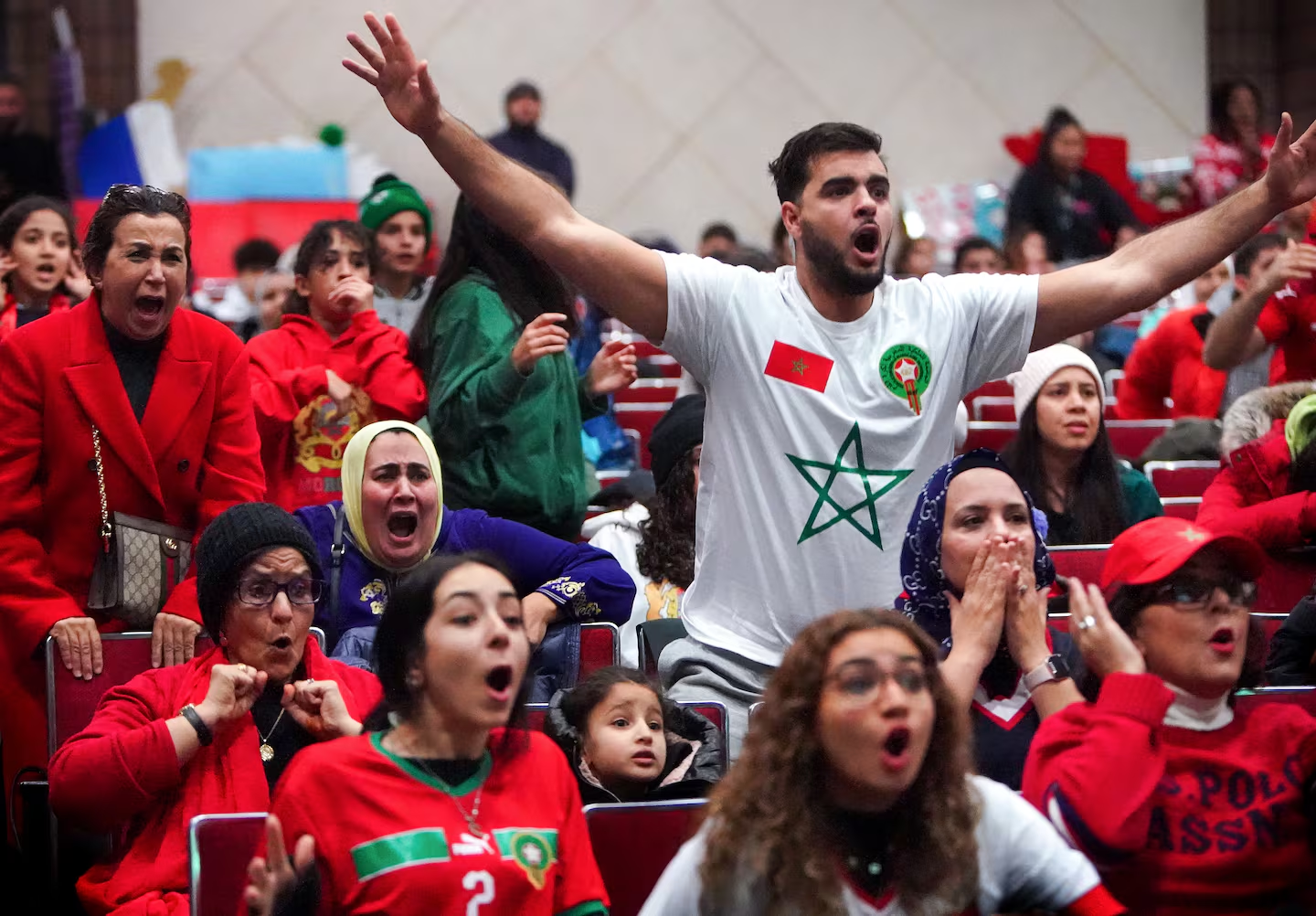
Morocco will co-host the 2030 FIFA World Cup with Spain and Portugal.
That is not just a sporting event.
That is a global stage.
For decades, the World Cup has been one of the most watched events on Earth. Now Morocco will stand beside two major European football nations and help host it.
That changes perception fast.
It tells the world that Morocco is not on the edge of the football map.
It is in the middle of it.
Africa And Europe Meet In One Country
Part of Morocco’s power is geography.
The country sits at the meeting point of Africa, Europe, the Atlantic Ocean and the Mediterranean Sea.
That is not just beautiful on a map.
It is strategic.
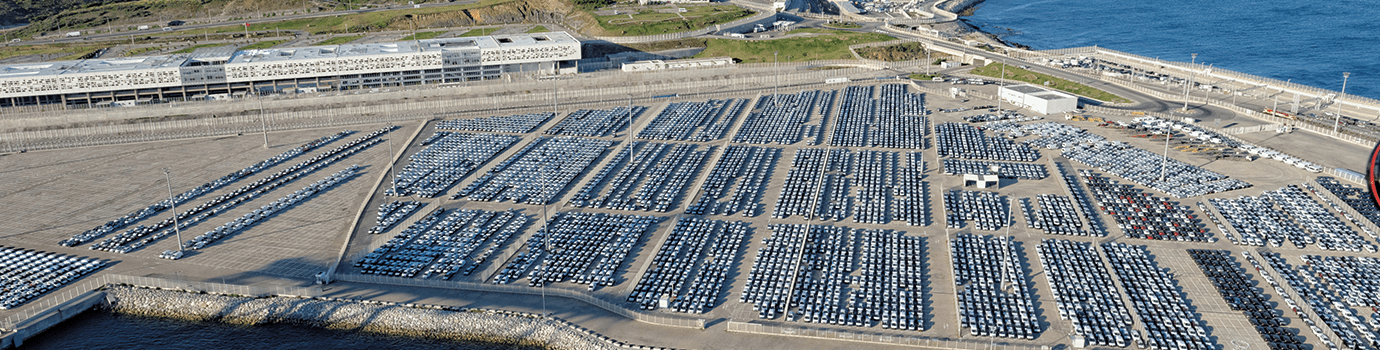
Tangier faces Spain across the Strait of Gibraltar.
Casablanca connects business, aviation and finance.
Marrakech sells global tourism glamour.
Rabat gives the country diplomatic weight.
Few countries can tell so many stories at once.
That is why Morocco feels bigger than its borders.
Tourism Is Becoming A Global Engine
The tourism numbers are no longer small.
Morocco welcomed a record 19.8 million tourists in 2025, up 14% from the year before.
That is a major signal.
Travellers are not only visiting Marrakech for a weekend anymore.
They are looking at Tangier, Agadir, Essaouira, Chefchaouen, Fez and the desert.
The country is turning into a multi-city travel machine.
And when millions of tourists return home with photos, stories and videos, they become free marketing for Morocco.
Airports Show The Size Of The Ambition
The airport plan says a lot.
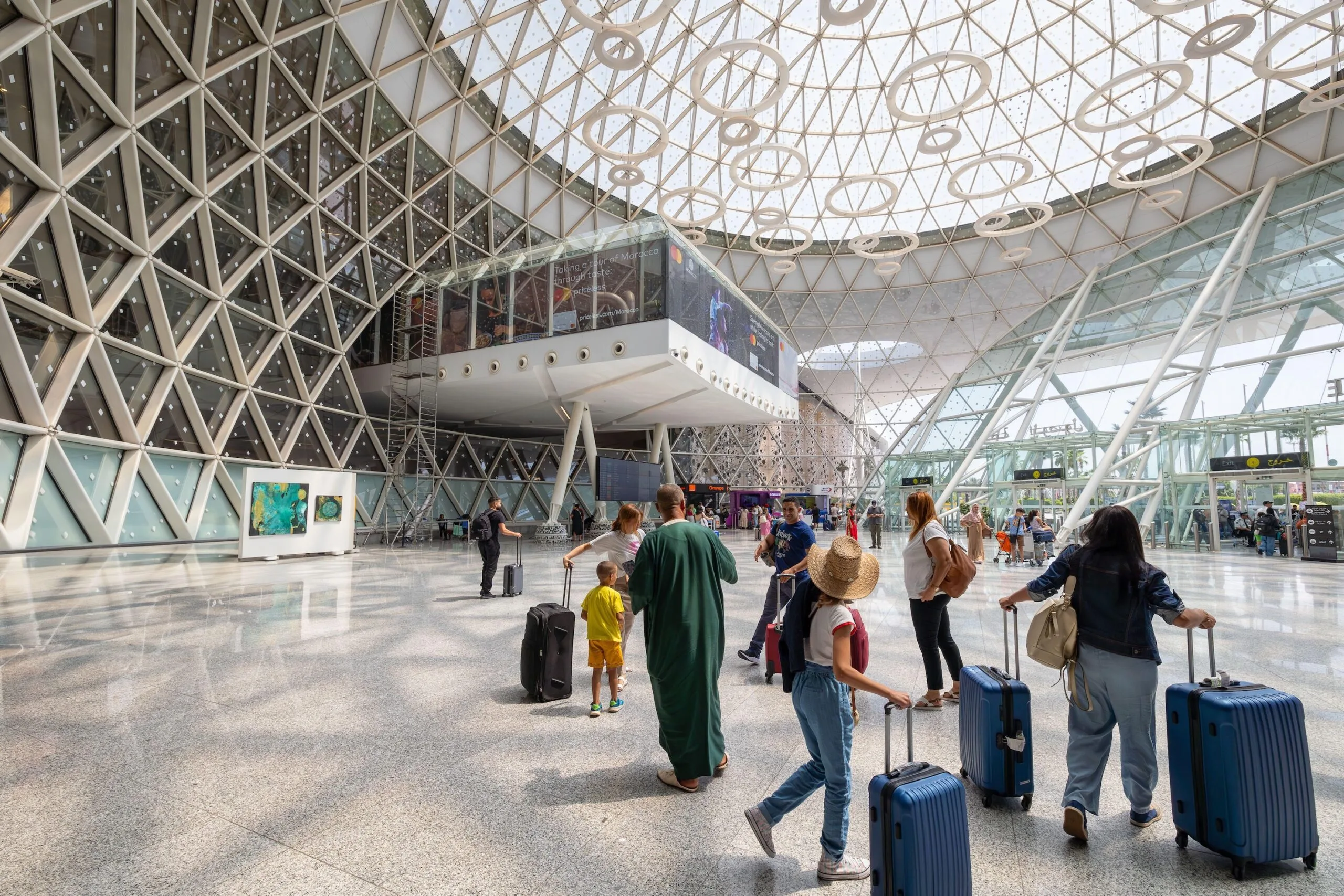
Morocco wants to expand airport capacity from 38 million passengers to 80 million by 2030.
That is not a small upgrade.
That is more than double.
For a country preparing for the 2030 World Cup, this matters because visibility needs access.
More flights.
More terminals.
More arrivals.
More hotel nights.
More business.
A country cannot become a global hub if people cannot reach it easily.
Morocco clearly understands that.
Casablanca Still Carries The Business Weight
Every rising country needs a serious economic engine.
For Morocco, that engine is Casablanca.
It is busy, commercial, crowded and ambitious.
Banks, companies, ports, headquarters, hotels, real estate projects and offices all give Casablanca a different kind of global role.
It may not have the postcard magic of Marrakech.
But it has money movement.
And for the world, that matters.
Tourists may dream of the medina.
Investors watch the business capital.
Tangier Is The Symbol Of A New Morocco
If Casablanca is business, Tangier is momentum.
The city feels like a bridge between continents.
It has sea views, port energy, modern districts, old cafés, European links and a growing international image.
For visitors from Spain, France, Belgium and the Netherlands, Tangier feels close but different.
That is powerful.
It gives Morocco a northern gateway with serious emotional and economic value.
Some cities look finished.
Tangier feels like it is still rising.
Marrakech Gives Morocco Its Global Image
Then there is Marrakech.
This is the city the world already knows.
Red walls, luxury riads, palm trees, rooftop restaurants, souks, gardens and celebrity-friendly hotels have turned Marrakech into one of Africa’s strongest city brands.
For global travellers, Marrakech often works as the first Moroccan fantasy.
They see it.
They book it.
They post it.
Then they start discovering the rest of the country.
That is why Marrakech remains so valuable.
It is the door that millions of visitors walk through first.
The Diaspora Makes Morocco Global Every Day
Morocco’s global rise is not only about airports and football.
It is also about people.
Millions of Moroccans and Moroccan-origin families live across France, Spain, Belgium, the Netherlands, Italy, Germany and the United Kingdom.
They carry the country with them.
In food, football, music, business, language and summer travel, the diaspora keeps Morocco visible every day.
That gives the country a global network no marketing campaign could ever buy.
The World Cup Will Turn Up The Volume
The 2030 World Cup will not create Morocco’s global rise by itself.
That rise is already happening.
But the tournament will turn up the volume.
More cameras.
More journalists.
More tourists.
More investors.
More flights.
More online searches.
For a few weeks, the world will not just hear about Morocco.
It will look directly at it.
That kind of attention can change a country’s image for years.
The Final Whistle
Morocco is entering a new global moment.
With the 2030 FIFA World Cup, record 19.8 million tourism arrivals, airport capacity plans reaching 80 million passengers, and cities like Casablanca, Tangier, Marrakech and Rabat all playing different roles, the country is no longer waiting to be noticed.
It is already being watched.
And for millions of Moroccans at home and abroad, that is more than a news story.
It is a reason to feel proud.