
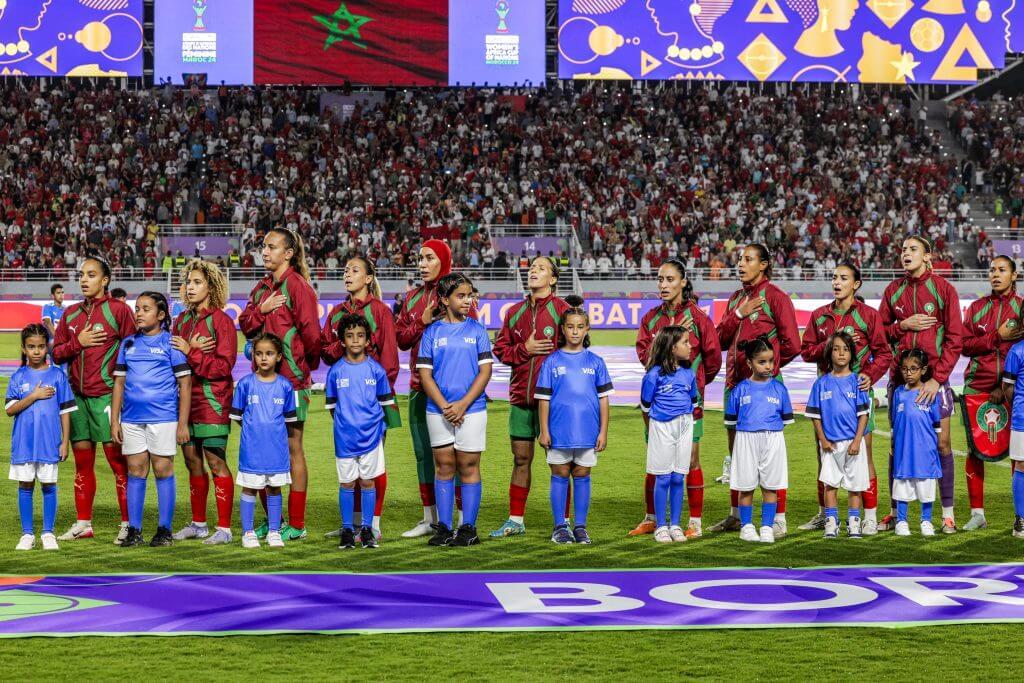
Morocco’s football summer is not over.
It has simply changed gender.
After weeks of global attention around the men’s game, the Kingdom now becomes the stage for one of Africa’s most important sporting tests: the Women’s Africa Cup of Nations.
This is the Lionesses Moment.
Not only for the Moroccan national team.
For women’s football.
For African sport.
For Moroccan stadium culture.
For sponsors, broadcasters, families, young girls and a country that increasingly wants to be seen as a serious football nation at every level.
The question is no longer whether Morocco can host football.
The question is whether Morocco can turn women’s football into a true national event.
Lionesses Moment Arrives At Home
The Lionesses Moment matters because playing at home changes everything.
A tournament abroad is pressure.
A tournament at home is exposure.
Every pass, mistake, result, empty seat, full stand, television image and public reaction becomes part of a bigger story. Morocco’s women are not only representing themselves on the pitch. They are representing the idea that women’s football can belong at the centre of Moroccan sporting life.
CAF’s schedule places the tournament in Morocco from 26 July to 16 August, with the final set for Rabat.
That gives Morocco a full national window.
Three weeks to show organisation.
Three weeks to show crowds.
Three weeks to show whether the women’s game can move beyond respect and into habit.
Home Advantage Can Become Home Burden
Home support is powerful.
It can lift players when legs are heavy. It can intimidate opponents. It can give young athletes the feeling that an entire country is behind them.
But home support also brings expectation.
The Moroccan women are not entering this tournament as outsiders. They are entering as hosts, as one of Africa’s most visible teams, and as a side with growing international recognition.
That changes the emotional equation.
A brave performance may not be enough.
The public will want results.
The players will feel that.
The technical staff will feel that.
And every opponent will know that Morocco carries the weight of the stadium.
Women’s Football Moves Into Prime Time
The strongest part of this tournament is not only the matches.
It is the visibility.
Women’s football in Africa has often lived in the shadow of the men’s game, despite producing elite players, dramatic tournaments and passionate national teams. WAFCON 2026 arrives at a moment when women’s sport globally is becoming more commercial, more visible and more professionally organised.
Morocco now sits inside that shift.
A strong tournament can help normalise women’s football on television, in cafés, in family conversations and on social media. It can make the women’s national team feel less like a special occasion and more like a permanent part of Moroccan football culture.
That would be a major step.
Morocco Must Fill The Stadium Story
A tournament is judged partly by football.
It is also judged by atmosphere.
Images matter.
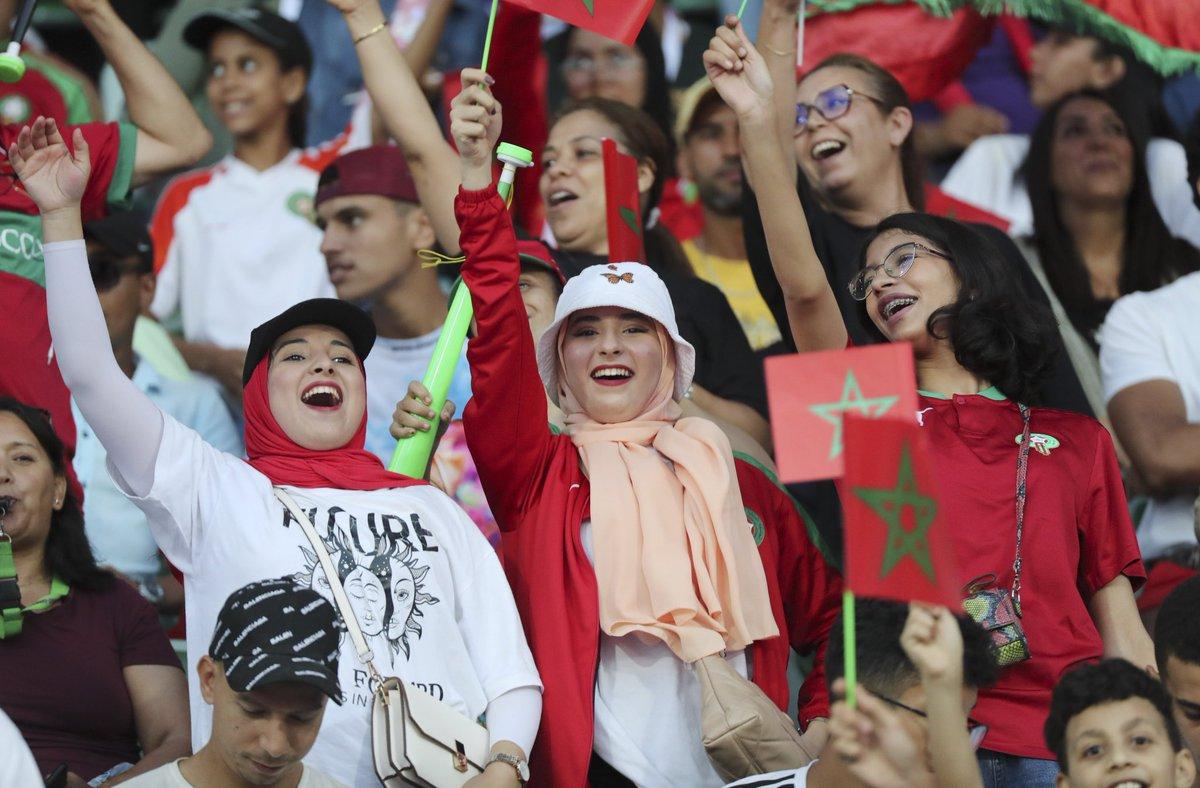
A packed stand tells the world that the event matters.
A half-empty stadium tells a weaker story, even if the football is good.
This is one of Morocco’s biggest tests.
The country has passionate football fans, but the women’s game needs its own audience-building strategy. Families, schools, clubs, women’s groups, youth academies and local communities should feel invited into the event.
Tickets must be accessible.
Transport must work.
Match timing must support attendance.
The atmosphere must feel safe and welcoming.
Women’s football does not grow only because players perform.
It grows because people show up.
The Young Girl In The Stand Is The Real Audience
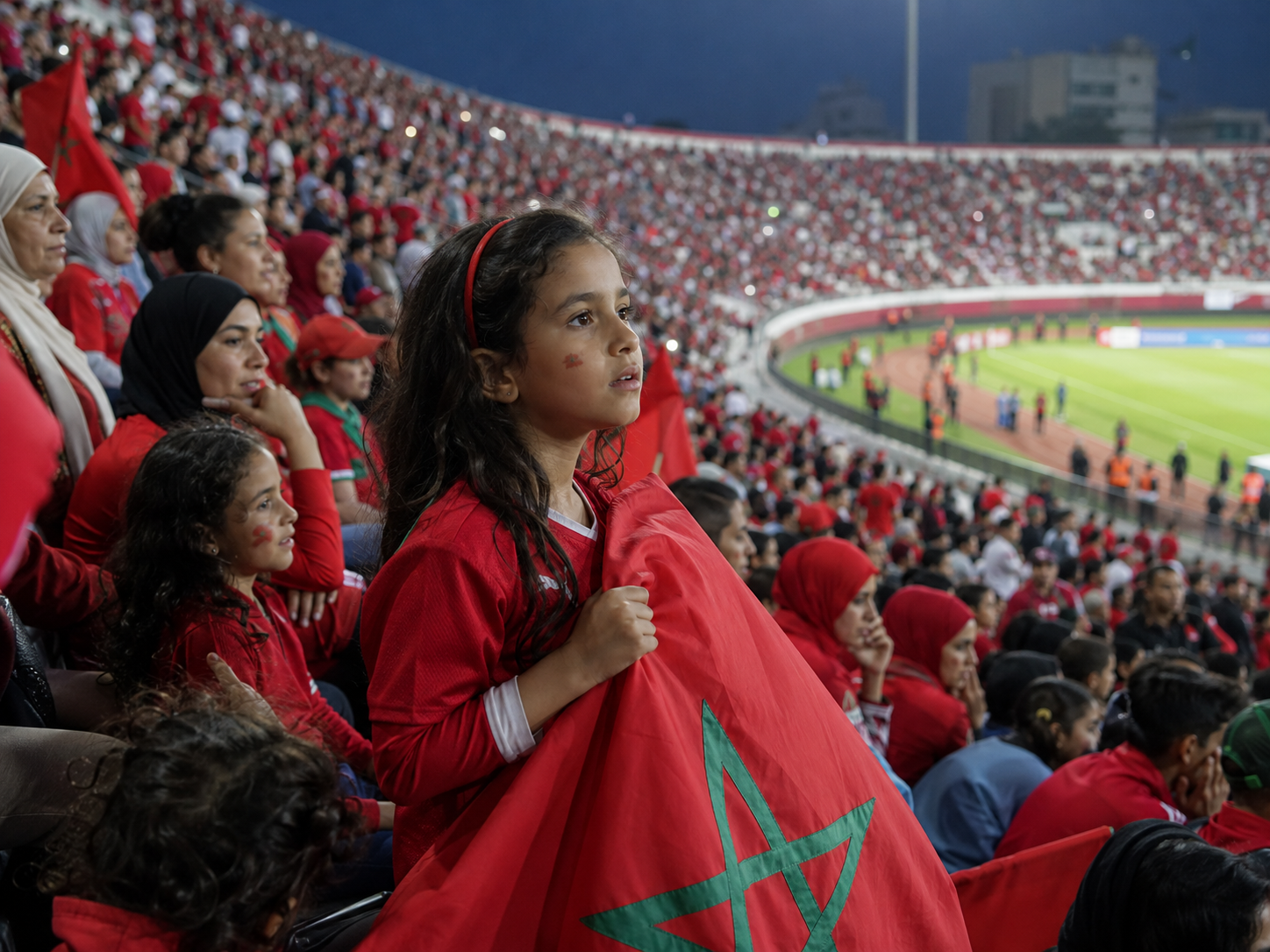
The most important spectator may not be the analyst, the journalist or the federation official.
It may be the young Moroccan girl watching from the stand or the television at home.
She sees women wearing the national shirt.
She sees them celebrated.
She sees a stadium reacting to them.
She sees that football is not only for boys.
That image can change ambition.
It can push families to accept daughters playing sport. It can encourage clubs to build better girls’ sections. It can make schools take female sport more seriously.
A tournament can create memories.
Memories can create participation.
Participation can create the next generation.
That is the real legacy.
The Expansion To 16 Teams Raises The Stakes
The 2026 edition carries additional weight because the tournament has expanded to 16 teams, according to The Guardian’s preview.
That expansion matters.
More teams means more matches, more countries, more players, more fan bases and more storylines. It gives African women’s football a larger stage, but it also raises organisational demands.
More teams require better logistics.
More matches require better scheduling.
More media attention requires stronger communication.
More visibility requires higher standards.
For Morocco, hosting an expanded tournament is an opportunity to show capacity beyond one national-team campaign.
It is a continental hosting test.
Africa’s Stars Need A Bigger Market
WAFCON is also a shop window.
African women’s football has produced players capable of performing in major leagues and global competitions, but the market remains uneven. Many players still fight for better contracts, facilities, medical support, coaching and visibility.
This tournament can help.
A strong WAFCON gives players footage, reputation and bargaining power. Clubs abroad watch. Agents watch. Sponsors watch. Media platforms watch.
For Morocco, this matters because the Kingdom wants to be seen as a football hub.
A true hub does not only host men’s football.
It supports the full talent economy.
The Moroccan Team Carries A Dual Message
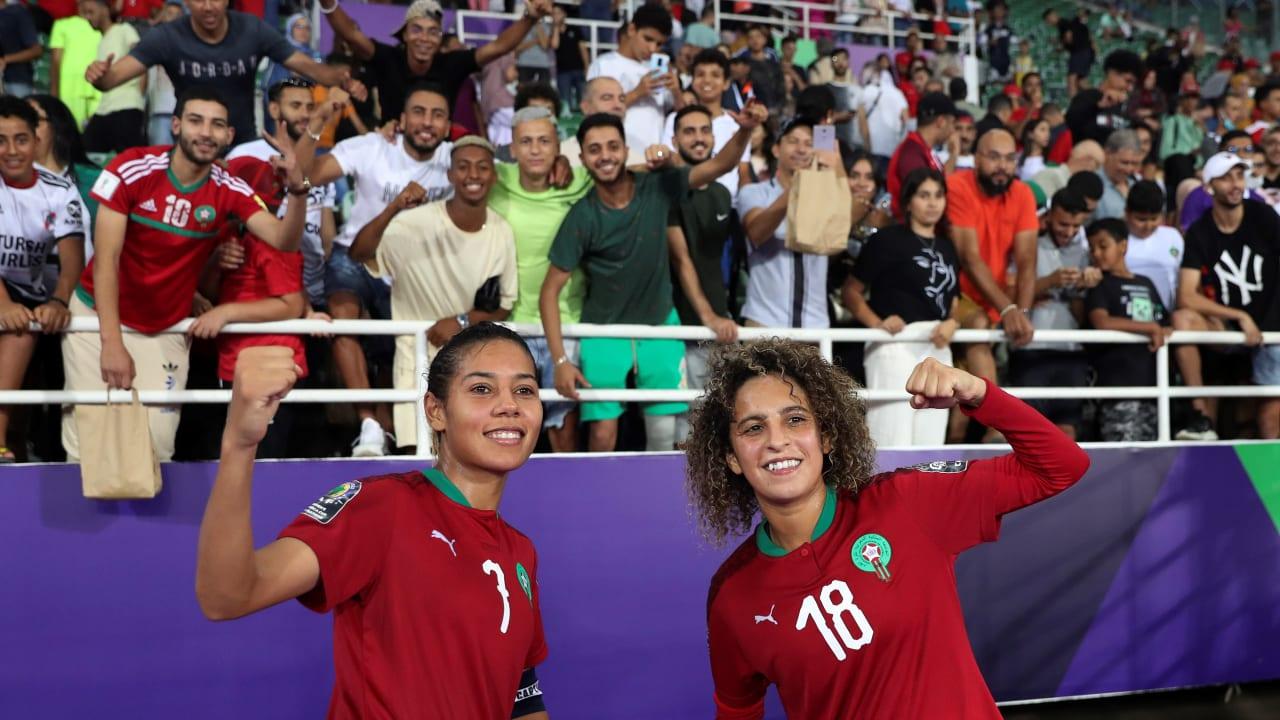
The Moroccan women’s national team carries two messages at once.
The first is sporting.
Can Morocco compete with Africa’s best?
Can the team handle pressure?
Can it reach the final stages?
Can it turn home advantage into performance?
The second is social.
Can the team shift perception?
Can it make women’s football feel mainstream?
Can it inspire more girls to enter the game?
Can it make sponsors and broadcasters treat the product seriously?
Both messages matter.
A good run helps the sport.
A poor run would not destroy the project, but it would make the conversation harder.
Winning changes attention.
Attention changes investment.
Nigeria, South Africa And Zambia Raise The Level
Morocco is not entering an easy tournament.
African women’s football has serious competitive depth. Nigeria remains a historic power. South Africa has recent tournament credibility. Zambia brings elite attacking threat. Several other teams arrive with players who can hurt opponents quickly.
Al Jazeera’s tournament preview points to major African stars such as Zambia’s Barbra Banda and Nigeria’s Rasheedat Ajibade, while also highlighting Morocco’s Ghizlane Chebbak as one of the key figures.
That is the reality.
Morocco may host the tournament.
But it does not control the tournament.
On the pitch, reputation must be earned again.
Chebbak Represents Experience And Pressure
Ghizlane Chebbak is more than a player.
She is one of the faces of Moroccan women’s football.
Her role matters because experienced players often carry home tournaments emotionally. They understand the shirt. They understand the fans. They understand how quickly pressure can turn into noise.
For Morocco, leadership will be crucial.
The team will need calm when matches become tense. It will need maturity if early chances are missed. It will need emotional control if the stadium becomes nervous.
Home tournaments are rarely smooth.
The teams that survive them usually have leaders who can slow the heartbeat.
The Federation’s Work Faces A Public Test
A tournament like this also reflects on the federation.
For years, Morocco has invested heavily in football infrastructure, coaching, academies and hosting capacity. Women’s football must now show that it is part of that strategy, not an accessory.
The tournament will test organisation, preparation, player pathways, communication and public engagement.
If Morocco performs well on and off the pitch, the federation can argue that its women’s football project is gaining credibility.
If the event feels underpromoted or underattended, questions will follow.
Investment must be visible.
Not only in facilities.
In culture.
Sponsors Should Pay Attention
This is a major opportunity for Moroccan and African brands.
Women’s football is still underpriced compared with its growth potential. Brands that enter early can build long-term association with a sport that is becoming more visible, family-friendly and emotionally powerful.
Banks, telecoms, airlines, food brands, sportswear companies, schools, media platforms and health brands all have reasons to connect with the tournament.
But sponsorship must be serious.
Not token visibility.
Not one campaign and silence.
The women’s game needs partners who understand that building audience takes consistency.
A viral moment helps.
A long-term sponsor builds the market.
Media Has A Responsibility
Media coverage will shape public perception.
If outlets treat WAFCON as a minor event, the audience may do the same. If they cover it with seriousness, storytelling and tactical respect, the audience learns to value it.
The coverage should not only say “women’s football is important.”
It should prove it through quality.
Profiles.
Analysis.
Match previews.
Player stories.
Business angles.
Crowd culture.
Youth development.
Broadcast data.
Sponsor interest.
The tournament deserves more than ceremonial praise.
It deserves journalism.
That is where MTD can stand out.
Morocco’s Football Identity Is Expanding
Morocco’s modern football identity is no longer built around one team or one tournament.
The men’s World Cup run created global respect.
Club football continues to carry continental weight.
Youth development is under attention.
The women’s national team now adds another layer.
This matters because a serious football nation cannot depend only on one golden generation. It must build across categories, genders, age groups and competitions.
The best football countries produce culture, not moments.
Morocco is trying to move in that direction.
WAFCON is part of that journey.
The International Audience Is Watching Differently
The timing helps.
The Guardian notes that WAFCON begins shortly after the men’s World Cup final, giving football audiences another major competition before European leagues fully return.
That gives WAFCON a chance to catch attention beyond Africa.
Global football fans are still in tournament mode. Broadcasters need content. Social media is ready for clips, goals and stories. Scouts are watching. Diaspora audiences are engaged.
Morocco can benefit from that timing.
But only if the tournament feels alive.
The football must be good.
The production must be strong.
The atmosphere must travel through screens.
Home Pressure Can Produce A Stronger Team
Pressure is not always bad.
A team that learns to play under national expectation becomes more mature. A player who handles a home crowd learns something that training cannot teach. A coach who navigates emotional pressure gains tournament knowledge.
For Morocco, this experience may matter beyond 2026.
Even if the tournament brings difficult moments, the team will grow through them.
The next step for Moroccan women’s football is not only one trophy.
It is building a team that can return to major competitions with confidence, depth and professional standards.
Pressure can expose weaknesses.
It can also accelerate growth.
The Risk Is Turning The Moment Into A Slogan
Morocco must avoid empty celebration.
Saying “women’s football matters” is easy.
Building women’s football is harder.
It requires youth leagues, coaching, medical support, facilities, salaries, travel budgets, club structures, school access and media visibility. It requires patience after the tournament ends.
The danger is that the event becomes a beautiful three-week campaign, then attention fades.
That would waste the opportunity.
The tournament should be a launchpad, not a temporary spotlight.
The real test begins after the final.
The Bottom Line
The Lionesses Moment is one of Morocco’s biggest sporting opportunities of 2026.
WAFCON 2026 runs in Morocco from 26 July to 16 August, with an expanded 16-team format and a Rabat final. The tournament begins just after the men’s World Cup, giving African women’s football a valuable global window.
For Morocco, this is more than hosting.
It is a national test.
Can the country build crowds?
Can the women’s team handle pressure?
Can sponsors and media treat the tournament seriously?
Can young girls see football differently after this summer?
The Atlas Lionesses are not only playing for results.
They are playing for visibility, culture and the next generation.
If Morocco gets this right, WAFCON can become more than a tournament.
It can become the moment women’s football moved from the margins into the Moroccan mainstream.