
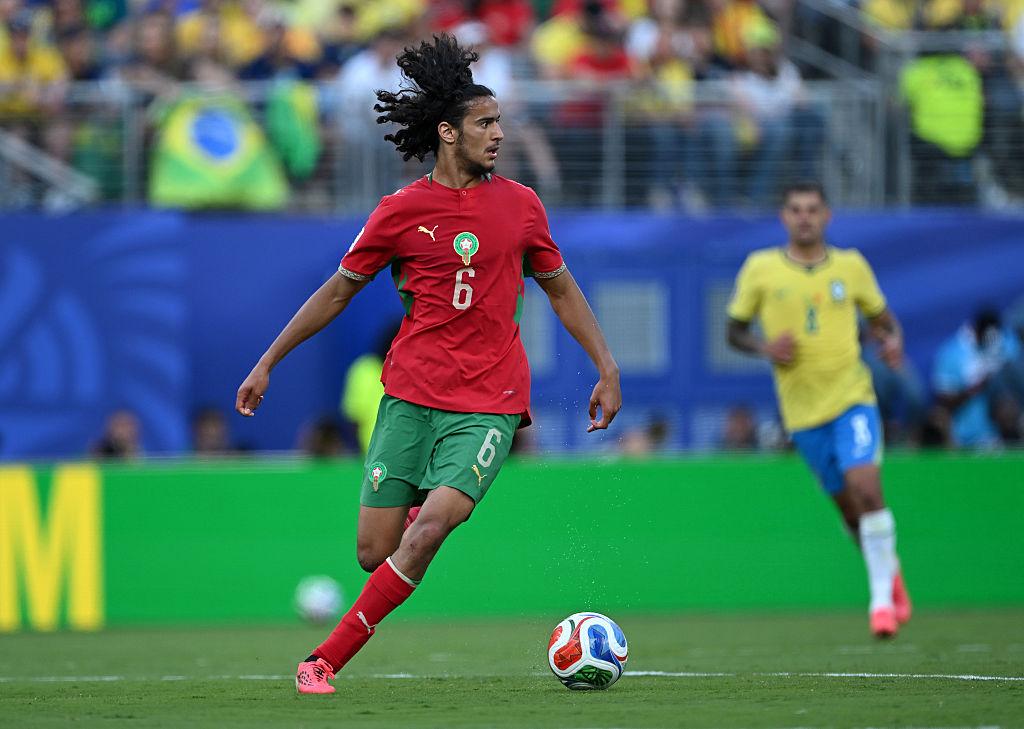
Ayyoub Bouaddi returned from the 2026 World Cup with more than international recognition.
The 18-year-old midfielder also returned as one of the most valuable young prospects in European football, with Lille reportedly demanding as much as €100 million for a transfer this summer.
Manchester City have emerged as one of the strongest contenders for his signature, while Arsenal, Liverpool, Manchester United and other major European clubs have also been linked with the Moroccan international.
No final transfer has been officially confirmed. But the scale of the reported interest already tells a bigger story.
Bouaddi is no longer being discussed merely as a promising academy player. He is being evaluated as a potential cornerstone of an elite European midfield.
A World Cup That Changed His Market
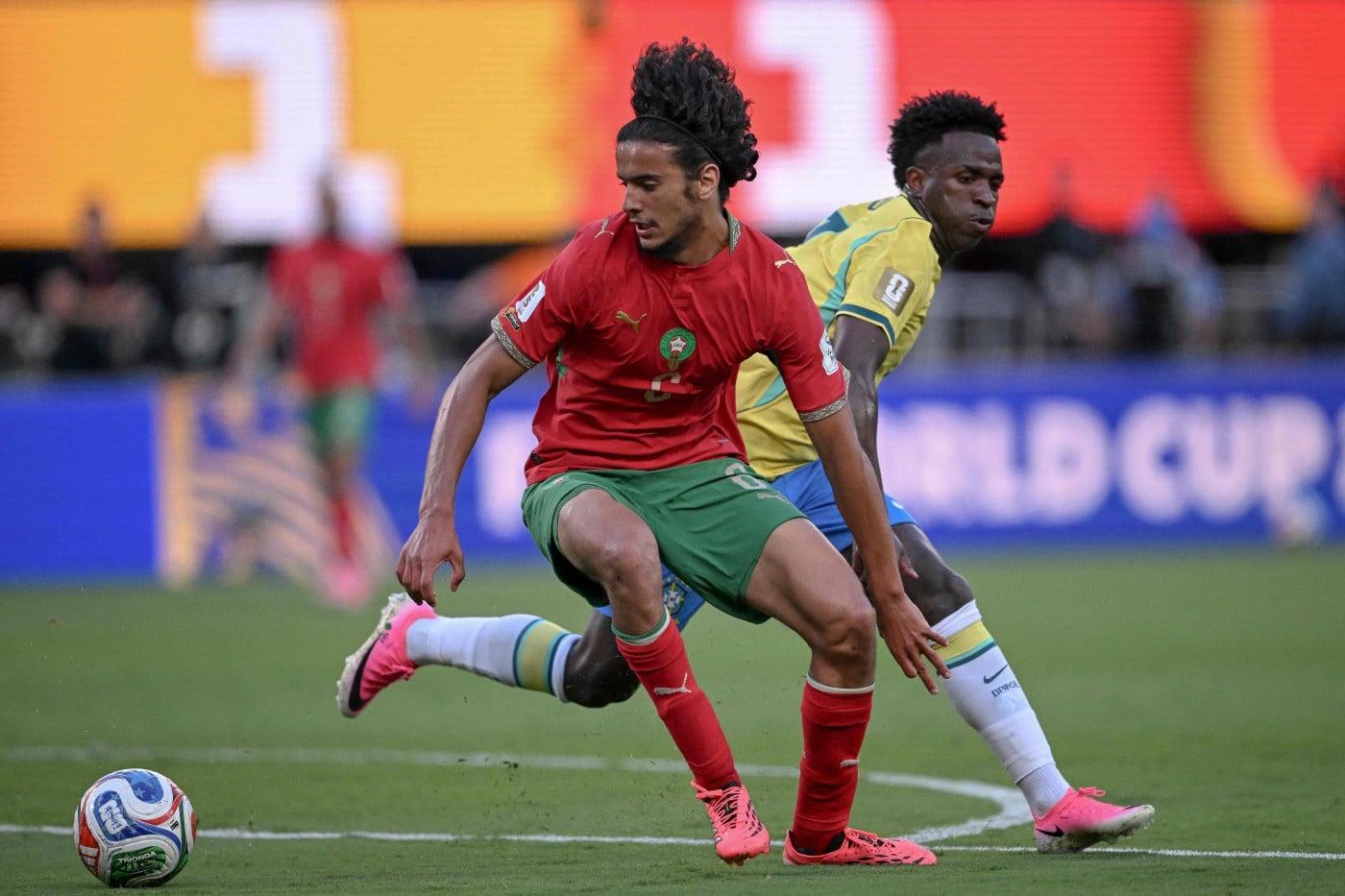
Bouaddi was already regarded as one of Lille’s most technically gifted young players before the World Cup.
His performances for Morocco, however, introduced him to a much larger global audience.
Playing with composure beyond his age, he demonstrated the qualities modern clubs increasingly demand from central midfielders: positional discipline, resistance under pressure, accurate distribution and the confidence to receive the ball in crowded areas.
His ability to perform on football’s largest stage reduced one of the principal uncertainties surrounding any young player.
Potential can be identified inside an academy or domestic league. Performing under international pressure is a different test.
Bouaddi’s World Cup performances suggested that his game could survive greater intensity, global scrutiny and higher tactical expectations. That shift is one reason his reported price has moved into a category normally reserved for established stars.
Why Manchester City Are Interested

Manchester City’s interest is particularly significant because the club is not simply searching for another midfielder.
It is building the next version of its midfield.
Reports indicate that City want Bouaddi to join immediately rather than purchasing him and allowing him to remain at Lille for another season. Lille, meanwhile, is reported to prefer either a price close to €100 million or a structure that would permit the player to continue his development in France temporarily.
That difference matters.
Lille sees Bouaddi as both a sporting asset and a financial asset whose value could continue to rise. Manchester City appears to see a player capable of entering an elite environment now.
The final price will therefore depend on more than technical ability. It will reflect competition between clubs, the length of Bouaddi’s contract, Lille’s willingness to sell and whether the player prefers immediate movement or another year of development.
The reported €100 million figure should consequently be understood as an asking price or negotiating position, not yet as the value of a completed transaction.
The Risk Behind The Record
A transfer of this size would create enormous expectations.
Bouaddi would not arrive as a young player quietly preparing for the future. He would arrive as one of football’s most expensive teenagers, carrying a price that would be mentioned after every difficult match.
That creates a development risk.
Young midfielders need minutes, tactical continuity and the freedom to make mistakes. At an elite Premier League club, those conditions are never guaranteed.
The competition for selection would be intense. The physical demands would increase. Every performance would be compared with the transfer fee rather than with the player’s age or experience.
For Bouaddi, the most prestigious destination may not automatically be the best destination.
The decisive question is not which club can pay the most. It is which club can offer the clearest sporting pathway.
A New Valuation Of Moroccan Talent
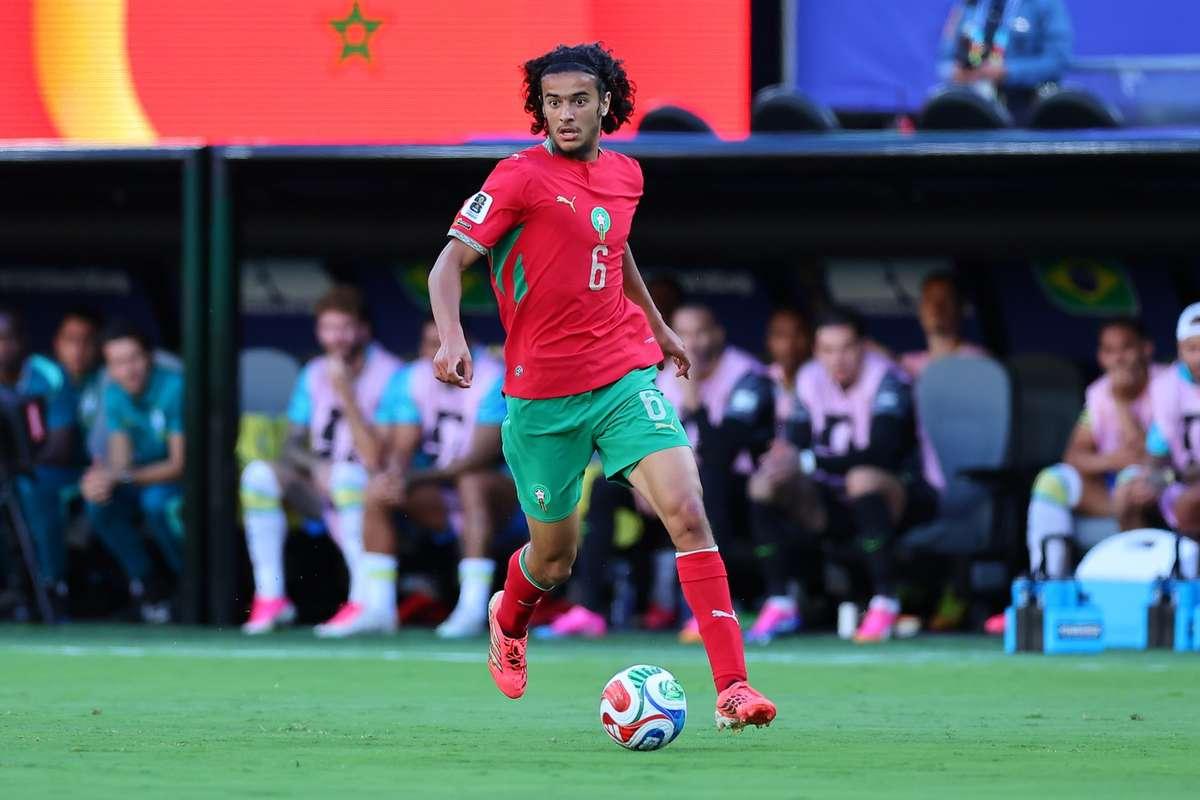
Whatever happens during the transfer window, Bouaddi’s rise represents a wider change in how Moroccan footballers are valued.
For years, Moroccan players often reached Europe’s largest clubs only after proving themselves through several intermediate stages.
That route is changing.
The national team’s international performances, the visibility of Moroccan players in elite European competitions and the country’s expanding football infrastructure are strengthening the global reputation of Moroccan talent.
European clubs are no longer looking at Moroccan players only as technically gifted opportunities available at attractive prices.
They are increasingly evaluating them as premium assets capable of carrying major sporting and commercial value.
A €100 million valuation does not only reflect Bouaddi’s passing, movement or World Cup performances. It also reflects the scarcity of young midfielders who already possess international experience, technical maturity and significant resale potential.
The Opportunity For Moroccan Football
Bouaddi’s rise should also raise questions inside Morocco.
Can the country build a development system capable of producing more players of this level domestically?
Can Moroccan clubs capture a greater share of the financial value generated by Moroccan talent?
And can the national football ecosystem convert international success into stronger academies, better coaching, improved scouting and more competitive domestic institutions?
Bouaddi developed at Lille after beginning his football journey in France. His Moroccan identity strengthens the national team, but the largest potential transfer payment would primarily reward the European system that developed and contracted him.
That is not a criticism of the player or Lille. It is the economic reality of modern football.
The next stage for Morocco is therefore not only to attract dual-national talents. It is to create more of the conditions that allow world-class talent to be identified, developed and commercially protected inside the country.
More Than A Transfer Story
The coming weeks may determine whether Bouaddi remains at Lille, joins Manchester City or chooses another European giant.
But the transfer speculation has already established something important.
An 18-year-old Moroccan midfielder is now at the centre of one of Europe’s most closely watched recruitment battles.
The figure may eventually be lower than €100 million. The negotiations may continue beyond this summer. Another season at Lille may even prove better for his development.
Yet Bouaddi’s position in the market is no longer in doubt.
He represents a generation of Moroccan footballers entering elite European football not as outsiders seeking recognition, but as strategic assets pursued by the continent’s richest clubs.