
Moroccan football has entered a new market cycle.
Not only on the pitch.
In the transfer window.
After years of being treated as emotional outsiders, underpriced prospects or late-discovery talents, Moroccan players are now becoming part of Europe’s serious recruitment conversation. Clubs are no longer looking at Morocco only for passion, tournament energy or diaspora symbolism.
They are looking for value.
That is the new story.
The Atlas Lions’ recent World Cup runs have changed how Moroccan talent is priced, scouted and discussed. A strong Moroccan performance is no longer just a national moment. It becomes a shop window. Every tackle, assist, sprint, duel and goal is seen by recruitment departments looking for the next player who can combine European development with Moroccan identity.
This is the Transfer Market Atlas.
And Morocco is no longer waiting to be discovered.
Transfer Market Atlas Enters A New Phase
The Transfer Market Atlas matters because football value is created before a deal is signed.
It starts with visibility.
A player who performs well at a World Cup changes his market position almost overnight. Scouts who were watching quietly become more urgent. Clubs that were hesitant begin asking for numbers. Agents become louder. Existing clubs become more protective. Supporters start tracking rumours.
Morocco’s 2026 campaign gave several players exactly that kind of visibility.
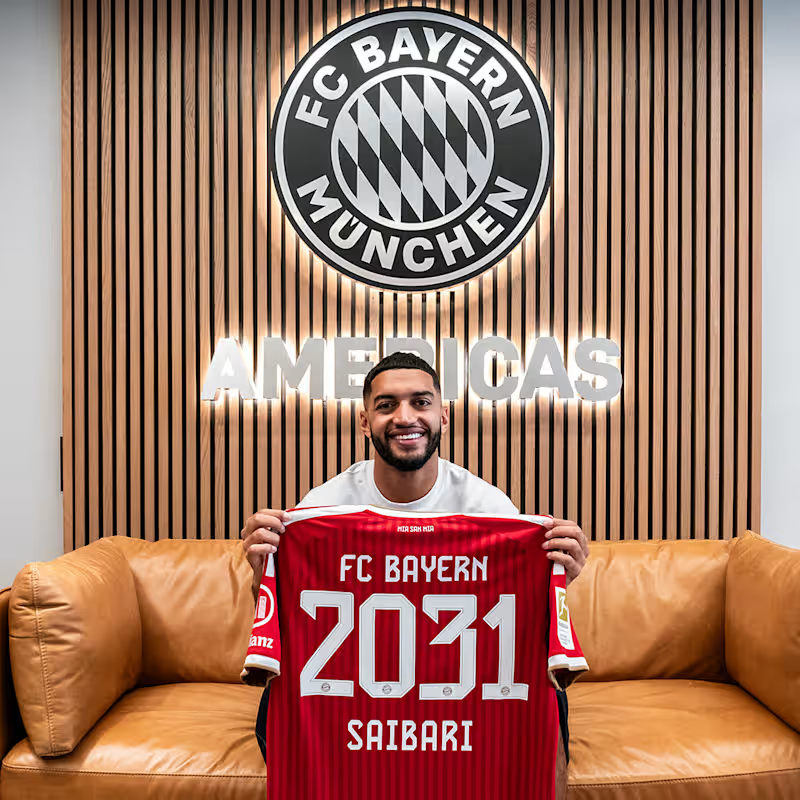
FIFA highlighted Ismael Saibari’s move to Bayern Munich after his strong performances for Morocco and described his rise from Eredivisie standout to one of Morocco’s key attacking assets on the world stage.
That is the model European clubs understand.
A player develops outside the biggest league.
He proves himself internationally.
Then a major club moves before the price rises again.
For Morocco, this is not only individual success.
It is reputation building.
Morocco Is Becoming A Value Market
European clubs love value.
Not cheap players.
Value players.
That means footballers whose quality, age, profile, salary level, tactical flexibility and resale potential make sense compared with inflated prices in England, France, Spain, Germany and Italy.
Moroccan players fit that search.
Many are developed in European academies, speak multiple languages, understand elite football cultures and carry international experience with Morocco. They can often adapt faster than players moving directly from less familiar markets.
That combination is powerful.
A Moroccan international may offer European readiness, tournament pressure experience and still a price below the most expensive domestic-market alternatives.
That is why the market is paying attention.
The Diaspora Pipeline Is Now Strategic
The Moroccan diaspora is no longer only an emotional advantage.
It is a scouting system.
Hespress reported that the Royal Moroccan Football Federation maintains a database of nearly 3,000 Moroccan players across Europe, updated annually to identify, monitor and recruit dual-national talent. The same report noted that dual-national players in Morocco’s squad increased from 14 in 2022 to 19 in 2026.
That is not luck.
That is structure.
Morocco has understood that identity and football development do not always happen in the same place. A player may grow up in France, Belgium, the Netherlands, Spain or Germany, but still become part of Morocco’s sporting future.
For European clubs, that creates an attractive profile.
For Morocco, it creates a stronger national team.
For players, it creates two markets at once: club value in Europe and international visibility through Morocco.
The Saibari Signal
Ismael Saibari’s move is important because it shows how quickly a Moroccan player can move from promising to premium.
Bayern Munich is not a club that signs sentiment. It signs players it believes can survive pressure, speed, tactical demands and competition. When a Moroccan attacking midfielder reaches that level, the signal spreads beyond one dressing room.
Other clubs notice.
Agents notice.
Young Moroccan players notice.
Families notice.
Academies notice.
The message is simple.
The Moroccan shirt can now accelerate a European career.
That was not always the perception. For years, some dual-national players worried that choosing an African national team could reduce exposure compared with waiting for a European call-up. Morocco has changed that calculation.
The national team is now a platform, not a compromise.
Europe Wants The Moroccan Profile
The modern game values players who can handle chaos.
Moroccan footballers often bring exactly that.
They are used to technical environments in Europe and emotional environments with Morocco. They understand pressure from club fans and national fans. They can play disciplined tactical football, but also carry street-football creativity, dueling intensity and resilience.
That profile travels well.
Full-backs with energy.
Midfielders who can press and carry.
Wingers who can attack space.
Defenders who can handle pressure.
Goalkeepers with tournament confidence.
Attacking midfielders who can break lines.
Europe’s recruitment market is increasingly data-driven, but scouts still look for something harder to measure: personality under pressure.
Moroccan players have spent the last two World Cups showing exactly that.
The Market Is Not Only About Stars
The Moroccan transfer story is not only Hakimi-level glamour or Bayern-level moves.
It is also about the middle tier.
Players moving from Belgium to Italy.
From France to Spain.
From the Netherlands to Germany.
From smaller leagues to bigger platforms.
From loan uncertainty to serious first-team roles.
This is where national football depth is built.
A country becomes stronger when many players move one level higher, not only when one superstar reaches the top. The transfer market can upgrade an entire generation by exposing more players to stronger training, faster leagues, better teammates and higher tactical demands.
For Morocco, the dream is not one big transfer.
It is a pipeline.
Zakaria El Ouahdi Shows The Full-Back Demand
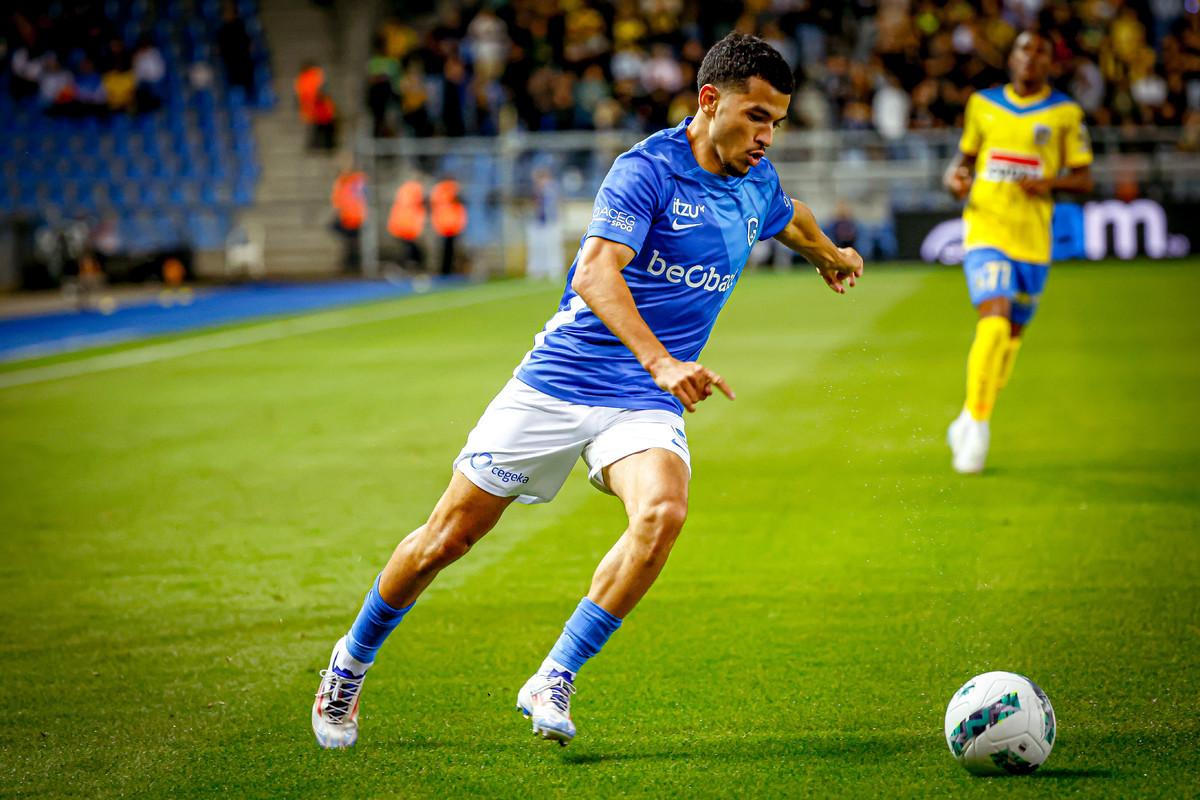
Full-backs are among the most valuable profiles in modern football.
They must defend wide spaces, press high, recover quickly, carry the ball, overlap, invert into midfield and survive one-against-one duels. Not many players can do all of that.
That is why Moroccan full-backs attract attention.
The Hard Tackle reported that AS Roma were prioritising a move for Moroccan international Zakaria El Ouahdi from KRC Genk, while also noting previous Premier League interest.
Whether every rumour becomes a transfer is not the point.
The point is that Moroccan profiles are appearing in serious recruitment conversations across Europe.
That visibility creates leverage.
Ounahi Still Represents The Elegant Market
Azzedine Ounahi remains a different kind of case.
He is not only a physical profile.
He is a style profile.
European clubs value midfielders who can receive under pressure, carry the ball through central zones and change the rhythm of a match. Ounahi’s World Cup reputation has long made him part of that discussion, and specialist reports continue to list him among Moroccan transfer files to watch this summer.
His case shows the complexity of the Moroccan market.
Talent is not enough.
The right club matters.
The right coach matters.
The right system matters.
The right timing matters.
A Moroccan player moving to Europe’s top level must choose carefully. A big name club can be attractive, but minutes and tactical fit may matter more.
A bad move can slow a career.
A smart move can multiply value.
Young Binationals Are The Next Battle
The next European battle will be for teenagers.
A strong senior national team changes youth recruitment. When Morocco becomes successful, young binationals and their families start viewing the Moroccan pathway differently. They see a national team that plays major tournaments, attracts global attention and gives players emotional belonging.
That makes Morocco more competitive against European federations.
But it also makes club recruitment more intense.
Young Moroccan-eligible players in France, Belgium, the Netherlands and Spain will face more attention from scouts. Clubs will try to sign them early. Agents will position them. Federations will monitor them.
The next transfer market is not only about completed professionals.
It is about who controls the best 16-to-21-year-old talent before prices explode.
The FRMF Must Protect The Pipeline
This is where the FRMF’s work becomes crucial.
A database is useful, but a database alone does not win loyalty. Players and families need contact, trust, clarity and a sense of sporting ambition. They need to feel Morocco is organised, serious and capable of helping careers rather than simply calling when a player becomes famous.
The best recruitment is relationship-based.
Morocco has improved in this area, but the competition will get harder. European federations will not ignore Moroccan-eligible talents if they become more valuable. Clubs will not always care which national team a player chooses, but they will care about development, exposure and injury risk.
Morocco must stay professional.
The emotional flag matters.
The professional pathway matters just as much.
Botola Must Not Be Left Behind
There is one danger in the Moroccan success story.
Too much dependence on Europe.
The diaspora pipeline is powerful, but Morocco cannot build its entire football future outside its borders. Domestic academies, Botola clubs, local coaching and youth development must also rise.
A strong national team should lift the domestic system, not replace it.
If Europe develops most of the players and Morocco only recruits them later, the country gains national-team strength but misses part of the economic value. Local clubs should produce more players capable of moving abroad for serious fees.
That would create income, improve training standards and make Moroccan football more financially sustainable.
The best model is not diaspora or domestic.
It is both.
Clubs Will Pay For Certainty
Transfer markets reward certainty.
A player who has performed only in one league carries questions.
Can he adapt?
Can he handle pressure?
Can he play faster?
Can he defend better?
Can he survive a bigger club?
International tournaments reduce some of those questions. A Moroccan player who performs against Brazil, France, the Netherlands or Canada gives clubs real evidence. The sample is still small, but the pressure is enormous.
That is why World Cup performances influence value.
They show how a player behaves when the world is watching.
Morocco’s recent tournament credibility makes that evidence more convincing.
The Risk Is Hype Inflation
There is also a risk.
When a national team becomes fashionable, prices and expectations can move too fast.
Not every Moroccan player linked with a big club is ready for that step. Not every tournament performer will become a long-term star. Not every rumour is serious. Not every move should happen immediately.
Hype can damage careers.
A player may leave a stable environment too early.
A club may buy a name instead of a fit.
Fans may expect too much.
Agents may push too hard.
Morocco must celebrate the market attention without losing discipline.
The goal is not to move every player quickly.
The goal is to move the right players correctly.
Europe’s Value Hunt Can Help Morocco
If handled well, Europe’s interest can benefit Moroccan football in several ways.
Players improve in stronger leagues.
Transfer fees raise the perceived value of the Moroccan market.
Young talents see a pathway.
The national team gains more elite-level experience.
Moroccan football becomes more visible internationally.
Domestic clubs may become more ambitious in development.
Sponsors and broadcasters may take the brand more seriously.
This is how sporting success becomes economic value.
The World Cup gives visibility.
The transfer market turns visibility into money, opportunity and leverage.
Morocco must understand that chain.
The Moroccan Shirt Has Become Commercial
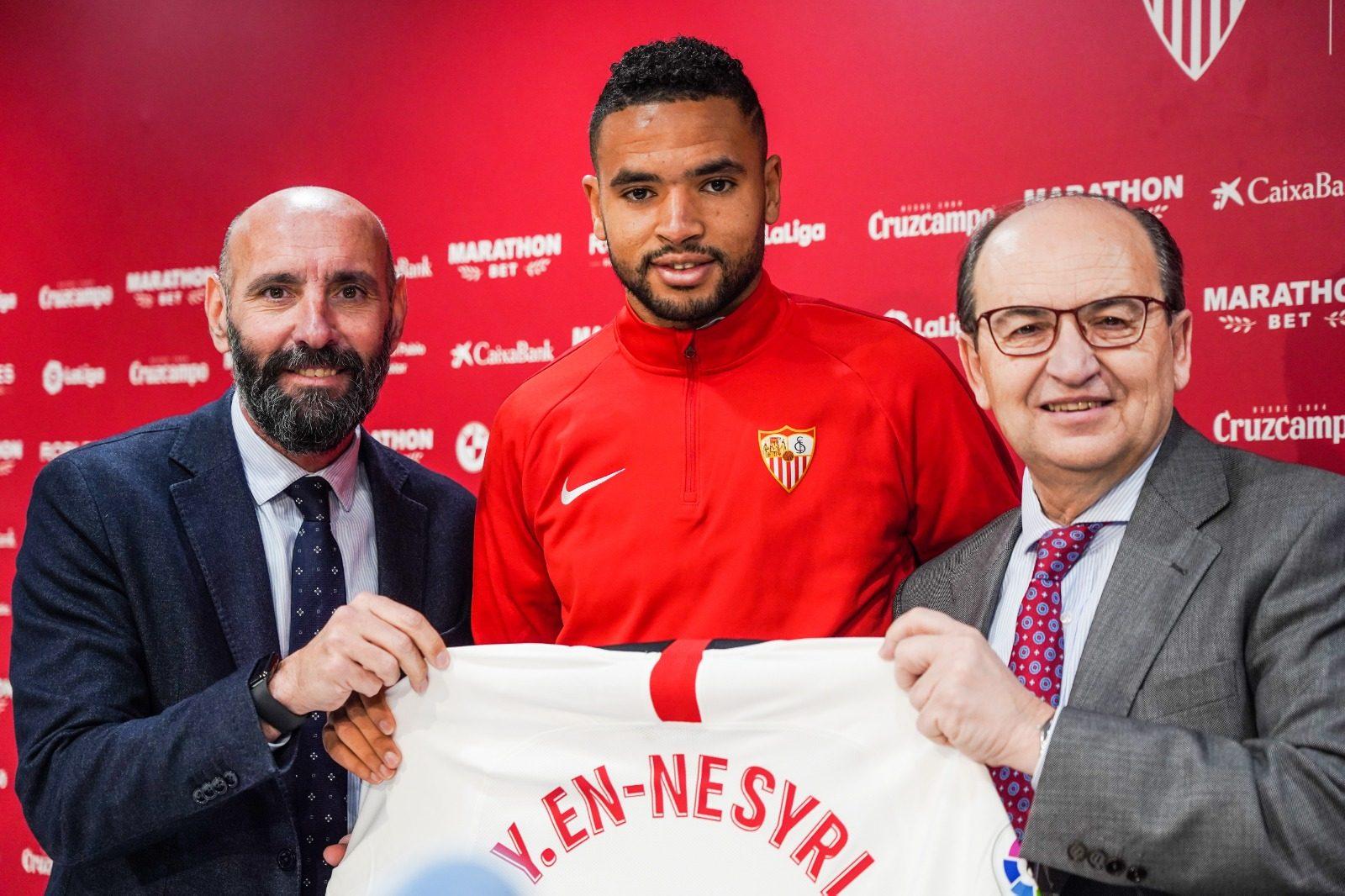
A national shirt can create market value.
That is what Morocco has achieved.
When players perform in the Moroccan shirt, they are no longer seen only as emotional representatives of a proud country. They are seen as assets in a global football marketplace.
That may sound cold.
But it is important.
Football is emotion for fans, but it is economics for clubs. If Morocco wants to be a serious football nation, it must understand both sides.
The Atlas Lions brand now has commercial weight.
Players wearing it can gain attention.
Clubs owning them can gain value.
Agents representing them can negotiate harder.
That is the reality of modern football.
The Bottom Line
The Transfer Market Atlas shows that Moroccan football has entered a new phase.
After Morocco’s strong World Cup performances, players linked to the Atlas Lions are becoming more visible in Europe’s transfer market. FIFA highlighted Ismael Saibari’s Bayern Munich move after his rise with Morocco, while specialist reports continue to track Moroccan transfer files across European clubs. At the same time, the FRMF’s monitoring of nearly 3,000 Moroccan players in Europe shows that the diaspora pipeline has become a strategic system, not a coincidence.
That is the new Moroccan football economy.
The national team creates visibility.
Europe creates demand.
Players create value.
Morocco must now turn that cycle into lasting power.
Respect on the pitch was the first step.
Value in the market is the next one.