

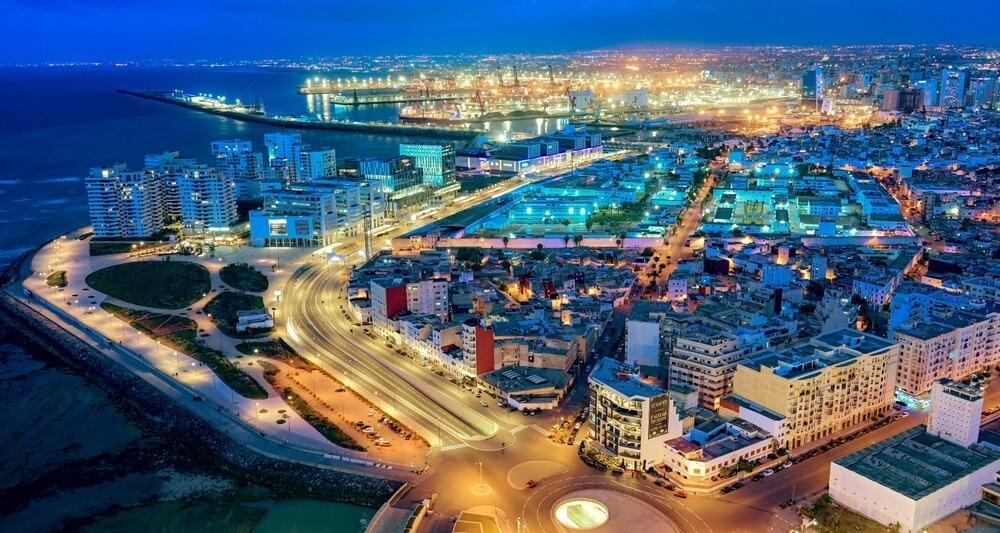
In Morocco’s largest cities, summer is changing the rhythm of economic life.
During periods of intense daytime heat, streets become quieter, outdoor activity slows and many residents postpone non-essential movement.
After sunset, that pattern reverses.
Terraces fill. Restaurants become busier. Families return to public spaces. Retail activity continues later. Waterfronts, cafés and cultural venues attract residents and visitors well into the night.
This is often described simply as nightlife.
Economically, it is much more than that.
Morocco’s night-time economy includes restaurants, cafés, taxis, hotels, delivery services, retailers, event organisers, security providers and thousands of workers whose income depends on activity after conventional business hours.
As temperatures rise and tourism grows, the hours after sunset are becoming increasingly important to the way Moroccan cities function.
The strategic question is no longer whether Morocco has an evening economy.
It is whether its cities are prepared to manage it as a serious source of employment, tourism spending and urban value.
Heat Is Moving Demand Into The Evening
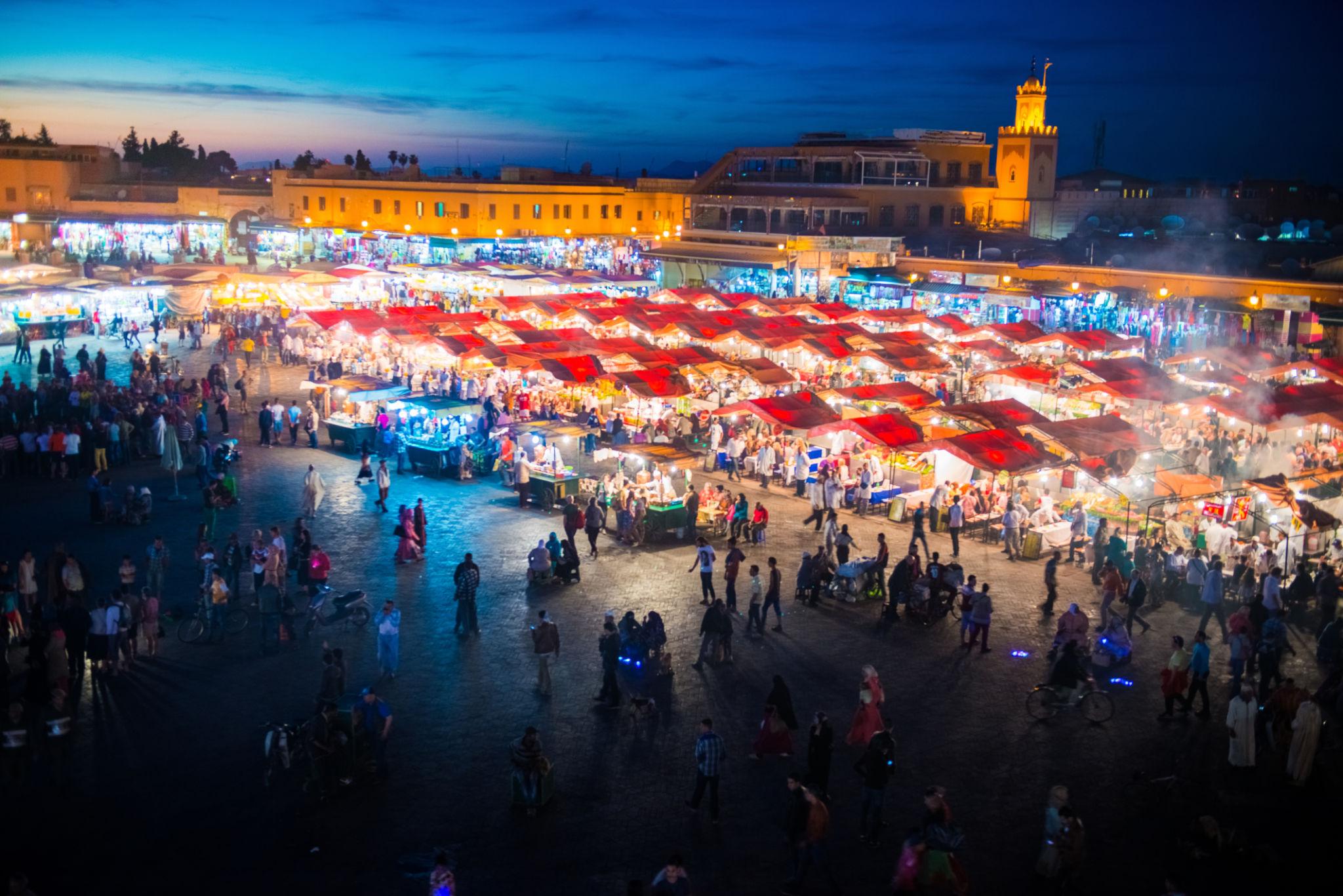
Extreme heat does not eliminate consumer demand.
It changes when that demand appears.
Residents may avoid shopping, dining or walking during the hottest part of the day. Tourists may spend the afternoon inside hotels, museums or air-conditioned spaces before exploring cities later in the evening.
This creates a redistribution of activity rather than a complete reduction.
For restaurants, cafés and retailers, the busiest commercial period may begin when traditional working hours are ending.
That shift has important consequences.
Businesses need staffing schedules that match real customer behaviour.
Public transport must remain available when workers and visitors are still moving.
Streets require lighting, cleaning and security beyond the daytime timetable.
Cities designed primarily around nine-to-five activity risk becoming inefficient when a growing share of consumption takes place later.
Climate adaptation is therefore not only about water, construction standards or green spaces.
It is also about time.
A city capable of extending safe and efficient activity into cooler evening hours can reduce the economic disruption created by extreme daytime temperatures.
The Evening Is Part Of The Tourism Product
Visitors do not judge a destination only by what they can see during the day.
They also remember what happens after dinner.
Can they walk comfortably?
Are cultural attractions still accessible?
Is transport reliable?
Are public spaces clean and well lit?
Can families participate, or is the evening offer limited mainly to restaurants and private venues?
A strong night-time economy increases the number of hours during which visitors can spend money.
It also allows cities to diversify beyond monuments, beaches and daytime excursions.
Night markets, guided heritage walks, waterfront programming, evening museum access and live performances can extend the tourism experience.
This creates additional value without necessarily requiring more tourists.
The same visitor can spend more, stay longer and experience more of the city when the evening offer is strong.
For Morocco, this matters because tourism growth should not be measured only by arrival numbers.
It should also be measured by the amount of value each destination can create from every visit.
Public Space Can Become An Economic Asset
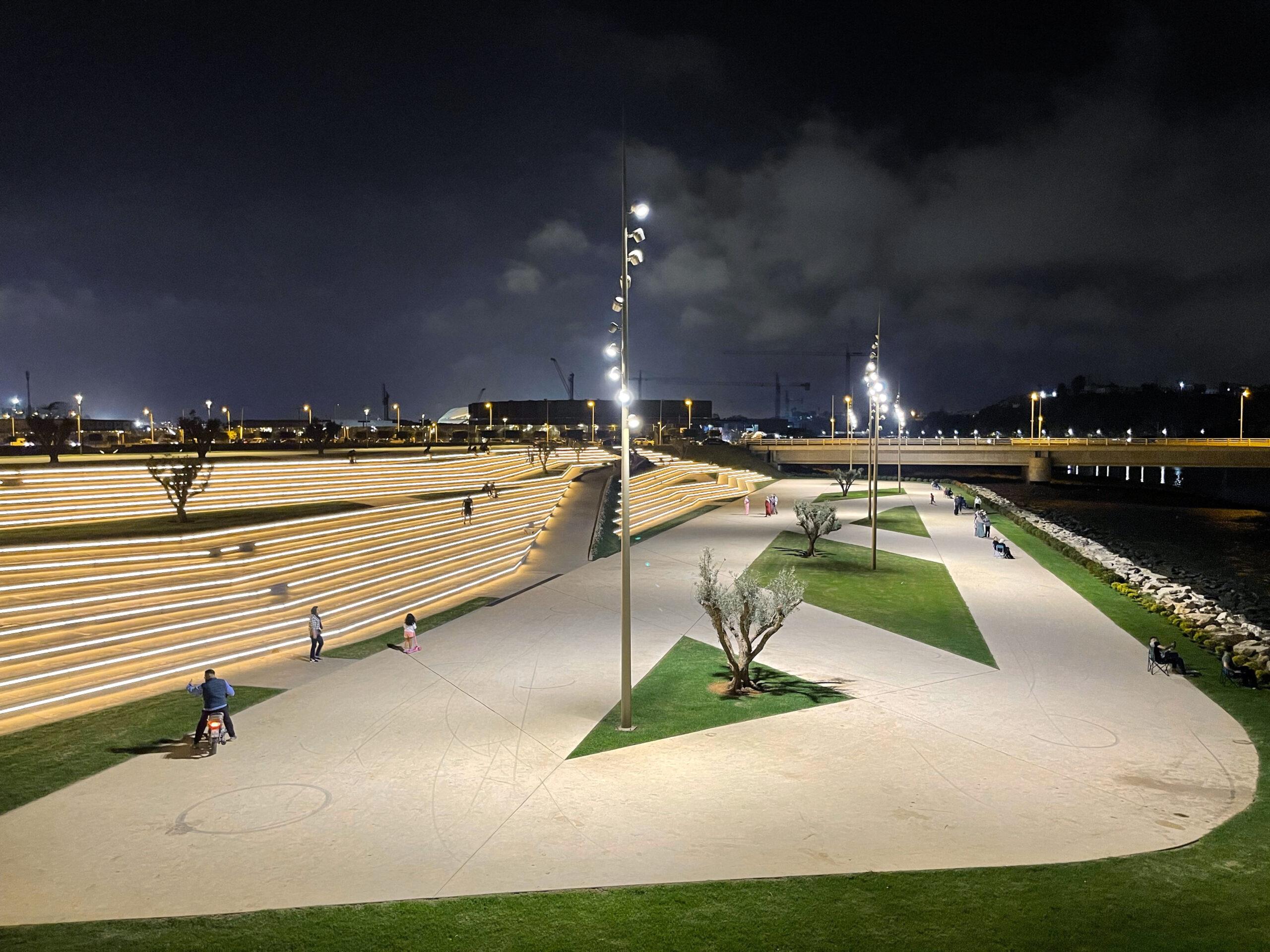
Some of the most valuable parts of a night-time economy are not private businesses.
They are public spaces.
A well-designed promenade, square, park or waterfront can attract thousands of people and support nearby cafés, restaurants, shops and transport providers.
Tangier’s corniche, Marrakech’s central districts, Casablanca’s waterfront and Rabat’s public spaces all demonstrate how evening movement can generate commercial activity.
But public space does not become economically useful automatically.
It requires lighting, maintenance, seating, sanitation, accessibility and security.
Poorly managed public areas can become congested or uncomfortable.
Well-managed spaces can support families, tourists, street vendors and formal businesses at the same time.
The design of these areas also matters.
Shade, ventilation, pedestrian routes and access to public transport can determine whether people remain for ten minutes or several hours.
Urban planning should therefore recognise that evening footfall has economic value.
A city that encourages people to stay safely in public spaces creates opportunities for the businesses surrounding them.
Transport Must Follow The New Rhythm
A successful night-time economy depends heavily on mobility.
Restaurants and cultural venues may stay open late, but workers still need a reliable way to return home.
Visitors need clear and safe transport options.
Families need predictable pricing.
If buses, trains and regulated transport services stop too early, the evening economy becomes dependent on private vehicles and informal solutions.
That creates several problems.
Traffic congestion increases.
Parking becomes more difficult.
Workers face higher transport costs.
Visitors may avoid certain districts because returning to their hotel feels uncertain.
Extending economic activity without extending transport access creates an incomplete system.
Moroccan cities should therefore examine whether public transport schedules reflect actual patterns of evening demand.
This does not mean every route must operate throughout the night.
It means that busy commercial and tourism corridors should remain connected during the hours when economic activity is still strong.
Real-time transport information, regulated taxi access and clearly identified pick-up points can also reduce confusion.
Mobility should support the night-time economy rather than restrict it.
Workers Need Protection And Predictability
The evening economy creates employment, but it also creates difficult working conditions.
Restaurant staff, hotel employees, security guards, cleaners, delivery workers and drivers often work when conventional services are less available.
Late hours can create transport problems, safety concerns and unpredictable schedules.
A stronger night-time economy should therefore not depend on weaker labour conditions.
Businesses need staffing systems that are commercially realistic and socially sustainable.
Employees should know their schedules in advance.
Late-night transport should be considered when workplaces are far from residential areas.
Security and health standards should apply just as seriously after midnight as they do during the day.
This is especially important for women working in hospitality, transport and retail.
An economy that becomes more active after sunset must also become safer and more accessible for the people who sustain it.
The quality of employment will determine whether night-time growth creates lasting value or only temporary pressure.
Safety Shapes Consumer Confidence
People spend more time and money in places where they feel comfortable.
That makes safety a direct economic factor.
Visible policing, good lighting, clear pedestrian routes and rapid response systems can increase confidence without making public spaces feel restrictive.
Safety planning should also include crowd management, traffic control and emergency access.
Popular districts can become extremely busy during weekends, festivals and summer evenings.
Without preparation, success can produce congestion, noise complaints and tension between residents and businesses.
Cities need to balance commercial activity with quality of life.
That may require clearer zoning, noise standards, delivery schedules and closing-time coordination.
The objective should not be to reduce activity.
It should be to manage it professionally.
A predictable environment helps residents, visitors and businesses coexist.
Culture Can Extend The Commercial Window
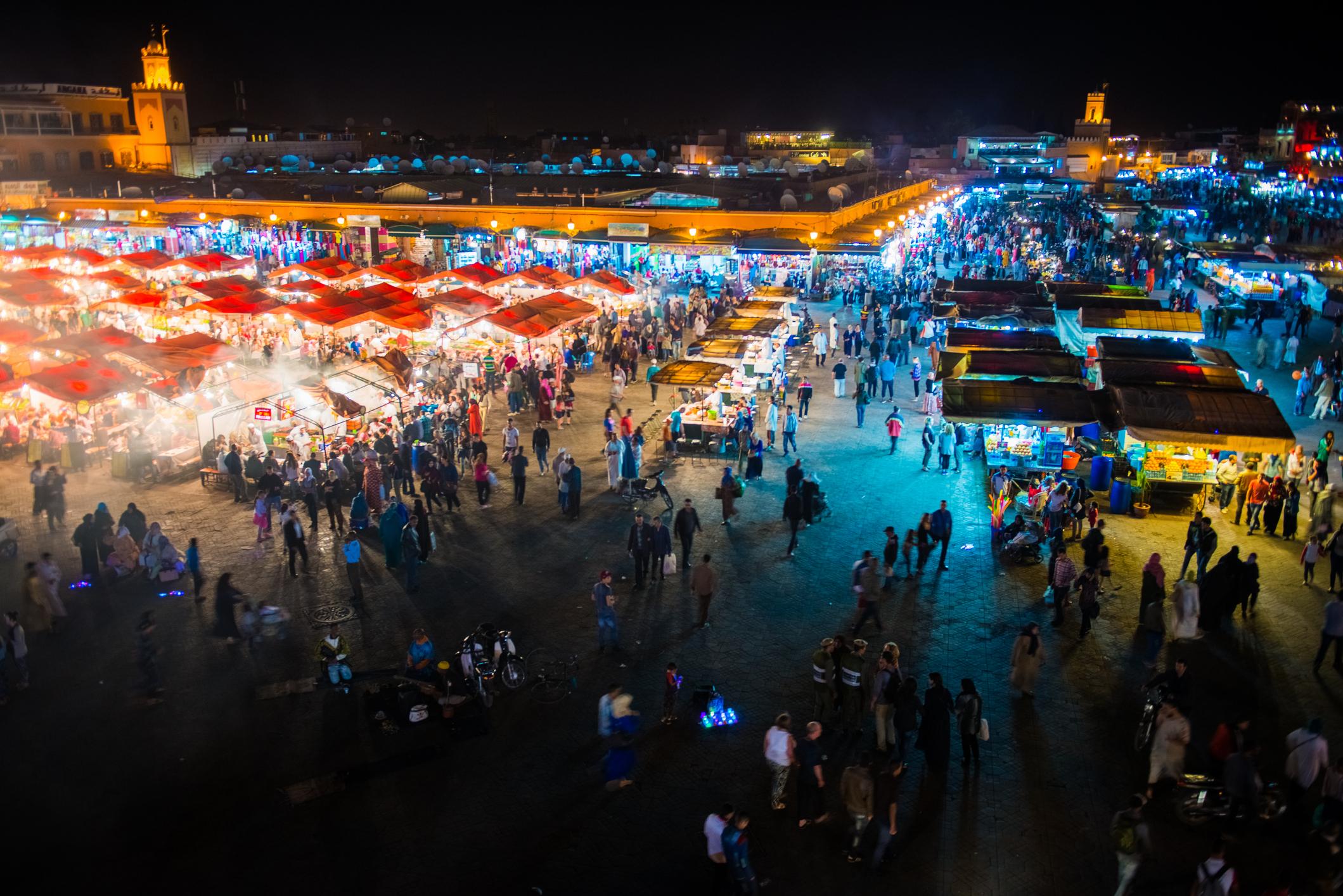
Morocco’s evening economy should not be defined only by food and cafés.
Culture can play a much larger role.
Museums, galleries, theatres, historical sites and public performances can attract visitors during cooler hours and distribute demand across different districts.
Evening cultural programming can also strengthen Morocco’s tourism identity.
A visitor who attends a night exhibition, musical performance or guided heritage tour experiences more than consumption.
They experience the city’s character.
This can help destinations avoid becoming overly dependent on the same restaurants, shopping streets and entertainment venues.
It can also create opportunities for artists, guides, technicians and small creative businesses.
The strongest night-time economies combine commerce, culture and public space.
They offer different experiences to families, young people, tourists and local residents.
Diversity makes the economy more resilient.
Data Should Guide City Decisions
Morocco’s night-time economy remains difficult to measure.
Traditional economic statistics often focus on sectors rather than hours of activity.
But cities need better information.
How many people move through key districts after sunset?
Which transport routes remain busiest?
When do restaurants, cafés and retailers experience peak demand?
Where do safety incidents or congestion occur?
How much employment is linked directly to evening activity?
Digital payment data, transport use, anonymised mobility information and business surveys can help answer these questions.
Better data would allow cities to coordinate public services more effectively.
Cleaning schedules could follow actual footfall.
Transport capacity could be increased during the busiest hours.
Security resources could be deployed where they are most needed.
Commercial decisions would become more informed.
The night-time economy should not be managed through assumptions.
It should be managed through evidence.
Cities Need A Night-Time Strategy
Morocco’s cities already operate after sunset.
The next step is to recognise that activity formally.
A night-time strategy could coordinate transport, tourism, culture, policing, sanitation, urban planning and business regulation.
Some international cities appoint dedicated officials or committees to represent the interests of residents, workers and businesses active at night.
Morocco does not need to copy another model directly.
But it can create its own structure based on local needs.
Tangier may focus on its waterfront and summer tourism.
Marrakech may prioritise visitor movement, hospitality and heritage districts.
Casablanca may require stronger late transport and business-zone coordination.
Rabat may connect cultural programming with public space.
Each city has a different evening economy.
Each requires a different response.
The Value Begins After Sunset
Morocco’s night-time economy is already visible.
It appears in crowded terraces, busy promenades, late restaurant reservations, delivery traffic and families returning to public spaces after the heat declines.
The opportunity now is to turn that activity into a more organised urban asset.
That requires reliable transport, safe public spaces, worker protection, cultural programming and better data.
The hours after sunset are no longer economically secondary.
For many businesses, workers and visitors, they are becoming the most important part of the day.
Morocco’s cities can either treat this shift as an informal seasonal habit or recognise it as a permanent feature of modern urban life.
The cities that manage the evening well will not only remain active for longer.
They will become more valuable.
 Jamal Mahdad, Founder & Editor-in-Chief