
Morocco’s next advertising network may not be built inside shopping malls, television studios or social-media platforms.
It may be built inside the neighbourhood hanout.
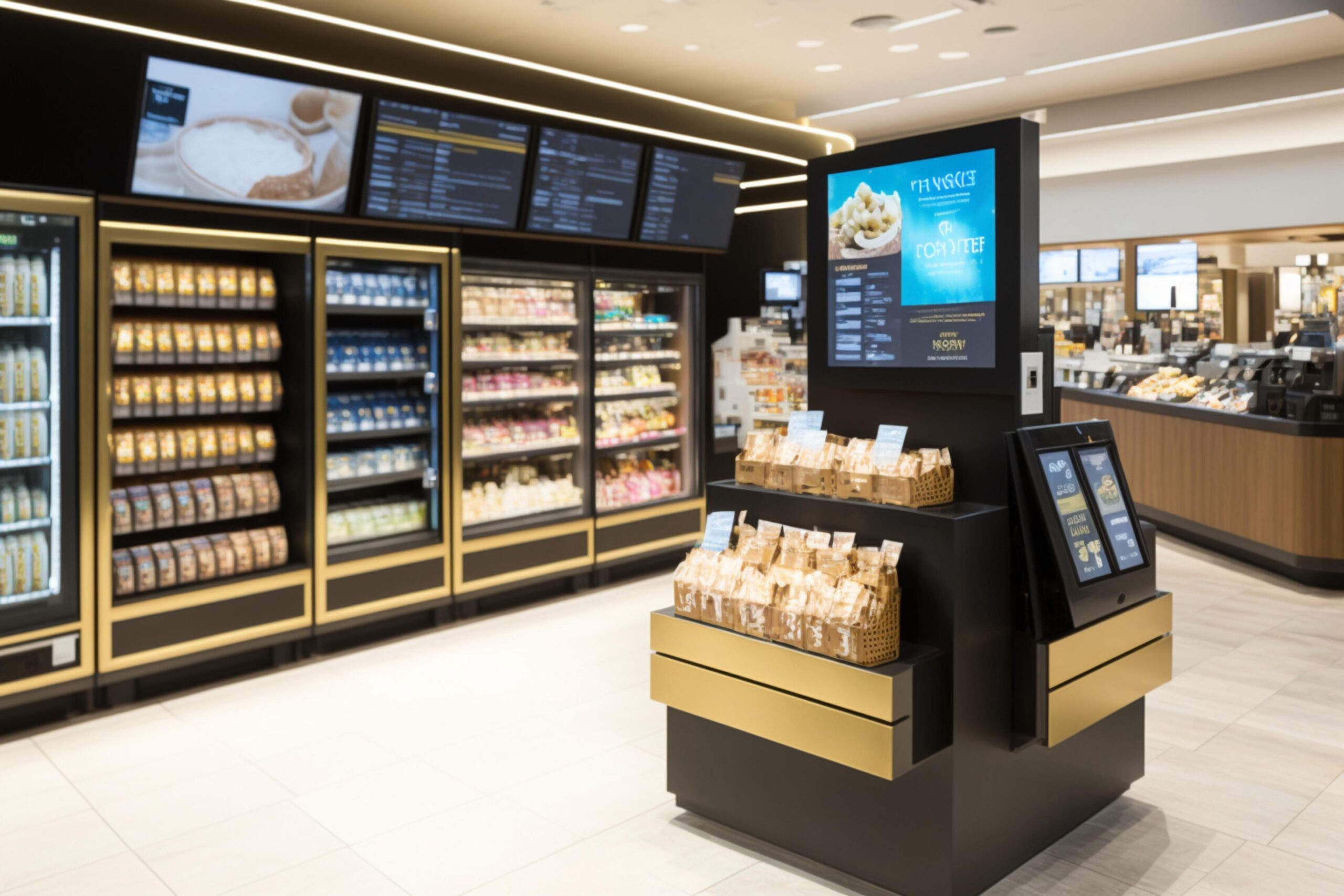
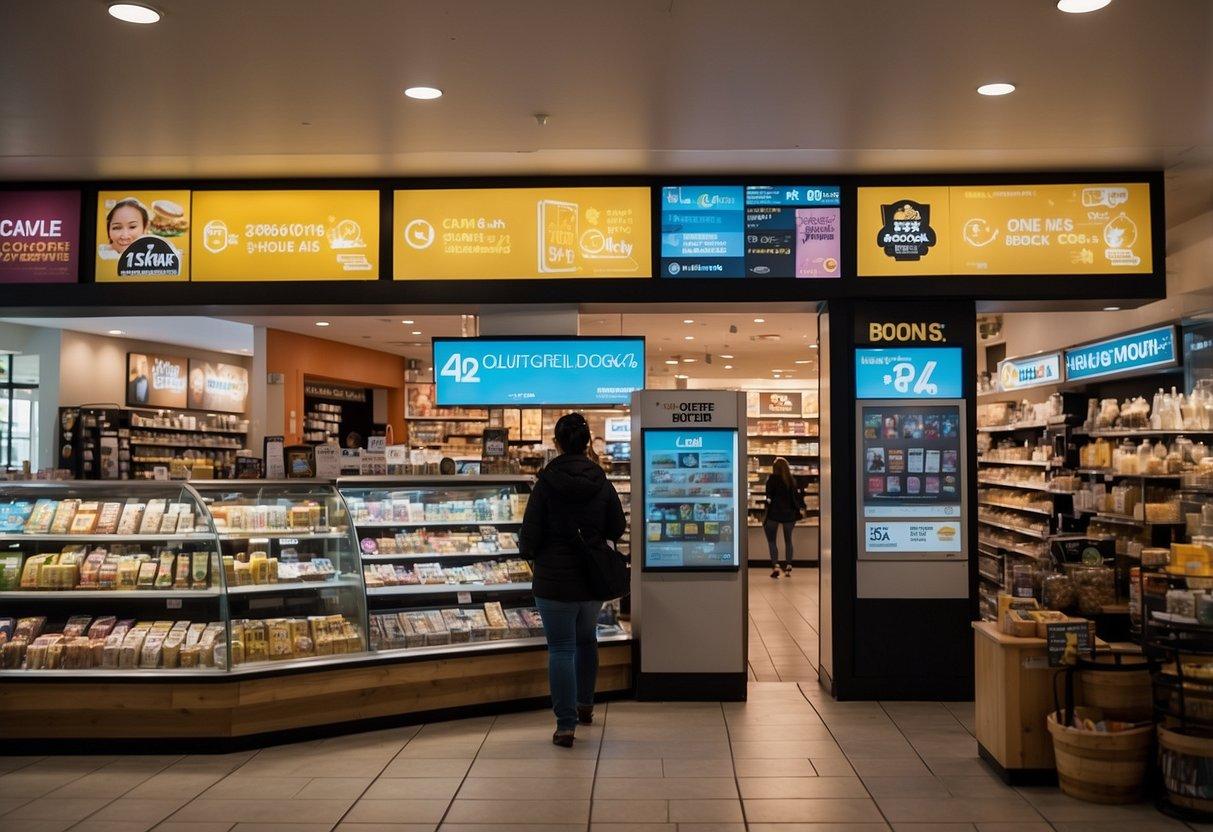
Moroccan start-up FMK Media is deploying digital advertising screens inside convenience stores, supermarkets and tobacco shops, creating a retail-media network positioned directly beside the products consumers purchase every day.
The company currently operates around 180 active points of sale and plans to add another 200 in September before reaching approximately 1,000 locations by the end of 2026. Its longer-term ambition is to expand toward 5,000 proximity outlets.
Brands already using the network include major FMCG names such as Coca-Cola, Procter & Gamble and Mutandis, while advertisers from automotive, telecoms, banking and microfinance are also entering the channel.
That makes this more than an advertising story.
It is another sign that one of Morocco’s oldest retail formats is beginning to acquire a digital infrastructure layer.
Hanouts Still Control The Daily Shopping Moment
Modern supermarkets are expanding rapidly across Morocco.
Convenience chains are growing.
E-commerce is becoming larger.
Yet the traditional neighbourhood shop remains deeply embedded in Moroccan consumer behaviour.
According to Morocco’s Ministry of Industry and Trade, proximity stores account for approximately 58% of sector turnover, 36% of employment and 80% of retail outlets.
That explains why the hanout continues to attract technology companies and consumer brands.
The store may be small.
Its collective market is not.
Millions of purchases happen through neighbourhood shops every day.
Milk.
Water.
Soft drinks.
Snacks.
Cleaning products.
Personal-care products.
Mobile credit.
Household essentials.
A company capable of reaching consumers at that exact moment enters one of the most valuable positions in advertising: immediately before purchase.
Retail Media Changes Where Advertising Happens
Traditional advertising tries to influence consumers before they enter the shop.
Television creates awareness.
Billboards create visibility.
Social media creates engagement.
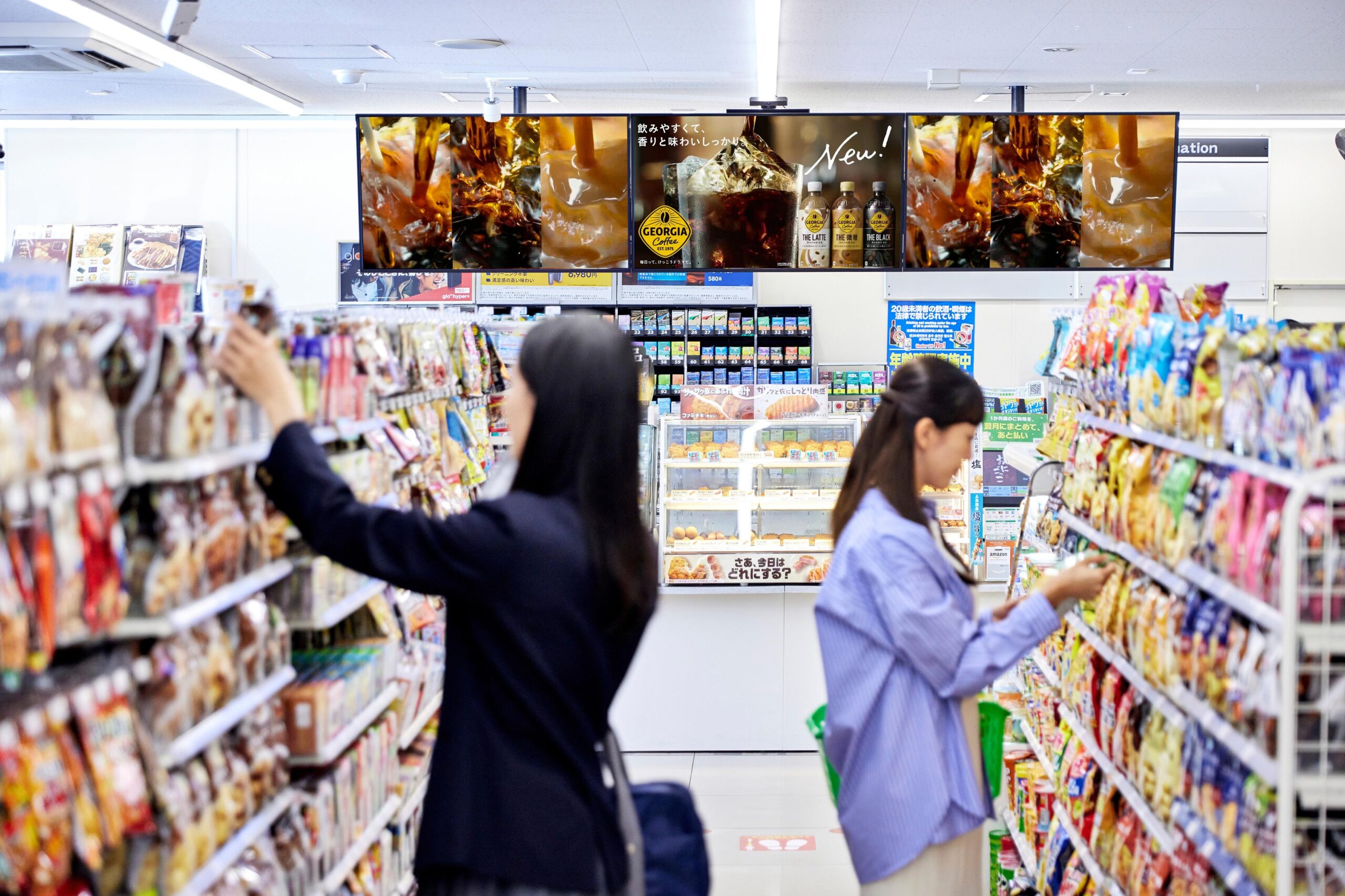
Retail media operates closer to the transaction.
A customer enters intending to buy one drink.
A screen promotes another.
A new product appears beside the shelf.
A discount becomes visible immediately.
The distance between advertising and purchasing becomes several metres rather than several days.
Globally, this model is expanding quickly. Industry estimates cited by FMK Media put the retail-media market at roughly $184 billion in 2025, potentially exceeding $300 billion by 2030.
Morocco’s opportunity is unusual because the country has a vast fragmented neighbourhood-retail network that has historically been difficult to organise as one advertising channel.
Digital screens can begin connecting those individual stores.
1,000 Stores Can Behave Like One Network
A single hanout has limited advertising value to a national brand.
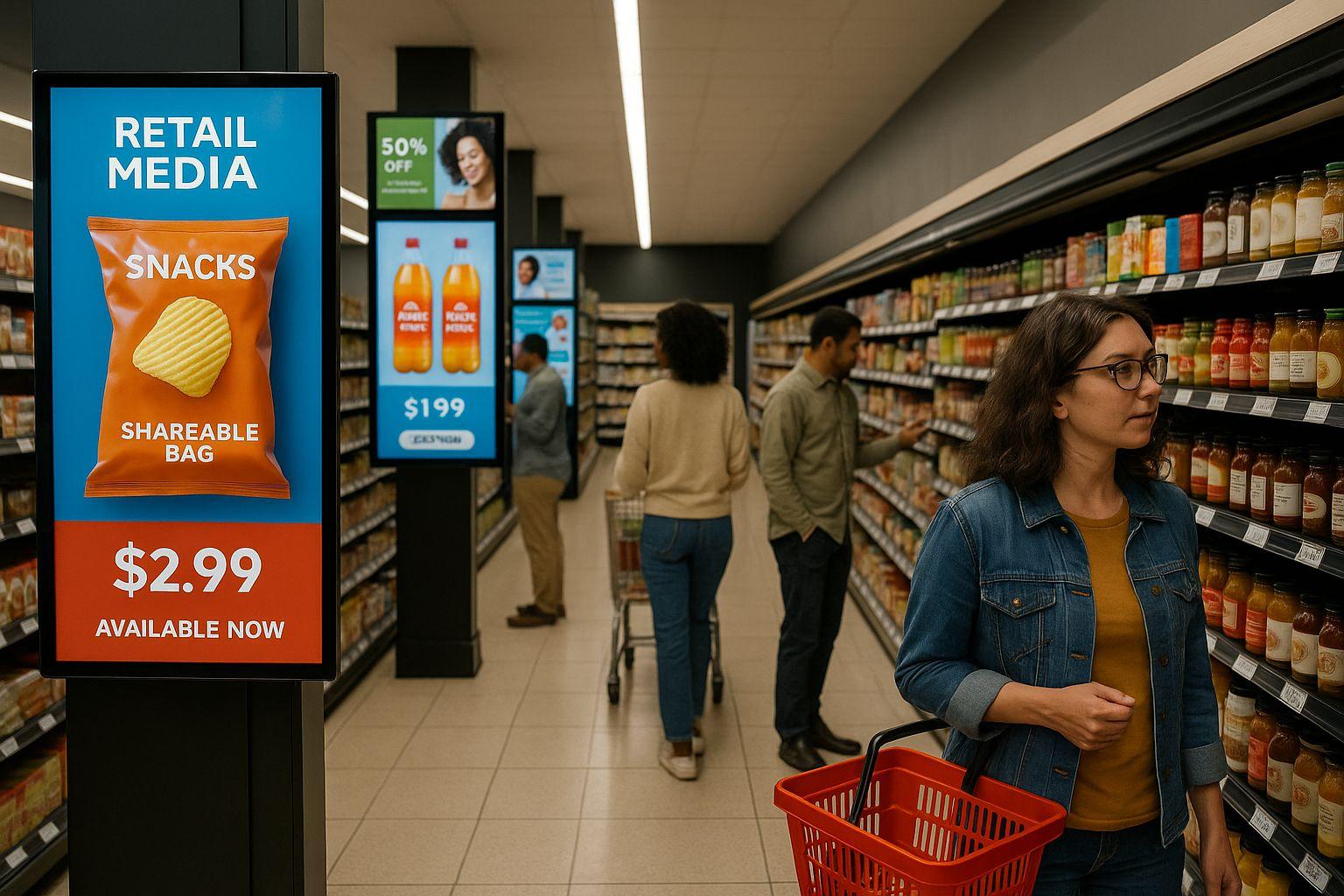
One thousand hanouts connected through one digital platform become something different.
A campaign can potentially be activated simultaneously across Casablanca, Rabat, Tangier, Marrakech and other cities.
Creative content can change centrally.
Different neighbourhoods can receive different campaigns.
A beverage company can promote one product.
A bank can advertise another.
A telecom operator can target customers in specific areas.
This creates network economics.
The physical stores remain independent.
The advertising layer becomes centralised.
That is the important innovation.
FMK does not need to own the shops.
It needs to connect them.
Inventory Can Make Advertising More Intelligent
One of FMK Media’s most interesting propositions is the connection between advertising and actual product availability.
The company says advertised FMCG products are synchronised with in-store inventory so that campaigns promote items available on the shelf.
That sounds simple.
Commercially, it matters enormously.
Advertising a soft drink inside a shop that does not sell it wastes the impression.
Advertising it two metres from available stock can directly influence the transaction.
This is where retail media begins to separate itself from conventional outdoor advertising.
The screen is not simply occupying space.
It can become part of the store’s sales infrastructure.
Over time, stronger inventory integration could make campaigns even more sophisticated.
Promote products with excessive stock.
Stop campaigns when stock runs out.
Activate offers according to location.
Measure whether advertising changes sales.
The closer advertising gets to transaction data, the more valuable the network becomes.
Measurement Will Decide The Business Model
Advertisers increasingly want proof.
How many people saw the campaign?
Where?
When?
What happened afterwards?
FMK plans to begin deploying anonymous thermal-flow sensors by the end of 2026 to measure traffic entering and leaving participating stores. The objective is to provide geographical audience data closer to the measurement standards brands already expect from digital marketing.
This could be crucial.
A billboard may estimate traffic passing the location.
A digital platform can report impressions and clicks.
Retail media needs similarly credible metrics.
If FMK can demonstrate that one neighbourhood receives 4,000 weekly visitors and another receives 9,000, advertisers can value those locations differently.
If future systems connect campaigns with sales results, the commercial argument becomes stronger again.
The advertising industry increasingly pays for measurable outcomes rather than theoretical visibility.
Shopkeepers Need To Benefit Too
The model will work only if the hanout owner gains something meaningful.
Installing screens, maintaining them and giving advertising access to the store must create economic value for the retailer.
That can come through direct revenue sharing.
Better supplier relationships.
Promotional support.
Increased sales.
Eventually, perhaps other digital services.
This is important because Morocco’s traditional retailers are independent entrepreneurs.
They are not branches of a national chain that can simply receive instructions from headquarters.
Each shopkeeper needs a reason to participate.
The strongest model would create a three-way benefit.
Brands gain access to customers.
FMK gains advertising revenue.
Shopkeepers receive additional income or stronger sales.
When all three benefit, the network becomes easier to scale.
FMCG Brands Have The Most Obvious Use Case
For companies such as Coca-Cola, Procter & Gamble or Mutandis, the logic is direct.
Their products are already sold through proximity retail.
Their challenge is influencing which product the customer chooses.
A consumer entering for detergent may still choose between several brands.
A person buying a drink can change preference in seconds.
This creates a valuable final marketing moment.
Retail media can therefore complement traditional campaigns.
The television advertisement builds recognition.
Social media creates engagement.
The hanout screen creates the last reminder.
Then the product sits beside it.
That combination can make advertising spending more accountable.
Banks And Telecoms Make The Model More Interesting
The arrival of advertisers beyond FMCG shows the network could become larger than product promotion.
Banks.
Microfinance companies.
Telecommunications operators.
Automotive brands.
These companies are not necessarily selling something from the hanout shelf.
They value the store because it provides repeated access to neighbourhood audiences.
This transforms the hanout into a local media location.
A bank could advertise a mobile-payment service.
A telecom operator could promote a package.
An automotive company could run geographically targeted awareness campaigns.
The shop becomes part of the city’s communication infrastructure.
That expands the addressable advertising market considerably.
Digitalisation Does Not Require Replacing The Hanout
Morocco’s retail modernisation is sometimes described as a competition between supermarkets and traditional stores.
That may be too simplistic.
The hanout can modernise without becoming a supermarket.
It can retain its strongest advantages.
Location.
Personal relationships.
Flexible purchasing.
Small quantities.
Long opening hours.
Neighbourhood trust.
Technology can be added around that model.
Digital ordering.
Payments.
Inventory management.
Advertising.
Supplier platforms.
Financial services.
Morocco’s Ministry of Industry and Trade has already supported modernisation programmes covering more than 25,000 proximity retailers, with reported improvements in turnover and business practices.
The future may therefore be hybrid rather than replacement.
Retail Data Could Become The Bigger Asset
Advertising screens create visible revenue.
The data behind them may eventually become more valuable.
Morocco’s fragmented retail structure means consumer-goods companies often have less direct visibility into neighbourhood purchasing behaviour than supermarket chains can provide.
Large retailers know exactly what leaves each checkout.
Traditional distribution is less transparent.
As hanouts become more digitally connected, that gap can narrow.
Brands could understand which products move fastest by neighbourhood.
Which promotions work.
Which areas respond to new products.
What time certain purchases happen.
Retailers could improve stock decisions.
Distributors could improve deliveries.
The data layer could therefore influence the entire FMCG supply chain.
Privacy and responsible data governance would need to develop alongside it.
But commercially, the potential is substantial.
5,000 Locations Would Change The Scale
FMK’s longer-term ambition of approximately 5,000 proximity points illustrates where this model becomes particularly interesting.
At that size, the network would no longer look like a start-up experiment.
It could become significant advertising infrastructure.
Thousands of locations.
Millions of store visits.
National campaigns.
Regional targeting.
Real-time creative changes.
Audience measurement.
Eventually sales attribution.
That could give Moroccan advertisers a channel combining characteristics of outdoor advertising, digital marketing and physical retail.
Few media formats sit so close to the moment money changes hands.
Morocco’s Smallest Shops Could Become Digital Assets
The hanout has survived repeated predictions that supermarkets, malls and e-commerce would make traditional retail obsolete.
Its resilience comes from something difficult to replicate.
Convenience.
Trust.
Proximity.
Daily habit.
Now technology companies are discovering that those characteristics are commercially valuable in the digital economy too.
FMK Media’s planned 1,000-screen network is an early example.
The screen itself is not the important part.
The important part is what happens when thousands of independent stores begin behaving like one connected commercial network.
Advertising can become measurable.
Inventory can become visible.
Brands can communicate directly at the point of purchase.
Shopkeepers can gain new revenue.
Retail data can become more structured.
Morocco does not necessarily need to replace its traditional commerce to modernise retail.
It may simply need to connect it.
If FMK reaches 1,000 hanouts this year and eventually thousands more, one of Morocco’s most traditional economic institutions could quietly become one of its most interesting new media platforms.
 Jamal Mahdad, Founder & Editor-in-Chief