
Morocco’s fashion market is becoming more demanding.
Not because another international brand has arrived.
Because established brands are now reinvesting in how they present themselves to Moroccan consumers.
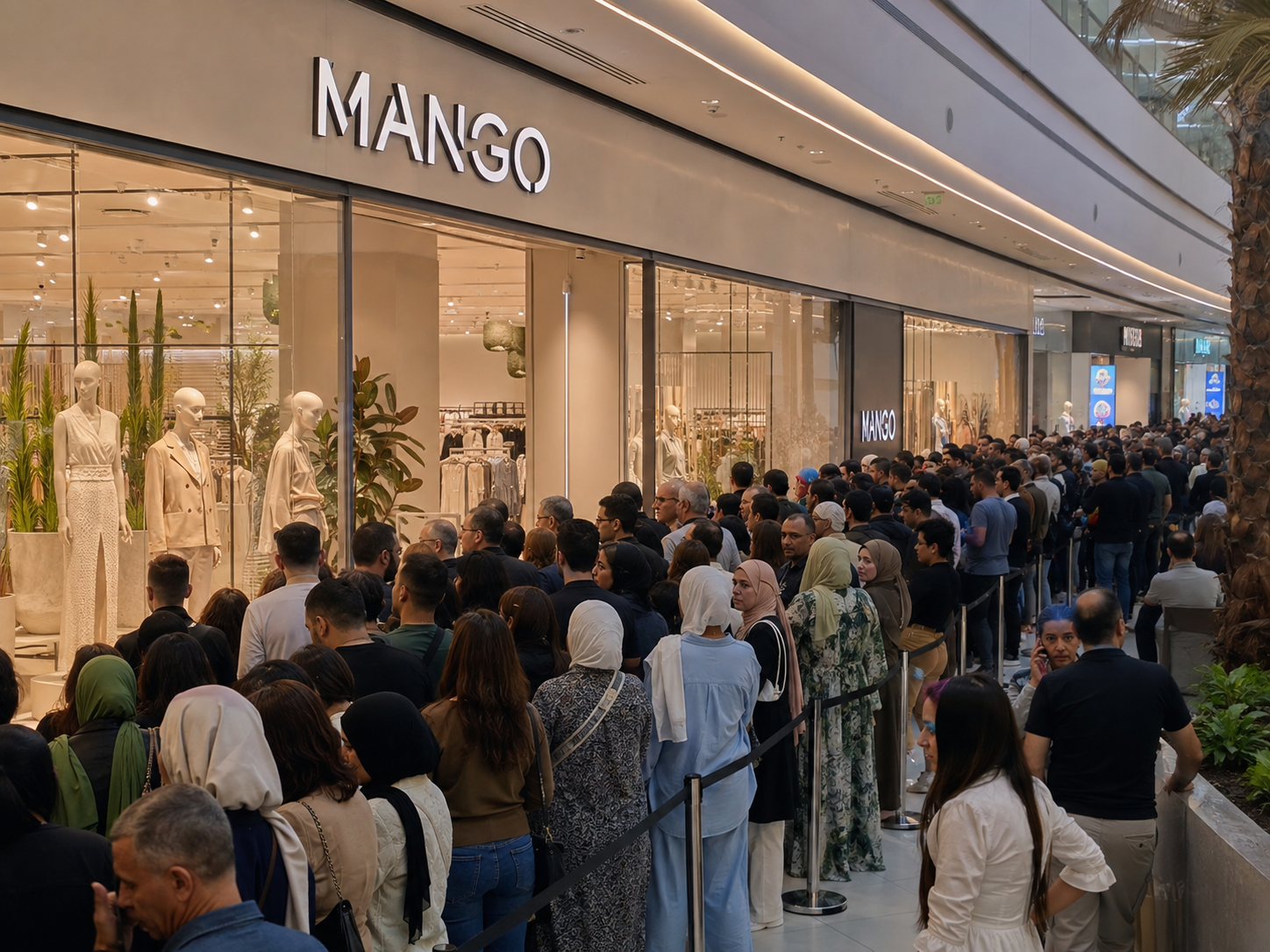
On 18 July 2026, MANGO reopened its Morocco Mall store in Casablanca in a new 405-square-metre location, introducing the brand’s latest “New Med” retail concept. More than 100 customers were reportedly waiting before the reopening.
That sounds like a relatively small retail story.
It is actually part of something larger.
International fashion brands no longer appear to view Morocco simply as an emerging market where opening a store is enough.
They increasingly have to compete on location.
Design.
Experience.
Product selection.
Digital integration.
Customer loyalty.
And this is happening while Moroccan franchise operators are expanding their own capabilities.
The fashion battle is becoming more professional on both sides.
405 Square Metres Is About More Than Space
A larger or better-positioned store is valuable only if it produces more sales.
MANGO’s move within Morocco Mall therefore represents a calculated retail decision.
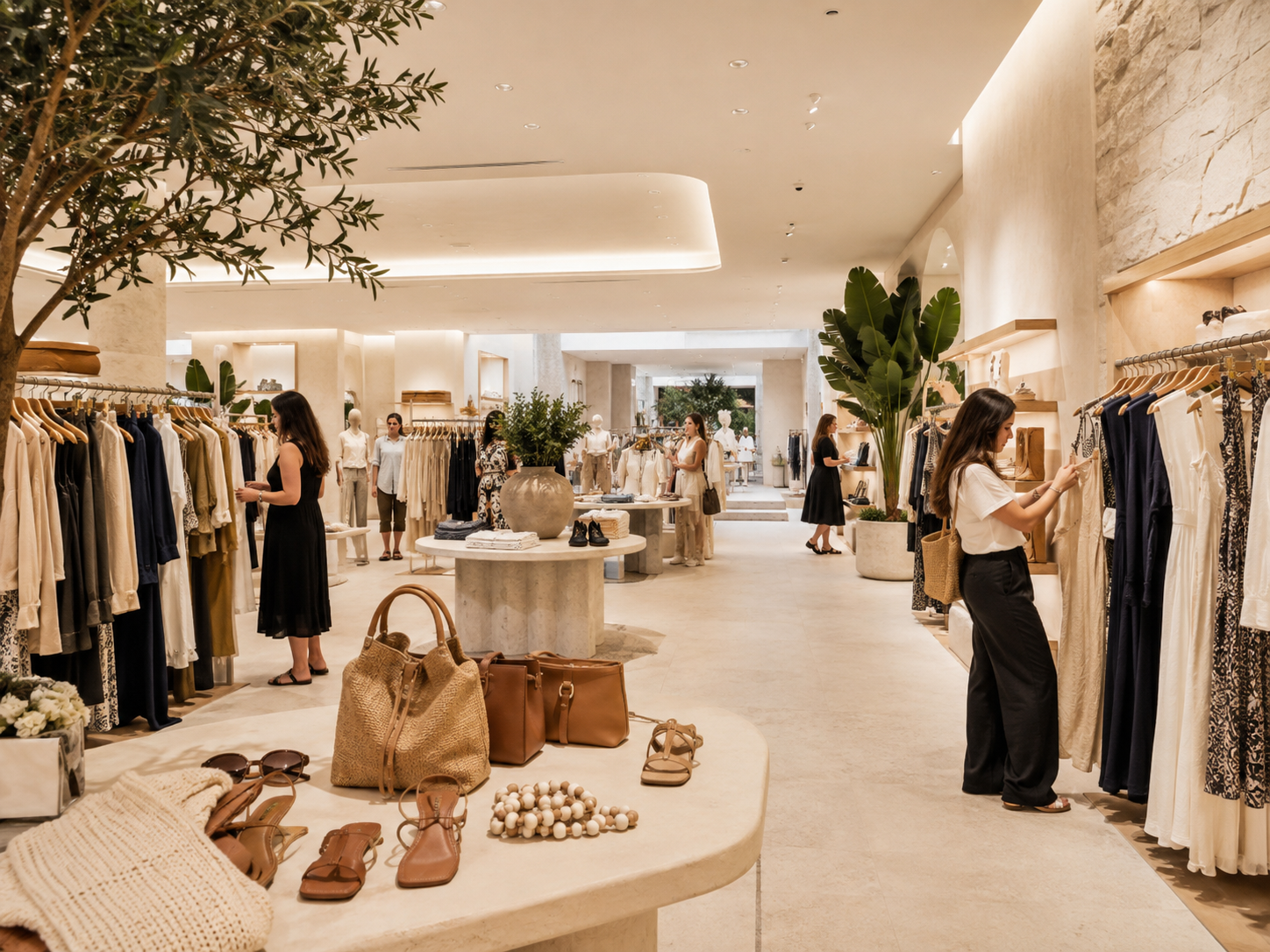
The new store occupies a more prominent position and uses the brand’s Mediterranean-inspired New Med concept across womenswear, footwear and accessories.
That matters because physical fashion retail is increasingly competing with the smartphone.
Customers can discover products online.
Compare prices online.
Follow trends online.
Purchase online.
A store therefore needs to provide something additional.
Immediate access.
Product discovery.
Fit.
Service.
Atmosphere.
Social experience.
Retail design becomes part of customer acquisition.
The shop is no longer simply inventory surrounded by walls.
Morocco Mall Is Becoming A Brand Battlefield
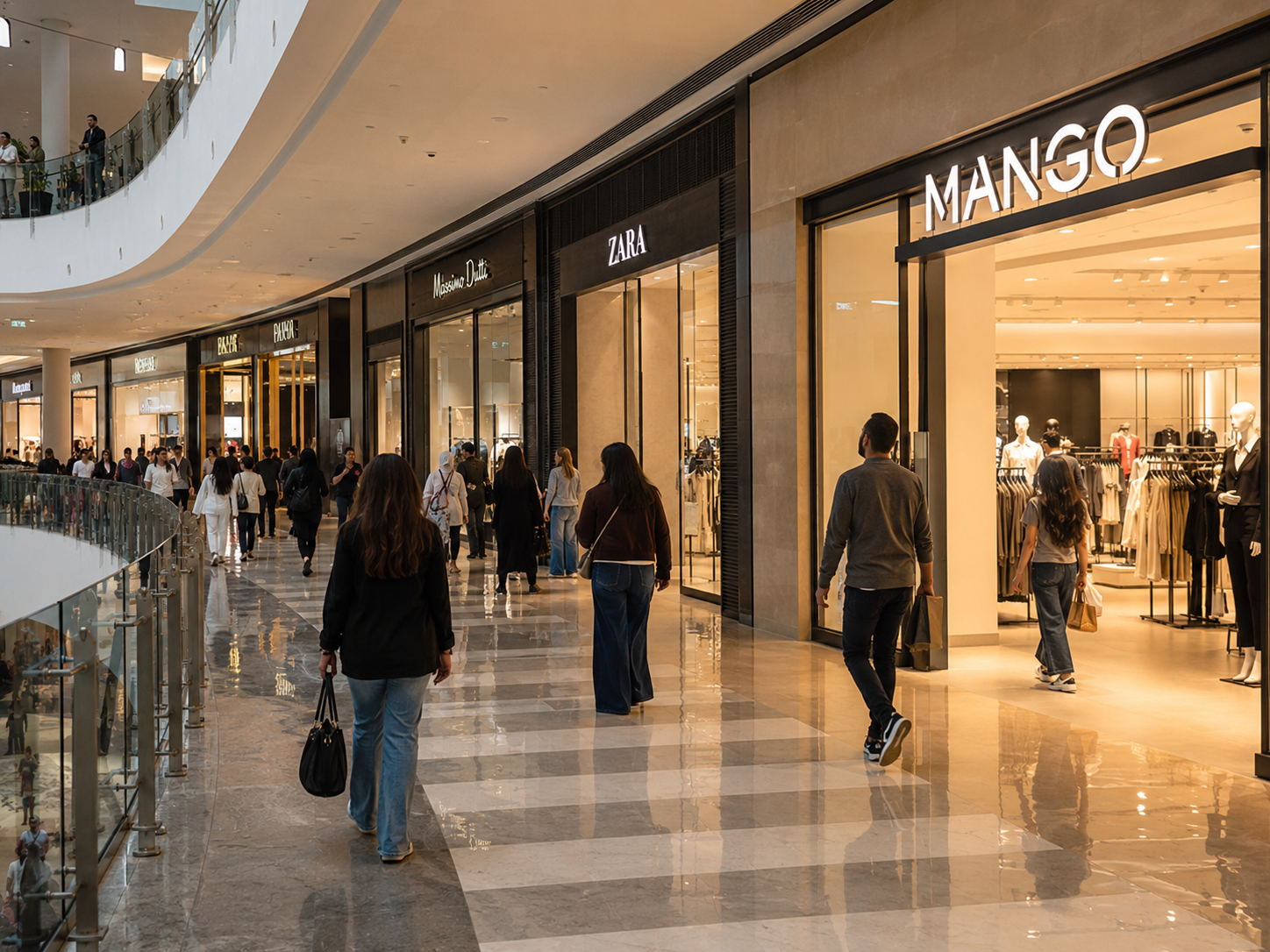
Morocco Mall remains one of the most important locations for international fashion in the country.
For a global brand, presence there provides visibility to both local consumers and visitors.
But premium locations also create pressure.
Rent is significant.
Operating costs are significant.
Competition is visible metres away.
Customers can compare multiple brands during one visit.
That makes performance per square metre critical.
Retailers need to understand which categories produce traffic.
Which generate margin.
Which displays convert.
Which collections remain too long.
A beautiful shop that does not convert visitors into customers is expensive decoration.
Fashion retail is fundamentally a productivity business.
Moroccan Consumers Already Know Global Fashion
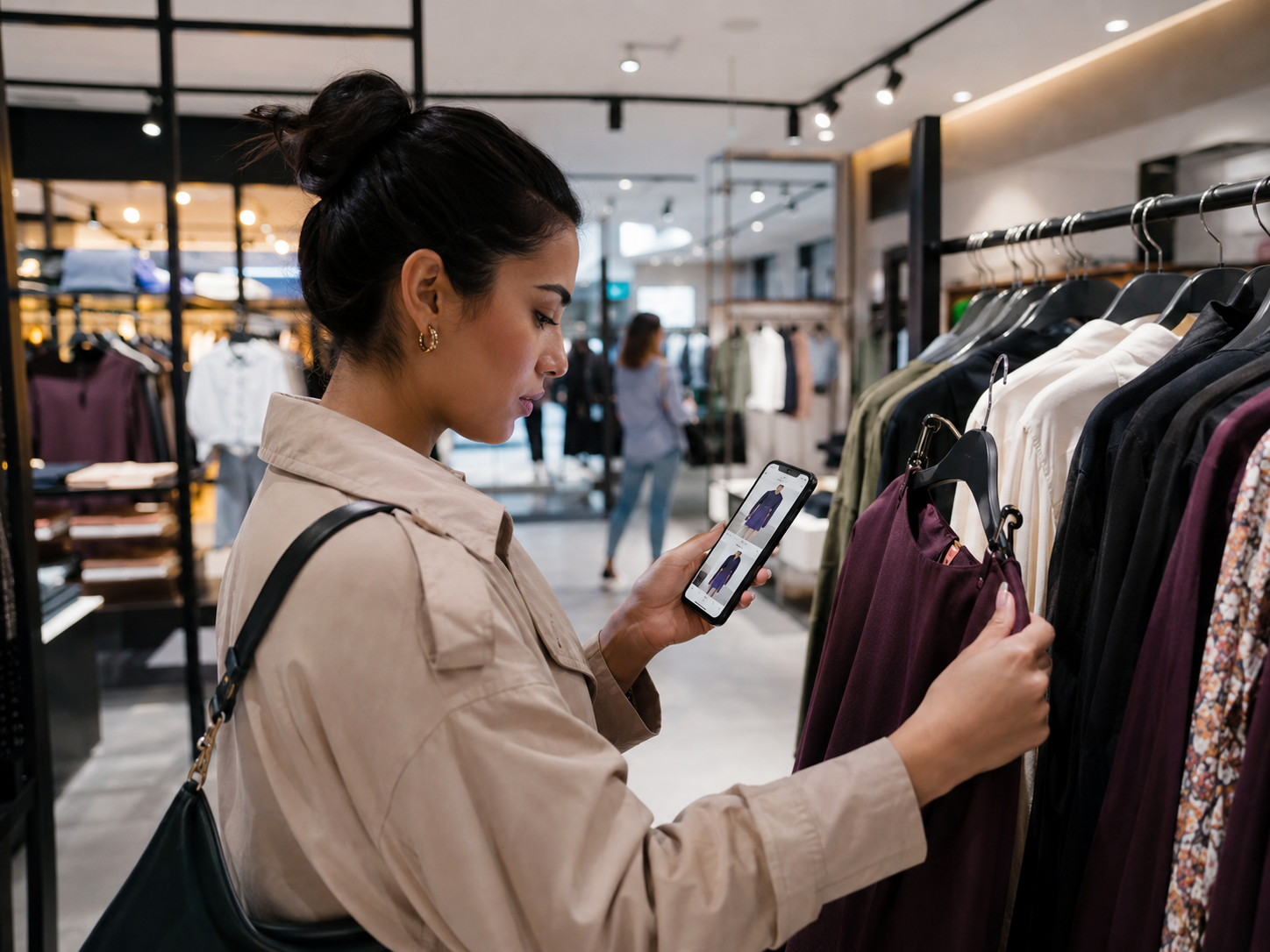
This is another reason the market is changing.
International brands no longer enter Morocco to introduce consumers to global fashion.
Moroccan customers already see global collections instantly through Instagram, TikTok, websites and international travel.
They know prices abroad.
They know product launches.
They know competitors.
That creates pressure on local retail operators.
A collection reaching Casablanca significantly later than Europe becomes more noticeable.
A store with weaker presentation becomes more noticeable.
Poor customer service becomes more noticeable.
Digital transparency has reduced the information advantage retailers once possessed.
The Moroccan consumer increasingly compares locally and globally at the same time.
Fashion Franchises Need Strong Local Operators
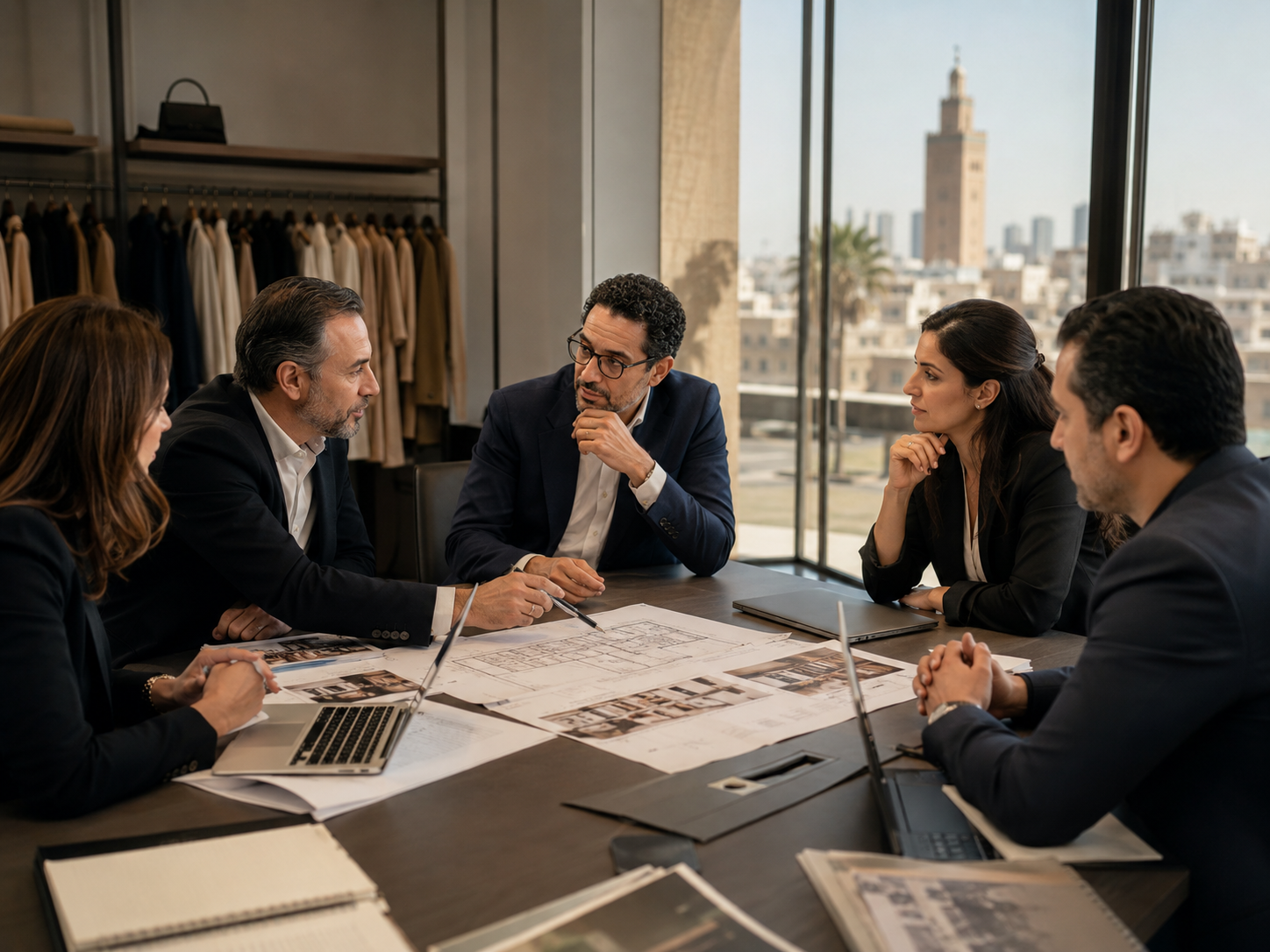
International retail expansion often depends on local partners.
They provide market knowledge.
Real estate relationships.
Recruitment.
Logistics.
Customs expertise.
Store operations.
Marketing.
This layer of the Moroccan economy is becoming increasingly important.
NESK Investment, for example, describes itself as one of Morocco’s leading fashion-franchise operators, managing brands including Stradivarius, Parfois, Aldo and Okaïdi through a network extending from Tangier to Agadir.
The value of such operators grows as the market becomes more complex.
A global brand may possess product and marketing power.
The local partner understands Morocco street by street.
That combination can determine whether international expansion works.
Casablanca Is Still The Testing Ground
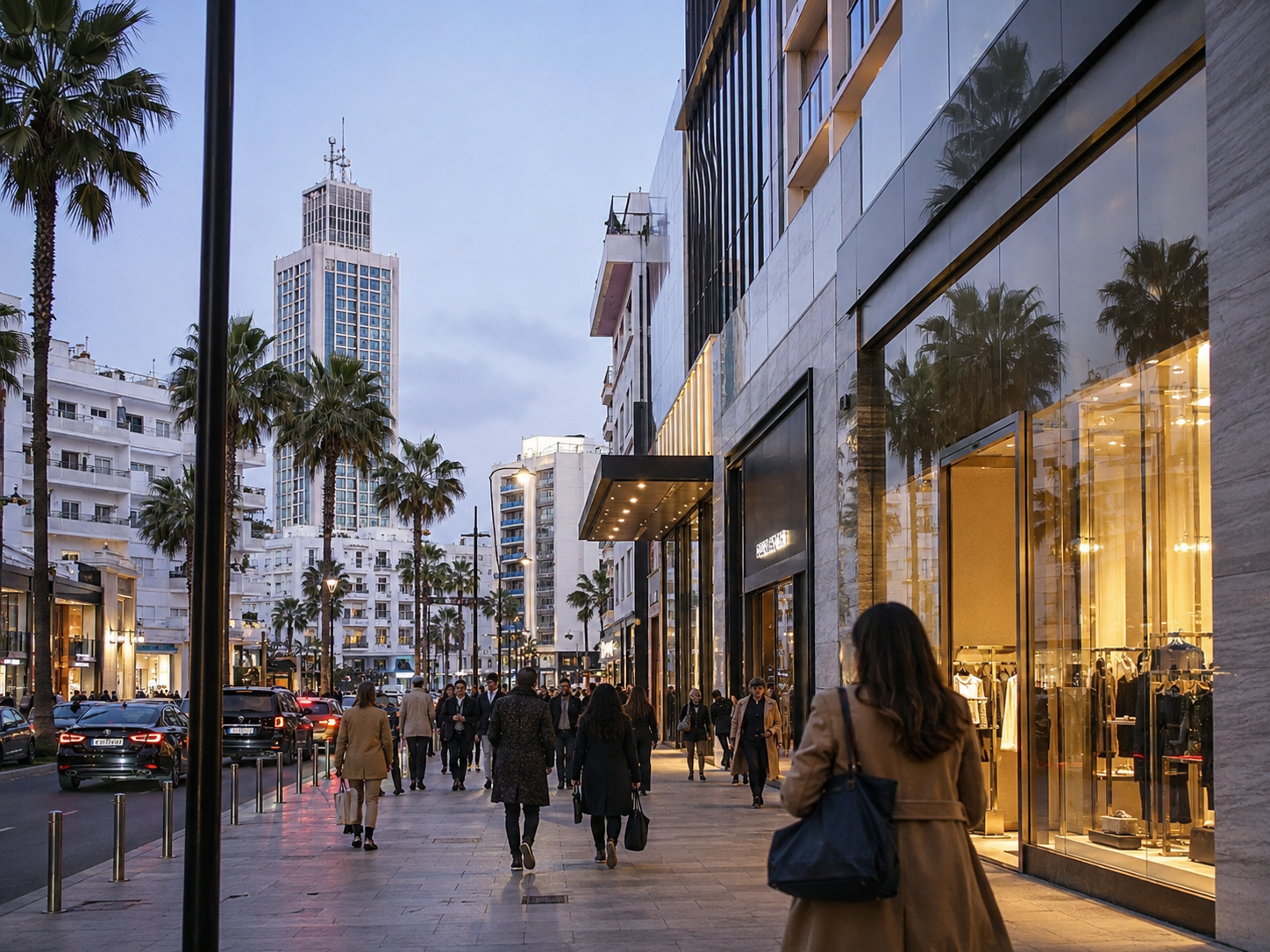
New international fashion concepts frequently begin in Casablanca.
The logic is obvious.
Population.
Purchasing power.
Corporate employment.
Tourism.
Retail infrastructure.
Large malls.
Dense urban districts.
The city offers several different retail environments.
Morocco Mall.
Aeria Mall.
Marina Shopping.
Maârif.
Other commercial centres.
Brands can therefore test different customer segments without leaving one metropolitan area.
Italian fashion retailer Alcott, for example, opened its fifth Casablanca location in Maârif in May 2026, after establishing stores in Morocco Mall, Marina Shopping, Aeria Mall and Californie Mall.
Five stores in one city indicates a market moving beyond simple brand introduction.
It is about network density.
Maârif And Morocco Mall Serve Different Missions
The contrast between Morocco Mall and Maârif is commercially useful.
A mall creates destination shopping.
Customers travel specifically to spend time there.
A dense commercial district like Maârif captures everyday urban movement.
The same fashion brand can therefore serve different purchasing occasions.
Weekend browsing.
Quick after-work shopping.
Tourist spending.
Planned purchases.
Impulse purchases.
This makes location strategy more sophisticated.
The question is no longer simply:
Should we open in Casablanca?
It becomes:
Which Casablanca?
Which district?
Which customer?
Which store size?
Which price mix?
That is a sign of retail-market maturity.
One Store Is Increasingly Not Enough
International brands used to be able to establish prestige through one flagship location.
That model becomes less effective once customers expect convenience.
A shopper living far from Morocco Mall may like a brand but rarely visit.
Multiple locations increase frequency and brand visibility.
The challenge is avoiding cannibalisation.
A new store should capture customers the existing network does not serve efficiently.
Data becomes important.
Customer addresses.
Transaction patterns.
Mall traffic.
Online demand.
Delivery locations.
Retailers increasingly need to know where their customers already live before choosing where the next store should open.
Expansion by intuition becomes expensive.
Fashion Is Also A Logistics Business
Consumers see shirts and shoes.
Retail managers see inventory.
Fashion is difficult because the product loses value quickly.
A winter jacket arriving late is a problem.
A trend-driven collection remaining unsold for months becomes a discount problem.
Wrong sizes create lost sales.
Too much inventory destroys margin.
Too little inventory frustrates customers.
The Moroccan fashion market therefore requires increasingly sophisticated logistics.
Demand forecasting.
Warehouse management.
Rapid replenishment.
Store transfers.
Returns.
Markdown management.
The more locations a retailer operates, the more valuable these capabilities become.
Back-office efficiency eventually determines front-of-store profitability.
MANGO’s Mediterranean Positioning Fits Morocco Naturally
MANGO’s New Med concept emphasises Mediterranean aesthetics, natural materials and a warmer design language.
That is particularly interesting in Morocco.
International brands traditionally imposed relatively standard global store concepts.
Today, retail design increasingly tries to feel culturally or geographically relevant while maintaining global brand consistency.
Morocco sits naturally inside Mediterranean consumer culture.
That creates opportunities for brands to adapt without appearing artificial.
The strongest localisation is not changing the brand completely.
It is making a global brand feel comfortable in the local environment.
Moroccan Craft Can Enter International Retail Design
This creates another potential opportunity.
If international retailers increasingly use Mediterranean and natural design concepts, Moroccan craft industries could become suppliers.
Woodwork.
Zellige-inspired materials.
Textiles.
Lighting.
Metalwork.
Furniture.
Decorative elements.
Retail fit-outs require significant spending.
Morocco should capture more of that value locally.
A fashion store operating in Casablanca does not need every interior component imported from Europe.
Local architects and manufacturers can increasingly work to international brand specifications.
The store itself can therefore become another market for Moroccan design capability.
Fashion Retail Creates More Jobs Than Sales Staff
A new store visibly employs sales advisers and managers.
The wider employment impact is larger.
Visual merchandisers.
Warehouse employees.
Marketing teams.
Accountants.
Logistics specialists.
E-commerce staff.
Maintenance.
Security.
Fit-out contractors.
Digital marketers.
Photographers.
Retail property managers.
As international brand networks expand, Morocco develops a deeper pool of people experienced in modern retail operations.
That talent can later move into Moroccan companies.
Some may launch their own brands.
International franchises can therefore function as training grounds for a domestic retail ecosystem.
Moroccan Fashion Brands Need To Learn From This
The international expansion story should not be one-directional.
Moroccan entrepreneurs can observe how global brands operate.
Store productivity.
Collection planning.
Visual merchandising.
Inventory control.
Digital marketing.
Customer databases.
Expansion discipline.
The long-term ambition should include Moroccan fashion companies developing the same capabilities.
Morocco has a textile and apparel manufacturing base.
It has designers.
It has craftsmanship.
What it needs more of are scalable consumer brands.
A country captures one level of value by manufacturing clothing for others.
It captures another when its own brand owns the customer relationship.
Manufacturing And Retail Should Connect More Closely
Morocco already produces garments for international markets.
Yet the manufacturing sector and domestic fashion-brand ecosystem are not always deeply connected.
That represents an opportunity.
Local manufacturing can give Moroccan brands shorter production runs.
Faster replenishment.
Greater flexibility.
Reduced shipping time.
Better control.
A Moroccan fashion company able to design, manufacture and retail locally can potentially respond to trends more quickly than a competitor importing everything from distant markets.
This resembles the broader nearshoring advantage Morocco sells internationally.
The same logic can work domestically.
Fast Fashion Has Changed Customer Expectations
Consumers increasingly expect frequent newness.
Collections do not change only four times per year.
New products arrive continuously.
This creates operational pressure.
Retailers need faster supply chains.
Marketing needs constant content.
Stores need regular visual updates.
Customers need reasons to return.
A brand opening a beautiful store and leaving the same product mix for months will struggle.
Retail experience is dynamic.
MANGO’s relocation therefore matters partly because physical investment needs to support a much faster merchandising cycle.
The store is the stage.
The product must keep changing.
E-Commerce Will Not Kill Fashion Stores
Fashion has been predicted to move almost entirely online for years.
Physical stores remain valuable because clothing is tactile.
Customers want to see colour.
Feel fabric.
Try size.
Compare fit.
Immediate possession matters.
But e-commerce changes what the store must do.
A customer may discover online and buy in-store.
Try in-store and order another size online.
Return online purchases physically.
Check stock digitally before travelling.
This creates omnichannel retail.
The best retailer no longer asks whether the customer is online or offline.
It treats both as one relationship.
Moroccan fashion operators need systems capable of connecting them.
Inventory Visibility Is Becoming Essential
Imagine seeing a jacket online.
You travel to Morocco Mall.
Your size is unavailable.
The brand actually has it at another Casablanca store.
Without connected inventory, that becomes a lost sale.
With connected inventory, several options appear.
Reserve elsewhere.
Ship to customer.
Transfer store-to-store.
Order online.
This sounds operationally basic.
Many retail systems still struggle with it.
As Moroccan fashion networks expand, unified inventory can become one of the strongest competitive advantages.
Convenience increasingly wins customer loyalty.
Malls Are Becoming Experience Platforms
Fashion brands also benefit from a wider transformation in Moroccan malls.
Modern centres increasingly combine:
Shopping.
Food.
Cinema.
Entertainment.
Fitness.
Children’s activities.
Events.
The goal is to increase dwell time.
A customer spending four hours inside a mall has more opportunities to make purchases than someone entering one store and leaving.
This benefits fashion retailers even when they do not directly operate entertainment businesses.
The mall creates traffic.
The brand converts part of it.
This is why location inside a strong mixed-use destination remains valuable despite e-commerce.
Tourism Supports Premium Retail
Morocco’s record tourism growth adds another customer segment.
International visitors spend differently.
Some already know global brands and may purchase because prices, availability or convenience work for them.
Diaspora visitors create another important seasonal market.
Summer travel can increase demand significantly in Casablanca, Tangier, Marrakech and other cities.
Retailers therefore operate within a customer base that changes throughout the year.
Domestic consumers.
Foreign tourists.
MRE visitors.
Business travellers.
A good fashion operator understands when each segment appears and adjusts inventory accordingly.
JOTT Shows That International Expansion Can Also Go Wrong
The wider European fashion market also provides a warning.
French outerwear brand JOTT entered judicial restructuring in late 2025 after financial and operational difficulties, despite having pursued international expansion under majority owner L Catterton. Its French operating entities reported 2024 revenue of €55 million and €24 million respectively.
In April 2026, the company was taken over by Amoniss, the investment vehicle associated with entrepreneur Salih Halassi.
The lesson is relevant well beyond JOTT.
Expansion can destroy value when the cost structure grows faster than the brand.
More stores do not automatically mean a stronger company.
More countries do not automatically mean better profitability.
Retail growth must remain disciplined.
Morocco Should Remember That Lesson
Morocco’s consumer market is attractive.
That can tempt operators to open too quickly.
Casablanca.
Rabat.
Marrakech.
Tangier.
Agadir.
Fez.
Every city may appear to represent an opportunity.
But stores create fixed costs.
Rent.
Employees.
Inventory.
Fit-out.
Utilities.
Marketing.
A network can generate impressive revenue while producing weak cash returns if locations are poorly selected.
The market therefore needs stronger retail analytics.
Sales per square metre.
Gross margin.
Inventory turnover.
Store contribution.
Customer acquisition cost.
Expansion should follow these numbers.
Not enthusiasm alone.
Franchise Operators Can Become Major Moroccan Companies
International brands often receive most of the public attention.
The Moroccan operators behind them may eventually become more strategically important.
A strong franchise group can manage several brands through shared infrastructure.
Warehouses.
Finance.
HR.
Real estate.
Marketing.
Technology.
Management.
Each additional brand can use the platform.
That creates scale.
Over time, these operators can become consumer conglomerates rather than simple franchisees.
Some may later acquire brands.
Others may develop Moroccan concepts.
Retail capability itself becomes an asset.
Morocco Could Become A North African Test Market
For international brands considering wider regional expansion, Morocco has several advantages.
Modern malls.
Tourism.
Urban consumers.
Established franchise partners.
Geographic proximity to Europe.
A developed commercial-property sector.
That can make Morocco a useful testing ground for North Africa.
A company can learn:
Which price points work.
Which store formats work.
How local consumers respond.
What assortment needs adaptation.
A successful Moroccan operation can then support a wider regional strategy.
This gives local operators another argument when negotiating franchise rights.
They are not simply selling access to Morocco.
They can offer regional expertise.
Customer Experience Will Separate Winners
As more international brands compete, products alone become less differentiating.
Several retailers may offer similar fashion at similar prices.
Then experience matters.
Changing rooms.
Queue times.
Staff knowledge.
Returns.
Online ordering.
Loyalty benefits.
Store atmosphere.
Stock availability.
The brands that make shopping easiest gain an advantage.
Retailers sometimes spend millions on store design and underinvest in employee training.
That is a mistake.
The most sophisticated physical store still depends on the person interacting with the customer.
MANGO’s 405 Square Metres Sends A Larger Signal
MANGO’s reopened 405-square-metre Morocco Mall store is not Morocco’s biggest investment story.
That is precisely what makes it interesting.
It shows what happens after a market has already attracted international brands.
The next stage is optimisation.
Better locations.
Better concepts.
Denser networks.
More local expertise.
More sophisticated franchise operators.
More integration between digital and physical retail.
MANGO is reinvesting.
Alcott has expanded to five Casablanca stores.
Established Moroccan operators already manage multi-brand networks across several cities.
These are signals of a market becoming more competitive.
Morocco’s fashion economy is moving beyond the question of whether international brands will come.
Many are already here.
The more interesting question now is which brands and operators can turn Moroccan consumer demand into a profitable national network without expanding faster than the economics allow.
That is the difference between opening stores and building a retail business.
 Jamal Mahdad, Founder & Editor-in-Chief