
Morocco’s television and radio industry entered a new regulatory period today.
From 15 August until 22 September 2026, Moroccan audiovisual broadcasters are operating under a special 39-day framework established by the Haute Autorité de la Communication Audiovisuelle ahead of the legislative elections scheduled for 23 September.
The political rules will naturally receive most of the attention.
But one provision has implications far beyond one election.
Artificial intelligence.
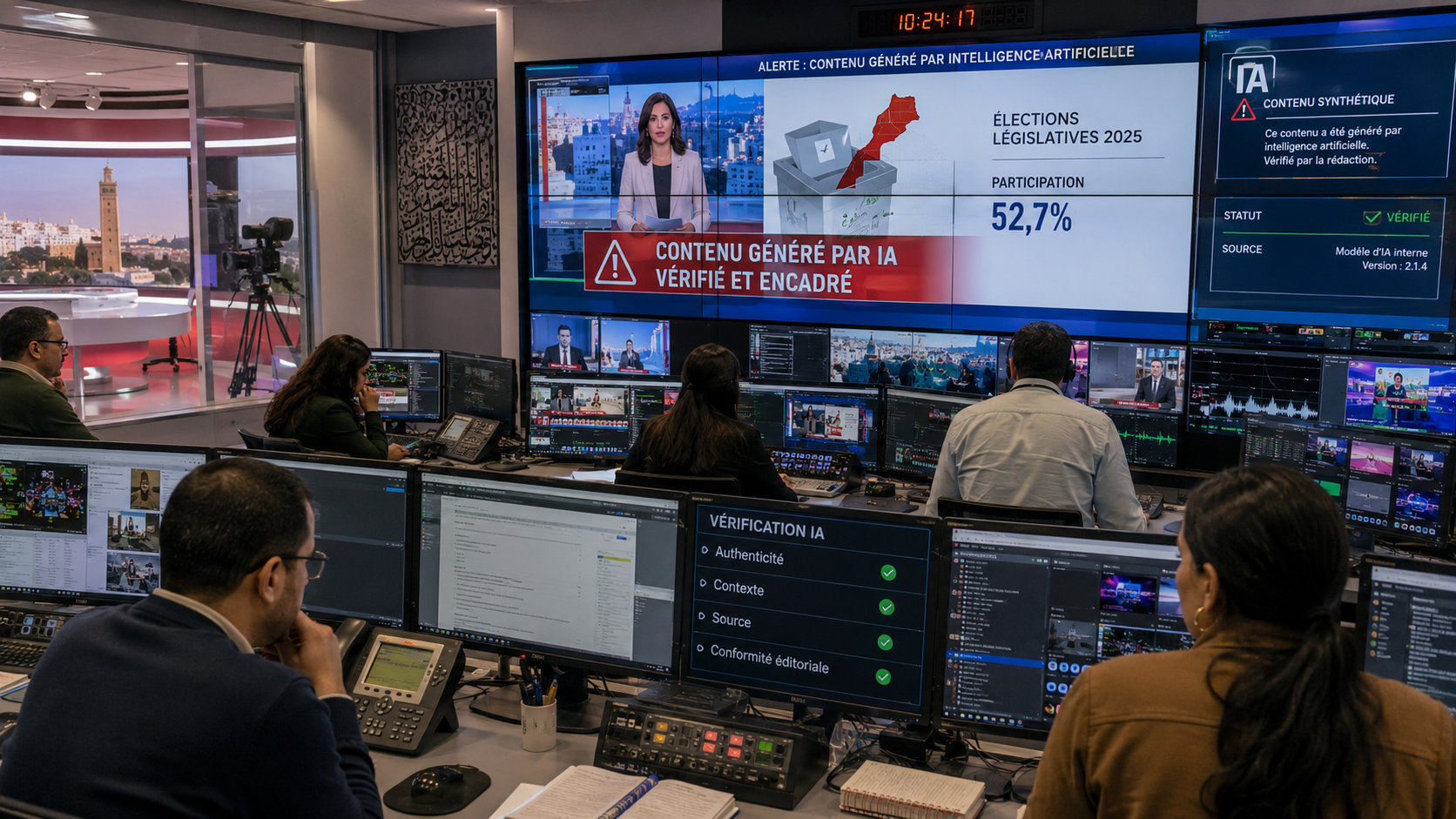
Under Decision 50-26, broadcasters must not air electoral content generated or altered by AI when it could mislead viewers or undermine the credibility of public debate. AI-generated or modified material used for explanatory, educational or verification purposes must be accompanied by a clear and permanent indication that artificial intelligence was used.
That makes the next 39 days an important test for Morocco’s media industry.
Because broadcasters now need to answer a question every television company in the world will eventually face:
How do you use artificial intelligence without destroying audience trust?
AI Has Made Fake Content Much Cheaper
Creating convincing false audiovisual material once required expertise.
Professional editing.
Expensive software.
Time.
Studios.
That barrier has collapsed.
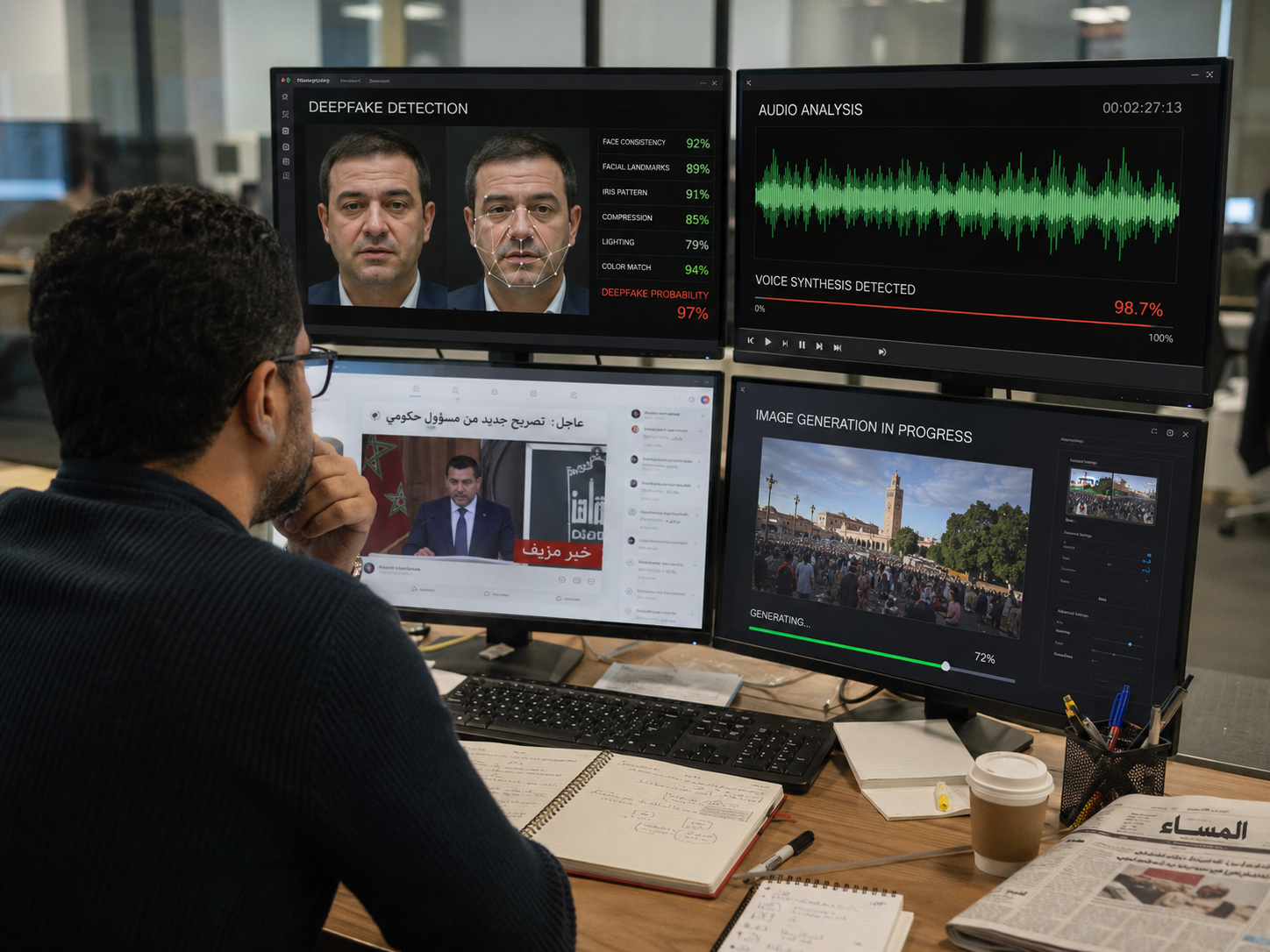
A realistic artificial voice can now be produced quickly.
Faces can be modified.
Videos can be manipulated.
Images can be generated from text.
Entire conversations can be fabricated.
The production cost of deception has fallen dramatically.
This changes the media business.
Broadcasters are no longer competing only against other professional newsrooms.
They operate inside an information environment where almost anyone can create content that appears professionally produced.
Verification therefore becomes more valuable.
Television’s Most Valuable Asset Is Trust
Broadcasters own cameras.
Studios.
Archives.
Transmission infrastructure.
Those are valuable assets.
But their most valuable asset may be reputation.
A viewer watches an established television channel partly because they expect someone has checked what appears on screen.
If that expectation disappears, professional broadcasting begins competing on exactly the same terms as anonymous social-media accounts.
That would destroy much of its economic advantage.
AI therefore creates an interesting paradox.
It can reduce production costs.
It can improve efficiency.
But careless use can weaken the very trust that makes professional media valuable.
Moroccan broadcasters need to capture the first benefit without creating the second problem.
The New Rule Creates A Labelling Standard
The HACA framework is particularly interesting because it does not simply say that AI is bad.
It distinguishes between deceptive use and transparent use.
Artificially generated or modified electoral material that could mislead the audience is prohibited.
But AI-generated material can still be used for explanation, education or verification when its artificial nature is clearly identified.
That distinction matters.
Broadcasters can use technology.
They simply cannot allow the audience to mistake synthetic material for reality.
This could become an important principle well beyond election coverage.
Transparency may become the basic operating rule of AI-era broadcasting.
Newsrooms Need To Know Where Every Image Came From
The old newsroom question was:
Is this footage authentic?
The AI-era question is more complicated.
Was it generated?
Was it partially modified?
Was the audio replaced?
Was the background changed?
Was the original video edited misleadingly?
Was the image enhanced?
Was an AI reconstruction used?
This requires stronger provenance systems.
Editors need to know where material originated before it reaches air.
A video arriving through WhatsApp cannot simply be treated as usable because it looks convincing.
The more realistic artificial media becomes, the less reliable visual appearance becomes as evidence.
Verification increasingly needs technical processes.
AI Detection Will Become A Media Technology Market
This creates a business opportunity.
Broadcasters need tools capable of analysing suspicious material.
Metadata.
Image inconsistencies.
Synthetic audio.
Manipulated video.
Content provenance.
Source history.
There will never be a perfect detector.
Generation technology and detection technology evolve together.
But professional broadcasters will increasingly purchase verification software in the same way they purchase editing systems or cybersecurity.
Moroccan technology companies could participate.
A domestic market for media-authentication tools may eventually develop around broadcasters, publishers, public institutions and corporate communications teams.
AI creates the problem.
It can also create a new technology industry around solving it.
Journalists Need New Skills
Traditional journalism training emphasised interviewing, sourcing, writing and verification.
Those remain essential.
The skill set now needs to expand.
Reverse-image search.
Metadata analysis.
AI-generated voice detection.
Frame-by-frame video examination.
Geolocation.
Source authentication.
Digital forensics.
A journalist does not need to become a software engineer.
But newsrooms increasingly need specialists who understand manipulated media.
The same way television once needed camera technicians, modern newsrooms will need verification technicians.
That creates new employment categories inside media.
Every Broadcaster Needs An AI Policy
The HACA rules apply specifically to the electoral period and audiovisual operators.
But the underlying issue is permanent.
Media companies should therefore develop internal AI rules that apply every day.
Which tools may journalists use?
Can AI write headlines?
Can it translate interviews?
Can it generate voiceovers?
Can it recreate missing footage?
Can synthetic images be used as illustrations?
How should AI-assisted work be labelled?
Who approves publication?
These decisions should not be improvised after a controversy.
A clear internal policy protects staff and audiences.
It also reduces legal and reputational risk.
Translation Could Be One Of AI’s Best Uses
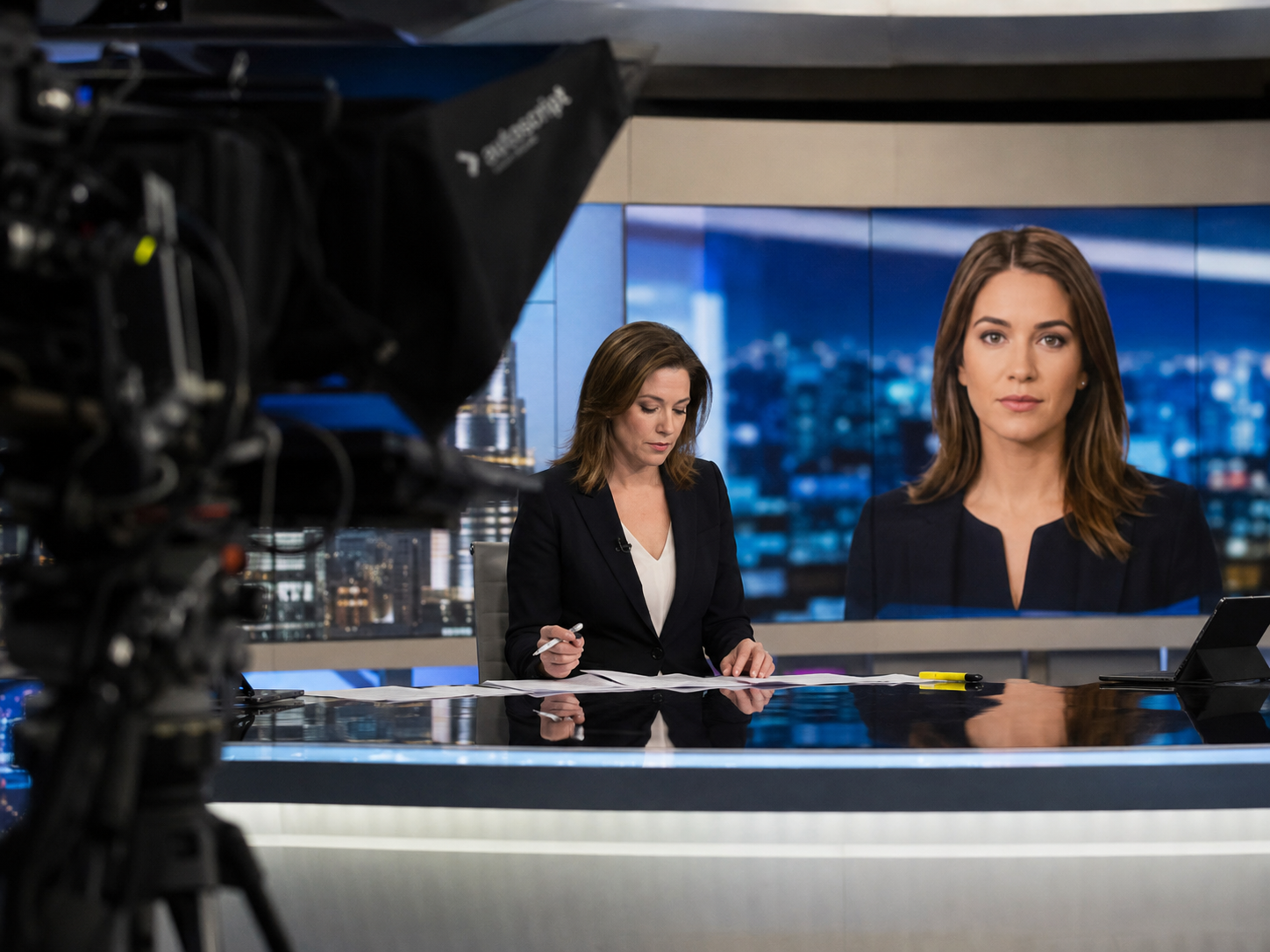
Moroccan media has an unusual opportunity because of language.
Arabic.
French.
Amazigh.
English increasingly matters internationally.
Spanish can matter regionally.
Producing content professionally across several languages is expensive.
AI can help reduce that cost.
Transcription.
Translation.
Subtitling.
Draft dubbing.
Search.
Archive indexing.
These are lower-risk applications because the technology assists existing verified content rather than inventing facts.
Used properly, AI can allow one Moroccan production to reach several audiences much more efficiently.
That can strengthen both public-service media and commercial broadcasters.
Archives Could Become Much More Valuable
Television companies possess decades of material.
News footage.
Interviews.
Sports.
Culture.
Entertainment.
Historic events.
Much of it is difficult to search manually.
AI can automatically identify speakers, locations and subjects.
It can transcribe old programmes.
Translate them.
Categorise footage.
This makes archives commercially useful again.
A broadcaster preparing a documentary can find relevant footage in minutes instead of searching manually through thousands of hours.
Archives can become streaming content.
Documentary material.
Social clips.
Licensing assets.
AI could therefore unlock economic value from content that broadcasters already own.
Synthetic Presenters Create A Harder Question
Some media companies internationally have experimented with AI-generated presenters.
The technology can reduce production cost.
It can also create an uncomfortable customer experience.
Viewers develop relationships with human presenters.
Trust depends partly on understanding that another person is speaking to them.
Synthetic presenters may work for simple information.
Weather.
Automated updates.
Instructional content.
But using them in journalism raises larger questions.
Who is responsible for what the presenter says?
Does the audience know the presenter is artificial?
Is a human editor supervising the output?
Moroccan broadcasters should approach this carefully.
Efficiency is useful.
Human accountability remains essential.
Entertainment Programmes Are Part Of The Rules Too
The HACA decision also requires a strict separation between electoral communication and recreational, cultural and entertainment programming, designed to prevent indirect or disguised political communication during the period.
That matters for entertainment broadcasters.
Talk shows.
Celebrity programmes.
Cultural shows.
Morning television.
Radio entertainment.
Influencer appearances.
Political content can enter these programmes indirectly even when they are not labelled as political broadcasts.
The rule means producers need stronger editorial controls over guest appearances and programme formats.
Entertainment cannot become an accidental loophole.
Influencers Are Now Part Of Broadcast Governance
Another modern element of the framework concerns experts, academics and influencers appearing in election-related programming.
Broadcasters are required to provide transparency around potential conflicts of interest.
This reflects how media has changed.
Influencers are no longer outside mainstream media.
They appear on television.
Television clips circulate on influencer accounts.
Social media commentary enters broadcasting.
The boundary between professional media and creator media is disappearing.
That means governance needs to follow the content, not simply the job title of the person speaking.
A creator with millions of followers can influence an audience as much as a conventional broadcaster.
AI Makes Social Media And Television More Interdependent
A manipulated clip may originate on social media and become a television story within hours.
The reverse also happens.
A television interview is clipped and redistributed online.
This means broadcasters cannot protect themselves by verifying only material produced internally.
External content enters the newsroom continuously.
The faster a story spreads online, the greater the pressure to air it quickly.
That creates the dangerous trade-off.
Speed versus verification.
AI makes verification slower at exactly the moment social media demands faster reaction.
Professional broadcasters will need workflows that preserve accuracy without making them irrelevant to breaking news.
Verification Could Become A Dedicated Desk
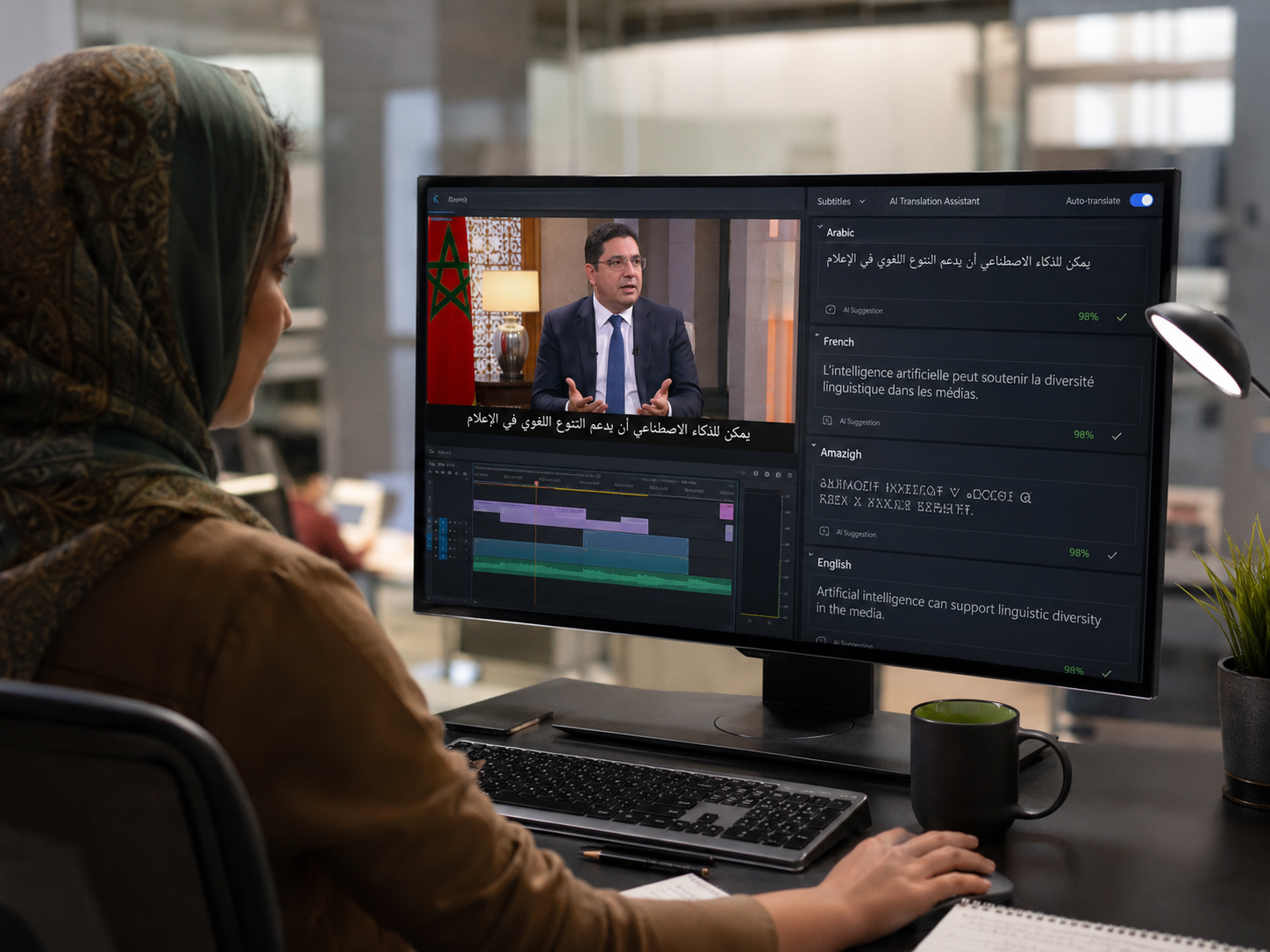
Large Moroccan newsrooms may eventually need central verification teams.
Instead of every journalist trying to authenticate complex material independently, specialised desks can support the entire newsroom.
Check video.
Verify images.
Contact sources.
Analyse metadata.
Document findings.
Maintain verification tools.
This creates consistency.
It also protects reporters from making technical judgments outside their expertise.
The structure already exists in parts of international journalism.
AI could make it standard.
Labelling Needs To Be Obvious
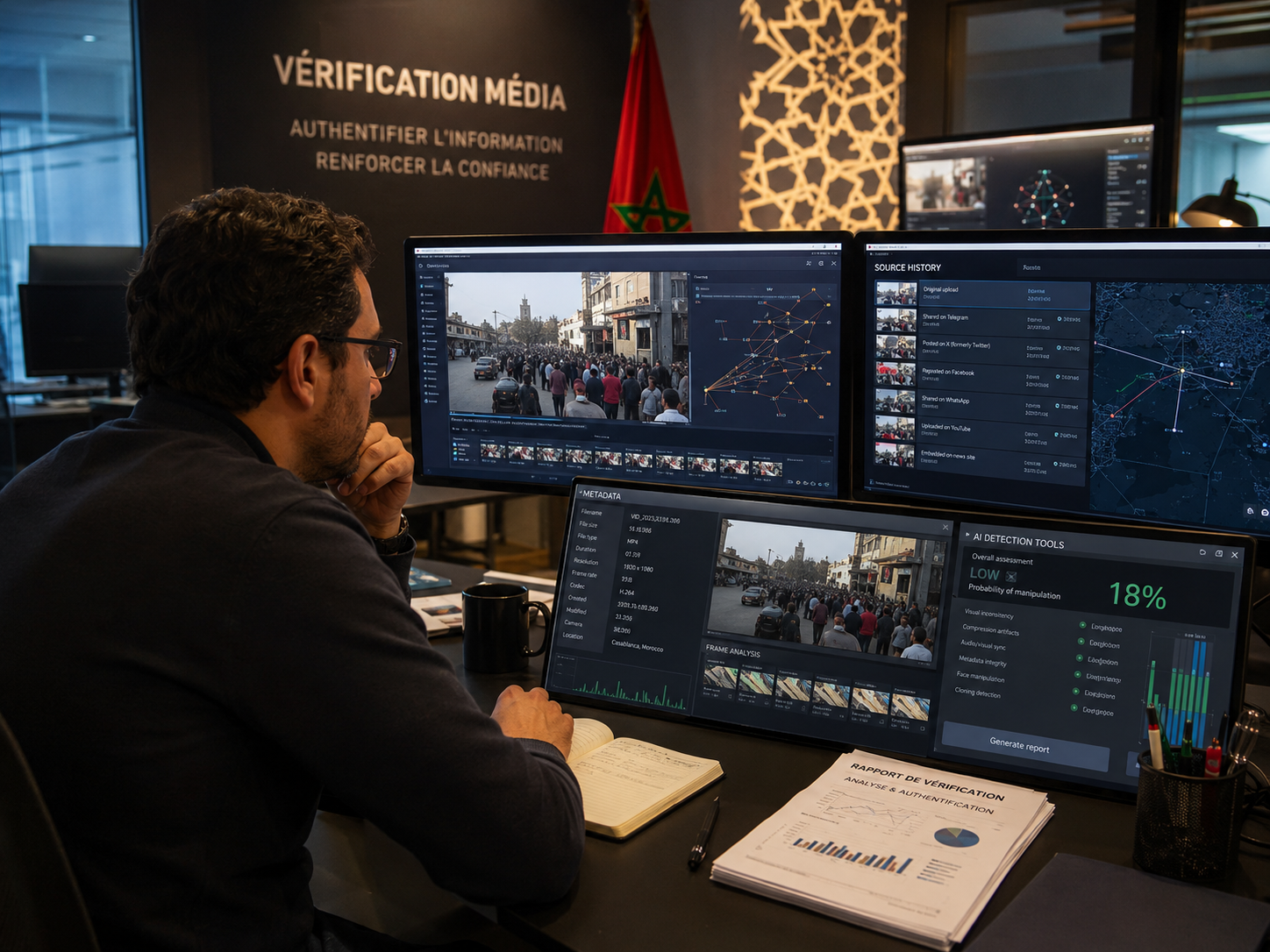
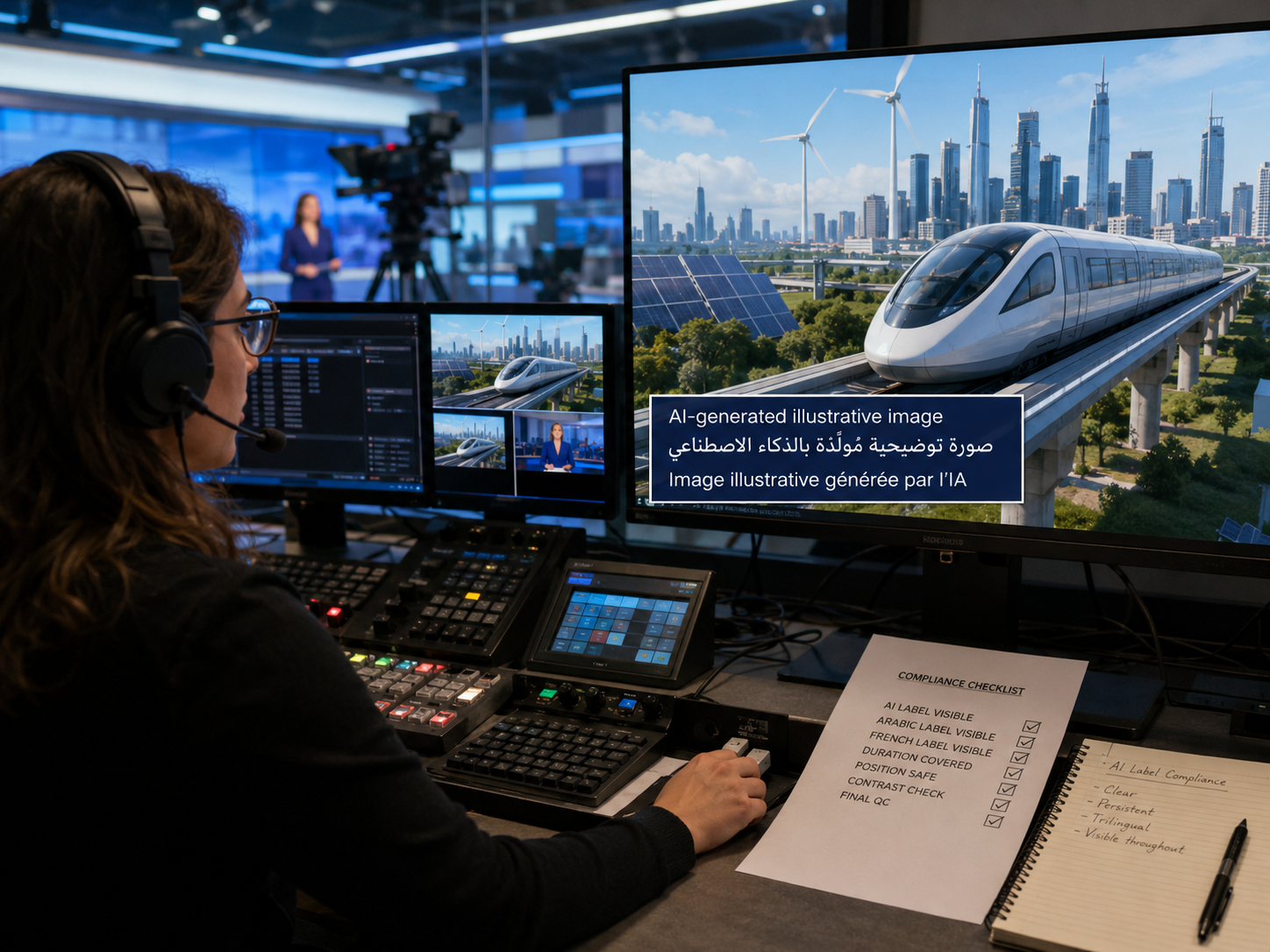
The HACA requires AI-generated explanatory or illustrative content in the relevant electoral context to be identified clearly and continuously.
That last point is important.
A tiny disclaimer shown for two seconds is technically different from meaningful transparency.
If viewers could reasonably miss the label, the system fails.
Broadcasters should therefore develop simple visual standards.
AI-generated reconstruction.
AI-modified image.
Synthetic voice.
Illustrative AI image.
Labels need to be understandable immediately.
The goal is not protecting the broadcaster legally through fine print.
It is ensuring the audience genuinely knows what it is seeing.
Advertising Will Face The Same Problem
The current framework concerns electoral content.
Commercial advertising will encounter similar issues.
Imagine an advertisement containing a celebrity who was never filmed.
An AI-generated customer testimonial.
A synthetic demonstration of a product.
A digitally created location presented as real.
Brands will eventually need stronger disclosure standards too.
Media companies selling advertising should prepare for that.
If misleading synthetic advertising damages audience trust, the broadcaster’s reputation suffers alongside the advertiser.
Commercial departments therefore need AI governance as much as editorial departments.
Sports Media Will Use AI Heavily
Sports broadcasting may become one of the fastest adopters.
Automated highlights.
Player statistics.
Instant translation.
Commentary support.
Graphic generation.
Personalised clips.
Archive search.
Morocco’s football boom makes this particularly relevant.
A broadcaster covering dozens of matches can create far more digital content through automation.
But sports also demonstrates the importance of clear separation.
A statistical visualisation is one thing.
A synthetic video making a player appear to say something they never said is completely different.
The technology may be similar.
The editorial consequence is not.
AI Can Lower Costs For Smaller Broadcasters
Large broadcasters can afford translation teams, graphics departments and technical staff.
Smaller radio and television operators have fewer resources.
AI can help narrow that gap.
Automatic transcription.
Subtitle generation.
Editing support.
Audio cleanup.
Research tools.
Programme summaries.
This may allow smaller media organisations to produce more sophisticated content.
That is positive for competition.
The challenge is ensuring cost savings do not become an excuse for eliminating human editorial review.
AI can accelerate production.
It should not remove responsibility.
Human Review Becomes More Valuable, Not Less
There is a common assumption that AI reduces the need for people.
In trusted media, it may change where people are needed.
Less manual transcription.
More verification.
Less routine editing.
More editorial judgment.
Less repetitive translation.
More fact-checking.
The human role moves upward.
What should be published?
Is it accurate?
Is it fair?
Could it mislead?
Does context change the meaning?
These are questions algorithms cannot safely own alone.
The more automation enters production, the more important accountable editors become.
Broadcasters Need Incident Protocols
Mistakes will happen.
A manipulated video may pass verification.
AI-generated audio may be aired before being discovered.
The question then becomes how quickly the broadcaster reacts.
Remove it?
Issue a correction?
Explain what happened?
Archive the correction?
Notify platforms where the clip spread?
Media companies should create AI incident procedures before they need them.
Reputation damage increases when organisations appear confused after an error.
Fast, transparent correction can protect trust.
HACA Is Creating A Monitoring Mechanism
The regulator has established monitoring and support mechanisms for the 39-day period, including an open session of the Superior Council and dedicated oversight arrangements intended to identify imbalances and help operators comply with the framework.
That makes the period more than a written rulebook.
Implementation will be observed.
For broadcasters, this creates a live compliance test.
What systems work?
Where are ambiguities?
Which procedures need improvement?
The industry should use the period to build capabilities that remain useful afterwards.
39 Days Can Become A Media Training Exercise
The special period began today, 15 August, and runs through 22 September, consisting of 26 days of pre-campaign coverage followed by a 13-day official campaign period beginning on 10 September.
That gives broadcasters a defined period in which verification, transparency and editorial processes will receive exceptional attention.
Moroccan media companies should treat this as an operational stress test.
Can AI-generated material be identified?
Can suspicious footage be checked rapidly?
Are staff trained?
Are labels clear?
Are conflicts of interest tracked?
Are entertainment and election content separated properly?
These systems will still matter on 24 September.
Morocco Could Become An Early Regional Reference
AI regulation in media is a challenge everywhere.
Few countries have perfect answers.
Morocco’s framework is notable because it explicitly addresses deceptive AI-generated electoral audiovisual content rather than treating the problem only through traditional broadcasting rules.
If implementation works well, the experience can eventually become useful elsewhere.
African regulators.
Broadcasters.
Training institutions.
Media technology companies.
Morocco could build expertise around responsible AI broadcasting just as it is developing capabilities in other digital sectors.
Regulation itself does not create an industry.
The compliance tools, training and expertise built around it can.
39 Days Could Change Much More Than Election Coverage
From today, Moroccan broadcasters operate under a 39-day framework requiring greater neutrality, transparency, verification and explicit safeguards around artificial intelligence.
The immediate purpose is clear.
Protect the integrity of election-related audiovisual information.
But the broader media lesson is much larger.
AI-generated content will not disappear after September.
Synthetic voices will improve.
Video generation will become more convincing.
Manipulation will become cheaper.
Production automation will accelerate.
The permanent competitive advantage of a professional broadcaster will increasingly be the ability to tell viewers:
We know where this came from.
We know whether it is real.
And when artificial intelligence was used, we will tell you.
That is ultimately not a technology policy.
It is a trust policy.
And in an era when almost anyone can generate convincing audiovisual content, trust may become the most valuable media product Morocco’s broadcasters can sell.