
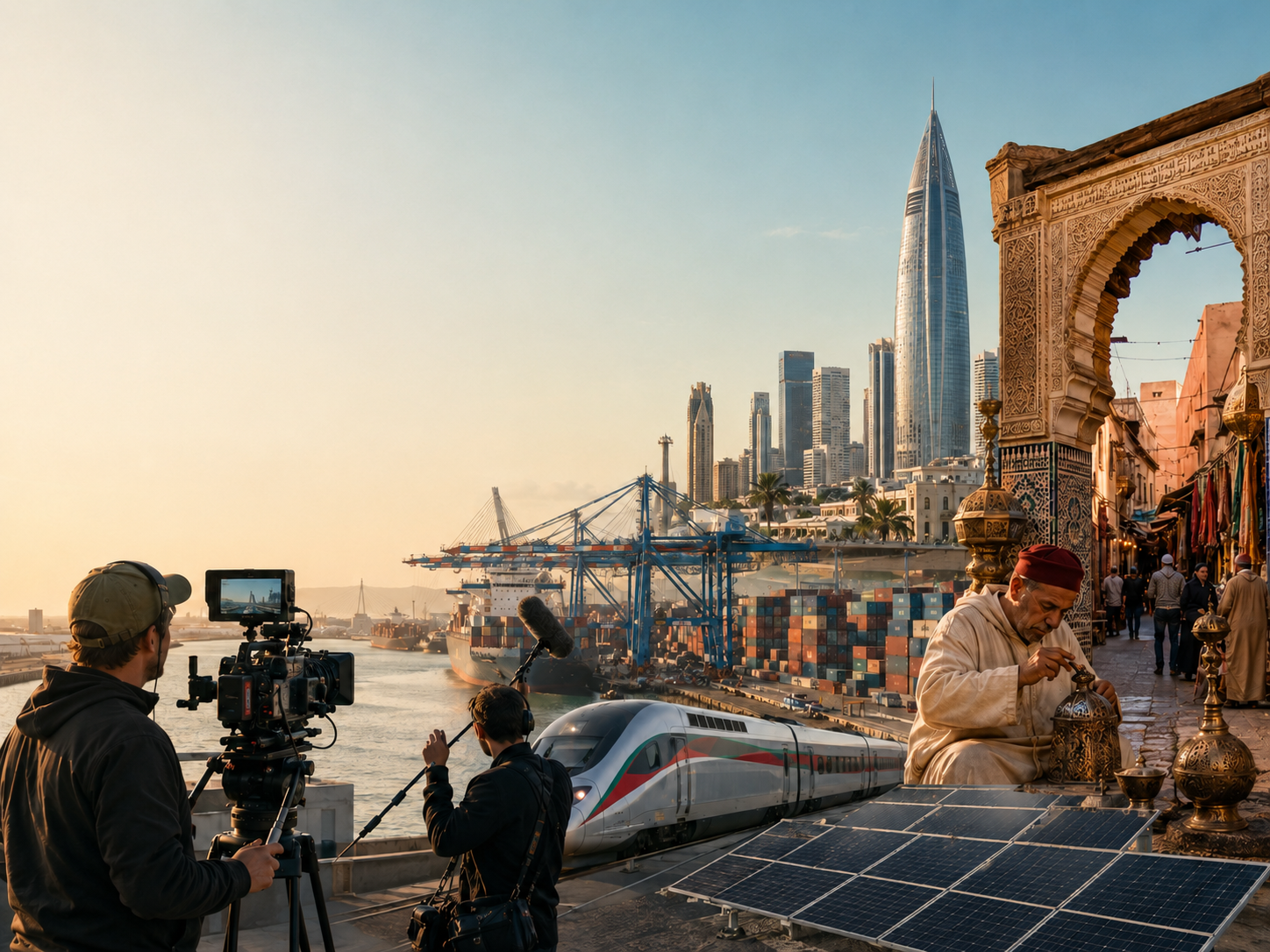
Morocco has spent years transforming its infrastructure, industry and international economic position.
Now that transformation itself is becoming entertainment.
Canal+ recently broadcast “Morocco: Secrets of a Transformation,” a documentary taking viewers through a rapidly changing Kingdom — from renewable energy and major infrastructure to industrial platforms, historic medinas, universities, cinema and the emerging creative scene.
The programme runs for approximately 50 to 52 minutes and was created by Guillaume Genton and Thibault Gitton. Canal+ describes it as a journey through contemporary Morocco through encounters and personal portraits, while Morocco’s official portal highlighted its portrayal of a country combining economic modernisation, cultural openness and historical heritage.
This looks like a documentary story.
Commercially, it is something bigger.
Morocco is becoming interesting enough that its economic transformation itself can be packaged as international content.
That creates an opportunity the country has barely begun to exploit.
Countries Have Stories Just Like Companies
Companies spend enormous amounts defining their brands.
What do they represent?
What makes them different?
What should customers remember?
Countries operate under similar dynamics.
For decades, Morocco’s international image was dominated by familiar symbols.
Marrakech.
The Sahara.
Medinas.
Food.
Craftsmanship.
Hospitality.
Those remain enormously valuable.
But another Morocco now exists alongside them.
Automotive factories.
Aerospace plants.
Renewable-energy infrastructure.
High-speed rail.
Ports.
Technology campuses.
Film studios.
Startups.
Modern urban projects.
The challenge is making international audiences aware that both Moroccos belong to the same country.
Documentaries can do something advertising struggles to achieve.
They can tell the complete story.
52 Minutes Can Change Perception More Than An Advertisement
A tourism advertisement may last thirty seconds.
A social-media campaign may capture attention for several seconds.
A documentary holds the viewer much longer.
That creates room for complexity.
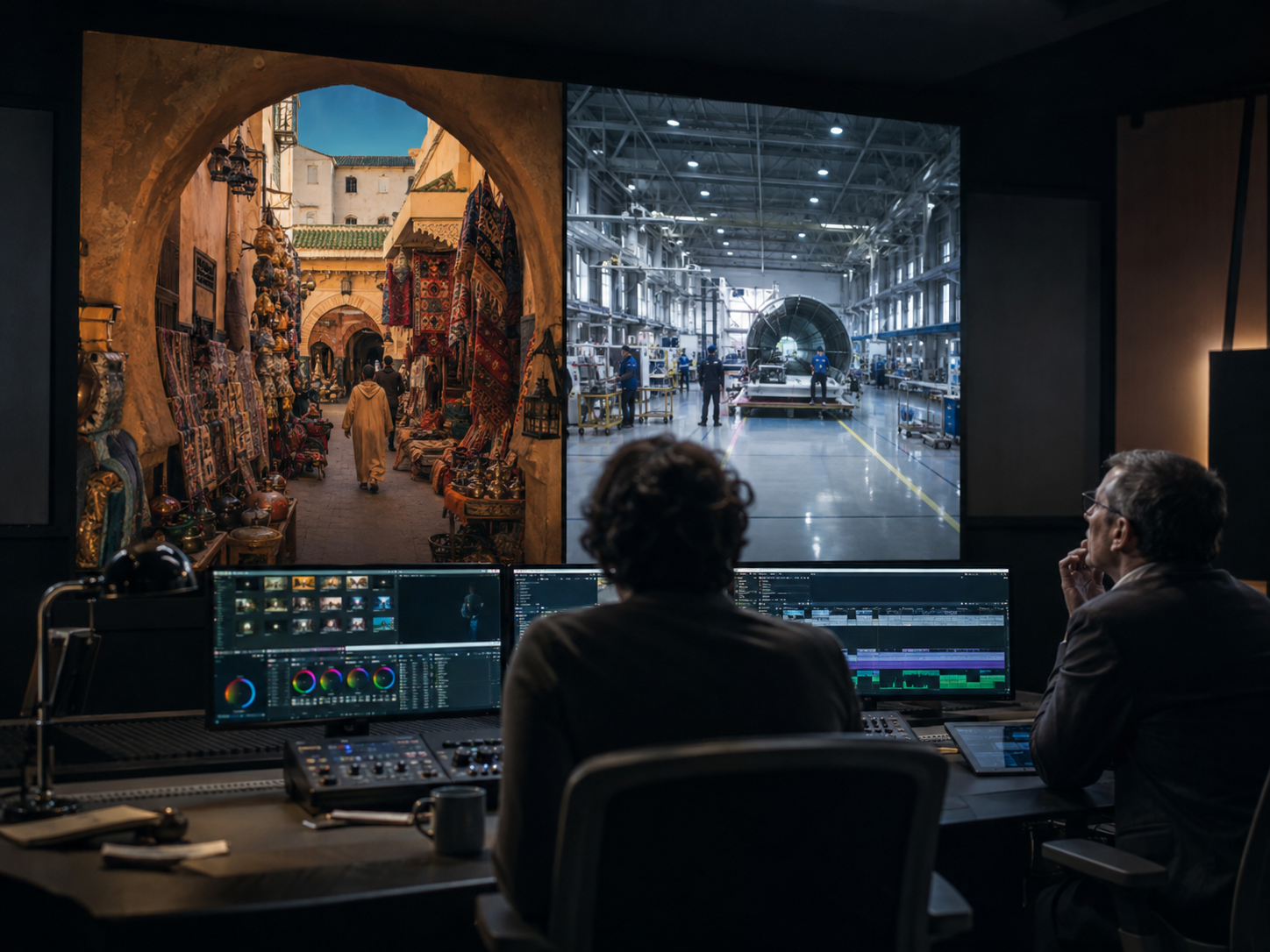
A viewer can begin with Marrakech and end inside an aerospace factory.
Move from artisans in Fez to students on university campuses.
Travel from Dakhla to Ouarzazate.
See renewable energy beside centuries-old architecture.
That contrast is one of Morocco’s strongest storytelling assets.
The country does not need to choose between heritage and modernity.
Its most interesting story may be the relationship between them.
Canal+ Gives The Story International Distribution
Distribution matters as much as production.
An excellent Moroccan documentary seen by only a small domestic audience has limited international impact.
Canal+ gives content access to audiences far beyond Morocco.
That means the country’s development story can reach people who may never read an economic report or investment presentation.
Potential tourists.
Investors.
Diaspora audiences.
Students.
Entrepreneurs.
Film professionals.
Executives.
Content reaches them through entertainment rather than institutional communication.
That can be more powerful because the viewer chooses to watch.
Morocco Should Become A Documentary Subject More Often
There is no shortage of material.
Tanger Med alone could support a documentary.
The automotive industry could support another.
OCP.
Morocco’s renewable-energy transformation.
Aerospace.
Casablanca.
Tangier.
Dakhla.
The Atlas.
Moroccan football.
Film production in Ouarzazate.
Startups.
Craftsmanship.
The transformation of Moroccan rail.
Each contains characters, conflict, ambition and change.
Those are the raw ingredients of documentary storytelling.
The country should not think of documentaries as occasional international coverage.
They can become a permanent creative category.
Industrial Stories Can Be Entertainment
Factories may not immediately sound cinematic.
They can be.
A vehicle begins as thousands of separate components.
Workers and machines assemble them.
A completed car leaves a Moroccan factory.
It travels through Tanger Med.
Days later it reaches a European customer.
That journey contains people.
Technology.
Engineering.
Logistics.
Global competition.
The same applies to aircraft components.
Battery manufacturing.
Ports.
Solar power.
Mining.
Modern audiences increasingly watch documentaries about businesses, technology and industrial transformation.
Morocco has enough real-world material to participate in that market.
Tanger Med Is A Natural Global Story
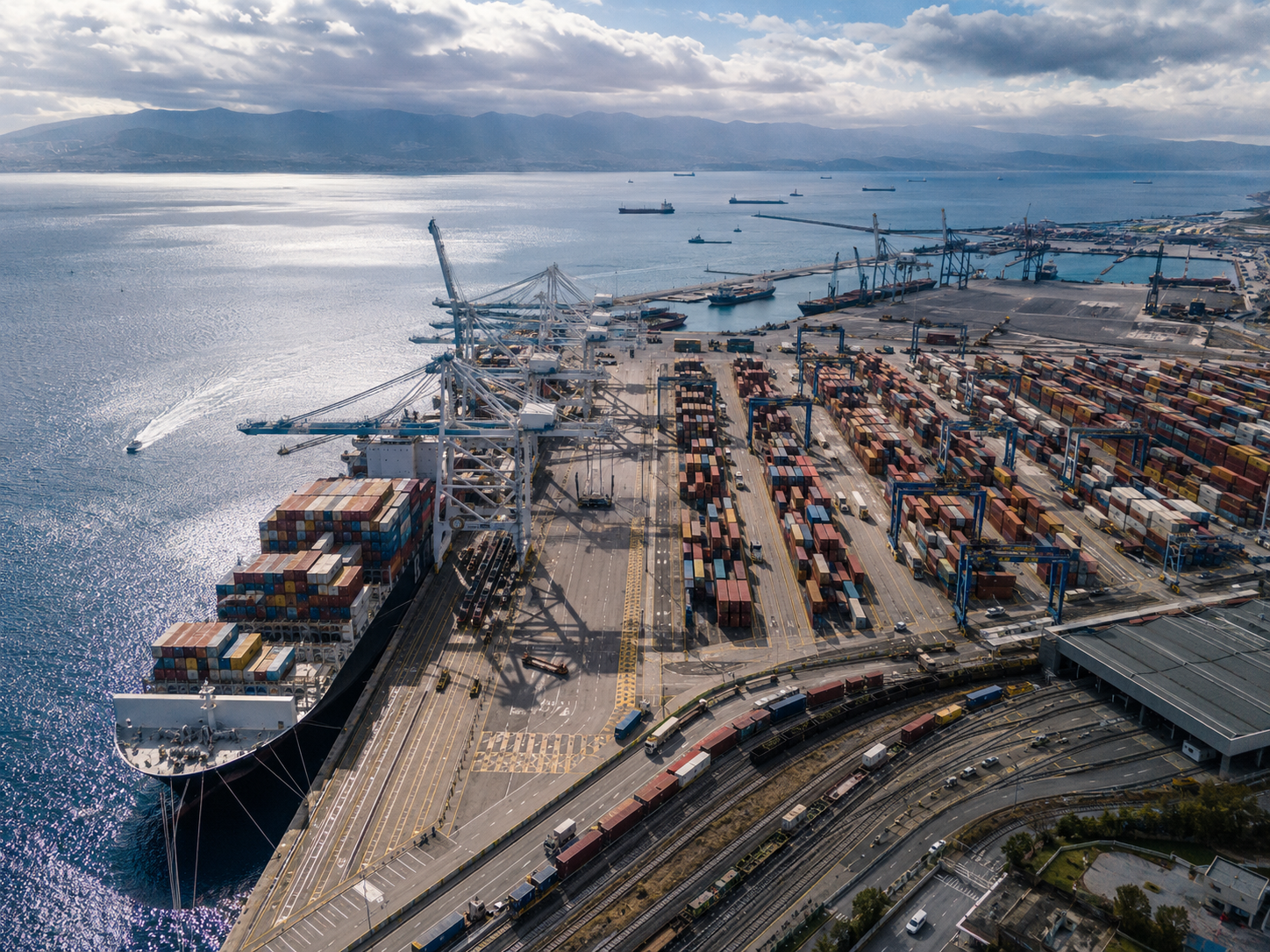
Few Moroccan economic assets are more visually powerful.
Massive container ships.
Automated port operations.
Trains.
Factories.
Thousands of containers moving between continents.
Europe visible across the Strait.
A Moroccan port becoming one of the Mediterranean’s largest logistics platforms.
It contains everything documentary producers need.
Scale.
Geography.
Technology.
Trade.
Human stories.
Global relevance.
Tanger Med can explain Morocco’s economic transformation without requiring a long economic lecture.
The images tell much of the story themselves.
Ouarzazate Can Tell Two Stories At Once
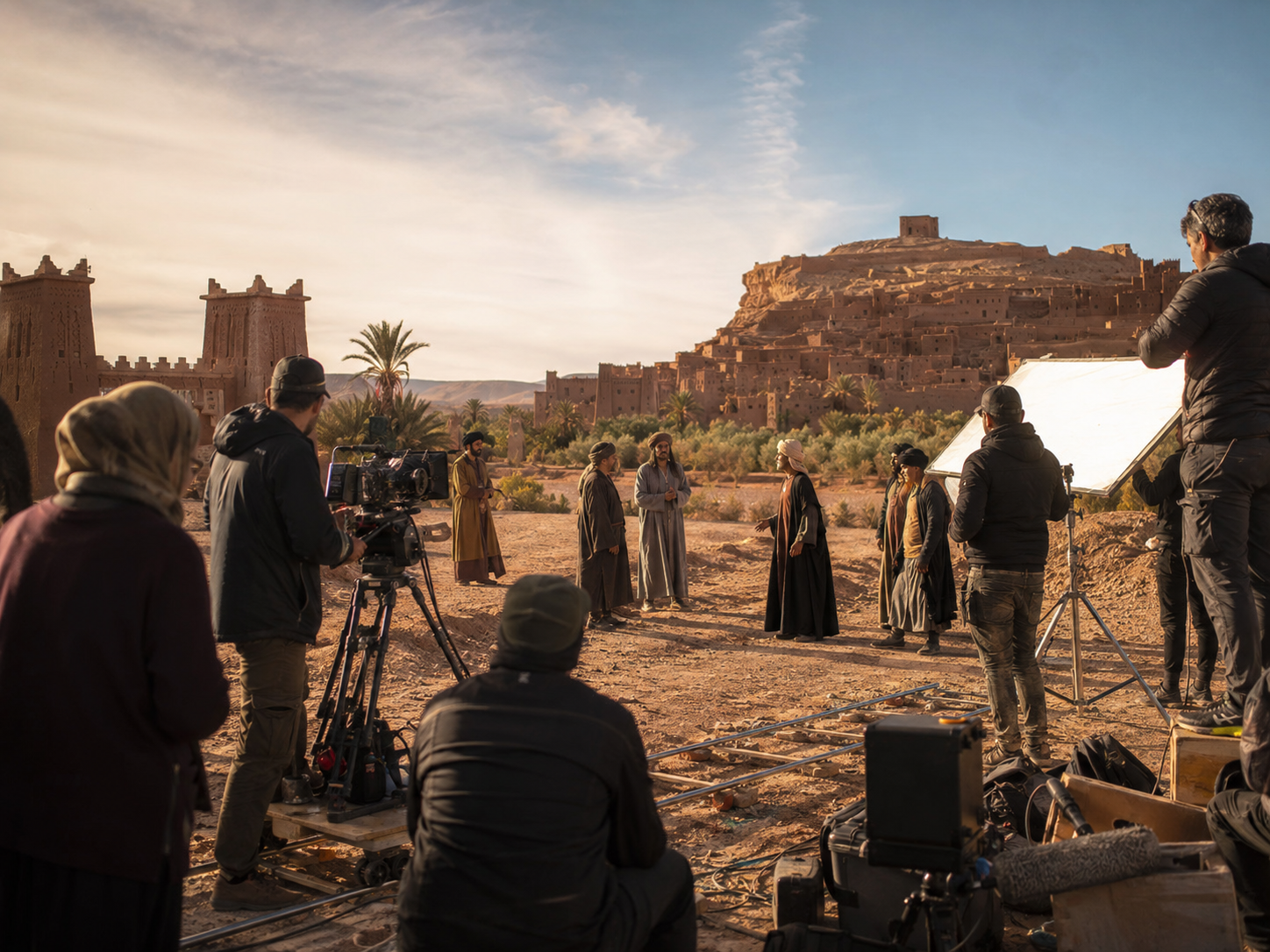
The Canal+ documentary also features Morocco’s cinema ecosystem, including Ouarzazate.
That city offers a particularly powerful content narrative.
One story is about films being made in Morocco.
The other is about Morocco itself becoming the subject.
International productions have used Moroccan landscapes for decades to represent other places.
Now Morocco has the opportunity to use its own production capability to tell Moroccan stories internationally.
That represents an important shift.
From location provider.
To production platform.
Eventually to intellectual-property owner.
Moroccan Producers Should Own More Of The Story
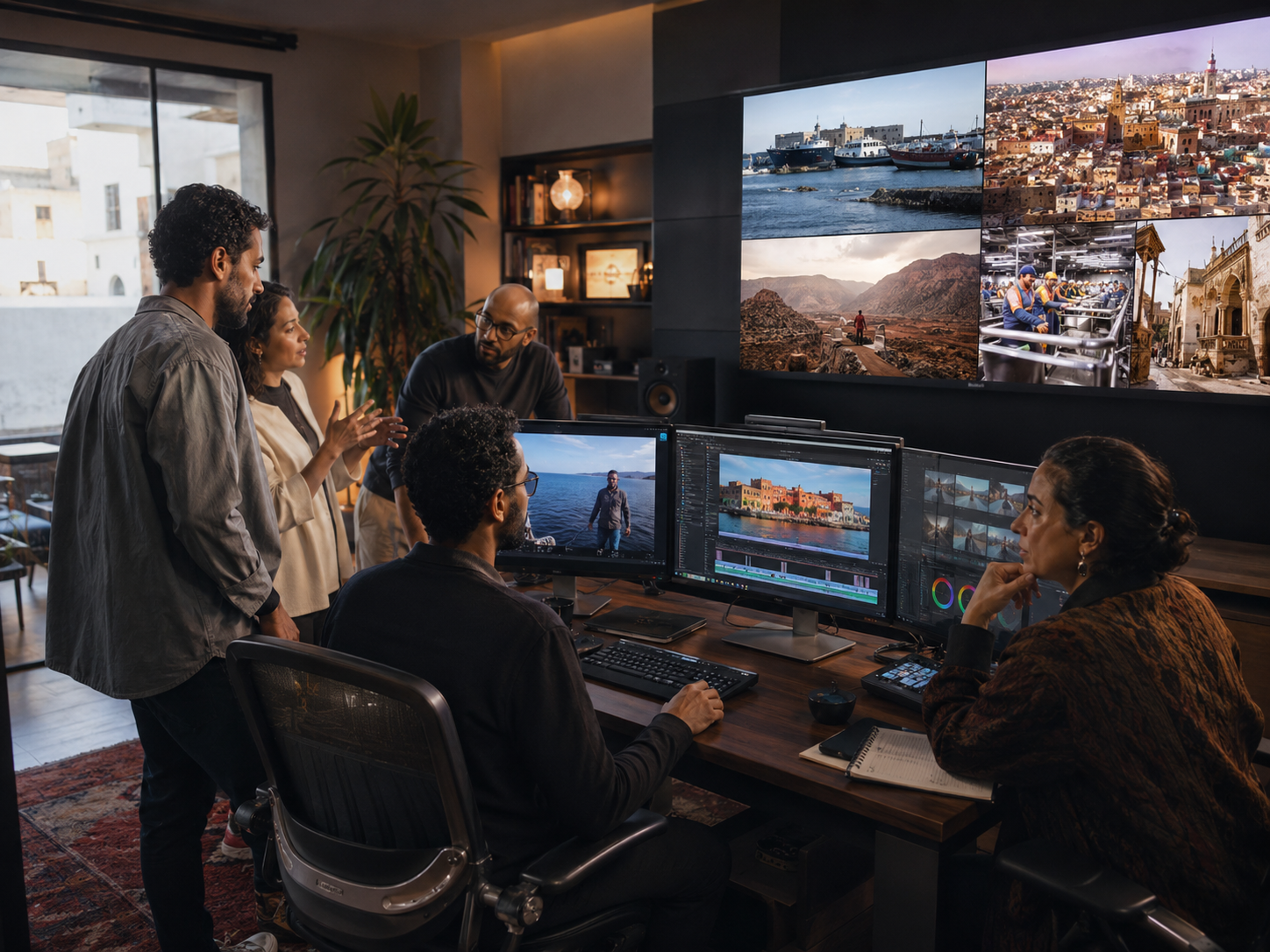
International documentaries about Morocco are valuable.
But Morocco should not depend entirely on foreign producers to explain the country.
Domestic production companies can create internationally competitive documentaries themselves.
Research.
Writing.
Cinematography.
Editing.
Music.
Animation.
Distribution.
The goal should be exporting Moroccan-produced factual entertainment.
A Moroccan company could produce a series about African infrastructure.
Or ports.
Food.
Football.
Business.
Cities.
The expertise developed around Moroccan stories can later be applied elsewhere.
Content production becomes an export service.
Streaming Has Expanded The Documentary Market
Traditional documentaries depended heavily on television schedules.
Streaming changed that.
A documentary can remain available for months or years.
It can find audiences gradually.
It can be recommended algorithmically.
It can travel internationally without securing a prime television slot in every country.
That increases the potential value of niche subjects.
A documentary about Moroccan aerospace may never attract the audience of a major blockbuster.
It does not need to.
A globally distributed specialist audience can still make the project commercially viable.
Digital distribution changes the economics of storytelling.
Business Documentaries Can Reach Investors Indirectly
Investment promotion usually happens through formal channels.
Conferences.
Reports.
Roadshows.
Meetings.
Those remain necessary.
But perception begins much earlier.
An executive watches a documentary.
Discovers an industrial zone.
Sees infrastructure.
Learns about a sector.
Searches for more information later.
Content does not necessarily produce an investment directly.
It puts the country into the investor’s mental map.
That matters.
Countries compete not only for capital.
They compete for attention before capital moves.
Tourism Benefits From The Same Content
A viewer may watch a documentary because they are interested in renewable energy.
Then see Dakhla.
Or Fez.
Or Tangier.
Suddenly an economic programme becomes destination marketing.
This is one of the strongest advantages of documentary content.
Different sectors can reinforce each other.
Industry creates curiosity.
Culture creates emotion.
Tourism creates a reason to visit.
The viewer does not experience these as separate government strategies.
They experience one country.
Dakhla Is Particularly Cinematic
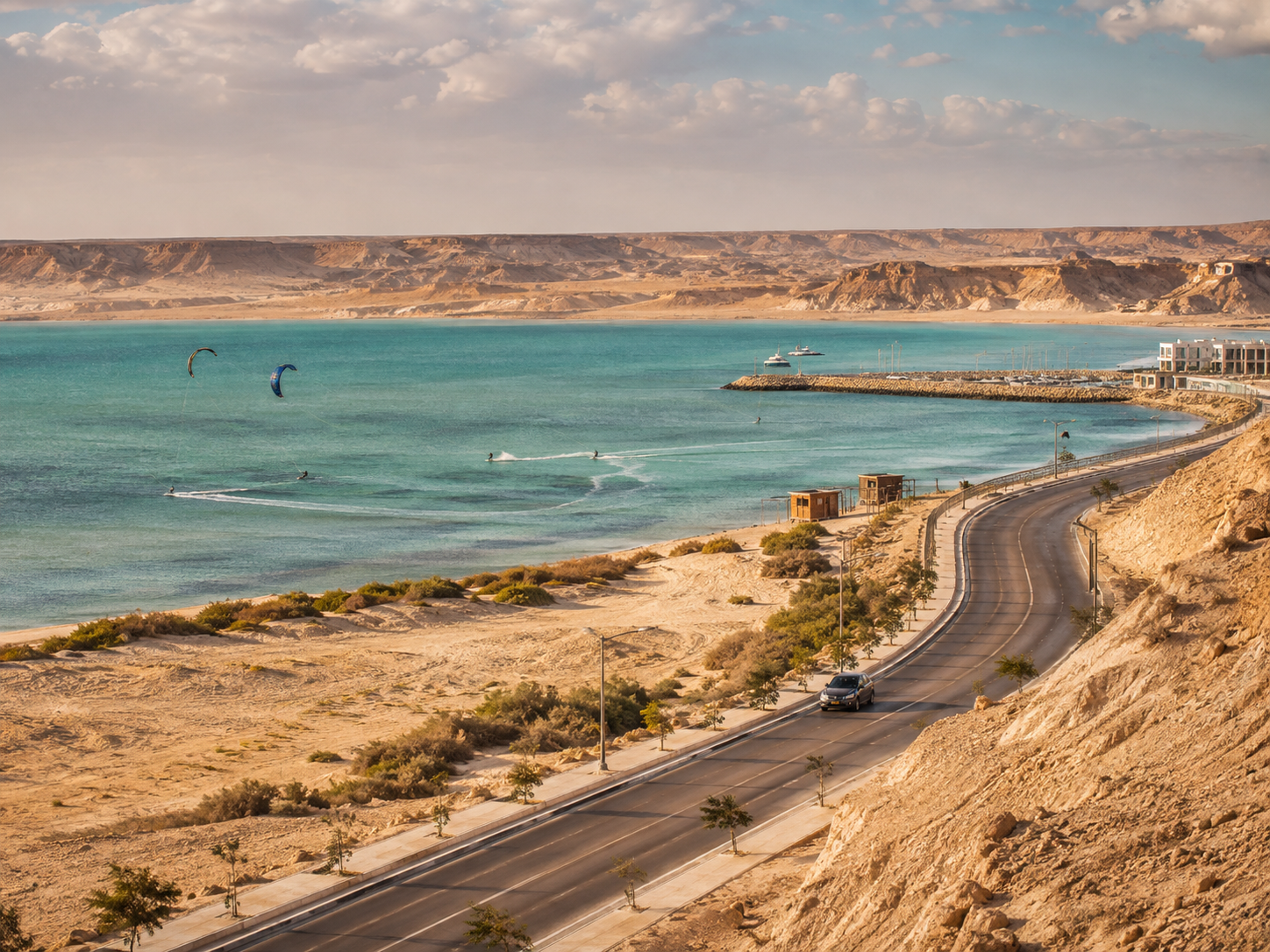
The Canal+ programme also highlights Dakhla through infrastructure, tourism, water sports, the blue economy and logistics.
Visually, the destination offers enormous potential.
Ocean.
Desert.
Wind sports.
Development.
Fishing.
New infrastructure.
The contrast between landscape and economic transformation can create compelling storytelling.
That can support a tourism identity very different from Marrakech or Tangier.
Content is especially useful for destinations whose international image is still being formed.
The earlier compelling stories circulate, the stronger the brand can become.
Morocco’s Youth Is A Stronger Story Than Buildings
Infrastructure photographs well.
People create emotional connection.
Young engineers.
Entrepreneurs.
Artists.
Students.
Athletes.
Designers.
Filmmakers.
Founders.
Researchers.
A documentary becomes memorable when viewers follow people rather than statistics.
The Canal+ film uses encounters and portraits as part of its structure.
That is the right instinct.
A factory is impressive.
The Moroccan engineer working inside it gives the factory meaning.
Entrepreneurship Needs Its Own Screen Time
Morocco’s startup ecosystem remains relatively small compared with the world’s largest technology centres.
That can actually make the story more interesting.
Building something from an emerging ecosystem creates narrative tension.
Who are the founders?
What are they trying to solve?
How do they finance their companies?
What difficulties do they face?
Can they expand across Africa?
These are universal business stories with a Moroccan setting.
A good entrepreneurship documentary does not need to pretend everything is perfect.
Challenge is what creates narrative.
Morocco’s African Role Is Another Content Category
Moroccan companies operate throughout Africa.
Banking.
Insurance.
Telecommunications.
Construction.
Mining.
Fertilisers.
This creates an extraordinary documentary opportunity.
Follow a Moroccan company from Casablanca into West Africa.
Show how teams operate across countries.
Follow goods through logistics networks.
Show local partnerships.
Explain how African companies are building across African markets.
Most global business content about Africa is still produced from outside the continent.
Moroccan production companies can help change that.
Football Could Create Morocco’s Largest Content Audience
Few Moroccan stories have greater global reach than football.
The national team.
Historic clubs.
Academies.
Supporters.
Diaspora players.
African competitions.
These are not only sports stories.
They are human stories.
Families.
Migration.
Identity.
Pressure.
Success.
Failure.
A multi-episode documentary following Moroccan football toward 2030 could potentially reach enormous audiences.
The timing is ideal.
The story is already developing.
Someone should be filming it now.
Waiting Until 2030 Would Be A Mistake
The strongest documentary needs history.
The preparation.
Construction.
Setbacks.
Decisions.
Players developing.
Cities changing.
Businesses preparing.
If cameras arrive only when the World Cup begins, much of the story will already be gone.
Moroccan production companies should document the transformation during the next four years.
The archive created today becomes the premium content of tomorrow.
This applies beyond football.
Rail.
Airports.
Stadiums.
Hotels.
Cities.
Industrial projects.
Transformation is most interesting while it is happening.
Archives Become Valuable Over Time
Morocco already possesses enormous audiovisual archives.
Historic television.
Speeches.
Sports.
Cities.
Factories.
Music.
Cultural events.
News.
Much of this material can gain new value through digitisation.
Old footage of Tangier beside modern Tanger Med.
Casablanca decades ago compared with today.
Early Moroccan automotive production compared with current factories.
Historical national-team footage before 2022.
Archives give modern documentaries depth.
They show transformation rather than simply describing it.
That makes preservation an economic asset.
AI Can Make Archives Searchable
Artificial intelligence can make these libraries dramatically easier to use.
Automatic transcription.
Face and location recognition where appropriate.
Topic tagging.
Translation.
Search.
A producer looking for historic footage of Casablanca could search thousands of hours rapidly.
That reduces production cost.
It also makes older material commercially usable again.
AI therefore has a positive role inside creative industries when used transparently.
It can help people discover content humans already created.
Multilingual Production Can Multiply The Audience
Moroccan content has an unusually strong language opportunity.
Arabic.
French.
English.
Spanish.
Amazigh.
A documentary produced once can increasingly be adapted into several languages efficiently.
Subtitles.
Dubbing.
Voiceovers.
International versions.
AI can reduce some of those localisation costs, while human editors preserve quality.
One production therefore becomes several marketable products.
That matters enormously for a relatively small domestic media market.
The business case improves when the potential audience becomes global.
Moroccan Music Can Travel Through Visual Content
Documentaries also create distribution for music.
A song used in a successful programme reaches audiences far outside Morocco.
Soundtracks.
Licensing.
Artist discovery.
Streaming.
The creative industries reinforce one another.
Film promotes music.
Music promotes artists.
Artists promote culture.
Culture supports tourism.
A mature entertainment economy understands these connections.
One piece of content can create economic activity across several creative sectors simultaneously.
Fashion And Design Can Benefit Too
The same applies to visual identity.
Clothing.
Interior design.
Architecture.
Craft.
A documentary showing contemporary Moroccan design can expose brands to international audiences.
The effect does not need to be explicitly commercial.
A viewer sees something.
Searches for it.
Discovers the designer.
Purchases later.
Entertainment can create demand without functioning like advertising.
That is one reason countries with strong film and television industries often export culture alongside products.
Morocco Needs More Format Creators
The long-term opportunity is not limited to documentaries.
Reality formats.
Travel programmes.
Business series.
Food shows.
Architecture programmes.
Sports formats.
Competition shows.
A Moroccan production company can develop a format once and potentially license it internationally.
That is intellectual property.
The production company stops earning only from producing one episode.
It owns something others may reproduce.
Format ownership is one of the higher-value layers of television production.
Morocco should aim to create more of it.
Food Is An Obvious Global Content Product
Moroccan cuisine already possesses international recognition.
It is naturally visual.
Markets.
Ingredients.
Cooking.
Families.
Regional differences.
Chefs.
Restaurants.
Food documentaries and series travel extremely well.
A Moroccan-produced food format could combine cuisine with travel and culture.
Tangier is not Fez.
Fez is not Marrakech.
The Atlas is different again.
One national cuisine contains many stories.
Global audiences already understand part of the brand.
Content can deepen it.
Crafts Can Become Premium Storytelling
Traditional crafts are often promoted through short tourism clips.
They deserve deeper treatment.
One artisan.
One family.
One workshop.
One technique passed through generations.
Follow the product from raw material to finished object.
Then show it entering a modern interior or international market.
That story combines heritage and business.
It also makes consumers understand why handmade products carry value.
Storytelling can help protect craft from becoming generic souvenir retail.
Documentaries Can Preserve Skills
Some cultural knowledge risks disappearing when younger generations move toward other careers.
Film can preserve techniques.
Oral histories.
Music.
Languages.
Recipes.
Craft processes.
This creates cultural value even when immediate commercial returns are limited.
The strongest creative strategy does not need every programme to maximise profit.
Some content can preserve national memory while still attracting audiences.
Commercial media and cultural preservation can coexist.
International Co-Productions Can Reduce Risk
High-quality documentaries are expensive.
Research.
Travel.
Equipment.
Editing.
Music.
Archive rights.
Marketing.
Moroccan companies can reduce risk through co-productions.
International broadcasters.
Streaming platforms.
Production funds.
Sponsors.
Pre-sales.
The important part is ensuring Moroccan producers retain meaningful participation in the rights and expertise.
A co-production should build local capability.
Not simply provide foreign crews with local access.
Brands Can Finance Premium Content
Corporate sponsorship provides another model.
A logistics company could support a series about trade.
A bank could support entrepreneurship content.
A tourism company could support travel programmes.
A technology company could support innovation documentaries.
The editorial independence needs to remain credible.
But branded content can finance productions that conventional broadcasters may not fund alone.
The audience increasingly accepts sponsored content when the relationship is transparent and the programme itself is worth watching.
Bad advertising remains bad.
Good storytelling remains valuable.
Moroccan Broadcasters Need Export Ambition
Domestic television naturally serves domestic audiences.
But digital distribution changes what national broadcasters can achieve.
A strong documentary can be subtitled and sold elsewhere.
Archive programmes can travel.
Football content can reach the diaspora.
Food formats can reach international audiences.
Moroccan broadcasters should increasingly evaluate projects through two questions.
Will Moroccans watch it?
Could anyone else watch it too?
The second question creates export potential.
The Diaspora Is A Ready Audience
Moroccans living abroad already want content connected with the country.
But the opportunity is broader than nostalgia.
Younger generations may speak different languages and consume media differently from their parents.
Documentaries can help them understand modern Morocco.
Not simply villages their families came from.
But companies.
Cities.
Artists.
Technology.
Football.
Culture.
A contemporary content industry can strengthen diaspora connection while building international audiences.
Morocco Needs Distribution Relationships
Producing content is only half the business.
Getting it watched is harder.
Canal+.
Netflix.
Amazon.
YouTube.
Regional broadcasters.
Airlines.
Educational platforms.
International distributors.
Moroccan producers need relationships with buyers.
Film festivals and content markets matter because commercial distribution deals often begin there.
A production that remains inside Morocco has one economic ceiling.
International distribution changes it completely.
Ouarzazate Should Produce More Moroccan IP
Morocco has spent decades providing production infrastructure to foreign films.
That created valuable expertise.
The next logical step is using that infrastructure for more domestically owned content.
Studios.
Crews.
Locations.
Production knowledge.
These capabilities already exist.
The country should capture more intellectual property on top of them.
Foreign productions can continue coming.
Domestic productions should grow alongside them.
The two industries can support each other.
52 Minutes Is Really A Proof Of Concept
“Morocco: Secrets of a Transformation” presents infrastructure, renewable energy, industry, Dakhla, heritage, universities, innovation and cinema inside one international documentary narrative.
That matters because it demonstrates something simple.
Modern Morocco is itself a content product.
Not only a tourism destination.
Not only a filming location.
A story.
A country building ports while preserving medinas.
Producing cars while maintaining craftsmanship.
Developing renewable energy beside desert landscapes.
Training engineers while exporting cinema locations.
Preparing for global sporting events while developing new industries.
That contrast gives storytellers material most advertising campaigns could never manufacture.
Morocco Should Own More Of Its Global Story
International coverage of Morocco is valuable.
International documentaries are valuable.
But the larger opportunity is building Moroccan companies capable of telling these stories themselves.
Producing them.
Owning them.
Distributing them.
Exporting them.
That creates jobs in media.
It creates intellectual property.
It supports tourism.
It gives Moroccan brands visibility.
It strengthens cultural influence.
And unlike a temporary advertising campaign, strong content can remain discoverable for years.
Canal+ spent around 52 minutes telling viewers how Morocco is changing.
The next stage should be ensuring that an increasing share of those stories are conceived, produced and owned in Morocco itself.
Because one of the country’s most underdeveloped exports may not be something made in a factory at all.
It may simply be the story of what Morocco is becoming.