
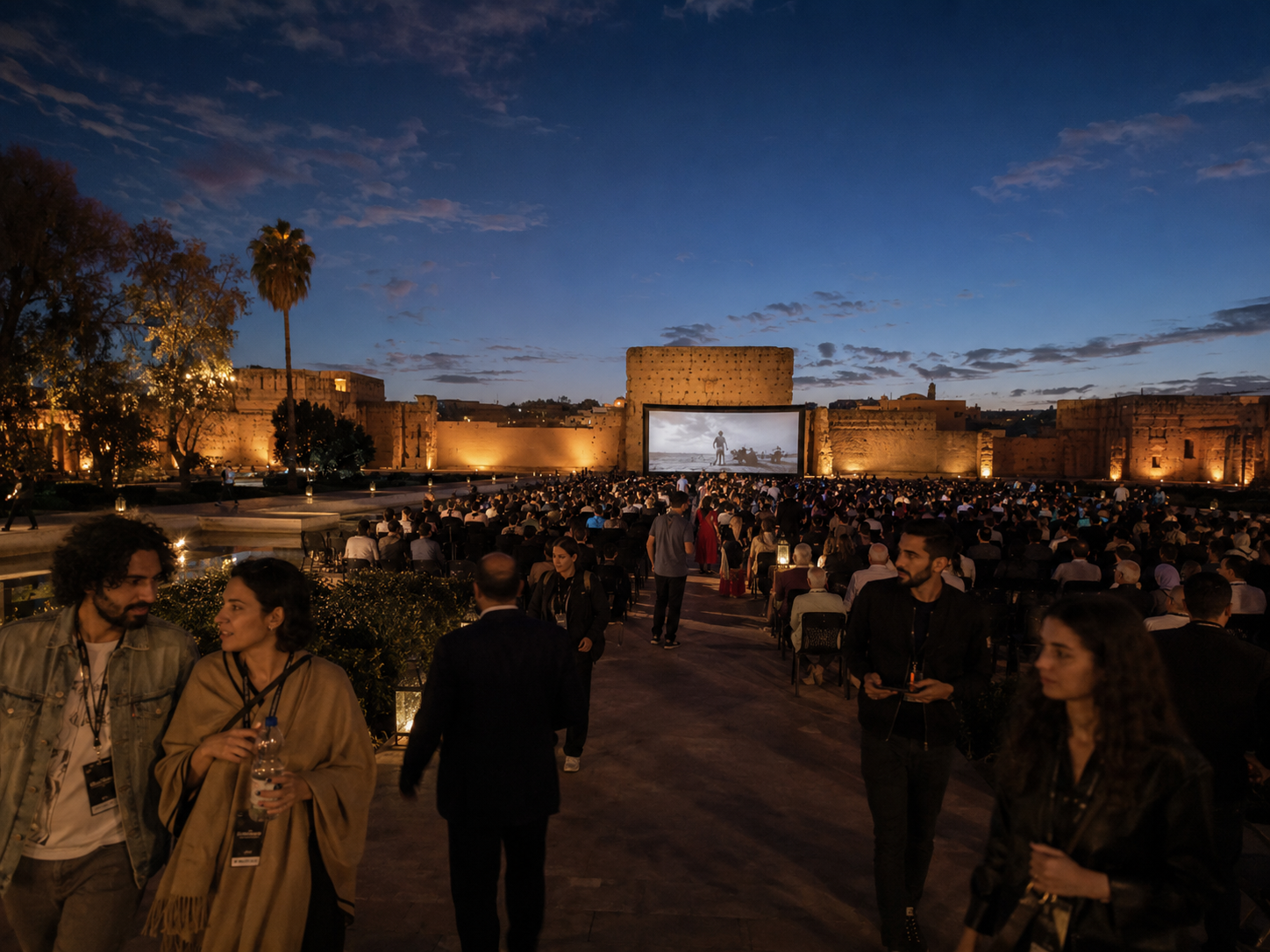
More than 400 short films were submitted from over 90 countries for the festival’s sixth edition, with screenings, competitions, talks and masterclasses taking place across Marrakech from September 25 to 30.
For six days, short films will escape the traditional cinema and appear across Marrakech in a palace, a public park, an auditorium and some of the city’s most distinctive cultural spaces.
The Marrakech Short Film Festival, known as MARRAKECHsFF, returns from Friday, September 25, to Wednesday, September 30, bringing together Moroccan filmmakers, international competition films, documentaries, talks, masterclasses and professional events.
More than 400 short films from over 90 countries and five continents were submitted. They will not all be screened. The organisers have announced six venues, but the complete daily timetable and final title-by-title screening programme had not been published when Morocco Times Daily checked on September 1.
This is not the larger Marrakech International Film Festival, or FIFM. MARRAKECHsFF is a separate event focused on short films and emerging cinematic talent.
MARRAKECH SHORT FILM FESTIVAL 2026 AT A GLANCE
| Information | Confirmed details |
|---|---|
| Festival | Marrakech Short Film Festival, MARRAKECHsFF |
| Edition | Sixth |
| Dates | September 25 to 30, 2026 |
| Duration | Six days |
| City | Marrakech |
| Venues | El Badi Palace, Cyber Park Moulay Abdessalam, The Folk, Institut français de Marrakech, Meydene and World Storytelling Café |
| Submissions | More than 400 short films, not the number being screened |
| Submitting countries | More than 90 |
| Continents represented | Five, according to the organisers |
| National competition | Nine unique films across three prize categories |
| National films outside competition | Four |
| Country of Honour | Malta |
| Maltese programme | Nine short films |
| Listed ticket range | MAD 50 to MAD 600 |
| Minimum age shown by iTicket | 12+ |
| Official website | marrakechshortfest.com |
| Official tickets | iTicket.ma |
| Last verified | September 1, 2026 |
SIX VENUES, ONE CITYWIDE FESTIVAL
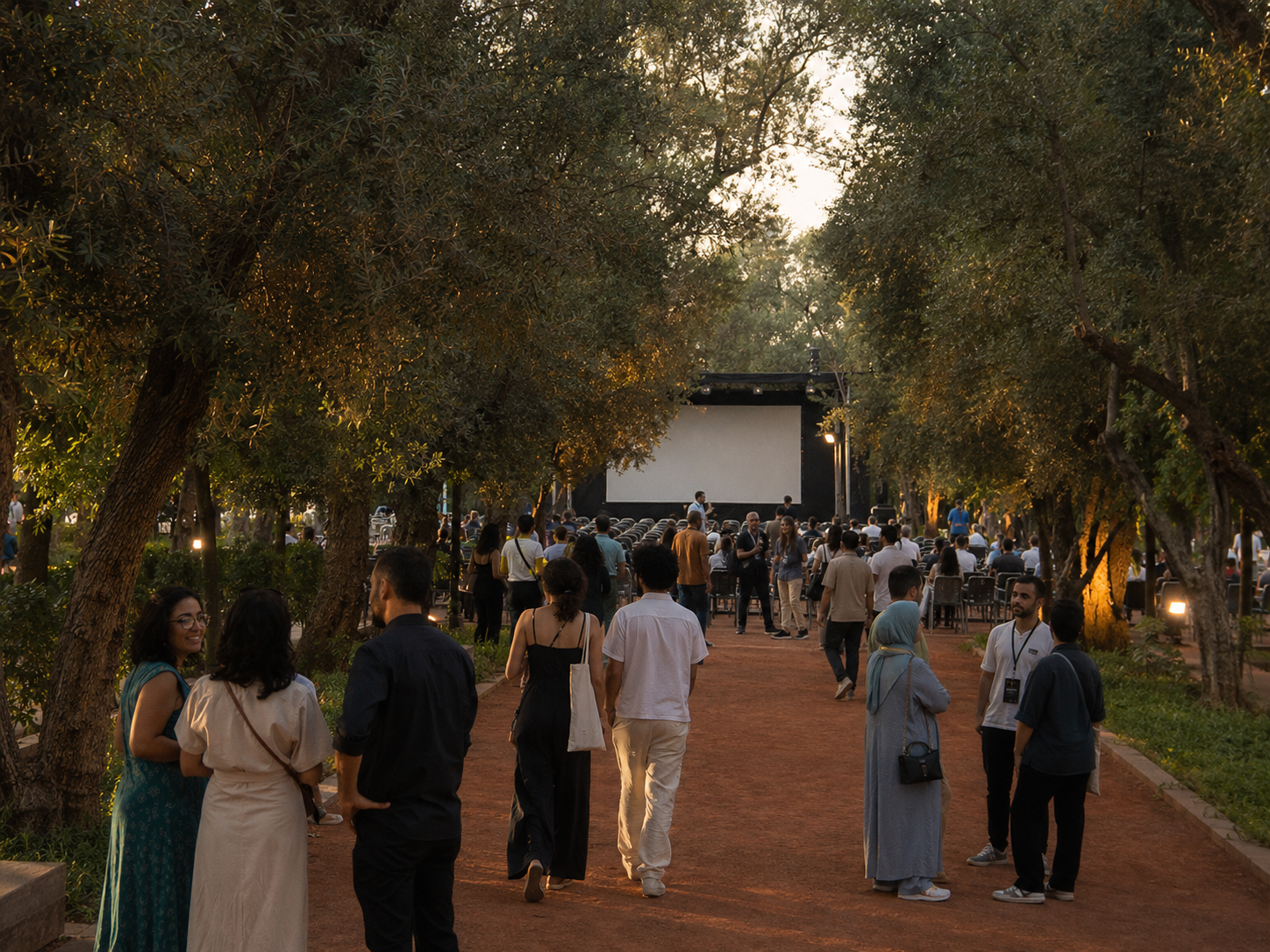
MARRAKECHsFF’s most striking feature is not one film or one screen. It is the map.
El Badi Palace will host the opening and closing events. Official national and international screenings are assigned to Cyber Park Moulay Abdessalam.
The Bridges of Reality documentary programme will be shown at the Institut français de Marrakech, while Auditorium Meydene will host the Low Budget Film Program.
The Folk is the base for talks, masterclasses and industry activities. World Storytelling Café has also been announced as a festival venue, although no specific activity had been publicly assigned to it by September 1.
Visitors should check every event separately. A pass that includes screenings may not include ceremonies or after-parties, and free admission does not guarantee a seat once a venue reaches capacity.
SIX VENUES, WHAT HAPPENS WHERE?
| Venue | Announced activity | Access information |
|---|---|---|
| El Badi Palace, listed as Palais Badii on iTicket | Opening ceremony and after-party; closing ceremony, awards and after-party | Included in VIP and Neighbours passes |
| Cyber Park Moulay Abdessalam | National and international screenings and competitions | Included in the available passes, although access dates differ |
| The Folk | Talks, masterclasses and industry programme | Conditions depend on the pass; some access is subject to availability |
| Institut français de Marrakech, Salle Leïla Alaoui | Bridges of Reality documentary programme | Free, subject to availability |
| Auditorium Meydene | Low Budget Film Program | Free, subject to availability |
| World Storytelling Café | Announced festival venue | Specific activity and access not yet specified |
MORE THAN 400 FILMS ENTERED, BUT NOT ALL WILL BE SCREENED
The festival’s biggest number requires an important explanation.
More than 400 films were submitted for consideration. That is not the number selected or scheduled for screening.
The published national competition contains nine unique productions across three prize categories. Some films appear more than once because they are eligible for different awards.
The announcement also names four Moroccan films outside competition and 13 international competition titles. It says additional out-of-competition works come from Cambodia, France, Saudi Arabia and Spain, but does not provide a complete title-level list for that section.
That means the overall number of officially selected productions cannot yet be independently calculated from the public material. The published lists name 26 unique competition and national out-of-competition films, before the unnamed international works and separate curated programmes are added.
Malta’s nine-film guest programme is a separate strand. Bridges of Reality is another curated selection, featuring 16 documentaries from Africa and its diaspora.
MOROCCAN FILMMAKERS TAKE CENTRE STAGE
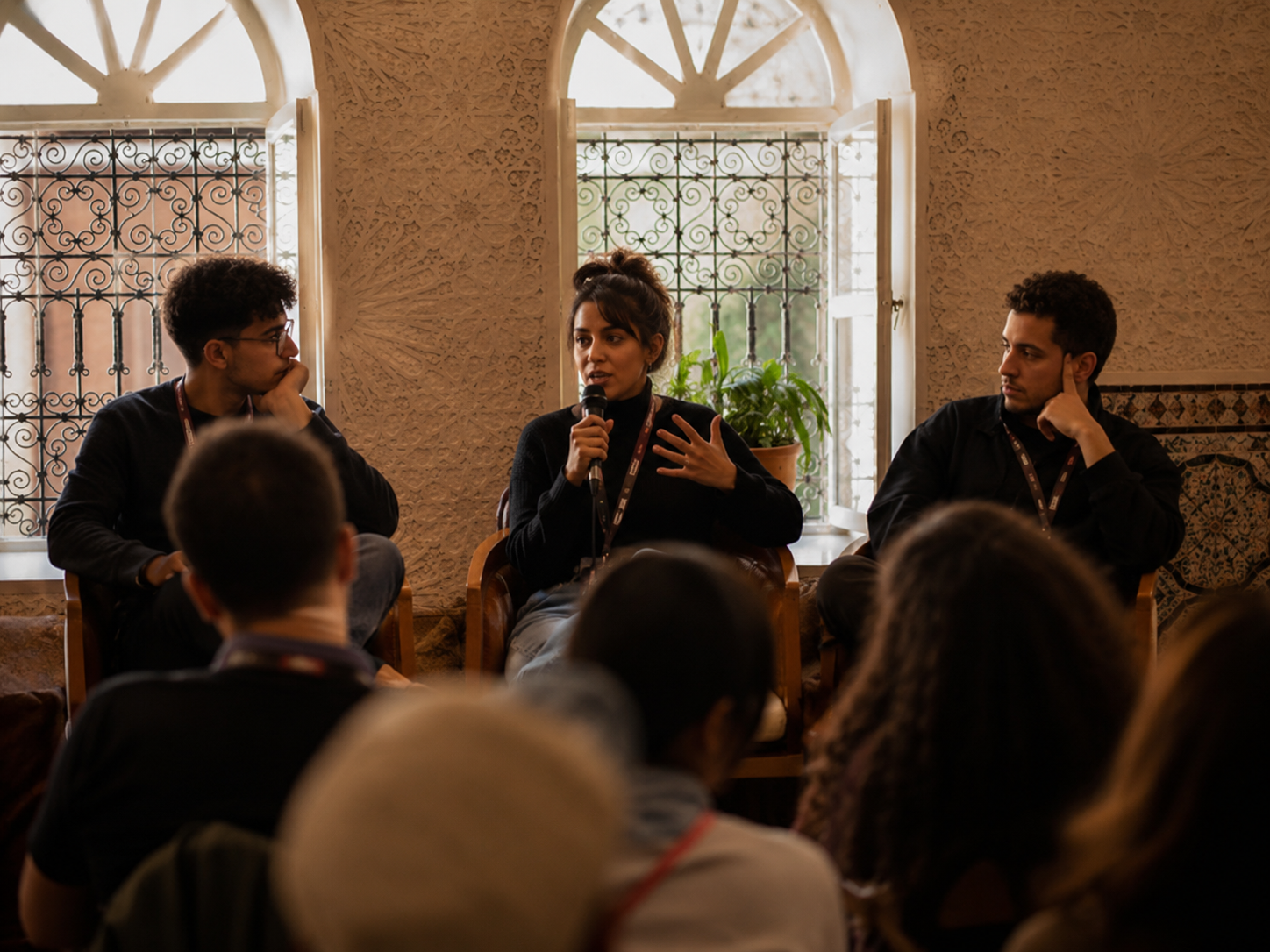
The national competition puts Morocco’s emerging directors, performers and visual storytellers at the heart of the festival.
The Belarj Prize, the festival’s Best Director award, includes Fading Candle by Ismail Ait Lahcen, Aicha by Sanaa El Alaoui, Two Ways by Yassine Iguenfer, Mesk Ellil by Rami Adnane and Behind the Curtain’s Edge by Kacem Skalli.
The Nakhil Prize, officially labelled Best Picture and described by the festival in connection with cinematography, features Aicha, Two Ways and Sonia Terrab’s Paradise Garden.
The Behja acting category recognises Aziz Hattab for Phone Breaker, Sandia Tajdine for Les Liens Invisibles, Khadija Salamadina for Paradise Garden and Mohamed Ben Seltana for 65 Days.
None has won yet. The awards will be decided during the festival.
Four more Moroccan films will be shown outside competition: Quo Vadis Meryem by Amine Zeriouh, With the Wind by Ines Lehaire, Investigation by Marwan Chiguer and Crawling Birds by Karim Taj.
For young filmmakers, selection does not guarantee an international career. What it can provide is more immediate and realistic: an audience, professional feedback, new contacts and a chance to have their work discussed beyond their existing circle.
The festival’s Low Budget Film Program adds a practical development route. Its 2026 project is KANAF, directed by Salma El Hachimi El Belghiti and produced by Rachida Saadi.
STORIES ARRIVE FROM ACROSS THE WORLD
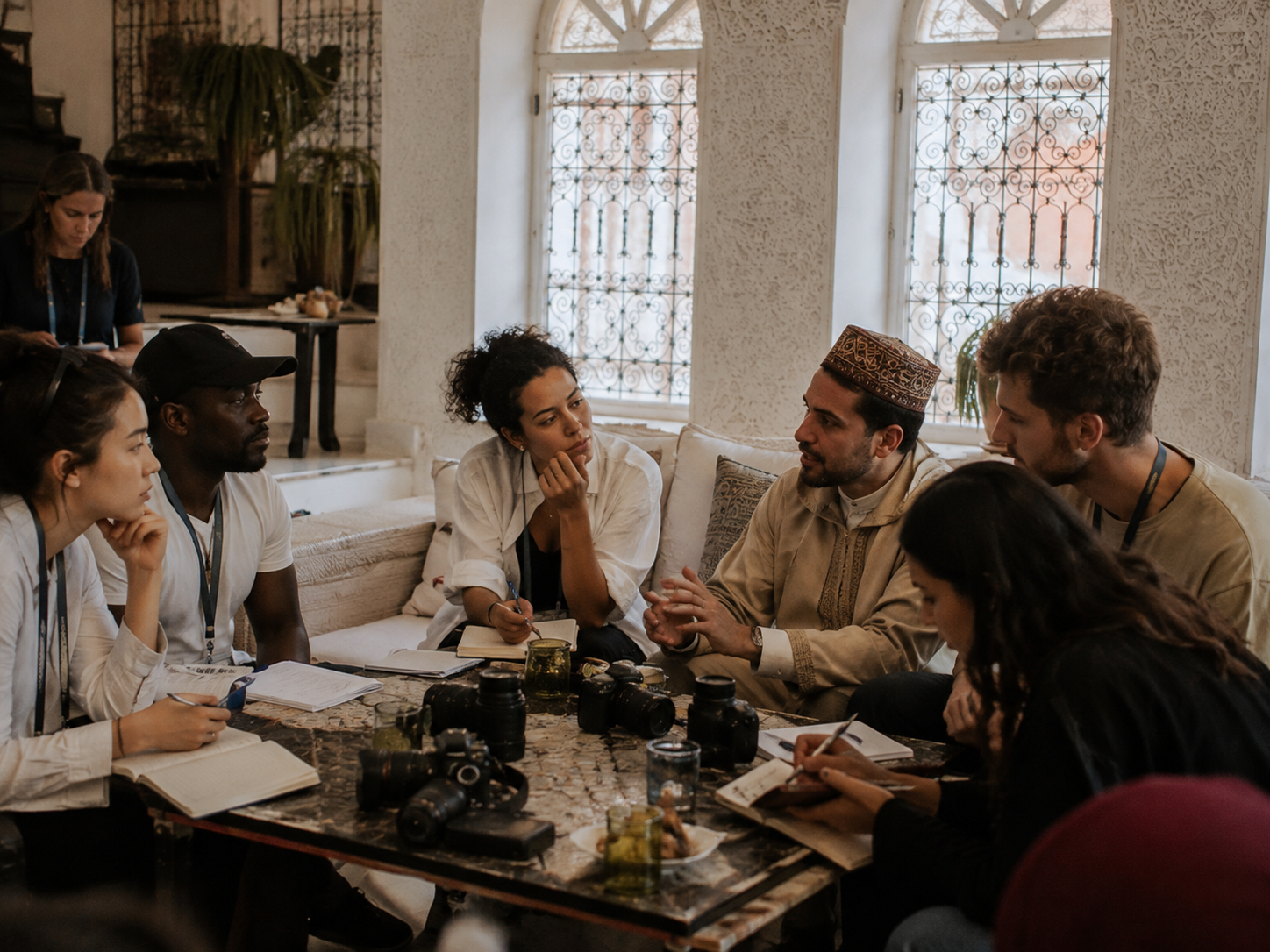
The international competition travels widely without turning the programme into an exhausting catalogue.
Its 13 announced titles include The Bridge by Italy’s Giacomo Bendotti, Where The Balloon Led Me by Iraq’s Yasmeen Waleed, The Wind in Ash by China’s Kun Sun and Dog Alone by Portugal’s Marta Reis Andrade.
Also selected are What If They Bomb Here Tonight? by Lebanese filmmaker Samir Syriani and A Very Straight Neck by Japanese filmmaker Neo Sora.
The wider competition reaches Australia, Albania, Kazakhstan, Egypt, Spain, the United Kingdom and South Korea. Out-of-competition works also come from Cambodia, France and Saudi Arabia.
Those selections give Marrakech audiences a compact journey through different countries, filmmaking traditions and perspectives, often within the space of only a few minutes.
WHY MALTA IS THIS YEAR’S COUNTRY OF HONOUR
Malta arrives in Marrakech with nine short films spanning fiction, animation and documentary.
The programme will feature films in Maltese and English. Published titles include the dramas Unur, Fama u Gloria, The Chain, My Dearest Mother and Bark, alongside animated works including Mr Teddy Is Angry, Filfla, Karamellu and Somewhere.
Arts Council Malta and the Centre for the Maltese Language are among the institutions contributing to the programme.
The cultural connection is easy to understand. Morocco and Malta sit on different shores of the Mediterranean, while Maltese is a Semitic language with roots in an Arabic variety and influences from Sicilian and Italian.
That gives the festival’s cultural-diplomacy theme a human form. Instead of speeches and formal declarations, audiences will encounter Malta through stories, characters, animation and documentary images.
WHICH PASS DO YOU ACTUALLY NEED?
The official ticket platform displays prices ranging from MAD 50 to MAD 600. A dependable price for each individual pass was not visible on the accessible event page, so buyers should check the final amount and conditions before completing payment.
WHICH FESTIVAL PASS IS FOR YOU?
| Pass | Intended audience | Main access | Important condition |
|---|---|---|---|
| VIP Pass | Professionals and visitors seeking the broadest access | Opening and closing events, screenings, talks, masterclasses, industry activities and specialist programmes | Some activities remain subject to availability |
| Neighbours Pass | Cinema, culture and arts professionals | Ceremonies, competitions, talks, masterclasses and industry programme | Professional proof required |
| Friends Pass | General visitors and film lovers | Cyber Park screenings from September 26 to 29, plus talks and masterclasses | Talks and masterclasses subject to availability |
| Apprentice Pass | Students | Cyber Park screenings from September 26 to 29, plus talks and masterclasses | Valid student card required; some access subject to availability |
| Free programmes | General public | Bridges of Reality and the Low Budget Film Program | Free admission is subject to available space |
The VIP Pass includes the opening and closing ceremonies and their after-parties. Those events are also listed under the Neighbours Pass, but not under the Friends or Apprentice passes.
The event is marked 12+ on iTicket. No more detailed age rules had been published for individual screenings or after-parties.
BEFORE YOU GO
Before travelling to a screening or festival event, check:
The exact venue and starting time.
Whether the activity is indoor or confirmed as open-air.
Whether you need a ticket, pass, professional proof or student card.
Whether a free event requires advance registration.
The film language and available subtitles.
Any age restriction.
Whether places are still available.
The weather if an outdoor screening is confirmed.
Your return transport after evening events.
The complete programme may still be updated, so check the festival website and iTicket again shortly before attending.
MARRAKECH BECOMES PART OF THE SCREEN
Short films do not need enormous budgets, feature-length running times or giant cinemas to find an audience.
For Morocco’s emerging filmmakers, MARRAKECHsFF offers a visible local platform with international voices in the same programme. For audiences, it offers the chance to discover films that may never reach a conventional cinema release.
Its strongest idea is also its simplest: Marrakech is not merely hosting the festival. The city is becoming part of how it is experienced.
For six days, a palace, a park, an auditorium or a cultural café can become a doorway into somebody else’s story.