
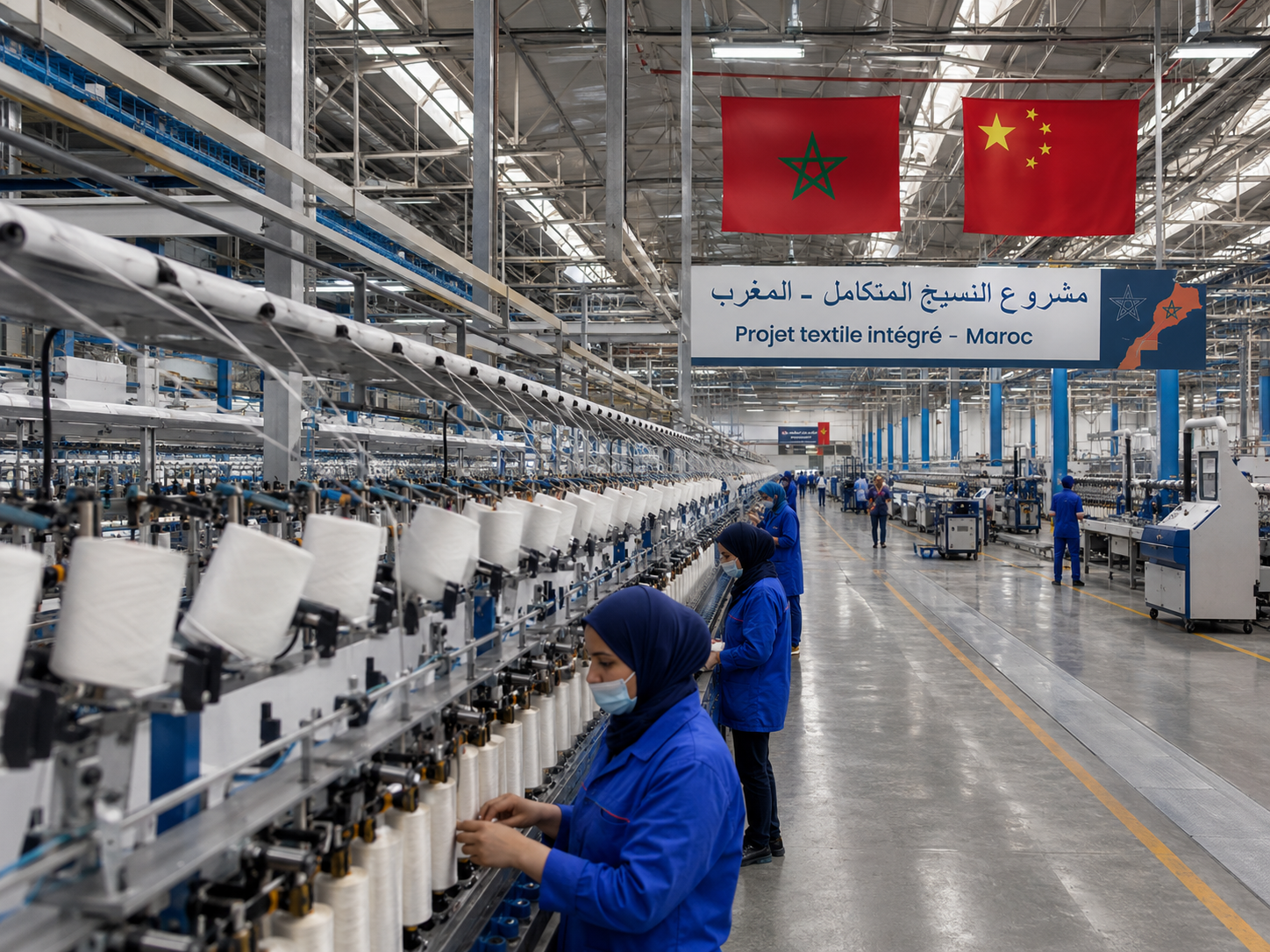
A major Chinese textile manufacturer is preparing to build a fully integrated production base in Morocco, adding another big industrial name to the growing list of companies choosing the country as a gateway to Europe and Africa.
China’s manufacturing push into Morocco is moving into textiles.
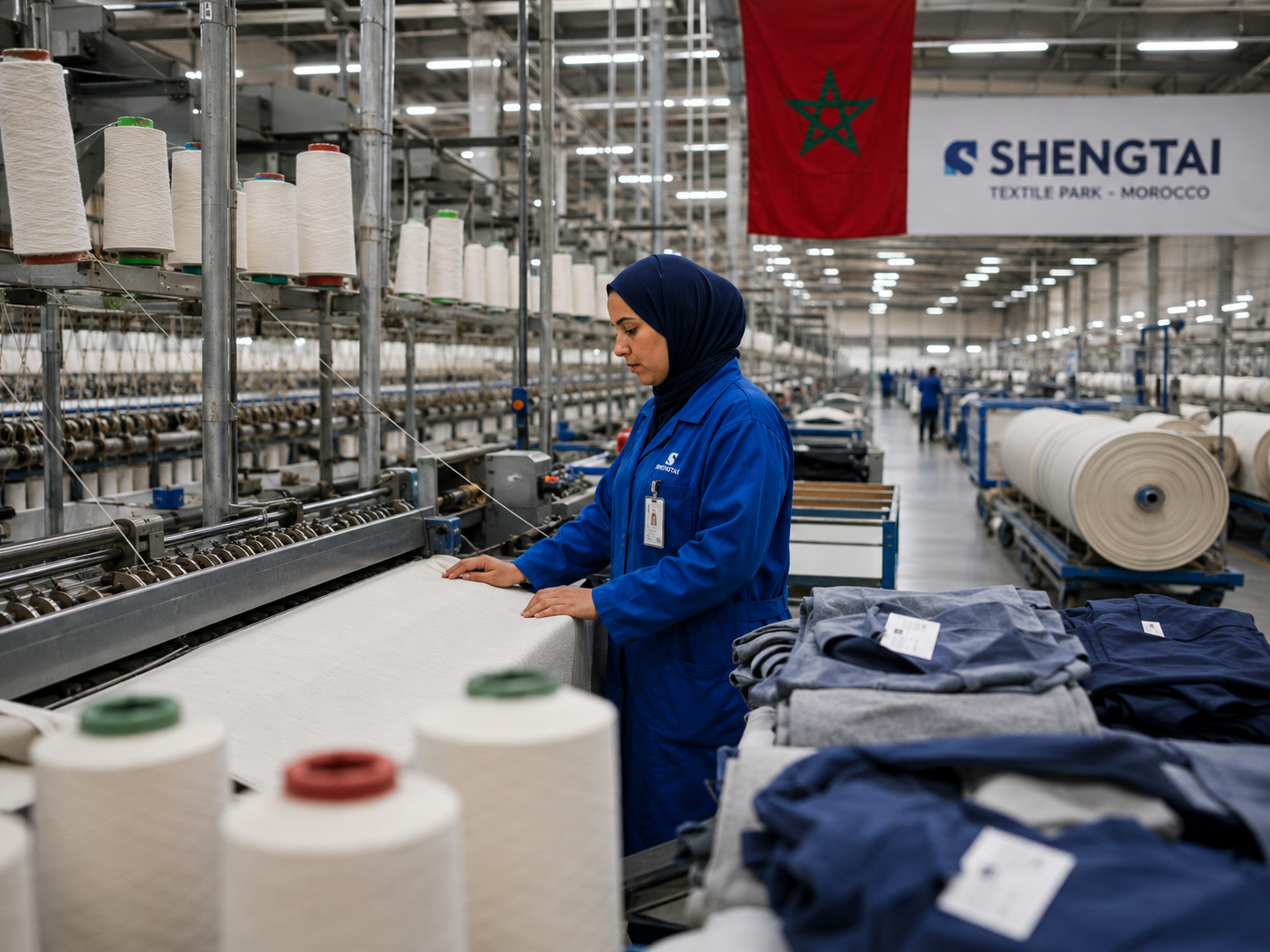
Shengtai Intelligent Manufacturing Group has secured key Chinese regulatory approvals for a major new textile industrial park in Morocco.
The planned investment is worth around 2.29 billion dirhams, according to Fibre2Fashion, with the project designed to produce everything from cotton yarn to finished garments.
That makes this more than another factory announcement.
Shengtai is planning an integrated production base.
And Morocco is once again the location.
FROM COTTON YARN TO FINISHED CLOTHING
The project is designed to bring several stages of textile manufacturing together in one place.
Shengtai plans to produce:
cotton yarn,
fabrics,
and finished clothing.
That matters because textile manufacturing is often spread across several countries.
Yarn can be made in one market.
Fabric processed in another.
Garments assembled somewhere else.
An integrated park brings more of that value chain into a single location.
Fibre2Fashion says the project is intended to strengthen Shengtai’s overseas supply capacity and support its global expansion.
THIS IS ABOUT MORE THAN CHEAP LABOUR
Morocco’s attraction to Chinese manufacturers is becoming increasingly clear.
The country sits only a short distance from Europe.
It has major ports.
Industrial zones.
Trade agreements.
An established manufacturing base.
And growing experience working with multinational companies.
That combination allows manufacturers to produce in North Africa while remaining close to some of the world’s largest consumer markets.
Fibre2Fashion specifically points to Morocco’s proximity to Europe, trade agreements and industrial infrastructure as factors supporting the country’s appeal as an export-oriented production base.
For a company like Shengtai, that geography can be extremely valuable.
MOROCCO IS ATTRACTING MORE CHINESE INDUSTRY
The textile project fits into a much bigger pattern.
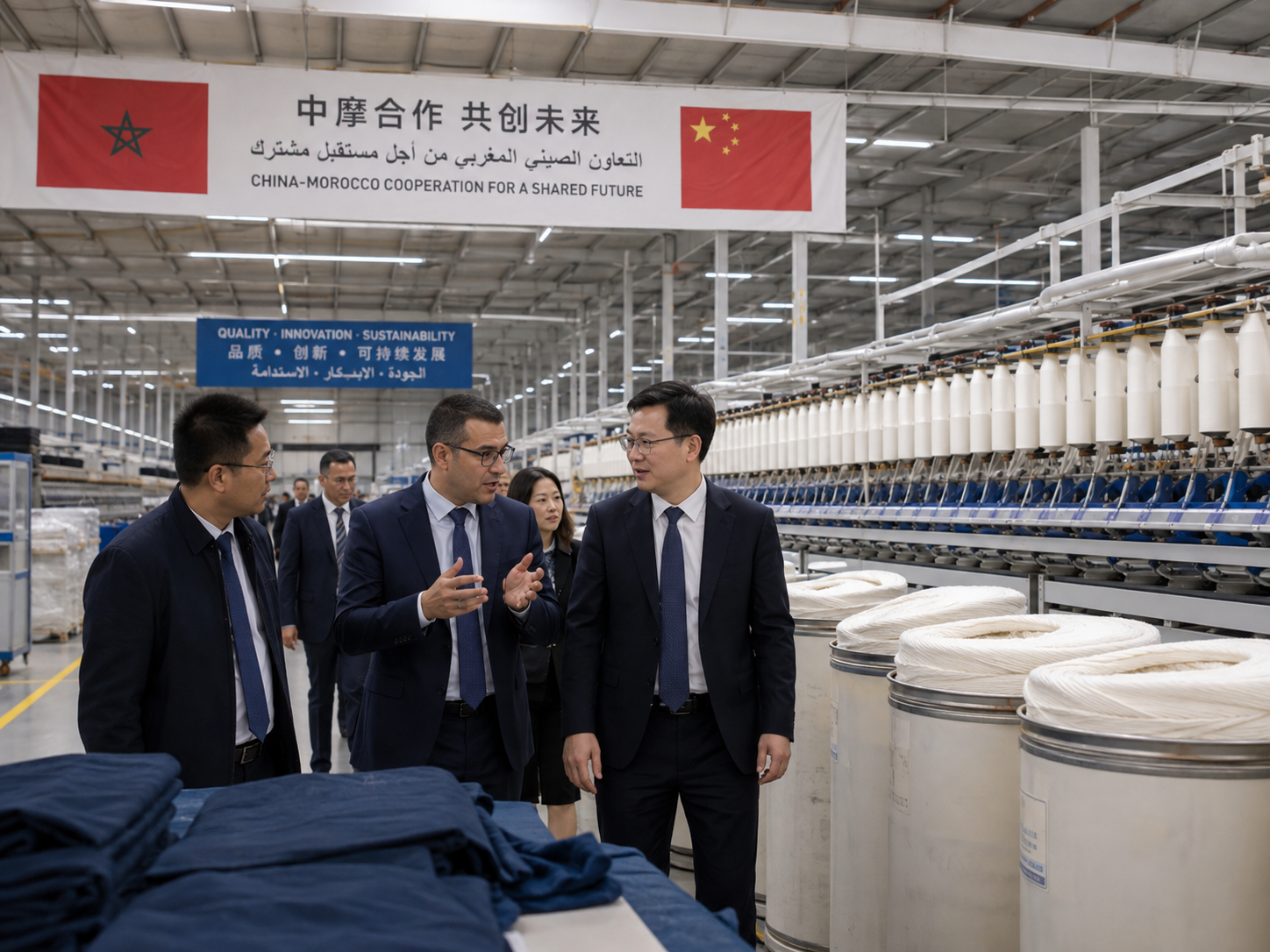
Chinese industrial investment in Morocco has expanded across sectors including automotive manufacturing, batteries, electronics and other industrial activities.
The logic is similar in each case.
Produce closer to Europe.
Reduce supply-chain risk.
Gain access to Moroccan trade agreements.
And build inside an industrial ecosystem that already understands export manufacturing.
Shengtai is now applying that same logic to textiles.
TEXTILES ARE GETTING MORE STRATEGIC
Morocco already has a significant garment and textile industry.
The country supplies European fashion markets and has built a reputation for relatively fast turnaround compared with suppliers located much farther away.
That matters in an industry where retailers increasingly want shorter lead times.
Fashion trends can change quickly.
Retailers do not always want to wait months for production to travel from Asia.
A Moroccan manufacturing base can shorten that distance dramatically.
That makes nearshoring increasingly important.
And Chinese companies appear to understand the opportunity.
SHENGTAI WANTS MORE CONTROL OVER ITS GLOBAL SUPPLY CHAIN
According to the reporting, Shengtai says the investment will strengthen its overseas supply capabilities and improve its ability to respond to changes in global trade and industrial policy.
That wording tells us a lot.
Global manufacturers are no longer thinking only about production cost.
They are thinking about tariffs.
Trade restrictions.
Shipping disruptions.
Political risk.
And access to different markets.
Building production in Morocco gives Shengtai another option.
If conditions change in one region, the company has more flexibility elsewhere.
That is increasingly valuable in a fragmented global economy.
MOROCCO WANTS HIGHER-VALUE MANUFACTURING
For Morocco, the ambition is bigger than attracting more factories.
The country has spent years trying to move higher in industrial value chains.
Automotive manufacturing is one example.
Aerospace is another.
Battery production is emerging rapidly.
Textiles and technical textiles are part of the same strategy.
The goal is not simply to assemble low-value goods.
It is to create industrial ecosystems where suppliers, logistics companies, skilled workers and exporters cluster together.
Shengtai’s integrated park fits that model.
EUROPE IS THE OBVIOUS PRIZE
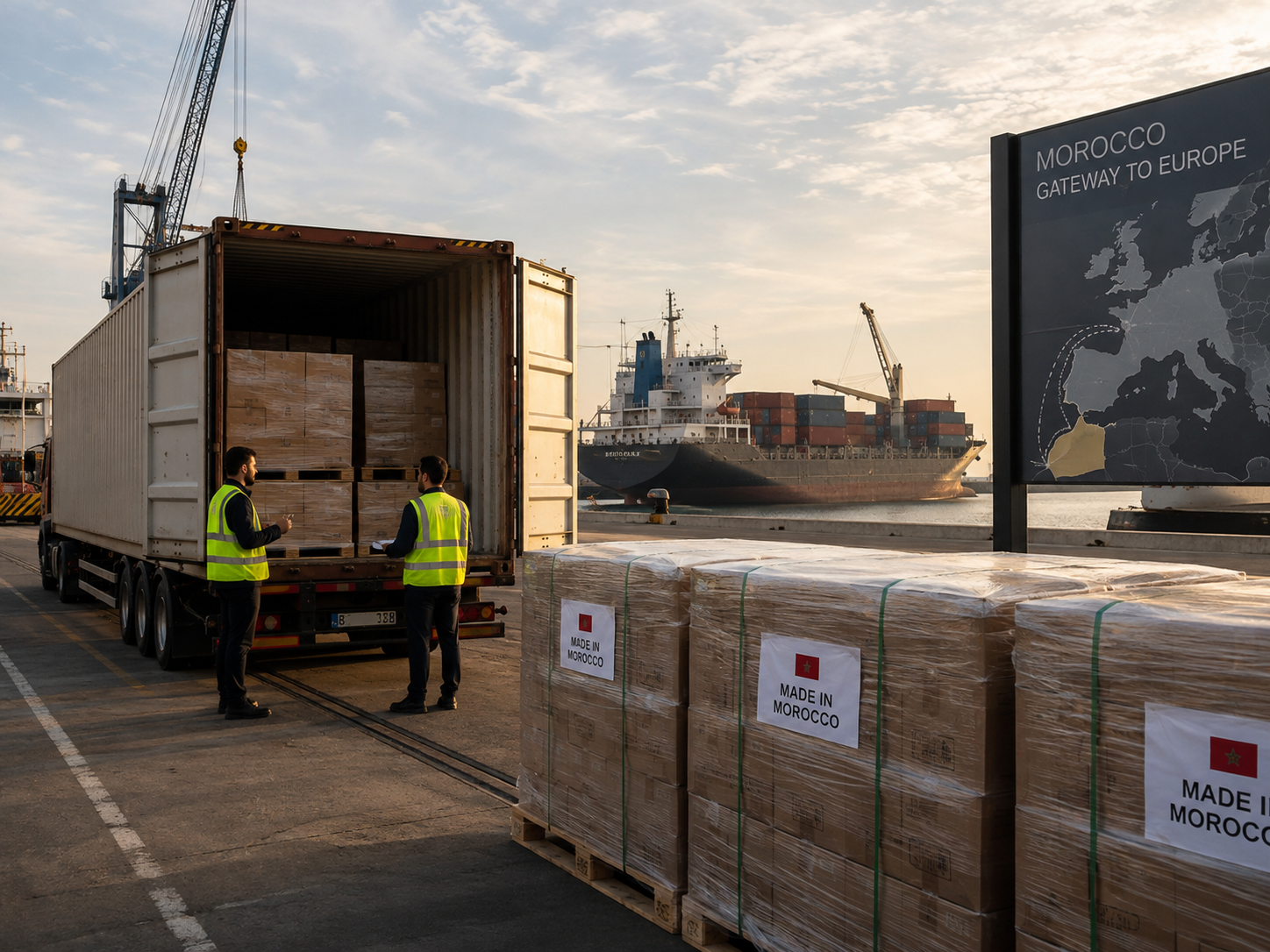
The European market sits just across the Mediterranean.
That creates a major competitive advantage.
A garment produced in Morocco can potentially reach European retailers much faster than one produced in East Asia.
For fast fashion and seasonal clothing, speed can be as important as cost.
The same logic applies to fabrics and technical textiles.
Morocco’s location allows manufacturers to serve European customers while keeping production outside the EU.
That is a very specific strategic position.
And Chinese investors are increasingly using it.
GREEN TEXTILES ARE ALSO PART OF THE PITCH
The project has been described as a green textile industrial park.
That matters because European buyers are under growing pressure to reduce the environmental footprint of their supply chains.
Energy use.
Water consumption.
Waste.
Transport emissions.
All of these are becoming more important when manufacturers choose where to produce.
If the Shengtai project develops as planned, Morocco will have an opportunity to combine nearshoring with a cleaner industrial model.
That could make the country even more attractive to international brands.
THE REAL STORY IS THE PATTERN
One Chinese investment alone would not mean much.
But the pattern is becoming difficult to ignore.
Chinese automotive suppliers are coming.
Battery companies are coming.
Industrial manufacturers are coming.
And now a major textile group is preparing a large integrated production base.
Fibre2Fashion says the Shengtai project adds to a broader trend of Chinese investment and could strengthen Morocco’s position as a textile manufacturing and export hub linking African and European markets.
That is the bigger story.
Morocco is increasingly becoming a place where global companies can manufacture for multiple continents from one location.
CHINA IS NOT JUST SELLING TO MOROCCO ANYMORE
For years, the China–Morocco economic relationship was easy to understand.
China exported.
Morocco imported.
That model is changing.
Chinese companies are increasingly choosing to manufacture inside Morocco itself.
That means factories.
Industrial investment.
Supply chains.
Local employment.
And potentially more Moroccan exports.
Shengtai’s textile park is another piece of that shift.
And if the project moves forward as planned, Morocco will not simply be buying Chinese textiles.
It will be helping make them.