
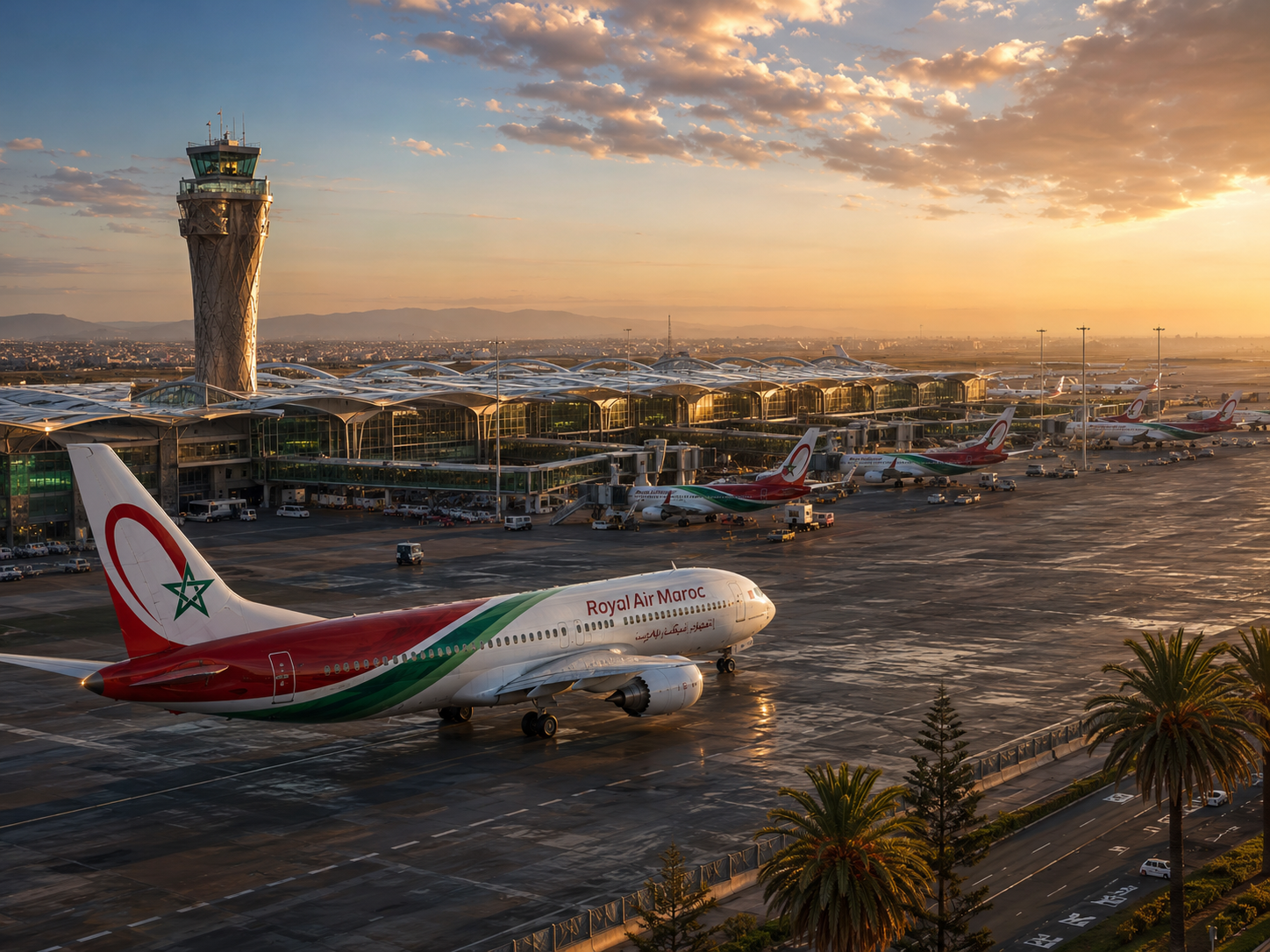
Africa’s aviation market is growing fast, airports are adding capacity, airlines are opening new routes, and Royal Air Maroc is expanding with the continent rather than watching from the sidelines.
Africa’s aviation story is getting bigger.
More seats are being added.
More airports are expanding.
More passengers are flying.
And across the continent, governments and airlines are betting that aviation will become an even more important part of trade, tourism and economic growth.
For Morocco, that boom is already visible.
The country is now the third-largest aviation market in Africa by scheduled seat capacity, with about 2.21 million seats in August 2026, up 8.8% from a year earlier, according to OAG.
Royal Air Maroc is growing even faster.
ROYAL AIR MAROC IS ADDING CAPACITY FAST
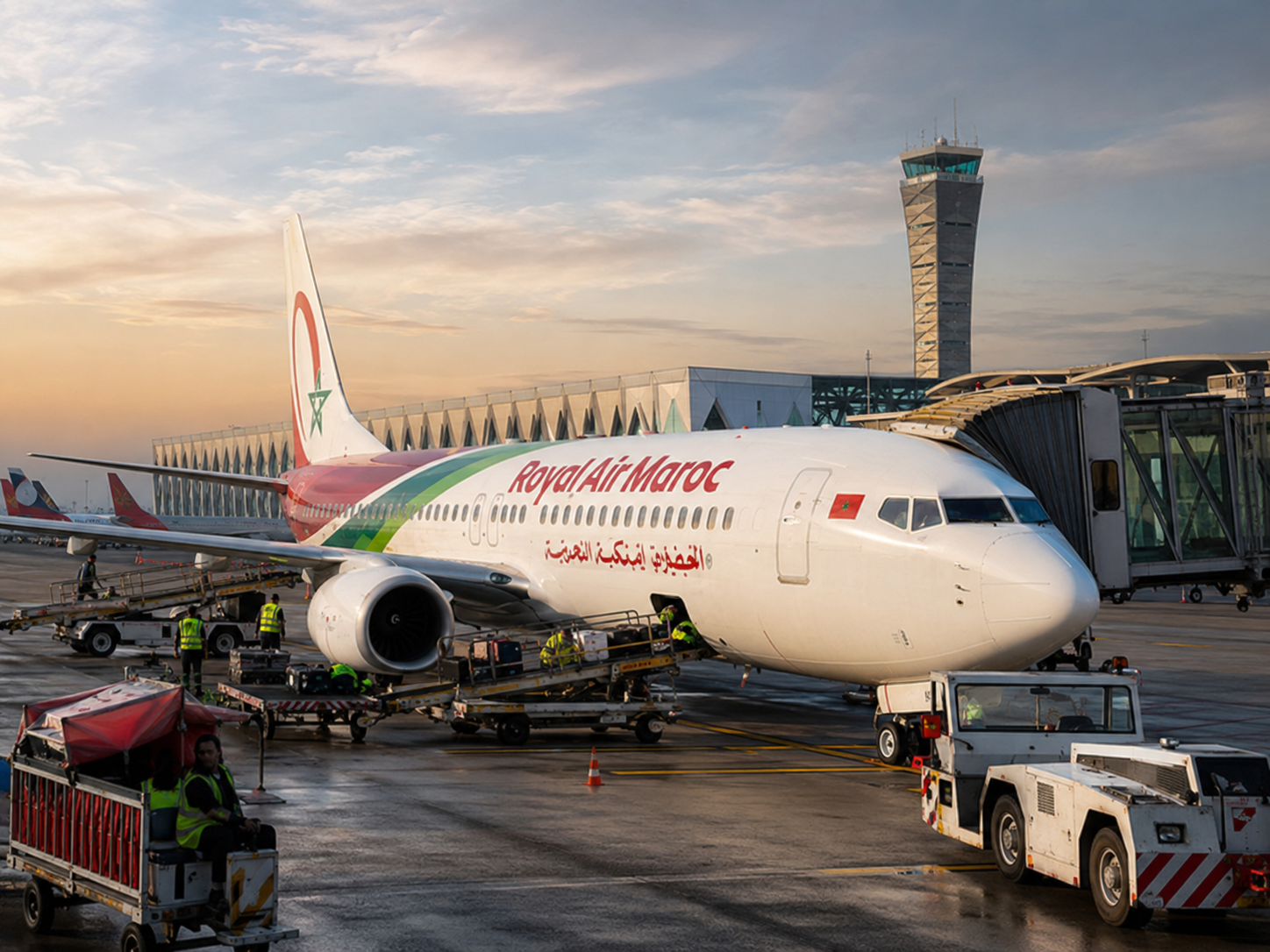
Royal Air Maroc is currently Africa’s fourth-largest airline by scheduled seat capacity, behind Ethiopian Airlines, Safair and Egyptair.
In August 2026, RAM is operating around 868,100 seats, an increase of 13.2% year on year.
That growth is not happening by accident.
For summer 2026, the Moroccan flag carrier announced a record programme of nearly 8.2 million seats, up 23% compared with summer 2025.
The airline plans to serve 86 international destinations across Africa, Europe, the Americas, Asia and the Middle East using a modernised fleet of 67 aircraft.
That is a major expansion.
And it is happening at exactly the moment Africa’s wider aviation market is accelerating.
AFRICA NOW HAS MORE THAN 27 MILLION SEATS IN A SINGLE MONTH
OAG data shows total African scheduled capacity reaching 27.3 million seats in August 2026, up 8.4% year on year.
International travel accounts for around 79% of that total.
Domestic capacity is growing even faster, up about 11% from August 2025.
The numbers show a continent where aviation demand is moving upward despite major differences between markets.
North Africa remains the largest regional aviation market.
Central and Western Africa, meanwhile, are among the fastest-growing areas.
Globally, Central and Western Africa recorded the strongest regional aviation growth rate in August, while North Africa was also among the fastest-expanding regions.
That creates an obvious opportunity for airlines capable of connecting different parts of the continent.
Royal Air Maroc wants to be one of them.
CASABLANCA IS ALREADY ONE OF AFRICA’S BIGGEST AIRPORTS
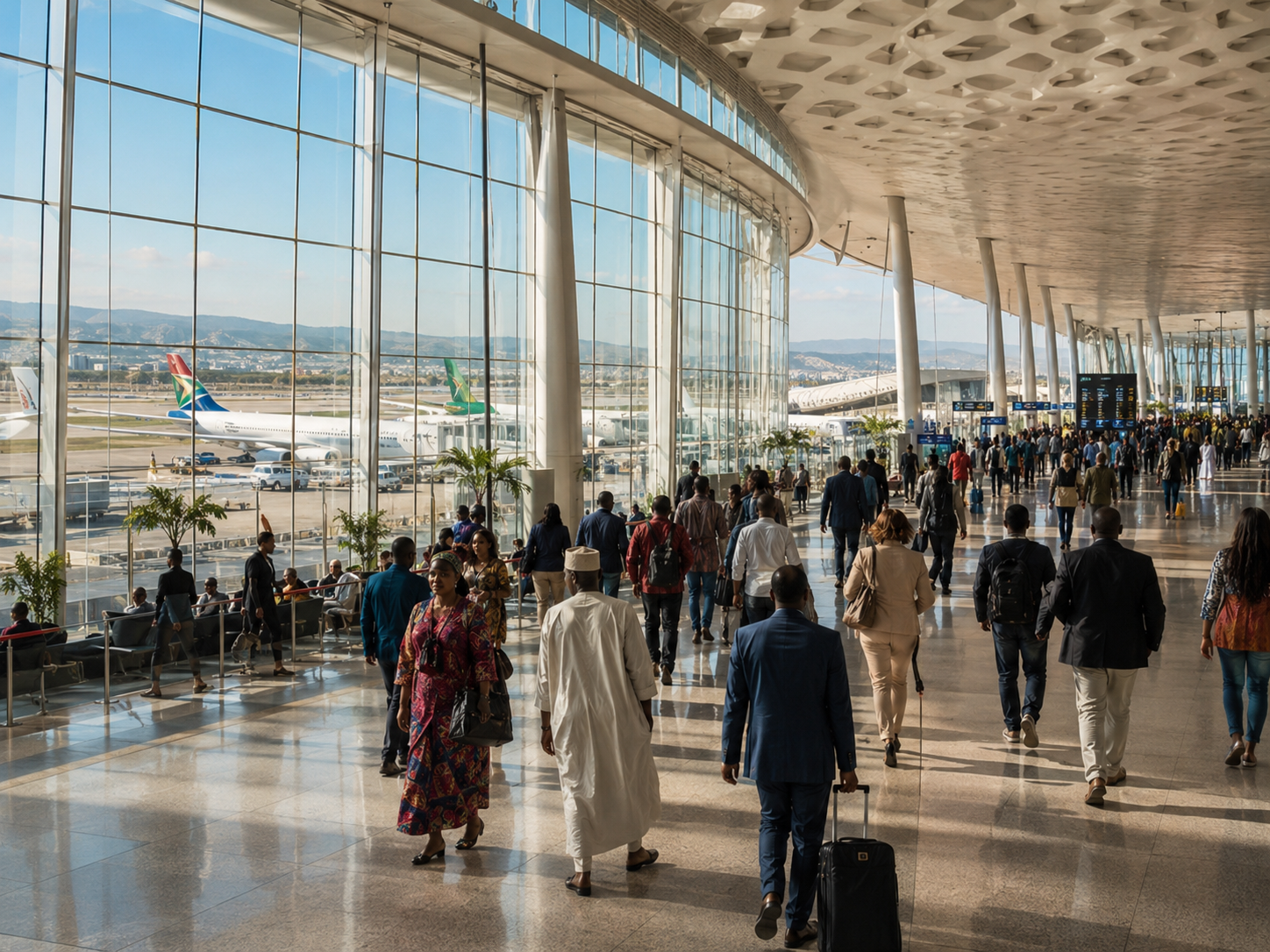
Casablanca Mohammed V International Airport sits at the centre of RAM’s strategy.
In August, Casablanca ranks as the fourth-largest airport in Africa by scheduled seat capacity, with around 800,000 seats, behind Cairo, Addis Ababa and Johannesburg.
Its capacity is up 10.1% from August 2025.
That matters because an airline is only as powerful as the hub behind it.
Casablanca allows Royal Air Maroc to connect:
West Africa to Europe.
Africa to North America.
Europe to African markets.
And increasingly, Morocco to a much wider global network.
The stronger the airport becomes, the more valuable that connecting model becomes.
AFRICA’S AIRPORT BOOM IS ABOUT MORE THAN TOURISM
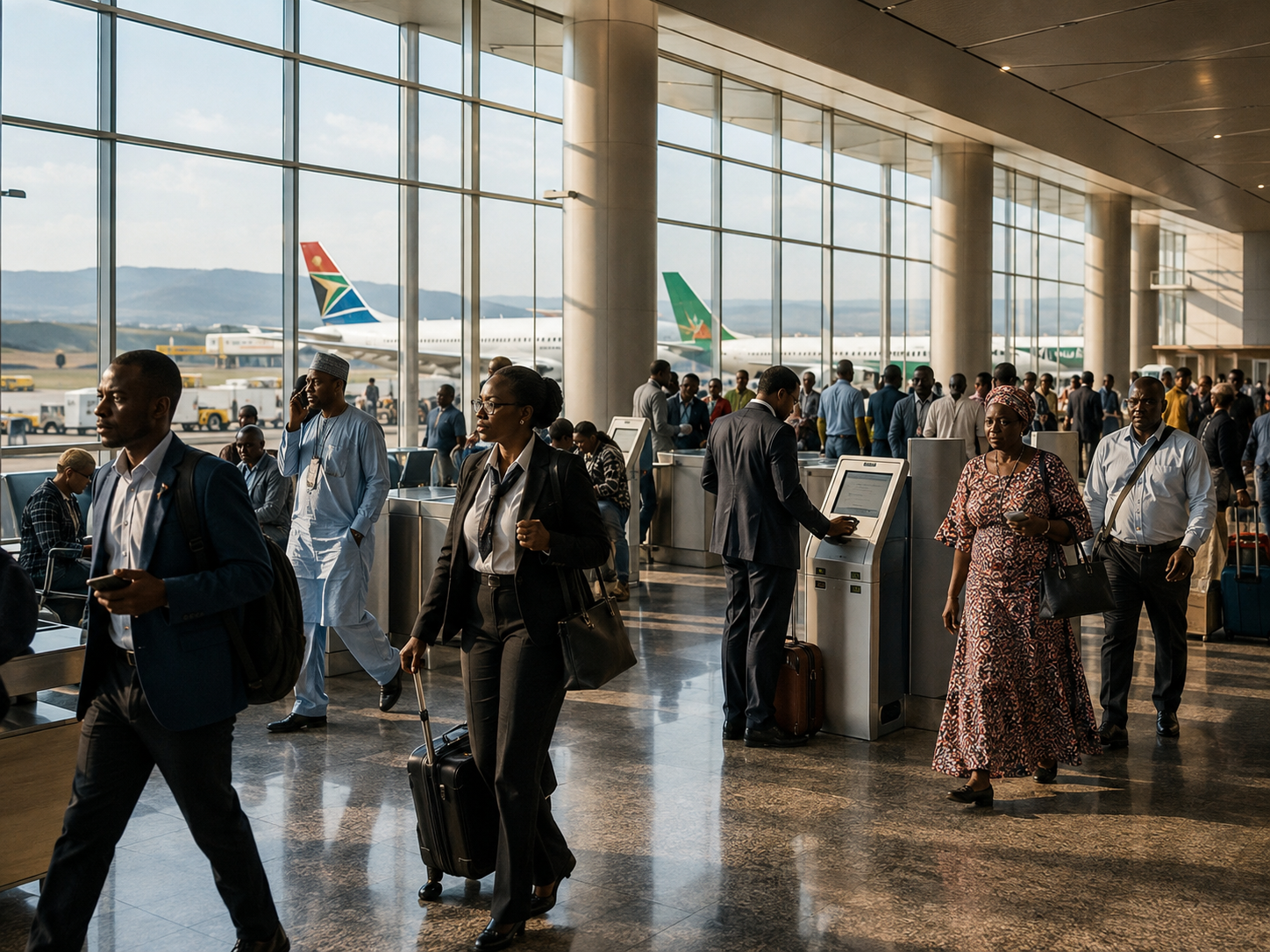
Tourism gets much of the attention.
But airports are economic infrastructure.
They move business travellers.
Cargo.
Investors.
Diaspora communities.
Students.
Government delegations.
And increasingly, high-value goods that depend on fast transport.
For countries trying to attract foreign investment, better air links can make the difference between being accessible and being inconvenient.
That is why airport expansion across Africa matters economically.
A new terminal is not just a building.
It can increase the number of routes an airport can handle.
It can shorten connection times.
It can attract airlines.
And it can make a city more competitive as a regional hub.
MOROCCO HAS AN ADVANTAGE OTHER MARKETS DO NOT
Morocco sits in a particularly useful location.
Europe is immediately to the north.
West Africa is directly to the south.
North America is reachable across the Atlantic.
And the country already has a large tourism industry and strong business links with Europe and Africa.
That gives Royal Air Maroc a natural hub strategy.
Instead of relying only on passengers whose journey begins or ends in Morocco, RAM can carry travellers through Casablanca between other markets.
A passenger can leave Dakar, connect in Casablanca and continue to Paris.
Or travel from another African city through Morocco toward North America.
That connecting traffic is what turns an airline from a national carrier into a hub carrier.
EUROPE IS STILL AFRICA’S BIGGEST INTERNATIONAL MARKET
Europe remains by far the biggest international destination region for African aviation.
OAG reports around 10.8 million international seats between Africa and Europe in August 2026, an increase of roughly 665,000 seats from a year earlier.
That relationship is particularly important for Morocco.
France.
Spain.
Belgium.
Italy.
The Netherlands.
And other European markets have large Moroccan communities and strong tourism and business ties with the country.
Royal Air Maroc can therefore combine local demand with connecting traffic from the rest of Africa.
That is a powerful advantage.
BUT THE COMPETITION IS SERIOUS
Royal Air Maroc is not expanding alone.
Ethiopian Airlines remains Africa’s largest carrier, with around 2.19 million seats in August, up 10.9%.
Egyptair is also growing.
Low-cost carriers are growing too.
Across Africa, LCC capacity is up 9.8%, slightly faster than the growth of traditional mainline airlines.
That means Royal Air Maroc cannot rely on geography alone.
It has to compete on:
network,
price,
reliability,
service,
fleet,
and connection quality.
A bigger African aviation market creates more opportunity.
It also creates more competition.
AIRPORTS WILL DECIDE WHO WINS
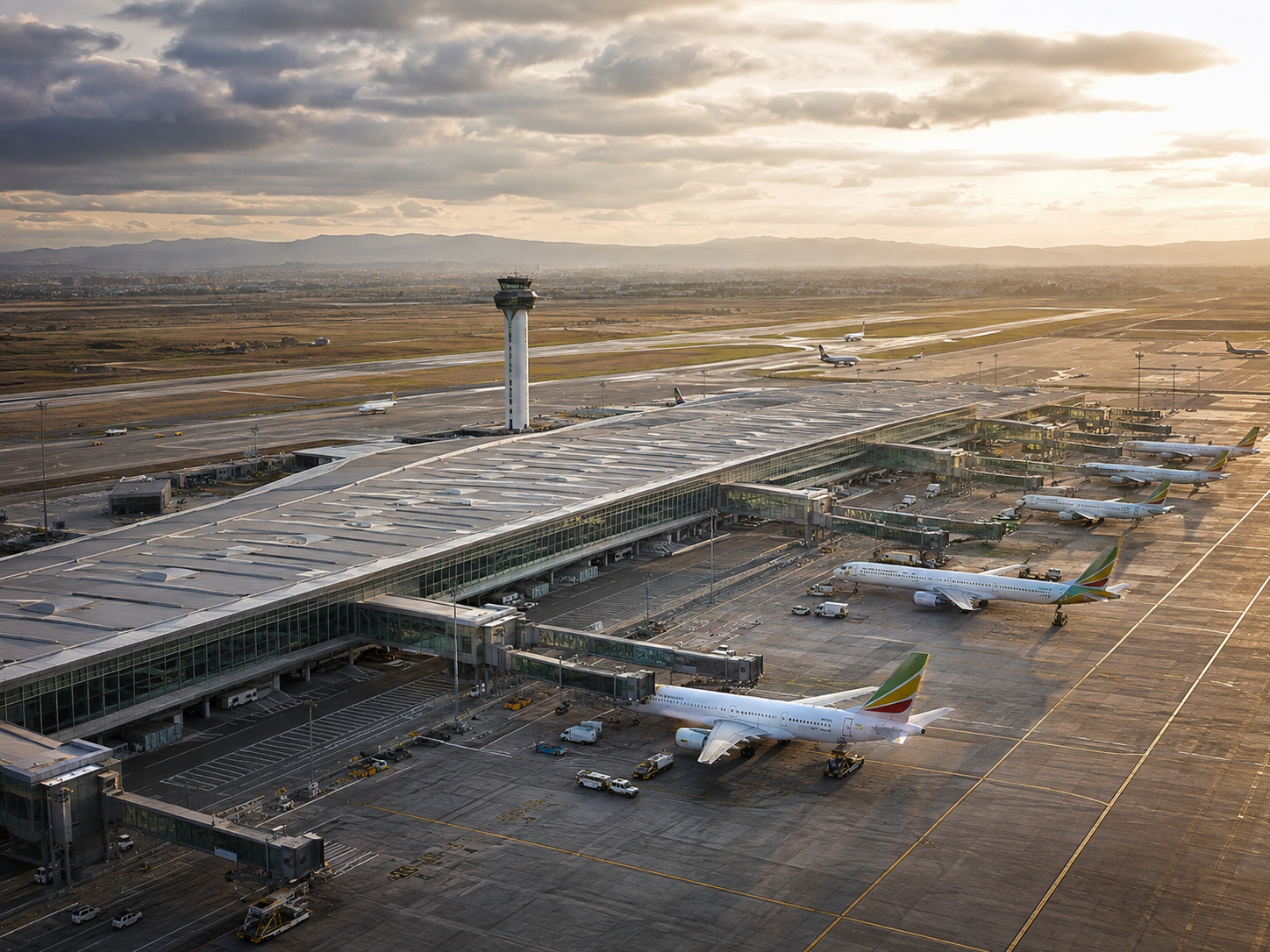
This is where the continent’s airport investment becomes crucial.
Airlines can buy aircraft.
But if airports cannot process passengers efficiently, growth quickly becomes uncomfortable.
Long queues.
Delayed connections.
Congested terminals.
Insufficient gates.
Weak baggage systems.
All can turn expansion into frustration.
Africa’s airport boom is therefore not simply about creating impressive terminals.
Capacity has to match airline growth.
For Morocco, that means Casablanca and other major airports need to expand alongside Royal Air Maroc.
The airline and the airport system are part of the same strategy.
RAM’S BIGGER AMBITION IS CLEAR
Royal Air Maroc has spent years building its position as an African connector.
Its membership in the oneworld alliance gave it deeper access to global partner networks.
Its Casablanca hub gives it geography.
And its expanding seat programme gives it scale.
The summer 2026 plan is another step in that direction.
Nearly 8.2 million seats.
86 international destinations.
A 23% increase in capacity.
Those are not the numbers of an airline trying to remain the same size.
They point to a carrier trying to take a larger share of a growing market.
MOROCCO IS RIDING THE SAME WAVE
The timing could hardly be better.
Africa’s aviation capacity is rising.
North Africa is expanding quickly.
Morocco is already the continent’s third-largest country market by seats.
Casablanca is among its biggest airports.
And Royal Air Maroc is growing faster than the African market overall.
That does not guarantee success.
Airlines remain expensive businesses.
Fuel prices move.
Aircraft deliveries can be delayed.
Competition is intense.
And airport infrastructure has to keep pace.
But the direction is difficult to miss.
Africa is building bigger aviation hubs.
More people are flying.
More routes are opening.
And Royal Air Maroc is trying to make sure that when the continent’s aviation map gets redrawn, Casablanca remains one of the places where the lines meet.