

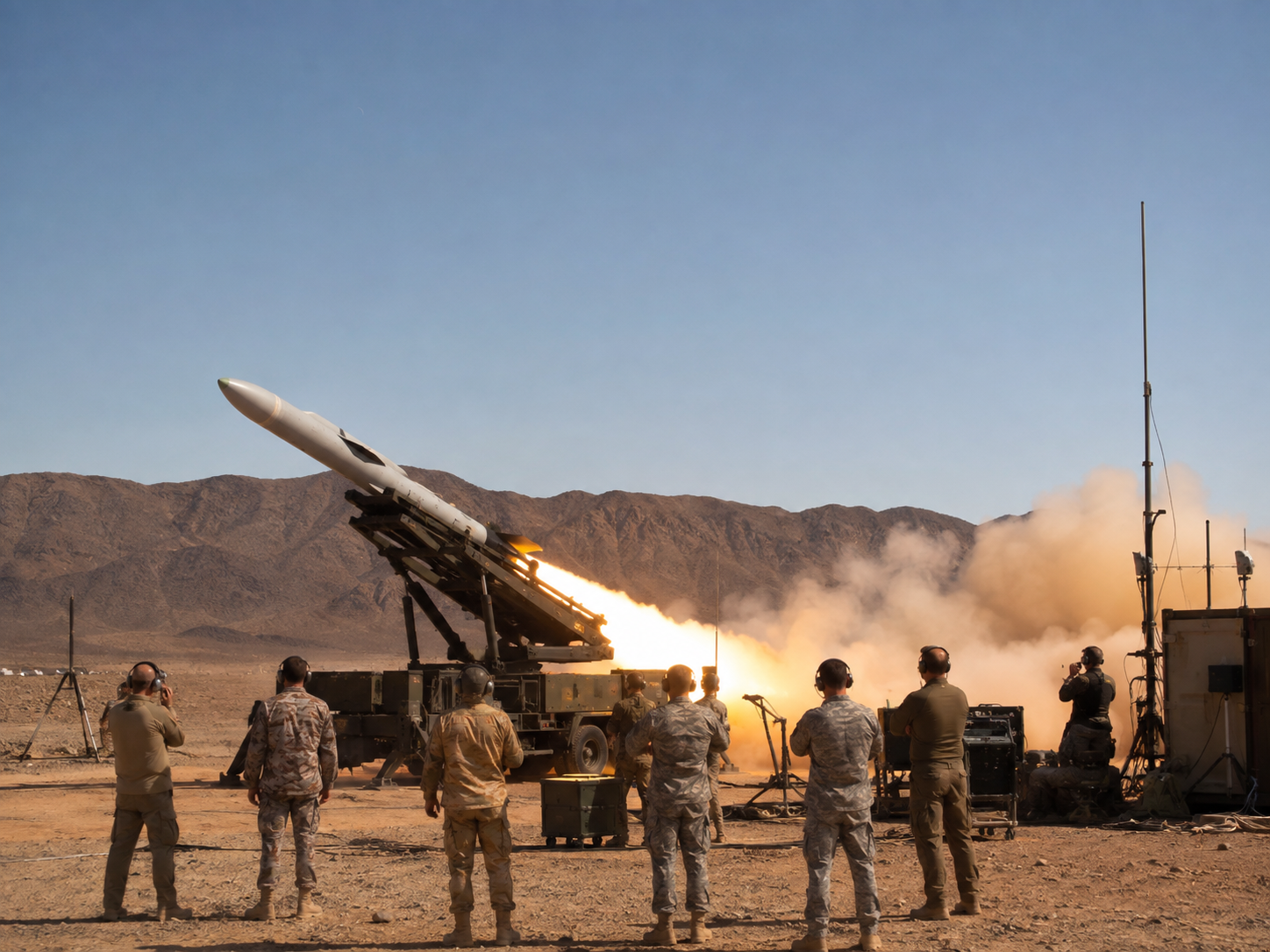
A cruise missile has been fired from the Moroccan desert in a first-of-its-kind live demonstration involving Moroccan and US forces, turning Tan-Tan into a testing ground for the next generation of long-range military technology.
Morocco and the United States have taken their defence partnership into new territory.
Near Tan-Tan in southern Morocco, the Royal Armed Forces and US military personnel enabled the first live-fire demonstration using the new Africa Multidomain Training and Experimentation Center, known as AMTEC.
The test took place during activities running from August 3 to 7 and involved a US defence company evaluating a long-range precision-strike capability.
Video released by US Africa Command shows defence-industry personnel preparing a cruise missile before the weapon is launched from the Moroccan test site.
For Morocco, however, the bigger story is not simply what left the launcher.
It is what Tan-Tan could become.
THE MISSILE WAS FIRED FROM TAN-TAN
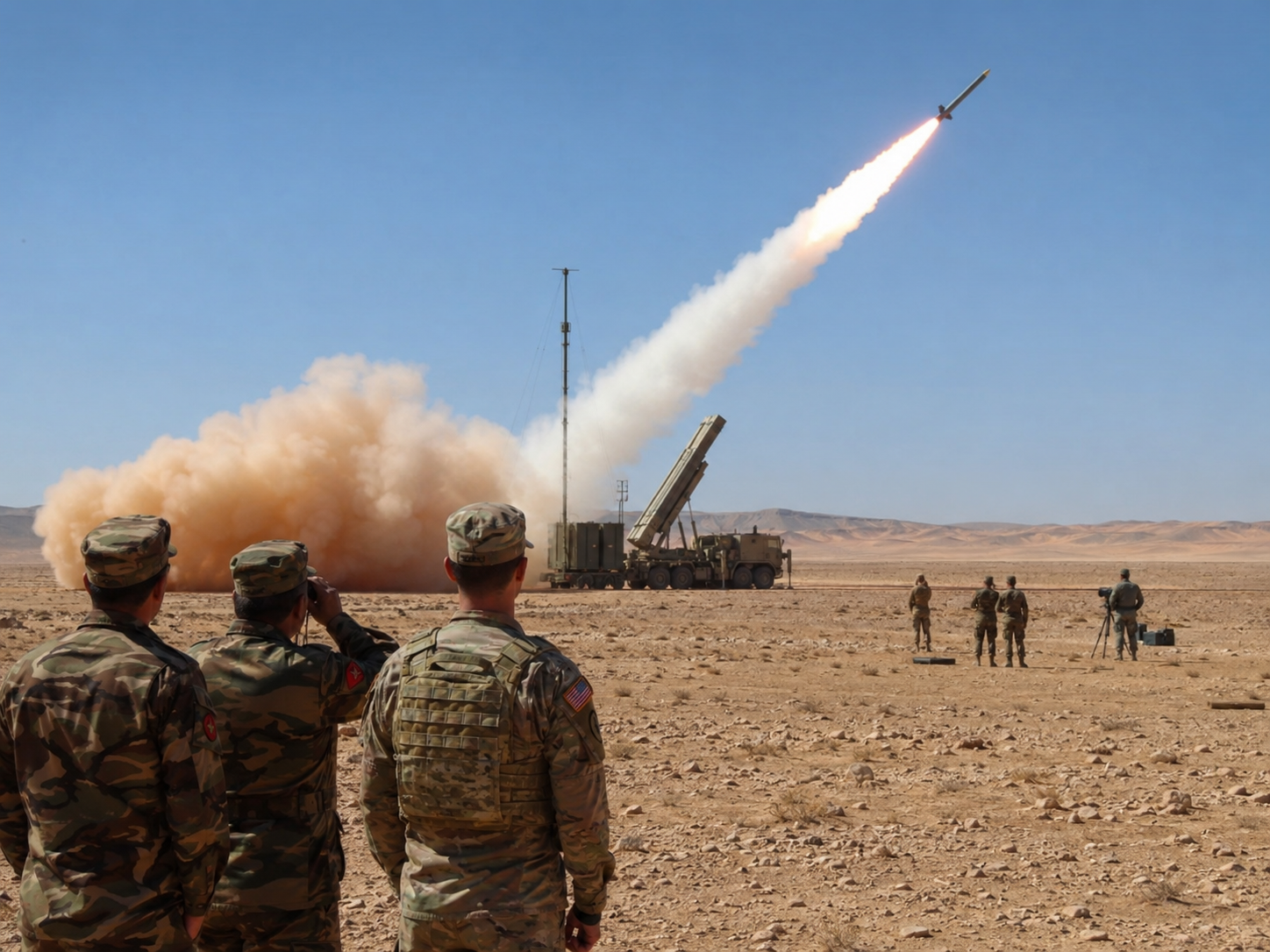
The demonstration was conducted at an expeditionary testing site around Tan-Tan rather than at a conventional permanent US missile range.
Moroccan and American forces supported a US defence-industry partner during the operation, allowing the company to test equipment in realistic desert conditions.
According to US military reporting, teams used the week to examine communications, targeting data and how equipment performed in the local environment before completing the live-fire demonstration.
The programme forms part of the US Army’s Test Range Expansion Initiative, which is looking for additional places where defence companies can test emerging technology more quickly.
That is what makes Morocco’s involvement strategically significant.
Tan-Tan is not simply hosting another military exercise.
It is being positioned as a place where new weapons and defence technologies can actually be tested.
THE US HAS NOT OFFICIALLY NAMED THE WEAPON
There is one important distinction.
AFRICOM’s official statement does not identify either the missile or the private company involved.
It refers only to a US defence-industry partner testing long-range precision-strike capabilities.
Specialist regional reporting has identified the system as Anthem, a low-cost long-range cruise missile developed by Covenant Industries.
Military Africa and Le Desk both reported that Anthem was the missile tested at Tan-Tan.
Covenant is a relatively young defence company seeking to build missiles that can be manufactured faster and at lower cost than many traditional long-range weapons.
That matters at a time when militaries are increasingly questioning whether they can afford to use extremely expensive missiles against every target.
A DIFFERENT KIND OF MISSILE RACE
Modern warfare has created a difficult economic problem.
Precision weapons can be extraordinarily effective.
They can also be extraordinarily expensive.
When large numbers of missiles are required, cost becomes part of military strategy.
That has created a market for companies trying to produce long-range weapons more cheaply and at greater scale.
Anthem is being developed in that environment.
According to specialist reporting, Covenant is positioning the missile as a more affordable and more easily mass-produced alternative to traditional cruise missiles.
The Tan-Tan test therefore matters beyond Morocco.
It is part of a much wider race to rethink the economics of long-range warfare.
WHY MOROCCO?
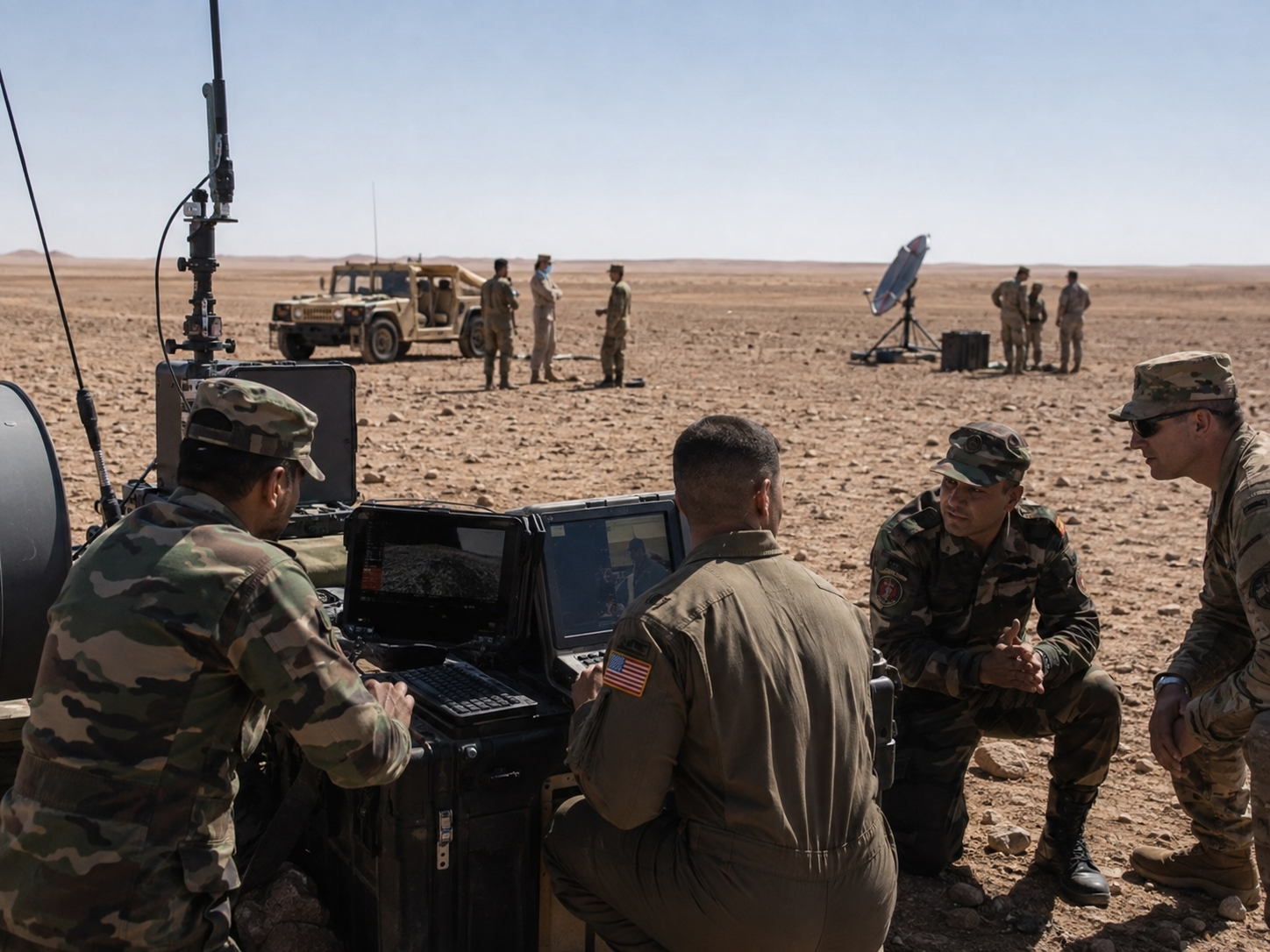
Morocco offers something the United States cannot always reproduce easily at home.
Space.
Desert terrain.
Access to a wide testing environment.
A longstanding defence relationship.
And the ability to conduct activities involving African partner forces.
US Army officials say AMTEC is intended to provide physical space and access across the electromagnetic spectrum for testing technologies that may be difficult to evaluate at many American ranges.
That could make Morocco increasingly attractive not only to the US military, but also to private defence companies developing drones, communications equipment, sensors and autonomous systems.
AMTEC COULD BECOME MUCH BIGGER
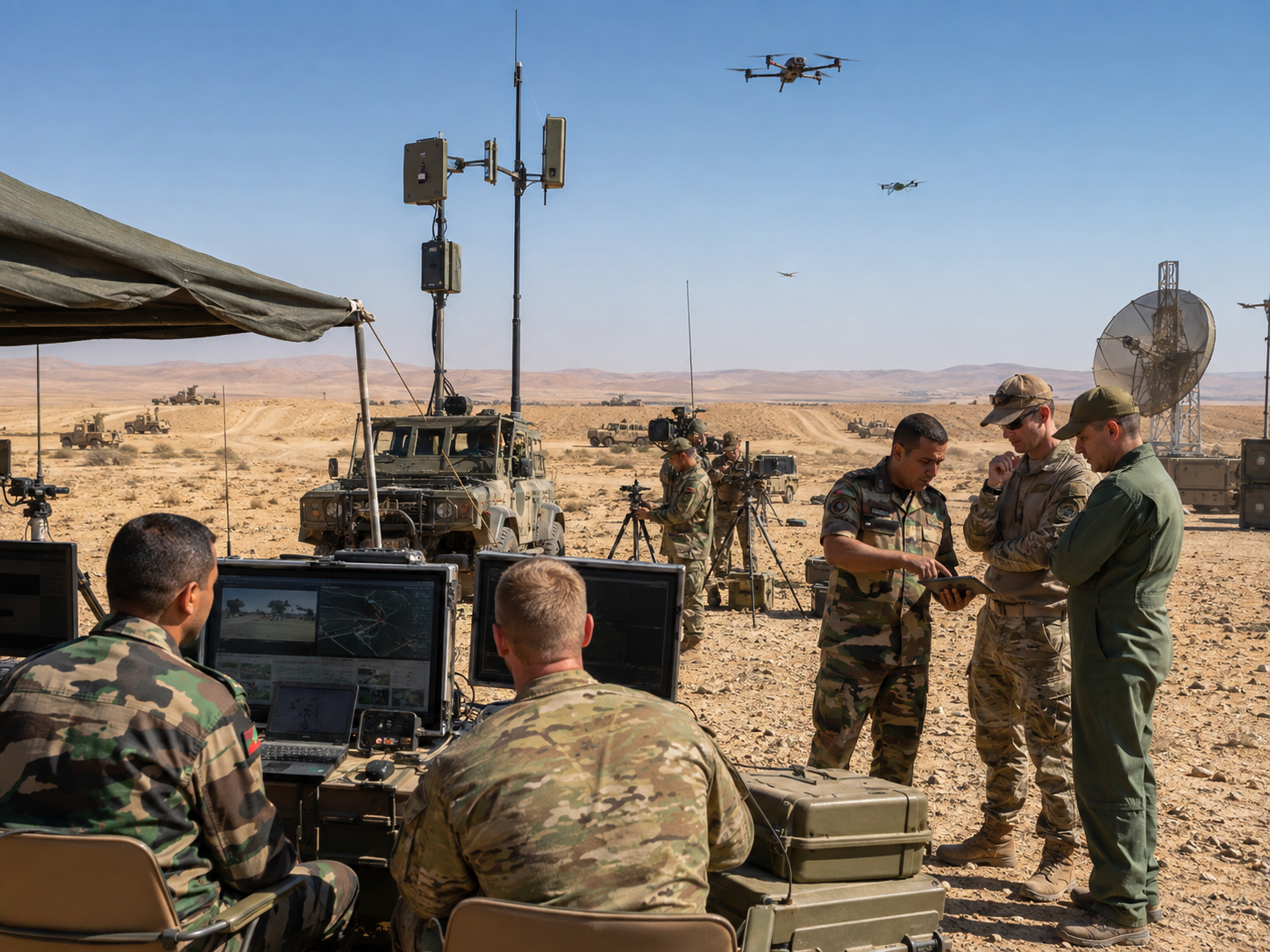
The new centre is designed for far more than missile launches.
AFRICOM says AMTEC will allow Moroccan and US forces, defence companies and potentially academic institutions to test and improve emerging technologies in realistic conditions.
Future work is expected to include:
long-range fires,
autonomous systems,
wireless communications,
advanced sensors,
small drones,
and counter-drone technologies.
That makes the Tan-Tan missile launch less of a one-off spectacle and more of a demonstration of what the centre could eventually support.
MOROCCO AND THE US HAVE BEEN MOVING CLOSER ON DEFENCE
The test also sits inside a much larger military relationship.
Morocco and the United States have conducted major joint exercises for years, including African Lion, one of the largest annual military exercises on the continent.
In July 2026, the two sides signed a memorandum of understanding connected to the development of AMTEC.
The centre adds something different to that relationship.
Exercises train forces to use existing systems.
AMTEC is designed to help test systems that may not yet be widely deployed.
That moves Morocco closer to the development side of the defence industry.
TAN-TAN COULD BECOME A TESTING HUB
For Morocco, the potential benefits go beyond military capability.
A permanent testing ecosystem can attract engineers, defence contractors, technology companies and investment.
It can also give Moroccan military personnel earlier exposure to emerging systems and the companies developing them.
Colonel Zouhair El Hamdani of Morocco’s Royal Armed Forces described AMTEC as a potential regional hub for innovation, strategic cooperation and industrial development, according to reporting on the demonstration.
That may ultimately be more important than the missile itself.
Weapons come and go.
Testing infrastructure can remain for decades.
THE DESERT IS BECOMING PART OF MOROCCO’S STRATEGIC VALUE
Tan-Tan has long been associated with military exercises.
AMTEC could give it another identity.
A place where new systems are assembled.
Tested.
Fired.
Evaluated.
And improved.
The August demonstration showed what that can look like.
A defence company brought a cruise missile to southern Morocco.
Moroccan and American forces created the environment to test it.
The weapon was launched.
Data was collected.
And a new military testing partnership moved from concept to reality.
For Washington, the attraction is access to a testing environment that is difficult to reproduce elsewhere.
For Morocco, the opportunity is larger.
The country is no longer only training with American military technology. It is increasingly becoming a place where the next generation of that technology is tested.