


A French intelligence officer sentenced to 20 years in a Malian prison is back in France after an extraordinary diplomatic intervention — and Morocco appears to have been one of the quiet forces behind his release.
Yann Vézilier had every reason to think he would spend years behind bars.
The French intelligence officer had been arrested in Mali in August 2025, accused by the authorities in Bamako of involvement in a plot against the state.
In June 2026, he was sentenced to 20 years in prison for undermining Mali’s external security.
France rejected the accusations as baseless.
Then, barely two months later, everything changed.
On August 13, Mali’s transitional president, General Assimi Goïta, granted Vézilier a presidential pardon and ordered his immediate removal from the country.
Behind that sudden reversal was a discreet diplomatic effort.
And Morocco appears to have played a crucial role.
A FRENCH INTELLIGENCE OFFICER IN A VERY DIFFICULT POSITION
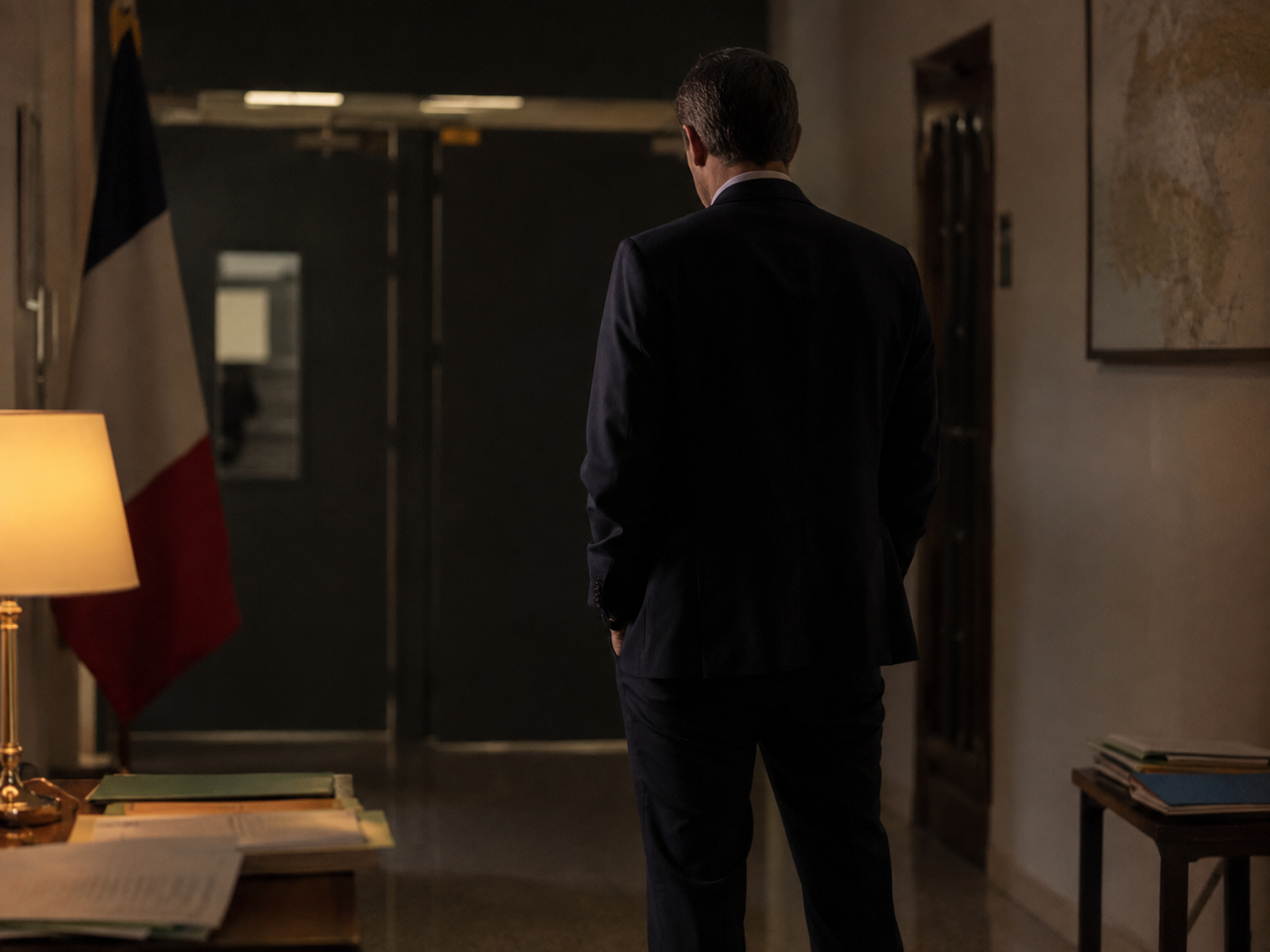
Vézilier was not an ordinary French national detained abroad.
He was an officer associated with France’s external intelligence service, the DGSE, and was officially attached to the French embassy in Bamako.
Malian authorities accused him of working with political figures, members of civil society and military officers in an effort to destabilise the government.
Paris strongly disputed that version of events.
French officials said Vézilier was carrying out legitimate security cooperation work and denied that France had participated in any attempt to overthrow Mali’s authorities.
The case came at a particularly difficult moment in relations between Paris and Bamako.
Since the coups of 2020 and 2021, Mali has steadily moved away from France and strengthened ties with Russia.
French troops left the country.
Security cooperation collapsed.
Political trust largely disappeared.
Vézilier’s arrest added another layer of tension.
THEN CAME THE 20-YEAR SENTENCE
In June 2026, Vézilier was convicted and sentenced to 20 years in prison.
For France, the sentence was deeply controversial.
For Mali, it was presented as a matter of national sovereignty and state security.
The two countries appeared to be heading further apart.
But diplomatic discussions continued behind the scenes.
Other countries attempted to help.
Le Monde reported that Qatar, the UAE, Ghana and Morocco were among those involved in efforts surrounding the case.
Morocco, however, appears to have emerged as one of the most important intermediaries.
MALI THANKED A ‘BROTHERLY COUNTRY’
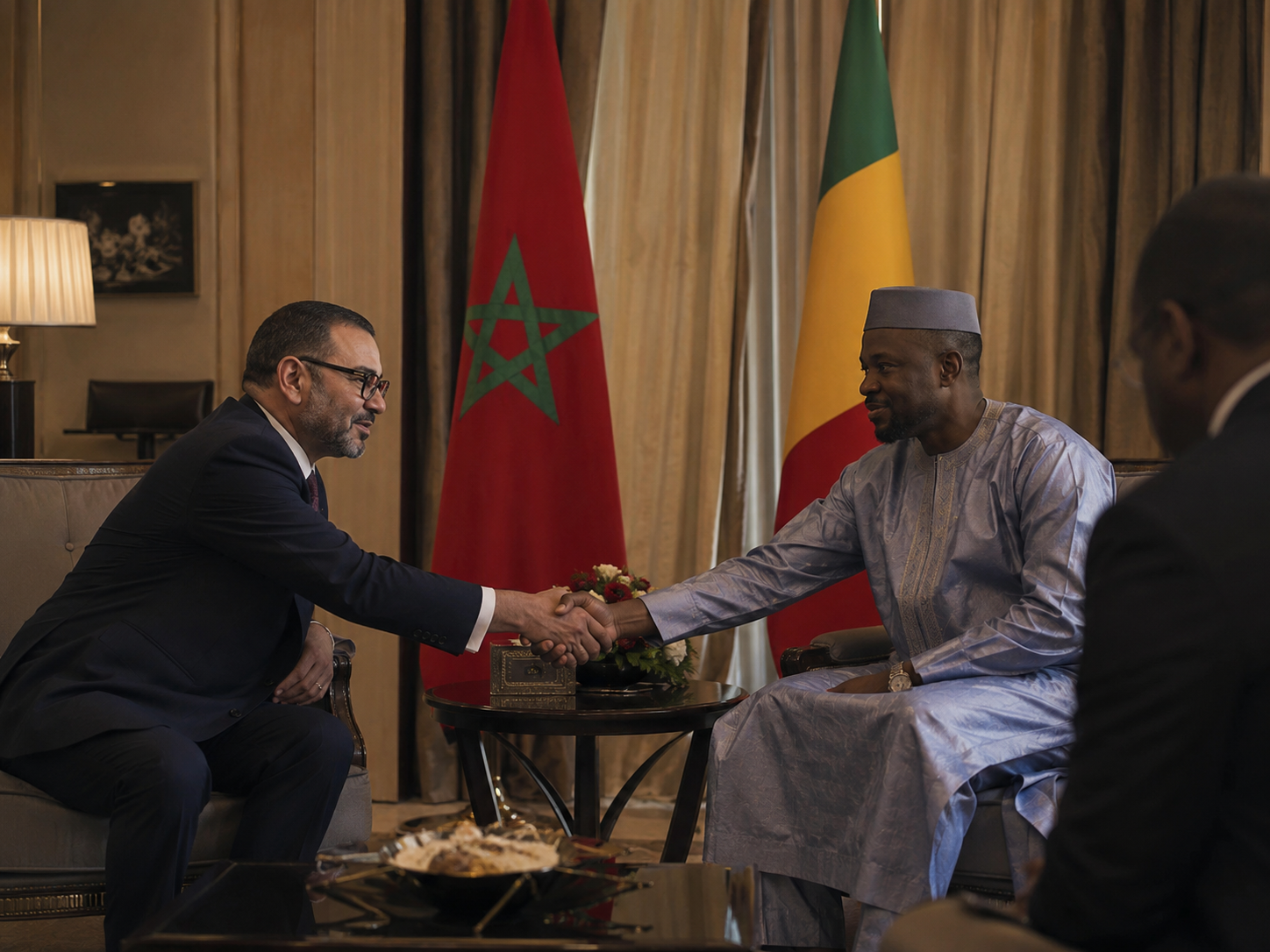
When Mali announced Vézilier’s pardon, its official statement included a striking line.
The government thanked a “brotherly country” whose discreet good offices had contributed to securing the pardon.
Bamako did not name that country in the communiqué itself.
But regional reporting later identified Morocco as the mediator.
Moroccan and regional outlets reported that Rabat had used quiet diplomatic channels with Bamako in the weeks before the release.
That fits Morocco’s broader diplomatic posture in the Sahel.
Rabat has maintained lines of communication across a region where relations with Western capitals have often become strained.
In this case, that access appears to have mattered.
THE PARDON DID NOT ERASE THE CONVICTION
There is an important distinction.
Vézilier was pardoned.
He was not acquitted.
Mali’s government explicitly said the presidential pardon did not overturn the findings of the court.
The conviction remained on the record.
The pardon simply ended the prison sentence and required Vézilier to leave Mali immediately.
That allowed Bamako to release him without publicly abandoning its position on the case.
It was a diplomatic solution that gave both sides room to move.
France got its officer back.
Mali maintained that its legal process had been valid.
And the intermediary could remain largely out of sight.
FRANCE CALLED HIS RETURN A RELIEF
After Vézilier returned to France, the French Foreign Ministry expressed what it described as very great satisfaction.
The ministry said his return to France and to his family was a relief for his colleagues and loved ones.
That reaction underscored the stakes involved.
This was not simply the release of a tourist or businessman detained overseas.
Vézilier was a member of France’s intelligence apparatus.
His detention had become part of a much larger geopolitical confrontation between France and Mali.
MOROCCO’S ROLE IS THE BIGGER STORY
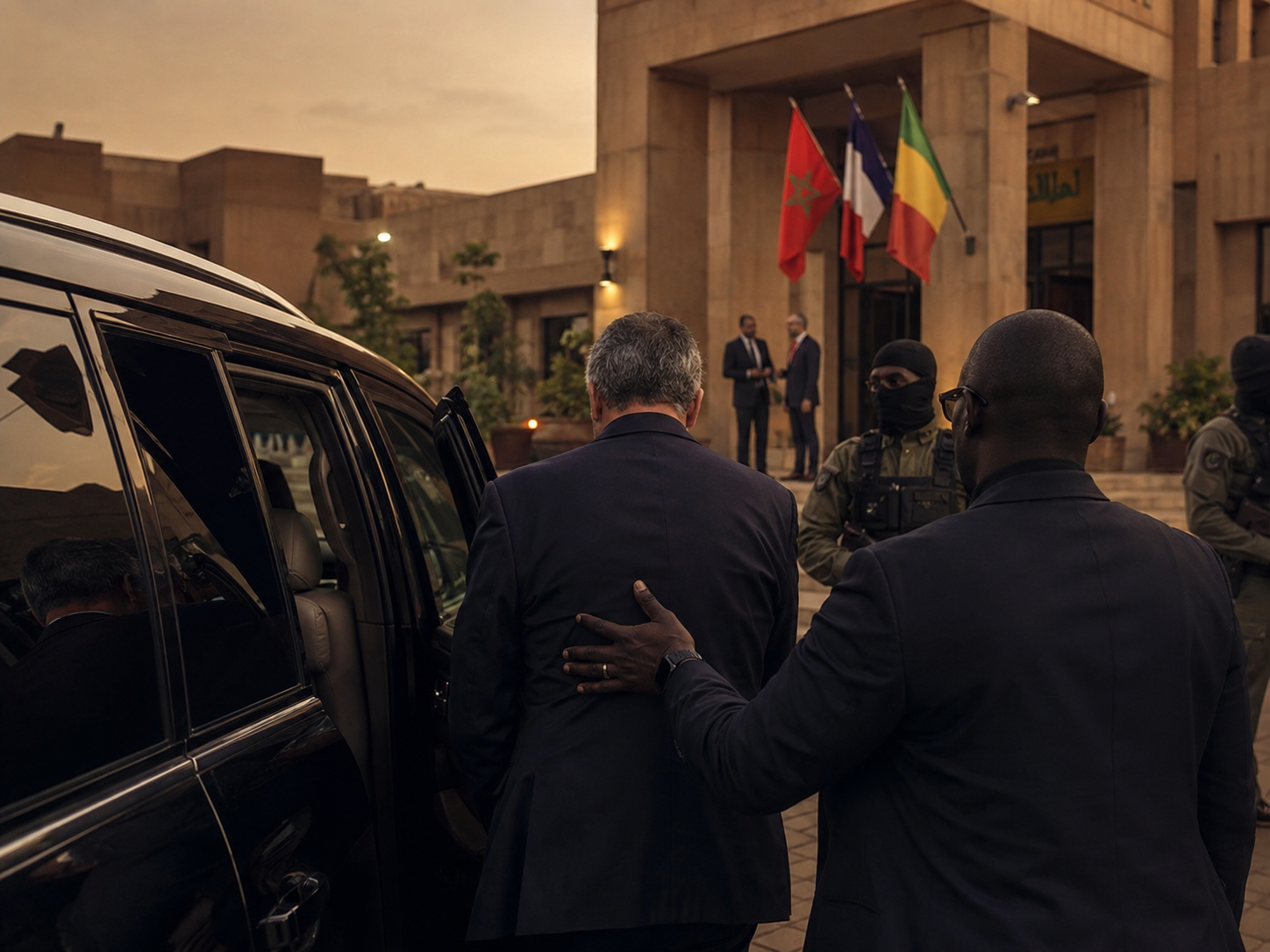
For MTD, the most interesting part of the story is not only Vézilier’s release.
It is why Morocco was able to help when relations between France and Mali were so badly damaged.
Morocco has spent years building diplomatic ties across West Africa and the Sahel.
It has positioned itself as a state capable of talking to governments that do not always maintain smooth relations with Europe.
That creates influence of a very particular kind.
Not influence built on public declarations.
Influence built on access.
On trust.
And on the ability to carry messages between capitals that may no longer speak easily to each other.
In the Vézilier case, that quiet diplomacy appears to have produced a tangible result.
ONE YEAR IN DETENTION — THEN A SUDDEN EXIT
Vézilier had been detained for almost exactly one year.
He was arrested in August 2025.
He received a 20-year sentence in June 2026.
Then, on August 13, the Malian president signed the decree that allowed him to walk free.
Within a short time, he was out of Mali.
Back in France.
And reunited with his family.
The legal case remained.
The political dispute remained.
But the prisoner was gone.
And behind that dramatic change was something far less visible:
Morocco’s quiet ability to open a door that seemed firmly closed.