

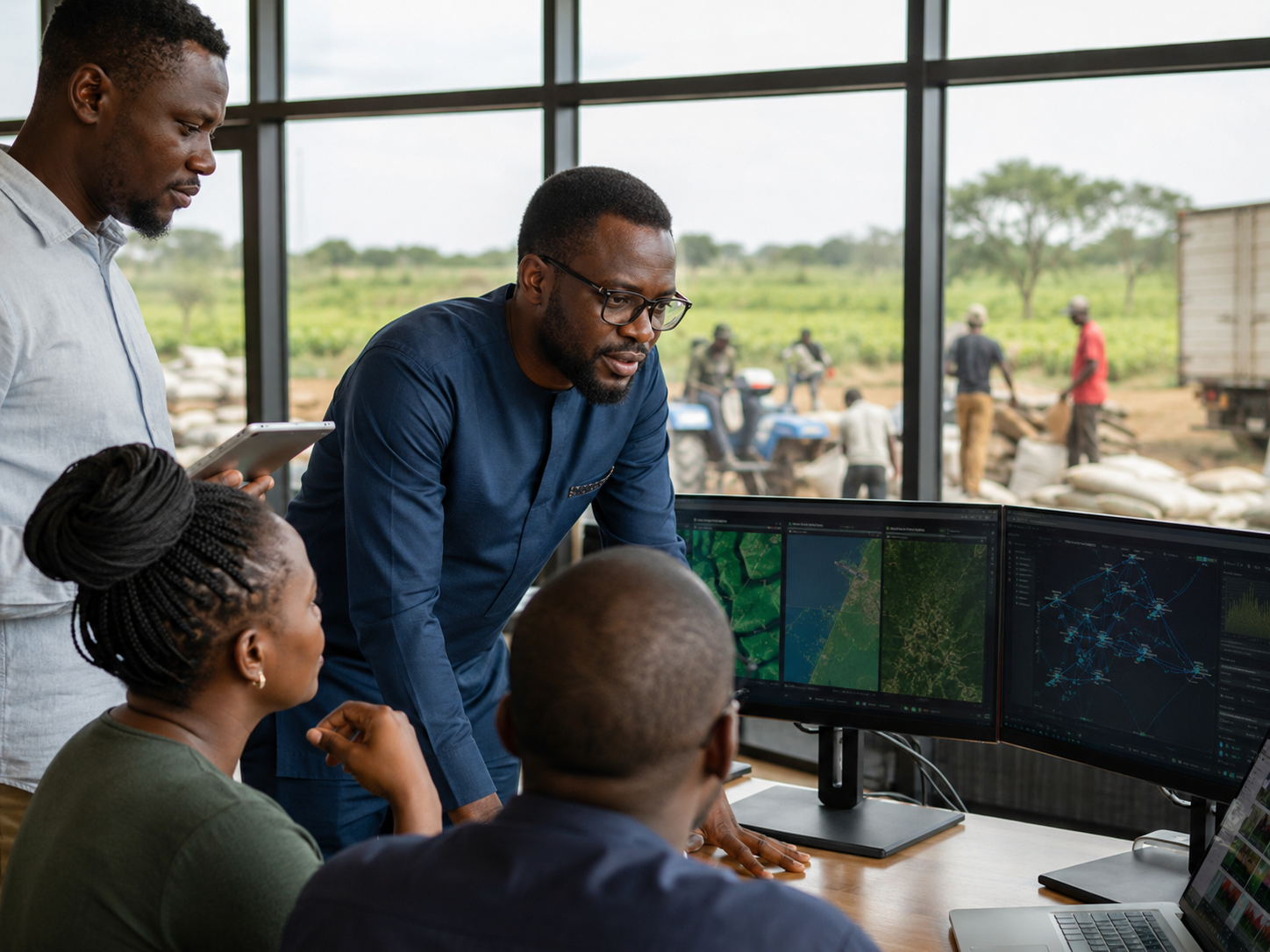
Africa does not need another copy of Silicon Valley. Its biggest AI opportunity may come from solving the problems global tech companies have spent years overlooking.
The global artificial intelligence race is obsessed with scale.
Bigger models.
More computing power.
More data centres.
More chatbots.
More money.
But Africa may have a completely different path to winning.
The continent’s most valuable AI companies may not be the ones trying to build the next ChatGPT.
They may be the ones helping a farmer spot crop disease earlier.
Helping a bank assess a small business that has never had formal credit.
Helping a hospital diagnose patients where specialists are scarce.
Or helping a logistics company move goods through cities where delivery networks remain inefficient.
That is the opportunity.
Not copying the technology everyone else is already building.
Solving problems everyone else has ignored.
AFRICA DOES NOT NEED TO COPY SILICON VALLEY
The temptation is obvious.
When a technology becomes globally fashionable, entrepreneurs rush toward whatever investors are discussing.
Generative AI.
Large language models.
AI assistants.
Consumer apps.
But copying the hottest American startup may not create the strongest African company.
Africa has different constraints.
Different infrastructure.
Different languages.
Different consumer behaviour.
And very different gaps in essential services.
The original analysis from FindMoreAfrica argues that the continent’s most promising AI businesses will be built around those realities rather than imported technology trends.
That is a much harder strategy.
It may also be a much more valuable one.
AGRICULTURE MAY BE ONE OF THE BIGGEST OPPORTUNITIES
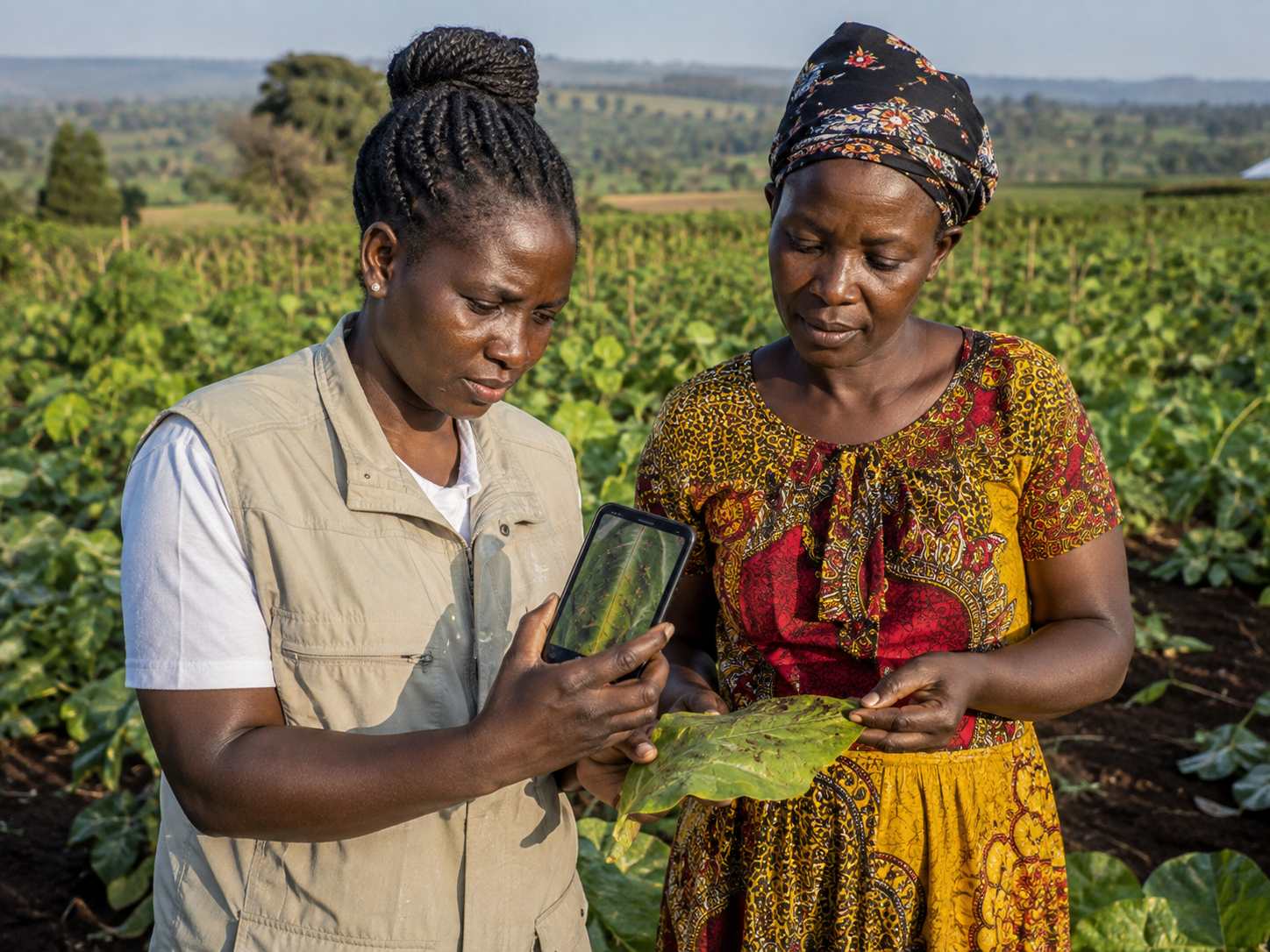
Agriculture employs millions of people across Africa.
But productivity remains constrained by problems that AI is unusually well suited to address.
Crop disease.
Weather uncertainty.
Irrigation.
Soil monitoring.
Input costs.
Market information.
AI-powered tools can help farmers identify plant disease from images, predict weather patterns and improve decisions about when to plant, irrigate or harvest.
For a technology company, that may sound less glamorous than building a consumer chatbot.
For a farmer who can save a crop, it is much more valuable.
And that distinction matters.
The best technology is not always the technology that attracts the most attention.
Sometimes it is the technology that prevents a farmer from losing an entire season.
HEALTHCARE HAS THE SAME PROBLEM

Africa also faces major shortages in healthcare access.
Doctors and specialists are unevenly distributed.
Rural communities can be far from hospitals.
Diagnostic capacity is limited in many areas.
AI cannot replace doctors.
But it can help extend their reach.
Diagnostic tools can support image analysis.
Digital systems can help manage patients.
AI-assisted triage can identify cases that require urgent attention.
And telemedicine platforms can combine remote consultations with automated support tools.
The commercial opportunity is obvious.
So is the social one.
A company that helps a hospital see more patients with the same number of doctors is not simply selling software.
It is expanding capacity.
EDUCATION COULD BECOME PERSONAL
The same pattern applies to schools.
Classrooms across Africa often contain students with very different levels of preparation.
Teachers may be responsible for large groups.
Learning materials are not always available in the student’s strongest language.
AI creates the possibility of much more personalised learning.
Adaptive systems can change the difficulty of lessons based on a student’s progress.
Translation tools can make materials available across more languages.
Tutoring systems can give students additional support outside school hours.
Again, the important question is not whether the technology is impressive.
It is whether children learn more.
FINTECH MAY MOVE EVEN FASTER

Finance is another obvious area.
Africa already became one of the world’s most innovative fintech markets because traditional banking did not reach everyone.
AI could accelerate that transformation.
Banks and fintech companies can use artificial intelligence for fraud detection.
Customer service.
Credit assessment.
Risk management.
And personalised financial products.
Credit is particularly interesting.
Millions of individuals and small businesses have limited formal borrowing histories.
Traditional credit scoring may therefore exclude perfectly viable customers.
AI systems can potentially analyse broader patterns of financial behaviour and help lenders make more informed decisions.
Done responsibly, that could expand access to finance.
Done badly, it could simply automate discrimination.
That is why regulation and data quality matter as much as the algorithm itself.
LOGISTICS IS BORING UNTIL IT SAVES MONEY
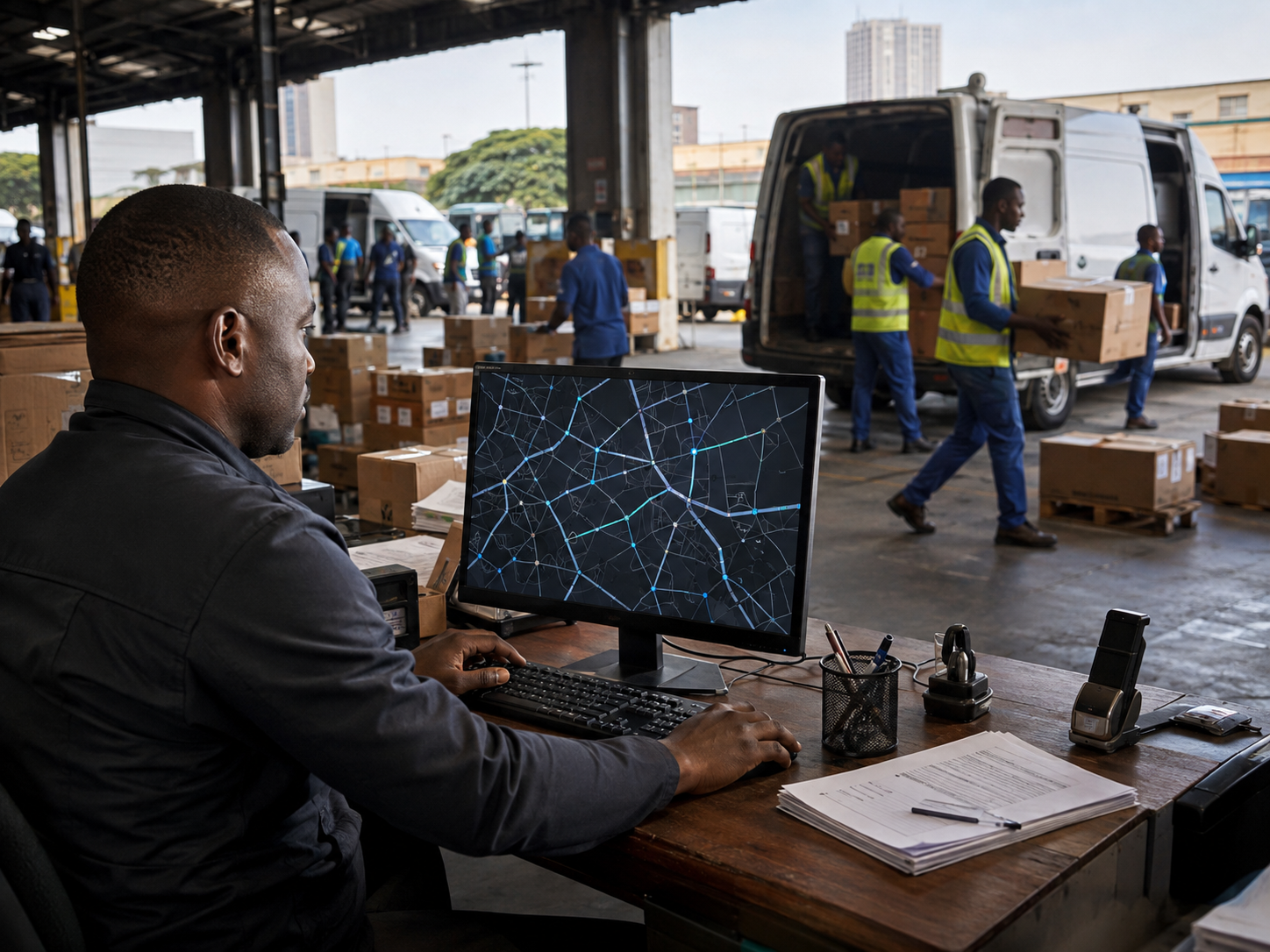
One of Africa’s biggest economic problems is the cost of moving goods.
Road congestion.
Weak addressing systems.
Long distances.
Border delays.
Fragmented distribution networks.
For many businesses, logistics is not a side issue.
It is one of the biggest costs.
AI can help companies optimise delivery routes, manage inventory and predict demand.
None of that sounds futuristic.
That is exactly the point.
The most commercially valuable AI products may be the ones that make ordinary businesses work better.
A truck arriving two hours earlier.
A warehouse holding less dead stock.
A retailer avoiding a shortage.
Those improvements compound.
And across thousands of businesses, they become productivity.
AFRICA’S YOUTH IS AN ADVANTAGE, BUT NOT ENOUGH
Africa has one of the youngest populations in the world.
That creates an enormous pool of future developers, entrepreneurs and digital consumers.
But demographics alone do not build an AI economy.
Talent needs infrastructure.
Reliable electricity.
Affordable internet.
Cloud computing.
Data centres.
Cybersecurity.
Research institutions.
And education systems capable of producing advanced technical skills.
Without those foundations, the most talented founders may simply build somewhere else.
Or leave.
That is why the AI race is also an infrastructure race.
ELECTRICITY MAY MATTER MORE THAN ALGORITHMS
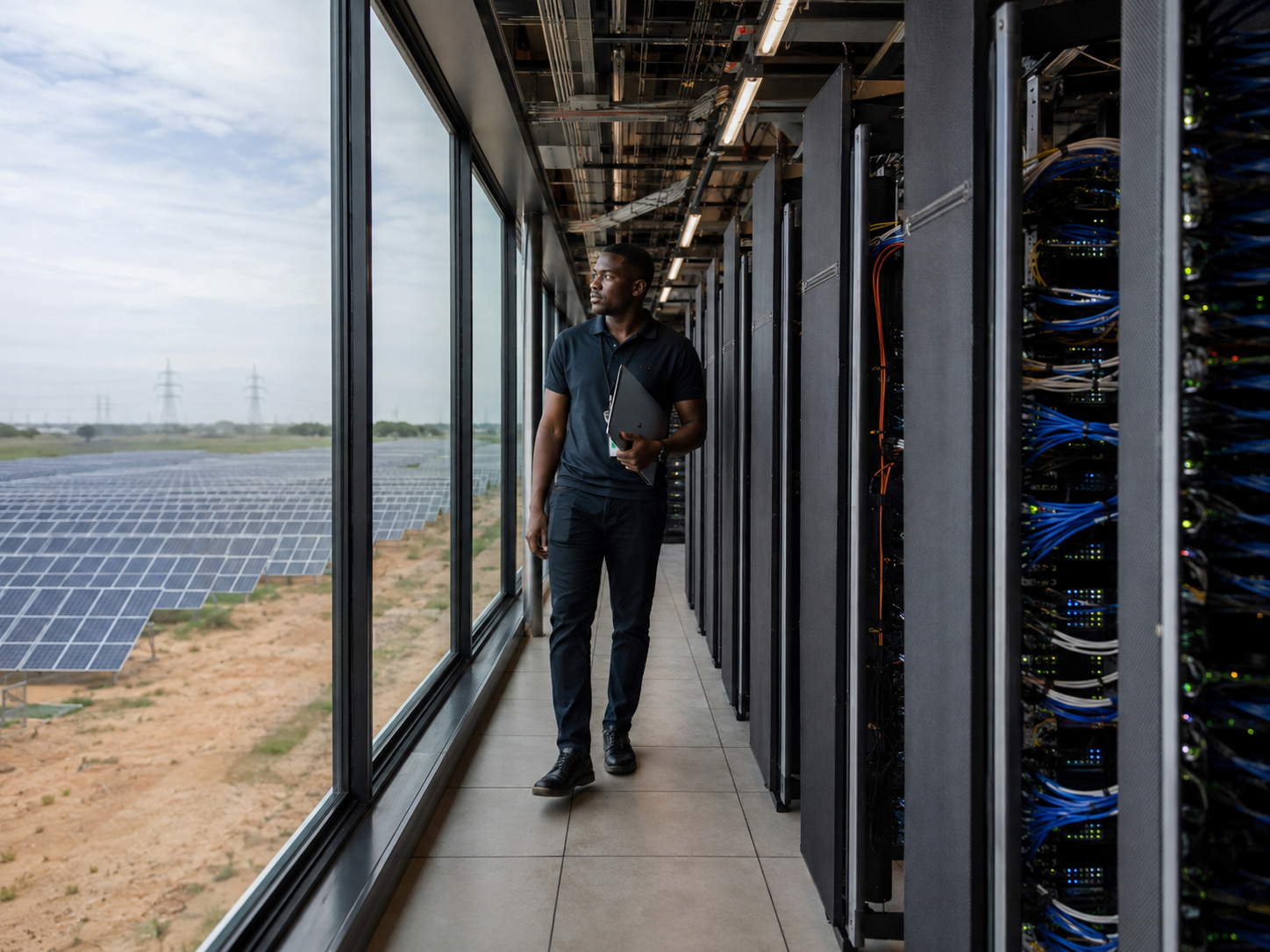
There is an uncomfortable reality behind every AI discussion.
Artificial intelligence runs on physical infrastructure.
Servers need electricity.
Data centres need cooling.
Cloud services need connectivity.
Developers need reliable broadband.
Companies need secure digital systems.
An economy cannot build serious AI capacity on unstable power and expensive connectivity.
That means governments that want AI growth may need to focus less on conferences and more on electricity grids, fibre networks and digital infrastructure.
The glamorous part comes later.
INVESTORS MAY NEED TO CHANGE WHAT THEY LOOK FOR
AI investing has become crowded with hype.
Companies add the letters “AI” to products that may barely need artificial intelligence.
Valuations rise.
Headlines follow.
But sustainable returns usually come from something much simpler.
A customer has a painful problem.
A company solves it.
The customer pays.
FindMoreAfrica argues that investors are increasingly recognising that durable returns in Africa are more likely to come from businesses solving genuine market failures than from startups simply following global technology fashion.
That may be the most important point.
The winners might look boring at first.
Until the revenue appears.
REGULATION WILL DECIDE HOW FAR THIS GOES
AI can improve access.
It can also create new risks.
Sensitive financial data.
Medical records.
Biometric information.
Automated decisions.
Algorithmic bias.
Fraud.
Cyberattacks.
Governments therefore face a difficult balance.
Too little regulation can destroy trust.
Too much can suffocate young companies before they have a chance to grow.
The strongest AI markets will likely be those that find a middle ground.
Clear rules.
Strong data protection.
Real cybersecurity.
But enough flexibility for companies to experiment.
THE NEXT AI GIANT MAY NOT LOOK LIKE OPENAI
That is perhaps the biggest mistake Africa can avoid.
Success does not have to look like Silicon Valley.
The continent does not need to produce the world’s largest language model to benefit enormously from AI.
A company serving millions of farmers could become huge.
So could a healthcare platform.
A logistics network.
A credit engine.
An education system.
Or an industrial productivity tool.
The market opportunity is not smaller because the problem is local.
In many cases, the opposite is true.
Local problems can be enormous markets.
SOLVE THE PROBLEM FIRST
Africa’s AI economy will ultimately be judged by results.
Did farms become more productive?
Did hospitals serve more people?
Did schools improve learning?
Did small businesses gain access to capital?
Did companies reduce costs?
Did new jobs appear?
Those are the outcomes that matter.
The technology is only the tool.
And that is why Africa’s biggest AI companies may not emerge from founders chasing whatever the rest of the world is talking about this month.
They may emerge from founders looking at an old problem and asking a much more useful question:
Can AI finally make this work?