


Morocco’s new law governing the legal profession is now in force. The lawyers protesting it have not gone back to work.
A legal battle over Morocco’s legal profession has entered a new and unusually tense phase.
Law No. 66.23 officially came into force after being published in the Official Gazette on August 20.
But the nationwide suspension of professional services by Moroccan lawyers is continuing.
The Moroccan Bar Associations Association says the boycott, which began on June 15, will remain in place while the profession decides what to do next. An extraordinary general meeting is scheduled for September 5.
That creates a striking situation.
The new rules are now law.
The lawyers expected to work under them are still protesting.
THE NEW LAW IS ALREADY IN FORCE

Law No. 66.23 changes several aspects of how Morocco’s legal profession is organised.
It covers admission to the profession, training requirements, professional organisation and disciplinary procedures.
Under the new framework, candidates generally need a master’s-level law qualification, must pass an entrance examination and then complete one year at a lawyers’ training institute followed by a 24-month traineeship.
The maximum age for sitting the entrance examination is 45.
Those provisions are now part of the legal framework.
But the controversy around the law did not disappear when it was published.
If anything, publication intensified it.
LAWYERS SAY THE DISPUTE IS NOT OVER
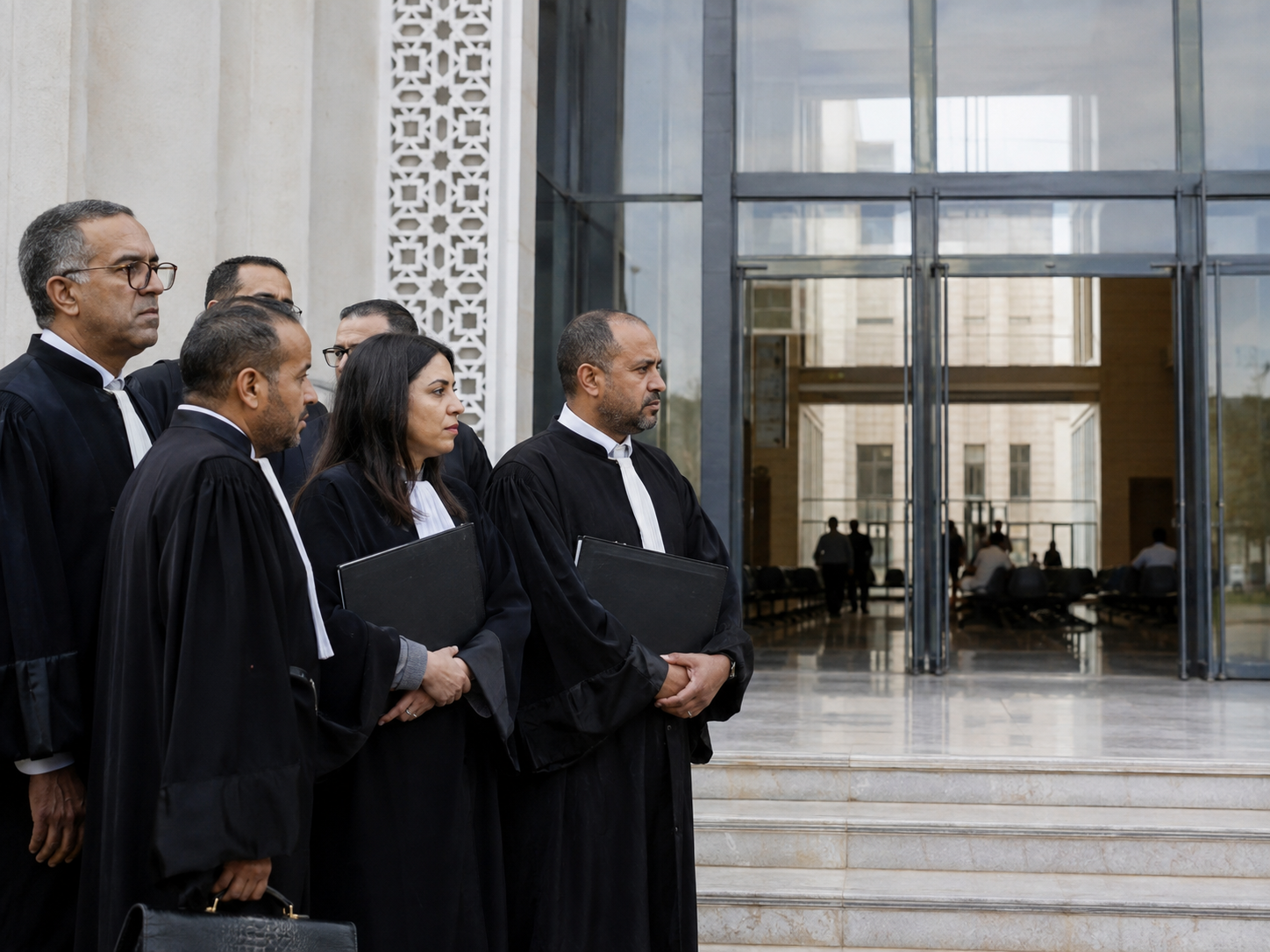
Moroccan lawyers have been engaged in a comprehensive suspension of professional services since June 15.
Their representative bodies have raised concerns over several elements of the legislation, including professional independence and safeguards surrounding the defence function.
The Moroccan Bar Associations Association has now confirmed that the suspension will continue despite the law entering into force.
That means the conflict has moved beyond an argument over a proposed bill.
The profession is now protesting legislation that is already legally effective.
THE CONSTITUTIONAL COURT NEVER RULED ON THE SUBSTANCE
A major part of the dispute concerns what happened before promulgation.
The Constitutional Court was asked to examine the law.
But on August 10, it said it could not carry out a substantive constitutional review because the referral file it received was incomplete.
According to the court, the speaker of the House of Representatives had submitted a committee report containing the text approved by the lower house on July 6 rather than an authenticated copy of the final version approved by the House of Councillors the following day.
That distinction is crucial.
The Constitutional Court did not rule that the law was constitutional.
It also did not rule that it was unconstitutional.
It said it could not decide because it had not been given the correct final text.
THAT PROCEDURAL FAILURE IS NOW AT THE HEART OF THE ARGUMENT
For critics of the law, the incomplete referral should have triggered another step.
Rabat lawyer Mohammed Bensassi argued that Parliament should have corrected the file and sent the legislation back to the Constitutional Court before it was promulgated.
Habib Benchikh, president of the National Association of Lawyers of Morocco, said publication of the law had deepened the dispute rather than resolved it.
That leaves the argument in an unusual place.
A constitutional review was requested.
The court could not complete it.
The law was nevertheless promulgated.
And lawyers are still challenging the process.
THIS IS ABOUT MORE THAN TRAINING RULES
On paper, some parts of the legislation appear highly technical.
Entry requirements.
Training periods.
Disciplinary rules.
Professional organisation.
But lawyers argue that the real stakes are much broader.
The profession is closely tied to access to justice, the rights of defendants and the ability of lawyers to operate independently from the state.
That is why reforms to the legal profession can quickly become constitutional and political questions rather than simply administrative ones.
Lawyers are not just another regulated occupation.
They are part of the machinery that allows citizens to challenge decisions, defend themselves and access the courts.
THE STRIKE HAS ALREADY LASTED MORE THAN TWO MONTHS
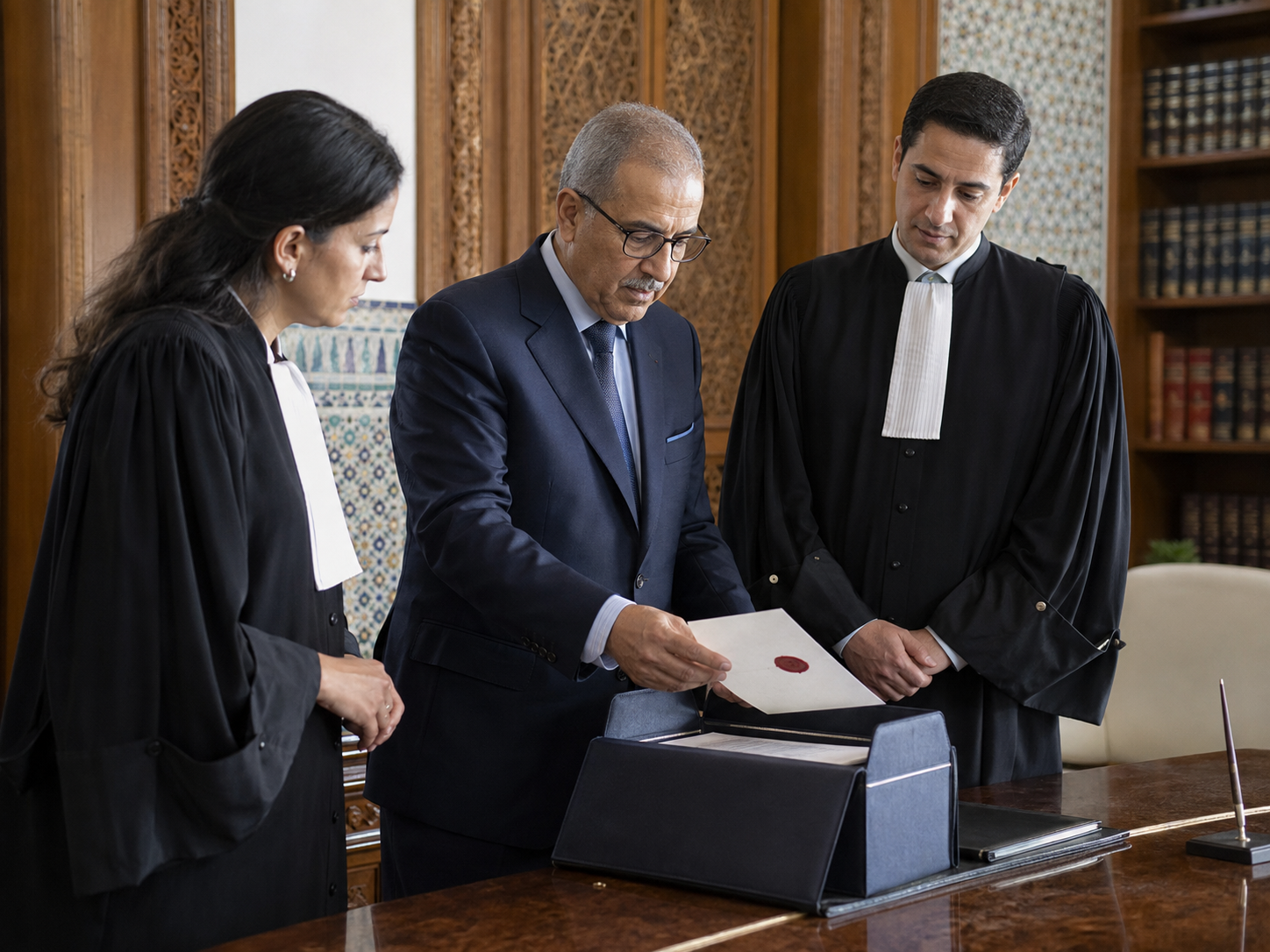
The duration of the suspension is becoming significant in its own right.
By late August, lawyers had been protesting for more than two months.
Earlier warnings suggested that a prolonged boycott could affect a very large number of court cases.
Hespress previously reported concerns from lawyers that more than one million cases could potentially be disrupted if the dispute dragged on.
That gives the standoff a practical cost.
Court users may face delays.
Businesses may wait longer for disputes to be heard.
Families may see proceedings postponed.
And defendants can find themselves caught between a political dispute and the legal system they need to navigate.
SEPTEMBER 5 COULD BE THE NEXT KEY DATE
Attention now turns to the extraordinary general meeting scheduled for September 5.
The Moroccan Bar Associations Association is expected to use that meeting to decide its next steps.
Several possibilities remain.
The profession could continue the boycott.
It could adjust the form of protest.
It could push for legislative amendments.
Or the dispute could move further into political and constitutional territory.
What is already clear is that publication of the law did not end the confrontation.
THE GOVERNMENT HAS THE LAW, BUT NOT YET THE PEACE
That is what makes the situation unusual.
Governments normally treat promulgation as the end of a legislative battle.
Parliament votes.
The law is published.
The rules take effect.
The political system moves on.
That has not happened here.
Morocco now has a new law governing lawyers.
But it also has lawyers refusing to end their nationwide suspension.
The legal text is settled for the moment.
The political argument is not.
And until that gap closes, one of Morocco’s most important professions will remain caught between a law already in force and a dispute that is very much alive.