

As the main 2026 summer return season draws to a close, Morocco must study not only how many diaspora families arrived, but what they paid and whether their children will keep coming back.
The great summer movement is turning north.
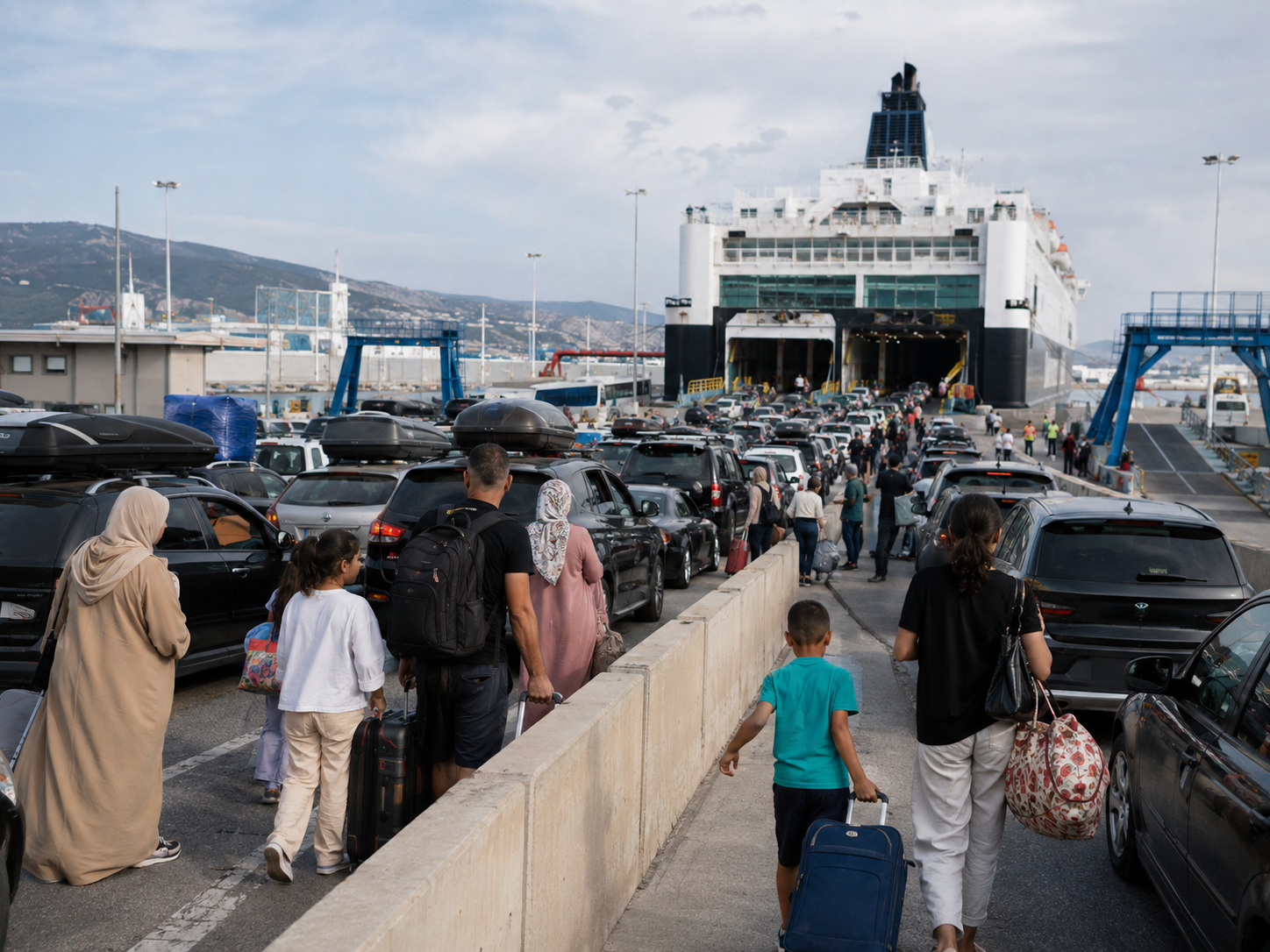
Cars packed with suitcases are heading towards Tanger Med. Families are checking bags at Moroccan airports. Grandparents are holding grandchildren for a final few seconds before departure gates and ferry lanes separate them again.
Across Europe, children are returning to school and parents to work, although calendars and departure dates differ between countries and families. Operation Marhaba 2026 itself remains active until 15 September.
Morocco can already count millions of arrivals. That is an extraordinary logistical achievement.
Now it must count something harder: the cost of coming home.
Because the future of Marhaba will not be decided only by how many Moroccans living abroad arrived in 2026. It will also be decided by whether their children and grandchildren can afford, and actively want, to repeat the journey.
THE GREAT SUMMER JOURNEY IS TURNING NORTH
Operation Marhaba 2026 officially began on 10 June and runs until 15 September, according to the Mohammed V Foundation for Solidarity.
The operation deployed nearly 1,400 staff members and volunteers across 26 reception centres in Morocco, France, Spain and Italy. The network provides social, administrative and medical support during both the arrival and return phases.
By the second half of August, attention had shifted towards the northbound journey.
Tanger Med introduced a fixed-ticket system requiring passengers to hold a confirmed departure date and time before accessing the port. Travellers were advised to plan ahead and, where possible, avoid the most congested return periods.
There is no single day on which the MRE summer officially ends. School holidays differ between France, Belgium, the Netherlands and other countries. Some parents must return to work earlier. Other families remain in Morocco into September.
But the busiest return period has passed, and the first lesson of the summer is becoming visible.
Moving millions of people safely is essential. Making the journey financially sustainable is the next test.
WHAT THE MARHABA 2026 NUMBERS REALLY SHOW
As of 14:37 Morocco time on 1 September, the latest detailed official Marhaba figures available to Morocco Times Daily remained a provisional snapshot through 3 August.
They were not the final results for the summer.
Between the launch of Operation Marhaba 2026 and 3 August, 2,741,570 Moroccans living abroad entered Morocco, according to figures presented by a Mohammed V Foundation official.
Of those arrivals:
1,430,811 travelled by sea, representing 52.19 per cent.
1,310,759 arrived by air, representing 47.81 per cent.
287,518 vehicles entered Morocco.
The maritime and air figures add up to the reported total. They concern arrivals into Morocco, not departures back to Europe.
Tanger Med handled 512,693 arriving maritime passengers, making it the leading sea entry point in the provisional data. Nador received 200,013 and Tangier Ville 168,240.
Among airports, Casablanca Mohammed V received 333,490 Marhaba arrivals. Marrakech Menara handled 225,086 and Tangier Ibn Battouta 167,147. Nador and Rabat-Salé received 119,487 and 119,452 respectively.
The number of arriving vehicles was 12.43 per cent lower than at the equivalent point in 2025. The Foundation official cited increased car-sharing in response to the cost of travelling by road as one possible explanation.
That detail deserves attention.
Passenger totals measure the scale of Marhaba. They do not measure what a family paid, how many months it saved, how long it waited or what it sacrificed to make the journey.
Morocco counted the passengers. Before Marhaba 2027, it should also count the cost.
COMING HOME MUST REMAIN AFFORDABLE
A low advertised fare is not a family’s travel bill.
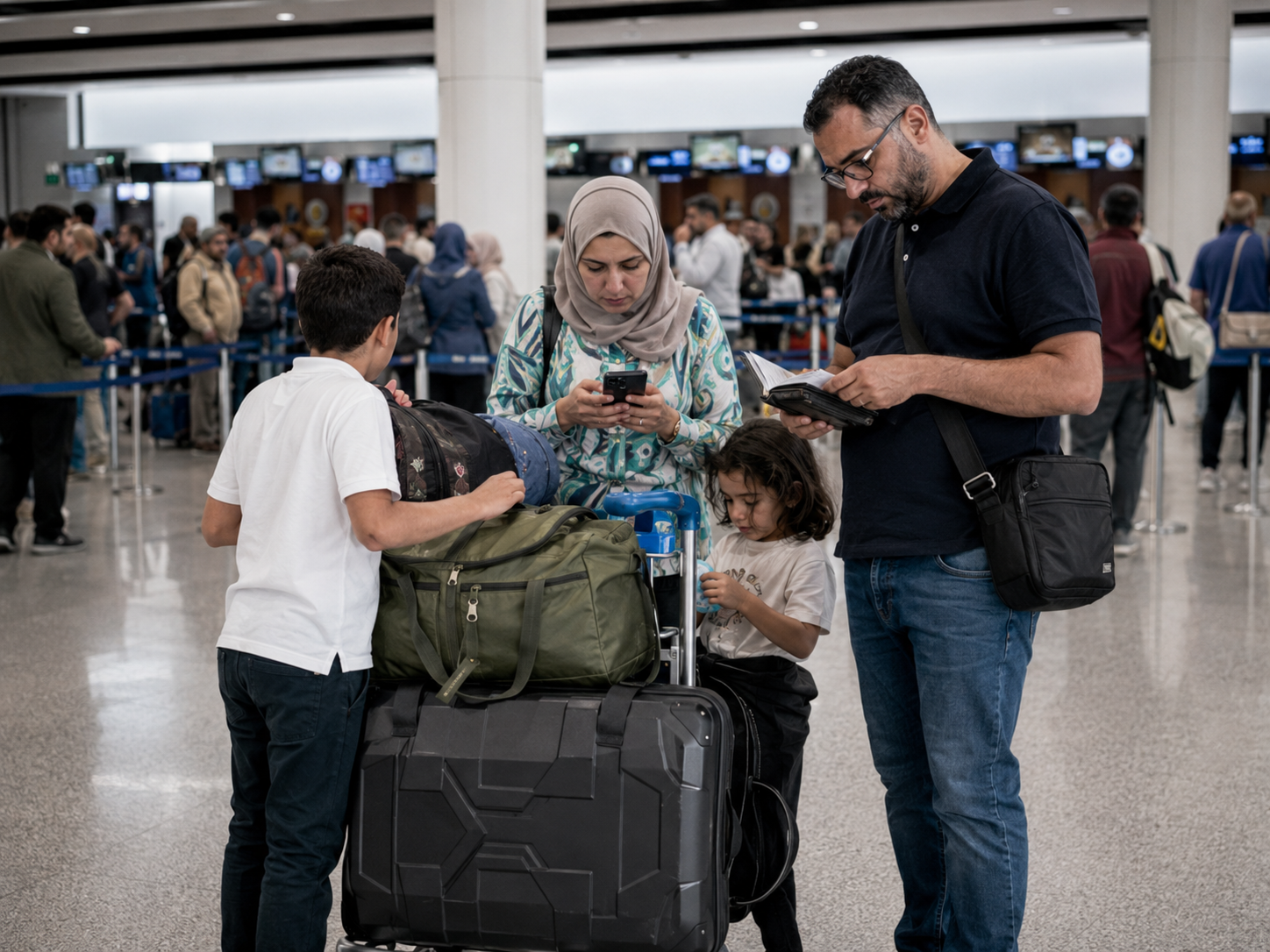
A household of two adults and two children may need four tickets, checked baggage, cabin baggage, adjacent seats and transport to and from two airports. If departure times are difficult, it may also need meals or a hotel.
Each addition can turn an attractive base fare into a serious household expense.
The pressure is greatest during the weeks when families have the least flexibility. Parents travelling with school-age children cannot simply move their holiday to a cheaper month. Demand becomes concentrated in July and August, while the number of airline seats and ferry spaces remains limited.
Ticket prices are not set by the Moroccan government alone.
They are influenced by seasonal demand, aircraft and ferry capacity, competition, fuel and operating costs, airport and security charges, route planning, baggage policies, the booking date and operators’ dynamic pricing systems.
That does not make affordability someone else’s problem.
It makes the full journey cost a question for airlines, airports, ferry companies, ports, consumer authorities and policymakers on both sides of the Mediterranean.
More competition on busy diaspora routes could help. So could additional capacity during predictable peak weeks, earlier publication of summer schedules, clearer all-in prices and better links with regional Moroccan airports.
The objective should not be artificially cheap travel at any cost. It should be a competitive market in which families can plan early, compare honestly and reach Morocco without the journey consuming a disproportionate share of their annual budget.
WHEN MÁLAGA LOOKS CHEAPER THAN A DIRECT FLIGHT
Some families now examine a more complicated calculation.
Instead of booking a direct flight from Morocco to their European destination, they consider taking a ferry to southern Spain, travelling over land to Málaga Airport and flying from there.
The geography matters.
A ferry from Tanger Med does not arrive in Málaga. The regular short crossing reaches Algeciras. Services from Tangier Ville arrive in Tarifa. Other crossings use ports including Motril and Almería.
A traveller starting in Tangier could therefore take the Tanger Med to Algeciras ferry, complete border formalities, continue by coach or private transport across southern Spain and then board a flight at Málaga-Costa del Sol Airport.
Aena confirms that a coach connection operates between Algeciras and Málaga Airport. But that does not turn the journey into a simple connection.
The passenger must separately calculate:
Transport to Tanger Med
Ferry fare
Any reserved seat or cabin
Border and boarding time
Transport from Algeciras to Málaga Airport
Airline fare
Cabin and checked baggage
Seat selection
Food
Possible accommodation
A safe connection margin
MTD has not published a price table because a fair, reproducible comparison could not be built from official booking systems for identical dates, destinations, baggage needs and passenger profiles.
Publishing a cheap ferry fare beside a complete airline price would mislead readers. So would comparing a September journey with the peak prices families may have faced in July or August.
The route through Spain may be cheaper on a particular date. It may also be more expensive, significantly longer or too risky for a family with young children.
There is another practical problem for households travelling with their own car. A family cannot simply drive to Málaga and fly home while ignoring the vehicle. It would need secure parking, somebody to collect the car or a plan to return to Spain later.
The conclusion is not that Málaga is always cheaper.
It is more revealing than that.
If families are willing to add a ferry, a border crossing, a journey across Andalusia and a self-connected flight to reduce their bill, the affordability of direct flights deserves serious attention.
WHY DIRECT FLIGHTS CAN STILL COST MORE
A direct flight is usually the easiest option. That convenience has value.
Airlines also sell a product that disappears the moment an aircraft departs. An unsold seat cannot be stored and offered the following week. Prices therefore change as demand develops and cheaper booking classes sell out.
During peak periods, a popular direct route may become expensive even when a lower fare is available from Málaga, Madrid, Paris or another larger aviation market.
That price difference does not, by itself, prove manipulation, abuse or unfair treatment. Different routes can have different levels of capacity, competition, airport charges and year-round demand.
The constructive question is whether more can be done before summer 2027.
Airlines and airports know when European school holidays begin. Ferry operators know when vehicle traffic will peak. Families know months in advance that they want to travel.
Publishing schedules earlier, adding capacity during the busiest weeks and making total prices clearer would give those families a better chance to plan.
Morocco could also examine where additional European links to Nador, Oujda, Al Hoceima, Tangier, Fez, Agadir and other regional airports are commercially realistic. A reasonably priced regional flight may save a family both money and a long domestic journey after landing.
THE THIRD GENERATION WILL NOT RETURN AUTOMATICALLY

For many first-generation Moroccans in Europe, the annual journey was never an ordinary holiday.
Parents, siblings, childhood homes, language and personal memory pulled them back. Morocco was not one destination among several. It was home.
Their children and grandchildren may love Morocco just as deeply, but their connection is often different.
Many were born and educated abroad. Some know fewer relatives in Morocco. Some speak limited Darija, Arabic or Amazigh. Some travel with a partner who has no Moroccan background. Others must divide restricted holiday time between several families and destinations.
Research cited by the OECD has identified communication as a possible challenge for third and fourth-generation Moroccans who do not have a strong command of Arabic.
This is not evidence that young people are losing their identity or rejecting Morocco.
It means belonging can no longer be treated as automatic.
A child who spends every summer in Morocco may develop a lifelong bond. But that bond will be stronger if the child creates personal memories, forms friendships, understands the language and discovers opportunities that extend beyond visiting relatives.
Young European Moroccans also compare Morocco with Spain, Türkiye, Greece, Portugal and destinations beyond the Mediterranean. They compare prices, booking convenience, accommodation, transport, digital services and the experience of travelling with friends or non-Moroccan partners.
Morocco should not turn its culture into a product to win that competition. It should make it easier for younger generations to participate in a culture that already belongs to their family story.
MARHABA MUST BECOME A YEAR-ROUND RELATIONSHIP
One crowded and expensive summer holiday cannot carry the entire relationship between Morocco and its diaspora.
Affordable travel opens the door. What happens afterwards determines whether younger generations return through it.
Language programmes could help them communicate with grandparents and relatives. Sports, music, heritage and volunteering activities could allow them to build friendships and experiences of their own.
Internships with Moroccan companies could connect identity with ambition. University exchanges and professional placements could show young people that Morocco is not only where their parents came from, but somewhere they can study, work, invest and create.
Support for diaspora entrepreneurship could turn summer conversations into lasting economic relationships.
These opportunities should not exist only in July and August. Programmes during spring, autumn and winter would reduce pressure on the peak season while making year-round engagement possible.
Information must also reflect the languages younger diaspora communities use. A multilingual digital platform could bring together travel guidance, events, language learning, study opportunities, internships and entrepreneurship support.
Most importantly, younger Moroccans living abroad should help design these programmes.
They are not empty vessels waiting to be taught what Morocco means. They already have identities, expectations and ideas. The most successful relationship will be built with them, not simply presented to them.
THREE LESSONS BEFORE MARHABA 2027
Morocco does not need another passenger total alone. It needs three deeper measurements.
First, measure the complete cost of returning.
A privacy-respecting survey should examine fares, baggage, vehicles, transfers, booking dates, delays and total door-to-door travel time. Results should distinguish between solo travellers, families, countries of residence and different travel modes.
Second, prepare capacity before the peak.
Schedules should be published early enough for families to plan. Authorities and operators should study where competition, additional flights, ferry capacity and stronger regional connections could reduce pressure.
Better coordination between airlines, airports, ferry companies, ports, trains and buses could make the entire journey simpler, even when travellers must use separate tickets.
Third, give the next generation reasons to return beyond obligation.
Travel should be part of a broader diaspora strategy built around language, culture, education, careers, sport, entrepreneurship and year-round digital connection.
The first generation returned because Morocco lived in its memories.
The next generation will return when Morocco also becomes part of its future.
THE NUMBER THAT MATTERS NEXT
The final Operation Marhaba 2026 figures, once officially published, will tell Morocco how many people came home this summer.
That number will deserve recognition. Moving millions of travellers and hundreds of thousands of vehicles across borders, ports, roads and airports is a major national undertaking.
But another number will matter more.
It is the number of children now sitting in the back seats of cars heading towards Tanger Med, or carrying backpacks through airport departure halls, who will still choose Morocco when they plan and pay for their own holidays.
Not because their parents told them to come.
Because the journey remains affordable. Because the connection remains meaningful. And because Morocco still feels like a place in which they belong.
MARHABA 2026: WHAT WE KNOW SO FAR
Operational period: 10 June to 15 September 2026
Latest detailed reporting date: Arrivals recorded through 3 August 2026
Total arrivals: 2,741,570 Moroccans living abroad
Arrivals by sea: 1,430,811, or 52.19 per cent
Arrivals by air: 1,310,759, or 47.81 per cent
Vehicles entering Morocco: 287,518
Leading maritime arrival points: Tanger Med, 512,693; Nador, 200,013; Tangier Ville, 168,240
Leading airport arrival points: Casablanca Mohammed V, 333,490; Marrakech Menara, 225,086; Tangier Ibn Battouta, 167,147
Status: Preliminary arrival figures, not departure totals or the final Marhaba 2026 balance
Official source: Maroc.ma, more than 2.7 million MRE travellers welcomed
THE REAL COST OF COMING HOME
Before comparing a direct flight with a ferry and flight combination, calculate:
Base airfare
Cabin baggage
Checked baggage
Seat selection
Ferry fare
Ferry cabin or reserved seat
Vehicle charge
Port and airport transfers
Fuel and tolls
Parking or vehicle collection
Food during the journey
Hotel accommodation
Total door-to-door travel time
Border and check-in time
Missed-connection risk
Prices are dynamic. A September search does not establish what families paid during the July and August peak.
FIVE WAYS TO KEEP THE NEXT GENERATION CONNECTED
Affordable travel: Support capacity, competition and transparent total prices on important diaspora routes.
Language and culture: Make Darija, Arabic and Amazigh learning accessible alongside cultural and heritage activities.
Youth experiences: Develop sports, volunteering and discovery programmes with young diaspora participants.
Education and careers: Expand internships, exchanges and links with Moroccan universities and companies.
Year-round digital connection: Bring multilingual travel information, programmes and opportunities together online.