
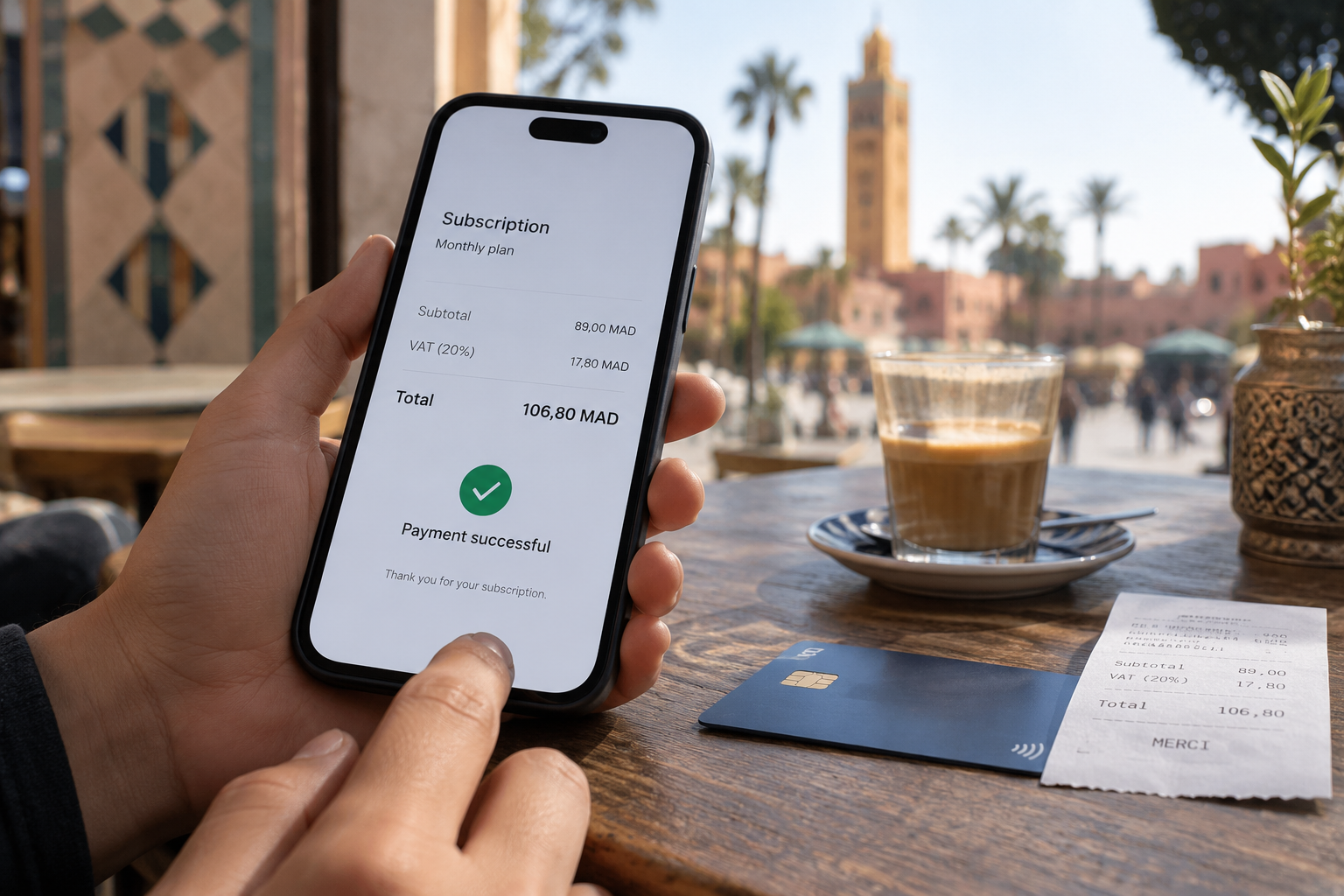
Moroccan VAT is beginning to appear on digital services, but that does not mean every subscription will automatically become 20% more expensive.
Your next digital subscription bill in Morocco may look different.
Netflix, Spotify, Google, Apple, TikTok and OpenAI are among the international platforms beginning to apply or account for Moroccan value-added tax on eligible services.
For customers, the change may appear as a new VAT line on an invoice, receipt or checkout page.
But do not assume that a MAD 100 subscription will automatically become MAD 120.
Some platforms may add the tax to the previous price. Others may already include it in the advertised total or absorb part of the cost.
The only way to know what changed is to check your bill.
WHAT IS CHANGING?
Morocco has introduced a system allowing its tax authorities to collect VAT from foreign companies selling digital services to customers inside the country.
These providers can register remotely, declare their eligible Moroccan sales and transfer the VAT without establishing a physical office or subsidiary in Morocco.
The framework grew from changes introduced through the 2024 Finance Law and was later clarified by Decree No. 2.25.862.
Morocco’s General Directorate of Taxes, DGI, launched an online service for non-resident digital providers in 2026. The first visible effects began appearing on transactions and bills during the summer.
This is not a special tax created only for Netflix, Spotify or ChatGPT.
VAT was already due on covered digital services consumed in Morocco. What has changed is the mechanism used to collect it from companies operating abroad.
WHICH SERVICES COULD BE AFFECTED?
The system can cover several types of digital purchases, including:
Streaming subscriptions
Music subscriptions
Artificial-intelligence services
Paid applications
In-app purchases
Digital advertising
Cloud and other online services
Around 30 foreign platforms are reportedly covered, although a complete verified public list has not yet been released.
The exact treatment varies by company, service and account type.
WHAT THE PLATFORMS HAVE CONFIRMED
TikTok
TikTok says it is registered for VAT in Morocco and charges 20% VAT on advertising services supplied to Moroccan customers who do not provide a valid Common Company Identifier, known as an ICE.
This guidance concerns TikTok advertising customers, not every person who simply uses the social-media application.
Google states that it is responsible for determining, collecting and remitting VAT on eligible paid apps and in-app purchases made through Google Play by customers in Morocco.
Apple
Apple announced that Moroccan VAT is being reflected in eligible App Store transactions and confirmed that it collects and remits the applicable tax.
Apple’s pricing treatment varies according to the product and the way its price is managed. Users should check the final amount shown before confirming a purchase.
Spotify
Spotify explains that taxes may already be included in the price of certain Premium subscriptions, depending on the market and local rules.
Moroccan users should compare their current receipt with the previous billing period.
OpenAI and Netflix
Recent reporting indicates that OpenAI has been collecting Moroccan VAT on eligible taxable services since August and that Netflix subscribers are also beginning to see VAT reflected in Moroccan bills.
Customers should check their own invoices because the final treatment may depend on the subscription and billing method.
WILL YOUR BILL INCREASE?
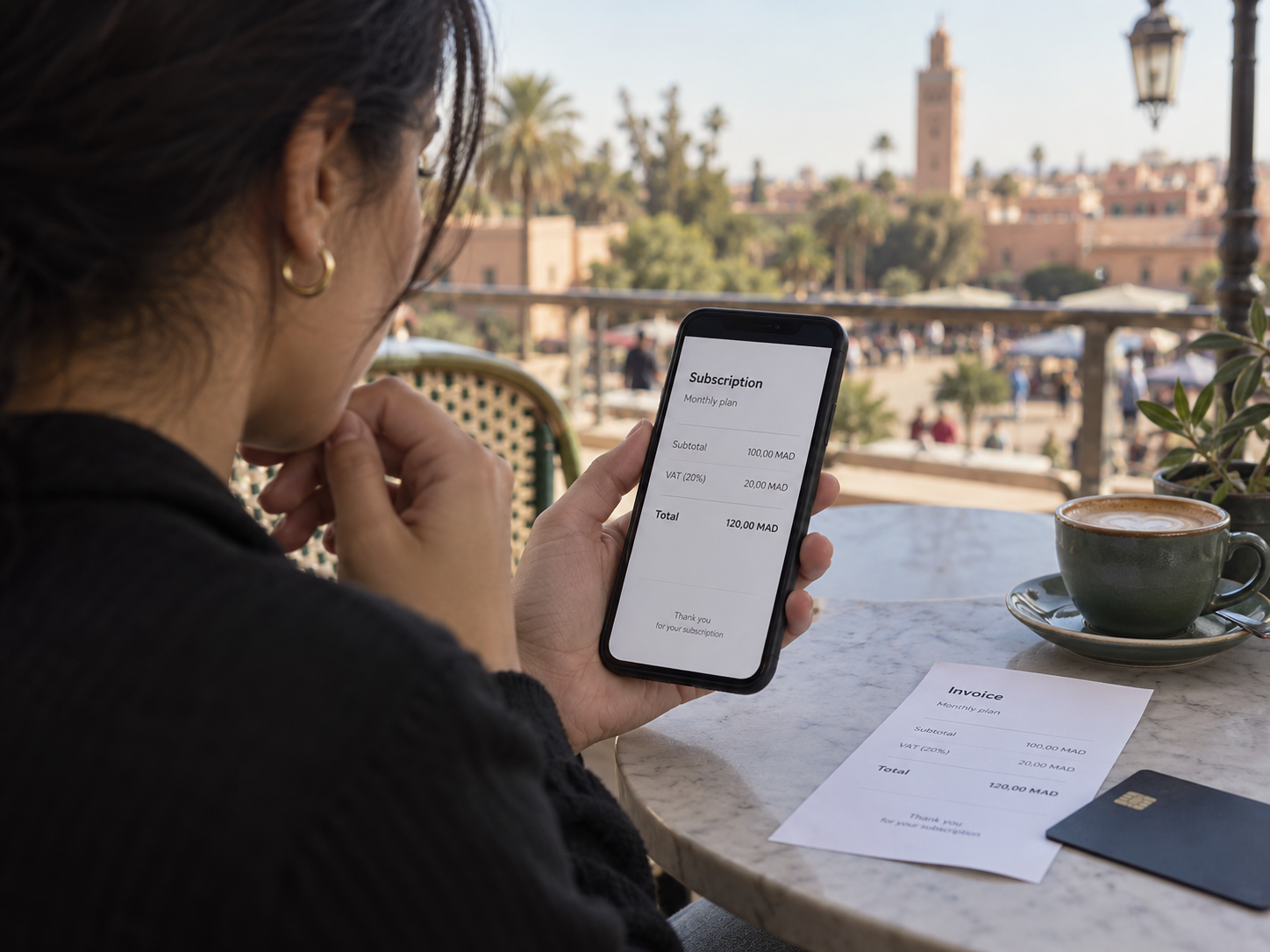
It may, but the increase will not necessarily equal 20%.
A platform can add VAT to its existing price, incorporate it into the amount already advertised or absorb part of the tax.
Consider a service that previously cost MAD 100.
If the company adds the full VAT charge on top, the customer could pay MAD 120. If the displayed price already includes tax, the total could remain MAD 100 while the invoice shows how much of that amount represents VAT.
This is only an illustration, not a confirmed price for any platform.
Subscription upgrades, expired promotions, currency movements and payments processed through Apple or Google can also change the final amount.
Compare like with like: the same platform, the same plan and the same billing period.
CHECK THESE DETAILS ON YOUR NEXT INVOICE
Open the official invoice or receipt and look for:
VAT or Morocco VAT
Subtotal before tax
Tax included
Total including tax
Billing country
Name of the company processing the payment
Check whether you pay the service directly or through an app store. The company collecting your payment may also be the company handling the VAT.
If the total appears incorrect, contact the platform through its official billing-support page.
Do not send passwords, complete card numbers or unedited bank statements to unofficial accounts claiming they can correct the charge.
BUSINESSES NEED TO CHECK THEIR ICE DETAILS
The treatment of a VAT-registered Moroccan business may differ from that of an individual consumer.
TikTok, for example, says business customers should provide a valid Moroccan ICE. Those who do so will generally not be charged VAT directly by TikTok and may instead need to account for it under Morocco’s reverse-charge rules.
That example should not be applied automatically to every platform.
Businesses should confirm their billing information and consult the DGI or a qualified Moroccan tax professional before changing their tax settings.
An ICE should never be entered simply to avoid paying a charge when the account does not genuinely qualify for business treatment.
WHY THE CHANGE MATTERS FOR MOROCCO
Digital companies can sell subscriptions and online services to Moroccan customers without opening a conventional local office.
That made traditional tax collection more difficult.
The new system brings foreign providers more directly into Morocco’s tax framework and reduces the gap between international platforms and Moroccan businesses already required to comply with domestic VAT rules.
It also modernises tax collection for an economy in which entertainment, advertising, applications and professional tools are increasingly purchased online.
It remains too early to calculate how much revenue the system will generate. No verified final figure should yet be presented as an established result.
The immediate change is simpler: taxable digital activity in Morocco can now be identified, declared and collected through a mechanism designed for international online companies.
CHECK THE TOTAL, NOT ONLY THE TAX RATE
A VAT line on an invoice does not tell the whole story.
What matters to the customer is the final amount leaving the bank account.
Check the latest bill, compare it with the previous one and confirm whether the tax has been added or was already included.
Morocco’s digital economy is changing, and the country’s tax system is changing with it.
For consumers, that national shift begins with one simple action: check your next bill.