

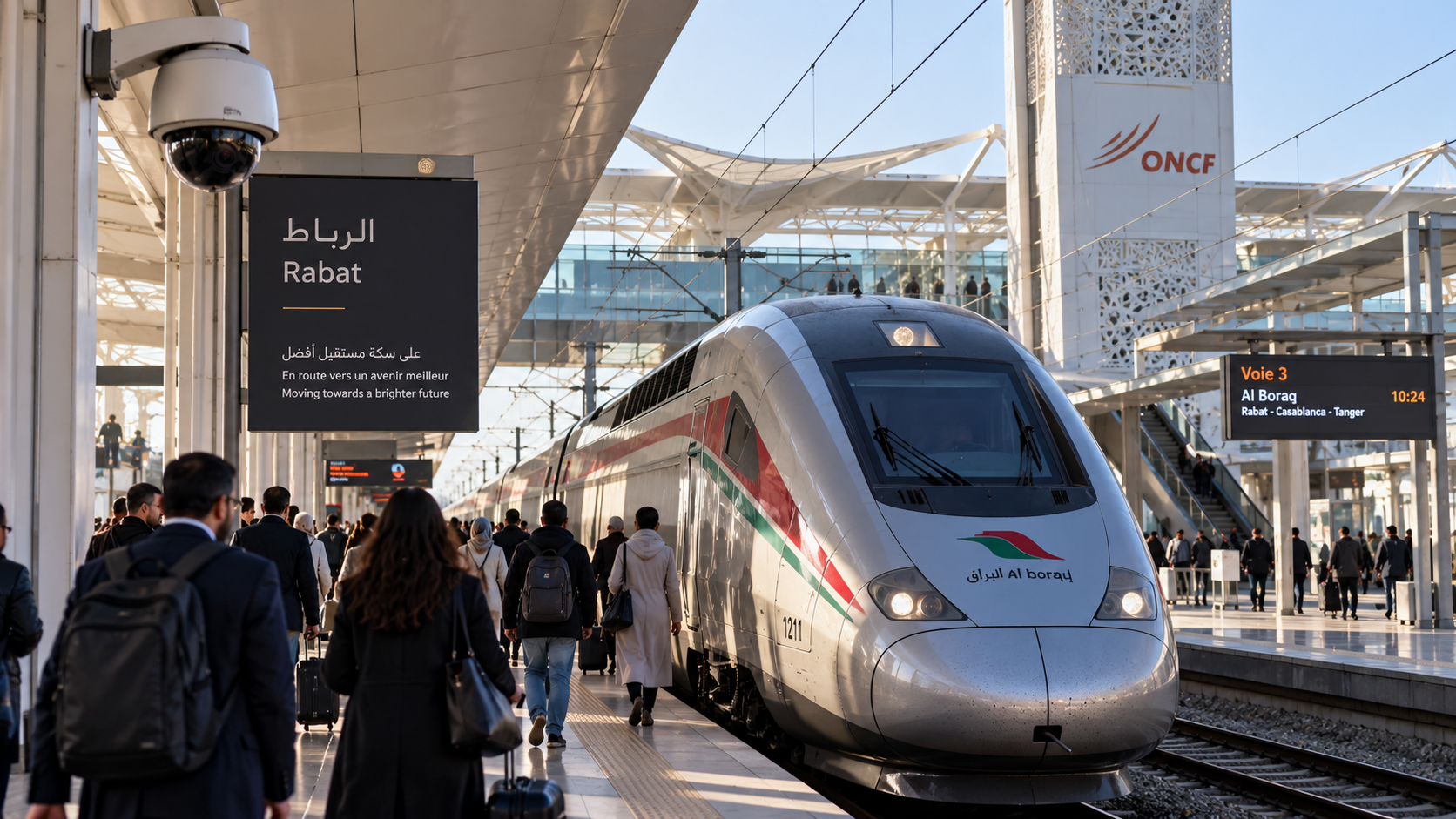
Morocco’s railway operator is preparing a national system that could use thousands of cameras and artificial intelligence to detect dangers, manage crowds and coordinate alerts.
Morocco’s railway stations could soon become much smarter.
The National Railways Office, ONCF, has launched a consultation to design a nationwide security system combining video surveillance, artificial intelligence and centralised monitoring.
The planned network could eventually include around 6,000 cameras across stations, trains and railway infrastructure.
Almost one-third could use automated analysis to help detect intrusions, abandoned objects, operational incidents and dangerous crowding.
But passengers should understand one important detail.
This is not a contract to install all the cameras immediately. ONCF is currently commissioning the strategic study that will determine how the future system should work.
WHAT ONCF IS PLANNING
The consultation will support the development of a national master plan for video surveillance, artificial intelligence and what ONCF describes as “hypervision”.
Hypervision means bringing information and alerts from numerous security systems into one central platform.
Instead of individual stations or facilities monitoring their cameras separately, relevant alerts could be shared with a National Security Centre and coordinated with regional control centres.
The proposed architecture is intended to cover both fixed locations and rolling stock.
That could include:
Railway stations
Maintenance and technical centres
Tracks and railway property
Bridges and other structures
High-speed trains
Future regional trains
Locomotives and conventional passenger trains
The study is expected to take four months and has an estimated cost of MAD 1.08 million.
That amount covers the strategic assistance and design work. It is not the final cost of installing the national camera network.
WHAT COULD THE AI DETECT?
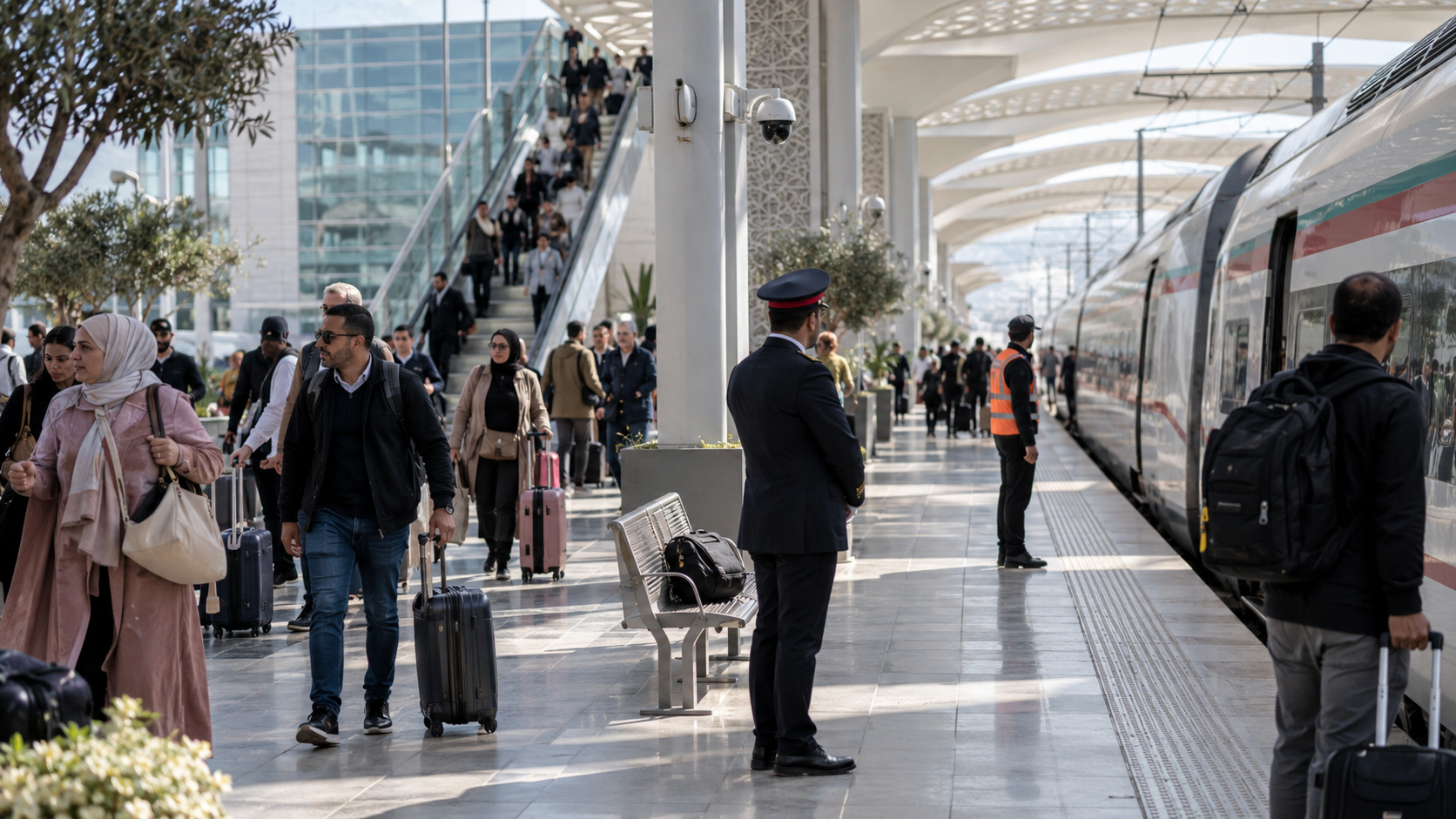
Most security cameras record images for people to watch or review later.
AI-supported cameras can also analyse certain situations automatically and alert an operator when something unusual happens.
According to the consultation documents reported by Médias24, the planned functions could include detecting people or objects entering restricted railway areas.
That matters because an intrusion onto a track can create an immediate danger for the person involved, passengers and railway staff.
The system could also identify abandoned objects or possible operational incidents.
In busy stations, automated tools may help analyse passenger flows and crowd density. If one platform, entrance or passage becomes unusually congested, staff could receive an earlier warning and respond before pressure increases.
Cameras installed on trains could also send selected footage or alerts to the wider monitoring system.
The technology is intended to support trained operators, not remove people from the decision-making process.
ONCF’S AI RAIL PLAN AT A GLANCE
Current stage: Strategic consultation and master-plan preparation
Target year: 2030
Potential camera network: Around 6,000 units
Potential AI-enabled share: Approximately 30%
Study period: Four months
Estimated study cost: MAD 1.08 million
Planned coordination: One national platform linked to regional centres
These are planning targets. They should not be presented as equipment already installed or a completed security system.
WHAT PASSENGERS COULD NOTICE
If the future system is approved and deployed, passengers may not notice every technical change.
The clearest effects could appear during busy periods.
Station staff may be able to identify overcrowded areas more quickly, redirect passenger flows and respond faster when an object is left behind or someone enters a restricted zone.
A centralised system could also help teams coordinate incidents affecting more than one station or train.
However, AI cannot guarantee that every danger will be detected or that delays and security incidents will disappear.
Its value will depend on camera placement, image quality, reliable communications, trained staff and clear procedures for responding to alerts.
A smart warning is only useful when the right team receives it and can act promptly.
PART OF A MUCH LARGER RAILWAY TRANSFORMATION
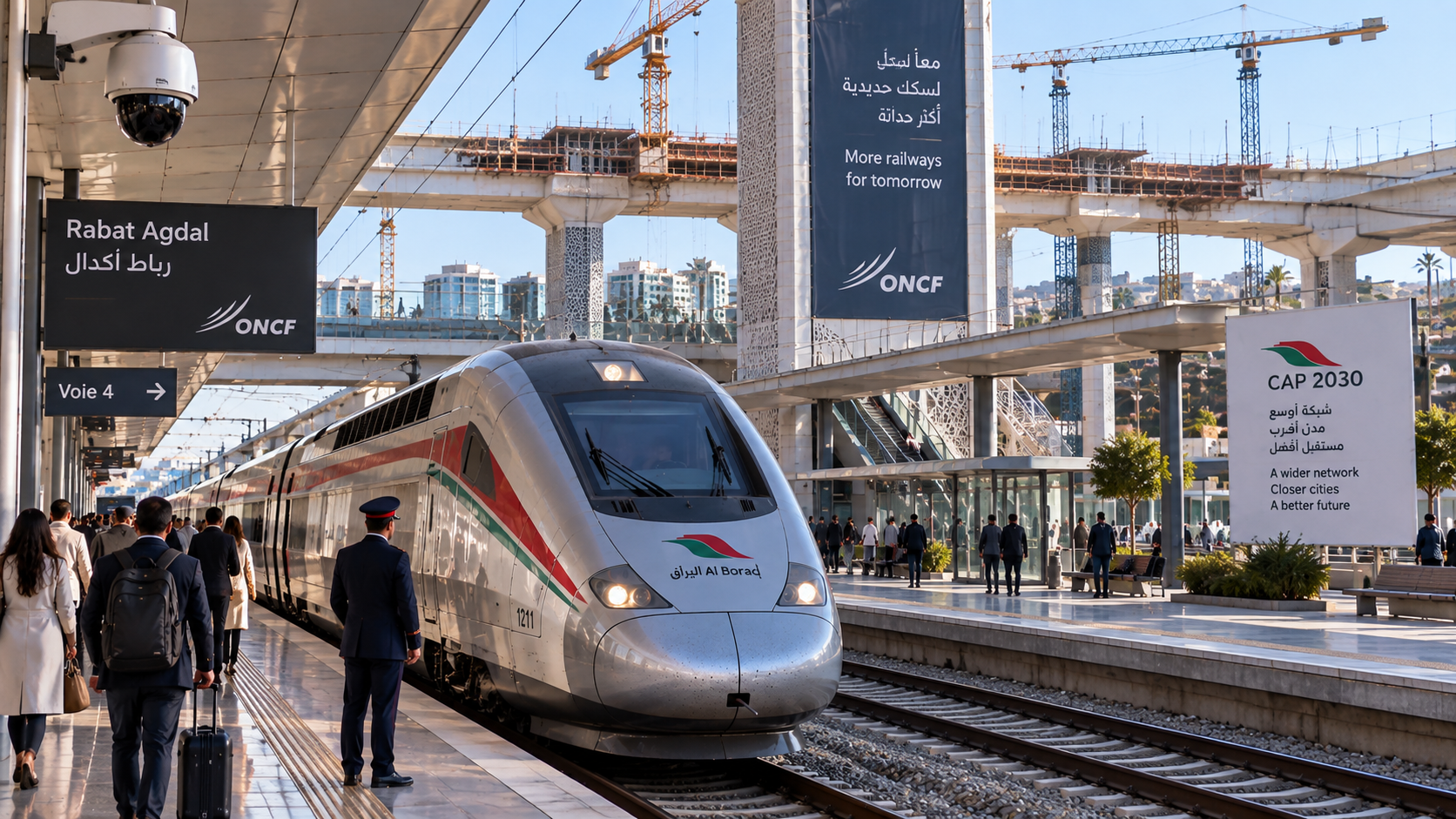
The security study forms part of ONCF’s CAP 2030 strategy.
Morocco is expanding its high-speed railway towards Marrakech, developing regional express services and modernising stations ahead of growing passenger demand and major international events.
A larger network brings more trains, busier stations and more complex passenger movements.
Security systems therefore need to grow alongside the physical railway.
A station designed for yesterday’s passenger numbers cannot rely indefinitely on yesterday’s monitoring tools.
The proposed platform would allow ONCF to prepare one national architecture rather than adding isolated systems without a common standard.
That could make it easier to connect new stations, trains and infrastructure as the network expands.
WHAT HAS NOT YET BEEN CONFIRMED
Several important details remain open because the project is still at the study stage.
ONCF has not yet publicly confirmed:
The final number of cameras that will be purchased
Which stations will receive the equipment first
A detailed installation timetable
The suppliers that could provide the technology
The final deployment budget
Whether facial-recognition technology will be used
The rules governing image retention and access
No assumption should be made about facial recognition simply because the project involves artificial intelligence.
AI video analysis can detect crowd density, movement, objects or entry into restricted areas without necessarily identifying a person.
More precise information should emerge after the master plan is completed and future procurement decisions are announced.
TECHNOLOGY ALSO REQUIRES CLEAR RULES
A national video network must protect infrastructure while also handling passenger data responsibly.
The final system will need strong cybersecurity, controlled access and clear procedures for storing, sharing and deleting footage.
Staff must also understand when an automated alert requires intervention and when it may be a false alarm.
These safeguards do not reduce the value of the technology. They help ensure that it remains reliable and focused on its purpose: safer stations, trains and railway operations.
The master-plan stage gives ONCF an opportunity to address these questions before selecting and deploying equipment.
A SMARTER NETWORK FOR A GROWING MOROCCO
Morocco’s railway transformation is not limited to faster trains and new tracks.
A modern network also needs systems capable of managing growing passenger flows, protecting infrastructure and helping staff respond quickly when something goes wrong.
ONCF’s consultation is an early step, not a finished security revolution.
But its direction is clear.
As Morocco builds a larger and more connected railway network, it is also preparing the digital tools required to protect it.
The trains of the future will not only travel faster. The network around them will need to see problems sooner.