
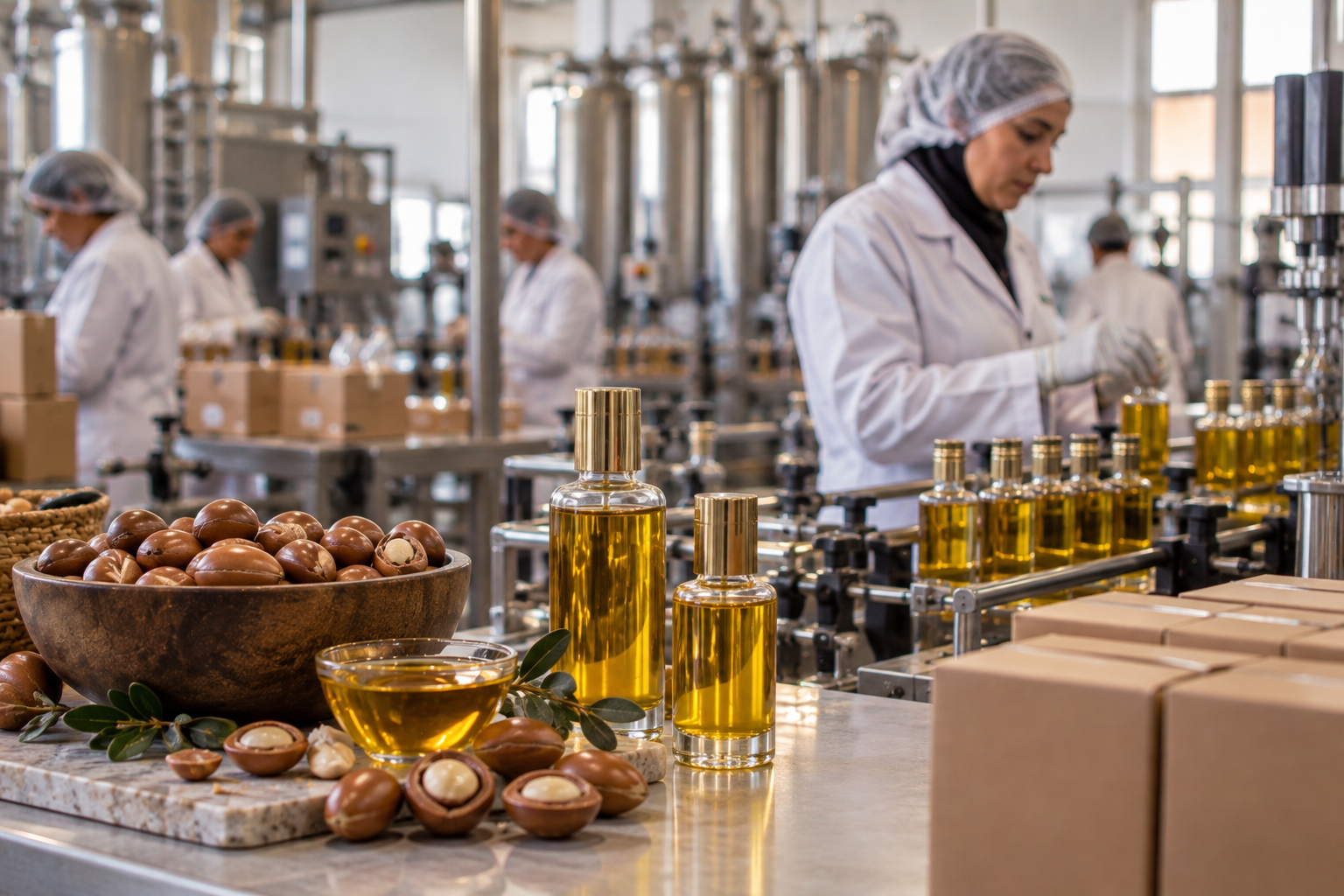
Argan oil is one of Morocco’s best-known exports. The next opportunity is to ensure that more of the value created around it stays in the country.
Morocco is the world’s dominant source of argan oil, but much of the commercial value is still created after the product leaves the country.
According to the IFC, 93% of Morocco’s argan oil exports are shipped in bulk. The oil is then often formulated, packaged and branded elsewhere before reaching consumers.
That leaves Morocco with a clear opportunity: move further into finished products rather than remaining primarily a supplier of the ingredient itself.
More of the Final Product Can Be Made in Morocco
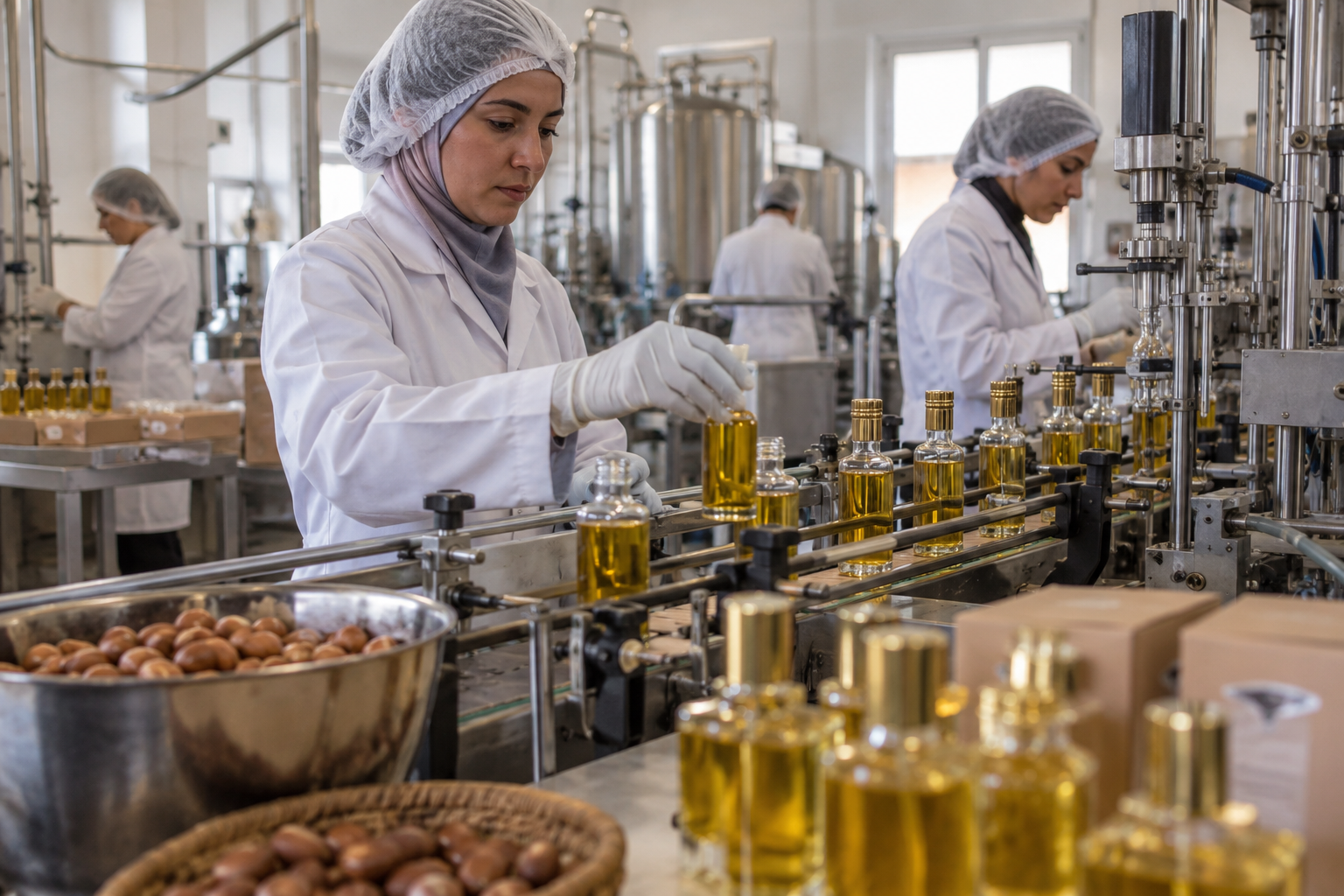
The value difference between bulk oil and a finished consumer product is significant.
Once the oil is formulated, bottled, packaged and marketed, additional value is created through manufacturing, design, branding and distribution.
The IFC identifies secondary processing as one of the sector’s main untapped opportunities, particularly in finished food, beauty and wellness products based on argan oil.
For Moroccan producers, that means the opportunity is not simply to export more oil, but to do more of the work that happens before the product reaches a shelf.
The Economics Could Be Significant
The potential is large, although the headline numbers need to be understood in context.
In its 2026 Morocco Country Private Sector Diagnostic, the IFC estimates that the broader argan oil and natural-ingredients processing segment could attract around $600 million in additional investment by 2035.
It also estimates roughly 17,000 direct and indirect jobs, including about 4,400 direct positions.
Those figures are not forecasts for argan oil alone. They are modelling estimates for a wider segment that includes argan and natural-ingredients processing, based on assumptions about the future growth of Morocco’s cosmetics industry.
That distinction matters.
The numbers illustrate the scale of the opportunity, but they also show that capturing it will require more than simply increasing production.
Local Producers Are Moving Further Into Processing
Morocco already has the raw material and the know-how.
The next stage is industrial.
More local companies are expanding into bottling, formulation, packaging and private-label production, allowing finished products to be developed closer to where the ingredient originates.
That can lower the barriers for Moroccan entrepreneurs who want to build consumer brands without investing immediately in their own manufacturing facilities.
It can also give exporters more control over quality, presentation and positioning in international markets.
But the IFC identifies several obstacles that still need attention, including standards, certification, traceability and regulatory requirements affecting food and cosmetics processing.
Origin Is an Advantage Morocco Already Has
Argan oil comes with something many products spend years trying to build: a strong association with a particular place.
International consumers already link argan oil with Morocco.
That origin cannot easily be replicated elsewhere.
The commercial question is how much more value Moroccan companies can build around it.
For some producers, that may mean higher-quality bottled oil. For others, it could mean food products, haircare, skincare, wellness goods or private-label manufacturing for overseas brands.
The common factor is that more of the final product is created before export.
From Ingredient to Finished Product
Bulk exports will remain an important part of Morocco’s argan industry.
But the IFC’s analysis suggests the bigger growth opportunity lies further downstream.
Morocco already supplies the ingredient. The harder task is building more processing capacity, stronger standards and companies capable of competing with finished products internationally.
If that happens, argan oil could generate more value in Morocco not because the country produces more of it, but because it does more with what it already produces.