
With more than two million tonnes of white sugar produced in 2025 and exports reaching over 90 international markets, the Casablanca-listed company combines domestic agriculture, industrial manufacturing and global trade.
CASABLANCA — From sugar consumed in Moroccan households to refined products sold internationally, COSUMAR has built a MAD 10.5 billion business connecting agriculture, manufacturing and global markets.
The Casablanca-listed group generated MAD 10.49 billion in consolidated revenue in 2025, up 2.4% from the previous year, supported by higher export sales volumes.
Its operations connect more than 80,000 agricultural partners with an industrial network that reported production of 2.088 million tonnes of white sugar during the year.
Since September 2025, COSUMAR has been led by Director General Imad Ghammad, a longtime executive whose experience includes procurement, supply chains and international trading.
The company operates a business model combining sugar produced from Moroccan crops with the refining of imported raw sugar, serving domestic consumers and international customers.
From Moroccan Farms to Industrial Scale
Founded in 1929, COSUMAR has developed an integrated business spanning agricultural production, refining, packaging and distribution.
The group works with sugar beet and sugar cane growers across five agricultural regions, including Doukkala, Gharb, Loukkos, Tadla and Moulouya.
Through its agricultural aggregation model, COSUMAR provides growers with technical assistance and logistical support, connecting domestic crop production to its manufacturing facilities.
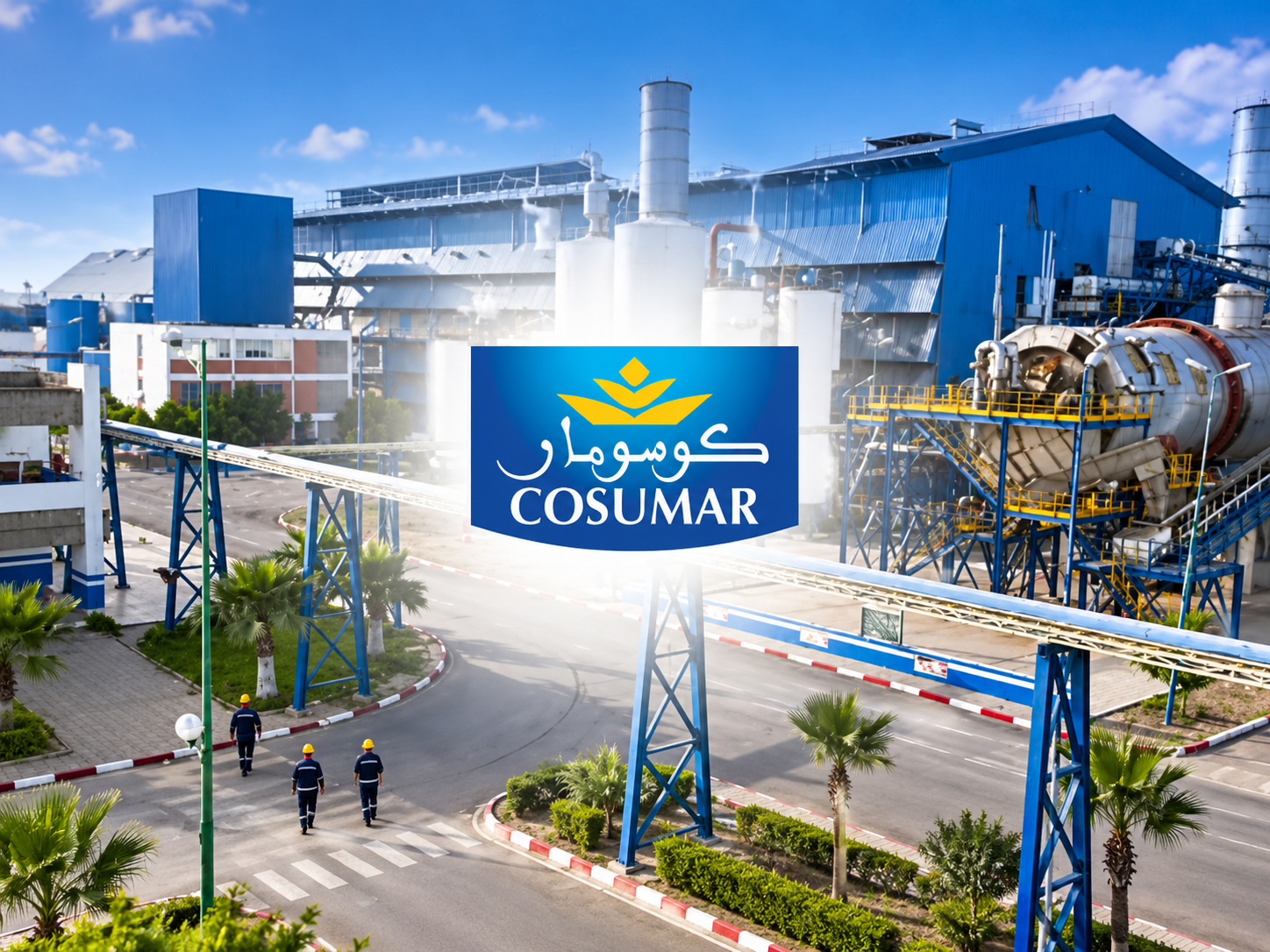
Its industrial network includes seven sugar-processing plants and two refineries, located in Casablanca and Sidi Bennour.
According to its 2025 annual report, the group had an annual white sugar production capacity of approximately 2.5 million tonnes, compared with estimated domestic market requirements of 1.23 million tonnes.
The distinction between capacity and actual production is important: the former represents potential industrial output, while the latter measures volumes manufactured during the year.
The company’s operations combine locally produced sugar with refining activities based on imported raw materials, allowing it to supply Morocco while developing international sales.
This industrial structure links farming communities, production facilities and distribution channels.
It also exposes the business to agricultural conditions, particularly rainfall and irrigation availability, alongside movements in international raw material prices.
Imad Ghammad and International Expansion
Ghammad was appointed director general on 23 September 2025, succeeding Hassan Mounir after nearly two decades with COSUMAR.
He joined the company in 2006, became a member of its management committee in 2010 and was appointed deputy director general in December 2023.
His previous responsibilities included purchasing, supply chains and trading, giving him experience in functions central to the group’s industrial and international activities.
Exports have become an important component of COSUMAR’s commercial operations.
Its official financial publications indicate that more than 850,000 tonnes of white sugar were exported in 2025 to over 90 international markets.
The company’s annual report recorded exports exceeding 851,000 tonnes, while its subsequent first-half 2026 report cited 853,000 tonnes shipped to 95 countries.
The figures differ slightly between publications, but both demonstrate the scale of the export business.
These international operations are conducted outside Morocco’s domestic sugar compensation system, using arrangements under which imported raw sugar can be refined for overseas customers.
For COSUMAR, maintaining competitiveness depends on reliable refining capacity, logistics, product quality and responsiveness to international market conditions.
Financial Performance and the Next Growth Chapter
COSUMAR’s recent results demonstrate the scale of its operations and the financial pressures associated with global sugar markets.
Despite higher revenue in 2025, net profit attributable to shareholders declined to approximately MAD 704 million from MAD 850 million in 2024.
According to the company, reported earnings were affected by exceptional items, including a tax adjustment.
In the first half of 2026, consolidated revenue fell by 10% to MAD 4.825 billion, primarily reflecting lower international sugar prices and their effect on export sales.
Net profit attributable to shareholders declined to MAD 333 million from MAD 387 million a year earlier.
The group also reported disruptions caused by flooding in the Gharb and Loukkos agricultural regions, alongside adverse weather conditions affecting port operations earlier in the year.
COSUMAR subsequently reported improved logistics activity during the second quarter.
Looking ahead, the group has identified improved water availability as a potential support for the 2026–2027 agricultural campaign, with more than 60,000 hectares of sugar crops envisaged. This remains a forward-looking objective rather than confirmed cultivated acreage.
The company is also pursuing industrial diversification through a carbon dioxide recovery and processing project at its Casablanca refinery.
The planned investment exceeds MAD 500 million and is designed to produce approximately 20,000 tonnes of food-grade liquid carbon dioxide annually, with commissioning targeted for the first quarter of 2027.
The project represents a planned new industrial activity; its projected capacity and commissioning date are not yet realised results.
For Ghammad and COSUMAR’s management team, the next phase will involve maintaining reliable domestic supply, strengthening agricultural productivity and improving industrial efficiency while navigating international commodity markets.
COSUMAR’s scale rests on more than sugar production alone. Its integration of Moroccan farming, refining and international trade provides a foundation for growth — with long-term success depending on operational resilience and sustainable profitability.